National Social Security Fund Partners with AICs of Three Major Banks to Invest in Hangzhou-based Solid-State Battery Dark Horse
Another phenomenal startup has emerged in Hangzhou.
According to PE Daily, Jinyu New Energy has completed a new round of strategic financing. Its investor roster includes three AIC investment platforms under the National Council for Social Security Fund, Bank of China, Agricultural Bank of China, and Industrial and Commercial Bank of China, as well as provincial and municipal state-owned capitals such as Zhejiang Financial Holding Group and Hangzhou Capital. Existing shareholders Hangzhou Industrial Development Group and Jiuzi Capital continued to make additional investments, among which Jiuzi Capital is its second largest shareholder.
In 2019, Huang Dubin, a doctor of mineral materials from Peking University, led the team to establish Jinyu New Energy and engaged in the solid-state battery track. Now rooted in Linping, Hangzhou, Jinyu New Energy has risen to be a dark horse in the solid-state battery industry — the cumulative sales of battery cells have exceeded 2 million units, with an annual production capacity of 2GWh, covering more than 500 global customers, and its products have been sold to more than 30 countries and regions around the world.
Quietly, a sample of mutual empowerment and mutual achievement between urban industrial ecology, venture capital institutions and enterprise commercialization strategies is emerging.
Led by a Peking University PhD, it has grown into Hangzhou's "New Little Dragon"
The story started on the campus of Peking University.
During his doctoral study at Peking University, Huang Dubin's scientific research direction has been locked on the core problem of solid-state batteries — how to optimize the solid-liquid interface of batteries to achieve higher energy density and safety. In those years, he and his team conducted repeated experiments and continuous iterations, and finally produced samples with performance indicators better than similar products on the market. The idea of starting a business came into being.
The name Jinyu New Energy is derived from "the feather of Golden Crow", which implies lighting a new spark for the industry with brand new energy. Their goal is very simple: to push solid-state batteries from academic papers to real industrial shelves.
At that time, the solid-state battery track was not very crowded. But in the following years, industrial leaders such as CATL and BYD entered the market one after another, and new forces such as Welan New Energy and Qingtao Energy rose rapidly. Solid-state batteries have gradually become one of the tracks with the greatest growth potential and the highest investment value in the new energy field.
Now headquartered in Linping, Hangzhou, Jinyu New Energy has taken its own unique path.
The team accurately targeted high-premium scenarios and built competitive barriers around differentiated performance requirements. They launched four hierarchical product matrices — Boundless, Soaring, Ten Thousand Mountains, Mountains and Seas, covering UAVs, construction machinery, green short-distance travel, robots, oil and gas drilling and many other fields. Different industries have different performance requirements for batteries: some focus on energy density, some on power, some on cycle life, and some on safety. Jinyu New Energy extends the same underlying technology system to multiple sets of products to meet all requirements one by one.
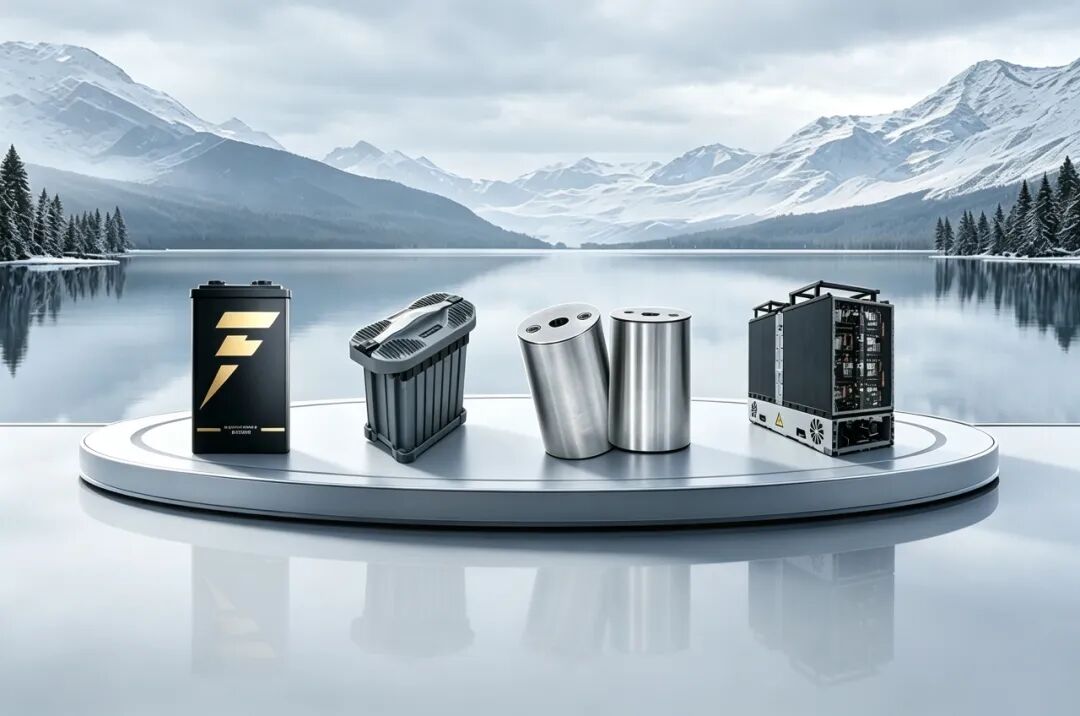
They have made this path a success. As of August 2026, the cumulative sales of Jinyu's solid-state battery cells have exceeded 2 million units, with an annual production capacity of 2GWh, and orders at home and abroad have been scheduled to the end of the year. The company has more than 500 global customers, its products are sold to more than 30 countries and regions around the world, and its sales rank at the forefront of the solid-state battery industry, making it one of the few solid-state battery enterprises that can achieve positive net profit margin.
Jinyu New Energy has thus been selected as a national-level specialized and sophisticated "Little Giant" enterprise, the "Sci-Tech Innovation China" Solid-state Battery Industrialization Collaborative Innovation Base, and has been listed as a "New Sci-Tech Little Dragon" enterprise in Zhejiang. It is deeply embedded in the construction layout of Linping's "China Green Port" green energy industrial landmark, helping the development of the two major clusters of new energy equipment and new materials among the 100-billion-yuan industrial clusters in Hangzhou's "296X" strategy, and has become a business card of Hangzhou's next-generation battery industry and even the high-end manufacturing industry.
In June this year, Liu Jie, Deputy Secretary of Zhejiang Provincial Party Committee and Governor, made a special investigation on the innovation and development of artificial intelligence in Hangzhou. He specifically visited Jinyu New Energy to inspect the empowerment situation of the enterprise's strengthened "AI + Battery" collaborative innovation on the R&D side, production side and application side, and encouraged it to deepen the exploration of the application practice of artificial intelligence in the field of advanced manufacturing. Du Xuliang, Deputy Secretary of Hangzhou Municipal Party Committee and Mayor, participated in the investigation together.
The rise of Jinyu New Energy is also inseparable from the power of venture capital. Since its establishment, the company has introduced a large number of well-known institutions such as SPIC Ronghe Technology, Jiuzi Capital, and the Peking University Scientific and Technological Achievements Transformation Fund. The latest round of financing has gathered a diversified shareholder lineup — including national long-term capital, financial capital from the three major banks' AICs, as well as provincial and municipal state-owned capitals and market-oriented investment institutions. Such a lineup is rare among startups.
A Sample of Industrial Implementation
Sorting out the growth path of Jinyu New Energy, a leading domestic technology investment institution has been running through it all the time — Jiuzi Capital.
Founded in 2008, whose team members are mainly from top domestic universities such as Tsinghua University, Peking University and Zhejiang University, Jiuzi Capital has invested in a large number of leading domestic high-tech companies in aerospace, semiconductor, new energy, new materials, high-end equipment and other fields, and has accumulated profound industrial resources, capital operation capabilities and sci-tech innovation incubation experience.
As early as 2022, Jiuzi Capital invested in Jinyu New Energy. At that time, solid-state batteries had not yet become a recognized track, and most institutions were still waiting and seeing, waiting for the technical route to further converge and the mass production inflection point to become clearer. However, Jiuzi Capital judged that the industrialization process of solid-state batteries was accelerating, and the technical route and engineering capability of Huang Dubin's team had the potential to become a leading player in the track, so it firmly invested when Jinyu New Energy was not yet large in scale. Now, Jiuzi Capital has become the second largest shareholder of the company.
But "successfully investing in Jinyu" is only the beginning of the story. What is more noteworthy is the role that Jiuzi Capital plays in the subsequent development of the project.
Over the years, from attracting Jinyu New Energy to settle its headquarters in Linping, Hangzhou, to connecting all kinds of upstream and downstream industrial resources, and then helping to introduce national-level and provincial and municipal capitals such as the National Council for Social Security Fund and the three major banks' AICs in this round of financing, Jiuzi Capital has deeply participated in every key node of this emerging technology company.
The formation of this connection capability did not happen overnight. The cooperation between Jiuzi Capital and ICBC AIC and ABC AIC can be traced back to October 2021. At that time, ICBC Investment and Jiuzi Capital jointly initiated the establishment of the "first" pure market-oriented "pure equity investment fund" within the ICBC AIC system — Shanghai Gongrong Sci-Tech Innovation Fund, with Jiuzi Capital acting as the general partner; in December of the same year, ABC Investment and Jiuzi Capital jointly established the "first" pure market-oriented "pure equity investment fund" within the ABC AIC system — Shanghai Suihe Zhirong Green Technology Fund, with Jiuzi Capital also acting as the general partner.
Three years later, this model has expanded from Shanghai to the whole country. The "17 Venture Capital Policies" issued by the State Council in 2024 clearly proposed to "summarize the experience of Shanghai's pilot direct equity investment" and expand the AIC equity investment pilot. Subsequently, the pilot expanded from Shanghai to 18 cities including Beijing, Hangzhou and Shenzhen. The Gongrong Sci-Tech Innovation Fund participated in the establishment by Jiuzi Capital was also listed by the Bank of China Research Institute as a representative case of Shanghai's AIC equity investment pilot.
Now, ICBC and ABC AIC have jointly invested in Jinyu New Energy with Jiuzi Capital again, and introduced long-term capitals such as BOC Asset and the National Council for Social Security Fund. This is not an accidental cooperation, but another in-depth practice of the cooperation model that has been running for nearly 5 years.
In Jiuzi Capital's hard technology investment map, such full-cycle empowerment cases have long been normalized. In August this year, Bolei Technology, which ranks first in the global market share of pure electric autonomous driving mining trucks, completed a new round of financing, introducing three industrial giants including Rio Tinto Group, CITIC Group and Xiamen Tungsten Co., Ltd., and reached in-depth cooperation. It is worth mentioning that Jiuzi Capital is also the second largest shareholder of Bolei Technology.
Earlier in April, Vimicro, a world-leading visual chip enterprise, moved its whole operation to Linping. As its second largest shareholder, Jiuzi Capital also provided key support.
The first half of investment is to discover enterprises, and the second half is to help enterprises achieve success. Jiuzi Capital is proving with actions that the value of an investment institution is not only to invest in a project in the early stage, but also to continuously provide industrial resources, capital connections and ecological support in the whole growth cycle of the project.
From Vimicro to Bolei Technology, from Jinyu New Energy to a broader hard technology territory, Jiuzi Capital's empowerment radius is constantly expanding. The logic running through it is always clear: connect capital, industry and cities, so that every investment can become a part of the hard technology industry chain.
All in all, this investment institution has quietly become an important promoter of the implementation of Hangzhou's hard technology industry, injecting strong momentum into the cultivation of new quality productivity in this sci-tech innovation hot land, and is also becoming an important market-oriented force connecting national capital, industrial resources and hard technology enterprises.
This article is from WeChat official account "PE Daily" (ID: pedaily2012), written by Zhou Jiali, and published with authorization from 36Kr.