Tesla redefines the automobile, and the Cybercab with no steering wheel or brakes is officially released.
On the afternoon of September 3 local time, Tesla officially launched the production version of the Cybercab robotaxi in Austin, USA.
This vehicle completely eliminates the steering wheel, accelerator and brake pedals, making it the world's first mass-produced model that is truly "natively built for fully autonomous driving".
Unusually, Tesla did not arrange a live broadcast for this launch event, and all invited guests were placed under a social media ban, prohibiting them from posting event photos or videos before the event concluded.
However, the vehicle had already been leaked long before the launch event started.
Golden Cybercabs can be seen everywhere on the streets of Austin, covering almost every corner of the city.
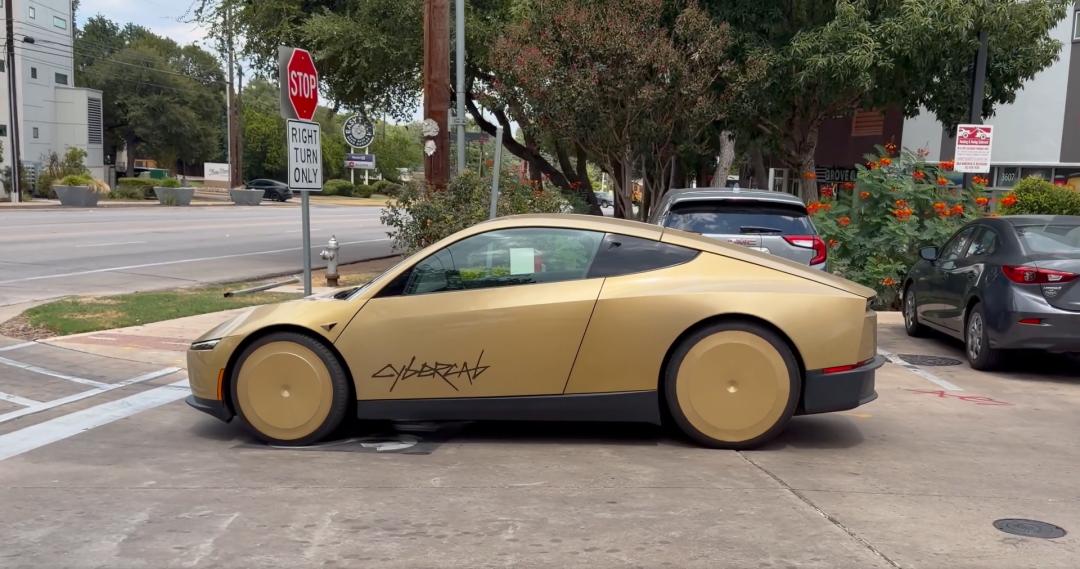
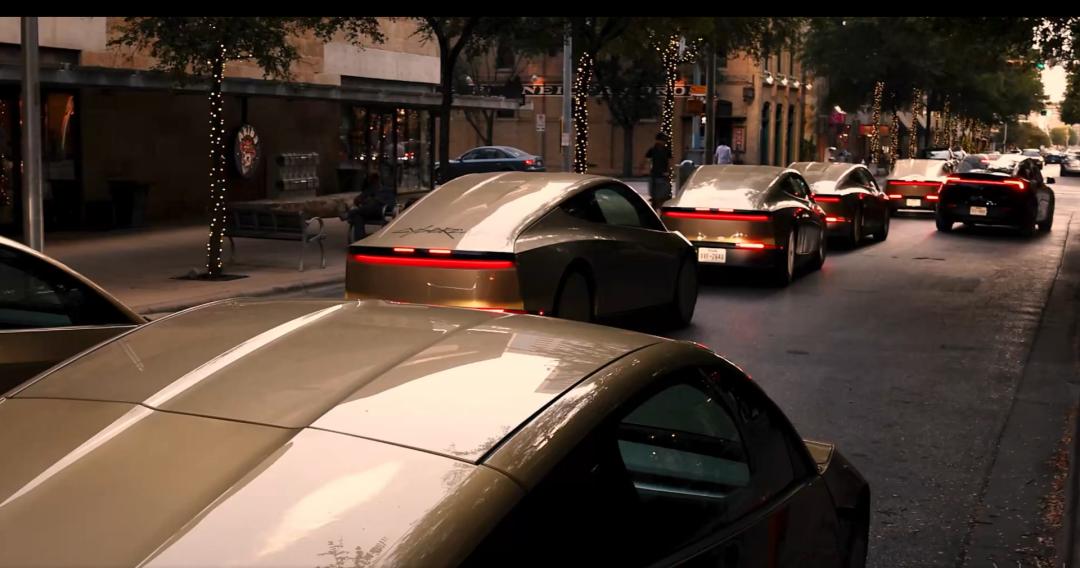
Previous autonomous vehicles were all "dual-purpose for human drivers and passengers", allowing manual takeover in emergency situations; while Cybercab removes the driver from the very beginning of its design, serving passengers exclusively.
The launch of this vehicle is not just a new car release, but a complete subversion of the century-old logic of the automotive industry and the urban mobility sector.
With steering wheels and pedals completely removed, what exactly does Cybercab look like?
All Waymo vehicles on the market and various domestic autonomous driving vehicles are modified from existing private cars, retaining a full set of driving hardware.
Tesla Cybercab is a fully autonomous mobility vehicle reconstructed from scratch, with no devices available for human control on the entire vehicle.
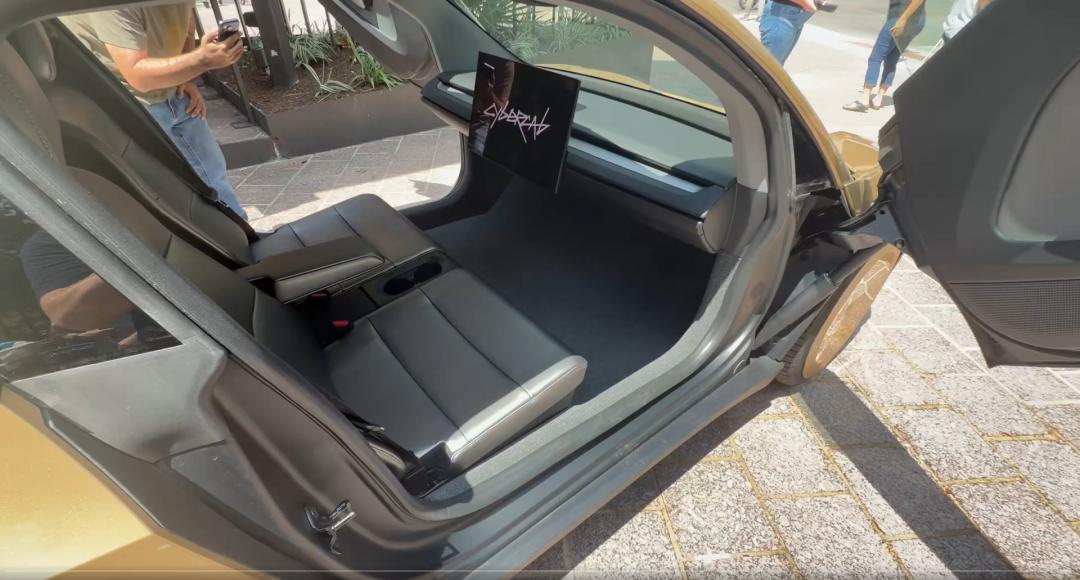
As can be seen from the video, there are only two seats in the car, and the only interaction device is a 22-inch central control large screen.
According to the official "Ride Guide", after passengers place an order for a trip on the Robotaxi app, they will receive a notification informing them of the light color of their vehicle.
When CyberCab approaches and detects the passenger's mobile phone, it will automatically open the door. After the passenger sits down and fastens the seatbelt, the door will close automatically.
The automatic opening/closing function of the door can be adjusted manually, and the door will not open automatically when obstacles are detected.
During the trip, passengers can check the journey and estimated arrival time through the central control screen, and can also watch movies, listen to music, play games and more on it.
The official stated that V5 Starlink hardware will be installed soon, allowing users to watch 4K videos or make video calls in the vehicle.
After arriving at the destination, passengers can open the door by clicking the "Open" button on the large screen or pulling the door handle.
To adapt to the high-frequency operation scenarios of online ride-hailing services, Cybercab has made a large number of humanized and operation-oriented optimizations in details.
The entry threshold of the entire vehicle is only 41.9 cm, making it easy for the elderly, children, folded strollers and small wheelchairs to get in and out, meeting the travel needs of all groups of people.
With an extra-large 572-liter trunk and a load-bearing capacity of 100 kg, it can easily accommodate two checked luggage items plus two carry-on luggage items, fully meeting the loading needs of daily commuting, travel and airport transfers.
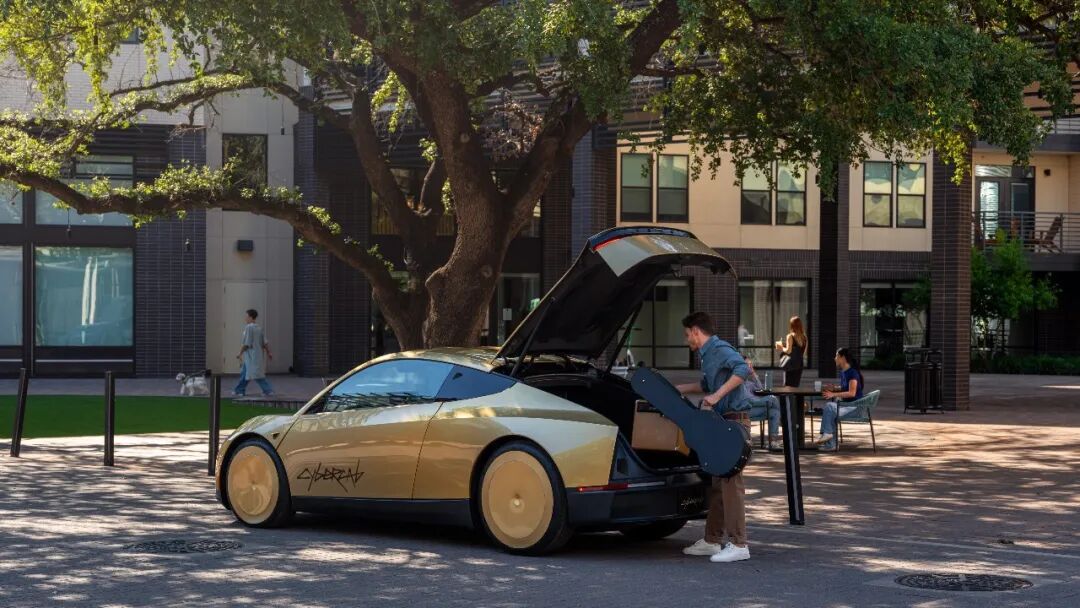
The legroom, headroom and lateral space in the car are spacious. Each passenger can independently control the air conditioning vent, and USB-C charging ports are also equipped.
In terms of privacy and security, the personal audio and entertainment accounts logged in by passengers will automatically clear data after the trip ends, eliminating the risk of privacy leakage.
At the same time, the vehicle has intelligent self-inspection capabilities. Between two orders, the in-vehicle camera will automatically detect the cleanliness of the cabin and scan for left-behind items, which not only facilitates vehicle scheduling and cleaning, but also maximizes the prevention of loss of passengers' belongings.
Even if the vehicle loses power accidentally, the door still retains a mechanical emergency switch for manual escape in emergency situations.
In terms of intelligent driving hardware, Cybercab relies on 9 high-definition cameras plus the HW4.0 hardware system to achieve full-scenario perception.
8 external cameras cover the entire vehicle without dead angles, responsible for road condition judgment; 1 in-vehicle camera monitors the status of the cabin.
A cabin radar is also installed at the position of the cabin ceiling light, which is used to identify the status of passengers to determine whether to trigger the front airbag.
The entire vehicle is equipped with at least 10 airbags, which is a configuration that belongs to high-end household vehicles.
It should be noted that the FSD running on Cybercab is different from the FSD of ordinary Tesla household vehicles.
The FSD of ordinary Tesla vehicles belongs to Level 2 assisted driving, which requires the driver to hold the steering wheel and take over the vehicle at any time, with the human always being the main subject of driving responsibility.
While Cybercab achieves Level 4 autonomous driving capability within the designated operation area, there is no steering wheel or pedal at the hardware level, and no human takeover is required at all.
Extreme cost-effectiveness subverts the industry, and the intention form has been available for submission
If the steering-wheel-free design is the highlight of Cybercab, then the extremely low cost is the killer move that subverts the entire industry.
According to the calculation of AJ Securities, the unit cost of Cybercab has dropped to the range of 23,000 to 25,000 US dollars. Elon Musk has publicly stated that the total vehicle price is expected to not exceed 30,000 US dollars, equivalent to only about 200,000 RMB.
This price is even lower than most household new energy vehicles on the market.
On the one hand, it completely removes the full set of driving hardware such as steering wheel, pedals and steering column, saving a lot of parts and assembly costs; at the same time, it adheres to the pure vision solution, abandons the expensive lidar, and relies on algorithms to replace hardware redundancy.
In addition, the 47.6kWh small-capacity battery it carries is focused on short-distance urban travel, further reducing weight and cost.
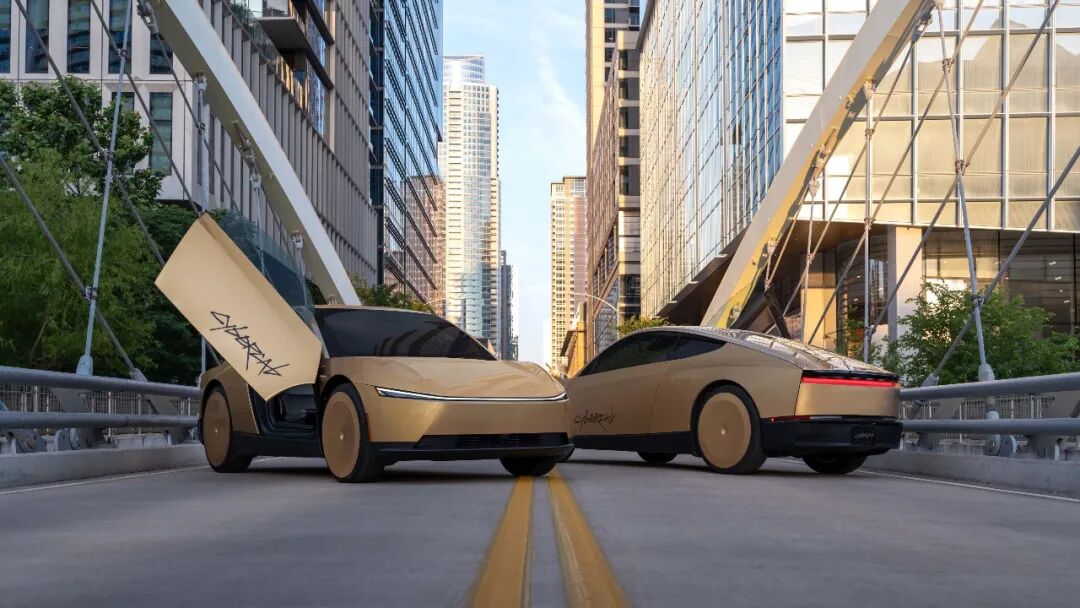
Elon Musk once predicted that the per-mile operating cost of Cybercab will drop to 0.2 US dollars in the future, which directly cuts off the largest and most expensive human driver cost compared with traditional online ride-hailing services.
In the future, this vehicle can realize all-weather fully autonomous operation: automatically receiving orders, automatically driving, automatically wireless charging, automatically detecting and cleaning, with no manual intervention throughout the process.
On the day of the launch event, Tesla simultaneously launched the intention form submission function, collecting three types of cooperation intentions from enterprises and institutions: fleet procurement, mobility hub construction, and event cooperation.
The era of privately operated robotaxi fleets is coming.
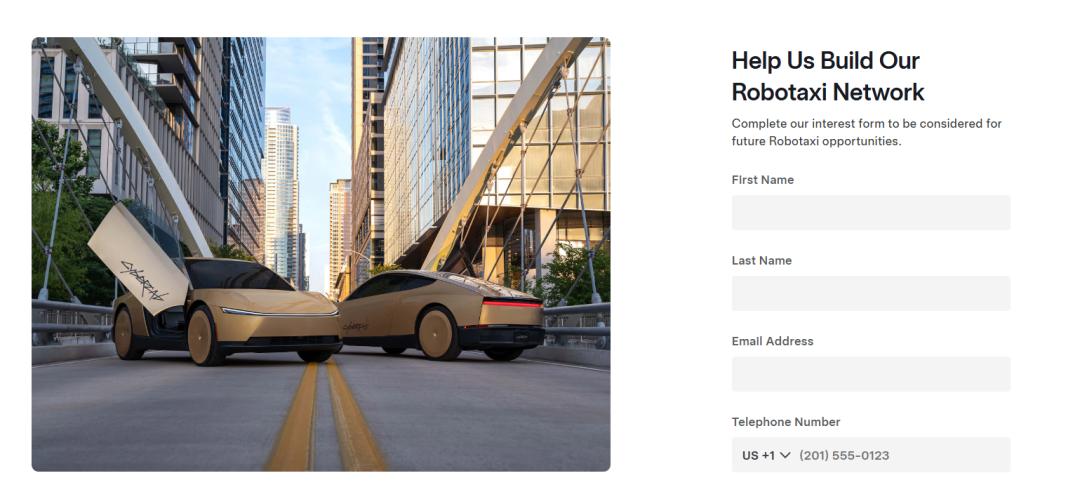
However, this does not mean that reservations or payment for vehicle delivery have been opened. Tesla has not announced the specific pricing and delivery time for fleet sales either.
At present, ordinary users can only use the Cybercab service within the Austin service area.
Universal popularization still takes time, and the autonomous driving future has arrived
The official release of Cybercab marks that autonomous driving has officially entered a new stage of commercial implementation from test demos and experimental scenarios.
In the past, all structures, configurations and safety designs of automobiles were designed to serve drivers; while Cybercab is the first to strip off the driver attribute, making automobiles return to a pure passenger-carrying tool.
But even if it has achieved mass production, Cybercab still faces unavoidable thresholds before it can be universally popularized and fully implemented.
The first is regulation. The current laws and regulations in most regions of the world mandate that vehicles must be equipped with manual control devices such as steering wheels. This directly leads to the illegality of such models in the vast majority of markets.
In the United States, Tesla is trying to use the "self-certification" method to claim that Cybercab fully complies with the Federal Motor Vehicle Safety Standards, thus bypassing the exemption quota limit of only 2,500 vehicles per year.
Secondly, Cybercab fully bets on the pure vision end-to-end solution without installing lidar, which performs excellently in 99% of common road conditions, but the physical limitations in extreme scenarios cannot be completely eliminated by software iteration.
At the same time, some regions require autonomous vehicles to be equipped with at least two other sensors in addition to cameras. Tesla either has to add extra sensors or choose to give up some markets.
Production capacity is another challenge. In January this year, Elon Musk posted on social platforms that since "almost all components and processes are brand new" for Cybercab, the production capacity ramp-up in the initial stage will be extremely slow. The final production speed will increase significantly, but it takes time to achieve this goal.
This may also be one of the reasons why the intention form submission function is launched so early, to spread the capital expenditure of production capacity expansion to global buyers, so that Tesla's own capacity expansion pressure will not be so great.
Although the road to popularization is still long, there is no doubt that the era of autonomous driving mobility with no drivers, lower costs and all-weather services has truly arrived.
This article is from the WeChat official account "Tech Daily Push" (ID: apptoday), author: ZHAO Zhishan, editor: ZHOU Weipeng, published with authorization from 36Kr.