Pushed to the very bottom of the academic qualification snobbery chain, technical schools are busy "proving their innocence".
After the expansion of regular high school enrollment, a new academic qualification snobbery has emerged. Technical education finds itself in the most awkward position on this chain, having to devote tremendous energy to clearing up misunderstandings and struggling to prove that it is legitimate, compliant, and valuable.
During the just-concluded summer vacation, many teachers who were supposed to temporarily lay down their teaching pressure ushered in their busiest period of time.
For many technical school teachers, this summer vacation is split into two halves: one half is spent competing for students, and the other half is spent proving that they are not scammers. While rushing to complete enrollment tasks, they have to answer calls, respond to parents' messages, spare time to sort out evidence, and even make videos in their spare time to "clear the name" of their schools.
What a school should present to parents most is supposed to be teaching quality and employment prospects for graduates. However, current technical colleges and schools often have to answer a more fundamental question first: Am I even a formal school?
This year, the contradiction was completely brought to the surface in Changsha. Facing the rampant malicious smearing during the enrollment season, Changsha Zhongke Intelligent Technical School no longer defended passively, and jointly issued lawyer's letters to relevant entities with the Changsha Technical Education and Vocational Training Association.
The school stated that during the enrollment season, some people repeatedly smeared technical schools in short videos and offline lectures, claiming that they "do not grant academic qualifications", "do not issue graduation certificates" and "do not allow students to take university entrance exams".
Such a situation is not an accidental case exclusive to Changsha. In July this year, multiple technical schools in Shandong took the lead in issuing statements to clarify facts; in August, technical schools in many regions of Fujian and Guangdong successively collected evidence to safeguard their rights, launching a concentrated counterattack against the long-standing chaos of enrollment smearing.
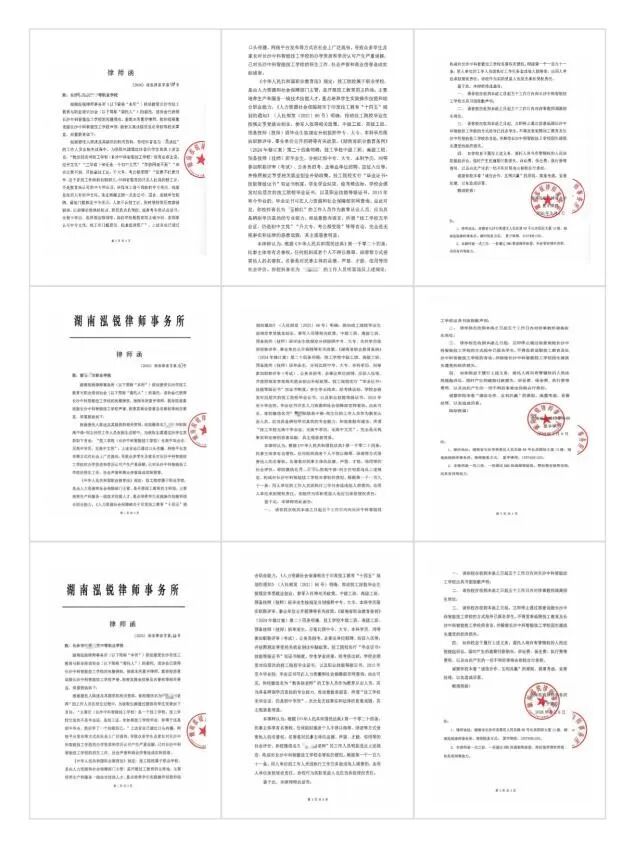
Technical schools sent letters to involved parties to safeguard their rights. (Source: official website of Changsha Technical Education and Vocational Training Association)
Behind the fact that technical schools need to repeatedly prove that they are "not diploma mills" lies the predicament faced by technical education: it is not just a few harsh remarks, but deep-rooted public prejudice against education: regular high school is the right path, secondary vocational school is the fallback option. As for technical schools? It is best not to even ask about them.
Regular high schools began to expand enrollment, while spots in popular technical schools with clear employment outcomes are in high demand. Is this bustling scene around technical schools in 2026 a long-overdue collective name-clearing, or a forced strategy adopted by schools to compete for students?
Where Does the Stigma Come From?
The core contradiction of this collective rights protection wave among technical schools is not a dispute over school running quality or student rights issues.
If you look through the rumors circulating online, you will find that this is actually a set of standardized smearing scripts: technical schools belong to "non-academic education", and graduates still only have a junior high school academic qualification; their student status is not in the education bureau system and cannot be queried on the Xuexin website; students cannot take the vocational education college entrance exam or separate recruitment exams, so they can only work in factories in the future.
None of these statements centered on "academic qualifications" are accurate, but they precisely hit the core anxiety of families when choosing schools. For the vast majority of parents, it is hard not to get nervous once someone ties "academic qualification", "further education" and "career prospects" together. More importantly, the reason why rumors like "technical school qualifications are not recognized" spread so widely is precisely that they are not fabricated out of thin air.
(Photo: *Nice View*)
In its reply to the proposal of the National Committee of the Chinese People's Political Consultative Conference in 2021, the Ministry of Education clearly stated that there are four types of secondary vocational schools: vocational high schools, regular secondary specialized schools, adult secondary specialized schools, and technical schools. The first three types are under the administration of the education department, while technical schools are under the administration of the human resources and social security department.
Although the Ministry of Education emphasizes that students of technical schools enjoy equal policy treatment and development environment with other secondary vocational students, the difference in administrative subjects is an internal division of labor, but it has invisibly created a subtle sense of marginalization in real public communication. All belonging to the senior secondary education stage, the other three types are widely known to the public as "schools", while technical schools are often linked with "vocational training".
What is more complicated is that this separation of administrative powers and responsibilities has also led to explanatory dilemmas in the recognition of academic qualifications. The Ministry of Education specifically explained in the same reply that the Ministry of Education has no authority to recognize higher education academic qualifications for technical personnel of different levels, and this work needs to be undertaken by training institutions with the qualification of higher education institutions.
This sentence is intended to clarify the boundary of authority, but even the highest department in charge of education has to specially mention this point, which makes it very difficult to explain the division of powers and responsibilities between different ministries to ordinary parents.
In the mixed enrollment market, this point is more easily intercepted and interpreted in a suggestive misleading way.
Shandong Vocational Education Technical School once exposed the routine of this set of scripts in its statement: some people "falsely claim that secondary specialized schools issue certificates from the education bureau and grant formal academic qualifications, while technical schools issue certificates from the human resources and social security bureau and do not grant recognized academic qualifications". The skills of such rumors are not sophisticated, but quite precise. Rumormongers seize the differences between competent authorities, names of graduation certificates, and further education paths, misinterpret "difference" as "hierarchy", and then misinterpret "hierarchy" as "genuine vs fake".
(Photo: *In the Name of Law*)
Relying solely on misleading rhetoric is not enough to build such deep-rooted prejudice.
Looking back decades ago, the term "attending a technical school" could not even be an option in the concept of many families, but a bad fallback answer that people had to accept. The "14th Five-Year Plan for Technical Education" issued by the Ministry of Human Resources and Social Security clearly states that it will "expand the enrollment of technical colleges and schools for high school graduates, veterans, new workforce from poverty-alleviated families and rural migrant workers". This shows that technical schools have always had the underlying attribute of "fallback education".
Technical colleges and schools have long undertaken the social function of enrolling students and providing skill education. The problem is that once "fallback" is fixed as an identity label, it no longer provides a "second path" for more people, but is understood as the "last resort" for students who cannot get into regular high schools.
(Photo: *The Young Life*)
As a result, "technical school" has gradually changed from an education type to a social ranking. Its biggest competitor is not secondary specialized schools, but "attending regular high school", no matter which choice you make, it is never decent enough. At the bottom of this academic qualification snobbery is actually a deep-rooted life path snobbery.
For technical schools, stigma is the norm. These voices have been suppressed for a long time in the past, until 2026, these long-existing misunderstandings and rumors began to directly affect the enrollment results of various schools.
Only when stigma brings tangible costs can we explain why technical schools decided to stop being silent this year.
Once a Fallback Option, Now a Popular Choice
For a long period of time in the past, the widely known rule for high school entrance examination admission was the "50-50 split" — about half of the students enter regular high schools, and the other half flow into the vocational education system. After years of operation of this mechanism, the student sources on the secondary vocational side are basically passively allocated. Students will only consider technical schools if they fail to get into regular high schools, with almost no right to choose, and schools do not need to compete for students.
This year's rights protection wave is the last link under the pattern change.
In 2026, the high school entrance examination reform was fully implemented, and many regions increased the supply of regular high school seats. Public reports show that the regular high school enrollment plan in Nanjing increased by 6,101 people compared with the previous year, the regular high school seat supply rate in Wuxi reached 70.03%; the regular high school admission rate in Hefei exceeded 85% for the first time this year, and Guangdong proposed to raise the proportion of regular high school admission in total senior secondary enrollment to 70% by 2030.
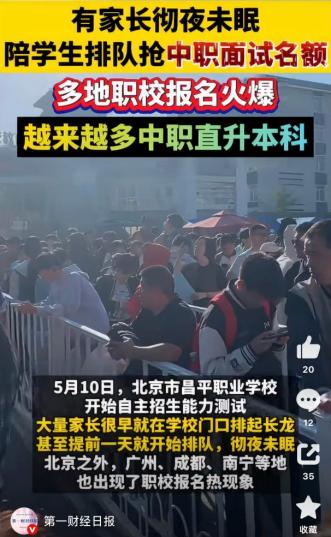
Some parents accompanied their children to queue up for secondary vocational school registration overnight. (Photo: Yicai Daily)
Does the increase in regular high school seats mean that vocational education is completely unwanted, and technical schools have to pull strings to recruit students? The actual situation is far more complicated. The expansion of regular high school enrollment first impacts the group of students who were originally in the middle of the ranking. After this part of student sources is intercepted by regular high schools, regular secondary specialized schools, vocational high schools and technical schools have to compete head-on in a significantly shrinking student pool.
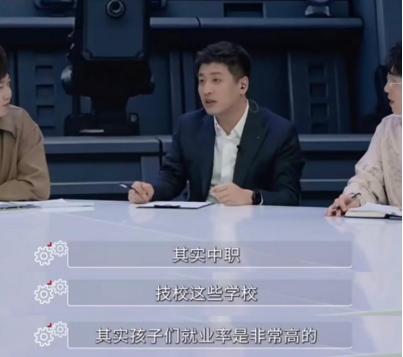
In this competition, the most fiercely degraded targets are precisely those technical schools that have cooperative order-based classes and clear employment prospects. When some parents begin to re-measure the cost-effectiveness of the two paths: "attend regular high school - enter an ordinary undergraduate university - join the highly competitive job market" and "attend technical school - get targeted high-paying employment", good technical schools have become highly sought-after, no longer a helpless fallback option.
(Photo: *New Quality Craftsmen*)
At this time, the ones that truly feel threatened are those ordinary secondary specialized schools and enrollment agencies that neither have strong strength to compete for students nor are willing to lose their student sources.
In the past, even if technical schools were looked down upon, the gatekeeping diversion mechanism could ensure that their basic student base would not collapse, so schools did not need to go to great lengths just for a few online rumors. But when enrollment becomes a real market competition, the issue has changed from a "face problem" to a "survival problem".
The rumors are so intensive that it cannot be explained simply by the poor quality of individual schools. At a time when the total number of student sources is sharply decreasing, competing by improving school running quality takes too long to show results, while smearing and degrading competitors is a "shortcut" with extremely low cost and extremely fast effect.
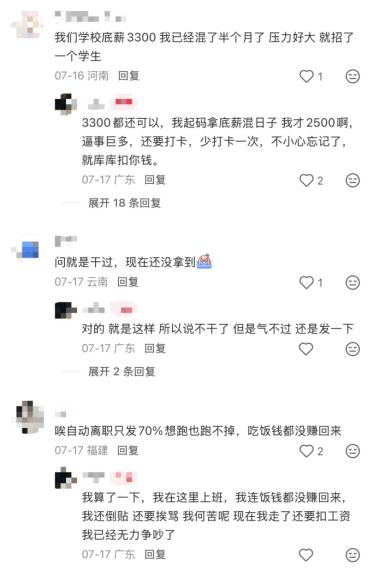
At present, the enrollment of a large number of secondary vocational schools is highly dependent on off-campus agencies and enrollment teams, and enrollment performance is directly bound to personal income. Media investigations once pointed out that the enrollment agency network of private vocational schools can cover the entire prefecture-level city, and enrollment teachers have "no basic salary and get commission per head". When the market is good, recruiting one student can get a "head fee" of two to three thousand yuan or even more than ten thousand yuan.
(Photo: Screenshot of social media)
This model hit the emergency brake this year. After the student pool shrank, the market competition of outsourced agencies became unprecedentedly fierce. A secondary specialized school enrollment teacher revealed to the reporter of *New Weekly* that this year is extremely difficult. In the past, recruiting one student could easily bring thousands of yuan in commission, but this year it is only 300 yuan.
Agencies and enrollment representatives are pushed to the edge of the cliff. Driven by both interests and survival, enrollment is no longer an educational service that objectively introduces school running advantages, but has completely degenerated into unscrupulous commercial games. Slandering peers has naturally evolved from an individual phenomenon to an unspoken industry rule.
After "Proving Innocence", Who Will Take on This Popular Science Task?
Going back to the phrase "proving innocence" itself, it points to a widespread public opinion dilemma: the stigmatized party often has to bear the heavy burden of proof alone, and the unequal public opinion environment will keep the entire technical education in a long-term passive defense state.

(Photo: Screenshot of Weibo)
Nowadays, the main battlefield of technical school enrollment is no longer limited to phone calls and leaflets, but also short video platforms. A 10-second short video can send the statement that "technical schools do not grant academic qualifications" into parents' mobile phones. Even if the video is taken down, it will not prevent rumormongers from spreading it with modified expressions.
In contrast, the cost of dispelling rumors is much higher. The whole process from evidence collection, entrustment to issuing formal lawyer's letters takes a lot of time and resources for schools, which