Luxury brand distribution channels have finally come to their senses: quality takes precedence over quantity.
Shifting from scale-driven growth to lean development means that the distribution channels of luxury brands have embraced a new development logic, and the transformation of pursuit from "more to refined, from quantity to quality" hides the opportunity for the next leap forward.
Last August 1st, I had a discussion with friends in the military enthusiast community.
"As early as half a century ago, the total number of our troops once reached a peak of 6.61 million."
"Now the total number remains at around 2 million, less than one-third of the peak figure."
But another topic has always gone hand in hand with it.
"When does our army have the strongest combat effectiveness?"
"It will always be tomorrow, because the progress of tactics and techniques never stops."
Back in August, the automotive industry also witnessed a major discussion on the development logic of "quality" and "quantity".
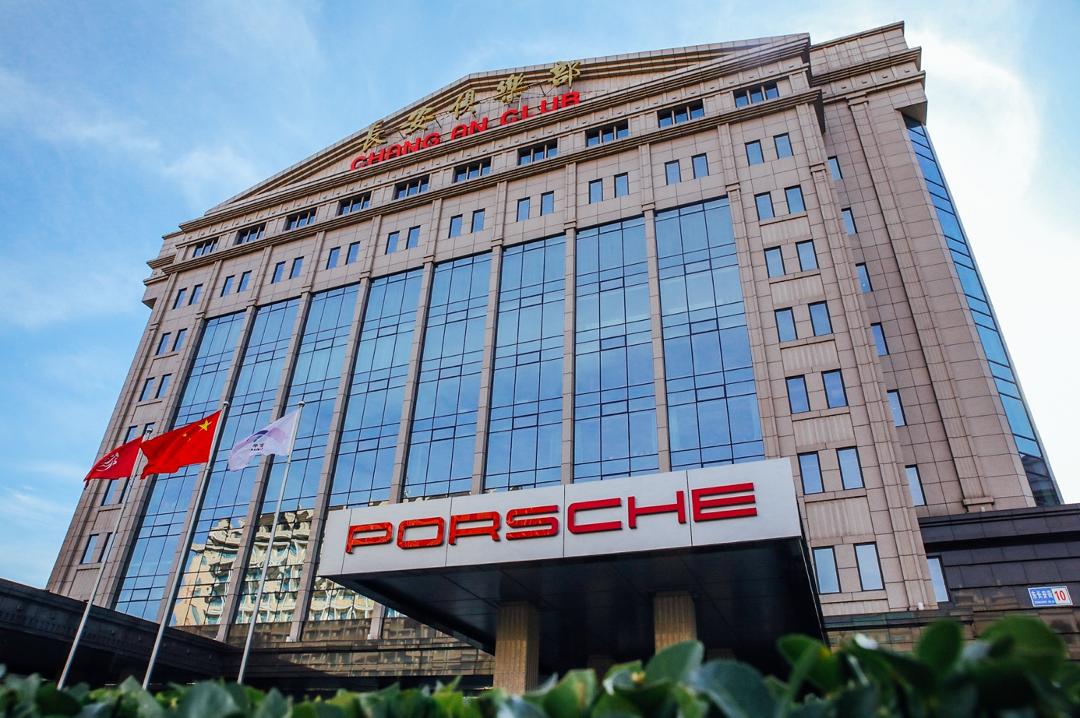
The trigger was the adjustment of luxury brand stores. From the closure of the first Porsche store in Chinese mainland — Porsche Centre Beijing Chang'an, to the transformation of Lincoln China's traditional 4S stores into lower-cost lightweight outlets, the three German luxury giants BBA reduced their outlets by 250 in one year, and then Tesla took the lead in shrinking its layout in high-end business districts as early as 2021, closed its supermarket stores in core locations such as Beijing's China World Mall and Shenzhen's MixC, firing the first shot of channel adjustment for new power brands. Even Xiaomi Auto closed outlets such as the Shanghai Guansong Auto Store as early as 2025.
If you only see the store closures, what you see is only the appearance. On the contrary, Auto Commune sees the deep iteration of development logic from a path pointing to "lean operation" — the distribution channels of luxury automobile brands are stepping out of the 1.0 era marked by scale and quantity, and entering the 2.0 era that "values quality over quantity, pursues refinement rather than extensiveness".
Shifting from scale-driven growth to lean development means that the distribution channels of luxury brands have embraced a new development logic, and the transformation of pursuit from "more to refined, from quantity to quality" hides the opportunity for the next leap forward.
The Departure of the "Supremacy of Scale" Era
"History is a play without an ending, and every ending is the beginning of a new plot of this play." This sentence by Peter Geyl always emphasizes that the historical cycle law is ubiquitous.
Over the 140-year history of the automotive industry, it has generally moved from scale-driven growth to lean development.
If the first automotive industry revolution was the assembly line production model advocated by Ford, which emphasized expansion, then the second automotive industry revolution focused more on convergence through Toyota's lean production. Obviously, the latter is more capable of doing great things in a limited space than the former.
More than a century later, a similar scene is repeated in the iteration of the development logic of automotive distribution channels. Especially for the channels of luxury brands, the strength can no longer be simply defined by the number of stores.
Judging only by the figures, the situation seems to be under huge pressure.
In the past 5 years, nearly 15,000 4S stores across the country have been shut down, merged or transferred. Nearly 5,000 stores withdrew from the network throughout 2025, and about 1,800 more stores were shut down in the first half of 2026.
But just as "in the era of hot weapons, the combat effectiveness of the army is not equal to the number of personnel", after the automotive industry has experienced the transformation of electrification and intelligence, the development logic of channels is also undergoing evolution.
In the past decade, the automotive market was thriving, manufacturers were full of confidence, dealers had no trouble selling cars, and more and more stores were opened. At its peak, Porsche covered first-tier to third-tier cities with 150 outlets nationwide; BBA's outlet layout even penetrated into fourth- and fifth-tier cities, and in some cities there were even five or six 4S stores of the same brand clustered together.
But the irrational expansion of the network has never been a reflection of the real market demand.
In the first half of 2026, China's passenger vehicle market was under overall pressure, with sales declining significantly year-on-year. Although the overall sales performance of luxury brands represented by Audi, BMW and Mercedes-Benz was better than the general market, in the face of the sluggish macro environment and insufficient consumer confidence, it is obviously impossible to rigidly apply the old logic of "exchanging growth for scale".
Lang Xuehong, Deputy Secretary-General of China Automobile Dealers Association, put it plainly: "Some dealers have such a dense channel layout that the sales volume allocated to each channel is not enough to support profitability."
This is not a rout, it is mathematics, and the reflection on the underlying law of development.
From "Opening Stores and Waiting for Customers" to "Intensive and Meticulous Cultivation"
In fact, on the contrary, this is a logic switch for luxury brands from "scale expansion" to "lean operation".
If in the previous stage, the development logic of luxury automobile brands' distribution channels was relatively extensive, and they simply pursued scale and quantity, then the new stage now is to "pursue refinement rather than extensiveness" — quality is greater than quantity, and efficiency is greater than scale.
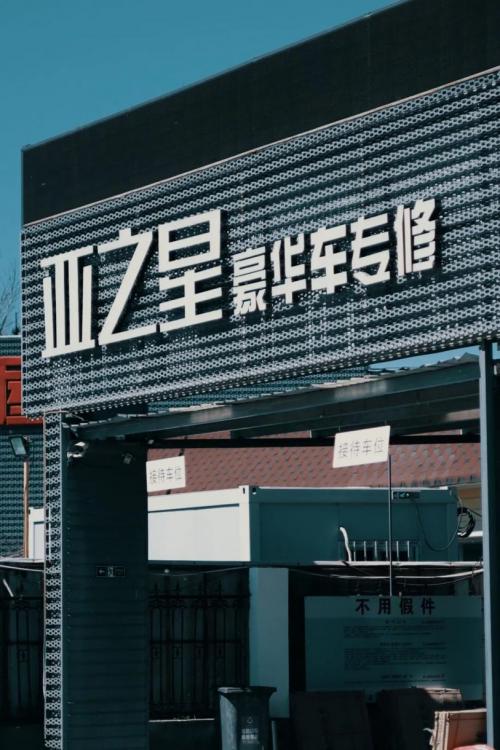
First of all, this is an active contraction, which is much more decent than being forced out of the market.
In the wave of store closures in the past few years, there are not only poorly operated individual stores, but also outlets that actively withdrew. However, the characteristics of this wave of adjustment in 2026 are completely different — it is an active strategic choice of leading groups.
After Porsche China's Jianfa Auto actively transferred its outlets, it called this the "National Network Integration Plan", and clearly put forward the development policy of "quality over quantity". Michael Steiner, CEO of Porsche AG, put it more plainly: "Porsche must make money even if it sells fewer cars."
Lincoln China implements new stores by acquiring, revitalizing and renovating the 4S store sites closed by other brands, which not only reduces capital expenditure, but also maintains the coverage of the service network.
Tesla represents the channel evolution path of new high-end brands. From entering high-end shopping malls on a large scale in the early stage, to actively closing experience stores in core business districts and turning to lower-cost suburban service centers and online sales models since 2021, Tesla's channel strategy adjustment is three to four years earlier than traditional brands, providing a reference for latecomers.
Luxury brands and new high-end brands are exploring the lean path of distribution channels from three directions.
First, reduce the cost of a single store. Lincoln's lightweight transformation provides a clear reference — the investment threshold has been reduced from tens of millions of yuan to several million yuan, and the operating cost has dropped by 40%.
Second, optimize the dealer assessment system. At the end of April 2026, the three German luxury giants collectively lowered their dealer assessment tasks in China, and the task reduction rate of some stores was about 20% to 24% respectively.
This measure marks a major transformation of channel strategy — shifting from the past model of "high-pressure assessment and forced inventory stocking" to actively reducing the burden on channels, giving dealers breathing space, so as to improve the operation quality of single stores.
Third, explore new channel models and manufacturer-dealer relationships. In 2026, Mercedes-Benz launched the "Retail of the Future" model in South Korea: dealers no longer earn the difference between purchase and sales prices, but get commissions according to transactions, and the inventory and price system are uniformly managed by the headquarters. Dealers no longer bear the risks of inventory financing and vehicle depreciation, and the brand side can also reduce internal channel friction.
The direction is clear — from "competing on scale" to "competing on efficiency", from "piling up inventory" to "improving quality". Channel costs will not disappear out of thin air, but can be optimally allocated among different entities through model innovation.
Slimming down is to set off better
A fact ignored by many people is that channel slimming itself is to prepare for the growth of the new stage.
Haidilao's "Woodpecker Plan" in 2021 provides a referable case — it closed 300 underperforming stores at one time, nearly one-fifth of the total number of stores. What was the result? In 2022, Haidilao achieved a net profit of 1.374 billion yuan, turned losses into profits, and its table turnover rate and per capita efficiency of single stores improved significantly.
What luxury automobile brands are doing is essentially the same thing.
Cui Dongshu, Secretary-General of the Passenger Car Market Information Joint Committee of China Automobile Dealers Association, believes that 2026 is the "first year of brand reshaping" for traditional high-end brands. The slowdown of market growth and the intensifying impact of new energy vehicles have made the industry completely bid farewell to the incremental era of rapid growth.
Bidding farewell to the extensive incremental era does not mean there is no growth. The way of growth has changed — from "opening stores and waiting for customers" to "intensive and meticulous cultivation".
In 2025, the profitable dealer groups relied on their after-sales customer operation capabilities, full-chain used car capabilities, new energy transformation speed and refined operation level. Those dealers who can shift from single sales to multi-business collaborative profitability are becoming the new winners.
When the number of stores matches the sales scale again, the remaining stores will obtain healthier single-store output, more stable profitability and more sustainable growth space.
From the strategic transformation of Porsche to Lincoln, from Tesla to Jianfa, this major channel slimming is indeed a big reshuffle. But what is washed away is excess capacity, inefficient outlets and unhealthy business models. What is left is the truly valuable assets.
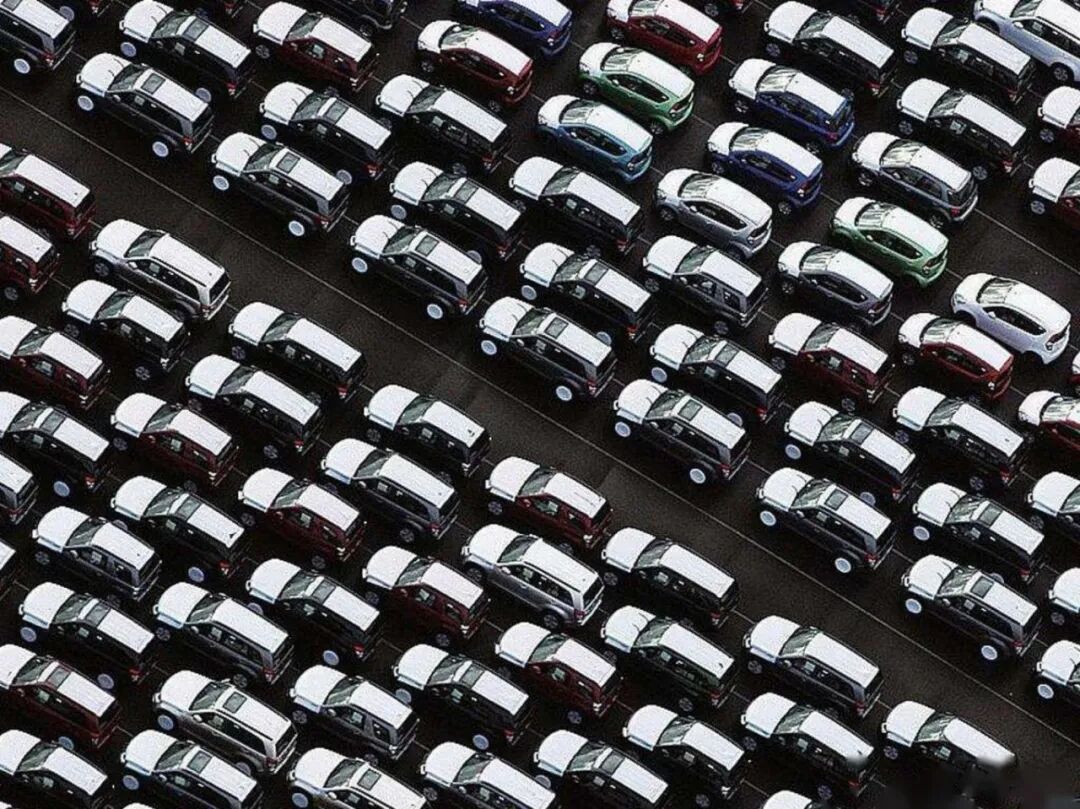
Channel slimming is a necessary burden reduction before setting off again. The 2.0 era of channel development logic that "pursues refinement rather than extensiveness" is coming. When redundancy is eliminated, resources are concentrated, and efficiency is improved, the remaining stores will have the opportunity to perform better in the next cycle.
The answer is still being written, but the direction is clear: luxury automobile brands are bending their arms to launch a heavy punch; when the number of personnel is no longer the top priority, the "lean" army with quality supremacy can forge unprecedented strong combat effectiveness.
This article is from the WeChat official account"Auto Commune" (ID: iAUTO2010), author: Barosaurus, authorized for release by 36Kr.