The highest ranking reached 12. Dalong Longtu and NetEase have successively stepped into this track to make strategic layouts. What is the potential of this new gameplay like?
Recently, a new gameplay track has emerged in the mini-game sector — the auction-like gameplay.
Relevant products on this track are gradually popping up, and judging from the current market momentum, *Club Big Player* is the most prominent one.
What is the specific performance of this product? What inspirations does the emergence of the new auction-like gameplay bring to the industry?
Today, the DataEye Research Institute will discuss this brand-new gameplay.
Turning "auction" into a game: Leading manufacturers are making layouts
*Club Big Player* is currently the most popular mini-game product in the auction-like track, and it has been launched on both the WeChat Mini Games platform and Douyin Mini Games platform. From the perspective of manufacturer relations, *Club Big Player* is a new mini-game product developed by the Dameng Longtu team.
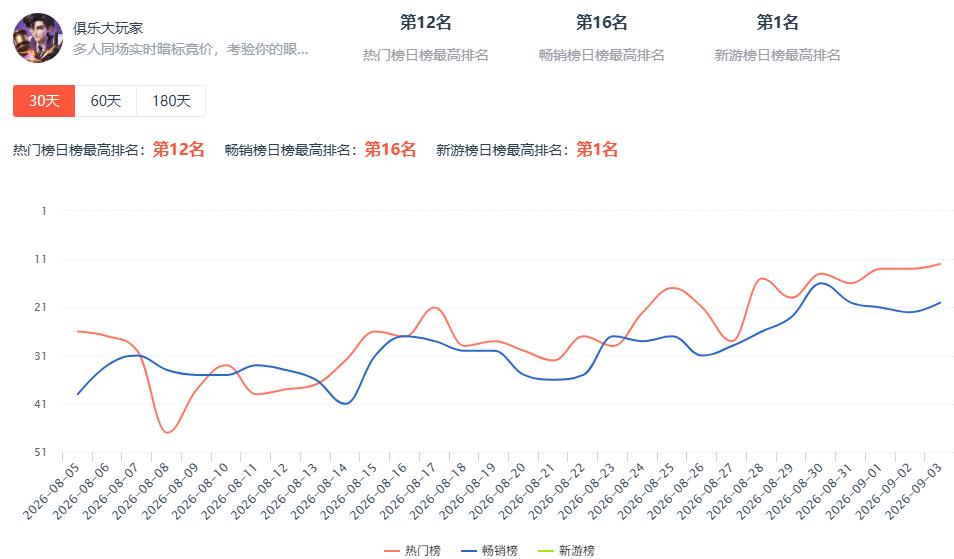
In terms of specific performance, its performance on Douyin Mini Games is more outstanding. It entered the ranking list at the end of July, and its related ranking has shown a steady upward trend. As of September 3, *Club Big Player* reached a maximum ranking of 12th on the popular list.
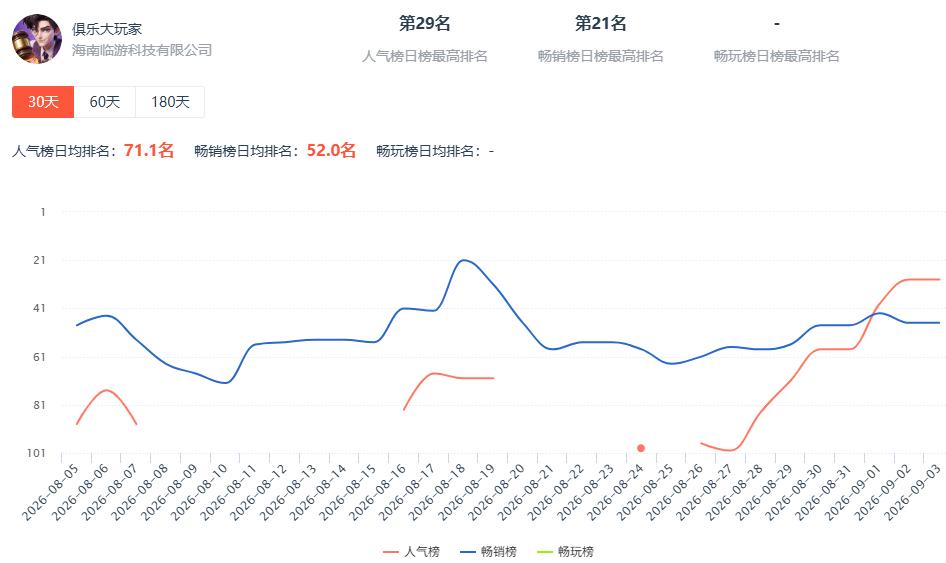
On August 5, *Club Big Player* entered the WeChat Mini Games bestseller list, and it is currently in the middle of the list, with its highest single-day ranking on the bestseller list being 21st. Its recent ranking on the WeChat Mini Games popularity list has continued to climb.
The prototype of the auction-like gameplay is the domestic indie game *Auction King*, which was released on the Steam platform on April 16 this year. As of September 3, its Steam page shows that the overall rating is "Mostly Negative", with a positive review rate of only 33% among 21,000 reviews; the positive review rate is even as low as 13% among 289 reviews in the past 30 days. Despite the mediocre user reputation, *Auction King* has achieved impressive sales performance: it ranked 3rd on the Steam Hot Sales List in the first two weeks after launch, and its sales volume exceeded 1.1 million copies in the first month.
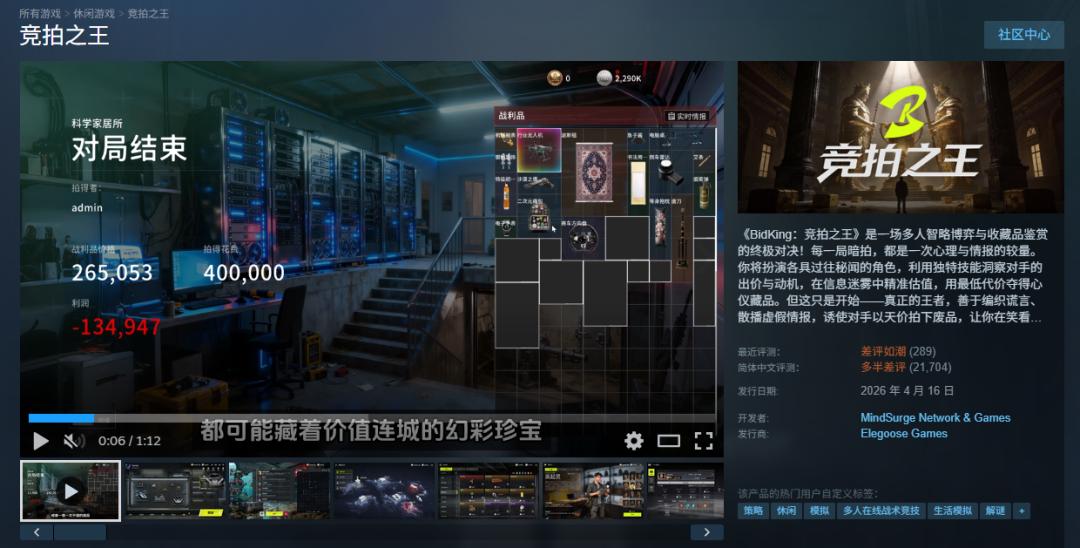
This phenomenon of "reputation and sales being inversely proportional" precisely proves that the auction gameplay has extremely strong user engagement and topic popularity, and its lightweight content form perfectly adapts to the fragmented playing scenario of the mini-game track. A large number of similar products have emerged in the current mini-game market.
It is worth mentioning that NetEase has also embedded the auction-like gameplay into the summer event of its flagship product *Fantasy Westward Journey*, launching it as a limited-time featured gameplay.
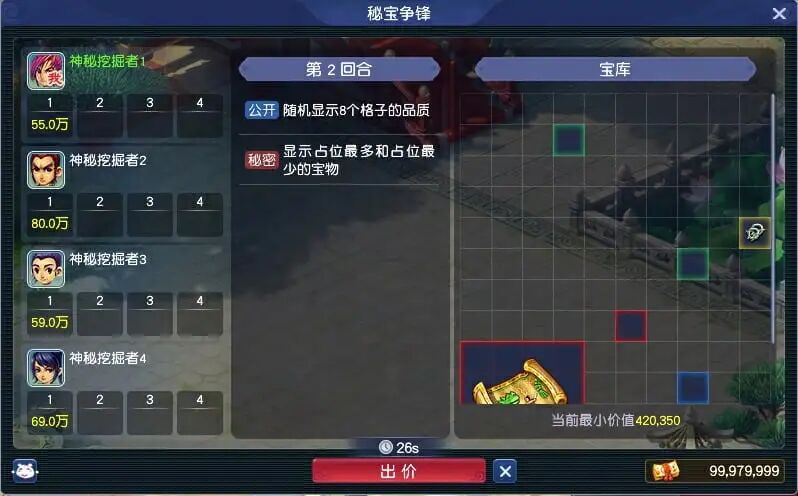
Back to *Club Big Player* itself, its core rules are very simple: four players participate in a blind bidding in the same game, competing for the blind box warehouse storing random collections within five rounds; after each round, the bidding records of all players are publicly displayed, and the transaction is finally completed according to the rule that the highest bidder wins. After a successful auction, the system calculates the total value of the collections in the blind box warehouse and settles the final income of this auction.
During the game, as the rounds progress, the system will give prompts to estimate the minimum value of the blind box warehouse. Players can rely on these fragmented information to roughly predict the value of the warehouse and formulate their own bidding strategies.
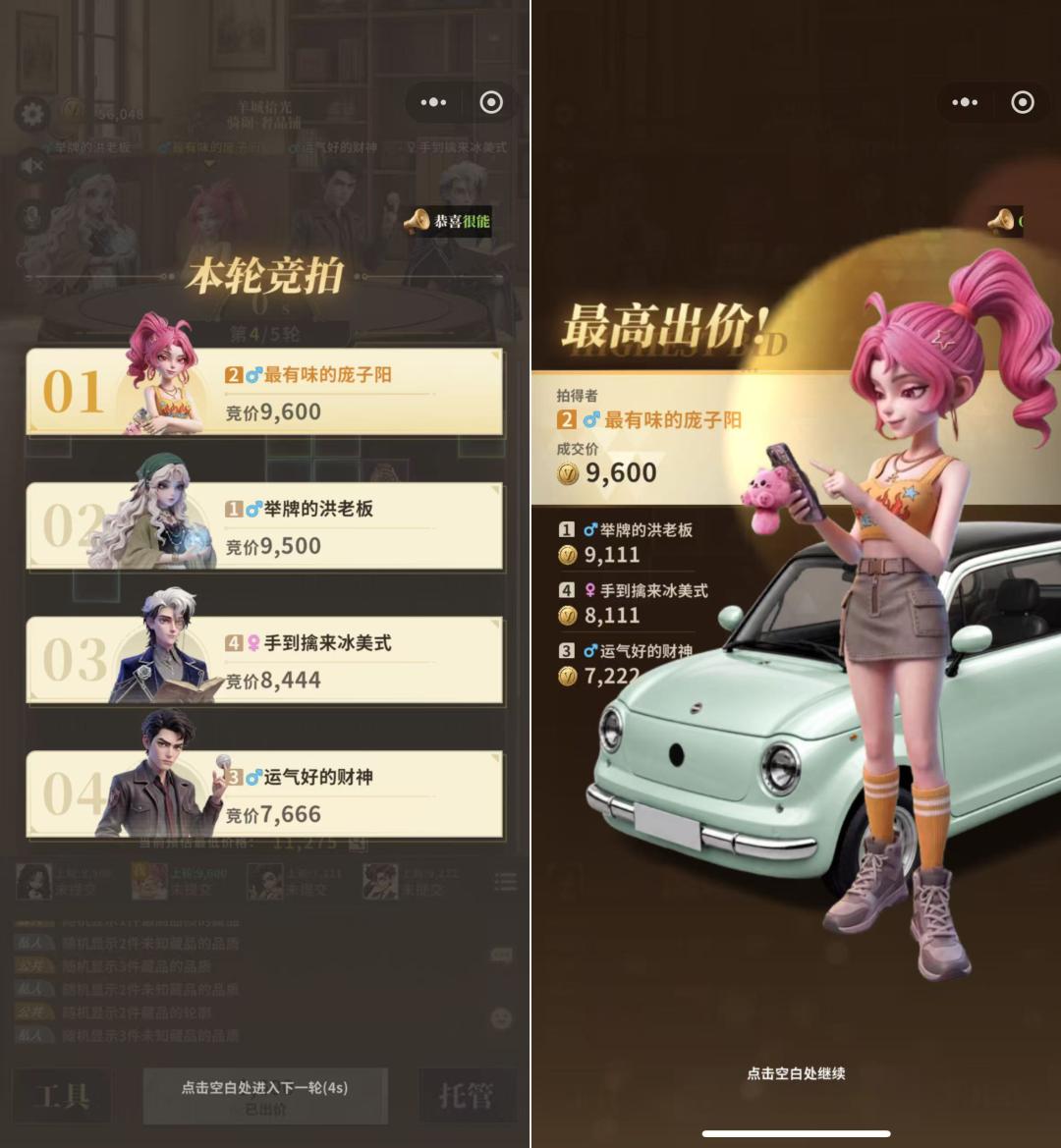
From the perspective of gameplay design, the core charm of *Club Big Player* comes from information asymmetry: the value of the collections in the warehouse fluctuates randomly, and players can only judge the overall value based on sporadic clues. They have the opportunity to pick up sky-high-priced collections at a low price and get rich overnight, but they may also bid a high price for a bunch of ordinary items and lose all their money in the end. The duration of a single game is controlled within 3-5 minutes, and the instant feedback paired with the dramatic emotional ups and downs constitutes the core fun of the game. On this basis, the product also designs a complete character and prop system, and differentiated exclusive skills derive rich and changeable game strategies.
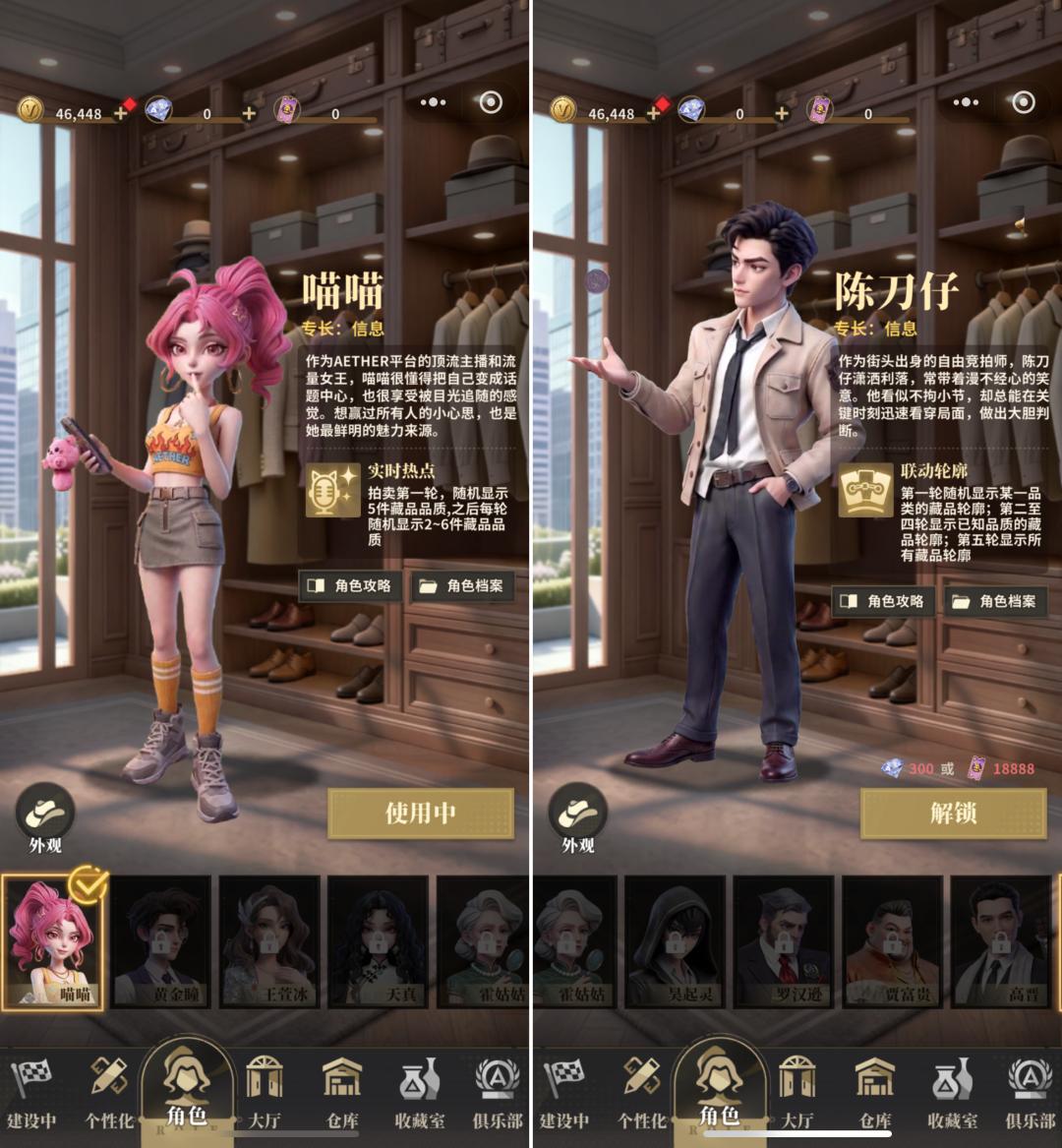
Overall, new auction-like products on the market are emerging in an endless stream, but few of them have achieved outstanding results. The root cause is that many products have obvious shortcomings. First, the underlying gameplay highly relies on random probability, and the outcome of the game is largely affected by the luck of collection refresh, so players who are unlucky for a long time are easy to have a strong sense of frustration; second, the gameplay loop in the middle and late stages of the game has a high degree of repetition, and season updates require continuous output of innovative content, which brings great R&D pressure.
However, the continuously rising ranking of the product on the list is enough to prove that user acceptance is constantly improving. For such games that focus on gaming experience, how to balance the weight of luck and strategy will be the core proposition for the product to maintain long-term user retention.
Observation on creative materials of *Club Big Player*
DataEye Research Institute has sorted out the high-efficiency delivery materials of *Club Big Player* in the past 30 days, which can be roughly divided into three major creative directions:
The first type is gameplay explanation oriented materials. This type of content is relatively conventional, which fully demonstrates the core auction gameplay and the psychological changes of players in the game, and also demonstrates the exclusive skills of characters, fully showing the highlights of the product to users. The auction-like gameplay is a newly emerging gameplay category in the market, so gameplay explanation is very important, which can help users quickly establish cognition and tap potential target players.

The second type is counterattack fun oriented materials. The materials focus on the complete auction game process, restore the bidding logic and decision-making process, and create a huge value contrast; they focus on presenting the highlight moment when players bid for sky-high-priced collections at a low price and obtain high returns, amplifying the fun of making a comeback from a disadvantaged situation.
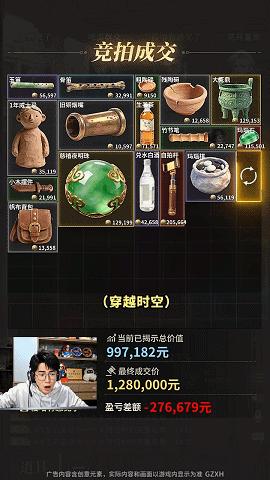
The third type is "failure" oriented materials. The content focuses on the reversed ending after the auction, showing the dramatic scene where players bid high but finally only get cheap sundries, using the excitement of loss to amplify the tension of the game. At the same time, this kind of "pitfall case" arouses users' curiosity and drives players to experience the game personally.
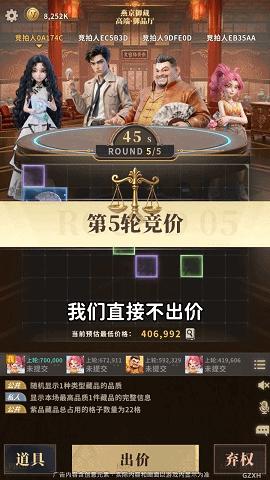
In general, all the delivery materials of *Club Big Player* revolve around the auction itself, relying on the two emotional scenes of counterattack and failure to amplify the core selling points of the game, grasp the user psychology, strengthen the players' sense of experience of wanting to control the game result, and enhance the attractiveness to users.
"Gaming" has become a new "keyword" for the development of the mini-game track
The breakout success of *Club Big Player* and the concentrated launch of a large number of new auction-like products are not accidental, which is a concentrated release of the value of gaming gameplay in the mini-game track.
Looking back at the market trend of mini-games this year, products of the "search, fight, retreat" genre have achieved continuous success. The gaming experience of this kind of gameplay, which has both risks and benefits, is essentially the embodiment of gaming elements, capturing users with fast-paced emotional value.
It is worth noting that this kind of gaming gameplay tests players' own decision-making ability, which can bring players a strong sense of achievement and immersion.
Combined with industry trends, DataEye Research Institute judges that gaming-oriented gameplay has grown into a potential category in the mini-game track, and there is still huge room for tapping its market value, and the concept of "everything can be a game" has broad innovation opportunities.
First, the dividend of segmented themes and scenarios has not been released yet. The underlying logic of gaming is based on information gap, risk assessment and benefit choice, which can be reused in a large number of themes: street business, commercial bidding, antique picking, card trading, career promotion, agricultural product auction and so on. Different themes can accurately cover user groups of different ages and different preferences.
Second, the product has the upgrading potential of socialization and moderate gameplay. In the future, social gameplay such as teaming up with friends for battles, multi-player confrontation, guild events and club leagues can be added to increase retention and communication efficiency by relying on social attributes. At the same time, the gaming mechanism can be used as a module to be embedded in games such as light strategy, simulation and RPG, promoting products to upgrade from pure casual mini-games to light and moderate products, and attracting more heavy game users.
In the view of DataEye Research Institute, *Club Big Player* is only a phased benchmark sample in the gaming track. This product confirms that the gameplay with psychological gaming, choice and luck always has the attraction to impress mass players. In the rapidly iterating mini-game track, the gaming category will give birth to more gameplay integration and innovation in the future, which is worthy of continuous attention from the whole industry.
This article is from the WeChat Official Account "DataEye" (ID: DataEye), written by ohzyh, and published with authorization from 36Kr.