After signing more than 40 celebrities in just 8 months, has the personal IP of auto company bosses lost its appeal?
Cai Xukun, Xiao Zhan, Yang Yang, Zhang Linghe, Liu Yifei, Dilraba, Cyndi Wang, Shu Qi, Yang Mi, Shen Teng, Sun Honglei... If I didn't tell you these are brand ambassadors for car companies, you would definitely think this is the attendance list of some entertainment awards ceremony.
But that's right, all these celebrities are now "working" for automotive brands, and these are just the tip of the iceberg. According to incomplete statistics, in the first 8 months of 2026, at least more than 40 celebrities have partnered with over 20 automotive brands.
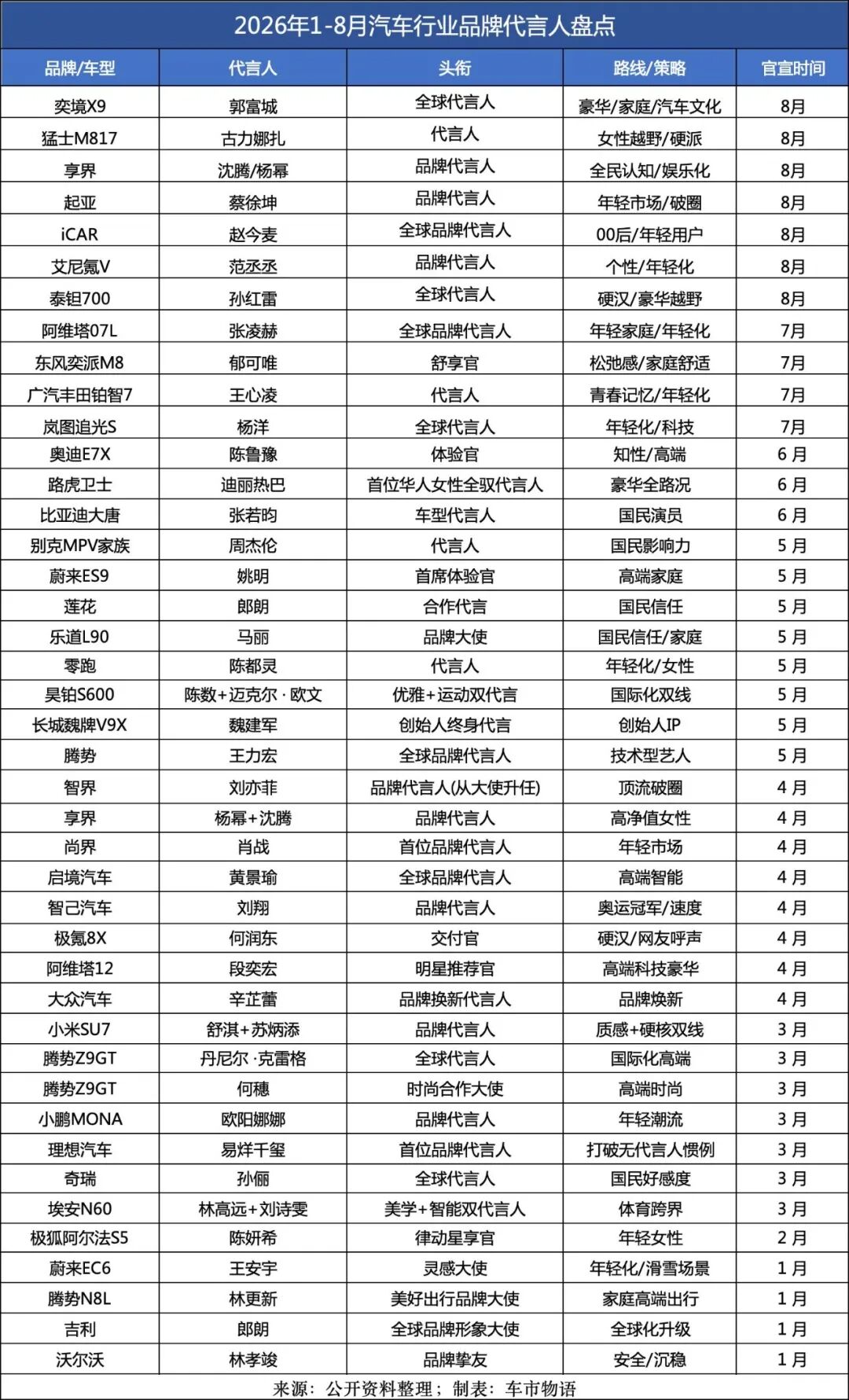
The problem is that two years ago, car companies were collectively "shunning" celebrities: "The boss himself is the best brand ambassador." "Cars don't need celebrities, the product speaks for itself."
Li Auto and Voyah are even well-known as the "no-ambassador faction": Li Xiang explicitly stated in 2024 that he would not invite celebrity ambassadors, and Voyah has adhered to zero celebrity endorsements for many years.
And what happened? Li Auto signed Jackson Yee in September 2025, and Voyah signed Yang Yang in July 2026. The two "stubborn holdouts" have broken their original stance one after another.
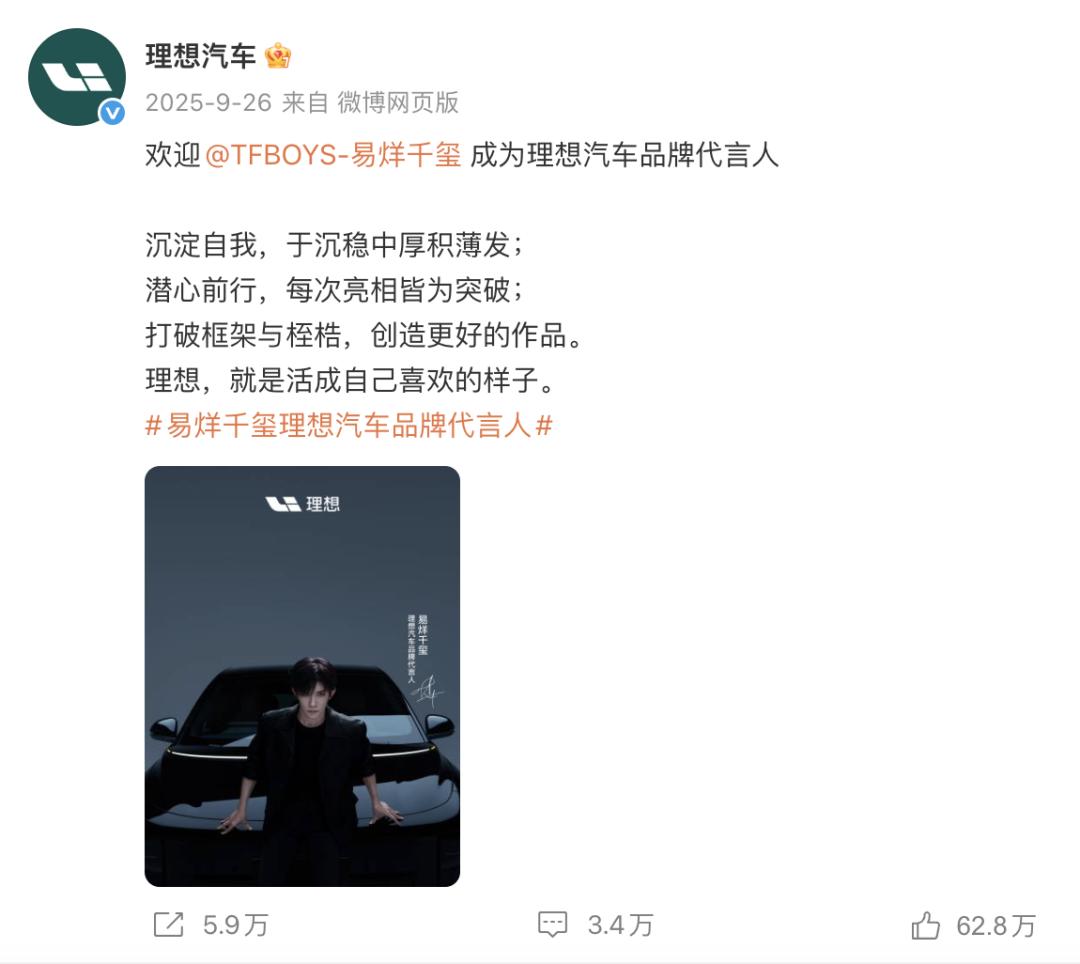
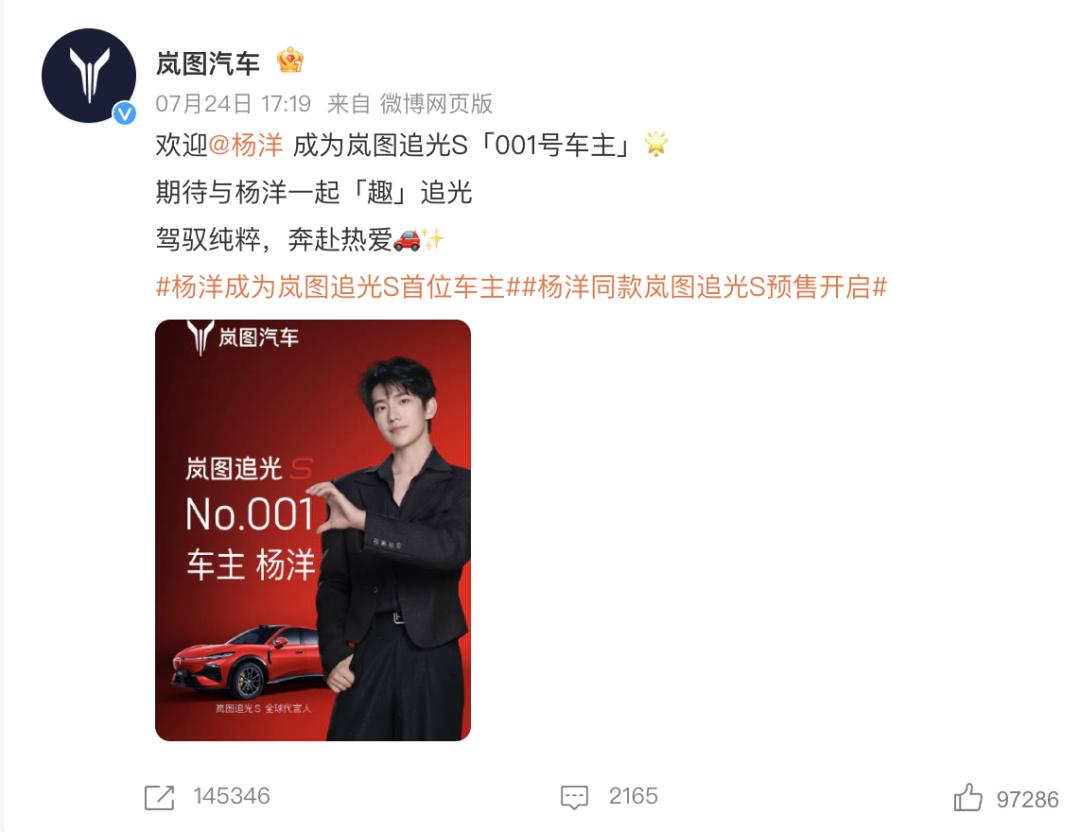
In just two years, how did the trend in the automotive circle suddenly drift back to the entertainment industry? Is the boss IP no longer attractive?
From "Boss Takes the Stage Himself" to "Boss Steps Back"
2024 was dubbed the "first year of car company bosses' live streaming". Lei Jun's press conference reshaped the entire industry's perception of traffic.
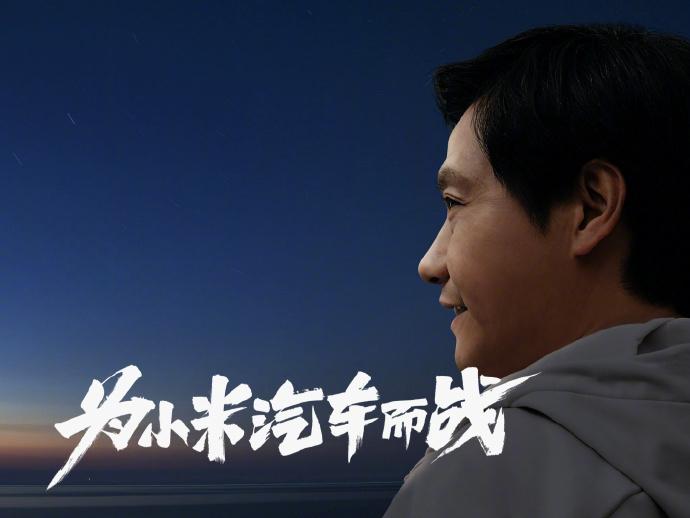
Li Bin, Wei Jianjun, Yin Tongyue all rushed into the live streaming rooms, and everyone thought they had found the truth: the founder IP is the cheapest and most controllable traffic password.
But this path only lasted for one year. According to the blue paper *China Automotive Brand Marketing Development Report (2025)*, in 2025, the personal communication volume of automotive executives decreased by two-thirds year on year.
The reasons are not complicated.
First, the bosses really don't have time. There are piles of affairs waiting to be handled in the company, they can't even finish all the meetings every day, how can they make time to attend every live stream in person?
Second, the content tends to get boring quickly. It's always about technology, strategy, and sentiments. People feel fresh at first, but they get aesthetic fatigue after listening to too much of it.
Third, and the most fatal point, is the uncontrollable risk. A wrong word from the boss or a negative news will drag the entire brand and car models down. But celebrity endorsement is a purely commercial cooperation, and car companies can cut off the partnership immediately if the celebrity gets into a scandal.
Therefore, celebrities are making a collective comeback. Now there are only a few people like Wei Jianjun who still frequently do endorsement live streams for their brands.
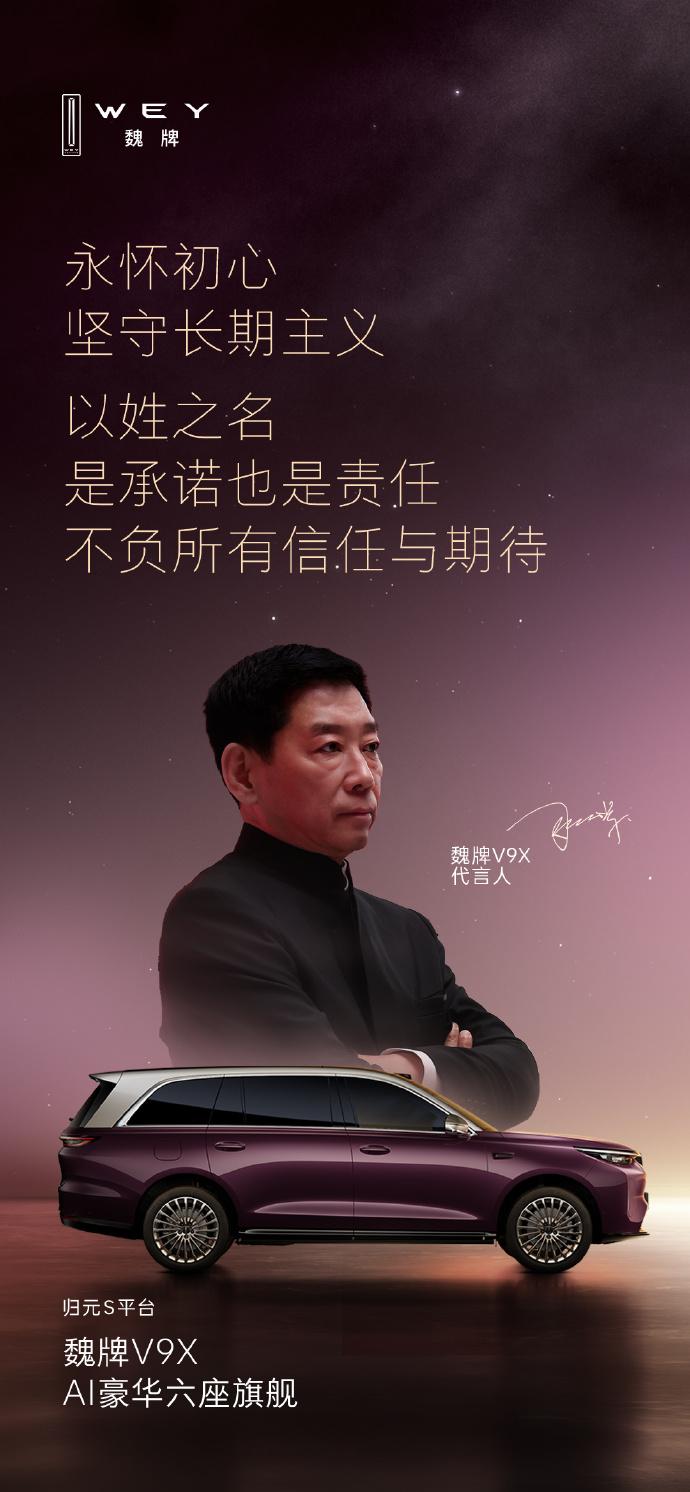
It's not that the boss IP suddenly becomes "unattractive", but that the division of labor starts to change: the boss is responsible for building brand trust, and celebrities are responsible for making more people notice the brand.
Celebrities Bring New Creative Endorsement Plays
But you have to note that current endorsements are not the same as the routines three or five years ago.
What was it like in the past? Invite a top-tier celebrity, shoot a TVC, read a few lines from the teleprompter at the press conference, go through the motions, and the KPI is completed. The audience all know it's just a commercial performance.
But a car is, after all, a high-value consumer good. A concert ticket costs hundreds or thousands of yuan, while a car often costs 200,000 to 300,000 yuan or even higher. It's hard for fans to impulsively buy a car just because of the line "the same model as your idol".
What about now? Car companies are trying to truly tie celebrities to their products. Celebrities not only take photos next to the car, but also participate in press conferences, live streams, test drives, product experiences, and even integrate their own lifestyles directly into product scenarios.
At least in terms of attracting new users and generating orders, top-tier celebrities do play a significant role.
After Shenzhou signed Xiao Zhan, the number of small reservations for the Z7/Z7T rose rapidly, and the number of firm orders exceeded 12,000 within 27 minutes after launch. After Li Auto invited Jackson Yee, the related topics quickly went viral, and the orders in the first week also increased significantly. These are typical cases: celebrities are responsible for attracting new users, and products are responsible for retaining them.
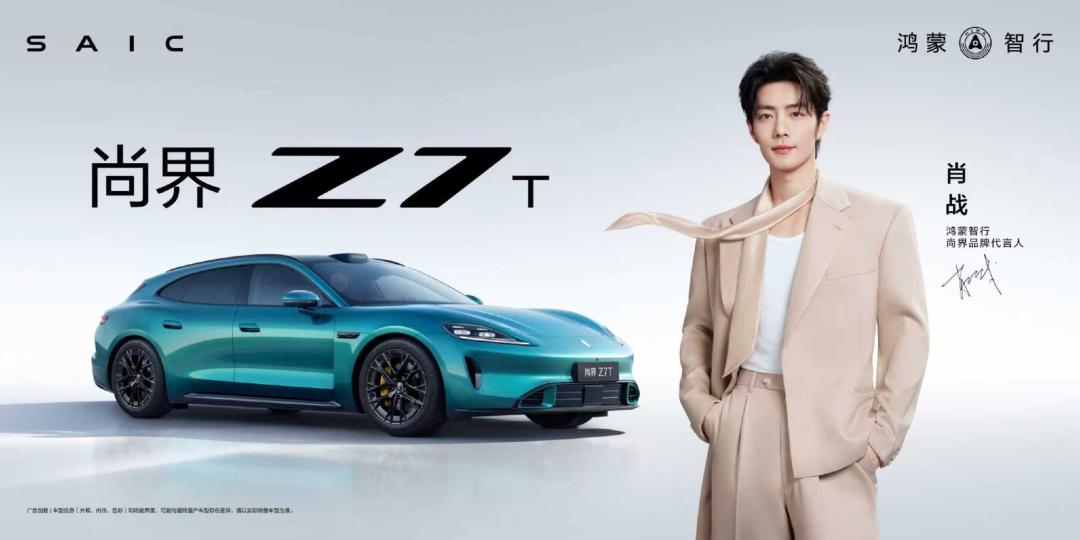
Many car companies have gradually realized that the real value of celebrities may not be to "sell cars" for them, but to help make the cars more visible, understandable and memorable.
At the press conference of the Yijing X9, Aaron Kwok's interactive session lasted for nearly an hour, and he went all out from start to finish. Zhang Linghe, who is 1.9 meters tall, sat in the back row of the Avita 07L and got out easily. Without saying a word about the space parameters, the audience can understand how spacious the car is immediately. The scene of Yao Ming sitting in the back row of the Nio ES9 and crossing his legs can directly end the product discussion of "whether the seat is spacious enough".
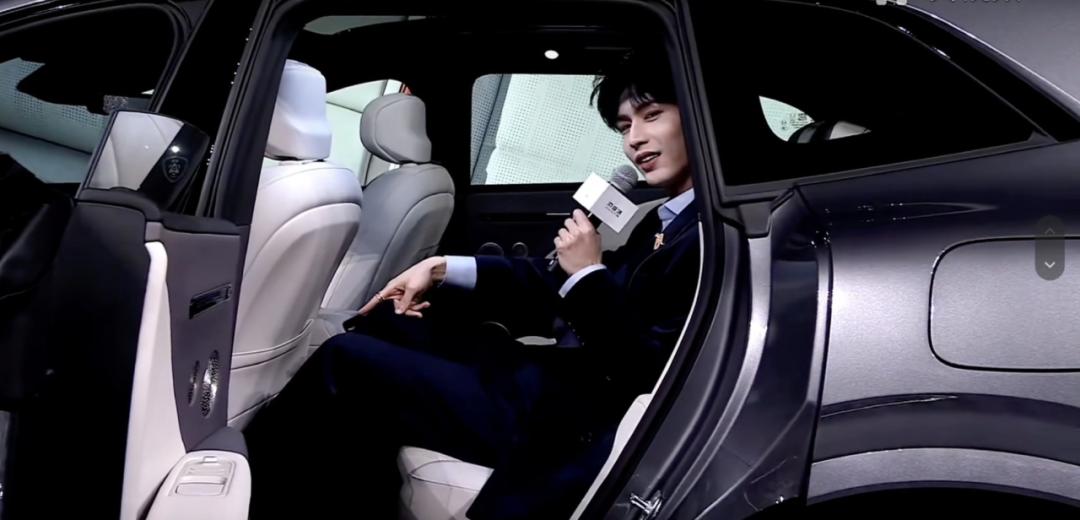
Some car companies invite celebrities to do "personality translation" for their brands.
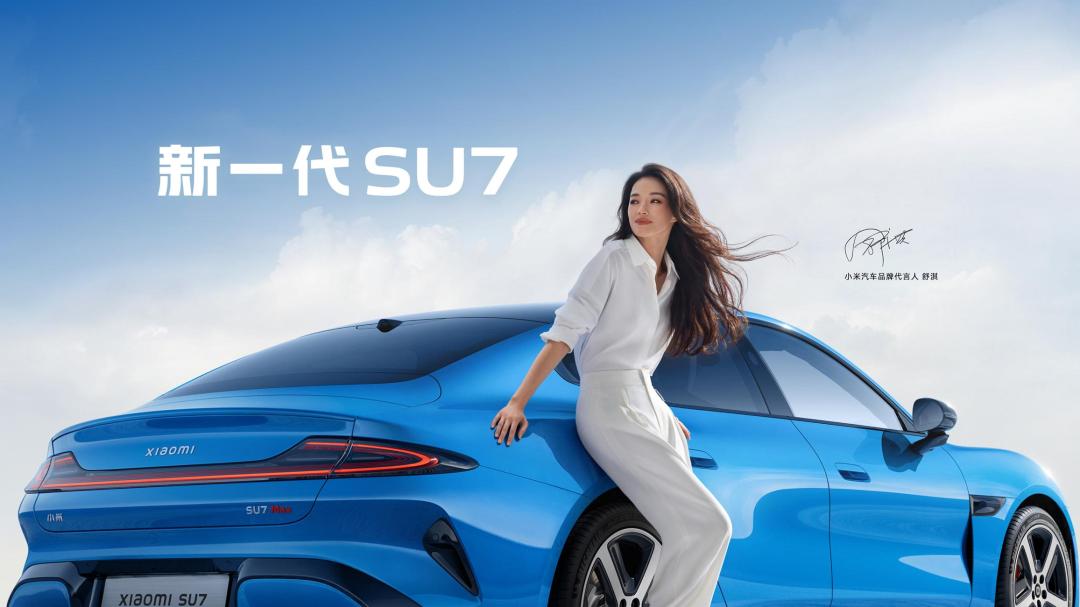
Xiaomi appointed Shu Qi as its brand ambassador. On the surface, it's a pun on the Chinese name, but essentially it's a breakthrough to the female and high-end fashion circles. BAIC Off-road used Sun Honglei to translate its off-road vehicles into an image of the mainstay of society that is "calm, confident and poised". IM Motors chose Liu Xiang, and there is no need to explain how fast its Lizard Chassis is. Liu Xiang standing there is the most intuitive brand endorsement for "control and extreme speed".
Endorsement Is Not a Universal Cure
Of course, as car companies are scrambling to invite celebrity ambassadors, doubts have never stopped.
A senior executive of Dongfeng Nissan publicly called out "Don't rush to grab celebrities": Celebrities can bring exposure, but they can't answer the question "Why should I buy your car" for the product. When the traffic fades away, what remains in the brand's hands is the key. He believes that cultural IP co-creation is the "spark", which does not bring instantaneous explosive points, but can gradually build brand memory and is a long-term asset.
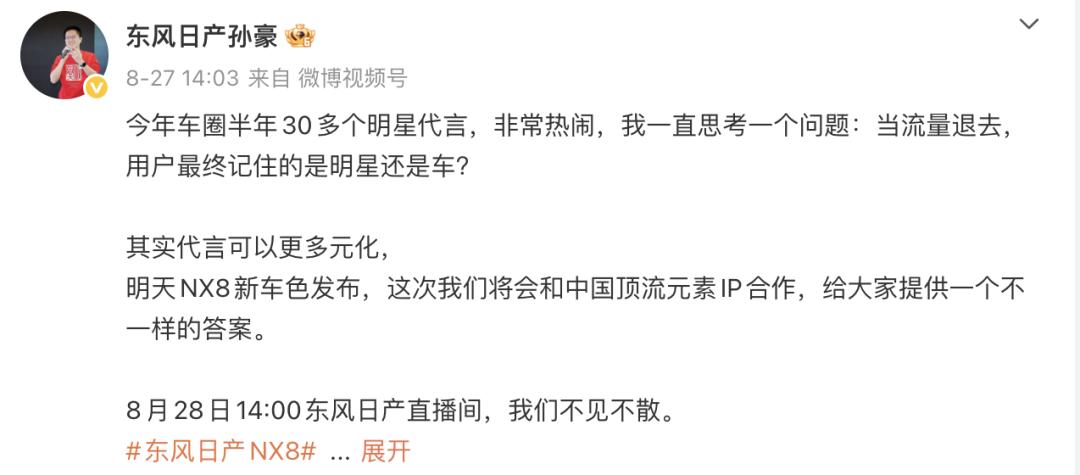
But from another perspective, although this statement is correct, we have to admit the reality: in the current market environment, if you don't invite brand ambassadors, you won't even have the chance to be seen.
He Zhiqi, Executive Vice President of BYD, recently shared a set of data: from January to May this year, the entire industry launched 542 new cars, an average of 3.6 per day. However, a car requires more than ten billion yuan in R&D investment and a development cycle of more than two years, but its popularity can't even last for three months.
More and more new cars are being launched, but the market is getting colder. According to data from the China Passenger Car Association, from January to July 2026, the retail sales of the domestic narrow passenger vehicle market reached 10.173 million units, down 20.3% year on year.
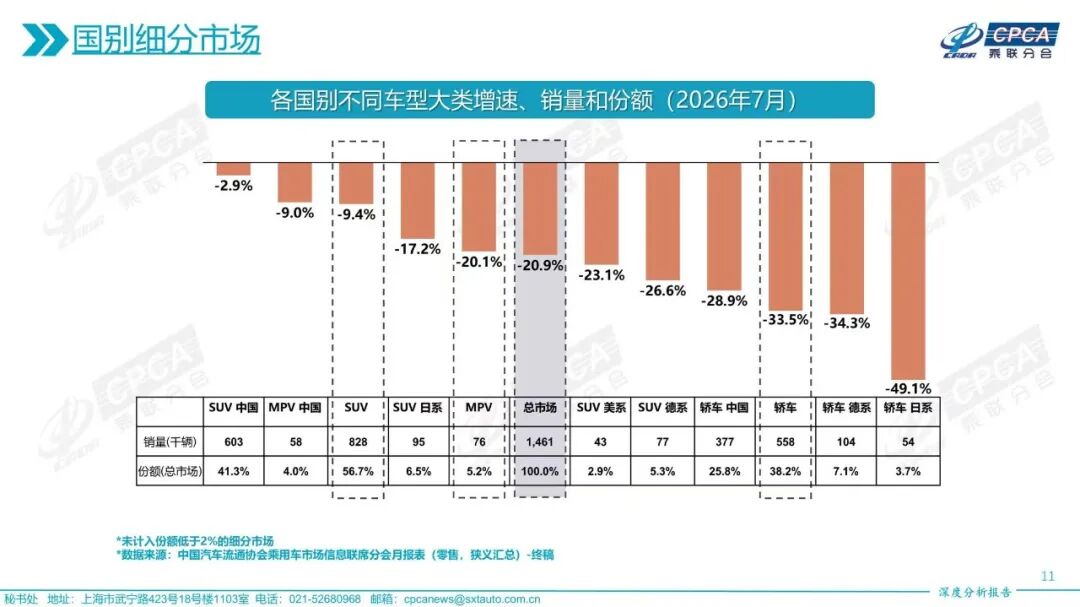
In this information-overloaded environment, the window for a new car to "take root" in consumers' minds may only be 72 hours after the press conference. At this time, a celebrity's face is the most efficient compressed package that can "blow" the brand out of the ocean of information. It's true that "hot searches are easy to get, but long-term user recognition is hard to gain", but between "being seen" and "being remembered", there is still a step of "survive first".
The collective "chasing stars" behavior of car companies is essentially an extreme thirst for traffic and exposure.
The emotional connection and exposure speed that the boss IP can't achieve can be supplemented by celebrities; but the question "Why should I buy your car" that celebrities can't answer, ultimately has to be answered by the product itself — safety, after-sales service, intelligent driving, battery attenuation, these are the things that really remain on the beach when the tide recedes.
No matter how beautiful the fireworks are, there must be a spark burning underneath.
This article is from the WeChat Official Account "Auto Market Story" (ID: autostinger), written by Peng Fei, authorized for release by 36Kr.