As we stand on the eve of the arrival of L3-level intelligent driving, what direction should traditional brands take for their intelligent transformation?
On the eve of the automotive industry's transition to Level 3 autonomous driving, what exactly is the level of intelligent driving capability of traditional automakers?
At the current stage, when we talk about intelligent assisted driving, we mostly only focus on the spotlighted new EV startup brands and some luxury new energy vehicle brands, whose technological development seems to represent the full picture of the entire industry.
However, the automotive industry is not only made up of new EV startup brands. The intelligent transformation of traditional independent brands and joint-venture brands also deserves our attention.
Therefore, today, EV Insider (ID: dianchetong233) will discuss with everyone the current transformation progress of traditional brands in the field of intelligent assisted driving.
Traditional Automakers Are Also Striving for Higher Intelligence
When it comes to models of traditional brands, especially fuel vehicles, many people cannot associate them with the term intelligence.
Many people even believe that for vehicles of these traditional brands, being equipped with cruise control and lane keeping already counts as a high-spec configuration, and Adaptive Cruise Control (ACC) is a feature that can only be found on top-trim models.
It is not surprising that some people have such stereotypes about traditional brand models. After all, while new EV startups were accelerating the R&D process of intelligent assisted driving in previous years, many traditional brands were mostly sticking to their comfort zone in the fuel vehicle era, which caused them to temporarily fall behind in the new round of intelligent competition.
But now many traditional brands are also pushing forward the intelligent transformation. Some independent brands and joint-venture brands have begun to equip their new energy vehicles and fuel vehicles with high-level intelligent driving assistance solutions, to adapt to the current competition trend among various brands in the intelligent field.
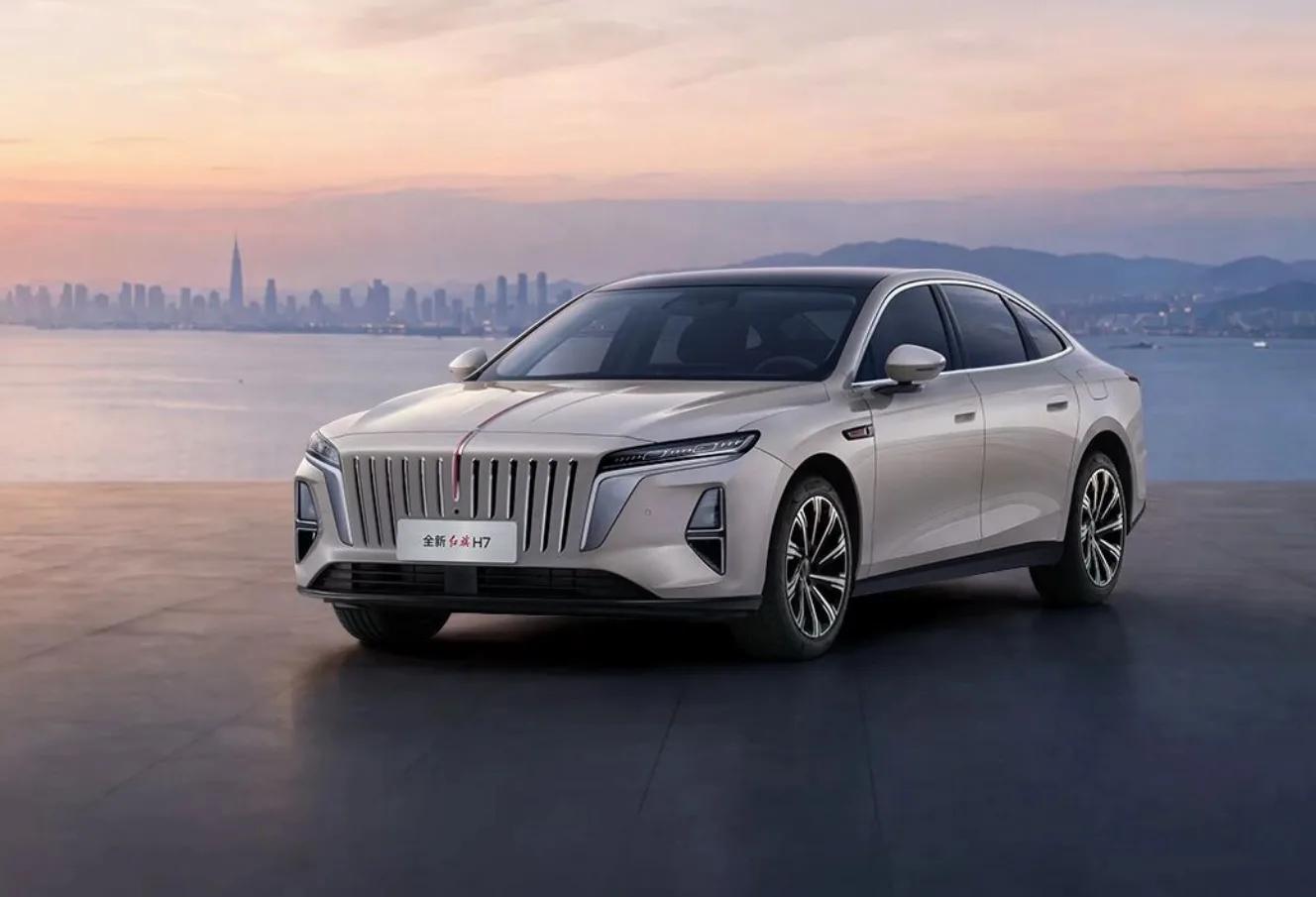
Among traditional independent brands, Hongqi can be regarded as a brand with relatively obvious transformation in intelligent assisted driving. Not only its new energy models including Tiangong 05, Tiangong 06 and HS6 PHEV are equipped with the highly perceptive end-to-end algorithm of Zhuoyu, even its fuel model Hongqi H7 is also equipped with the Sinan Intelligent Driving jointly developed by Hongqi and Zhuoyu, which is fitted with an inertial navigation triple-camera vision system and the Zhuoyu highly perceptive end-to-end 4.1 model, supporting functions such as full-scenario urban navigation assistance and highway navigation assistance.
(Image source: Zhuoyu)
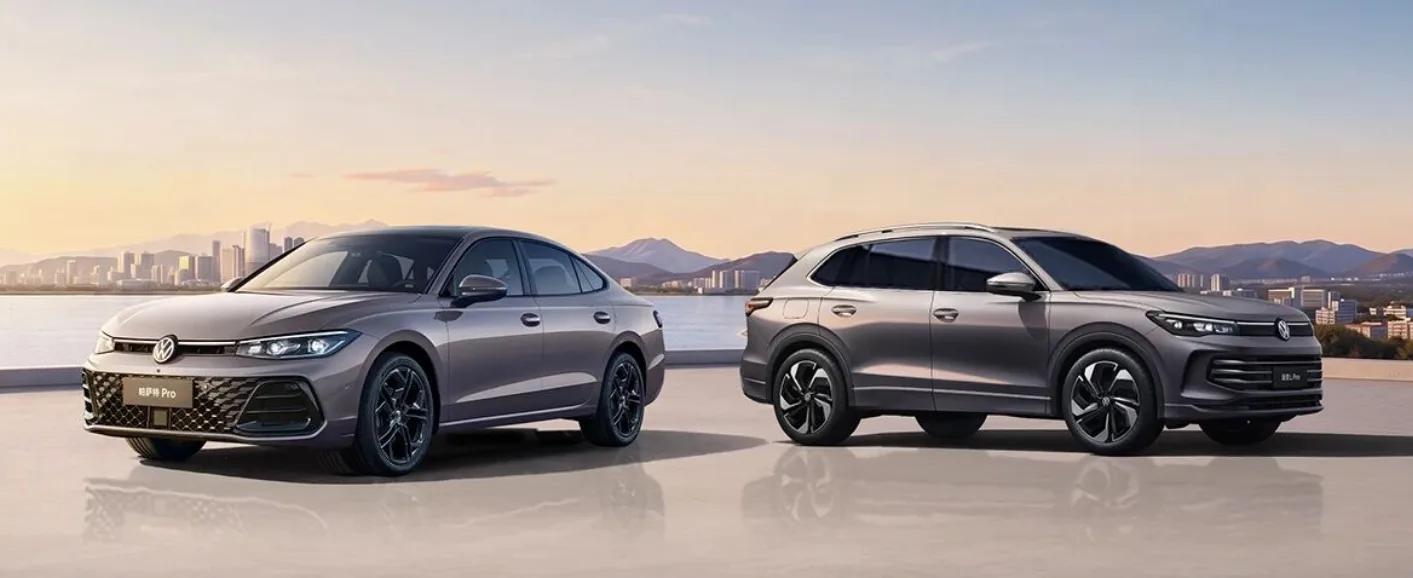
Among joint-venture brands, Volkswagen's transformation process is also quite rapid. In recent years, models including Passat Pro, Tiguan L Pro, Tayron L PHEV and Magotan PHEV are all equipped with the high-level intelligent assisted driving system developed in cooperation with Zhuoyu, supporting highway and expressway NOA functions, and some models are also equipped with intelligent parking assistance function.
(Image source: Zhuoyu)
In addition, traditional automakers such as Chery, Wuling, Dongfeng and Great Wall have also installed Zhuoyu's high-level assisted driving system on their models positioned at entry-level / mainstream price segments.
Judging from the transformation measures and implementation achievements of these automakers in the field of intelligent driving, traditional automakers are also exploring to equip mass-produced high-volume models with intelligent assisted driving systems, so as to enhance the competitiveness of vehicles in the intelligent field. This can not only better make up for shortcomings and attract consumers to buy, but also help them better compete with other brands.
However, these traditional brands do not have deep enough accumulation in the field of intelligent driving to support the R&D of a complete set of high-level assisted driving solutions. Therefore, choosing to cooperate with external intelligent driving technology companies for joint R&D can not only make up for the technical shortcomings of these brands, but also enable intelligent assisted driving to be installed on vehicles faster, so as to better improve the competitiveness of their models.
And Zhuoyu, which is frequently mentioned in the previous text, is an intelligent driving company with leading technical strength.
"Intelligentize All Mobility" to Empower More Brands
Compared with other intelligent driving companies, Zhuoyu seems to be too low-profile from the outside, but a careful calculation shows that Zhuoyu has cooperated with a large number of automotive brands, and there are quite a lot of models equipped with its intelligent driving solutions.
So what does Zhuoyu's technical route in the field of intelligent assisted driving look like?
For Zhuoyu, its goal is not just to become an intelligent driving company in the traditional sense. What it wants to do is to become a mobile physical AI company that intelligentizes all mobility.
What does "intelligentize all mobility" mean? Zhuoyu's explanation for this is to upgrade the "autonomous mobility capability" of objects from a single automotive intelligent driving function to a general-purpose AI capability that can be reused across categories.
In other words, in Zhuoyu's view, automobiles are not just isolated vehicles. Instead, they are treated as objects in the physical world. They share a set of common physical laws and motion laws with other moving objects in the world. Therefore, if the model can master this set of general laws during pre-training, it can be better applied to more vehicle models, regions and scenarios.
To support the concept of "intelligentize all mobility", Zhuoyu has consolidated it with a two-layer structure: one is the technical base of the native multimodal foundation model, and the other is the hardware base of the unified vehicle-grade domain controller and perception hardware.
The first is the native multimodal foundation model, which made its debut at the Beijing Auto Show. Its training idea is similar to that mentioned earlier, that is, to master general laws through pre-training, and then implement and apply it to various different products.
In addition, this model adopts a unified multimodal representation, supports the unified input of multimodal information such as video, text, motion, voice and maps, and under the training of a unified framework, it can also better reduce latency and information loss, so as to improve the training effect.
The unified vehicle-grade domain controller and perception hardware play more of the role of "skeleton and nerve". This set of hardware enables the algorithm capability of the model to be more stably, reliably and scalably deployed on various mobile carriers, thus ensuring the consistency of experience and capability of various products.
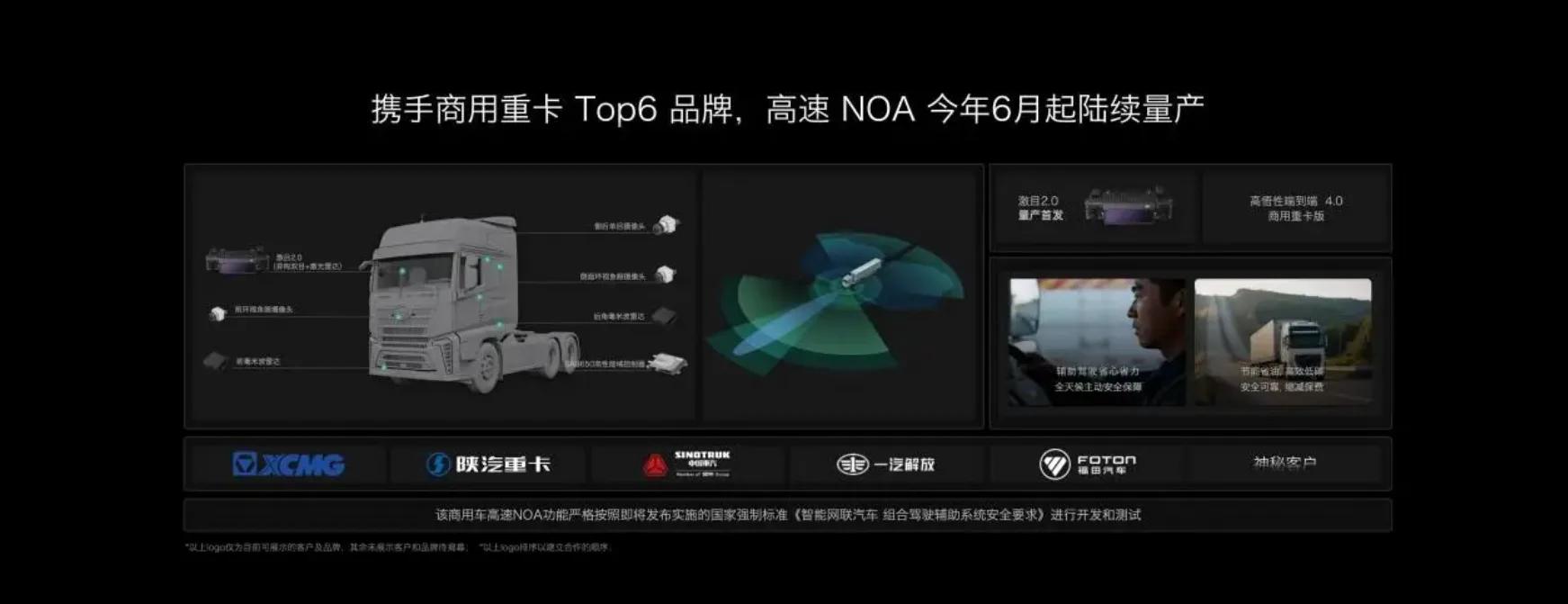
With the support of such software and hardware technologies, Zhuoyu's business in the field of intelligent driving not only covers the passenger vehicle sector, but also extends to heavy trucks, buses, urban distribution, L4 Robotaxi and other sectors, which can be described as "one foundation, multiple vertical sectors".
At present, Zhuoyu has migrated the core capability of passenger vehicle NOA to the commercial heavy truck scenario, and the same model is running on both passenger vehicles and heavy trucks of Zhuoyu now.
This means that the cross-vertical capability migration in the field of intelligent driving has achieved real technical implementation at Zhuoyu.
(Image source: Zhuoyu)
Zhuoyu said that projects such as building urban NOA for commercial buses in cooperation with Yutong Bus, jointly building a full-link urban distribution logistics solution with leading operators and OEMs, and developing L4 Robotaxi will be put into mass production and enter the trial operation stage one after another in the second half of 2026. In the future, these projects will continue to feed back to model optimization, helping to further improve the model's capabilities.
Overall, in the field of intelligent driving, although Zhuoyu is low-profile, it has taken a different technical route from other intelligent driving enterprises. If its model capabilities accumulated in the "intelligentize all mobility" concept can be further applied to the passenger vehicle intelligent driving sector, it is expected to further improve the intelligent assisted driving capabilities of mainstream models of traditional brands that use Zhuoyu's solutions.
Embrace the New Era of Physical AI
For fuel vehicles and new energy vehicles of traditional brands, embracing intelligence and improving intelligent assisted driving capabilities at the current stage has become a new trend that must be followed up.
In addition to Zhuoyu mentioned above, many intelligent driving technology enterprises are also supplying intelligent driving solutions to traditional automakers. It is the support from these intelligent driving suppliers that enables these models to no longer stay in the ACC and LCC (Lane Centering Control) era, but to move forward to the field of highway & expressway NOA and urban NOA, and is expected to embrace physical AI.
Once upon a time, those high-level driving assistance functions that looked like black technologies could only be experienced on new energy vehicles of new EV startup brands priced at hundreds of thousands of yuan. Now, mainstream household new energy vehicles and even fuel vehicles can easily have these functions, which is the inevitable result of technological progress and scientific development.
Perhaps one day, with the support of the "intelligentize all mobility" concept, we can see that more and more transportation means can be equipped with more advanced intelligent driving capabilities, and embrace the new era of physical AI.