Google is half-hearted in this endeavor, and Broadcom's pie-in-the-sky promises made entirely on its own are hardly sufficient to meet practical demands.
Broadcom (AVGO.O) released its fiscal 2026 third-quarter earnings report (covering the period up to July 2026) after U.S. market hours in the early hours of September 3, 2026 Beijing time:
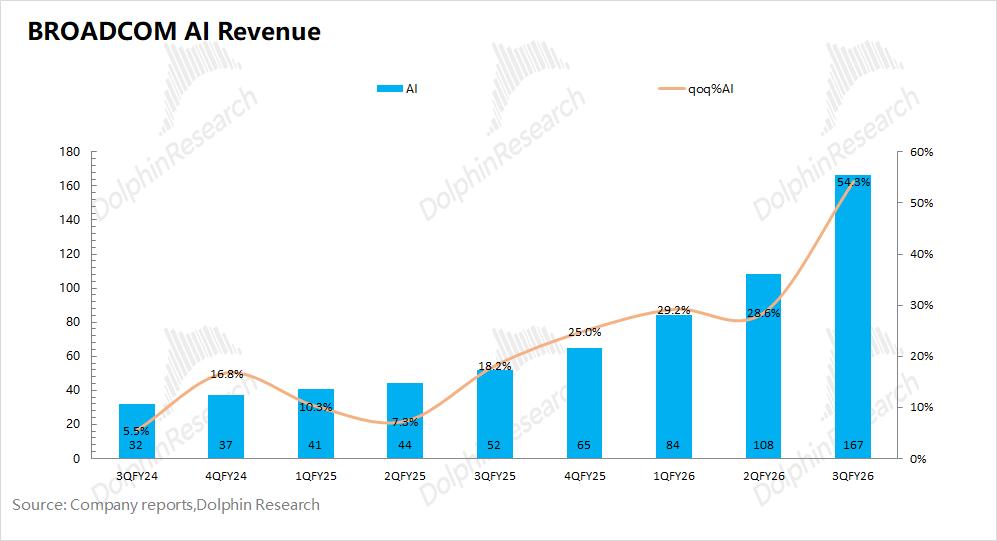
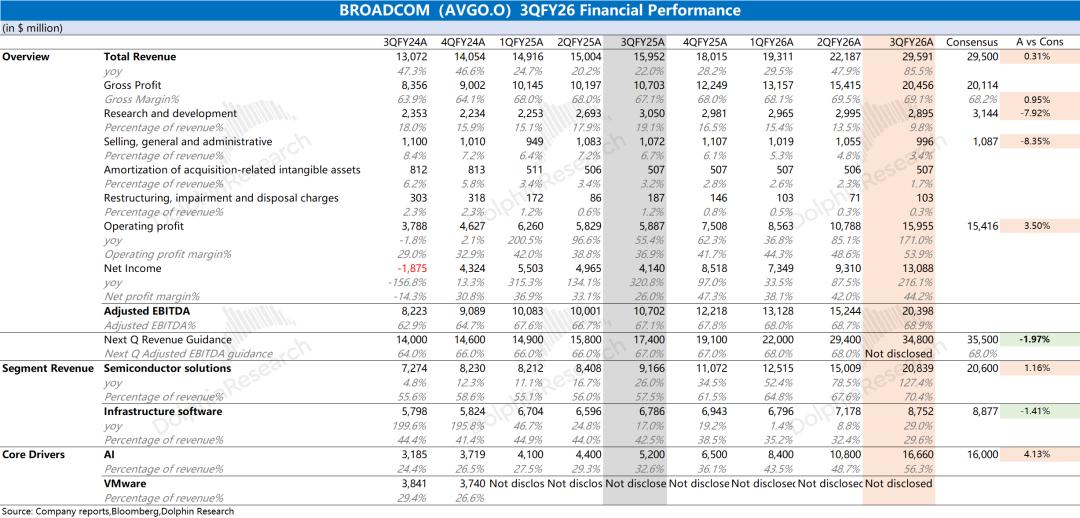
1. AI Business: The core segment of the semiconductor business. Broadcom (AVGO.O) recorded AI business revenue of 16.7 billion USD this quarter, with a quarter-on-quarter increase of 5.9 billion USD, outperforming market expectations of 16 billion USD, the growth is mainly driven by large-volume deliveries of TPUv7 to Google and Anthropic.
Major players including Google have recently raised their 2026 capital expenditure outlook, and deliveries to Anthropic will start to accelerate from the second half of the year. The company expects AI business revenue of 21.7 billion USD in the next quarter, representing a quarter-on-quarter increase of 5 billion USD.
2. Broadcom Performance Guidance: Expected revenue for the fourth quarter of fiscal 2026 is around 34.8 billion USD, lower than market expectations of 35.5 billion USD, and the company expects its non-GAAP operating margin for the fourth quarter of fiscal 2026 to be 66%.
As the company provided full-year outlook for AI revenue, the importance of quarterly guidance is relatively "weakened". The company's management released AI revenue expectations for fiscal 2026-2028 after the earnings report, which are 58 billion USD (previously 56 billion USD), 115 billion USD (previously 100 billion USD) and 230 billion USD respectively.
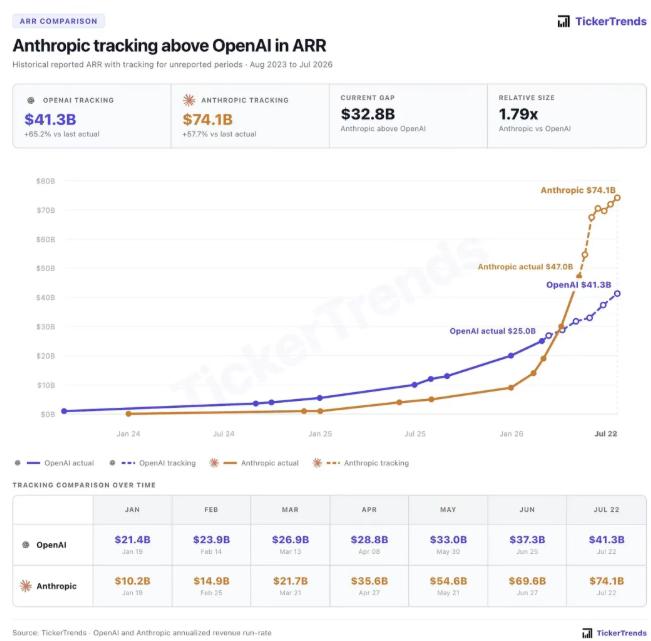
For fiscal 2027, the company still maintains its 10GW caliber, and the market generally sets the revenue expectation for this 10GW at 130-150 billion USD, while the company's guidance remains "conservative". As for the 230 billion USD guidance for fiscal 2028, it is a solid figure, but since 10GW of the 20GW expectation comes from Anthropic, the market will "discount" this part of the outlook, especially as Anthropic's ARR slope has slowed down recently.
3. Operating Metrics: Revenue reached 29.6 billion USD this quarter, up 86% year-on-year, in line with market expectations of 29.5 billion USD. The quarter-on-quarter increase of 7.4 billion USD is mainly driven by the growth of AI business.
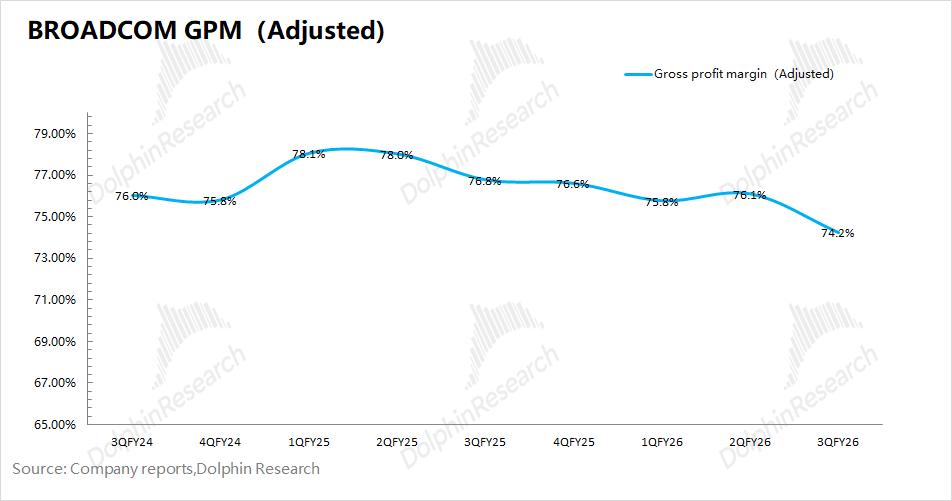
The company's gross margin this quarter is 69%, after excluding the impact of acquisition amortization and restructuring expenses, the actual adjusted gross margin from operating activities this quarter is 74%, down 2 percentage points quarter-on-quarter. Affected by the rising proportion of ASIC business with lower gross margin, the overall gross margin saw a structural decline.
4. Broadcom AVGO's business is divided into two segments: semiconductor business and infrastructure software
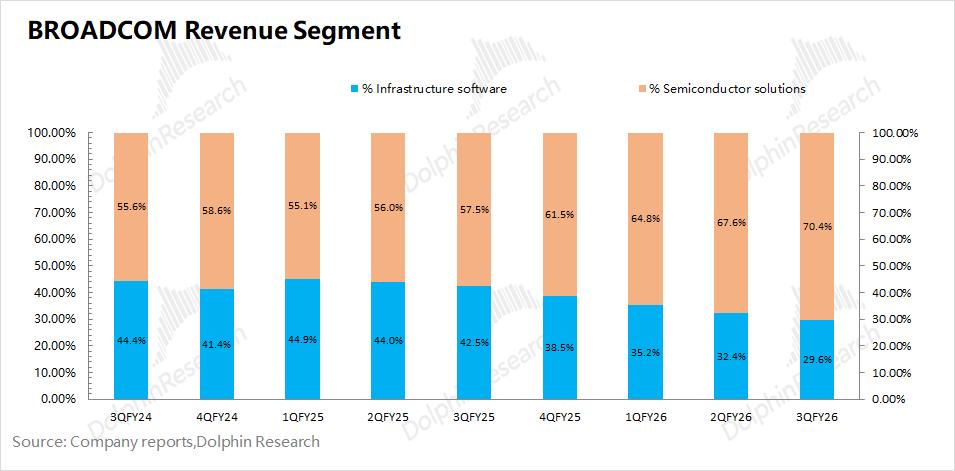
① Semiconductor business: Revenue reached 20.8 billion USD this quarter, up 5.8 billion USD quarter-on-quarter, with AI business contributing the majority of the incremental growth. Excluding AI business, the company's non-AI business recorded revenue of 4.2 billion USD this quarter, up 5% year-on-year, where the combined broadband and server storage segments saw growth, which was offset by the decline in the wireless business.
② Infrastructure software: Revenue reached 8.75 billion USD this quarter, up 29% year-on-year, driven by VMware Private AI Cloud and VCF workload repatriation, which is new incremental demand brought by enterprise-side AI.
The previous growth was mainly driven by VMware M&A integration and charging model adjustment (full transition from permanent license model to subscription model). The impact from the acquisition has ended, the future growth of the software business will mainly rely on the organic growth of VMware's subscription model.
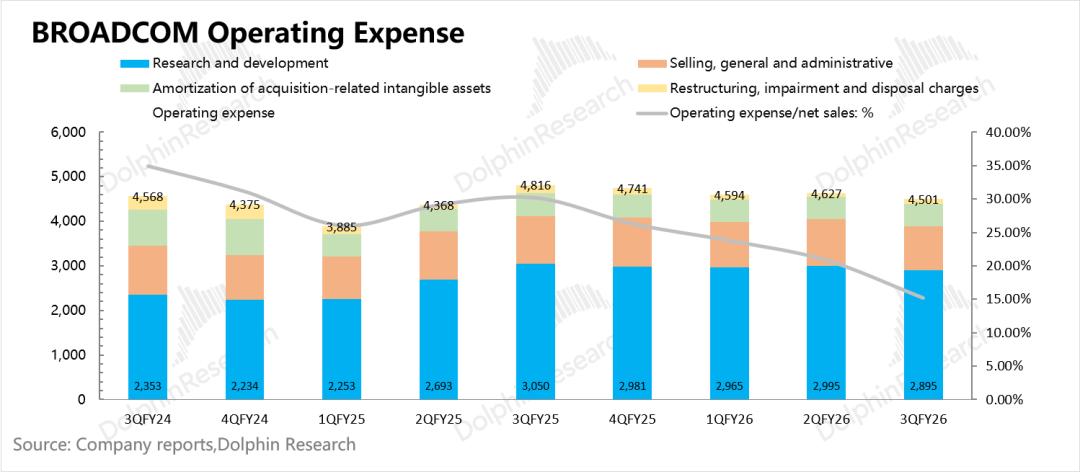
5. Expense Side: Core operating expenses (R&D expenses + SG&A expenses) reached 3.9 billion USD this quarter, remaining stable. Driven by the rapid revenue growth, the core operating expense ratio dropped to around 13%.
Over the past two years, the company has significantly increased stock-based compensation and related expenditures (stock-based compensation now accounts for nearly half of the total). Excluding the impact of stock-based compensation, the company's core operating expenses this quarter stand at 2.1 billion USD, down 0.08 billion USD quarter-on-quarter.
Dolphin Team's Overall View: Flawed long-term guidance, no peace amid fierce competition from strong rivals
Broadcom AVGO's revenue and gross margin this quarter basically met market expectations. The revenue growth is mainly driven by AI business contributions; in terms of gross margin, after excluding the impact of acquisition amortization and restructuring expenses, the actual adjusted gross margin from operating activities this quarter is 74%, down 2 percentage points quarter-on-quarter. From a medium and long-term perspective, affected by the rising proportion of ASIC business with lower gross margin, the overall gross margin still faces downward pressure.
The AI business performance that the market is most concerned about: the company recorded AI revenue of 16.7 billion USD this quarter, up 5.9 billion USD quarter-on-quarter. The company expects AI revenue in the next quarter to reach 21.7 billion USD, up 5 billion USD quarter-on-quarter, slightly outperforming market expectations of 21.5 billion USD.
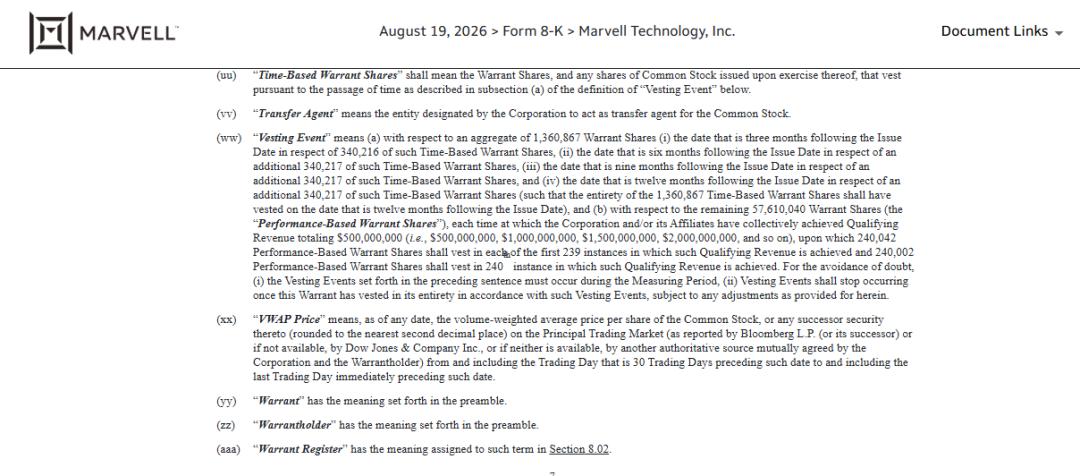
Broadcom's share price corrected quite significantly in the previous pullback, besides the industry beta impact, the market was also worried about the company's competitive risks. Currently the company's largest customer remains Google, but Google has launched a "backup" plan for its supply chain: ① Google clarified that it will split the next-generation TPUv8 series into two versions and introduce MTK into its supply chain; ② Google accepted Marvell's warrant and signed a custom chip agreement with Marvell.
The company raised its fiscal 2027 shipment guidance to 10GW after the last earnings report, but kept its revenue outlook above 100 billion USD. Whether the revenue per GW corresponds to 15 billion USD or 20 billion USD, 10GW is clearly far more than 100 billion USD, but the management still failed to make a clear upward revision, which the market interpreted as "lack of confidence", leading to a 12% single-day drop after the last quarter's earnings report.
NVIDIA recently explicitly announced a 70%+ revenue growth rate for fiscal 2028 (corresponding to the 2027 calendar year) after its earnings report. Amid competitive threats from MTK and Marvell, the market expects Broadcom's management to explicitly raise its AI guidance for fiscal 2027 (corresponding to the 2027 calendar year).
In the post-earnings call this time, the company's management did raise the AI guidance for the current fiscal year and the next fiscal year (fiscal 2027) to 58 billion USD (previously 56 billion USD) and above 115 billion USD (previously 100 billion USD) respectively, and gave a fiscal 2028 outlook of 230 billion USD (corresponding to 20GW).
Since most mainstream institutions set their AI revenue expectations for the company in fiscal 2027 at around 130-150 billion USD, the 115 billion USD guidance for fiscal 2027 will still be interpreted as "lack of confidence" or "hiding performance".
As for the company's outlook of 20GW (about 230 billion USD) for fiscal 2028, it is a solid guidance. But 10GW of that comes from Anthropic, which has weaker capital strength than large CSPs. Affected by the slowdown of Anthropic's ARR slope in recent periods, the market will also "discount" this expectation.
Beyond this earnings report, the market is mainly focused on the progress of Broadcom AVGO in the following aspects:
a) Customers and capital expenditure: Broadcom AVGO has secured 6 custom XPU customers (maintained), including Google TPU, Meta MTIA, Anthropic, Open AI and 2 undisclosed customers. Google and Meta were previously the largest "buyers" of the company's custom ASIC chips, and Anthropic and Open AI will also start contributing revenue from the second half of the year.
Combined with market expectations, the 10GW for fiscal 2027 disclosed by the company can be roughly split into Google (3-4GW), Anthropic (5GW), Open AI (1-2GW), Meta (1-2GW), etc.
From the perspective of these major customers, Google and Meta once again raised their full-year capital expenditure expectations after their earnings reports, and the demand from these two is highly certain. As for Anthropic and Open AI, the market is currently mainly focused on their ARR slopes. The recent slowdown of Anthropic's ARR slope will increase the uncertainty of this part of demand in the future.
B) AI Chip and Market Competition: In the AI chip market, NVIDIA still holds an absolute leading position, Broadcom AVGO used to play the role of "chaser/competitor", but now it is facing a "fire in its own backyard" situation.
The previous combination of "Broadcom + Google TPU" gradually formed competition against NVIDIA. However, Google has never been "satisfied" with its exclusive tie-up with Broadcom, it started to introduce MTK to the TPUv8 supply chain, and also got very close to Marvell. The market's focus on Broadcom has shifted from "posing a threat to NVIDIA" to "can it maintain its share in TPU business".
Marvell's recently announced cooperation plan with Google defines eligible revenue as Google's custom ASIC chips, including AI inference accelerators, storage controllers, network interface controllers, memory interface controllers and near-memory computing. This cooperation is clearly targeted at Broadcom's custom ASIC business including Google TPU.
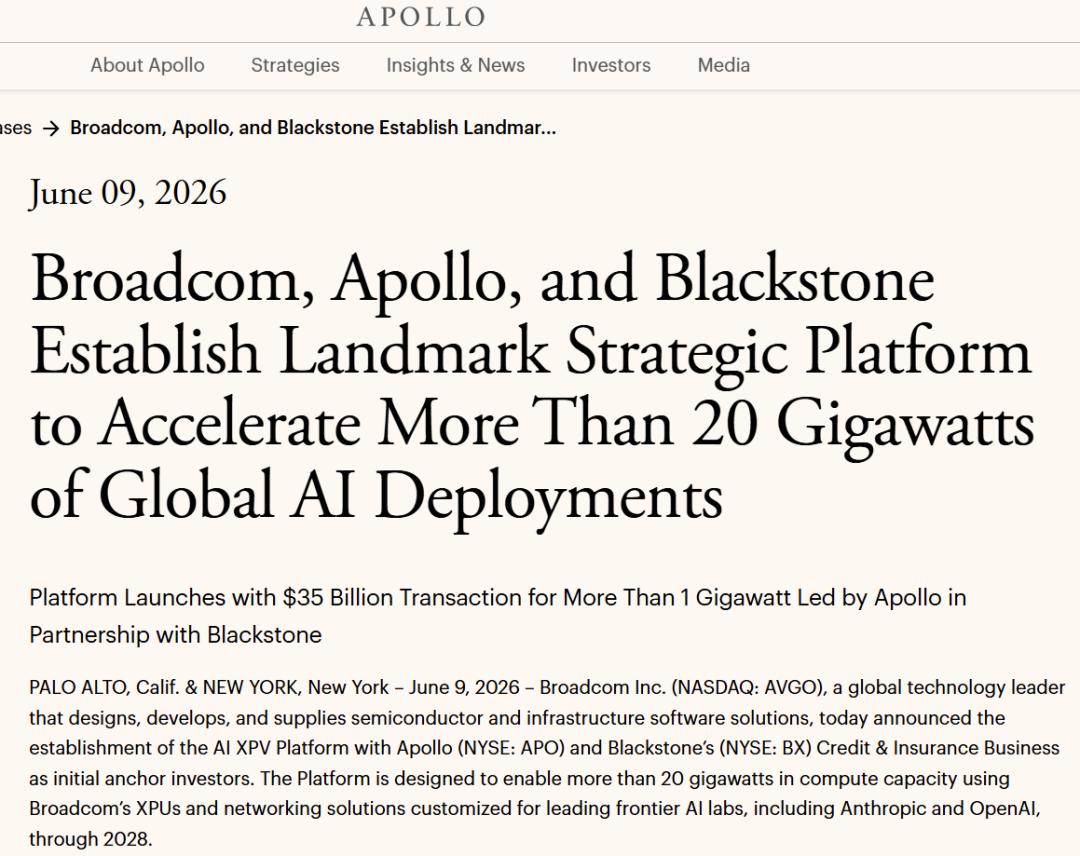
c) Financing Platform: Broadcom established the AI XPV Platform with Apollo and Blackstone's credit and insurance business, targeting to support over 20GW of computing power by 2028, using Broadcom's XPU and network solutions, customized for cutting-edge labs (specifically naming Anthropic and OpenAI). The first tranche of 35 billion USD, led by Apollo, will be used for the deployment of Anthropic's 1GW+ capacity at Fluidstack sites.
In terms of specific operations, the platform is funded by Apollo/Blackstone to purchase Broadcom chips and deliver them to cutting-edge labs that "cannot afford to pay cash". The revenue is real on Broadcom's books, but the final payment capacity depends on the commercial success (ARR performance) of Anthropic/OpenAI.
Although Broadcom's "only selling chips" model looks cleaner, the collateral in Broadcom's model is XPU customized for a single customer's single model architecture, which is a chip with no value/use for other parties (NVIDIA's products are general-purpose GPUs). Once the assets have "zero residual value", it means the next round of financing will disappear directly, corresponding to the "uncertainty" of the subsequent 20GW capacity.
Initially the market viewed Broadcom as a competitor fighting for market share against NVIDIA, and the valuation expectation for the company was relatively high at that time. But now the company itself is also facing competition from MTK and Marvell, Broadcom has become the "target of competitors", and its valuation has dropped significantly.
The market's main concerns about Broadcom AVGO are twofold: on the one hand, intensified competition may threaten the company's supply share at its major customer Google; on the other hand, among the major customers in the company's outlook there are cutting-edge labs (Anthropic and Open AI), if their corresponding ARR slopes slow down, it will increase the uncertainty of the revenue outlook, and may even lead to a "circular financing trap".
Overall, the company's performance basically met market expectations. Compared with performance, the market pays more attention to the outlook of AI business. The company raised its AI business outlook for fiscal 2027 and gave expectations for fiscal 2028 this time, but this guidance is still "flawed". The 115 billion USD guidance for fiscal 2027 is still lower than market expectations, and most of the incremental growth in the 20GW for fiscal 2028 comes from Anthropic and Open AI.
Different from NVIDIA's general-purpose GPUs, the collateral of Broadcom's custom ASIC chips has a much more single use case, which virtually increases the "tail risk". Once Anthropic or Open AI's ARR slows down, it may lead to direct order cuts, and also affect a large