Who on earth is making money from the grocery store on the first basement level of the shopping mall?
Walk into any decent shopping mall, and you will most likely come across several brands on the B1 floor or the ground floor: Miniso, Muku Store, The Green Party, KKV...
With different names, you may feel they are pretty much the same once you step inside: nothing but blind boxes, journal supplies, co-branded stationery, snacks and accessories placed on rearranged shelves. But beneath the surface, every brand has a totally different background, operation strategy and financial status.
Today, TopKlout will compare these brands side by side, and break down their business models and development paths~
Miniso: From "10-yuan Store" to IP Cash Cow
Miniso was founded in 2013, whose predecessor was the "Aiyaya" accessory store run by Ye Guofu.
Back then, e-commerce was squeezing offline department stores, clothing stores in malls closed down in batches, shopping malls had a large number of vacant shops and lowered their threshold for attracting tenants.
Small items priced at dozens of yuan have extremely low decision-making costs. Consumers want to buy them the moment they see and touch them on the spot, which is exactly the instant impulsive consumption it targets. Therefore, from the very first day, Miniso not only targeted the design style of Muji, but also the operational efficiency of "10-yuan stores". With prices close to Daiso and acceptable appearance, it turned casual impulsive purchases into a large-scale business.
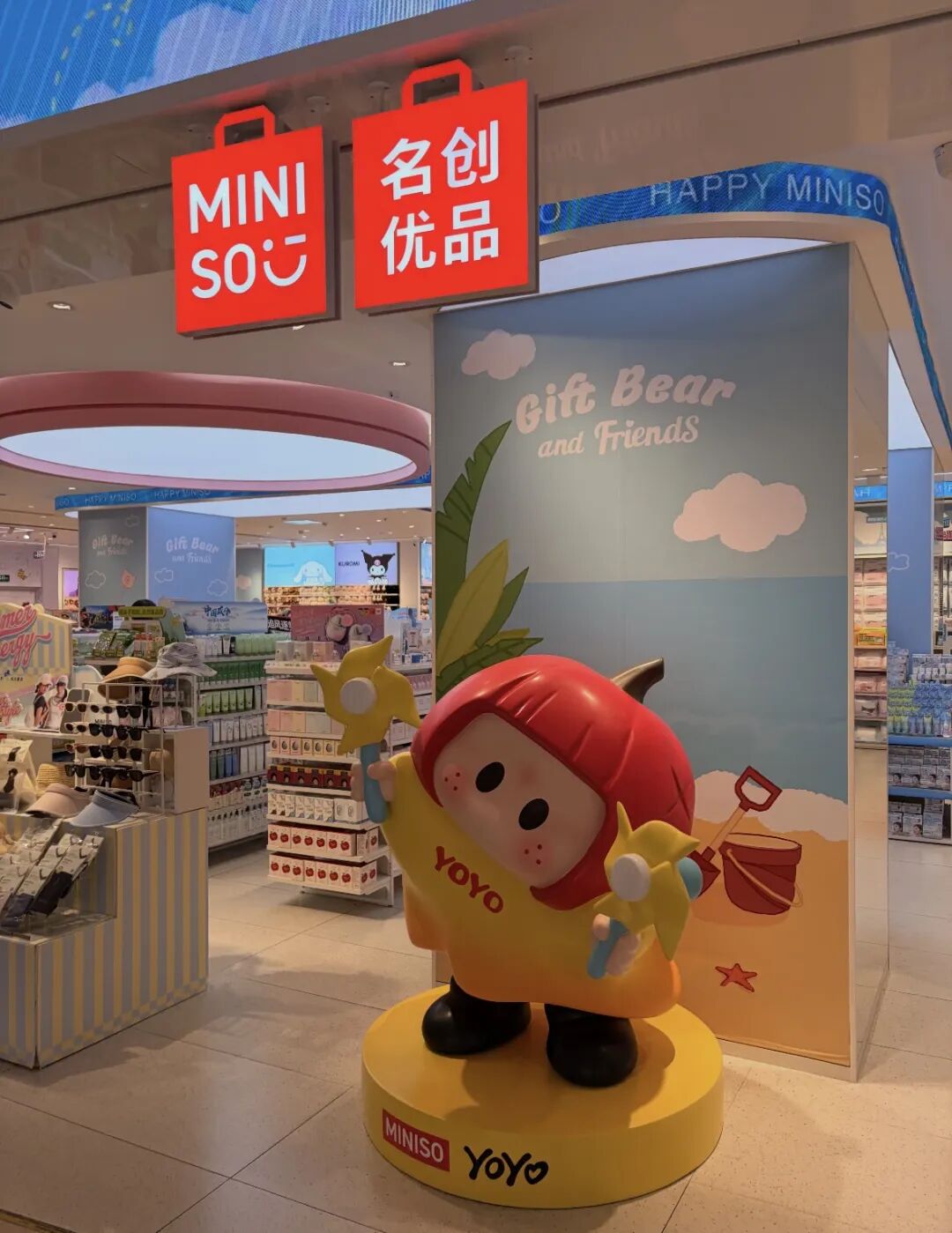
How was this strategy implemented? The answer is franchise + supply chain system.
For Miniso, franchising means expanding channels with other people's capital, so that it can focus on its own supply chain. It connects with thousands of factories, adopts exclusive customized production and lowers costs through bulk orders, keeps launching new products at a high frequency all year round, and removes unsalable products immediately to replace them with new ones. This strategy allowed Miniso to open thousands of stores within three years. A single store may not make huge profits, but the whole network generates revenue through high turnover efficiency. At that stage, every penny Miniso earned essentially came from supply chain management.
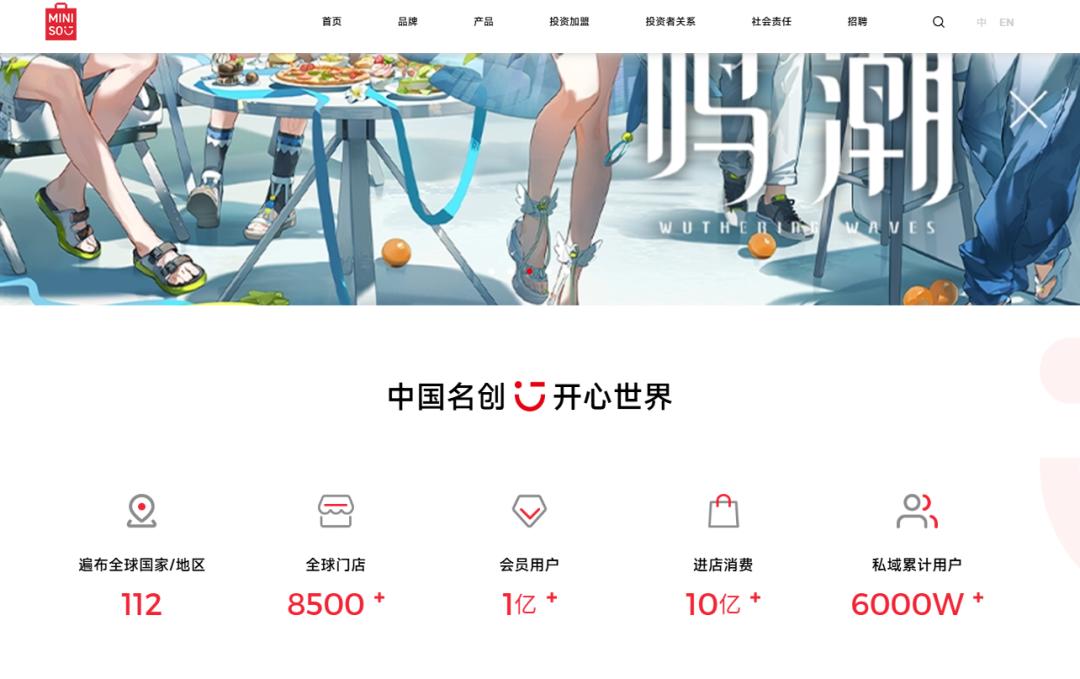
However, 2023 was a watershed year. The company officially upgraded its brand positioning to "a collection store of good life products featuring IP design", shifting from "selling cheap goods" to "selling emotional value".
Miniso has built an integrated upstream and downstream model of "IP + retail". It has signed authorization agreements with more than 150 top IPs around the world, recreated IP images and developed corresponding image libraries, then sent the solutions to more than 1000 external factories for mass production, and finally reached consumers through more than 8000 stores worldwide.
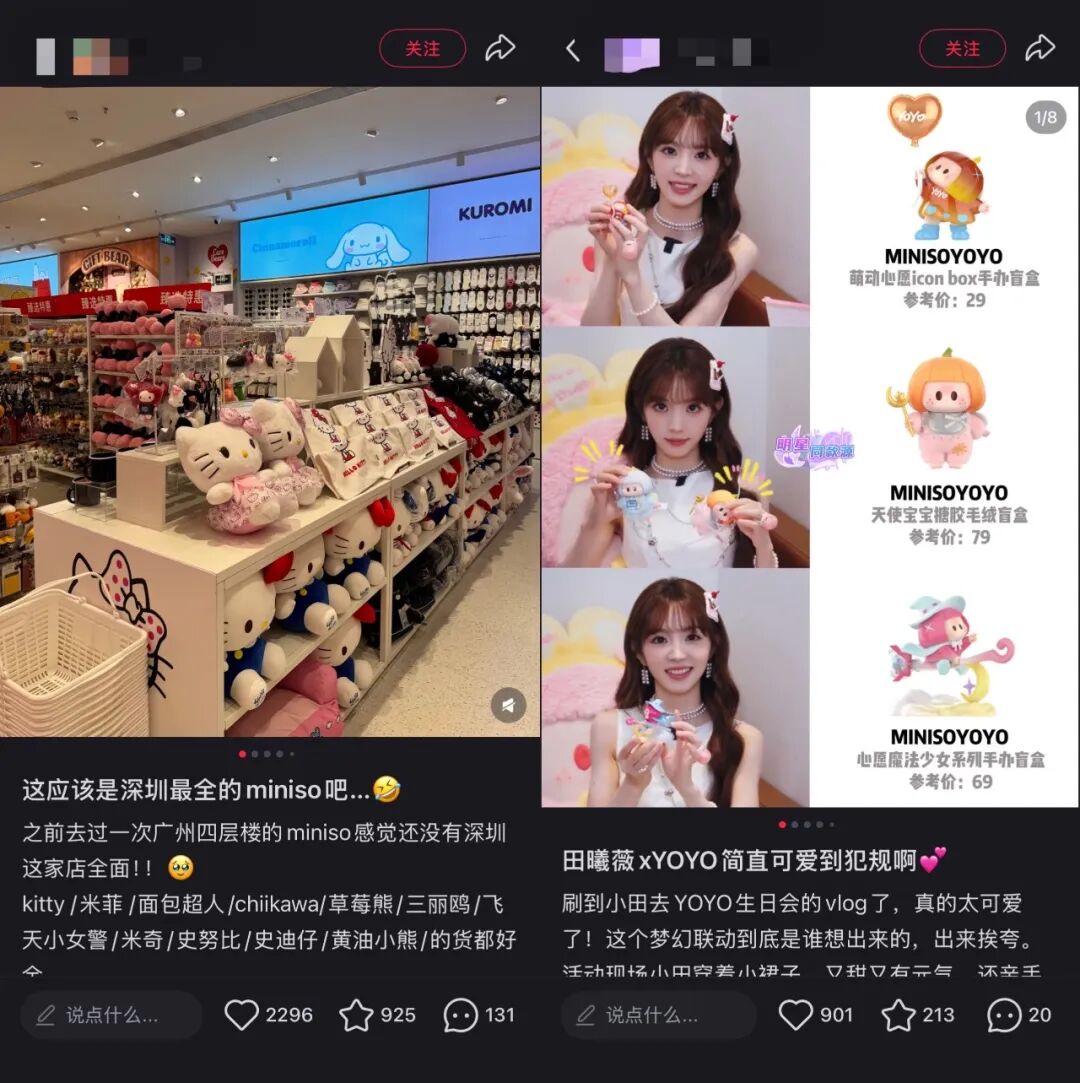
This model has indeed brought remarkable results to Miniso. According to Miniso's 2024 financial report, the company's revenue increased by 22.8% year-on-year to 170 billion RMB, and its gross profit margin reached 44.9%, hitting a record high.
But there are still risks in this model. Third-party IP licensing fees are rigid costs, and the fees for IP authorization are getting higher and higher. Self-owned IP requires continuous investment, and a failed IP operation will become a sunk cost. Overall, Miniso is still the brand that develops the most smoothly among all these retailers.
Muku Store: The Bumpy High-end Development History of M&G Stationery
Muku Store was founded in 2016, which is a "cultural and creative grocery collection store" incubated by M&G Stationery Co., Ltd.
The logic for M&G to launch this brand is very simple: The growth ceiling of the traditional stationery business is clearly visible, so the company must find a second growth curve.
The strategy M&G adopted is to open stationery stores in shopping malls, selling cultural and creative products, IP derivatives, trendy toys and daily groceries. The most valuable assets of M&G are the trust of student customers and its mature stationery supply chain, and these two assets can bring higher returns in shopping malls. A pen that earns a few cents in stores near schools can be sold for more than ten yuan with IP co-branding in shopping malls.
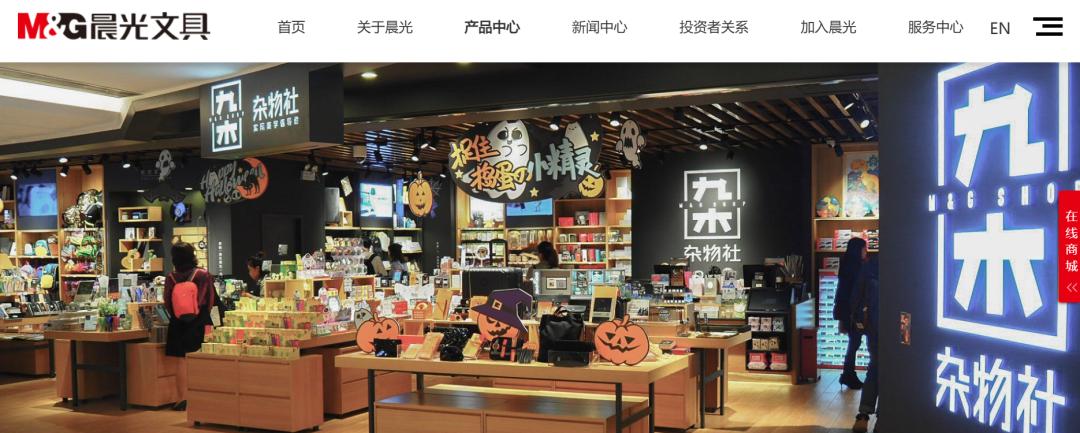
Muku Store adopts both direct sales and franchising modes. The standard store covers 200 to 400 square meters, with roughly three categories of shelves: stationery and cultural creative products from M&G's supply chain, third-party IP products such as Sanrio and LINE FRIENDS, and daily groceries such as aromatherapy and storage boxes. Backed by M&G, its procurement cost and new product launch speed are unmatched by its peers.
By the end of 2025, the number of Muku Store across the country has exceeded 860, with a plan to open more than 100 new stores in 2026, and the number of members has exceeded 10 million. However, the financial data is not so satisfactory: its revenue in 2025 was 1.537 billion yuan, a year-on-year increase of 9%, but it suffered a loss of 84.51 million yuan. From 2019 to 2025, the cumulative loss reached 179 million yuan. Except for a short period of profit in 2023, it has been losing money for most of the time.
Why does it keep losing money as it expands? Industry insiders believe there are three main reasons:
First, the rigid cost brought by store expansion is too high. For example, the monthly rent of a 100-square-meter store on B2 floor of Xidan Joy City in Beijing is at least 30,000 yuan;
Second, product homogeneity is serious. The Line Friends co-branded pens you see in Muku Store can also be sold in the store next door with a different package;
Third, the high unit price of products does not match the consumer group, and the revenue growth rate cannot keep up with the expansion speed.
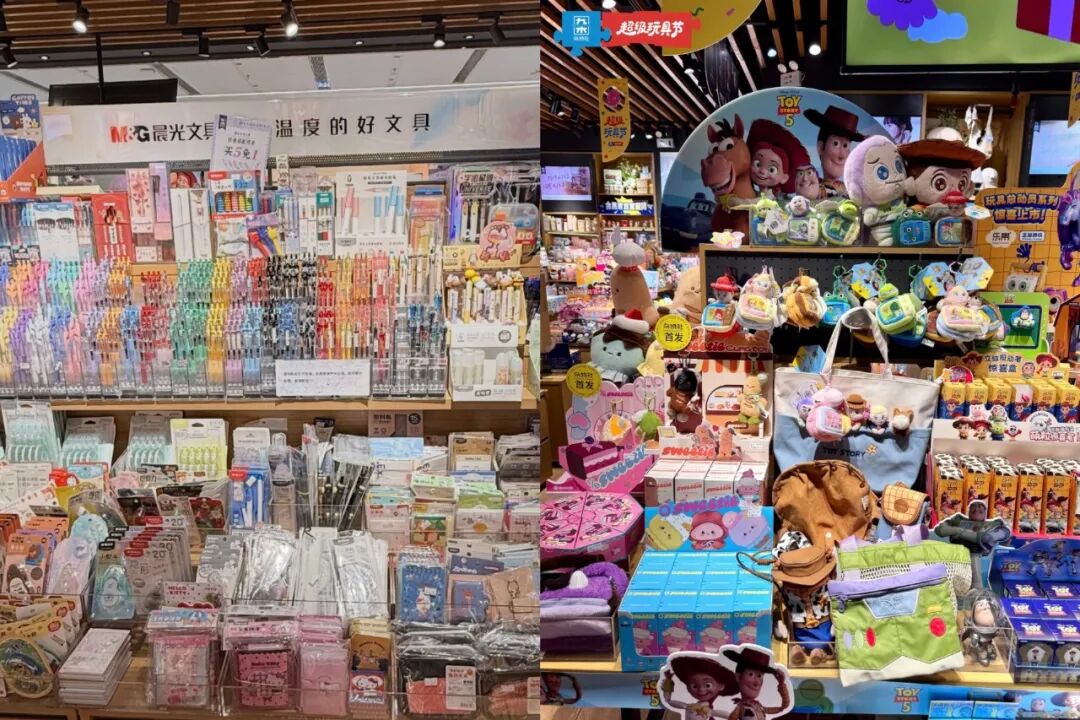
In addition to the shelves that are becoming more and more similar to Miniso and KKV, trendy toy brands such as 52TOYS and ROLIFE supply products to several retailers at the same time, so consumers can't tell why they have to go to Muku Store specifically. The performance of original IP is also unsatisfactory, the sales data of the exclusive co-branded IP blind box "Gududu" is very poor.
Its unique advantages are the trust of consumers in M&G's stationery products, and the scale of nearly 900 stores. If it makes good use of these advantages, Muku Store will become the future of M&G; if not, it will only be an ordinary cultural and creative grocery store with a relatively large number of outlets.
The Green Party: The "Hidden Champion" of Kalan Group
The Green Party was founded in 2014, but its parent company Kalan Group started its business as an accessory chain retailer in Hangzhou back in 1998. Its subsidiary brand Lenle is one of the earliest accessory chain brands in China, which has expanded its channels through supermarket counters and small stores on pedestrian streets for more than 20 years.
The most valuable asset of Kalan Group is the channel relationships accumulated over more than 20 years of cooperation with shopping malls, as well as a complete set of direct sales management disciplines. Around 2014, the shopping mall industry was in a period of explosive growth, a large number of new malls were in urgent need of new business formats to fill their vacant shops. With mature mall relationships, Kalan Group upgraded its original counters to integrated collection stores.
The Green Party adopts a "full direct sales" operation mode, with more than 1000 stores around the world. This is very rare in the grocery industry which is full of franchised stores, but it is not surprising for Kalan, which has adhered to direct sales since the accessory business era. Because the accessory category is flooded with counterfeit products and has strict quality control requirements, direct sales is the only way to maintain brand reputation, at the cost of slow expansion.
There are two types of stores: black gold flagship store and standard flagship store. Black gold stores are concentrated in high-end business districts of first-tier and strong second-tier cities, with unit price 50%-60% higher than that of ordinary stores. For example, the black gold store in Hangzhou Xixi Intime Department Store covers an area of only 120 square meters, with an average monthly performance of more than 400,000 yuan. The standard flagship store covers about 200-400 square meters, which is responsible for penetrating into third and fourth tier cities.
It is worth noting the evolution of its positioning. Its earliest positioning was "natural life collection", with a fresh green style, targeting the lifestyle grocery track, but it could not compete with Miniso in operational efficiency, and the concept of environmental protection itself could not support consumers' repurchase intention.
Since 2023, it began to transform, and gradually upgraded its positioning to "natural fun life collection", leaning towards IP and interesting products. Now IP co-branded products and peripherals occupy prominent positions on the shelves, and anime peripheral products have become the main driving force for customer flow.
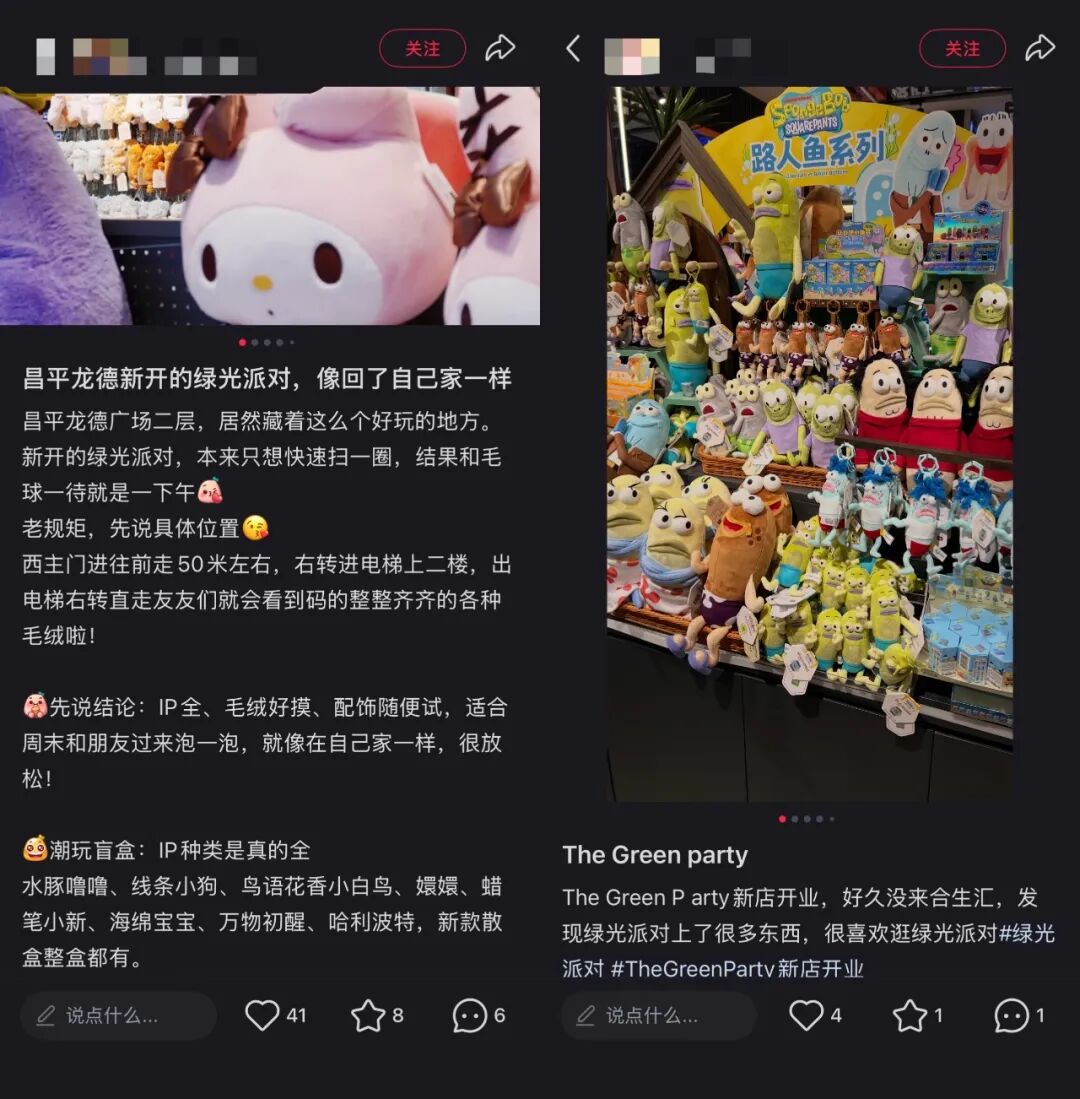
It also launched the "New Warehouse" plan, and cooperated with bilibili goods to hold pop-up stores. In February 2026, it launched exclusive customized peripherals with the IP "Little Mushroom" from Kuaikan Manhua, and its stores are also moving into core business districts. It does not burn money to pursue rapid growth, nor does it rely on franchising to expand scale. In the grocery industry full of franchised stores, The Green Party is operating steadily in its own way.
KKV: Internet-famous Large Store Forced by Capital
No matter how different the first three brands are, their foundation is all in the real industry: Miniso has a strong supply chain, M&G has its own factories, and Kalan Group has more than 20 years of experience in mall channels.
KKV is different. Its parent company KK Group was founded in Dongguan in 2015. The founding team is a group of retail outsiders with e-commerce background, who have successively incubated KKL, KKV, The Colorist, X11 and Pet Tribe. As outsiders in the retail industry, they have no historical burden, and directly applied the internet growth logic to offline retail: large stores are customer acquisition channels, attractive appearance is the source of traffic, buyers are the product selection algorithm, and capital is the fuel for growth.
Against this background, KKV was born in 2019. It opened large stores of thousands of square meters, with a iconic yellow facade, and more than 20,000 SKUs. But the products are selected from different brands by buyers. What it really sells is not a specific product, but the shopping experience itself.
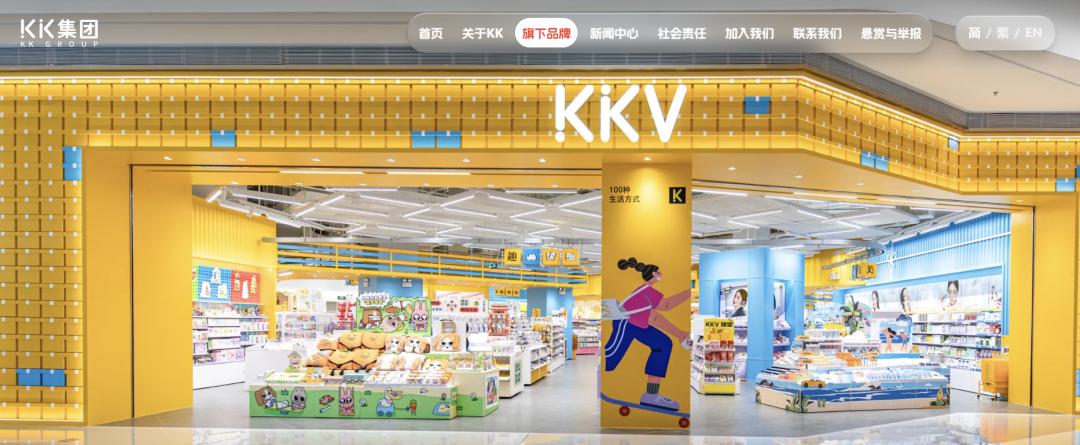
This model worked in the era when shopping malls were short of foot traffic and internet-famous stores could help attract customers. Malls provided prime locations and decoration subsidies, and KKV rewarded malls with a large number of check-in visitors.
But there is an implicit premise for this symbiotic relationship: the mall does not calculate detailed operating costs. Once the mall begins to calculate the per-square-meter efficiency and pays attention to conversion rate, the model will fail immediately.
The most typical case is the KKV store in Shenzhen Joy City, which was forcibly closed by the mall on the grounds that "the performance failed to meet the contract standards". Stores in core business districts such as Beijing Hopson One and Xi'an MixC World have also been closed one after another.
What is the problem? The operation cost of the large store model is too high. It expanded rapidly in the early stage through "market penetration", and only began to adjust profit margins and optimize SKUs in the middle stage. But when consumers' sense of novelty fades and the ability to attract customers declines, the pressure of high rent will be exposed.
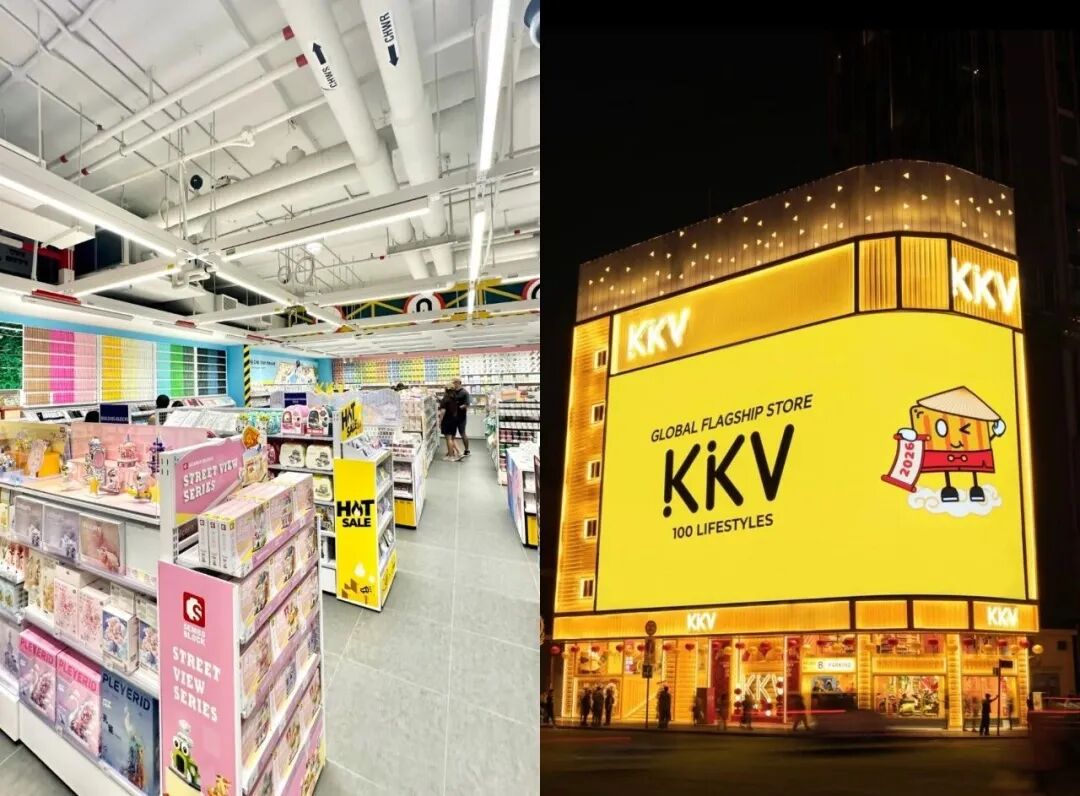
Looking back, the three key links of KKV are not controlled by itself: the products belong to brand owners, the traffic comes from social platforms, and the sites belong to shopping malls. In a favorable market environment, this is called an asset-light model, but in a tough market environment, these are three bargaining chips that others can take back at any time. Its aesthetic large store model was once the benchmark of new retail, but now it has to figure out how to survive.
Nostalgic Themed Retail Stores: Selling "Memory Kill"
In recent years, a new type of nostalgic themed retail store represented "Passing by Childhood" has emerged, which is completely different from the previous four brands.
Other stores compete to be more "trendy": new IPs, new designs, new scenes, and launch hundreds of new products every year. This type of store is completely opposite: all the products it sells are "old".
Since old childhood products are becoming more and more scarce, the team visited hundreds of old factories to integrate nostalgic products. The store adopts a retro campus nostalgic style, restores the scene of old-fashioned small shops, and mainly sells three