Mixue is no longer young
On August 27, Mixue Group released its 2026 interim report, recording an operating revenue of 152.16 billion yuan in the first half of the year, a slight year-on-year increase of 2.3%; profit for the period was 23.19 billion yuan, down 14.7% year-on-year; gross margin was 30.4%, down 130bp year-on-year, which was lower than market expectations.
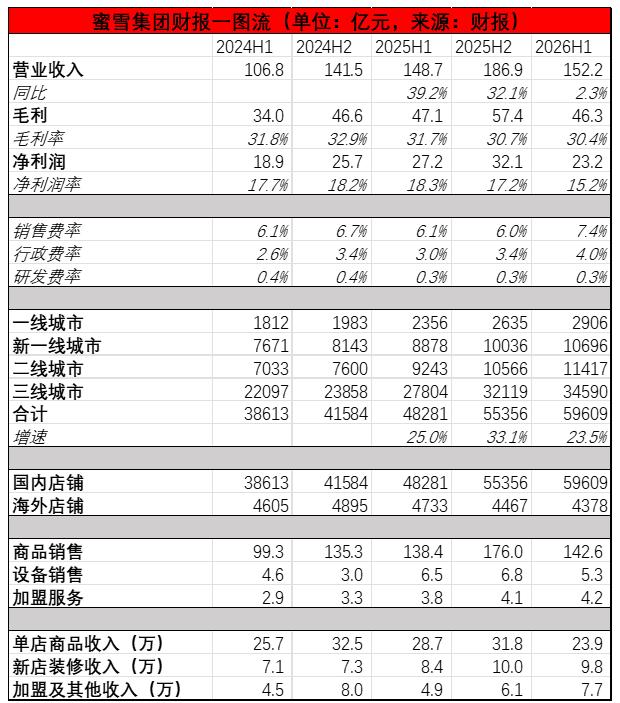
(The full chart of the financial report is shown in the figure, unit: 100 million yuan, source: WIND, sorted out by Financial Report Chronicle)
Mixue has relatively cautious disclosure of operating data, and there are few data sources available for analysis. Of course, from the scale of stores, the depth of supply chain to the revenue volume, Mixue is already the undisputed absolute leader in China's tea drink track, and its underlying business logic of "franchise expansion + strong supply chain control" has long been familiar to the market.
However, from the perspective of the interim report period, the inflection point of this set of strategies has appeared, the growth of stores has slowed down, profits are under pressure, and the growth of sales expenses can hardly bring more increments. Neither Lucky Coffee nor Fresh Beer Fulujia seems to be able to replicate the success of the main brand, and Mixue has fewer and fewer new stories to tell.
If the same story is told too many times, the capital market will eventually get tired of it. Mixue, which has been listed for a year and a half, has seen its stock price fall back to the original point.
01 Revenue growth brakes sharply, "subsidy decline" may just be an excuse
In the first half of 2026, Mixue Group recorded a revenue of 152.16 billion yuan, a slight year-on-year increase of 2.3%, which was basically the same as the same period of last year, and the growth rate dropped rapidly from more than 30%.
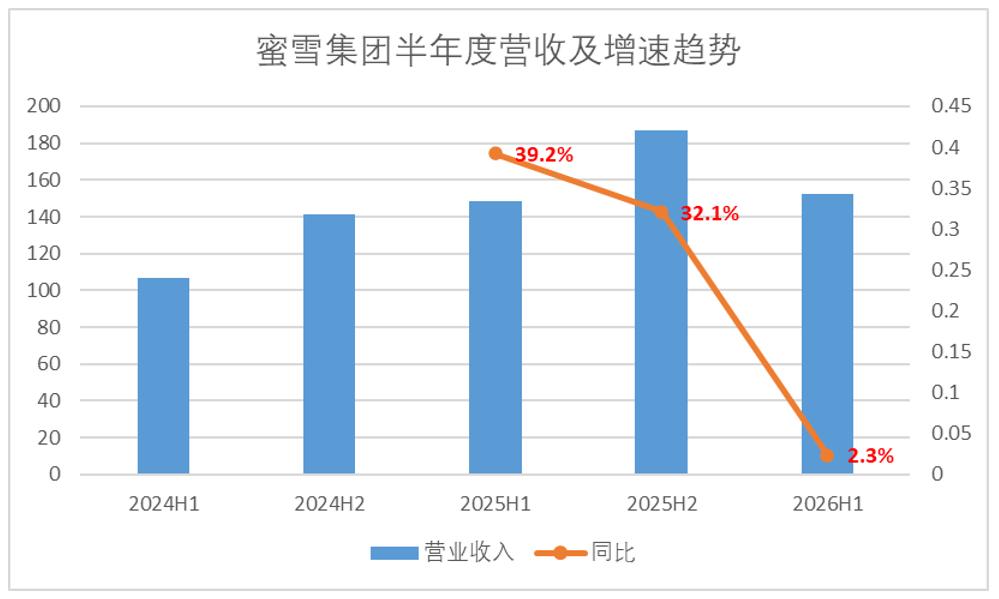
The explanation given by the management at the performance meeting is that large-scale subsidies for food delivery in the first half of 2025 pushed up the order volume of stores and formed a high base; in 2026, the subsidies ebbed, and the growth rate naturally declined.
It sounds reasonable, but we think this is not the core reason, because in horizontal comparison with other enterprises in the tea drink track, the interim report growth rates of Guming, Chabaidao and Hushang Ayi are all significantly faster than Mixue Bingcheng. Among the tea drink enterprises listed in Hong Kong stock, Mixue's growth rate is only slightly higher than that of the dying Nayuki.
At the same time, Mixue's overall gross profit margin continued to decline in the first half of this year, with a gross profit of 46.3 billion yuan and a gross profit margin of only 30.4%, down 130bp from the first half of last year, and still down 30bp from the first quarter with a low base month-on-month.
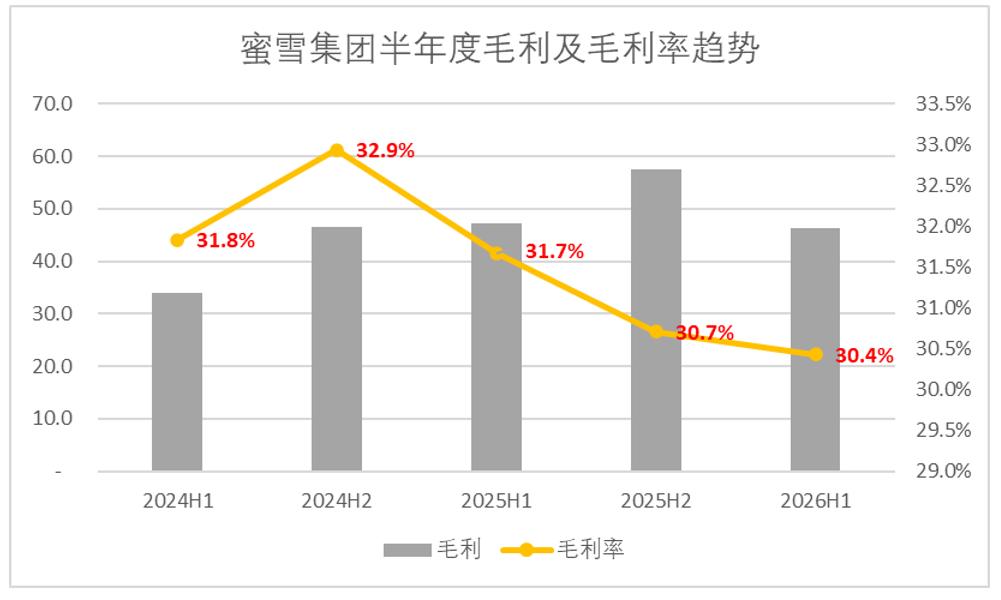
If the decline of subsidies really has a great impact on the demand side, then the impact on the revenue side should not only be limited to Mixue. And from the data of the first half of the year, after the food delivery war slowed down in stages, the gross profit margins of Guming and Hushang Ayi both increased, while Mixue's gross profit margin declined instead.
Mixue is the tea drink enterprise with the lowest relative customer unit price. According to the data disclosed in the annual report of last year, the impact of the food delivery war on its price is limited. After all, no matter how fierce the artillery fire of the price war is, there will only be a pile of dud bombs left when the price drops below 10 yuan. However, Mixue has become the enterprise most affected by the backlash after the end of the food delivery war, which is definitely not in line with common sense.
02 Slowdown of franchise expansion may be the core factor affecting financial results
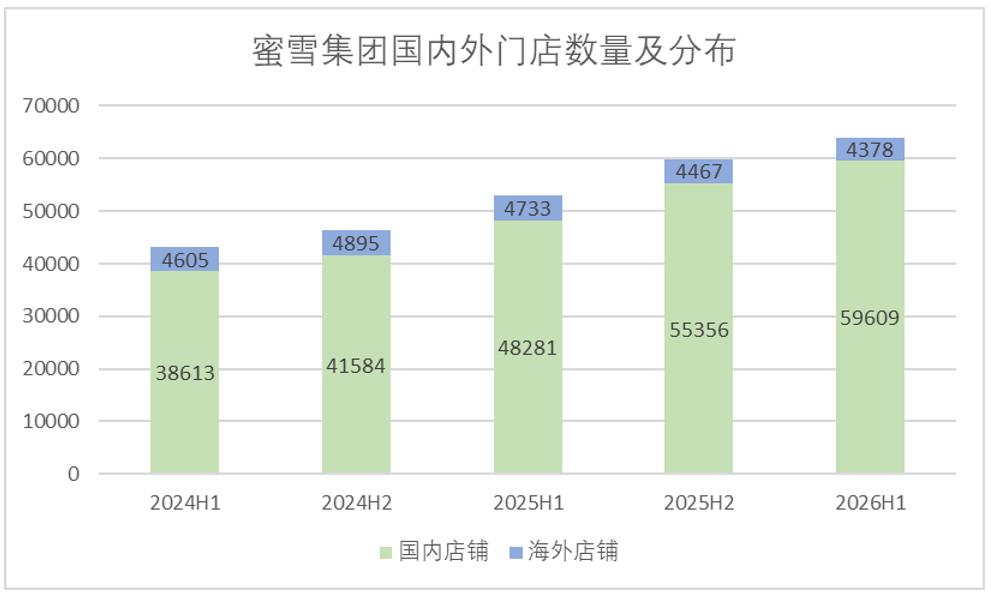
Among the limited financial report information, the most obvious feature of Mixue in 2025 is that the speed of store expansion has slowed down significantly. In the first half of this year, 5455 new stores were opened, 1289 stores were closed, and the net number of newly opened stores was only 4166, while the net number of newly opened stores in the first half of last year reached 6534, nearly 2400 fewer stores opened.
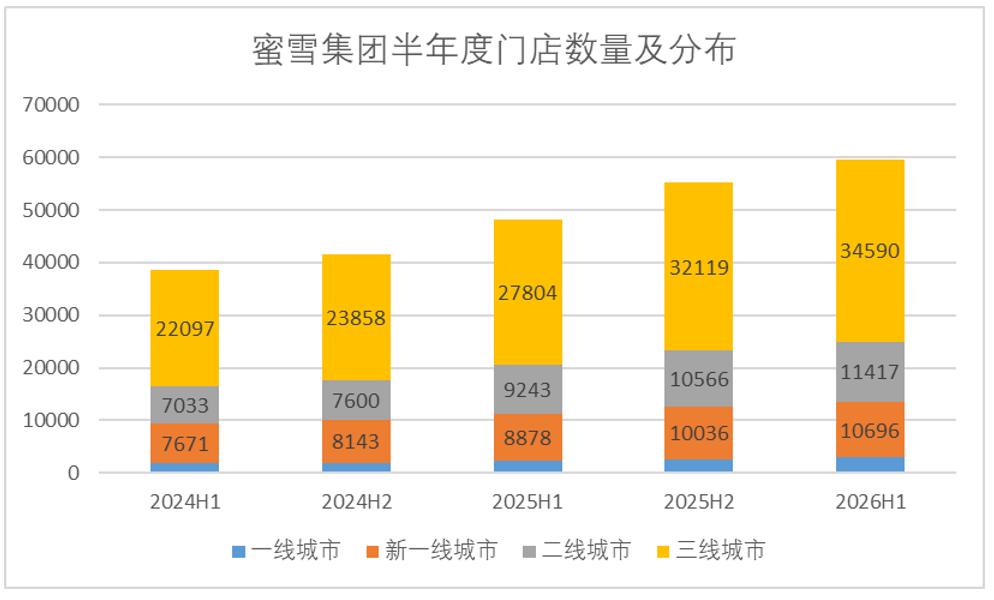
The main reason for this is the relative saturation of second-tier cities and new first-tier cities. From the structural point of view, the number of stores in new first-tier cities increased by 1818 net in the first half of the year, and the number of new stores in second-tier cities increased by 2174, slightly lower than the new increase in the same period of last year.
However, the third-tier cities are still expanding, which is mainly benefited from the expansion of the second brand. Last year, many media reported that Lucky Coffee has become the second brand strongly promoted by Mixue at this stage. The expansion of Lucky Coffee relies on the long-term franchisee system built by Mixue Bingcheng, and many franchisees of Lucky Coffee are also franchisees of Mixue Bingcheng.
In contrast, in the information disclosed on the official website, the franchise fee of Lucky Coffee is significantly lower than that of Mixue Bingcheng. Without including the decoration, the franchise fee disclosed on Mixue's official website is about 160,000 yuan or more, while that of Lucky Coffee is only 127,000 yuan. Considering that there are some franchise fee discounts during the expansion period, the actual cost difference may be even greater.
Obviously, Mixue wants to replicate a Mixue Bingcheng through Lucky Coffee. However, different from the tea drink market, the ready-to-drink coffee market is far more competitive than the tea drink market in those days. According to the "2025 China Coffee Industry Development Report", the number of coffee stores in China increased by more than 40,000 net in 2025, reaching 215,000, with an increase of 25%; the chain rate also increased from 46% to 53%.
In addition, the price difference between the single products of the leading market players Cotti and Luckin Coffee and Lucky Coffee is not large, so this road is not easy for Mixue.
In terms of overseas stores, after Mixue experienced a relatively rare negative growth in 2025, it continued to decline in the first half of 2026. As of the interim report period, the number of stores was 4378, down 7.5% year-on-year. According to the management's statement in the annual report, this is due to the re-site selection and integration of the Southeast Asian market. If combined, the current momentum of the main brand Mixue Bingcheng is indeed not as sharp as it was in previous years.
03 The rate increases significantly, and the single-store model reaches an inflection point
On the cost side, as the representative of the "asset-light" model of new tea drink brands, Mixue's overall cost control performance is not excellent. In the first half of 2026, sales expenses, administrative expenses and R&D expenses recorded 11.2 billion yuan, 6.1 billion yuan and 400 million yuan respectively, with the three expense rates being 7.4%, 4% and 0.4% respectively. The sales expense rate increased by 130bp year-on-year, and the administrative expense rate increased by 100bp.
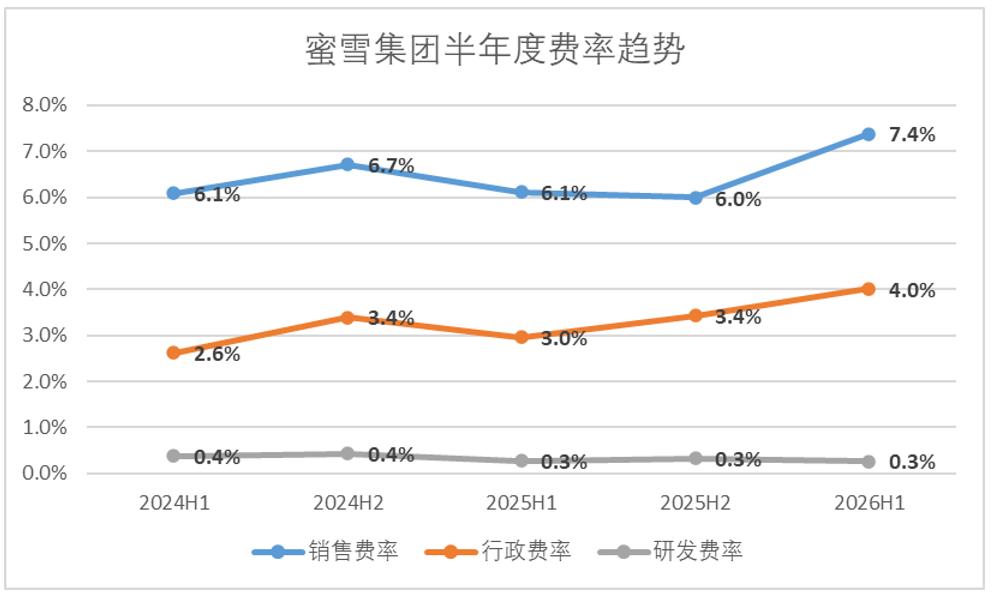
The management explained at the performance meeting that the increase in expense rates is mainly used for IP brand marketing, high-quality operation support for stores, and the rise of human resources costs in the middle platform, which is a front-end investment for long-term capacity building.
At the level of the single-store model, the overall single-store commodity revenue of Mixue Group (commodity revenue / number of existing stores) was about 239,000 yuan in the first half of 2026, a significant drop of 47,000 yuan compared with the first half of 2025. Considering that the speed of store expansion is relatively slow this year, after the end of the food delivery war, the actual decline in Mixue's single-store revenue is even worse.
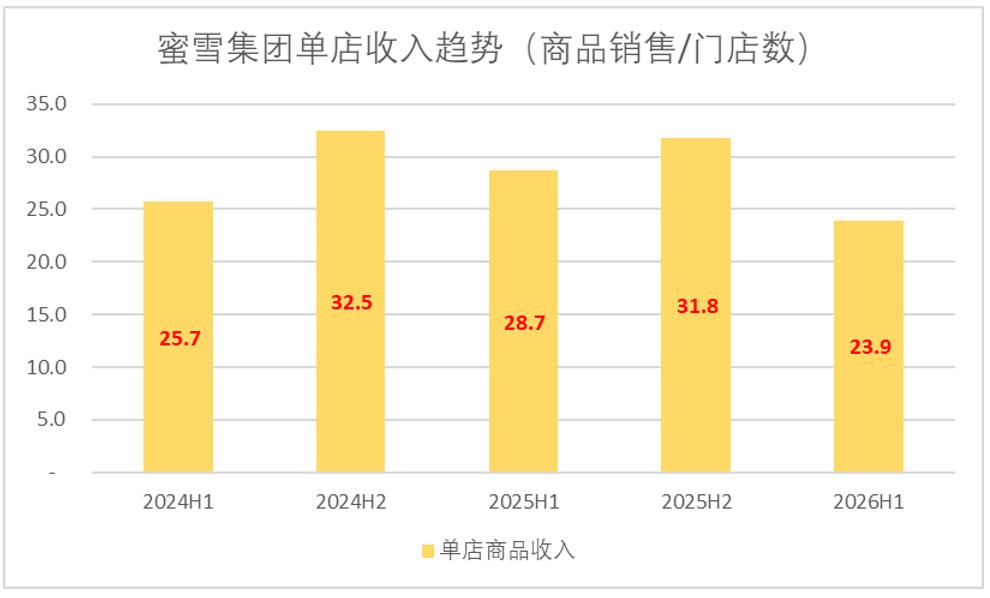
Obviously, Mixue Group, which is currently dominated by the main brand, can hardly drive the increase of single-store revenue through supply chain integration. For Mixue, which adopts the asset-light model, the expansion of revenue scale has no more than two paths: increasing store sales by expanding SKUs, or increasing coverage through store expansion. However, Mixue's store coverage has basically been saturated, and the growth of SKUs has not significantly driven the increase of single-store sales revenue.
In the absence of significant growth overseas, the existing business seems to have reached the growth boundary, which makes it easy to understand why Mixue strongly promoted the sub-brand Lucky Coffee last year.
04 Franchise discounts are tightened, and the brand power of Lucky Coffee is relatively limited
Let's turn our attention back to the expansion of Lucky Coffee itself. The revenue of Mixue's interim report divided by business type shows that commodity sales revenue accounts for more than 90% of the total, which is the core pillar of the group's profitability. However, even in the two smaller items of decoration and equipment revenue and franchise service revenue, some noteworthy trend changes are also revealed.
For example, if we compare the service franchise fee revenue in 2025 (assuming that most of the service franchise fees are one-time revenue from new stores) based on the caliber of newly opened stores in 2026, we can find that Mixue's adjustment of franchise fees was quite obvious in order to promote Lucky Coffee and attract franchisees. In the first half of this year, the overall franchise service revenue / number of newly opened stores was about 77,000 yuan, an increase of 28,000 yuan compared with the same period in 2025.
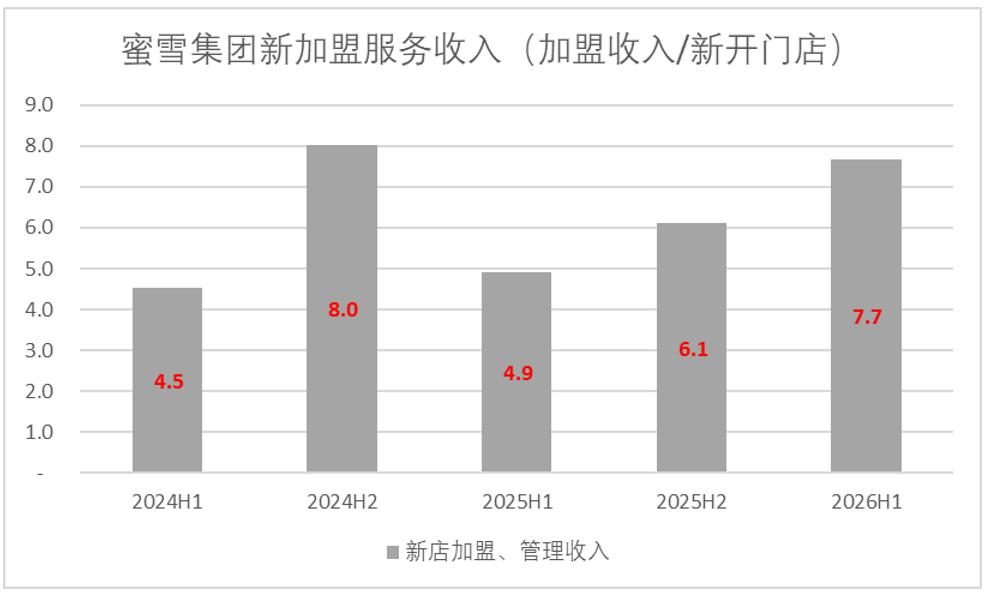
Moreover, although Lucky Coffee's official website does not directly disclose the franchise decoration cost, from the observation of the equipment sales caliber, the revenue contribution of this item has also increased significantly. In the first half of 2026, the single-store equipment sales revenue was about 98,000 yuan, an increase of 12,000 yuan compared with the same period in 2025.
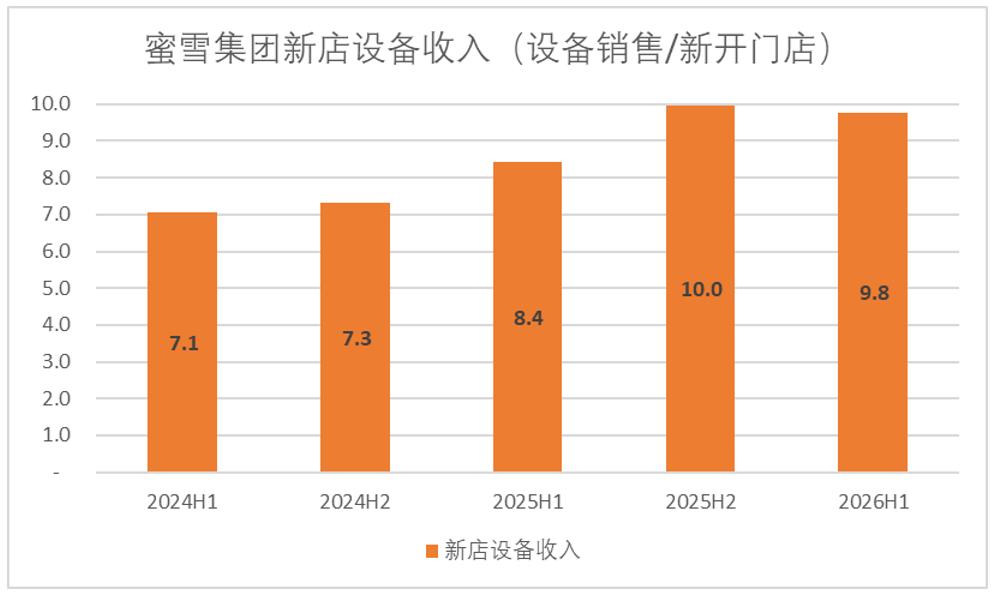
Thus, we can sort out two relatively clear clues:
First, although the expansion speed of Lucky Coffee is fast, the brand premium has not really taken shape. The collaborative inertia established by the main brand Mixue Bingcheng in the expansion process is very strong — most old franchisees will not only open one store — Lucky Coffee's current round of land enclosure also relies heavily on this stock franchisee network, in exchange for expansion efficiency. During the rapid expansion in the first half of 2025, the group chose to take the initiative to give up profits, and once the franchise discounts were tightened, the speed of store expansion declined significantly.
Second, Mixue's asset-light model has full initiative in adjusting the revenue caliber, but franchisees are also very sensitive. The decline of the single-store model and the decline of the store expansion rhythm almost occurred at the same time in the first half of the year. The binding degree between Mixue and franchisees does not seem to be as close as the market imagines. At this stage, it is relatively difficult to rely on Lucky Coffee to create another Mixue.
05 Mixue is no longer young
Looking back at Mixue's growth in the past three years, the business logic that Mixue relies on is essentially the continuation of that set of expansion scripts — relying on the stock franchisee network to quickly replicate stores, diluting costs through large-scale supply chain, and then firmly holding the initiative of revenue caliber in its own hands with the asset-light model.
Lucky Coffee's successive store expansion, flexible adjustment on the equipment sales side, and the relative immunity of the parity positioning to the decline of food delivery subsidies together constitute the hidden dangers of Mixue after the main brand slows down, extending the dividend period.
Although the stores are still expanding, over time, the marginal dividend brought by expansion is getting smaller and smaller:
For example, the negative growth of stores in overseas markets shows that in the face of different market environments, simple scale replication is no longer omnipotent. Another example is that the overall expansion of stores slowed down in the first half of this year. Or the decline of single-store commodity revenue is all indicating to the market that the marginal revenue of the existing business model is getting lower and lower.
Obviously, there is still a big gap between the brand power of Lucky Coffee and the main brand, and the competition in the ready-to-drink coffee market is relatively fierce,