Who allowed alo to be so expensive?
In Guo Jingming's *Tiny Times*, Lin Xiao was interning at a fashion magazine. Once, she wore a pair of Adidas Originals sneakers, and was ridiculed by the client in front of her boss: "Can't you pay her a little more so she can buy a decent pair of shoes?"
Lin Xiao burst into tears right then. That pair of Adidas Originals sneakers was a limited edition that Jian Xi queued for three hours outside the adidas flagship store on Huaihai Road to get. But "in Shanghai's fashion circle, sneakers can never beat stiletto heels."
If the story took place in 2026, Lin Xiao could hold her head high proudly and snap back that the client knew nothing at all.
Her most fashionable friend Gu Li would have long taken off her Gucci ankle boots and put on alo, imported directly from Beverly Hills, USA.
Not long ago, alo, which had been warming up its entry into the Chinese market for years, finally landed in China. It sold over 10 million yuan of products within 1 minute of going live on Tmall, and its best-selling SUIT UP straight-leg pants, priced at 1150 yuan, recorded sales of over 10,000 units.
alo's main business is yoga apparel, which is in the same track as lululemon, but the two brands receive completely different market treatment.
American media describes *American Housewife* as a community of "affluent size-0 housewives wearing Lululemon", and Lululemon and Starbucks have become standard items for middle-class mothers.
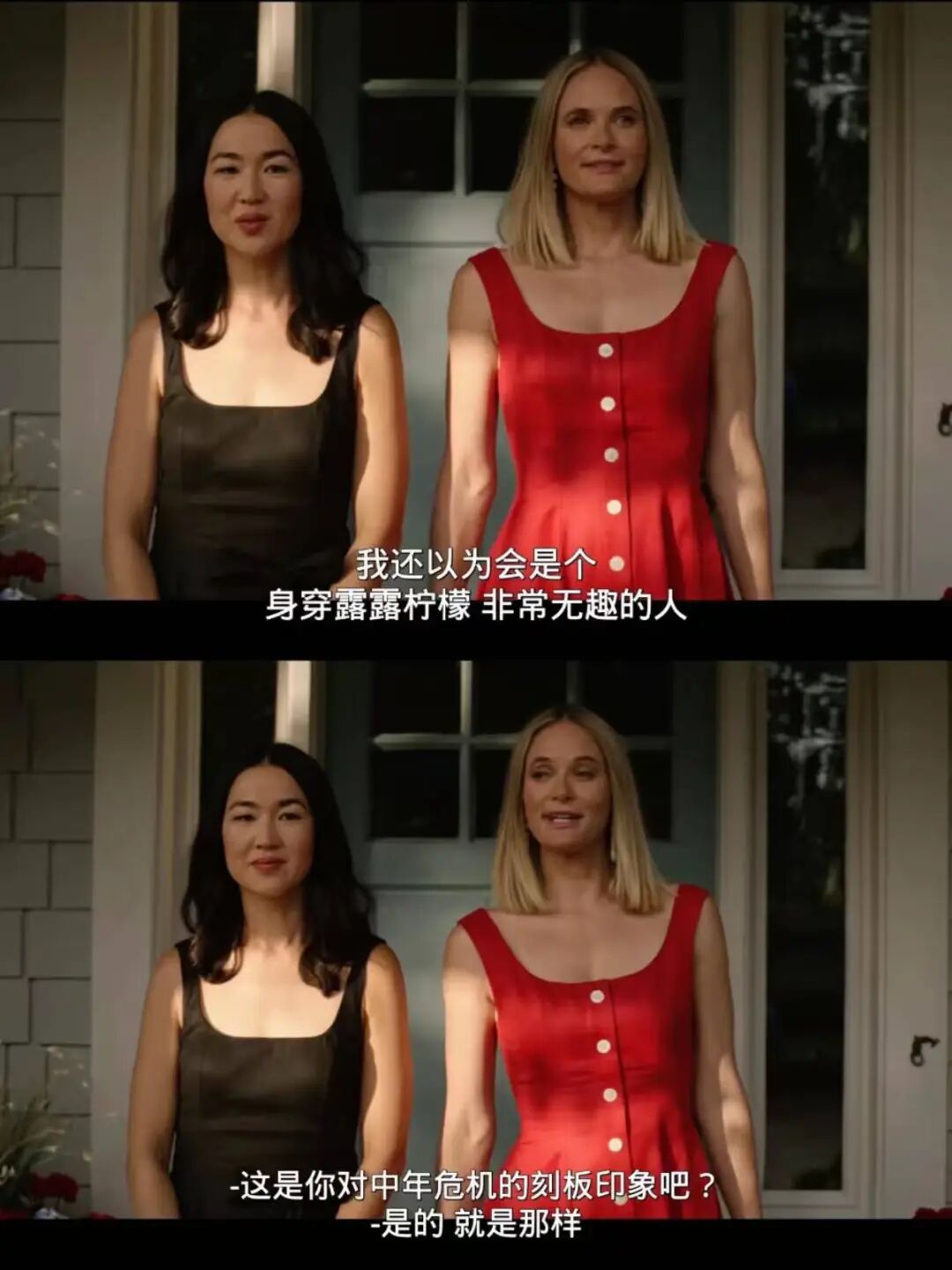
Wearing lululemon seems to signal that you are going to pick up your kid and drop by a yoga class on the way, while wearing alo makes you look like you just walked out of a Pilates studio, heading to the beach for meditation with a cold-pressed green juice. The latter obviously corresponds to a distinct, more expensive lifestyle.
This is probably why alo's products are priced higher than lululemon's even though their quality is not as good as lululemon's.
Street Snap Is Also a Kind of Sport
When lululemon went public in 2007, it successfully opened up the niche market of yoga pants, turning technical apparel for niche scenarios into daily wear, and inspired countless peers in the sportswear sector, including alo's founders Danny Harris and Marco DeGeorge.
In the same year, the two founded alo, whose name is derived from Air, Land and Ocean. Advocating the concept of "green mountains and clear waters", they drew on lululemon's mature experience and focused on the yoga pants track.
At this point, the gap between professionals and amateurs became obvious. lululemon's founder Chip Wilson is a muscular triathlon enthusiast, while alo's two founders only "have experience in yoga practice". The company remained little-known for nearly a decade after its founding, with a plain slogan of "bringing yoga to the world".
It was not until 2016 that alo discovered a broader market than yoga: street snap.
In January 2016, American star Kendall Jenner was photographed wearing Alo yoga pants on the street. After that, photos of celebrities in Alo yoga pants kept being "accidentally" exposed, which finally caught the attention of fashion magazine Teen Vogue in August 2016, with a straightforward headline[1]:
Taylor Swift, Hailey Baldwin, Gigi, and Bella Hadid Wear Alo Yoga Moto Leggings.
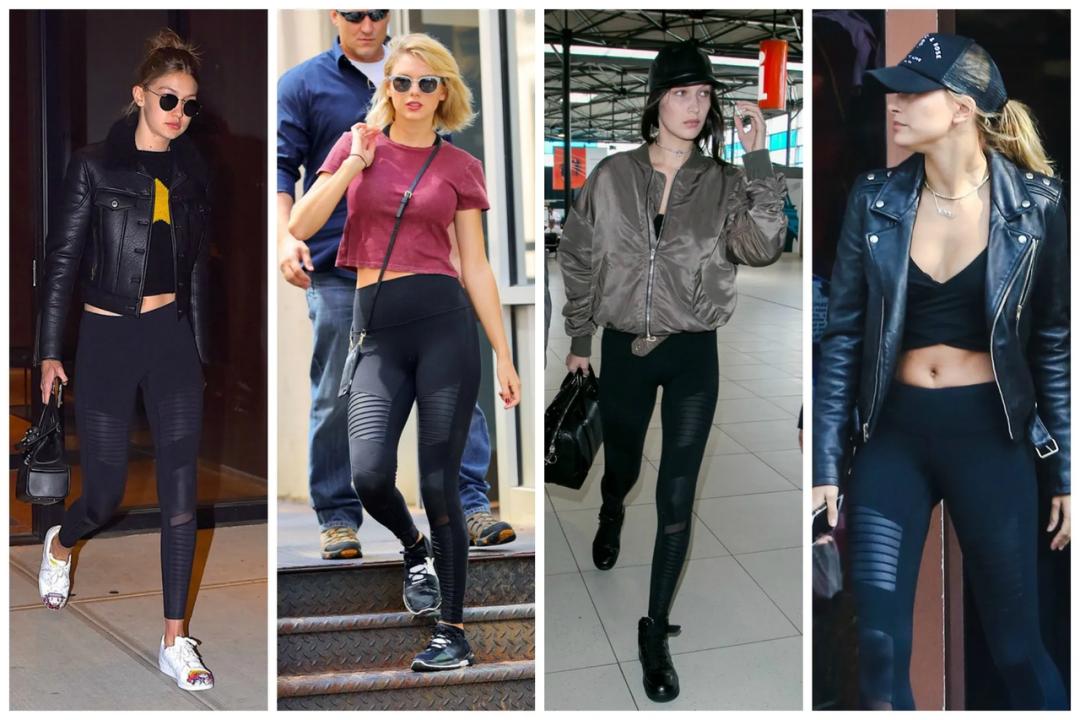
The exact same Moto Leggings in the photo
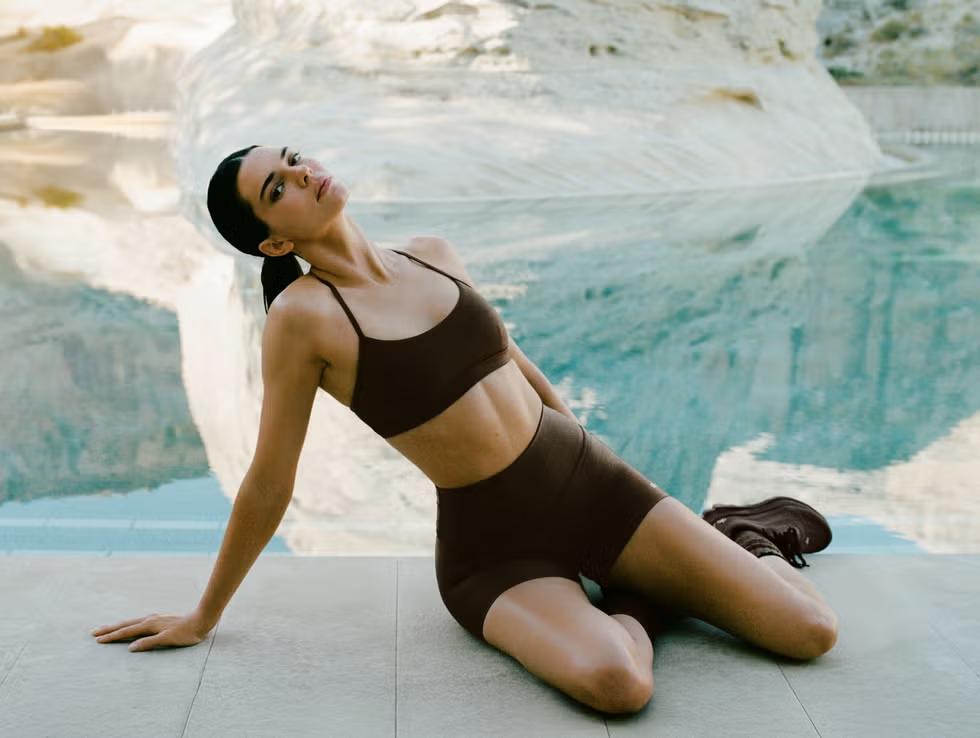
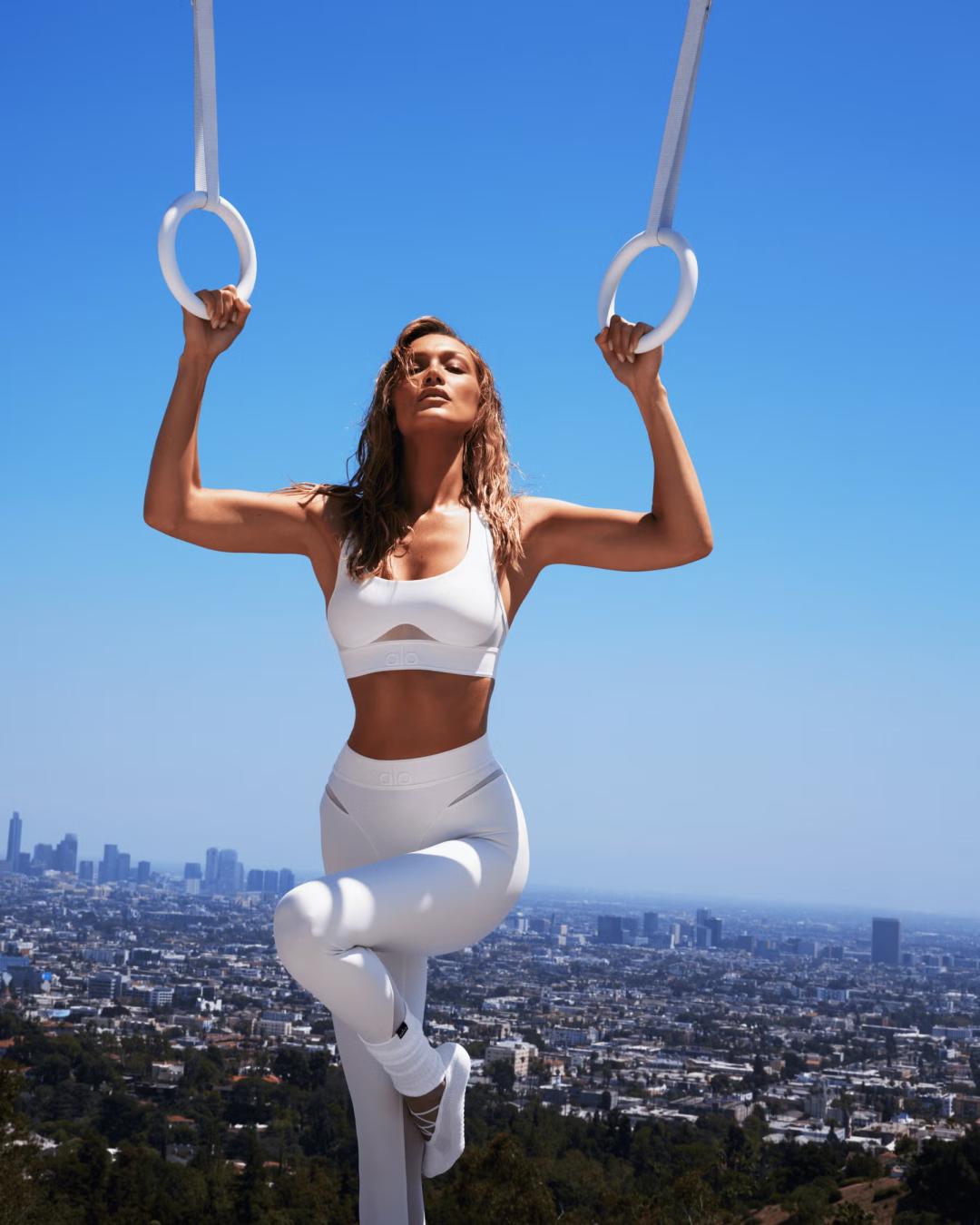
Kendall Jenner and Bella Hadid later successfully became brand ambassadors of alo
Leaving the unpromising past behind and heading for a bright future, alo decided to abandon its previous positioning of the best yoga clothing and rebrand itself as the most fashionable yoga clothing.
alo's signature fabric Airlift is characterized by light weight and subtle sheen. It is hard to say whether it is comfortable enough for yoga practice, but it guarantees perfect photo presentation effect.
Chip Wilson, founder of lululemon, wrote in his autobiography: If a product cannot enhance the aesthetic of women's self-image, women will not spare a second glance at it no matter how good its quality and technology are. It is clear that alo has fully learned the lessons left by the senior player in the industry.
The combination of celebrity endorsement and street snap brought alo huge dividends.
First, it successfully elevated the brand's status, turning it from an obscure niche brand to a high-end product, creating an illusion that celebrities would choose this brand for themselves, rather than recommending a certain mobile phone to fans while using iPhone privately.
Red Bull used the exact same marketing strategy: its logo appears in countless thrilling moments captured by cameras. The small can of drink makes ordinary people seem to share something in common with those fearless, towering figures.
Second, the public accepted that wearing yoga apparel on the street is a new fashion, since Taylor Swift did exactly that. Yoga apparel thus expanded from the sportswear sector to the fashion industry, and finally entered the daily life of ordinary consumers.
When selecting brand ambassadors, alo continued its consistent operation: the opening screen ad for its Tmall flagship store launch featured Zhao Lusi. The public commented that she did not look like a regular fitness enthusiast, and no muscle traces from training could be seen in the promotional video.
Despite the public's complaints, Zhao Lusi's outstanding product sales performance is obvious to all and well documented. In August 2024, Jorya officially announced Zhao Lusi as its first global brand ambassador, and she single-handedly pulled the brand from loss to profitability.
alo's brand ambassador in South Korea is Jisoo. After she became Cartier's global ambassador in 2022, she contributed about 45% of Cartier's total EMV that year with only 12 Instagram posts and 24 Stories.
As for the connection with sports, it can only be said that the smoking area downstairs counts as outdoor space, and the Q3 performance peak is also a peak in the literal sense.
Competitive Level Lifestyle
In his autobiography, Chip Wilson described the user group of lululemon, the "super girl", with the following characteristics:
1. Pursue healthy diets and exercise regularly; 2. Give birth at a later age, so they have more time to dress up; 3. Do not own a large number of clothes, but attach great importance to clothing quality; 4. Have strong purchasing power.
alo refined this positioning and further targeted the high-spending crowd. In 2016, alo made a key decision to open its first flagship store in Beverly Hills, where the most privileged group of "super girls" live, right next to a lululemon store.
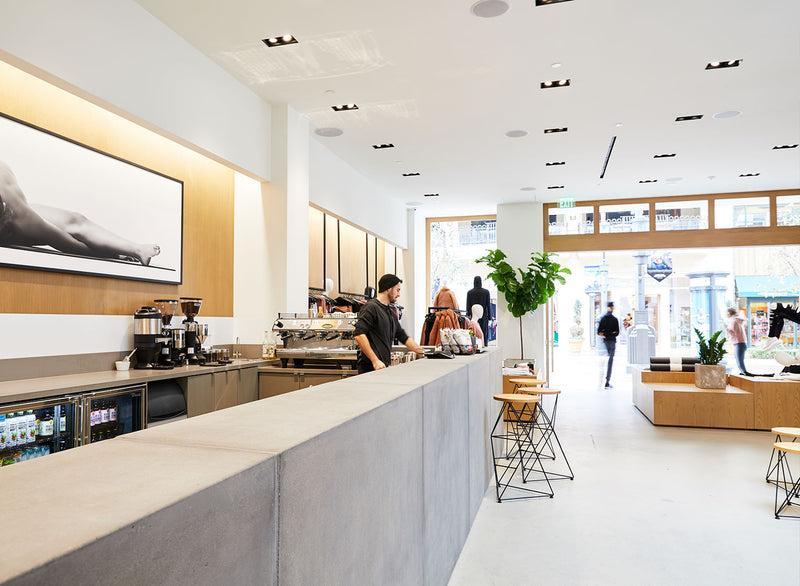
Interior of alo's flagship store
Beverly Hills is the symbolic residence of high-net-worth individuals around the world, the most solid barrier of capitalism. A Lexus is barely enough to cover the purchase tax for a local property, and a Starbucks store there is no more upscale than a Mixue ice cream shop in ordinary neighborhoods. For alo, this place has exactly the consumer group they dream of: competitive level privileged white women.
What defines a competitive level privileged white woman? She wakes up in the morning, drinks water from a Stanley cup, puts on an alo set, uses rhode eye mask and lip gloss for skincare in the bathroom, takes a Pilates class at Equinox, goes to the luxury grocery store erewhon (where a bottle of plain water sells for 20 US dollars), orders a Hailey Bieber-style smoothie, and finishes the meal with an organic salad.
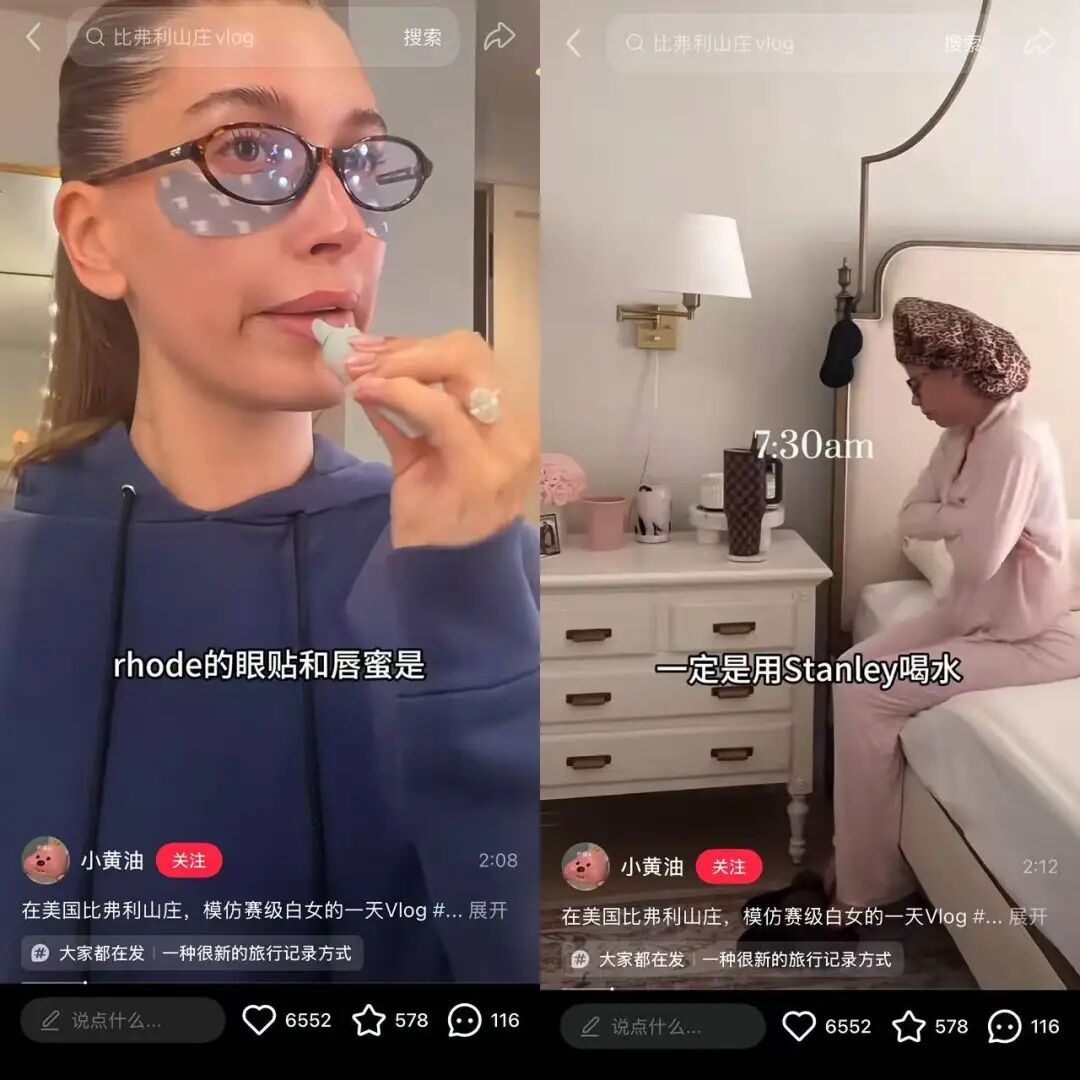
This fixed routine is called wellness, which covers a wider scope than fitness and health, referring to the active management of one's body, mentality and life to maintain an optimal state. And considerable wealth is the basic entry threshold.
Beverly Hills is to the white women's economy what Yiwu is to the small commodity industry. What the socialites show here will soon become a popular trend on Instagram. alo smartly positioned itself right in the center of this trend and achieved viral spread.
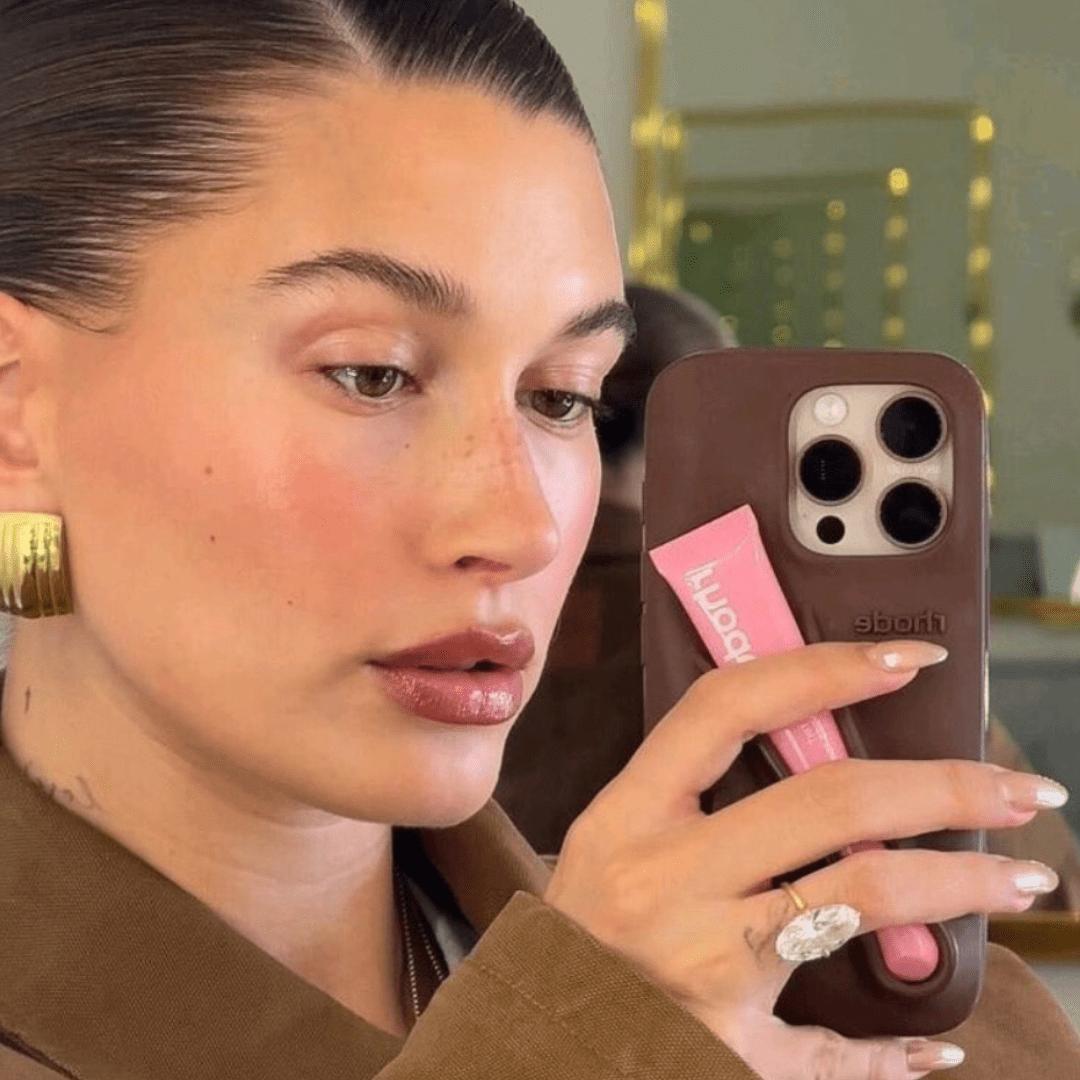
After Hailey posted a mirror selfie, the rhode lip gloss and phone case immediately became bestsellers
The desire to show off wealth is a universal currency all over the world. When this luxurious wellness concept is refined to the extreme, it only leaves a handful of brands such as alo, rhode and skims, which are regarded as standard configurations of wellness. It seems that as long as you buy products from these brands, you can own the same life as those privileged socialites.
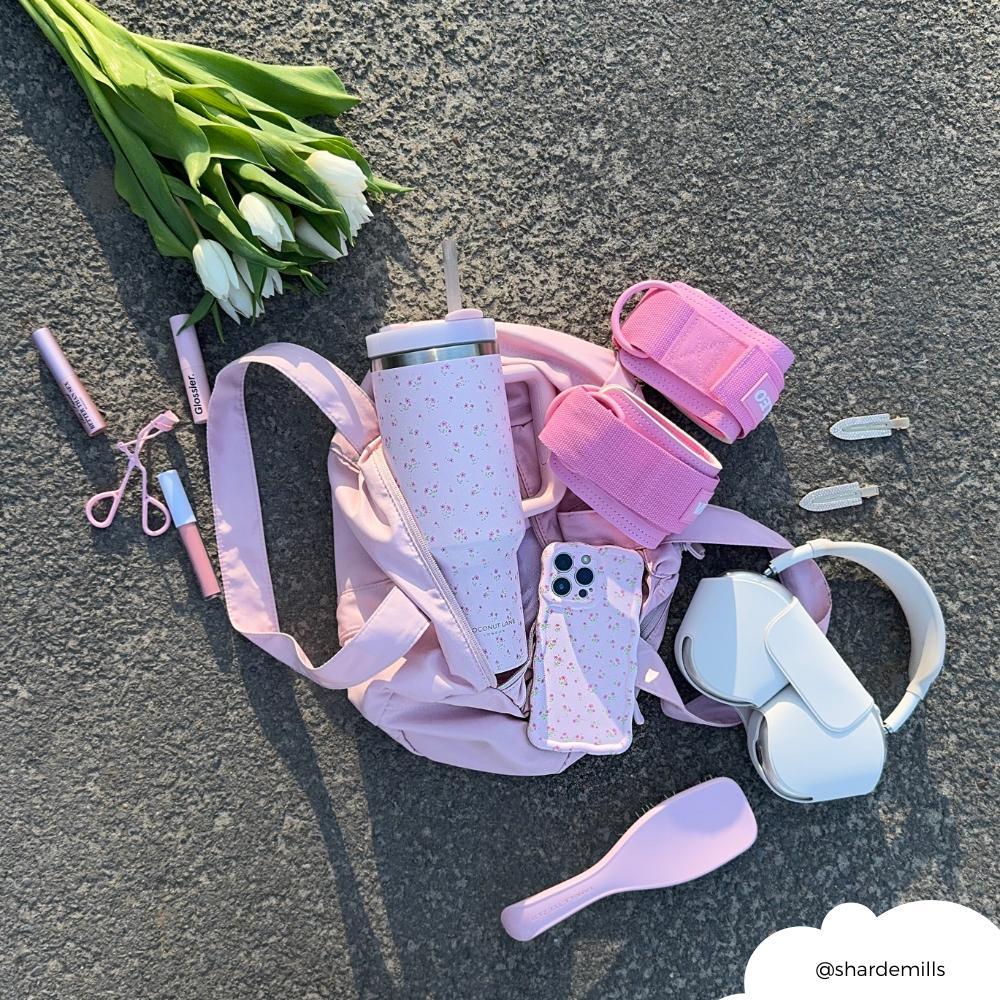
Standard configuration for competitive level privileged white women
Guy Debord wrote in *The Society of the Spectacle*: "In societies where modern conditions of production prevail, all of life presents itself as an immense accumulation of spectacles." Behind the spectacle lies the mediated relationship between people.
Now, you don't need to own a mansion in Beverly Hills, or have a luxury car and a gym in your basement, or even go on a real beach vacation. You just need to spend 138 dollars on a pair of yoga pants to feel like you are part of that privileged lifestyle.
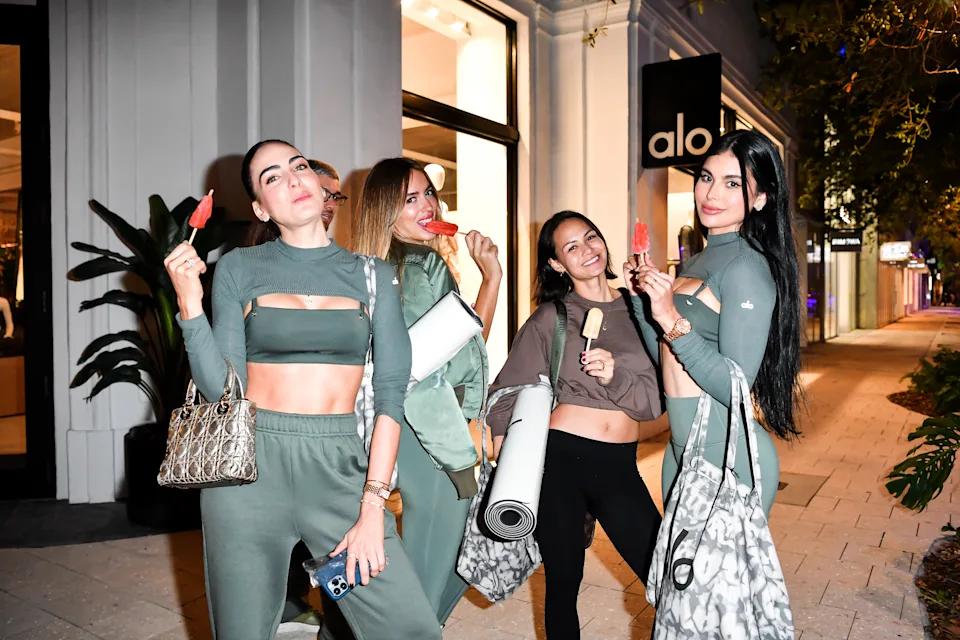
This is consumerism: as an elite like you, you deserve a pair of alo yoga pants.
Major Transformation
From the moment it successfully penetrated the group of competitive level privileged white women, alo and lululemon embarked on two completely different development paths.
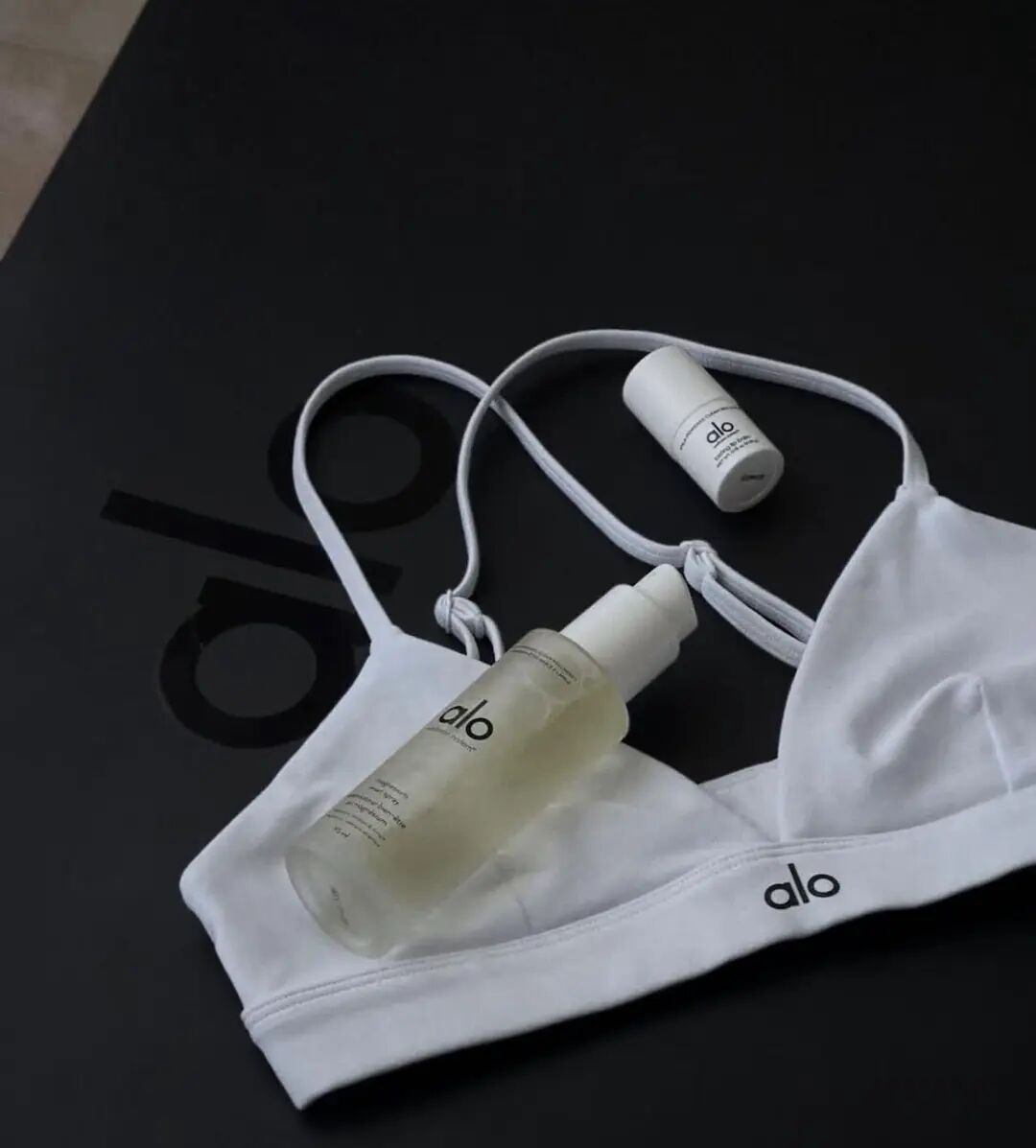
The first step of alo's expansion is to enrich its product categories. It launched a beauty and skincare line in 2020, launched ski and outdoor products in 2022, entered the high-end ready-to-wear sector in 2023, and continued to expand into categories such as bags, jewelry, sunglasses and home goods.
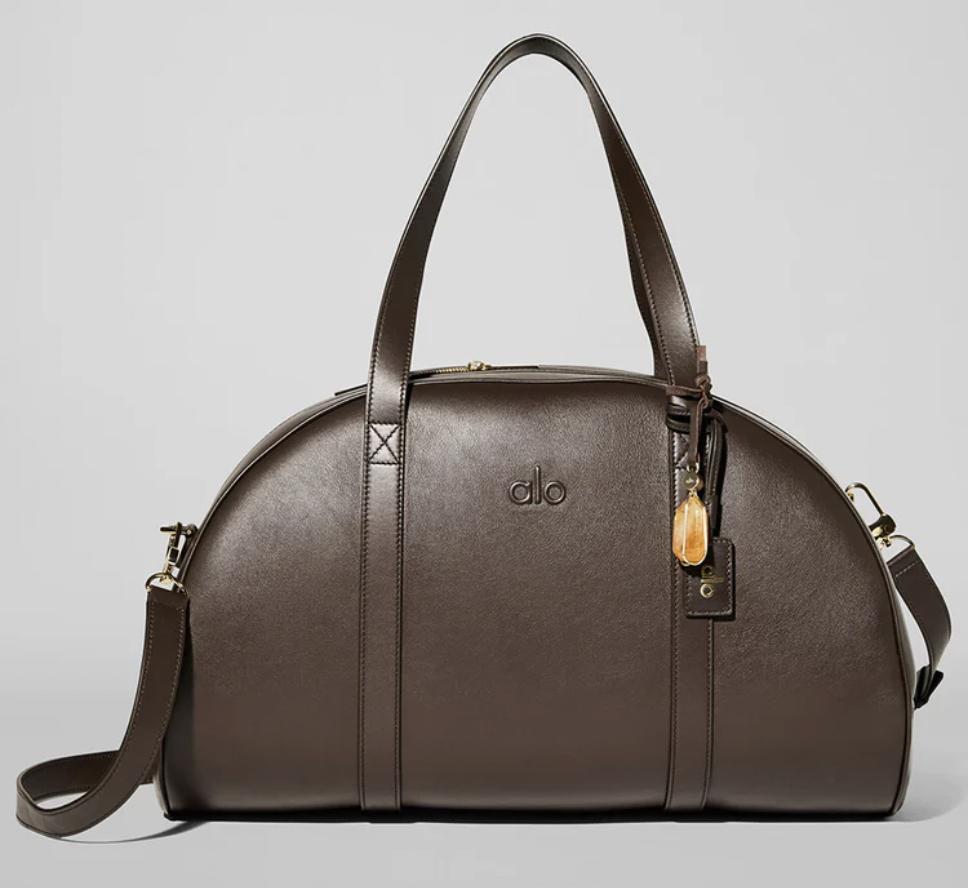
The second step is to formally enter the luxury market by launching its first high-end handbag collection, each bag inlaid with a crystal, with the highest unit price reaching 3600 US dollars.
With the general direction set, the management team also needs to be upgraded. In 2026, alo hired Benedetta Petruzzo, former CEO of Miu Miu, as CEO of its international business, and Jimmy Zhu with Givenchy work experience to lead the Chinese market, and also recruited Andrew Nipp from LVMH, completing the formation of its luxury-specialized management team.
The third step is to let consumers truly experience what the lifestyle means. alo emphasized in interviews that their stores are not ordinary stores, but a sanctuary, which integrates yoga studios, coffee shops, retail areas, experience activities and more.
alo's first Asian flagship store in South Korea is a six-floor building that not only has retail space, but also houses a Wellness Center, a rooftop garden, a healing space and a VIP area. It seems that when you buy a pair of pants in the store, all other supporting experiences are given for free.
