This year's summer movie season has begun to confront "cinematicity".
How much public awareness is there of this year's summer movie season?
The answer is arguably more uplifting than that of any summer season in the past few years.
This is a summer season full of unexpected twists that created several absolute breakout hits. When the total box office settled at 12.498 billion yuan and the number of movie viewers reached 340 million, behind the cold hard data lies in-depth thinking across the entire film industry.
This is a summer season that is impossible to predict and even somewhat hard to understand.
When the market did not hold high expectations for Stephen Chow's new film Kung Fu Women's Football Team, the new Spider-Man installment Spider-Man: Brand New Day, and Nolan's new film Odyssey, the summer season was unexpectedly ignited by these titles in its mid-phase. Meanwhile, works that were expected to be box office magnets such as The Three Kingdoms: Battle for Luoyang and Annual Party Can't Stop! 2 suffered unexpected defeats at the box office, with some failing to even break the 100 million yuan mark and choosing to withdraw from the release schedule. Of course, the most baffling case is the runaway hit Here Comes the Ox, which sparked widespread indignation in the industry, yet became a bona fide annual talking point representing the film sector...
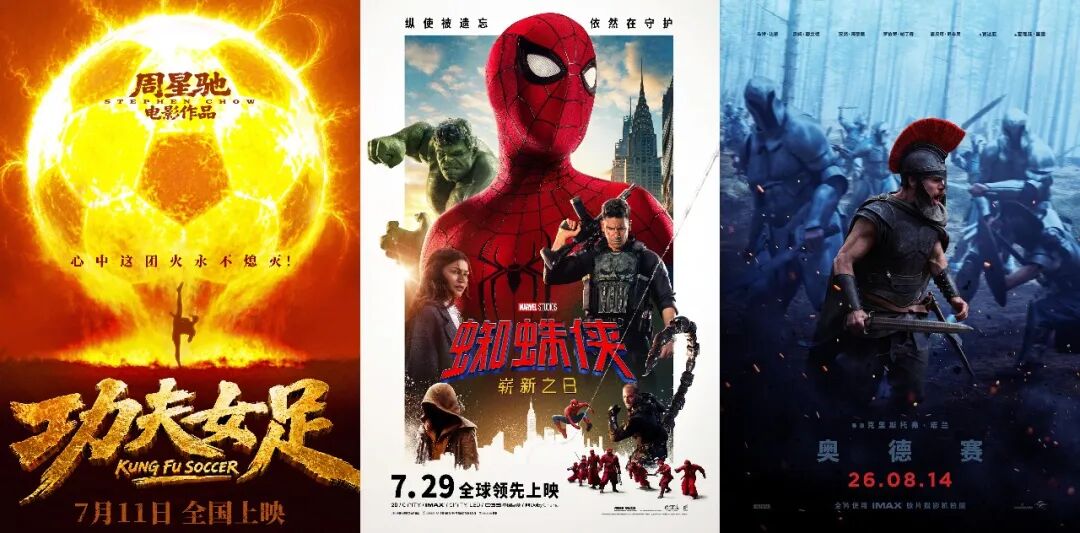
Few practitioners in the industry would dare to assert that they have fully grasped the rules of the market this year. After all, the current film market has long entered the "mid-transition" era, where fresh creative blood is lacking and creative methodologies have become rigid. How can anyone claim to fully understand the content consumption needs of the younger generation?
This gap has become even more prominent in this year's summer season, where the whims and emotional highlights of young audiences often leave industry practitioners completely confused.
It is undeniable that this summer season has seen a high degree of collision between "old concepts" and "new consciousness".
Judging from the results of this summer season, some long-held industry assumptions are also starting to loosen.
A film season that owes its success to "screen-recording marketing"
Some people still cling to the values cherished in the old era, while others embrace the uninhibited spirit of the new era.
"Screen-recording" (the act of filming movie scenes with a mobile phone inside the cinema) is a typical object of discussion in this regard.
Back in 2024, the market was still debating the "first year of screen-recording" sparked by the Xue Zhiqian incident, but by the 2026 summer season, the success of three films was inseparable from the contribution of "screen-recording marketing".
The first of these is Kung Fu Women's Football Team.
From a marketing perspective, the operation of Kung Fu Women's Football Team can be regarded as a "gray area experiment".
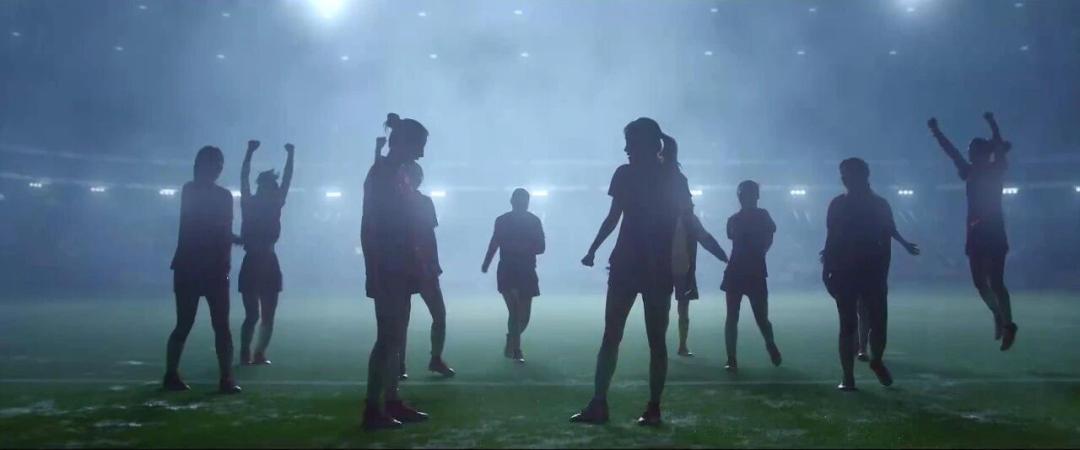
Still from Kung Fu Women's Football Team
The common practice in the industry is that even if the law does not explicitly prohibit screen-recording, film distributors will actively restrict the spread of such content on social platforms out of copyright protection considerations. However, in the early stage of this film's release, a large amount of screen-recording content spread across social media with almost no resistance, and marketing accounts even directly used screen-recording footage as promotional material. This abnormal "silence" was not broken until the 13th by a belated statement calling for "refusal of unauthorized filming", whose persuasiveness was naturally greatly reduced.
If you connect all these series of actions, a clear logical chain emerges: the so-called "screen-recording promotion" actually takes controversial visual presentation as the attraction point, creates social topics through polarized word-of-mouth, and leverages Stephen Chow's nostalgic appeal, ultimately converting audiences' desire to "see for themselves" into theater ticket purchases.
Of course, most of the audiences who went to the cinema, especially those from lower-tier markets and family audiences, could find joy in the 106-minute film through its exaggerated performances, kung fu action scenes and lively plots.
The next breakout hit is Spider-Man: Brand New Day.
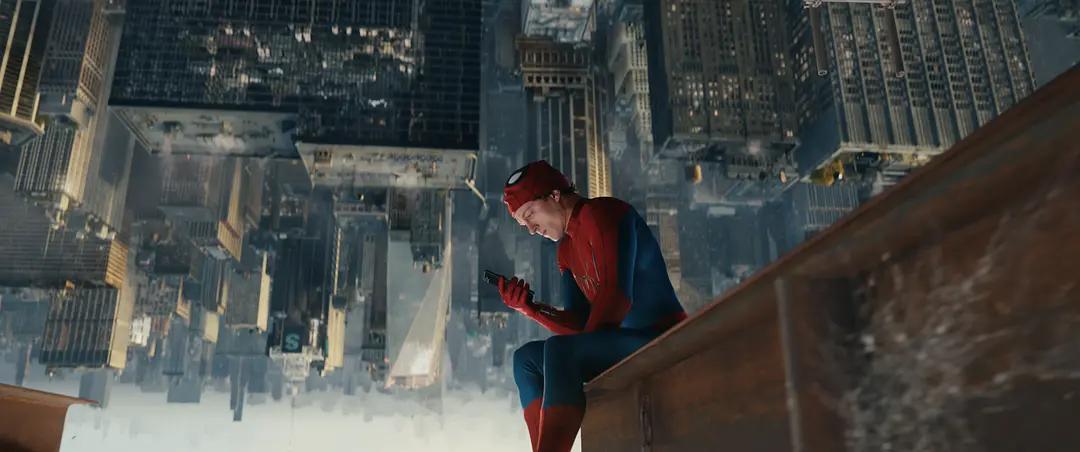
Still from Spider-Man: Brand New Day
If you ask people what their most memorable scene from this version of Spider-Man is, it is definitely the moment when Peter Parker sits alone on a pillar, overlooking the entire city under the glow of the setting sun, conveying a strong sense of loneliness.
This scene was screen-recorded by countless content creators, becoming a viral post on social media that sparked discussions about the self-redemption required for people to grow up, and the sense of loneliness that belongs to adults.
This emotional highlight instantly went viral across the whole internet, and this "screen-recording" scene could be found in every comment section where people asked "Is Spider-Man 4 worth watching?".
In addition, more than one scene became classic spread material: the shot of Jean Gray leaning against the bus window with a calm gaze was also widely screen-recorded and loved by many audiences.

Source: Internet
It can be said that Spider-Man 4 grossed 1.5 billion yuan in mainland China this summer, hitting a new all-time high. Its success did not come from the Hollywood blockbuster effect, nor the public's nostalgia for the IP, but more from the emotional identification with the theme of growing up, and it was also inseparable from the boost of "screen-recording marketing".
Last but not least, we have to mention the best absurd cultural phenomenon of the year: Here Comes the Ox.
The runaway popularity of Here Comes the Ox quickly sparked widespread criticism from a large number of industry practitioners. The core reason, apart from the film's poor quality, is that screen-recording in this film is no longer a sneaky violation, but has become an open collective ritual.
From the first batch of audiences taking screen recordings to shout "avoid this bad movie", to the next batch of audiences finding some kind of abstract fun in the screen recordings, to more people flooding into the cinema just to shoot a short clip that can be used as social currency, then the nationwide meme creation wave around "Here Comes the Ox" swept across the internet, and "Here Comes the Ox" instantly became a cultural phenomenon.
The screen-recording trend of "Here Comes the Ox" turned cinemas into temporary amusement parks, and pushed the public discussion of "film" to a long-unseen climax. Behind this trend lies the public's renewed urging of the film market, as well as practitioners' re-examination of film creation and promotion methodologies.
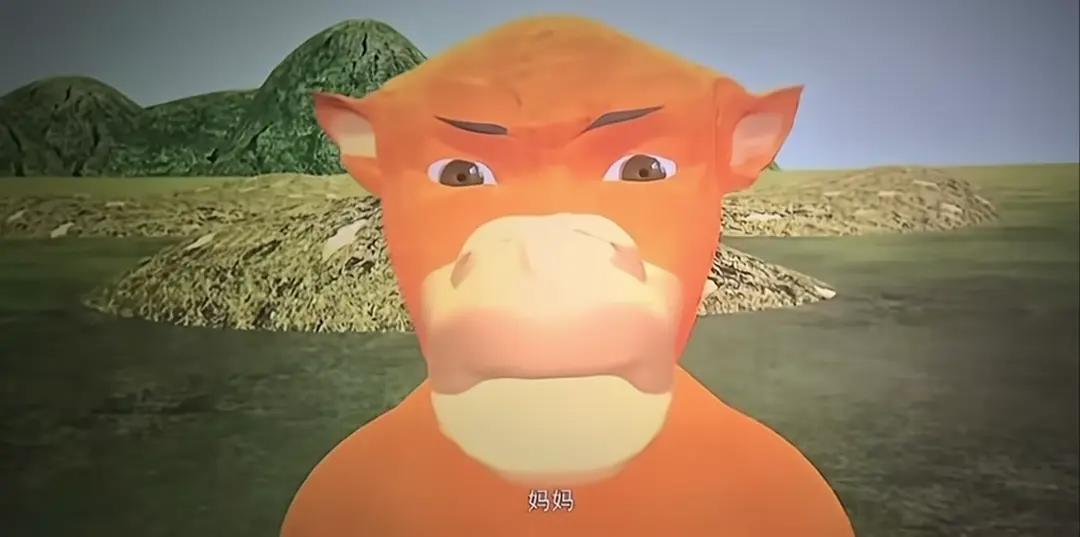
Still from Here Comes the Ox
These three films all point to the same fact: "Screen-recording" is evolving from a behavior resented by the industry into a special marketing leverage.
For many practitioners, this is no different from their ideal world being eroded by reality — the Eden where work quality is the only passport to success is being recoded by new consumption logic.
But in an era where audiences are always asking "why should I go to the cinema", "screen-recording" unexpectedly opened a floodgate of emotional release: It is part of the circulation of social currency, and also a declaration of consumption sovereignty of the new generation of audiences who take "the self as the center".
Re-understanding "mass appeal"
If this summer season tells the market to learn to follow the unique narrative pursuits of the younger generation in terms of marketing methods, it also sets higher requirements for the idea that "as long as the work is good-looking it is enough". The fruits of market victory are increasingly leaning towards "good-looking" works with broad mass appeal, which further reveals that not all good-looking works will be favored, and "whether the work has discussion value" is a rather critical factor.
This also reveals that this summer season broke a long-standing fixed paradigm: will a film definitely succeed as long as it earns rave reviews and meets the basic standard of "good-looking"?
There are two underperforming works worth analyzing.
The first one is The Three Kingdoms Part 1: Battle for Luoyang, which earned a high score of 8 on Douban. We cannot say it lost because it is "not good-looking", but the box office reality is harsh: before it withdrew from release, Battle for Luoyang only grossed 92.98 million yuan, which is even lower than the 60.1 million yuan box office of Here Comes the Ox, making many people feel sorry for this work.
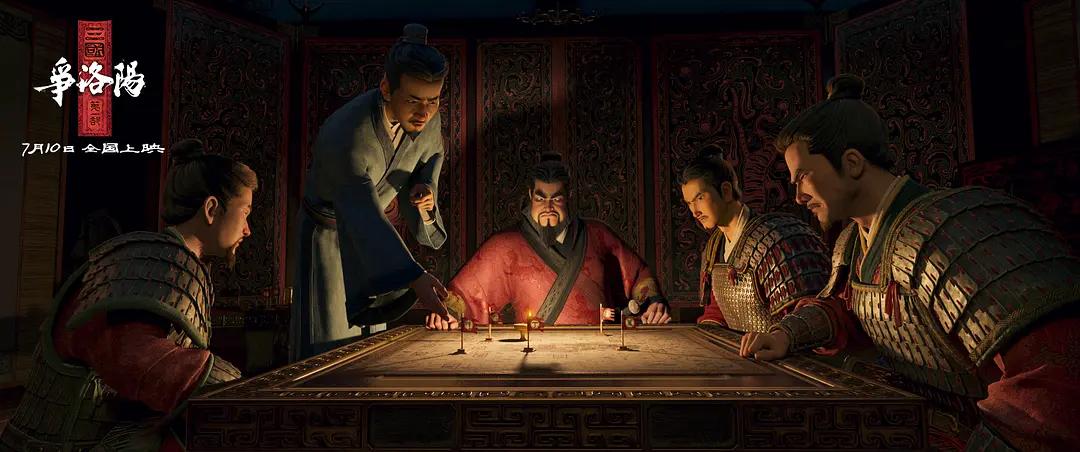
Still from The Three Kingdoms Part 1: Battle for Luoyang
Why didn't the public pay for the 8-point Battle for Luoyang? Is it not good-looking?
The key reason is that it is not "good-looking" in a mass-appeal sense, and it did not create "discussion value".
Looking at the marketing strategy of Battle for Luoyang, it centered on two core points: the improvement of domestic animation production standards, and comparing itself to Chang'an Three Thousand Li which grossed 1.8 billion yuan three years ago, aiming to boost public confidence in domestic animation.
However, from the perspective of story perspective selection and theme narrative, Battle for Luoyang overestimated the idea that "good creation can conquer audiences". It did not figure out why audiences would go to the cinema to watch a story about Cao Cao, a historical figure who does not have high public appeal.
Perhaps from the perspective of character selection, it intended to follow the route of "breaking out from niche circles to attract the general public", but the risk index of this route rose sharply.
In the eyes of many audiences, behind the 1.8 billion yuan box office of Chang'an Three Thousand Li is a family-friendly work: its story rhythm, imagination, and the experience that the whole family can enjoy by reciting poems, counting poets, and seeing familiar historical figures are all likable, worth paying for, and "worthy of being discussed" by the public.

Still from Chang'an Three Thousand Li
But in Battle for Luoyang, not to mention the fact that there is a natural barrier between the public and the characters of Yuan Shao and Cao Cao, the "chronicle of history" style of narrative can hardly impress the general public. What's more, the favorable comments and expectations from audiences after watching all focused on the character Lu Bu and the famous battle scene "Three Heroes Fighting against Lu Bu", while the whole film is mostly supported by the story of Cao Cao and Yuan Shao, which the public shows little interest in.
History fans are satisfied, but what then?
Battle for Luoyang is a good niche film work, it is good-looking, but it is not a qualified mass film product. The "discussion value" of the film was ignored in the design stage, which is the key reason why this good-looking film performed unsatisfactorily.
The same situation also happened to When the Stars Shine Bright.
Just like Battle for Luoyang, before its release, the overwhelming high word-of-mouth from various preview screenings and advance viewings made audiences full of expectations. Many sci-fi fans praised it as "solid", but where is the point that can stimulate the general public?

Still from When the Stars Shine Bright
It was in a more passive position than Battle for Luoyang, and finally withdrew from release after grossing only 73.73 million yuan.
So who are the winners?
They are Eight Immortals! which has even better word-of-mouth and stronger family-friendly mass appeal, Kung Fu Women's Football Team supported by Stephen Chow's nostalgic effect and lower-tier market audiences, and Welcome to Dragon Restaurant with Shen Teng as the guaranteed box office draw and excellent production quality...
Among these cases, the case of Stephen Chow deserves separate discussion. In fact, his previous film The New King of Comedy had already reduced the nostalgic appeal of Stephen Chow among the public, so why was he able to make a comeback this time?
A well-recognized reason is that his active presence in short video content creation helped him regain mass appeal: from his classic old works continuously gaining new popularity on short video platforms, to his entry into the short drama industry, and his authorization of AI secondary creation, Stephen Chow does not live in the past, but connects his past glory with the present, thus giving birth to the "Stephen Chow 2.0" era.