After 17 years of transition between fuel-powered and electric vehicles, why is it said that the prevailing industry trend in the automotive sector has never shifted?
In the past two years, the automotive market has never lacked topics that stimulate public nerves.
When the cycle for a new car to go from blueprint to delivery is repeatedly shortened, "quickly-assembled vehicles" have become a hotly discussed topic. Before the hype fades away, news breaks out that luxury midsize SUVs that once required price premiums and long queues are now officially priced down into the 200,000-yuan range. Consumers are just about to celebrate, while long-established dealership stores that have been in business for more than ten years can only quietly stop receiving customers after a short text message...
All kinds of such phenomena are simply "one scene ends and another begins", making many industry participants sigh that the pace is so fast that it is dazzling.
In fact, looking back in 2026, from the sporadic demonstration of the "Ten Cities, Thousand Vehicles" project in 2009 to the fact that new energy vehicles account for more than 60% of monthly new car retail sales today, over the past 17 years, power forms have been iterated, brand rankings have been reshuffled, and consumption concepts have been overturned.
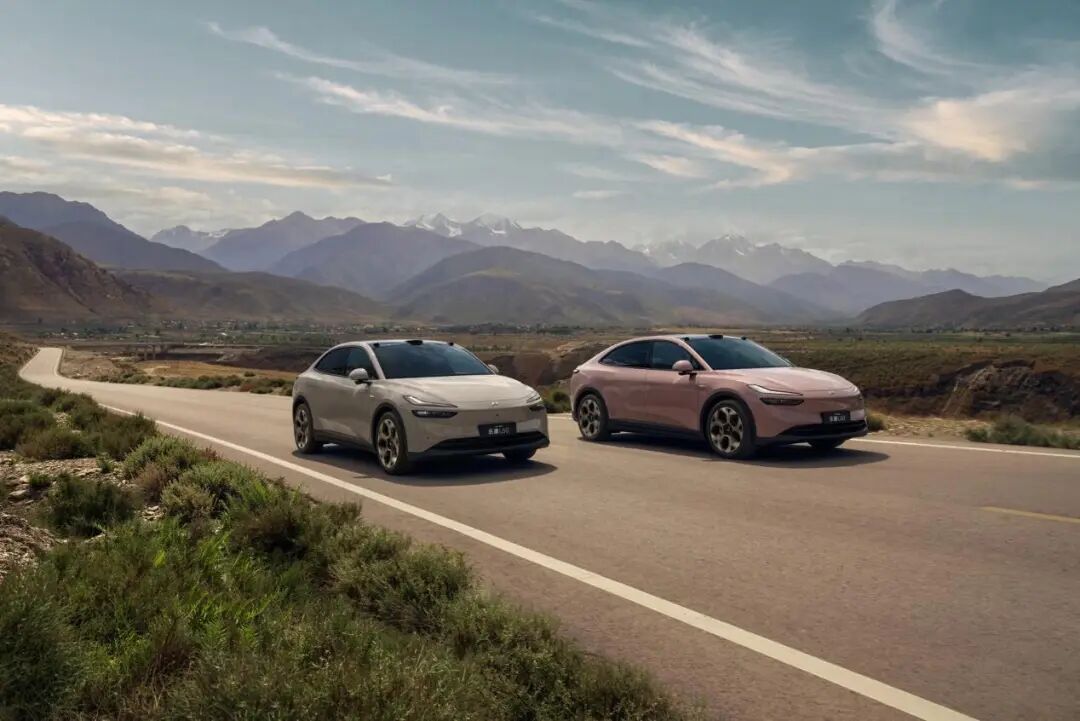
But in my opinion, the underlying logic shows a certain degree of constancy: Policies set the wind in motion, users determine the wind direction, and enterprises that stand firm are always answering the same simple proposition: how to make travel more worry-free and easier to use.
The wind rises to break the order: change and constancy on the 17-year rugged journey
First of all, it should be acknowledged that the starting point of China's new energy vehicle industry bears distinct policy imprints.
In 2009, four ministries and commissions launched the "Ten Cities, Thousand Vehicles" project, with policies acting as sowers; in 2012, the State Council issued the industrial development plan, and the industry had its first national-level roadmap; after that, policies advanced step by step. In 2014, the exemption from vehicle purchase tax unlocked the gate of car purchase costs. In 2017, the Dual Credit Policy systematically pushed automakers onto the electrification track. The 2020 plan set a target of 20% market share by 2025, which was achieved just two years later, and the purchase subsidy was withdrawn in the same year.
Obviously, the market process is significantly faster than the plan, and policies have also shifted from "supporting to walk" to "watching to run".
Then in 2024, the trade-in policy took over, the penetration rate of new energy vehicles continued to increase, and in 2025, the market share in China's domestic market exceeded 50% for the first time. Entering 2026, data from the China Passenger Car Association (CPCA) shows that the retail penetration rate of domestic passenger vehicles in July has reached 65.1%.
Policies set the wind in motion, and the industry is changing rapidly. More than a hundred new energy vehicle brands have emerged during this period. However, the cultivated soil does not designate a winner. Which seed can grow into a big tree is ultimately left to products and users.
Before the wind rose, consumers' car selection order was so stable that it was almost dogmatic: they looked at the brand first, then the three major components consisting of engine, transmission and chassis, and finally compared fuel consumption and configurations.
However, when the generation that grew up with smartphones becomes the main force of car buyers, and when automobiles are required to continuously evolve like electronic devices, the old measurement standards begin to loosen.
The change of measurement standards has a clear footnote at the 2025 Shanghai Auto Show. Li Bin, Founder, Chairman and CEO of NIO, first defined the "new three major components" of smart vehicles, namely the intelligent driving chip, the global operating system and the intelligent chassis. These three core technologies determine the upper limit of experience and the upper limit of safety of smart vehicles.
It can be said that after 17 years of twists and turns, from the old three major components to the new three major components, the underlying logic for judging a good car is still the user. The market boom has not disappeared, it is just waiting for new product forms to take over.
Shrink the body and expand the cabin: the demand for space has never changed
The unchanging demand of users first lies in the level that the body can directly perceive.
A family car needs to hold the decency of the whole family, with enough space and low enough car usage costs. This is an appeal engraved in the instinct of car purchase, which has nothing to do with the power form. In the fuel vehicle era, large space was almost achieved by spending a lot of money. To get a spacious interior, you had to lengthen the body and upgrade configurations, which made the cost rise steadily. The electric architecture fundamentally rewrites this problem. The long wheelbase, completely flat floor, no engine and transmission crowding the cabin, making it possible for the first time for crossover-level space to become a standard configuration at the same price range.
As a result, the entire industry has embarked on a coincident movement of "shrinking the body and expanding the cabin": the external dimensions no longer expand blindly, while the internal space grows inch by inch through ingenious engineering designs.
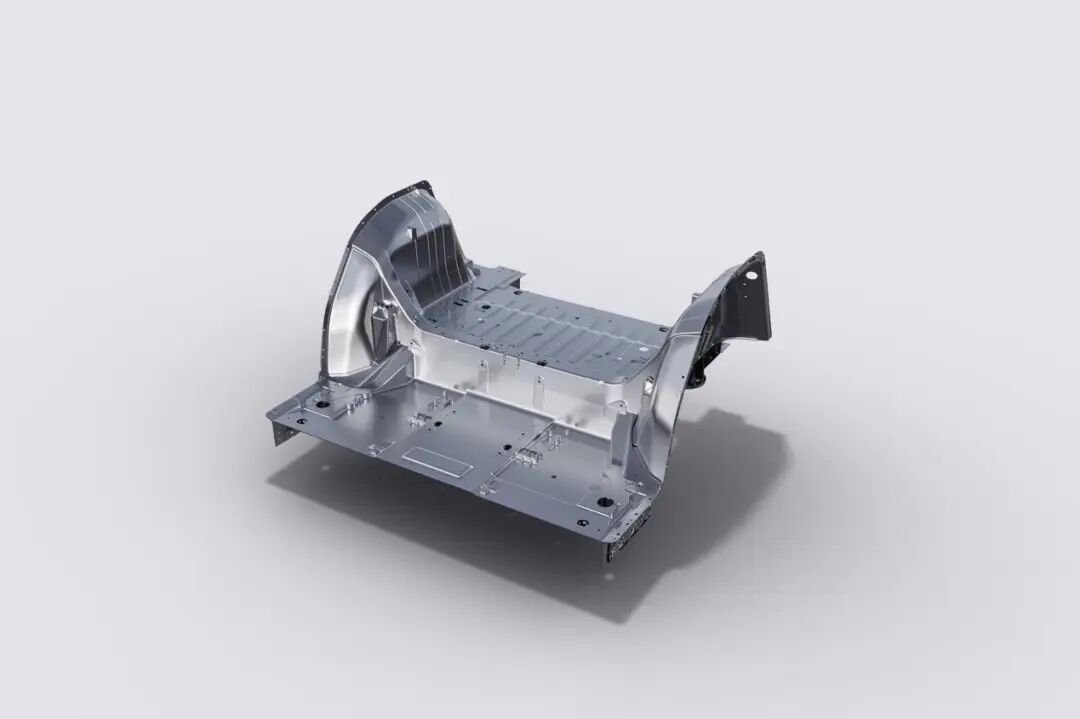
Lightweight is another main line of this movement.
Every 100kg reduction in vehicle weight will bring a visible improvement in range and energy consumption. Therefore, Tesla uses integrated die-casting to reduce the number of rear floor parts from 70 to one. New power brands such as XPeng and Leapmotor are also repeatedly reducing weight on 800V platforms and high-voltage electric drives. The industry consensus is getting clearer: space should be gained from the cabin, and weight should be saved from the structure.
The LeDao L60 is also a typical sample in this industry trend.
LeDao is an automotive brand built by NIO for high-quality families, sharing NIO's technology and services. At the beginning of the project, the weight reduction target set for the rear-wheel drive version was 1900 kg, which is exactly the weight of Tesla Model Y. The LeDao team did not take the shortcut of "replacing a few lightweight materials". Instead, the first step was to make trade-offs on the architecture, arranging the rear suspension and motor extremely compactly, so that the core components work efficiently in coordination rather than piling up materials separately. This confidence comes from the full-stack self-developed underlying capabilities of core components such as motors and batteries.
Another part of the weight reduction comes from the trade-off of configurations around family needs. LeDao uses suspension layout, integrated spring-damper structure and software chassis functions to improve steering flexibility, so the seats can be directly reclined to zero-gravity posture without additional slide rails. Finally, the LeDao L60 weighs about 1885 kg, which is more than ten kilograms lighter than the initially benchmarked Model Y.
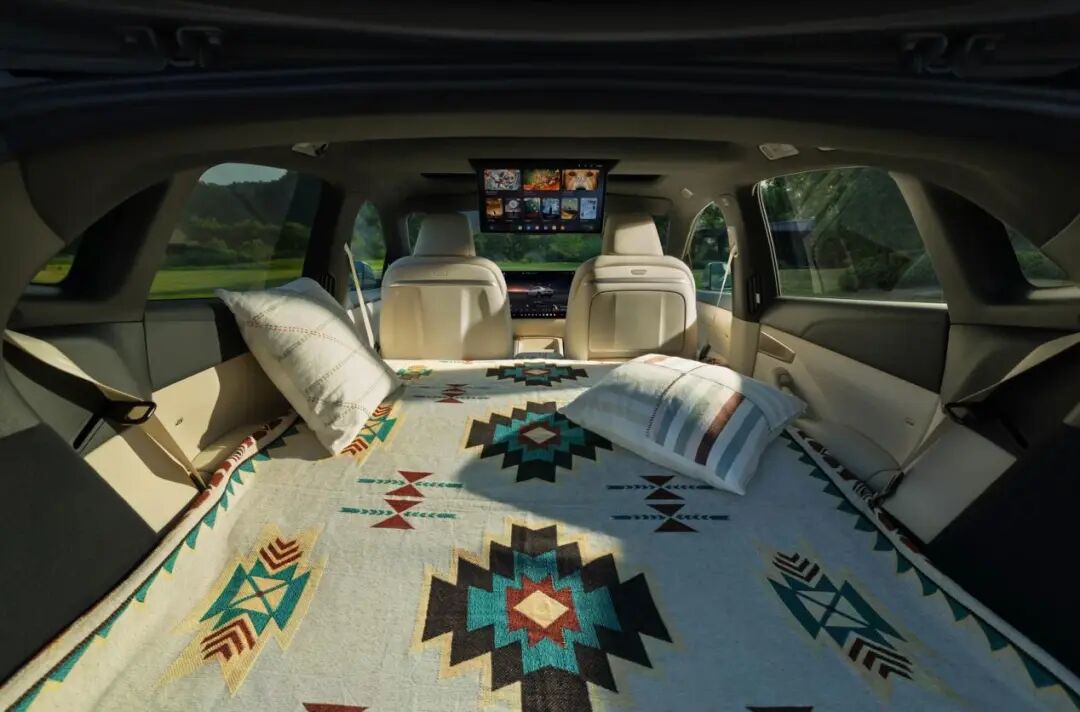
Such trade-offs are most appealing to users who switch back from Tesla. In the owner stories of replacing Model 3 with LeDao L60, the high-frequency reasons are surprisingly consistent: the small car has flexible handling, but the rear row is really cramped, and the octogenarian elderly in the family have to make great efforts to get in and out. Therefore, the large space in the second row becomes the primary demand for car replacement, and the L60 just makes up for this regret with a completely flat rear row that can lie down.
Return space to people, remove weight from the car, and the unchanging physical demand is thus satisfied again by new product forms.
Intelligence for all: the desire for flagship-level experience remains lasting
If space and lightweight comfort the body, intelligence, comfort and safety comfort the mind. The popularization of intelligent experience has also gone a long way from high-priced optional configurations to standard configurations for all.
In the fuel vehicle era, intelligence was more like a business of "paid optional configuration plus subscription", with limited capabilities and continuous charges. Tesla rewrote the paradigm of "intelligence means premium" through pre-installation of all vehicle functions and remote over-the-air updates, bringing a decent intelligent experience into the 250,000-yuan price range for the first time. Chinese brands have gone a step further, making advanced intelligent driving and comfort configurations standard in the mainstream price range, taking the second step of intelligent popularization.
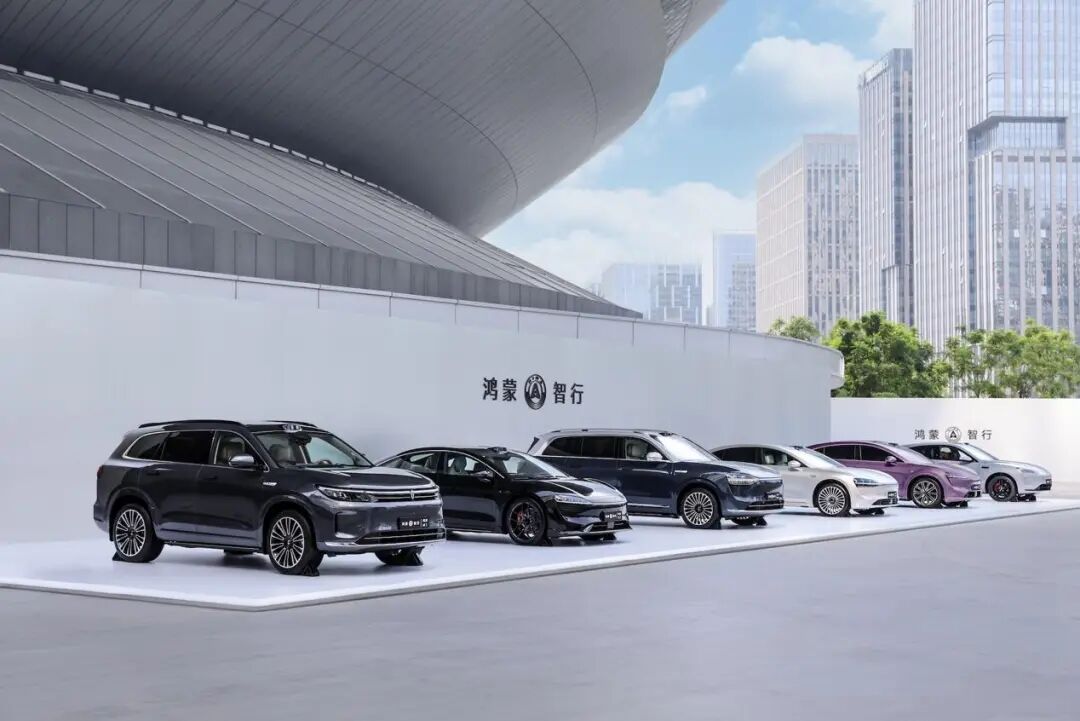
Popularization is not the solitary courage of one company, but the convergence of the whole industry. Huawei equips every model of AITO, Luxeed and Zhijie with advanced intelligent driving; XPeng continues to bring urban navigation assisted driving down to the 200,000-yuan level from XNGP to AI Tianji; Li Auto makes AD Max and Magic Carpet Air Suspension standard for family users. Obviously, the whole industry is forming the same judgment: intelligence is no longer a flagship-only display, but a daily experience that mainstream families deserve to enjoy.
The new LeDao L60 takes this popularization logic to the extreme.
Relying on NIO's 11 years of technology accumulation, LeDao L60 is the first model in the industry to fully bring the flagship intelligent three-piece set into the 200,000-yuan price range. The world's first 5nm automotive-grade intelligent driving chip Shenji NX9031 that is homologous to NIO ES8 and ES9, the industry's first AI-oriented full-vehicle global operating system SkyOS·Tianji, and China's first NIO World Model (NWM) for autonomous driving are all equipped on the vehicle. The overall guide price range is from 192,800 yuan to 222,800 yuan. The technological gap that once lay between flagships and mainstream models has been filled by a 200,000-yuan level family SUV.

However, what really makes the technology widely known is the "hell-level" real-world test. At the launch conference of the new LeDao L60 on June 11, 2026, the whole process of the vehicle passing through the 540-meter tunnel in Jianan Karst Cave in Guizhou with no light, no GPS signal, the narrowest point only 2.5 meters wide, with zero takeover of intelligent assisted driving was announced.
It is reported that after the video was spread overseas, some foreign netizens directly tagged Elon Musk. Within 24 hours, the cumulative views of related videos on X platform and YouTube exceeded 10 million, becoming a rare overseas event of China's intelligent driving that "speaks with cases rather than shouts with parameters".
Tesla made the world believe that cars can be intelligent, while Chinese brands let 200,000-yuan level family cars hold flagship intelligence, riding comfort and all-domain safety for the first time.
Breakthrough in energy replenishment: the anxiety about range and convenience finally has an answer
After the demands of the body and the mind are responded to one by one, the last unchanging demand is the certainty of energy conservation and energy replenishment.
3 minutes of refueling and service stations everywhere were once the most solid moat of fuel vehicles. As a successful transition solution, extended-range electric vehicles helped users cross the psychological threshold, and the recognition of pure electric vehicles has gradually formed in this process.
In order to make up for the shortcomings of energy replenishment, the entire industry has pushed the charging speed to new heights. In the early stage, the power of DC fast charging was generally around 60 kW, and it took hours to replenish energy. After the 800V high-voltage platform was mass-produced, 4C and 5C ultra-fast charging shortened the time to the quarter-hour level. Solutions such as Huawei's full-liquid-cooling ultra-fast charging, XPeng's 800V, and Li Auto's 5C are also being intensively deployed. Data from the National Energy Administration shows that by the end of July 2026, the total number of charging infrastructure in China has reached 23.683 million, a year-on-year increase of 41.9%.
However, what fast charging and ultra-fast charging answer is always "how fast can we replenish energy", another more long-term problem has not disappeared: the service life of the vehicle and the battery are not the same.
The whole vehicle can be driven for more than ten years, but the power battery has its own degradation curve. The recent successive heated discussions about battery failures and degradation incidents have repeatedly pushed this hidden worry into the spotlight. No matter how fast the charging speed is, it cannot solve this problem left by time.
As a different solution to this problem, battery swapping has begun to be taken seriously by more and more enterprises. The battery and the vehicle are moderately separated, and the battery swapping can be completed in about 3 minutes, with the experience comparable to refueling. More critically, the batteries are uniformly monitored, maintained and iterated by the professional energy network, and the degradation anxiety is transferred from the car owner to the inside of the energy system. The deadlock that the battery degrades before the vehicle is still in good condition is thus fundamentally broken.
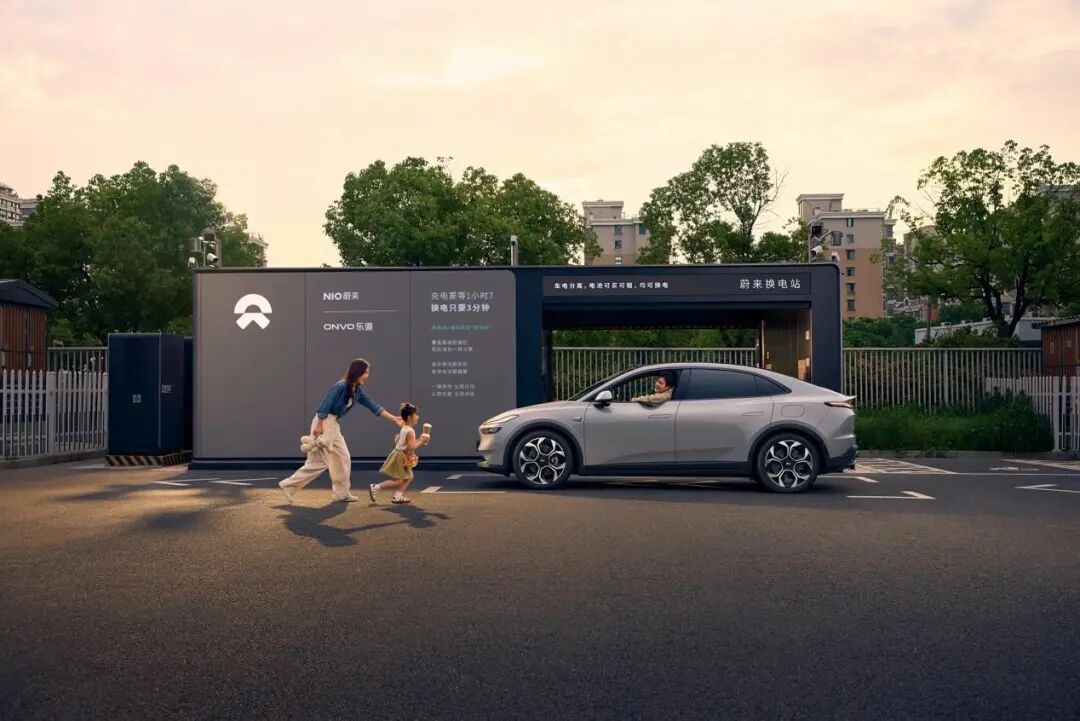
Among many entrants, NIO is the builder that has adhered to this route for the longest time, and the LeDao brand fully shares this system. Since 2018, NIO has built its own charging and battery swapping network. At present, it has built more than 9,000 charging and battery swapping stations, of which more than 4,000 are battery swapping stations. The high-speed battery swapping network covers 9 vertical, 11 horizontal routes and main urban agglomeration channels. What users buy