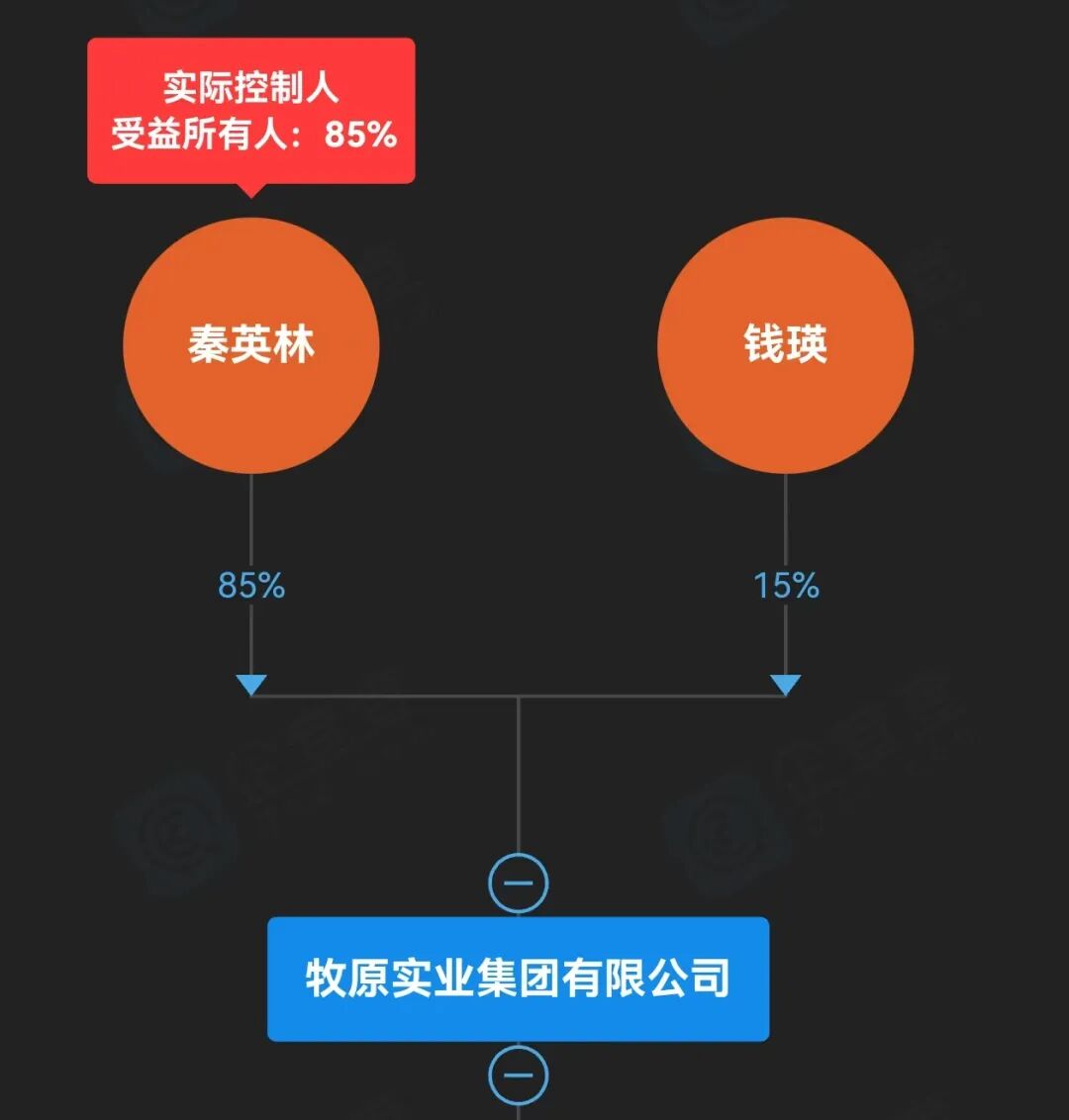
With a loss of 6 billion yuan in half a year, how many hidden cards up its sleeve does Muyuan Co., Ltd. still have?
"Operating revenue reached 59.41 billion yuan, down 22.30% year on year; Net profit attributable to shareholders recorded a loss of 6.078 billion yuan, compared with a profit of 10.53 billion yuan in the same period last year."
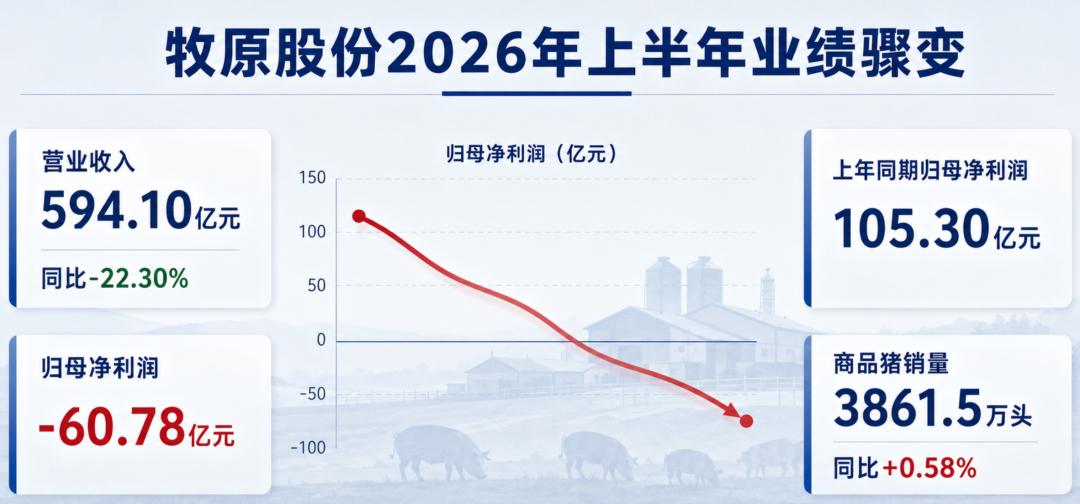
This marks the first year-on-year decline in Muyuan Co., Ltd.'s interim revenue since 2013, the growth curve that has never been broken since its listing more than a decade ago was abruptly interrupted at the bottom of this cycle.
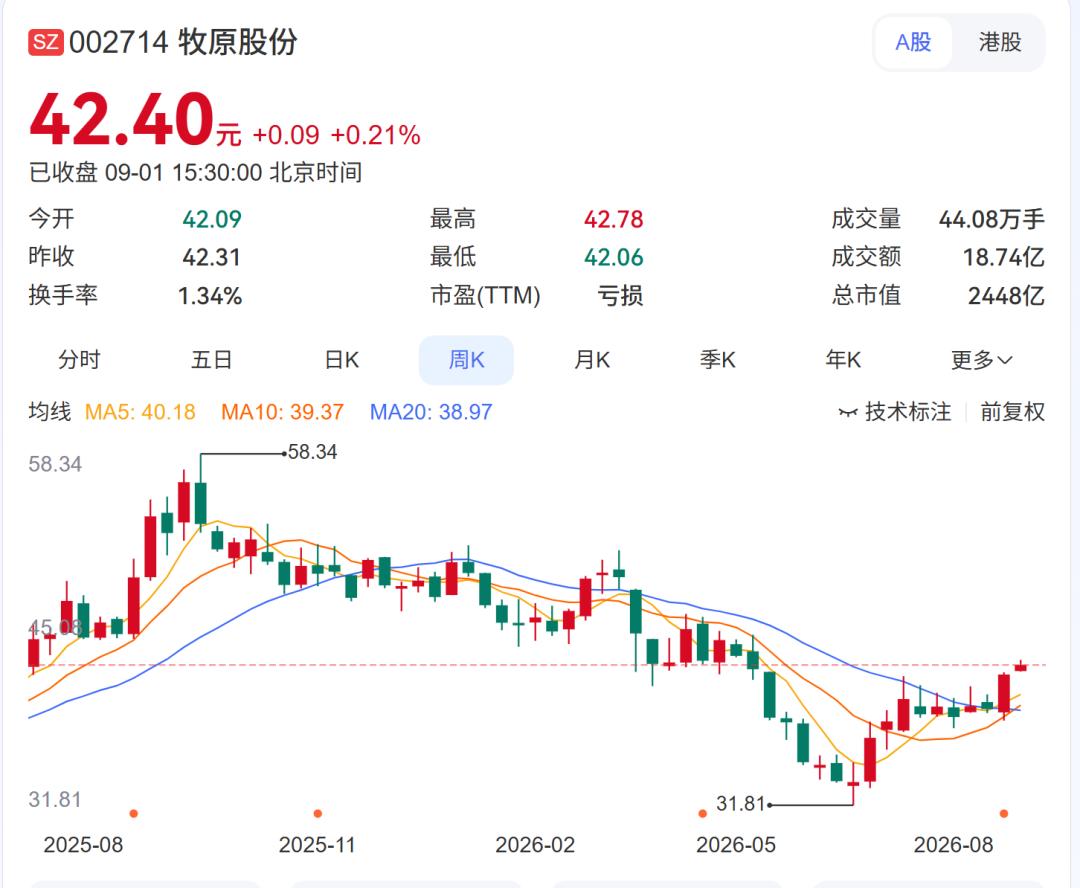
In the secondary market, in the past year, against the background of the Shanghai Composite Index fluctuating upward, the company's stock price has fallen back.
The company has just completed a major reshuffle of senior management. In June 2026, founder Qin Yinglin stepped down as chairman and president, Cao Zhinian took over as chairman, and post-90s executive Gao Tong took the position of president.
The first semi-annual report in the post-Qin Yinglin era has recorded a huge loss.
With such a huge loss, where did the money go? This is the most concerned question across the whole network.
The author summarizes that the core reason is the continued sluggish pig price. The average sales price in the first half of the year was about 10.4 yuan per kilogram, down nearly 30% year on year, while the full breeding cost remained at around 11.7 yuan per kilogram. The sales price was more than 1 yuan per kilogram lower than the cost, and every kilogram of pigs sold for slaughter resulted in a loss.
Meanwhile, the company's slaughter scale has not shrunk. It sold 38.615 million commercial pigs in the first half of the year, a slight year-on-year increase of 0.6%. The higher the sales volume, the higher the total loss.
Affected by this, the gross profit margin of the breeding business dropped from 20.24% in the same period of last year to -4.51%, the revenue decreased by 30.51% year on year, while the cost reduction was less than 9%.
In addition, the provision for asset impairment losses in the first half of the year was 314 million yuan. Although the slaughtering business made a profit of 936 million yuan, its scale was not enough to make up for the huge loss of the breeding segment.
For the pig farming business, can't even Muyuan hold on? Today the author will conduct an in-depth study of this company, to see what the company is really like and how many cards it still has in hand.
Pig Price Drops to Freezing Point
Before analyzing Muyuan's semi-annual report, it is necessary to figure out a core question: What on earth has the pig price experienced in recent years?
According to the data released by the Ministry of Agriculture and Rural Affairs, the average price of live pigs in 2025 was 14.44 yuan per kilogram, down 9.2% year on year. The annual trend was "high in the first half and low in the second half", and the annual price hit the lowest level since 2019.
Entering 2026, the pig price accelerated its decline. In the first half of the year, the average domestic live pig price dropped to 10.4 yuan per kilogram, down 4.3 yuan per kilogram year on year, with a decline of 29.3%.
Against the background of the continuous downward trend of the industry, the whole industry fell into deep losses in the first half of 2026. Muyuan's semi-annual report is just a natural financial reflection of this price curve.
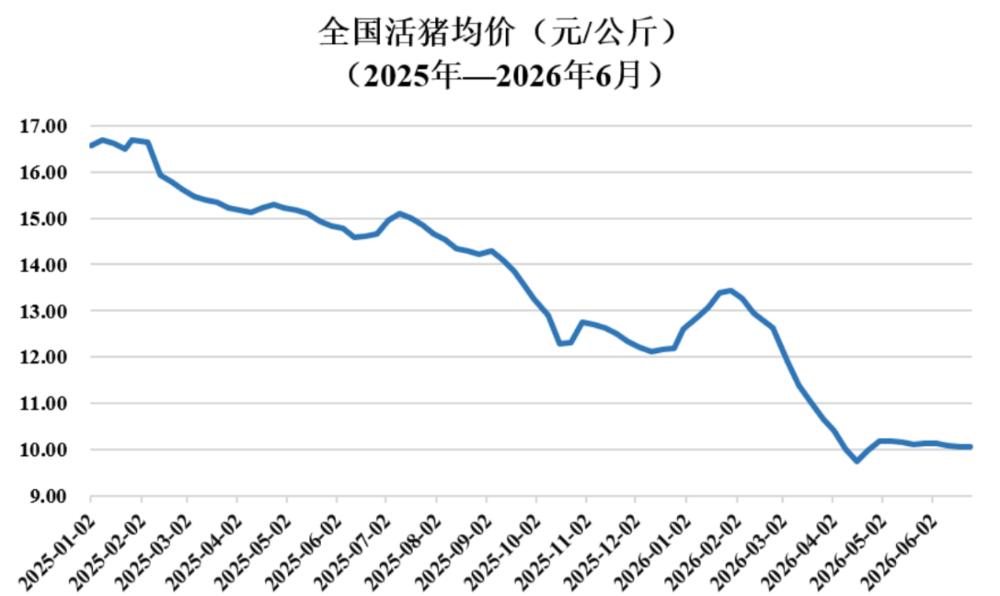
Source: 2026 Semi-Annual Report of Muyuan Co., Ltd.
Pig Price Falls Faster Than Cost Reduction
In the first half of 2026, Muyuan sold 38.615 million commercial pigs, a slight year-on-year increase of 0.58%. However, its operating revenue decreased by 22.30% year on year due to the sharp drop in the average sales price of commercial pigs, and the gross profit margin of the breeding business directly dropped to -4.51%.
That means, the pig price remains at a low level for a long time, which can't even cover Muyuan's cost, and the company is in a state of "losing money for every pig sold".
The highlight of the income statement is the slaughtering business. In the first half of 2026, Muyuan slaughtered 17.234 million pigs, up 50.98% year on year. The revenue of slaughtering meat business reached 22.061 billion yuan, with a gross profit margin of 4.24%.
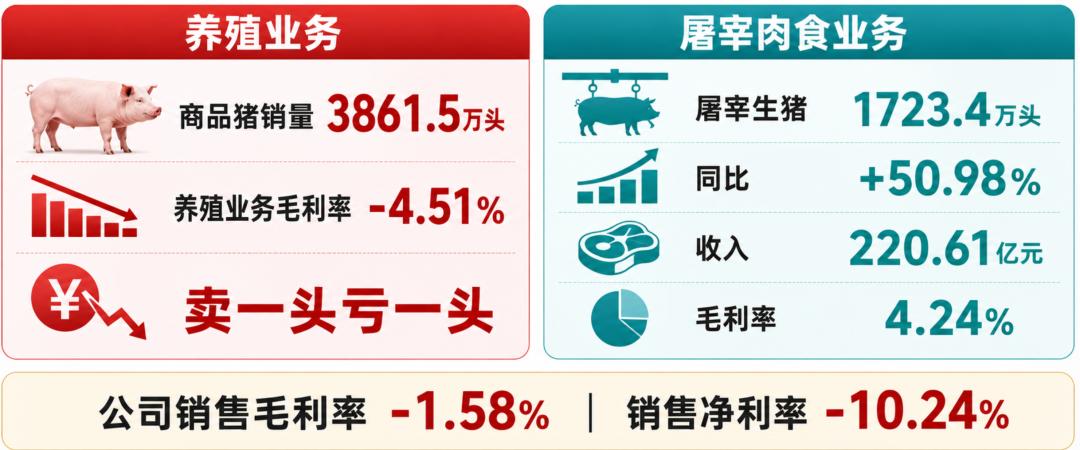
However, the scale of the slaughtering business is not enough to fill the gap of the breeding business. In the first half of 2026, Muyuan's sales gross profit margin was -1.58%, and the sales net profit margin was as low as -10.24%.
What makes investors more worried is the cash flow from operating activities. In the first half of 2026, the net cash flow from operating activities of the company was -2.224 billion yuan, compared with a net inflow of 17.351 billion yuan in the same period last year. Such a large change deserves high attention from investors.
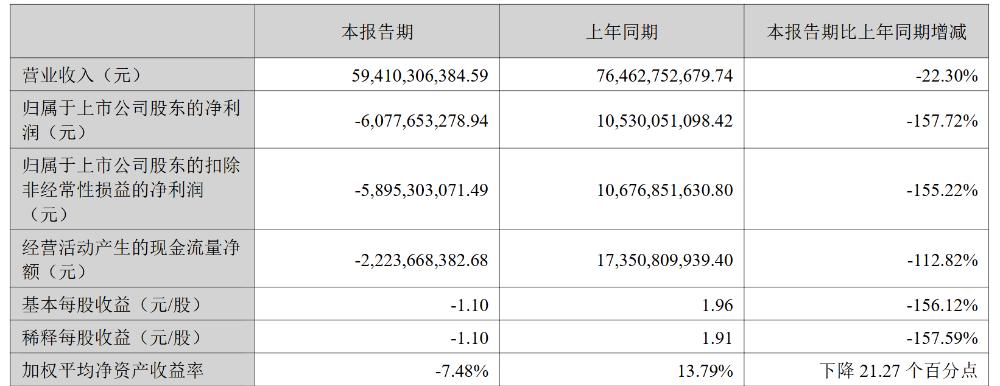
Source: 2026 Semi-Annual Report of Muyuan Co., Ltd.
The Two Sides of Self-Breeding and Self-Rearing Mode
To understand Muyuan, you must first understand its operation mode.
Since its establishment in 1992, Muyuan Co., Ltd. has always adhered to the closed breeding mode of "integrated self-breeding and self-rearing".
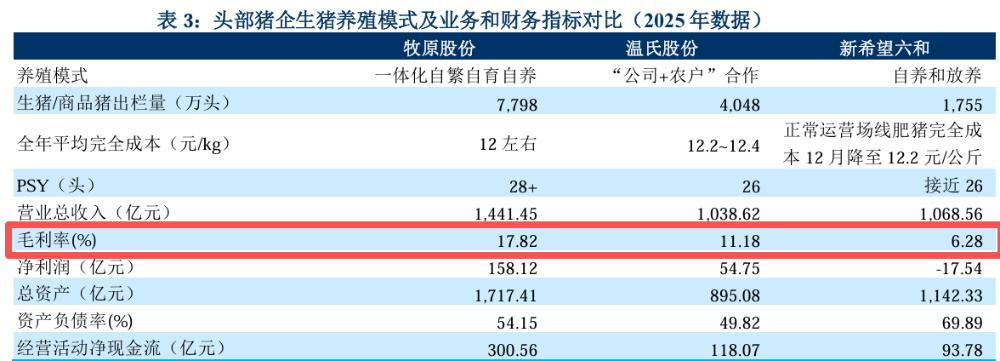
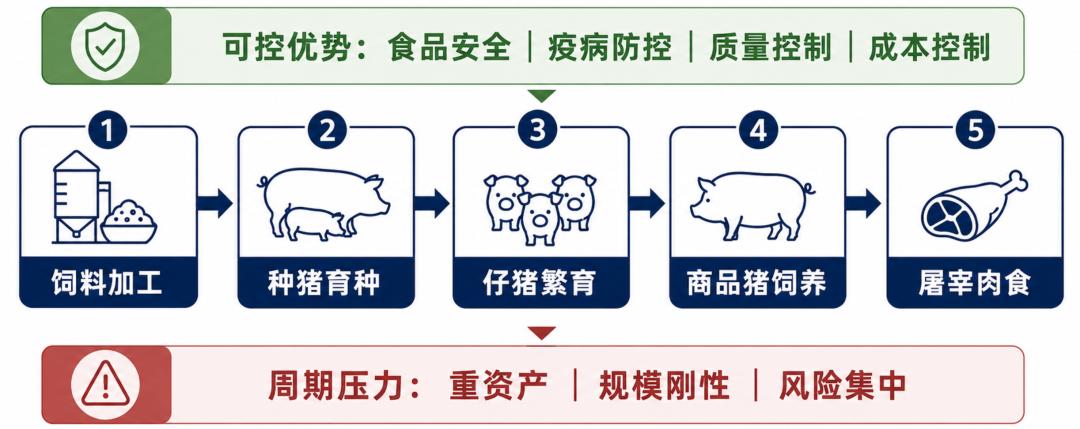
Different from the "company + farmer" mode of other breeding enterprises such as Wen's Co., Ltd., Muyuan completes all links by itself, from feed processing, pig breeding, piglet breeding to commercial pig rearing.
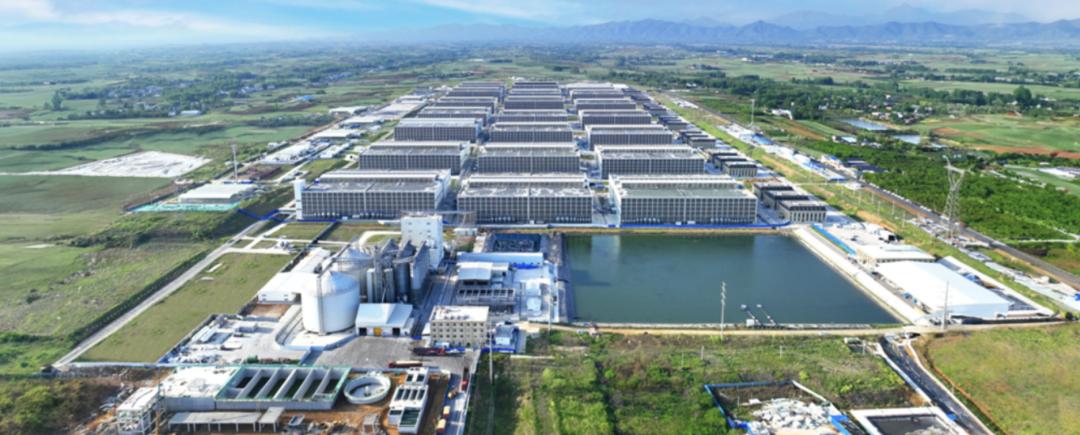
The company's integrated industrial chain operation mode can put all production links under controllable state, and has certain advantages in food safety, epidemic prevention and control, environmental protection operation, quality control, cost control and other links. Therefore, Muyuan's gross profit margin is much higher than that of its peers.
Source: 2026 Credit Rating Report of China Chengxin International
But this mode also has its "other side".
First, heavy assets. Self-breeding and self-rearing means a large amount of fixed asset investment, including pig houses, feed mills, slaughterhouses, all of which are heavy assets. The heavy asset mode means a large amount of fixed asset investment, so Muyuan makes full use of leverage and obtains a large number of loans from banks.
When the cycle goes up, heavy assets are leverage amplifiers; when the cycle goes down, heavy assets become financial burdens.
Second, scale rigidity. Once the production capacity is built, the depreciation of fixed assets, labor costs and maintenance costs are rigid expenditures. When the pig price falls, the production capacity cannot be reduced overnight. The larger the enterprise, the more difficult it is to turn flexibly at the bottom of the cycle.
Third, the risk of biosecurity is highly concentrated. Tens of millions of pigs are concentrated in the company's own farms. Once an epidemic occurs, the risk is systematic.
Muyuan has invested huge sums of money to establish a complete biosecurity system for African swine fever prevention and control, but centralization itself is a risk exposure that cannot be eliminated.
Objectively speaking, there is no absolute good or bad for the self-breeding and self-rearing mode, it is a double-edged sword.
When the pig price is at a high level, it is Muyuan's deepest moat; when the pig price is at a low level, it is also Muyuan's heaviest burden.
Muyuan has grown from a local pig farming enterprise to the world's largest pig breeding enterprise in the past ten years, relying on this full-industry-chain integrated mode.
Pig Farming Companies Burn Money Even Faster Than Tech Companies?
This is the most surprising figure in Muyuan's semi-annual report, and it is also a hot topic across the whole network recently.
In the first half of 2026, Muyuan's R&D expenses reached 709 million yuan, while Wen's R&D expenses in the same period was only 396 million yuan, and New Hope Liuhe's total R&D expenses in 2025 was only 191 million yuan.
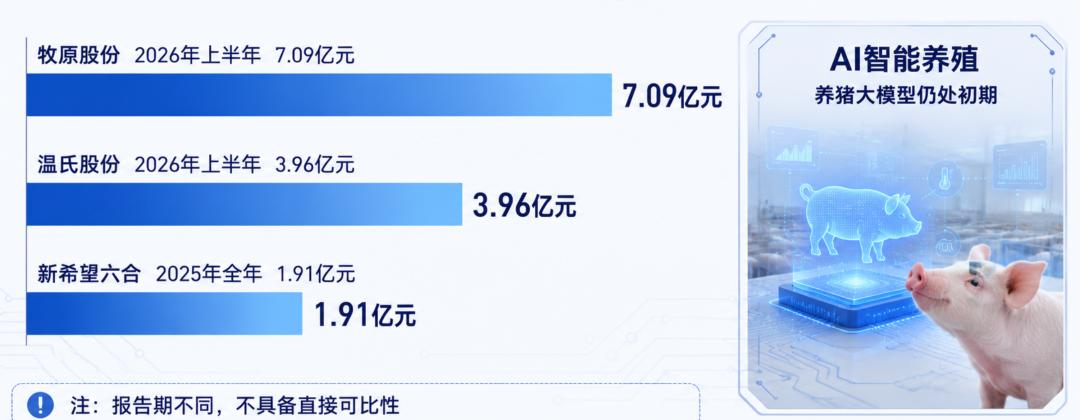
A pig farming enterprise spends hundreds of millions of yuan on R&D in half a year, which is more than many technology companies. In particular, there was a recent topic that Muyuan's R&D expenses are higher than that of Unitree Robotics, which has sparked heated discussions among many netizens.
Where did Muyuan's R&D expenses go?
Muyuan disclosed in its 2026 semi-annual report that the company has reached a strategic cooperation with Alibaba Cloud to jointly develop the industry's first vertical large model for pig farming, implanting the experience and solutions accumulated in the development process into the pig farming large model to help front-line employees solve technical and management problems.
In August 2026, Muyuan signed a strategic cooperation agreement with Huawei again, and the cooperation between the two sides was fully upgraded to core new tracks such as AI intelligent breeding, green and low-carbon development, and industrial digitalization.
The breeding industry is also embracing the wave of technological development, which is the general trend. But as for how much real revenue the "pig farming large model" can contribute to the performance, there is no clear expectation at present. The company only disclosed in the semi-annual report that "the construction of the large model is still in the early stage of development".
This is a question worth thinking about.
Related Party Transactions That Aroused Public Attention
According to Muyuan's "Announcement on the Estimation of Daily Related Party Transactions for 2026", the total estimated amount of purchasing goods and receiving services from related parties in 2026 is nearly 7 billion yuan.
In the first half of 2026, Muyuan's largest related party transaction was a total amount of 2.379 billion yuan with Henan Muyuan Construction Engineering Co., Ltd. and its subsidiaries. What is the origin of this related party?