Low-price Economics: Cheap Daily Life, Expensive Life
"Since my labor is cheap, I can only afford the cheap labor of others, which is destined to be a vicious cycle." This sentence went viral some time ago, reflecting that people will eventually question the root causes of their difficult lives, and "cheapness" is the most tangible daily experience.
When a product is one yuan cheaper, the general economic explanation is that this is a victory of competition. Consumers pay one yuan less, the enterprise completes a transaction, and this one yuan seems to vanish from the world.
But this one yuan will not cease to exist just because it is not collected. It may be truly absorbed by better technology, larger scale and more efficient logistics, so that no one needs to bear it at all; it may be borne by the enterprise itself earning one yuan less; it may be temporarily covered by subsidies, credits or investors; or it may move along the whole transaction chain, landing in the thin profit of suppliers, employees' bonuses, family care, and pension accounts decades later.
Therefore, the really worthy question is not "why are things so cheap", but: who finally pays for this one yuan that we underpay?
This way of questioning rewrites the "low wage - low price - low demand" cycle from a circle with no starting point to a directional problem. "Cheapness" itself is not equivalent to exploitation, nor will it automatically cause insufficient demand. The key lies in what methods enterprises use to cut prices, and who has the ability to pass this one yuan on to others.
In the past, discussions about China's cheap labor usually focused on exports: low wages reduce factory costs, and products are sold to overseas households with higher incomes. The insufficient purchasing power of Chinese workers will not immediately become the upper limit of enterprise sales - because demand can come from abroad. However, catering, housekeeping, maintenance, care, retail and local transportation cannot be exported. When these industries absorb more and more employment, the nature of the same set of arrangements changes: low wages are a price advantage in the export sector, but an upper limit of demand in the domestic demand sector.
Our discussion starts from this cheap one yuan.
Five Sources of Low Prices
Low prices can be divided into five categories by their sources. Even if they are the same in price, their economic implications are completely different.
The first type is efficiency-driven low price. Automation, large scale, logistics, standardization, universal spare parts and intensive supply chains reduce unit costs. This is real productivity progress: the society produces the same goods with fewer resources. No one needs to bear this one yuan, it is newly created.
The second type is enterprise profit-concession low price. Merchants cut gross margins for promotion, inventory clearance or market grabbing. This one yuan is paid by the current income of shareholders and operators.
The third type is balance sheet-driven low price. Banks provide excessively low-cost credit, local governments offer land, energy or tax preferences, some enterprises accept very low returns, and suppliers provide implicit financing with extended payment terms. Prices are lowered today, but this one yuan has neither disappeared nor been truly borne by anyone - it is only recorded for the future. The bank agrees to wait for another year, the local government hopes the factory will not close, the overdue payment becomes an interest-free loan, and the shareholders' books hold up temporarily.
The fourth type is value chain pass-through low price. Platforms, brands, large distributors or large purchasers maintain their own income, but require merchants to bear promotion costs, require suppliers to cut prices, extend payment terms, accept returns, and absorb inventory and compliance costs on their own. This one yuan is not absorbed, but paid in advance by the party with weaker bargaining power.
The fifth type is labor and social cost outsourcing low price. Unpaid overtime pay, work injury and safety guarantees that are not fully provided are passed on to the workers' own families; uncovered social security, medical care, training, childcare and elderly care are borne by the unpaid care work mainly done by women and the public finance in the future. What enterprises and the society pay is only the price for a person to show up at work today, without paying the full cost for his life tomorrow, in old age, or even for the next generation.
The above five types of low prices can be further divided into three paths. The first type is real absorption, no one needs to pay for this cheap one yuan; "value chain pass-through" and "labor and social cost outsourcing" belong to cost sharing, this one yuan is pushed to the thin profit of suppliers, workers' working hours and suppressed wages; as for the "balance sheet-driven" type, and the pension and health part of workers in "labor and social cost outsourcing", they push the cost to the future, making the future self, other people or public finance bear it.
Of course, there is also a situation where the enterprise itself takes this one yuan. In industries with sufficiently fierce competition, this space is very small, and usually cannot last long, and will soon turn to the third or fourth type.
These three pass-through paths are the foundation of all low prices. Facing any downgrade of consumption, we can always ask one more question: which path does it take?

Film *The Great Buddha +*
All Links of Low Price: A Case Study of New Energy Vehicles
We can also look at it from a specific industry. Over the past years, the new energy vehicle industry is a typical industry with low price advantages. How can its low price path be divided and understood?
Part of it comes from efficiency. Batteries are cheaper, production lines are faster, and parts are more universal. No one pays for this part, it is newly generated. It is very important to admit this point: the progress of China's manufacturing industry over the years is real. Describing all cheapness as exploitation is not accurate, and will mistakenly put "improving efficiency" and "improving distribution" on opposite sides.
Part of it is conceded by the upstream through value chain pass-through. Automakers require component suppliers to cut prices, extend the payment period from three months to six months, and push the risks of inventory and returns to the upstream. Suppliers' payment is still on the way, but the price of cars has already been reduced. This part is paid in advance by the upstream.
Part of it comes from labor and social cost outsourcing, conceded by working hours. Overtime work when catching up with orders, dispatched workers in peak seasons, positions transferred from formal contracts to contracting and outsourcing, and underpaid social security. This part is paid in advance by workers.
There is another part that no one concedes, but has not been counted in yet. This is the most easily ignored part that needs to be clarified: why can factories continue to produce even when they are clearly losing money?
The first layer of the answer is that the funds supporting them are priced low, and the source of this cheap fund is actually depositors. In 2026, the one-year deposit rate of the six major state-owned banks is 0.95%, the three-year rate is 1.25%, and the demand deposit rate is 0.05%; in July of the same year, the CPI rose by 0.5% year-on-year, and the core CPI rose by 0.9%. Household deposits exceed 170 trillion yuan, after deducting price factors, the real return is close to zero.
This sum of money lies in the bank and becomes the bank's extremely low-cost liability. There is an economic term to describe this situation, which is financial repression: suppressing deposit interest rates and transferring the income that depositors should have obtained to the borrowers. This is a systematic arrangement that allows the entire credit system, including state-owned enterprises, local financing platforms, and a large number of capital-intensive industries, to obtain funds priced lower than market risk. The reason why this factory can hold on without recognizing losses is exactly the space supported by this system. It's just that the flow of this money from the depositor's passbook to the factory's account, through the bank's risk pricing and capital allocation, is more like a whole low-priced capital environment, and it is difficult to draw a precise straight line.
Thus, the same household enjoys low prices when buying a car, and at the same time subsidizes part of this cheapness through the interest on their deposit. This money is not paid from wages, but from the opportunity cost of interest. This subsidy may not fall accurately on this specific factory, it first flows into a larger pool and then is redistributed.
Cheap capital is only one of the conditions to sustain losses. "Everyone is willing to hold on" is the second layer of the answer, and the two layers are intertwined and difficult to separate completely.
Local governments do not want this factory to close, as it contributes to employment, tax sources and a whole local supply chain. The most common way for local governments to protect factories is to push local banks to renew loans, still using the aforementioned low-priced capital system. In addition, some enterprises have lower return requirements than the market, so they can set prices at a level that other enterprises cannot match; some car companies rely on equity financing and extending supplier payment terms to maintain cash flow, not all from bank loans; as long as the money from sales can pay for electricity and wages, stopping production will lead to greater losses, so peers also follow to sell at a loss. These forces are intertwined, allowing loss-making factories to continue production, and making this year's losses not need to be recognized this year.
Banks renew loans, local governments protect factories, and enterprises hold on, every party is doing "reasonable things" in their own position.
But in the long run, enterprises cannot use the money of shareholders and creditors to subsidize consumers for a long time. When capital is no longer so cheap, payment terms cannot be extended further, and local finance cannot afford subsidies, this unrecorded loss must be claimed by someone.
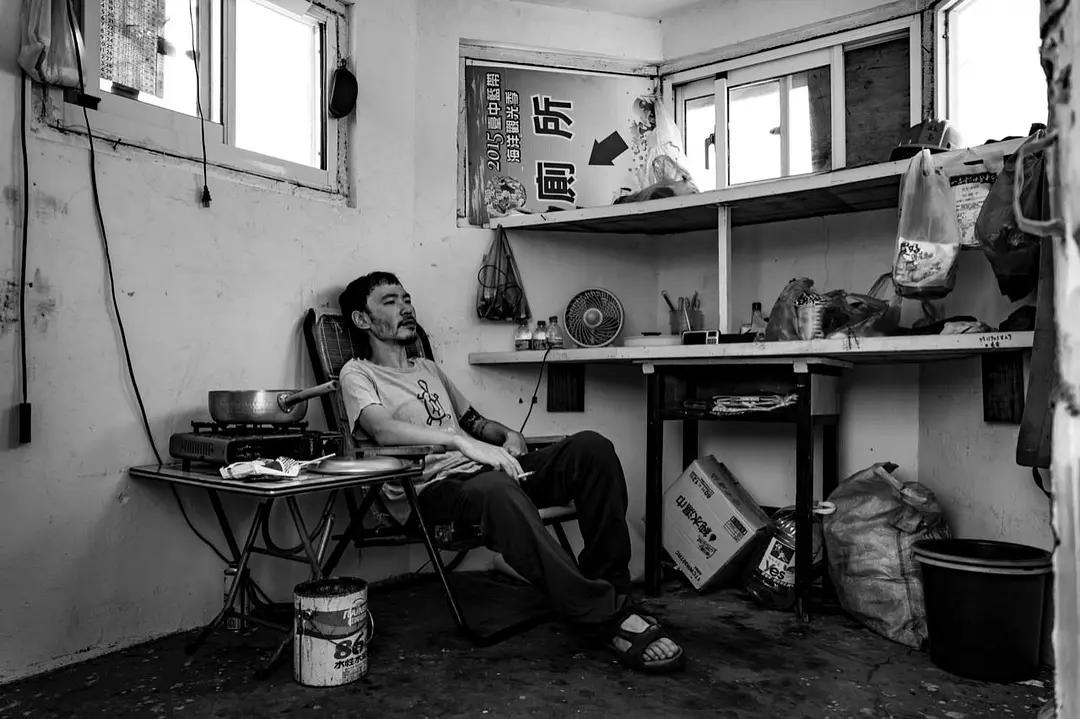
Film *The Great Buddha +*
Cheap Daily Life, Expensive Life
In many industries, once the "balance sheet-driven low price" continues, it will almost inevitably turn into "value chain pass-through" and "labor and social cost outsourcing".
Large platform enterprises and leading enterprises occupy the upper layer of the value chain. Platforms such as Taobao, Pinduoduo and Meituan control the ranking, commission, traffic pricing and promotion rules, and the scale of China's market makes their contractual capabilities far exceed that of a single merchant. If while consumer prices fall, platforms cut commissions synchronously and brands take the initiative to bear promotion costs, the gross profit of merchants will not deteriorate immediately, and this part of the concession will mainly come from the profit concession of platforms and brands, or efficiency improvement. But if the platform is strong enough, this one yuan will be passed on to merchants and suppliers; suppliers then pass it down to workers, turning into lower piece rates, longer working hours, less social security and safety investment.
The vast number of small and medium-sized enterprises play two roles in this pipeline. They are pressured by platforms, landlords, brands and large customers to a thin profit level, but still have the ability to pass part of the pressure on to workers and lower-level suppliers. Admitting that they are the pressured parties does not deny that they can continue to pass on the pressure.
The most critical nature of this chain is that it can skip the profit concession step and directly reach outsourcing. The premise for enterprises to make profit concessions is that they still have profits to concede; in industries where profits have been suppressed to near zero, value chain pass-through will directly connect to labor cost outsourcing with no buffer in the middle.
And its long-term operation relies on the same time trick. The social security that workers do not receive is made up by the family when they get sick; the unpaid childcare cost is made up by grandparents and female caregivers; the insufficient pension is left to the finance and the next generation two or three decades later. Consumers enjoy convenience today, enterprises keep orders today, and the government maintains employment today. The bill is split into many small parts, scattered into other people's nights, families and the future.
A person does not only pay bills at the checkout counter, they also have to face housing, medical care, education, childcare, unemployment and elderly care. These large risks will not disappear just because a meal is a few yuan cheaper. When public security is weak and rights cannot be carried across regions, families have to keep more cash, and it is harder to reject a low-paying job that can get paid immediately.
As a result, families begin to use high savings and kinship networks to replace the part of public risks that the government fails to cover. The cost is that it is harder for a person to live in a big city, more afraid to change jobs, and more difficult to invest in their own future or take risks. Urban life thus presents a contradiction: daily convenience is very cheap, but a complete life is still expensive.
Low-paid workers are also low-price consumers at the same time. A person delivers food for a platform during the day, and buys cheap goods from another platform at night. They use their own low remuneration to subsidize others' convenience, and also rely on another group of low-paid people to maintain their own lives. This is not a vertical redistribution from the state or high-profit sectors to residents, but a horizontal cross-subsidy among low-income workers.
Moreover, this subsidy is actually unfavorable to the poor. Low-income people get relative welfare from cheap goods, but high-income households usually buy more housekeeping, food delivery, care and other labor-intensive services, and get relatively greater convenience. Low price is not only a painkiller for the life of the bottom group, but also an institutional condition for middle and high-income families to enjoy cheap labor. From the perspective of subsidies, high-income people get more subsidies from low-income workers.
Some people say that the marginal utility of this saved money is inherently higher for the poor, which is true. But this utility cannot hedge against large risks such as medical care, education and elderly care, it can only make today's life a little better, and cannot buy the sense of security for tomorrow. And this sense of security is exactly what high-income people already have and do not need to save money to get.
From this perspective, the life of low-income people is more expensive than that of high-income people.

Film *Shoplifters*
Why Are Service Industries Relatively Cheap?
After understanding the five sources of low prices, we will also re-understand why China's service industry is relatively cheap? It is not the so-called "quality problem", but an elimination question.
The service industry cannot be exported, and there is no overseas demand to support it. It cannot get the land, electricity price and industrial fund subsidies that the manufacturing industry gets, so the balance sheet-driven low price is basically invalid for it. The hourly output of haircutting, food delivery, care and maintenance is difficult to multiply as in chip manufacturing, and the space for efficiency improvement is limited. The profit of a small shop is almost zero, so there is no room for profit-concession low price.
Four of the five doors are closed, leaving only manpower, working hours and social security.
Finally, as mentioned in the previous chapter, the society itself has become dependent on cheap services. People support riders to get better protection, but oppose the rise of delivery fees; they support caregivers to get higher salaries, but cannot afford higher elderly care and childcare prices. Therefore, the low wage system is not only maintained by enterprises, it has a real consumer veto point.
The "cheap cycle" thus comes into being.
Where Did the Benefits of "Efficiency-Driven Low Price" Go?
There is also an interesting question: the first type of low price (efficiency-driven) does exist, have its benefits gone back to workers?
Part of it has. In 2025, the average annual salary of professional and technical personnel in enterprises above designated size is 155,491 yuan, that of production and manufacturing personnel is 80,739 yuan, and that of all employees is 106,080 yuan; the former increased by 5.0% year-on-year, the latter by 2.8%, and the overall average by 3.5%. Industrial upgrading has raised the returns of a small number of skills, but has not formed a