All video platforms are going all in on AI. Who will be the first to profit from AI content?
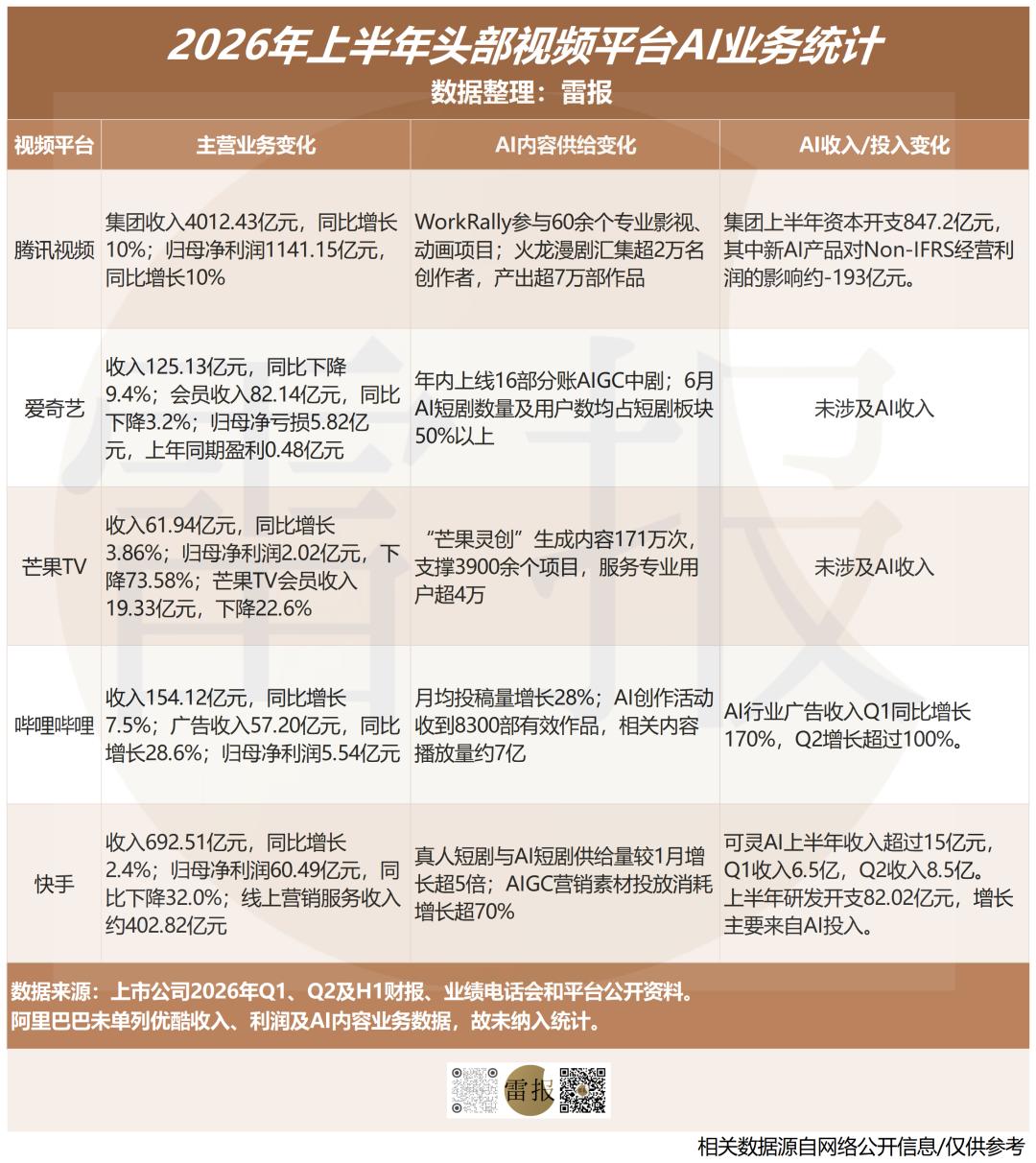
Recently, Tencent, iQiyi, Mango Super Media, Bilibili and Kuaishou have successively released their semi-annual reports. In the past, AI was often only a strategic direction in financial reports; this time, all video companies have started to announce specific projects, the number of creators, advertising growth rate, and even directly disclose AI revenue. AI-generated videos are no longer just about technology, but have begun to undergo business validation.
This validation comes at a very timely moment, as the original business of the video industry is getting increasingly difficult. According to QuestMobile data, in June 2026, the monthly active users of Tencent Video, iQiyi, Mango TV and Youku reached 319 million, 291 million, 243 million and 161 million respectively, all declining year-on-year. Both membership and advertising revenue of iQiyi dropped, Mango TV's membership revenue fell by 22.6%, and Tencent's long-form video subscription revenue decreased by 6%.
On the other hand, the user base and revenue of Bilibili and Kuaishou are still growing, but their new revenue is closely related to AI. Bilibili's advertising revenue in the second quarter increased by 28% year-on-year, among which the advertising revenue from the AI industry increased by more than 100%; Kuaishou's traditional live streaming business declined, but the revenue of Keling AI in the first half of the year has exceeded 1.5 billion yuan. ByteDance and Hongguo are not listed, so the outside world cannot see their financial reports, but the data from Bilibili and Kuaishou is sufficient to illustrate what is happening on UCG-dominated video platforms.
Putting these semi-annual reports together, there are only three questions worth asking: Who pays for an AI video, and who bears the loss if it fails? What kind of content are platforms more willing to produce? Finally, who is the first to make a profit?
Do platforms produce content on their own, or leave it to creators?
Several platforms are increasing AI content, but their approaches are different. The most straightforward difference is that some platforms spend money to produce content in-house, while others provide tools to external companies and creators. The reason for this choice first depends on what the original profit model of the platform is.
iQiyi and Mango TV mainly rely on membership revenue, so key projects such as AI feature films and long dramas are still led by the platforms. iQiyi's membership revenue in the second quarter was 4.01 billion yuan, accounting for about 64% of its total revenue; Mango TV's membership revenue in the first half of the year was 1.933 billion yuan, accounting for about 43% of its internet video business revenue.
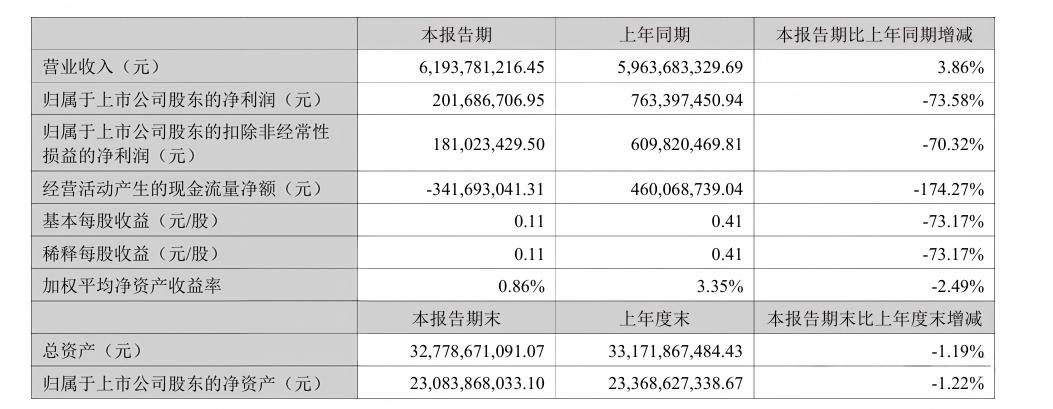
Both platforms need to use exclusive content to attract users to renew their subscriptions. The performance of a key work will directly affect revenue. The semi-annual report of Mango Super Media has reflected this pressure: membership revenue dropped by 22.6%, but content costs are difficult to decline synchronously, the gross profit margin of Mango TV's internet video business fell by 3.95 percentage points, and the net profit attributable to shareholders of the listed company decreased by 73.58%.
For such platforms, the most direct use of AI is to make works cheaper and faster, so that projects will not suffer losses even if they make less profit. iQiyi disclosed that for projects suitable for AIGC application, production costs and cycles can be reduced by 70% to 90%; the rough editing efficiency of "Sister is in Charge 2" has increased by more than 10 times. 16 AIGC mid-length dramas on revenue-sharing basis have been launched this year. By June, AI short dramas had exceeded half of iQiyi's short dramas in both the number of works and the proportion of unique visitors.
Mango TV chose to build its own AIGC center for a very straightforward reason. When projects are under its own control, the progress, copyright and review process are easier to manage, and the produced content can directly use Mango's existing distribution channels and promotion resources.
However, if platforms produce content by themselves, they also have to bear most of the risks: the works may not attract audiences, the cost of buying traffic is getting higher and higher, new models may make old works obsolete quickly, and the requirements for copyright and content review will continue to rise.
Tencent Video has taken a middle path: the platform provides tools and distribution channels, and hands over a large number of projects to external institutions and creators. WorkRally has been connected to more than 60 film, television and animation projects, and more than 130 institutions have long used its manhua drama version, with the average production cost reduced by about 60%; Huolong Manhua Drama has accumulated 70,000 works and more than 20,000 creators about five months after its launch.
The advantage of this approach is that there is no need to bet heavily on every project in advance. External institutions produce content first, and after the works are launched, the platform decides how much traffic to allocate and whether to continue investing based on the view count and payment performance.
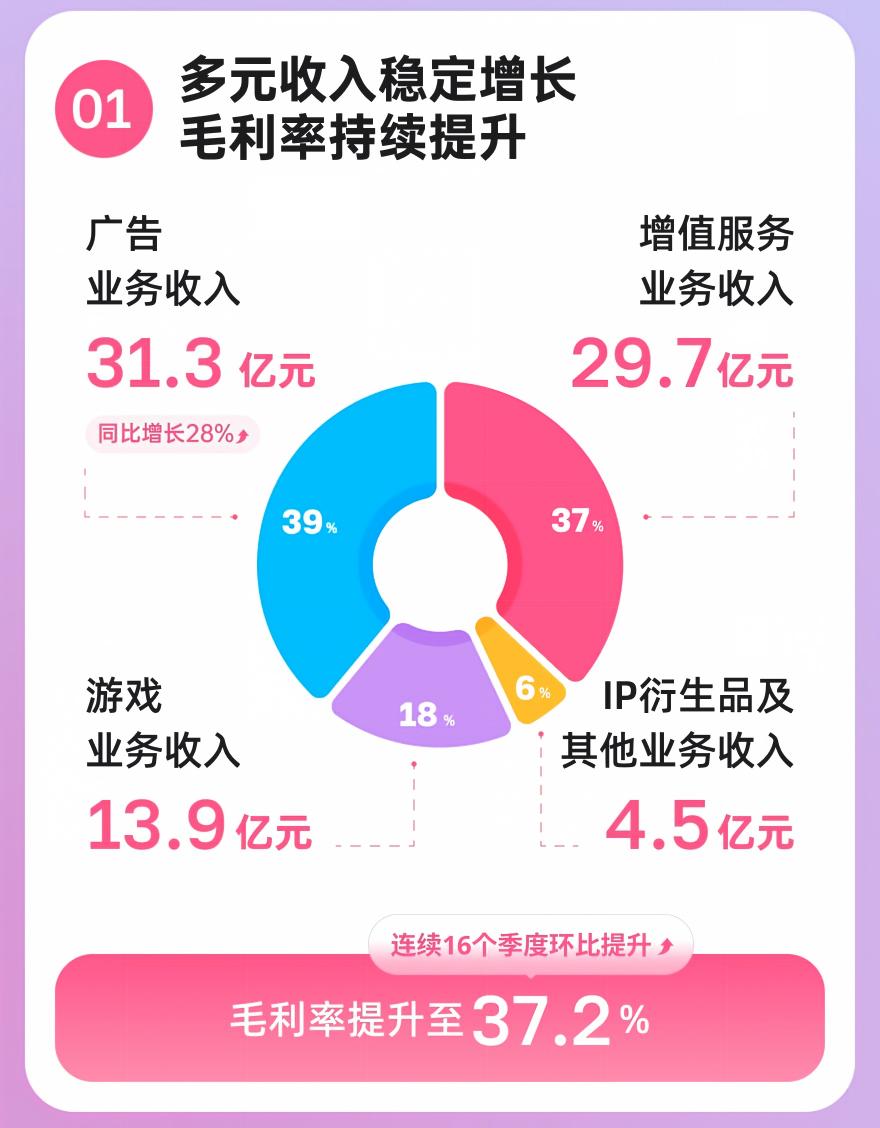
Bilibili is more like a creator market. In the second quarter, advertising revenue accounted for about 39% of Bilibili's total revenue, the average daily submission volume increased by 28% year-on-year, and the total user usage time increased by 14%, significantly higher than the 7% growth of daily active users. For Bilibili, the more submissions there are and the more accurate the recommendation system is, the longer users will watch, and the more ad slots that can be sold. Therefore, Bilibili is more willing to give AI tools to UP hosts first.
Bilibili's first AI Creation Contest received 8,300 valid works, with a total view count exceeding 700 million. This approach allows the platform to test a large number of themes at a relatively low cost, and hit works with tens of millions of views such as "Badge" and "The Book of Supernatural Tales: Ask the Common People" may also emerge from individual creators.
Kuaishou directly turns AI production capabilities into a tool business. Institutions and creators pay to use Keling first, and then bear the risk that their works may not attract audiences; after the works are submitted to Kuaishou, the platform can continue to charge for traffic purchase and advertising services.
In other words, AI has not eliminated the risks of the content business, but has transferred part of the risks from platforms to production institutions and individual creators. Platforms spend less on pre-purchasing, but they have to face more works and take on heavier review and screening work. This is why all platforms are building creator ecosystems: there is no shortage of people making AI videos now, what is scarce is the ability to select a small number of content that audiences are willing to watch and pay for from massive works.
Overcapacity, mature IP becomes the first choice?
AI makes videos faster and cheaper, and also leads to a rapid expansion in the number of works. Platforms soon found that it is no longer rare to be able to produce a work, the difficulty lies in making a work that people want to watch after it is produced.
According to DataEye's "2026 H1 AI Drama and Manhua Drama Data Report", more than 221,900 new AI dramas and manhua dramas were launched in the first half of the year, of which only 1055 had a view count exceeding 100 million, accounting for about 0.48%. In other words, on average, only 1 out of every 200 works has a view count exceeding 100 million. If 50 million views are taken as the reference line for roughly recovering production costs, only about 1.3% of the works can meet this standard.
With so few hit works, platforms will naturally prioritize content whose audience is easier to predict. Mature IP, popular themes and formats suitable for continuous updates are all designed to increase the certainty of success before production starts.
The most obvious choice is to adapt novel IP. Among the top 30 most popular Hongguo AI dramas and manhua dramas counted by DataEye, 19 are adapted from novel IP, accounting for more than 60%. Platforms usually already have data on how many people read a novel, how many people finish reading it, and the age and gender of readers. Producers can estimate the potential audience in advance, and platforms can also use the labels of the original work to recommend the new drama to people who may be interested.
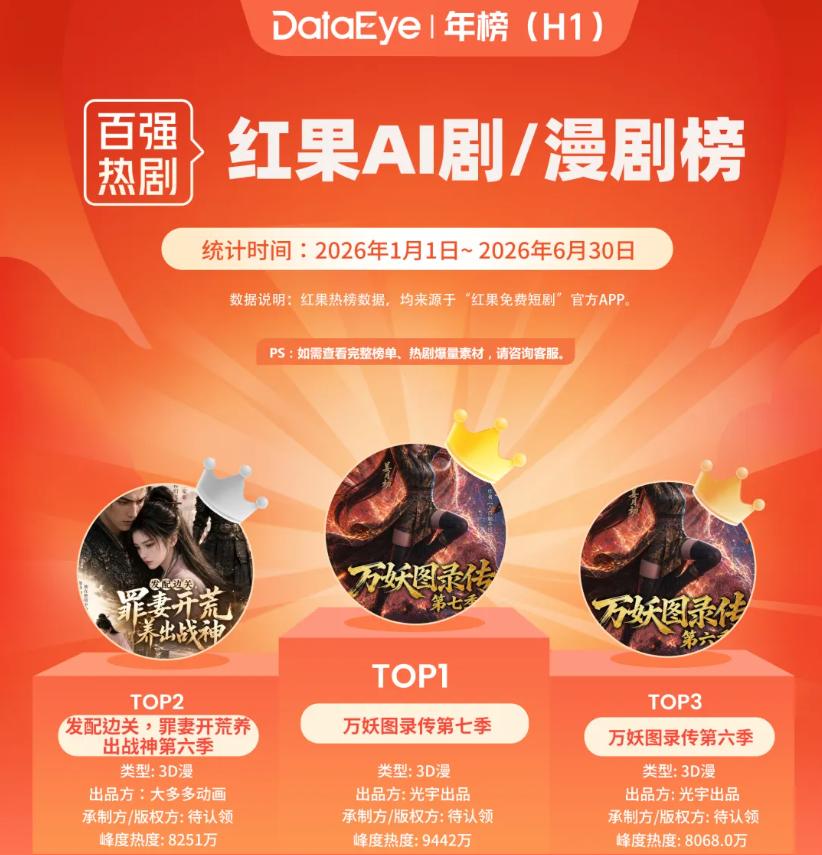
Mature IP also makes it easy to produce sequels continuously. More than half of the works on Hongguo's AI drama hot list are sequels. "The Legend of Ten Thousand Demons" has been updated to the 9th season, and the first season of "The Little Favorite Junior Sister of Our Sword Sect" has 300 episodes, while the second season has increased to 666 episodes. The first season is equivalent to a market test; as long as audiences are willing to follow the updates, the same set of characters, scenes and accounts can be reused in subsequent seasons, and the plot can be adjusted based on the data of which episode users exit and which episode users pay.
Long-form video platforms are also using old IP to reduce audiences' unfamiliarity with AI content. iQiyi chose "The Ferryman", Mango TV chose "The New Journey to the West" and "GG Bond", Tencent Video's "Notes of the Northern Sect" is adapted from online novels, and "Thriller Paradise" co-produced by Bilibili and Yuewen also comes from mature online literature. For audiences, at least the story or characters are familiar to them.
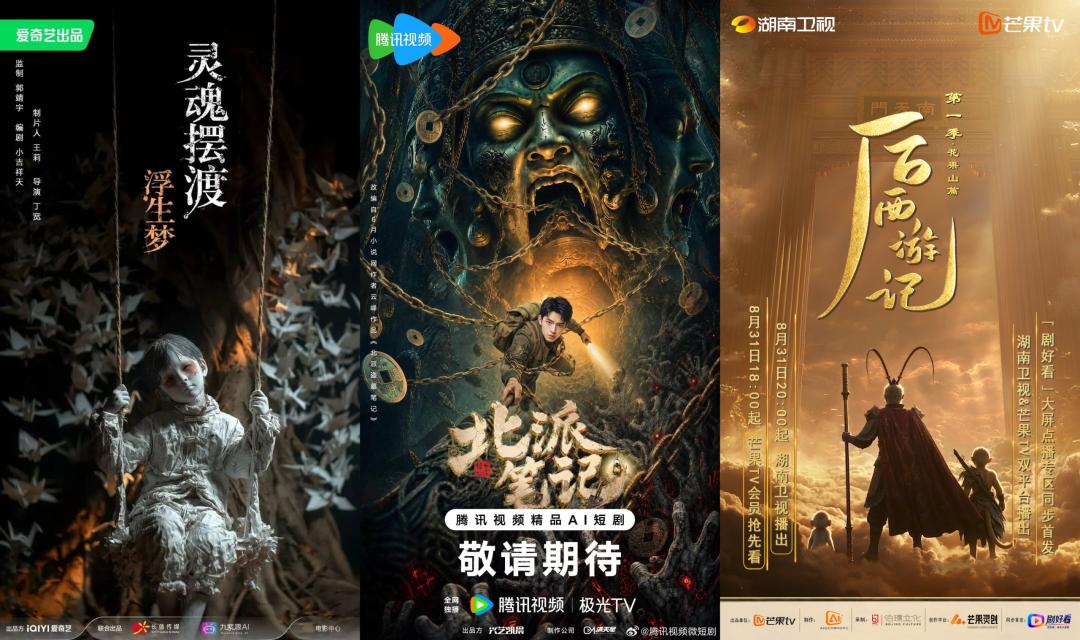
"The Ferryman: Butterfly Dream" and "The Ferryman: The Dream of the Heavenly Maiden" use the screenwriter, characters and authorized actor images of the original series. The accumulated revenue-sharing amount exceeded 3 million yuan three days after launch, and the in-site heat index of iQiyi broke through 6600. Three days after the launch of "Notes of the Northern Sect", the heat index on Tencent Video exceeded 17,000, and the revenue-sharing amount in the first week exceeded 1 million yuan.
The themes chosen by platforms are becoming more and more similar. According to DataEye's statistics, among the listed works of Hongguo, the cumulative heat of "counterattack" theme reaches 457.73 billion, ranking first; "fantasy and creative ideas" ranks second with 312.12 billion. In Douyin's native dramas, "marriage and emotion", "cultivation and fantasy" and "survival and farming" are the most frequent keywords. The reason is not complicated: these themes have strong conflicts, fast upgrading rhythm, and reusable characters and scenes, which are suitable for low-cost continuous updates.
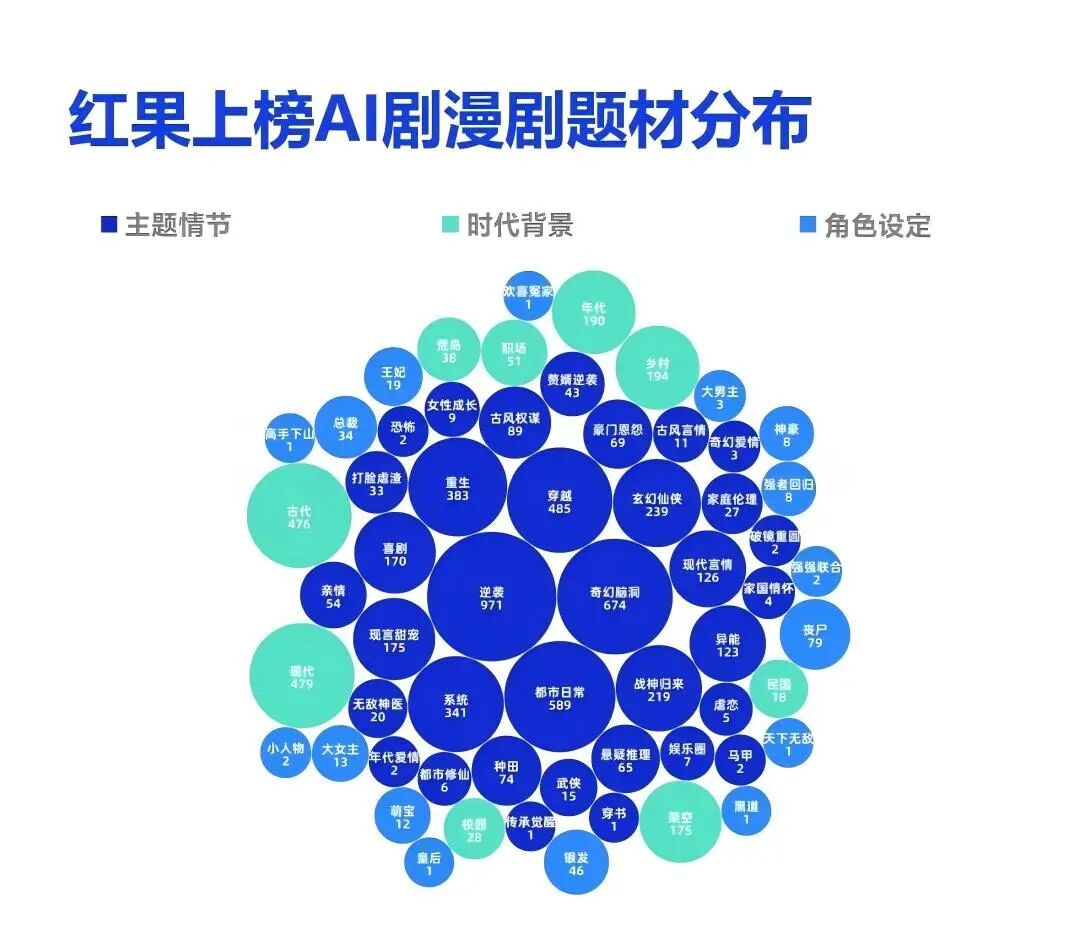

However, even for the same theme, the practices on different platforms are still different. Hongguo and Kuaishou prefer fast-updating satisfying dramas where the protagonist keeps getting promoted; iQiyi, Tencent Video and Mango TV pay more attention to mature IP, complete stories and subsequent development; the recent hit works on Bilibili are more original themes such as urban fantasy, folk tales and historical fables.
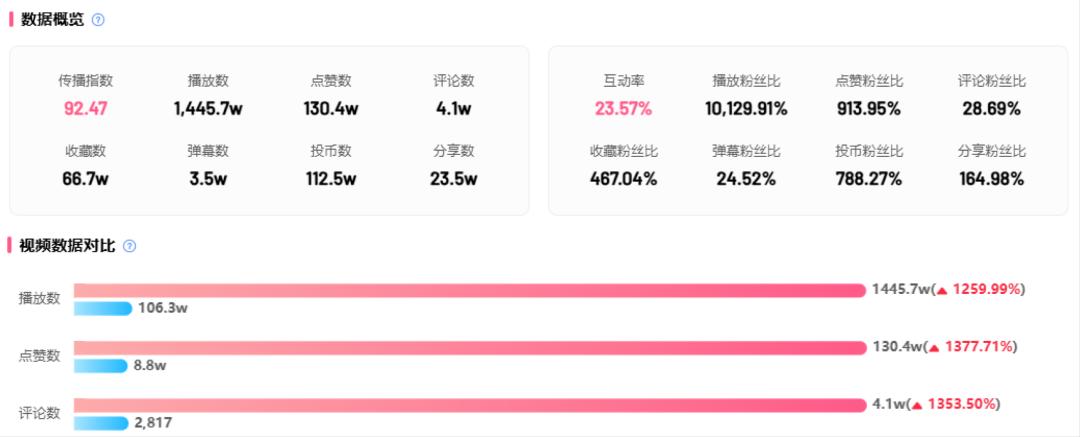
For example, "I Work as a Ghost Agent in Modern Times" created by UP host "Hongdou Xifan Zhong" was launched in mid-August, with more than 6 million views in one week;
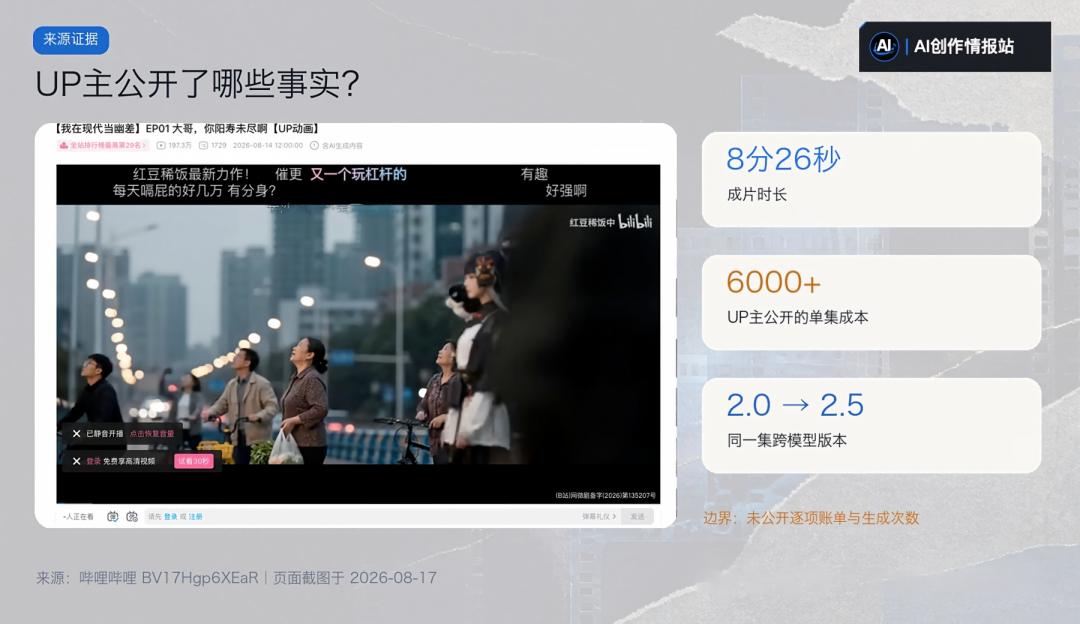
"The Biggest Sin in My Life is to Write Humans as Monsters..." created by UP host "Qinggua Dan" is 26 minutes long, and its view count exceeded 10 million less than a week after launch.
The emergence of such works on Bilibili is related to user habits. Bilibili users are already willing to watch mid-length and long videos ranging from a few minutes to dozens of minutes, and they are more patient with unfamiliar settings and niche themes. Works do not have to force audiences to pay within the first few seconds, and creators can spend more time depicting characters, building atmosphere and telling complete stories.
From the perspective of the entire market, short dramas and manhua dramas are still the main outlets for AI content. In the first two months of this year, the market was dominated by 2D and 3D manhua dramas; after March, AI short dramas with near-real human images increased rapidly, the proportion of new dramas in the second quarter rose from 57% to 70%, and 3D manhua dramas remained stable at around 20%. By June, such AI realistic human dramas accounted for 70.62% of the number of new dramas, contributing about 68% of the total views. At the same time, Kuaishou's data shows that the overlap rate of paying users for manhua dramas and paying users for real-person short dramas is only 38%. In other words, 62% of paying