Are the three major northern industrial hubs no longer going it alone this time?
Cross-city collaboration in the northern aviation industry is taking a critical step forward.
During the recently held Advanced Manufacturing Cluster Development Conference (2026), aviation cluster promotion agencies from Shenyang, Xi'an and Harbin signed an industrial cooperation and co-construction agreement. The three parties agreed to deepen division of labor and collaboration in key links to promote complementary advantages and resource sharing.
At present, the large-scale application of domestically produced large aircraft is accelerating, and the low-altitude economy has opened up new tracks, bringing a series of new growth points to the aviation industry. However, as an advanced manufacturing sector, the aviation industry has an extremely long industrial chain and high technical barriers. No single city can cover the entire chain, and joint research and collaboration as well as cooperative production must be organized on a larger scale.
Sun Fengdao, representative of the Shenyang aviation cluster participating in the signing and General Manager of Shenyang Aviation Industry Technology Research Institute Co., Ltd., told Urban Evolution that the three cities have high industrial similarity and strong complementarity, and joint co-construction is conducive to transforming competition into cooperation and achieving common progress.
Shenyang, Xi'an and Harbin are three indispensable cities on the map of China's aviation industry. All their aviation clusters have been selected as national advanced manufacturing clusters, and as the country enters the 15th Five-Year Plan period, the three cities have set higher industrial goals for themselves.
Looking south, the Yangtze River Delta (including Jiangxi) large aircraft cluster and the Chengdu-Deyang-Mianyang-Ziyang-Liangshan aerospace cluster have long taken the lead and formed a collaborative trend. How much room is there for this cross-regional cooperation among the three major northern aviation hubs? What practical challenges will they face?
Current Industrial Strength
How to measure a city's real weight in the aviation industry chain?
The list of national advanced manufacturing clusters recognized by the Ministry of Industry and Information Technology can serve as one of the reference answers. Up to now, among the four batches of national advanced manufacturing clusters, a total of 6 clusters in the aerospace field have been selected, and all the regions behind them are key industrial hubs.
Looking back to 2021, the Xi'an aviation cluster was selected into the first batch of national-level advanced manufacturing clusters in China. In the following year, the Zhuzhou small and medium-sized aero-engine industry cluster was shortlisted. By 2024, four regions were selected at the same time, including the Yangtze River Delta (including Jiangxi) large aircraft cluster, the Chengdu-Deyang-Mianyang-Ziyang-Liangshan aerospace cluster, the Shenyang aviation cluster and the Harbin aviation cluster.
Among the 6 "national-level" clusters, the three northern cities of Xi'an, Shenyang and Harbin all obtained admission tickets with their own strength, which can be said to form the core skeleton of the northern aviation industry. Specifically, the three cities have a profound foundation in the aviation industry, with different focuses.
Xi'an has significant advantages in system design and test verification, with numerous scientific research institutes and strong technical strength; Shenyang mainly focuses on the fields of aviation power and large component manufacturing, with outstanding manufacturing capacity for core components such as aero engines; Harbin is known as the "cradle of China's helicopter industry", deeply engaged in characteristic fields such as helicopters and transmission systems.
Entering the 15th Five-Year Plan period, the three cities have set higher industrial goals for themselves: Xi'an accelerates the promotion of national-level advanced manufacturing clusters such as the Xi'an aviation cluster to a world-class level, and strives to make the aerospace industry scale exceed 1.3 trillion yuan; Shenyang promotes the development of the entire aviation industry chain and builds an internationally advanced aviation industry base; Harbin clearly promotes the city's aerospace industry cluster to move towards the 100-billion-yuan target.
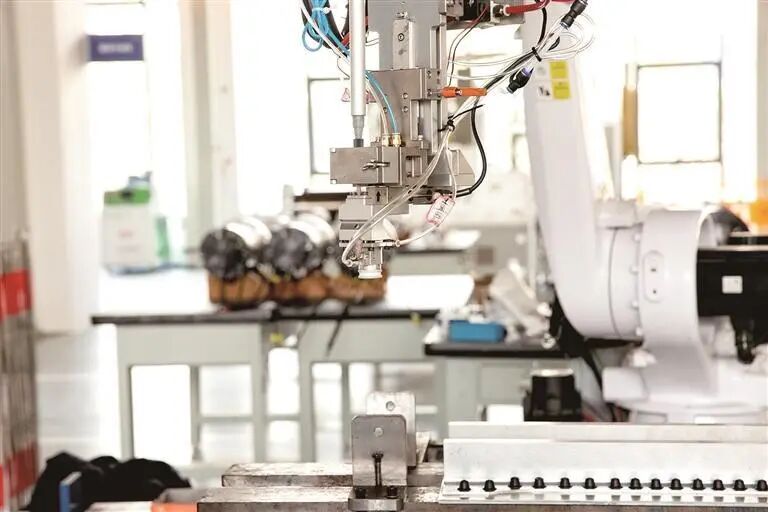
The domestically developed first aircraft fastener automatic sealing and gluing machine independently developed by Xi'an Xinghang Aviation. Image source: Shaanxi Daily
However, it should be pointed out that the higher the aviation industry moves towards the high-end, the more difficult it is for a single city to cover the entire industrial chain, and the more new growth momentum is needed. "Collaborative development" is becoming a new trend in the development of the national aviation industry. Among the national-level advanced manufacturing clusters selected in the fourth batch, the Yangtze River Delta (including Jiangxi) large aircraft cluster and the Chengdu-Deyang-Mianyang-Ziyang-Liangshan aerospace cluster both adopt the cross-regional co-construction mode to amplify industrial effects through division of labor and collaboration between cities.
As Chen Yao, Vice President and Secretary-General of the China Regional Economic Association, said, the differentiated characteristics of Shenyang, Xi'an and Harbin have naturally formed space for complementary cooperation. According to Sun Fengdao, at this Advanced Manufacturing Cluster Development Conference, the Ministry of Industry and Information Technology intended to promote in-depth exchanges and docking of national aviation manufacturing clusters, and the three local industrial promotion agencies took the opportunity to reach cooperation, establish a regular contact mechanism, and share resources with each other.
In Chen Yao's view, the cooperation among the three places is worthy of recognition. In the past, due to the strong military attribute of the aviation industry, there were many institutional barriers to cross-regional cooperation, and it was difficult to promote. This time, carrying out division of labor and collaboration with national-level advanced manufacturing clusters as the main body is conducive to taking the lead in breaking geographical boundaries in the aviation field and forming a demonstration of cross-regional coordinated development.
Co-opetition
Behind the deepening cooperation is the continuously expanding new growth space of China's aviation industry. The 2026 government work report has positioned aerospace as an "emerging pillar industry" for the first time, and the strategic status of the industry has risen significantly.
In terms of the market, the large-scale application of domestically produced large aircraft is accelerating — public reports show that about 15 C919 aircraft were delivered in 2025, reaching a cumulative total of 31 units; the delivery target for 2026 is no less than 28 units, and the long-term plan is to reach 200 units per year in 2029. The batch delivery of large aircraft is driving a huge industrial chain market.
The after-market is also sending positive signals. A few days ago, 9 departments including the Ministry of Commerce issued a document to promote the high-quality development of aviation bonded maintenance. Up to now, there are 37 aviation bonded maintenance projects across the country, which account for 12% of the total number of projects in the bonded maintenance industry, contributing 85% of the import and export value, reaching 60 billion US dollars in 2025.
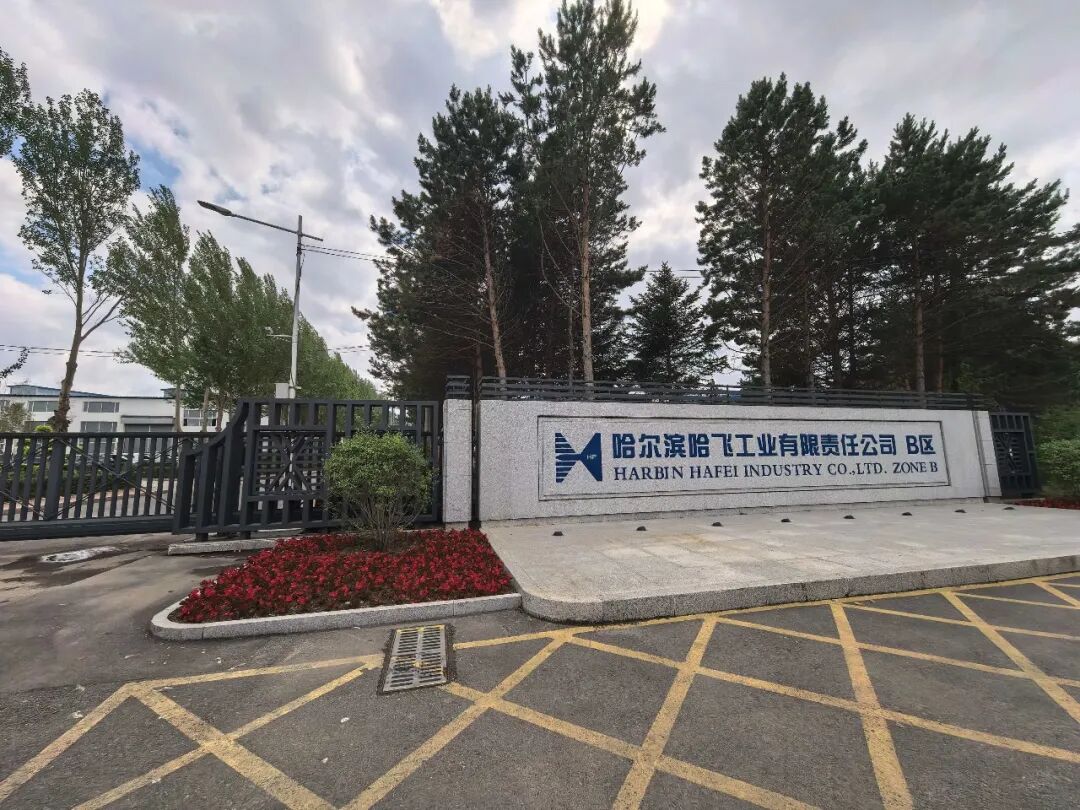
Image source: Harbin Daily
The potential incremental market is expected to reshape the industrial supply and demand pattern. However, the realization of opportunities cannot be achieved overnight. In Sun Fengdao's view, the current civil use of large aircraft still needs to go through a climbing period before real large-scale application, and the low-altitude economy is still in the early stage of industrial development with high input and low return. The entire aviation industry is in a painful period of logic switching.
There are also hidden worries of competition between cities.
Taking Shenyang and Xi'an as examples, the person in charge of the Shenyang Municipal Bureau of Industry and Information Technology once said before, "The scale of Shenyang's civil aviation industry is relatively weak, and there is a lack of traction projects for the final assembly of large aircraft. Therefore, Shenyang needs to introduce and cultivate major civil aviation projects to increase the scale of the civil aviation industry and its driving effect on the entire industry."
Xi'an also made it clear in the outline of its 15th Five-Year Plan that it will actively strive for the layout of the second production base of the C919 large passenger aircraft in Xi'an to ensure the implementation of major national industrial projects.
Sun Fengdao said frankly that we should view the co-opetition relationship of the aviation industry in the three cities dialectically. There is not only the need for mutual learning and cooperation, but also the competition for high-end enterprises to settle in. Integrating resources through collaborative cooperation is not only a practical need to avoid disorderly competition, but also conducive to giving full play to each other's advantages and making up for corresponding shortcomings.
"The industrial linkage of the three cities needs to find the right cooperation direction from the signing of the agreement to the real implementation," Chen Yao suggested. Among the three cities, Xi'an has outstanding capabilities in R&D and test verification, and can act as the leader of industrial transformation, exporting innovation experience and platform resources to the outside world, driving Shenyang and Harbin to upgrade together.
Sun Fengdao also mentioned that Xi'an's experience in cultivating airborne equipment and building the Qinchuangyuan innovation platform is worthy of Shenyang's learning. It is understood that the industrial cooperation and co-construction agreement signed by the aviation cluster promotion agencies of Shenyang, Xi'an and Harbin this time is to deepen division of labor and collaboration in key links such as complete machine manufacturing, power systems, airborne equipment, and maintenance services, promote complementary advantages and resource sharing, and accelerate the construction of an industrial ecosystem with reasonable layout, differentiated development and efficient coordination.
Opportunity
From a broader perspective, the regional industrial cluster pattern of the national aerospace industry is gradually taking shape.
The research report of the China Investment Industry Research Institute shows that the Yangtze River Delta region has formed dual engines of large aircraft and commercial aerospace; the Pearl River Delta is the world's largest consumer drone production base, and also has significant advantages in satellite applications; Chengdu-Chongqing, with its profound military industry heritage and emerging forces converging, is forming unique industrial competitiveness in the fields of low-altitude economy and commercial aerospace.
In contrast, the old industrial bases in Northeast China represented by Shenyang and Harbin are still in the transformation stage of the aviation manufacturing industry. At present, the construction of a unified national large market is advancing in depth. Sun Fengdao believes that with the overall guidance at the national level, cities like Shenyang will have the opportunity to "enter the game", move in the same direction as the major industrial highlands across the country, find their own positioning and seek development in a larger industrial cycle.
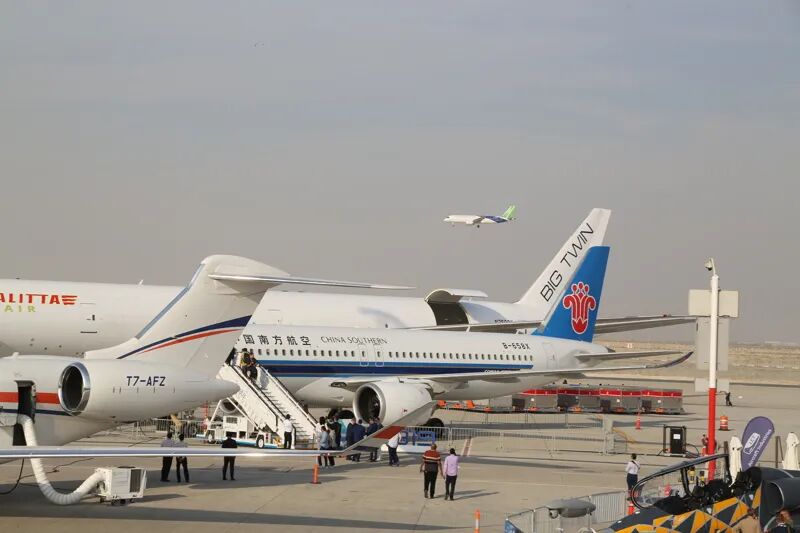
Image source: Xinhua News Agency Photo
From this perspective, the pilot exploration of the integrated development of the aviation industry in the Yangtze River Delta just provides a reference model for the linkage of the three northern cities.
In 2024, the Yangtze River Delta (including Jiangxi) large aircraft cluster became the first national advanced manufacturing cluster named after "large aircraft", which had already gathered more than one-third of the country's large aircraft supporting capacity at that time.
In June 2025, the industry and information technology departments of the three provinces and one municipality in the Yangtze River Delta (Shanghai, Jiangsu, Zhejiang and Anhui) signed the framework agreement for the co-construction of the Yangtze River Delta large aircraft industrial cluster, which explored cross-regional aviation industry collaboration more than a year earlier than the three cities of Shenyang, Xi'an and Harbin.
However, the practice of the pioneers also confirmed the difficulty of this path.
According to reports, in the process of coordinated advancement in the Yangtze River Delta, compared with the tackling of technologies and products, the deeper challenge lies in breaking through the institutional barriers of regional coordination. Although the Yangtze River Delta has high enterprise density and strong supporting capacity, problems such as inconsistent standards and fragmented resources still restrict efficiency. This institutional fracture is the key obstacle to getting through the "last mile" inside the cluster.
In Chen Yao's view, the internal coordination within the Yangtze River Delta cluster is not easy, and the cross-cluster co-construction of Shenyang, Xi'an and Harbin will face greater institutional and mechanism challenges. "Looking at the actual cooperation between cities, more consideration is given to how to distribute benefits in the early stage." The three cities should put aside their local short-term gains and losses first, carry out cooperation, gradually optimize in coordination, and finally maximize their respective interests.
Looking deeper, this joint effort of the three places is not just an industrial cooperation, but also a coordinated breakthrough around high-end manufacturing.
Chen Yao said that northern cities have long had more competition than cooperation, and linkage in the high-end manufacturing field is especially rare. The aviation industry chain is long, covering a wide range of upstream and downstream, and has a strong driving effect on the overall upgrading of urban manufacturing. The three cities taking aviation as the entry point to carry out cooperation can not only release the coordinated potential in the aerospace field, but also explore paths for industrial linkage between northern cities, which has positive significance for improving the industrial level of each city and the overall regional competitiveness.
This article is from the WeChat official account "Urban Evolution", author: Liu Xuqiang, published with authorization from 36Kr.