1.9-yuan and 3.9-yuan coffee are making a comeback, with more than 20,000 stores joining the fray. Is the price war staging a comeback?
The summer vacation has just ended, and the coffee market has become active again.
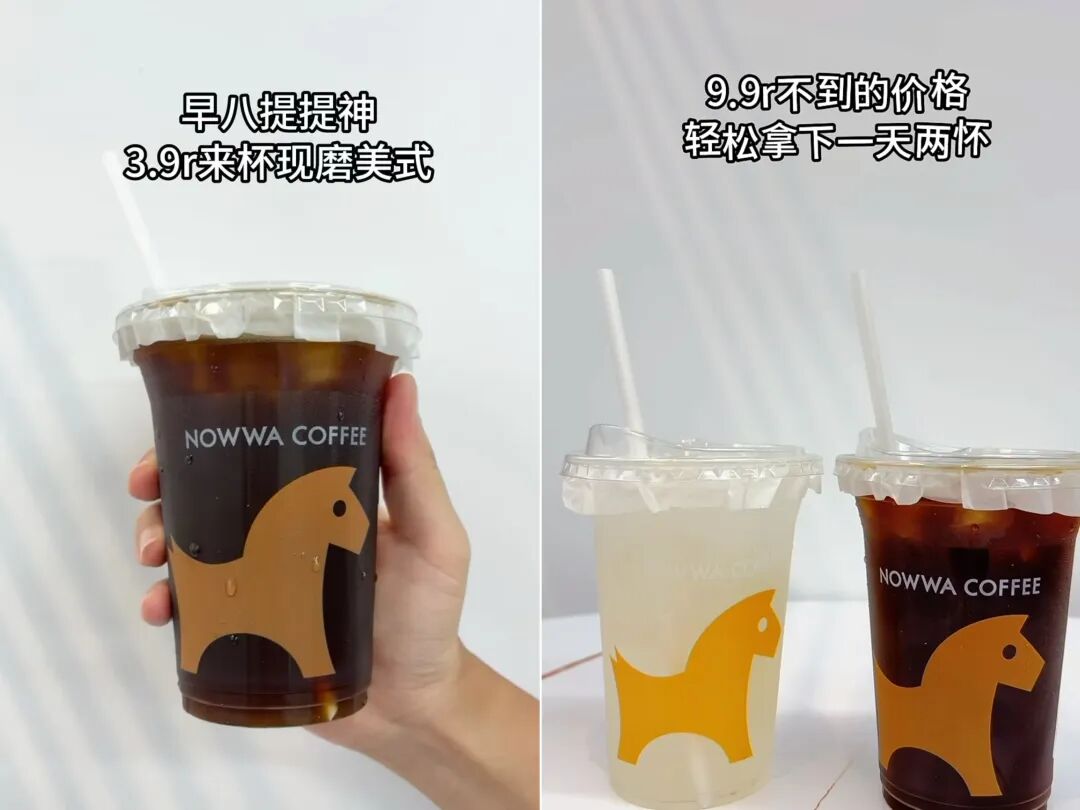
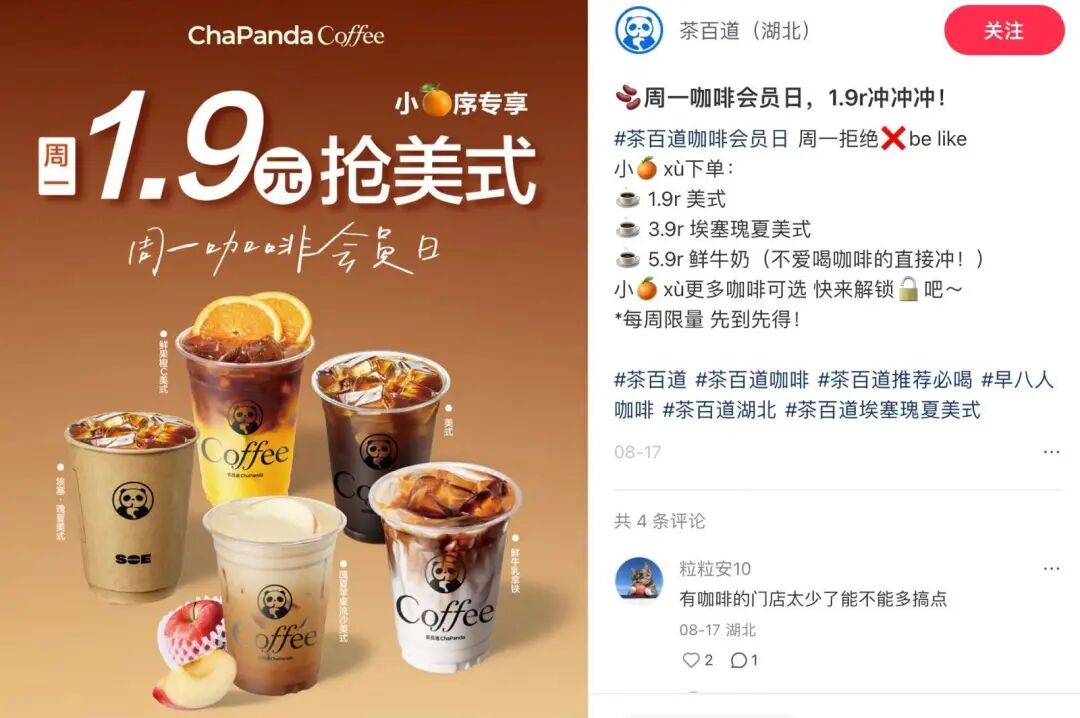
Nowwa Coffee launched 3.9-yuan freshly ground Americano at its joint stores in convenience stores; Chabaidao launched 1.9-yuan Americano and 3.9-yuan Geisha Americano on its Monday member day; Hushang Ayi sold a 9.9-yuan 5-visit card on its mini-program, with a single cup discounted to about 1.98 yuan; CoCo restarted 3.9-yuan coffee on food delivery platforms...
Has the price war that subsided at the beginning of the year made a comeback?
Single cup as low as 1.9 yuan, more than 20,000 stores participate, low-priced coffee is densely "swiping the screen" again
"The first cup of coffee in autumn is cheaper than water". Recently, the price of a cup of coffee has refreshed my perception again.
Nowwa put forward the slogan "Freshly ground coffee for 3.9 yuan every day" in mid-August, Americano and lemonade are 3.9 yuan every day, and Orange C Americano and Coconut Latte are 5.9 yuan every day. Consumers exclaimed that "coffee freedom is coming again".
The 9.9-yuan 5-visit card sold on Hushang Ayi's mini-program (limited to redeeming classic Americano/strong Americano) is discounted to about 1.98 yuan per cup, made from freshly ground and extracted IIAC 2024 Gold Award Arabica beans. It previously launched a 19.9-yuan 5-visit latte card, with optional special drinks such as small butter latte and coconut latte.
Chabaidao, which has covered 2700 coffee stores, also joined in, launching coffee promotions on Monday member days, with Americano at 1.9 yuan/cup and Ethiopian Geisha Americano at 3.9 yuan/cup. On social platforms, positive reviews such as "3.9-yuan coffee is comparable to SOE in specialty coffee shops" keep popping up.
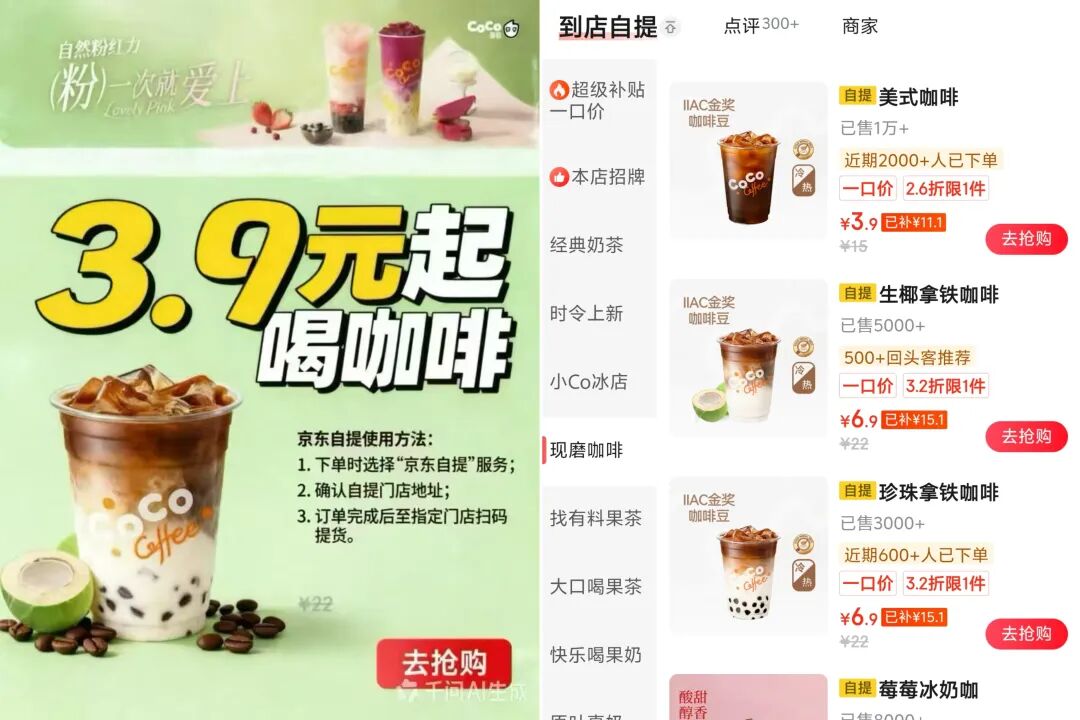
On the JD food delivery platform, the in-store pickup Americano of CoCo is only 3.9 yuan, and the coconut latte and pearl latte are 6.9 yuan — the price has returned to the level three years ago.
A rough estimate shows that the number of coffee stores of the above brands has exceeded 20,000.
Coffee is cheaper than a bottle of mineral water, which makes people trance back to 2023 when Cotti and Luckin fought a close "9.9 yuan vs 8.8 yuan" battle.
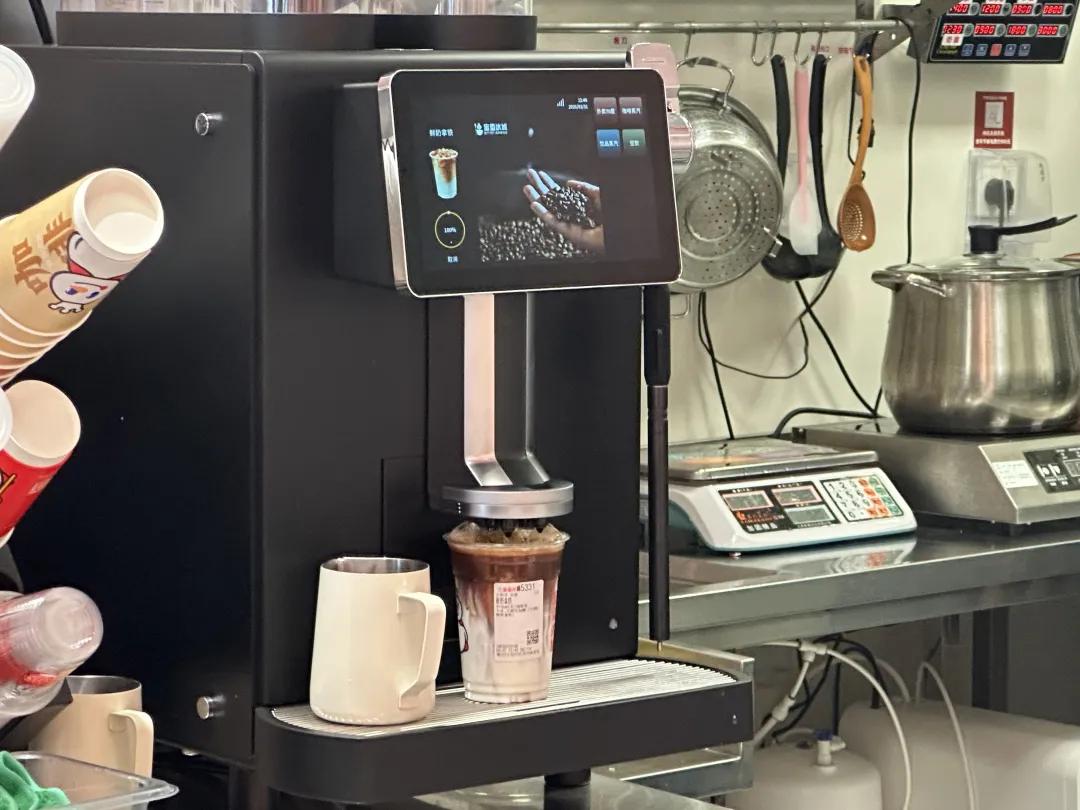
This wave of low prices is not an isolated event. Deep in the industry, tea brands are "deploying coffee machines" at an unprecedented speed.
Tea brands are frantically deploying coffee machines
Mixue Ice Cream & Tea is the most typical case.
In the first half of 2026, Mixue Group recorded a revenue of 152.2 billion yuan, and its main brand allocated 1 billion yuan of special funds to subsidize franchisees to introduce fully automatic coffee machines.
As of June 30, 2026, about 6000 stores have been equipped with freshly ground coffee machines, using fresh milk and 30-day fresh coffee beans. The pilot stores performed impressively, the daily average coffee sales of many stores accounted for more than 20%, and some stores sold more than 9000 cups 53 days after the new product launch, with a daily average of 177 cups.
Chabaidao's 2026 mid-year report shows that freshly ground coffee machines have covered more than 2700 stores, compared with only about 200 stores at the beginning of the year, a dozen times growth in several months.
Hushang Ayi disclosed at the first half of the year performance meeting that as of June 30, more than 9000 stores have completed the coffee machine upgrade, about 6000 to 7000 stores have started operations in advance, the proportion of coffee cup volume has remained stable at more than 10%, and the vast majority of the increment comes from the breakfast scenario.
What is even more remarkable in the industry is Guming. By the end of June, about 13500 stores have been equipped with coffee machines, with a coverage rate of over 90%. The revenue in the first half of the year was 74.7 billion yuan, a year-on-year increase of 31.9%.
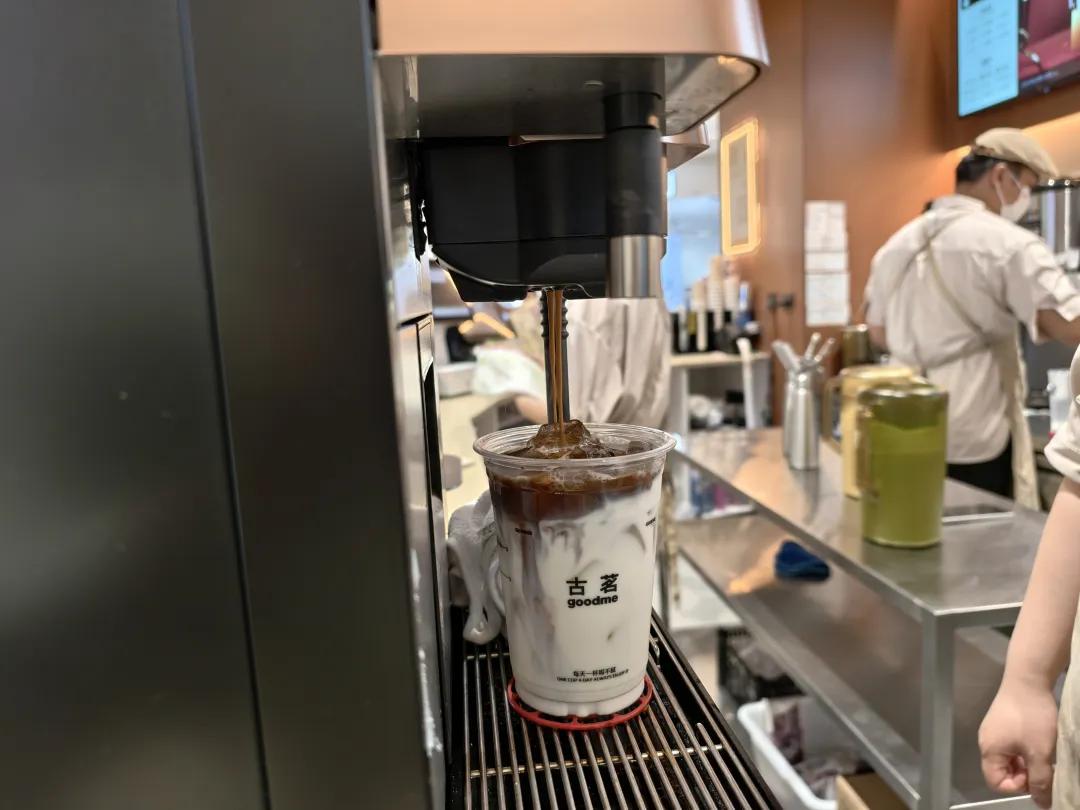
Founder Wang Yunan revealed at the performance meeting that the proportion of coffee sales remains stable at more than 20% without centralized promotions, and exceeds 25% during the event; more than half of coffee consumers are new customers of Guming.
Meng Hailin, CFO of Guming, said bluntly: "If there were no coffee and no morning hours, we might be similar to the whole industry, and it would be at least difficult to maintain the growth in the first half of the year."
Tea brands are setting off a "coffee transformation" wave, and a "enclosure movement" around coffee is in full swing.
The "coffee wave" of tea shops, a market education of "trading price for volume"
Many people worry that the price war that just subsided half a year ago will make a comeback. But a careful breakdown will find that this time is essentially different from three years ago.
First, low prices are not normalized, but only drainage under limited conditions.
The most terrifying part of the last round of price war was the normalization of low prices: Cotti's "9.9 yuan for all products without limit", and Luckin followed up with a 9.9-yuan zone, aiming to clear competitors and seize market share. However, this time the price reduction is mostly time-limited, quantity-limited and channel-limited.
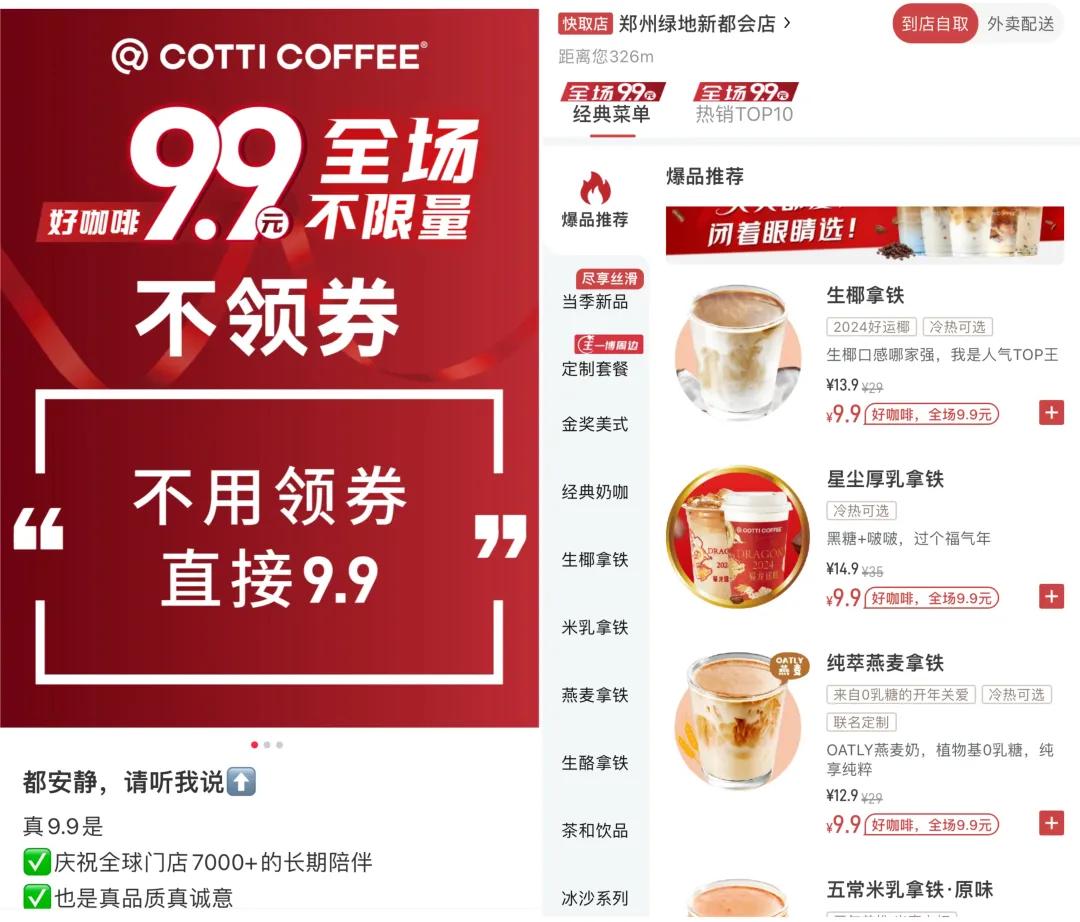
Nowwa's 3.9-yuan freshly ground coffee is concentrated in convenience store channels; Chabaidao's 1.9-yuan Americano is limited to Monday member day; Hushang Ayi's 9.9-yuan 5-visit card is limited in quantity and time, with the purpose of increasing consumption frequency.
For tea brands, coffee is a drainage product, this is a precise promotion with rhythm, scope and time limit, rather than an unlimited, full-store and long-term normalized low price.
Second, the goal of low prices has changed: it is not to clear competitors, but to expand the market pie.
This round of price reduction is more about cultivating the market and tapping incremental potential.
Guming's data is the most convincing: more than half of coffee consumers are new customers, which means Guming is also participating in the coffee market education.
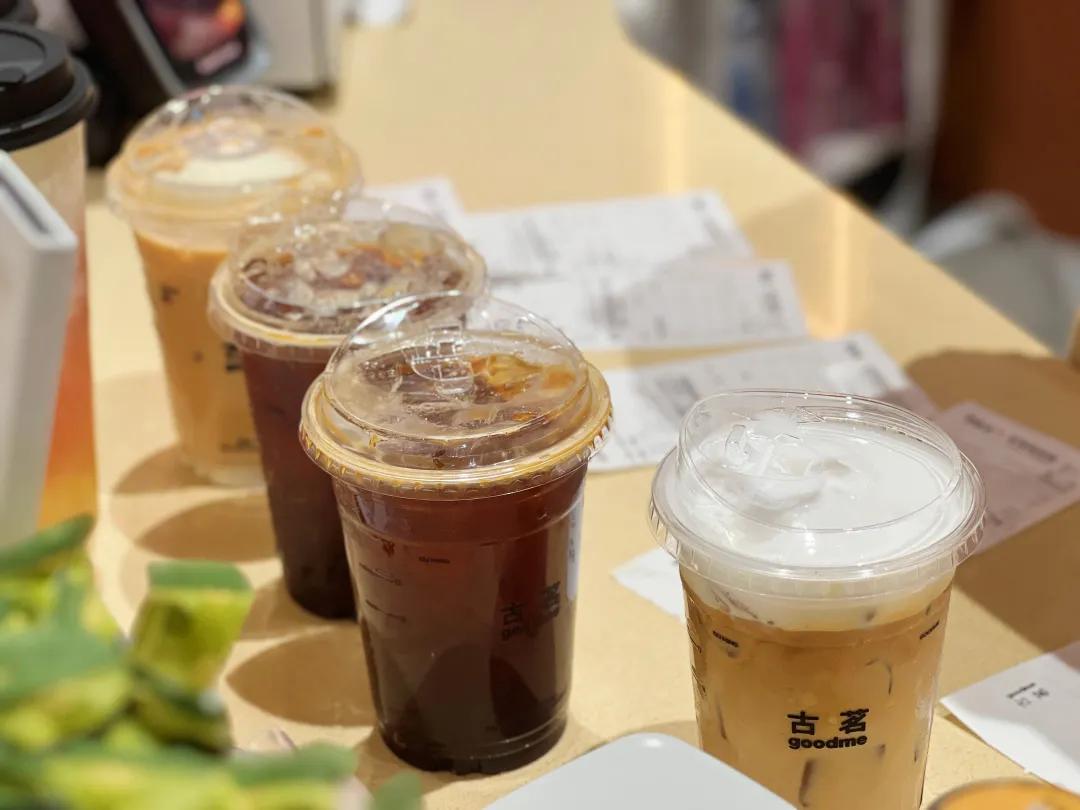
Nowwa uses 3.9-yuan Americano to lower the threshold of first-time trial, and cultivates coffee drinking habits in the convenience store scenario; Chabaidao and Hushang Ayi launch extremely low-priced coffee, aiming to let consumers who originally drank milk tea "by the way" try coffee.
In other words, in the stage of rapid growth of coffee penetration rate, tea brands use low prices to attract more first-time triers, turning coffee from "occasional drink" to "daily drink".
Third, the "in-shop shop" model gives low prices a different cost logic.
Most importantly, as a new category of milk tea stores, the cost of coffee has been diluted.
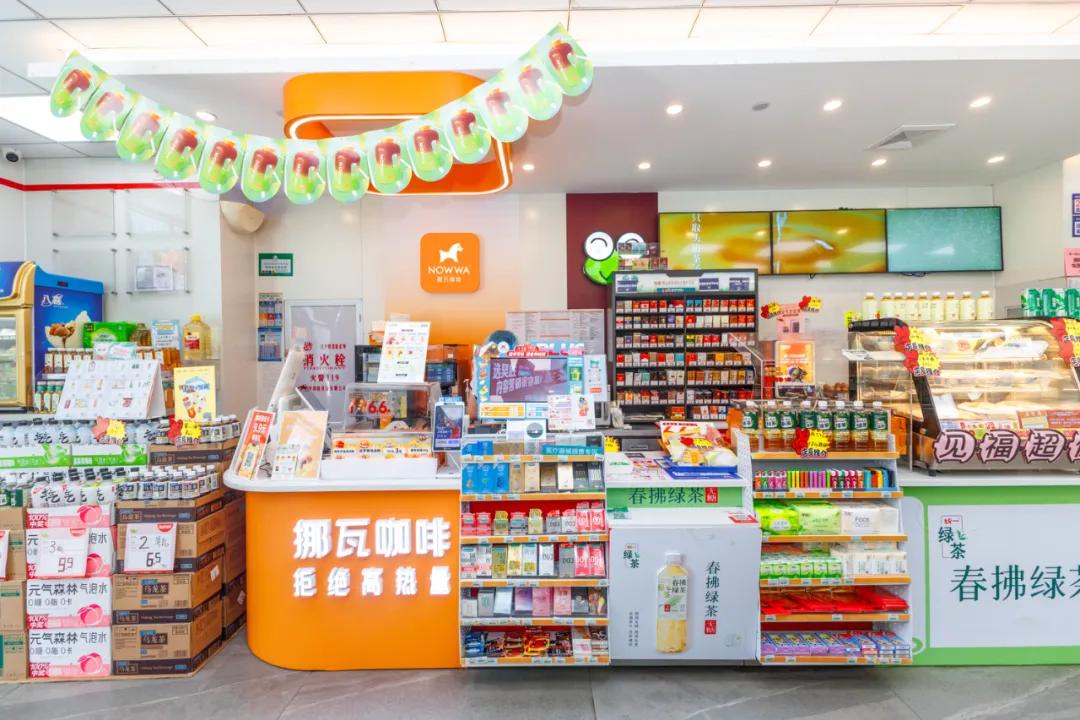
Nowwa Coffee's "in-shop shop" model is particularly typical: coffee is embedded in high-frequency scenarios such as convenience stores, snack shops, and hotels, becoming a drainage product, and low-price profit sharing becomes marketing expenses rather than pure losses.
The same is true for tea drinks. When rent, labor, raw materials and other resources can be reused, coffee can sacrifice some profits temporarily to obtain consumers' mindset of buying coffee in tea shops.
In essence, this is not a "new round of price war", but a brand new market education of "trading price for volume".
Low prices can create excitement, but excitement does not equal business success
For the beverage industry, the peak summer season has just passed, and it is a conventional operation to carry out a wave of promotions to boost sales before the off-season comes. Only this time, the drainage product has changed from milk tea to coffee.
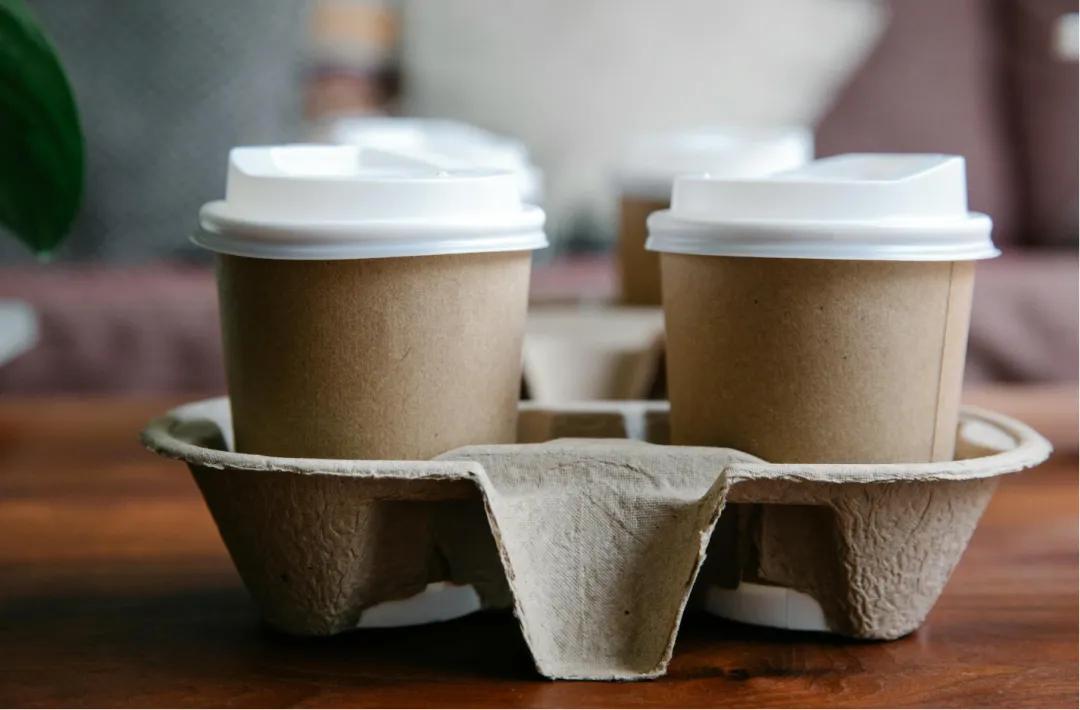
In the beverage industry without too many competitive barriers, price reduction is "faster, more accurate and more ruthless" than any marketing activity. But it needs to be vigilant that low prices can effectively acquire new customers in the short term, but the incremental volume that can be driven is limited, and people cannot be retained only by "cheapness".
Low prices can create excitement, but excitement does not equal business success.
When Wang Yunan, founder of Guming, was asked at the performance meeting "what is something that peers cannot do", his answer was very sober: "At present, there is no capability that competitors cannot fully replicate."
This sentence precisely points out the core dilemma of the industry: When coffee becomes a standardized commodity, price becomes the only dimension of competition, and there is no winner in the price war.
Wang Yunan said, "What Guming does relatively better is mainly the management of coffee beans and other raw materials, expiration date control, store operation and equipment maintenance."
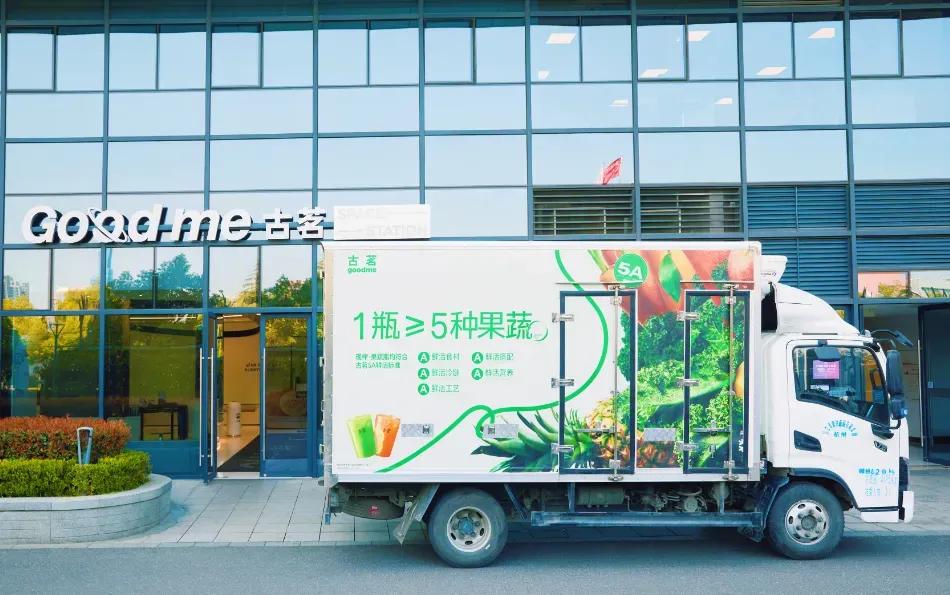
Indeed, Guming has promoted coffee at 2.9 yuan and 4.9 yuan for many times, but behind the low price is massive investment.
According to a report by LatePost, when Guming launched an Ethiopian SOE coffee bean this year, it seconded more than 100 operation staff, spent nearly a month debugging store equipment, and invested more than 2.3 million yuan. It also installed a data collection system for coffee machines to find abnormal stores through extraction parameters.
These investments explain why not all tea brands, after adding a fully automatic coffee machine, can immediately replicate its sales proportion.
For consumers, 1.9-yuan Americano and 3.9-yuan Geisha are certainly good things, and the threshold for coffee drinking has been lowered to an unprecedented low point.
But for practitioners, the real test has just begun: When everyone has learned to acquire new customers with low prices, only those who can turn new customers into regular customers and turn "first trial" into "daily habit" can replicate Guming's performance.
This article is from the WeChat Official Account "Kamen" (ID: KamenClub), written by Guojun, and published with authorization from 36Kr.