AI Office, a bloody trench warfare
This summer, a major event in the AI industry is the sudden rise of the importance of AI office, whose speed and intensity caught everyone completely off guard.
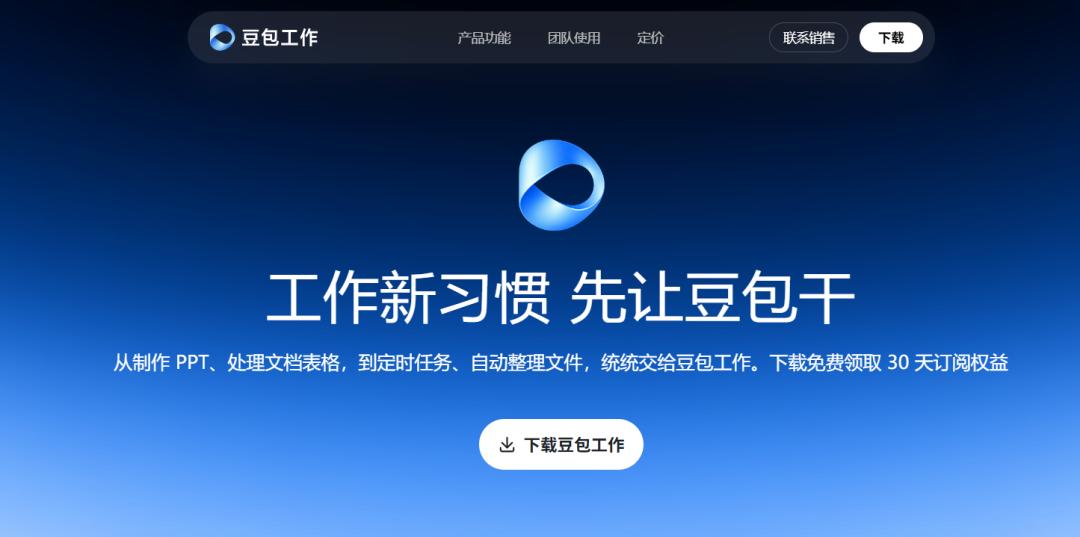
At the end of July, Tencent, Alibaba and ByteDance collectively adjusted their business layouts and organizational structures for AI office. Tencent fully integrated the QClaw product into WorkBuddy, and then went all out to promote it. ByteDance integrated the entire Feishu product team into Doubao, established a new Doubao product team, and launched an independent AI office brand "Doubao Work". In contrast, Alibaba merged its three agent product lines into Qwen Office. The three giants chose to concentrate heavy forces on AI office at the same time, and the posture of an imminent fierce battle is very obvious.
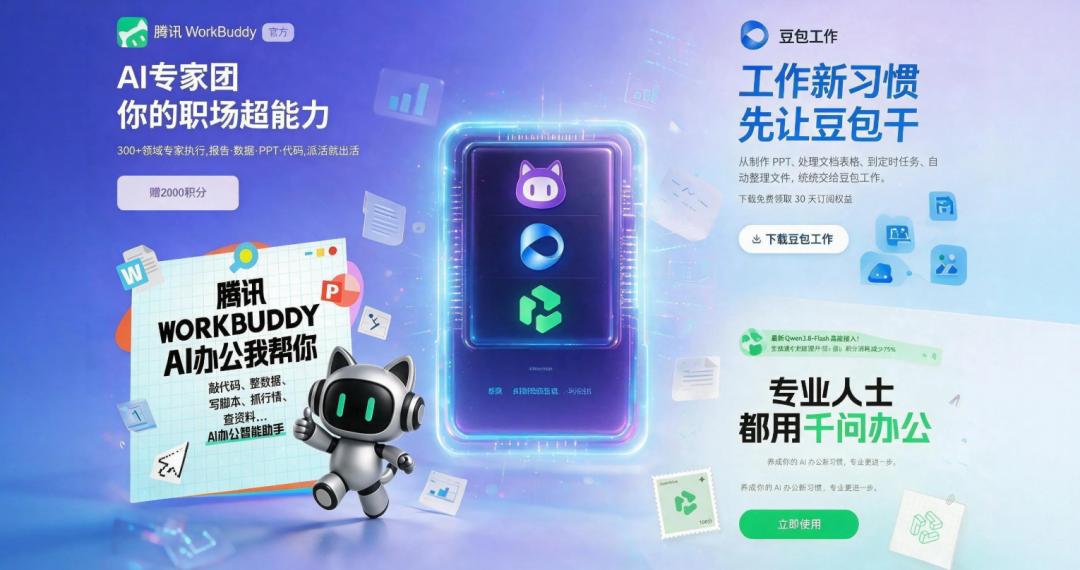
However, oddly enough, there seemed to be almost no sign of smoke before this conflict. You know, half a year ago, the big tech companies were still competing to give out red envelopes and launch food delivery services on the C-end AI entrance. Why did the focus of the AI competition shift to the B end before long? The indicators changed from the red envelope amount of billions and monthly active users to which companies their own AI services have settled in.
Different from the field battle of large model APPs, AI office will be a "trench warfare". It will last longer, and it is bound to be more bloody and brutal.
Ending the internal horse race
Generally speaking, the signal that a large tech company decides to take a certain matter seriously is to unify all relevant internal business lines, integrate all forces to face the outside world with one accord.
The AI office sector has just gone through this round of intensive preparation. Originally, office function was an incidental capability that many business lines might involve. Public cloud, enterprise collaboration, social platforms and office software are all natural carriers of AI office, which also leads to the long-term state where AI office is scattered on various platforms, develops independently, has no systematic layout and no unified entrance as a "secondary function".
At this node, the big companies are obviously not satisfied with this situation. So the long internal horse race was uniformly ended all of a sudden.
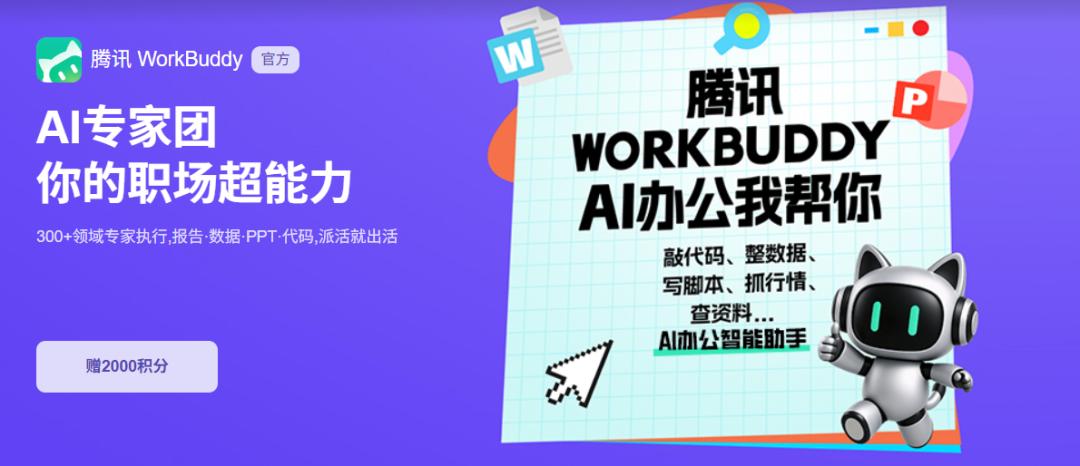
The internal AI office horse race in Tencent originally involved at least three independent cross-departmental business lines. Among them, QClaw belongs to Tencent PC Manager, which is transformed based on OpenClaw. CodeBuddy belongs to Tencent Cloud, positioned as an agent tool in the programming field. WorkBuddy also comes from Tencent Cloud, positioned as a desktop office AI tool. In addition, Tencent Docs, Tencent Meeting, WeCom and other products also have built-in AI functions respectively. After converging all resources, Tencent has integrated all AI office capabilities on WorkBuddy, and opened up the Tencent ecosystem through functions such as "WeChat direct connection", which seems to be determined to get rid of the embarrassment that Tencent has no star product in the AI era.
On the ByteDance side, the main work is to fully integrate the four independent platforms of Doubao, Feishu, TRAE and Coze. This is a large-scale integration spanning four differentiated fields: C-end APP, SaaS, programming tools and Agent platform.
ByteDance completed the integration in two steps. First, split the Feishu product team and merge it into Doubao to establish a new Doubao product team. At the same time, the original Feishu marketing team was merged into Volcano Engine, and Feishu no longer exists as an independent business unit since then. The second step is to merge the TRAE and Coze teams into Doubao as a whole, strengthen the Agent and AI programming capabilities into Doubao's AI office system, and launch the independent AI office brand "Doubao Work" along the way. As a result, the Doubao team, which has achieved excellent results in the past, has won absolute trust within ByteDance, and has begun to take the position of the main force in the AI office battle.
Alibaba, which used to swing between DingTalk and Alibaba Cloud, has also put forward a brand new strategic idea. The solution this time is to take the opportunity of the leadership transition of DingTalk to reorganize a system specifically for AI office. This system integrates the respective resources of DingTalk and Alibaba Cloud. For example, Tongyi Lingma that originally belonged to Alibaba Cloud, Wukong that originally belonged to DingTalk, and Luotuo Kuaipao incubated internally by Alibaba Cloud. By completely merging the three, QwenWork, which is under the unified responsibility of Chen Yusen, the new CEO of DingTalk, was established, and reports to both Alibaba Cloud and DingTalk at the same time.
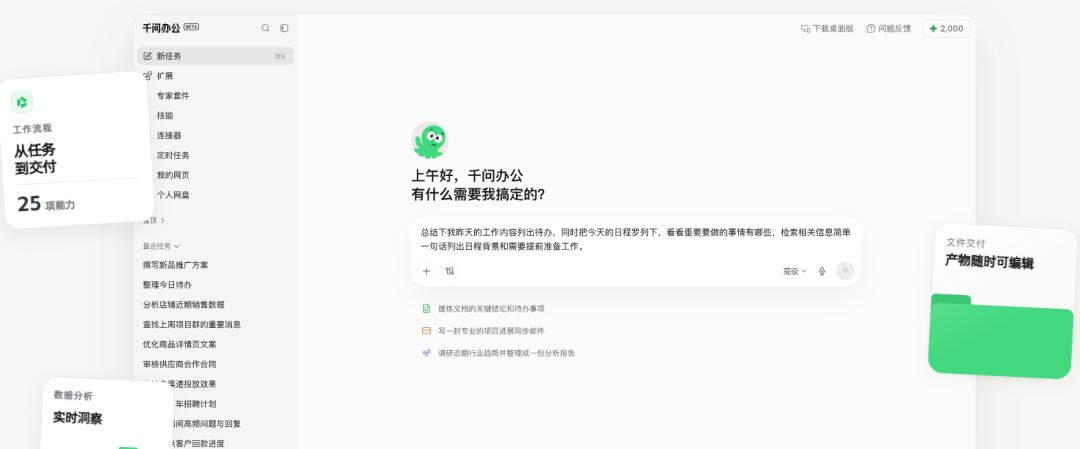
So far, the "three-way standoff" situation of WorkBuddy, Doubao Work and Qwen Office has taken initial shape, and a fierce battle is inevitable. The core logic of this competition is that the value of agents in office scenarios is no longer just an embedded capability, but an opportunity to define the next generation of enterprise operation mode.
The just-launched AI office war is likely to evolve into the fierce battle scene when Internet enterprises entered the cloud computing market in those years.
Three trenches
Why has the importance of AI office risen sharply all of a sudden, and become a must-contested place for big tech companies?
On the one hand, this is because the technical maturity exceeds expectations. The explosion of Lobster AI at the beginning of the year essentially points to the application of AI in personal scenarios. Office efficiency is the direct commercial manifestation of this value. In the past few years, AI office has long stayed at basic links such as Q&A information, document generation, and PPT beautification, which can only be regarded as auxiliary capabilities. The cross-application, responsible task understanding and long-chain execution capabilities brought by agents have the potential to fundamentally change the office mode. When the engineering level of this capability gradually meets the standards, the commercial value it brings will become more and more considerable.
Another factor that pushes AI office into the fierce war among giants is that the last AI battle ended hastily. The giants who were still throwing a lot of red envelopes during the Spring Festival vowing to compete for DAU soon found that the C-end user retention rate is really poor, and the willingness of retained users to pay for AI is even worse. Moreover, the more users there are, the higher the computing power cost, and the cost is difficult to be diluted. This makes the C-end AI competition a bit tasteless, and the big companies are still eager to get AI business that can quickly recover funds and generate cash flow. Every time this situation occurs, charging enterprises is almost the only choice. Today, when the AI bubble is likely to burst, consolidating the toB market is not only a pragmatic strategy, but also a firewall.
As a result, the three giants began to heavily invest in AI office. Since this heavy investment is driven by the general trend, the technical differences between each company are not significant, and the usage habits of AI office in the B-end market have not been effectively cultivated, and the market is not hot. Therefore, AI office is destined not to become a large-scale field battle like promoting large models, but a "trench warfare" that converts traffic from the inherent traffic pools of each company on the premise of convergent technology and products. Everyone hides in their own trenches to dig deep ditches until one day they can rush out and engage in full-scale fire exchanges.
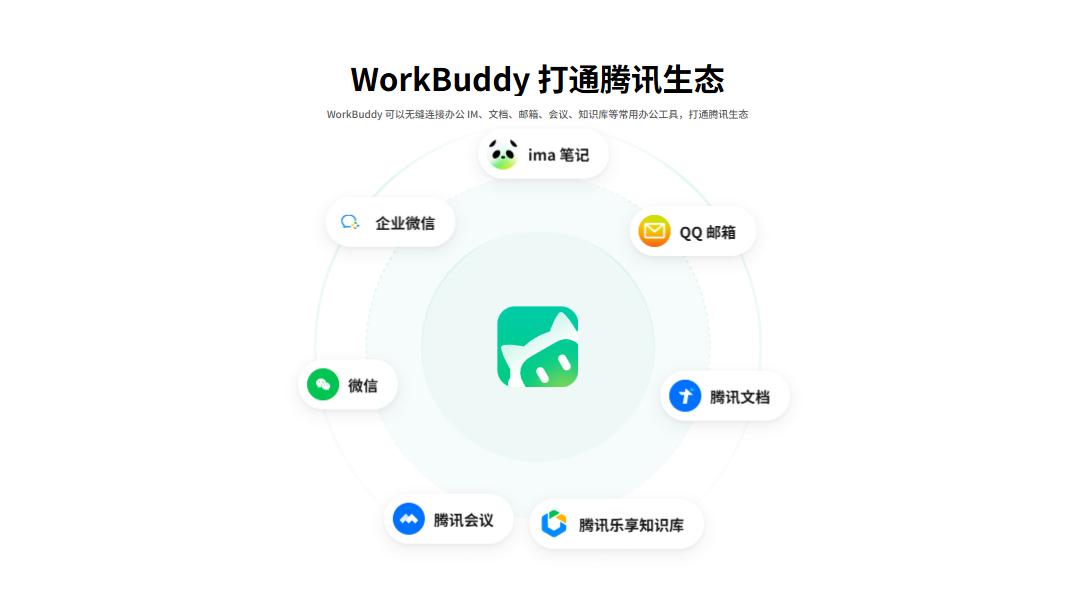
Tencent has figured out that its own trench is WeChat. Instead of developing AI separately from WeChat, it is better to divert water from WeChat's traffic pool and usage habits. Therefore, the core advantage of WorkBuddy is that it connects WeCom, Tencent Docs, Tencent Meeting, QQ Mail, supports remote instruction delivery via WeChat and result feedback back to WeChat. This agent experience that seamlessly integrates into the daily work of enterprise employees greatly lowers the threshold of AI office, and naturally blocks other competing products out of the AI closed loop. Therefore, during the period when the AI office war started, WorkBuddy performed best in terms of traffic, with monthly visits exceeding 20 million times. I believe everyone can see the promotion of WorkBuddy recently. A media colleague told me that this is the largest scale promotion Tencent has ever launched since it started its AI business. It shows the internal emphasis and determination on this opportunity.
If Tencent's trench comes from mobile social habits, then ByteDance's trench comes from the large model habits that have just been developed in the AI era. The logic of using Doubao to take over Feishu instead of the other way around is that Doubao has essentially become the first national-level product in the AI era. Digging the AI office trench around Doubao can naturally introduce C-end traffic into the B-end ecosystem. Let the people who like to use AI the most also use AI office at the same time. But whether the relationship between Doubao Work and Feishu can be really sorted out clearly, and whether the AI office business line can be cultivated along Doubao's trench, these issues remain to be further answered.
Tencent has social resources, ByteDance has AI resources, and Alibaba has cloud computing resources. The trench of Qwen Office opens up the B-end depth of Alibaba Cloud and DingTalk. You know, there are clear boundaries between the B end and the C end in many aspects, and most of the attempts to break this boundary have proved to be wishful thinking in the end. Relatively speaking, Alibaba has a deeper B-end paid market, and the problem is how to convert this market momentum into the brand new AI office story.
Next, the three trenches will be intertwined in the fierce competition. What we compete for is not the reckless rush with huge amount of red envelopes, but the handling of public opinion sniper attacks, the competition for industry fortresses, and the continuous breaking of B-end discourse power. The competition will last longer, and the battle situation will be more intense.
Desktop entrance, a battlefield meat grinder
The first battle of the AI office competition is the battle for the desktop entrance.
This is the simplest and most effective entry point for AI office, that is, whether enterprise users can enter a certain AI office system as soon as they turn on the computer, and complete a series of their own office needs within its framework. Generally speaking, the desktop-level agent plays the role of this entrance. It is the default entrance for many AI office capabilities, and it is also the key function that the three AI office players are focusing on promoting.
The ideal situation is that the company's own desktop agent can occupy the startup item of enterprise users, the resident position on the desktop, can be awakened at any time through shortcut keys, and can be used in combination across different office terminals of users.
WorkBuddy can be awakened remotely via WeChat, Doubao PC client adds a "Work" entrance, and DingTalk navigation bar can directly wake up Qwen Office, all of which can be regarded as the competition for desktop entrance by each player. The lower the wake-up cost and the usage threshold, the higher the first wave penetration rate of AI office, which is also the key for Tencent to achieve a leading start in this game.
Looking further down, the desktop entrance is only the first step. The core of AI office commercialization is how to recover cash flow after the entrance is opened. This requires big tech companies to provide customized AI capabilities required by various industries. Breaking through industry after industry, this B-end gameplay that has been rejected by giants many times is likely to return to the mainstream vision. Furthermore, giants need to organize a brand new AI office ecosystem, introduce ISVs and developers to serve users. AI office is likely to redistribute the SaaS market share.
"In the AI era, Internet giants will increasingly become IT service providers."
This is the curse that big companies want to escape, but the torrent of technology and business pushes them in this direction again and again. The battle for desktop entrance will not be invested heavily in the short term like the C-end competition of large models, but relies on long-term competition, word-of-mouth accumulation, and "street fighting" among enterprises and industries one by one. This kind of B-end competition will be more cruel and consumptive, and a large number of product capabilities, service capabilities and marketing capabilities will be continuously invested in the front line.
For enterprises that really want to gain market dominance, the desktop entrance of AI office will become a battlefield meat grinder.
After the gunshot, the "four battles" of To B begin
Since the information revolution, enterprise office digitalization has gone through three changes. The first one is centered on office informatization, giving rise to office giants like Microsoft. The second one takes enterprise process digitalization as an opportunity, standardized software such as ERP and CRM rose, giving birth to overseas companies like SAP and Oracle, and domestic companies like Yonyou and Kingdee. The third one takes cloud collaboration and enterprise collaboration as an opportunity, giving birth to products like DingTalk and Feishu.
Each of these three changes is accompanied by huge business opportunities and brutal user competition. When the AI era comes, enterprise office is likely to transform into a new form dominated by agents. AI can independently decompose office tasks, call tools and deliver results. The role of employees will be to coordinate agents and supervise the process and results of AI. Enterprises that provide office agents are not only providing a single tool or platform, but also have the opportunity to deeply participate in the workflow of an enterprise, becoming an indispensable and irreplaceable part of the enterprise.
The realization of this opportunity is more difficult than the previous three office revolutions, but the imagination space is also richer. The reality is that the vast majority of enterprises have not yet tapped the real necessity of AI office, and their usage habits need to be cultivated. There are too many AI office entrances on the market, and the AI capabilities provided by the systems behind the entrances