The battle in the sportswear industry is now spreading to the "post-workout" segment.
Ten years ago, GORE-TEX and Primaloft were the core competitive advantages of outdoor brands, but now they have almost become the industry standard. Technologies are upgrading, yet when the technical parameters of all products converge, consumers' motivation to purchase has quietly shifted from "which is warmer" or "which is more waterproof and breathable" to "what does it represent when you wear it".
Over the past decade, sportswear and outdoor apparel have continuously spawned new trend labels. Around 2015, Athleisure became a buzzword in the fashion industry; Gorpcore, which emerged in 2017, gained further popularity during the pandemic, and since then, various style terms ending with "-core" have kept popping up. From 2025 to 2026, another term that originally belonged to skiing culture has re-entered the mainstream vision — Après-ski.
Will it become a multi-year trend, or just another short-lived fad that fades along with the passing hype? More importantly, why is Après-ski the one that stands out? What exactly makes it different from previous sport fashion trends?
The original meaning of Après-ski is "after skiing". The term was born in the Alpine region in the 1950s, when skiers would not change their clothes after finishing skiing, but directly put on their windproof jackets and head to log cabins for mulled wine. More than 70 years later, it no longer has an inevitable connection with skiing.
Before it became a marketing term, it only referred to the period of time after skiing when people go to drink, eat and socialize. From the 1960s to 1970s, it was part of the winter social life for the wealthy in Europe: people would appear in the ski resort log cabins wearing fur-trimmed parkas and oversized sunglasses, as an extension of a luxurious lifestyle. After 2000, brands started to pile logos on ski gear, forming a conspicuous display of luxury brand labels. By 2026, this style has shifted to another direction: no obvious logos, minimalist designs, and colors dominated by black, gray and neutral tones.
Therefore, the resurgent Après-ski today is not a completely new concept created out of thin air by brands. It originally pointed to a very specific life scene, which used to be more of a part of skiing culture. But now this trend has spread to cities, and some people even coined the term "après-street" to describe the way of mixing sport items with fashion pieces. Combinations like hoodies paired with tailored trousers, jackets with half-skirts, and knitted cardigans worn over sports shorts are no longer exclusive sights around ski resorts, but daily looks on city streets.
The core of Après-ski is actually very simple: pair one sport item with one fashion piece. It solves a very common daily demand — you need to meet people after exercising but are too lazy to change clothes. This demand has always existed, no one gave it a name before.
Gorpcore has already made consumers accept wearing functional clothing outside its original scenarios. Après-ski takes this logic one step further, from daily wear to social occasion wear.
In 2021, Gucci and The North Face launched a co-branding collaboration, with Gucci prints on down jackets and the commercial shot filmed in the Alps. No one called it Après-ski back then, but in retrospect, that was the first time alpine style entered the public view on a large scale. Toronto stylist Ashley Galang told CBC that this collaboration made the Après-ski style truly take off.
In the following years, Après-ski appeared sporadically in the product lines of different brands. It did not take shape on a large scale until the eve of the 2026 Winter Olympics. This year's Après-ski is described as "more refined, more urban, and more practical", with athleisure, relaxed tailoring and comfortable materials as its main features. It no longer requires consumers to actually go skiing, or even to be in a winter sports scenario.
Why are sports brands focusing on Après-ski at this point in time? The most direct catalyst is the 2026 Milan-Cortina Winter Olympics. The deeper reason is driven by consumer demand: people need to seamlessly switch from sports to social scenarios without having to change into a whole new set of clothes.
After the rapid growth of the outdoor sports market in the past few years, brands need to find new growth drivers. The Winter Olympics can bring attention, but attention will not automatically turn into purchasing power. Brands need to convert short-term hype into sustainable consumer scenarios, and Après-ski is right between professional gear and fashion apparel.
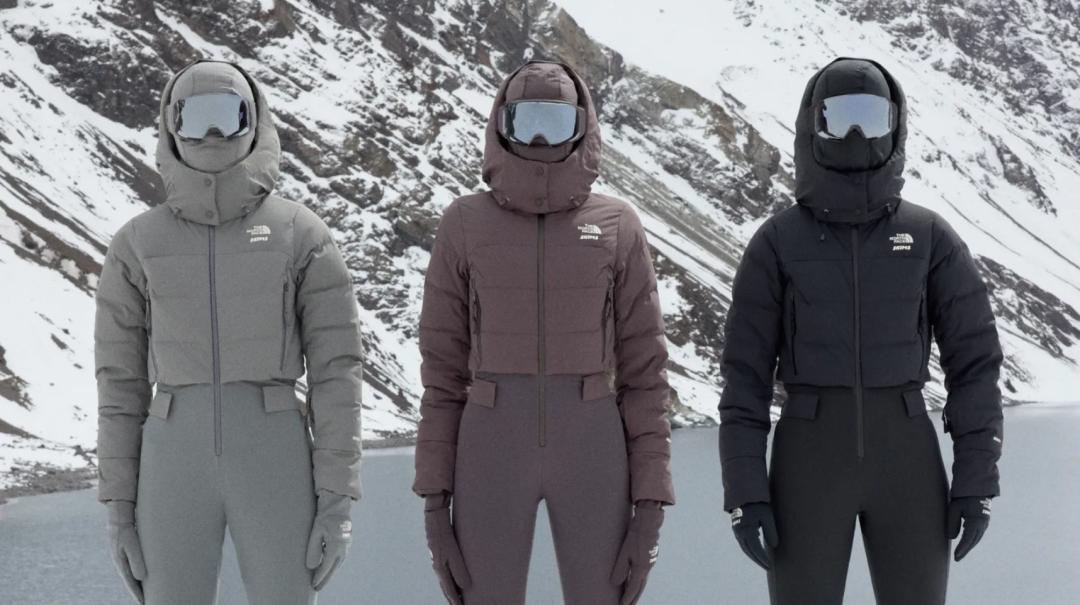
The North Face x SKIMS
The North Face and SKIMS are collaborating for the second consecutive year, and the brand explained in the press release that "consumers need a piece of clothing that can be worn both on the ski slope and at Après-ski occasions".
Consumers are also voting with their searches and purchases. Forbes pointed out in January 2026 that the search volume of "Après-ski" on Google has increased by more than 1000%, and there are more than 1 million posts with the #apresski tag on Instagram so far.
More importantly, Après-ski is no longer just a winter-related concept. New Balance launched a marketing campaign centered on the core concept of "après" in the spring of 2026, encouraging free mixing and matching of items with different attributes such as running shoes, suits, loafers and sports jackets. As a result, Après-ski has evolved from a winter-specific scenario to a general dressing method.
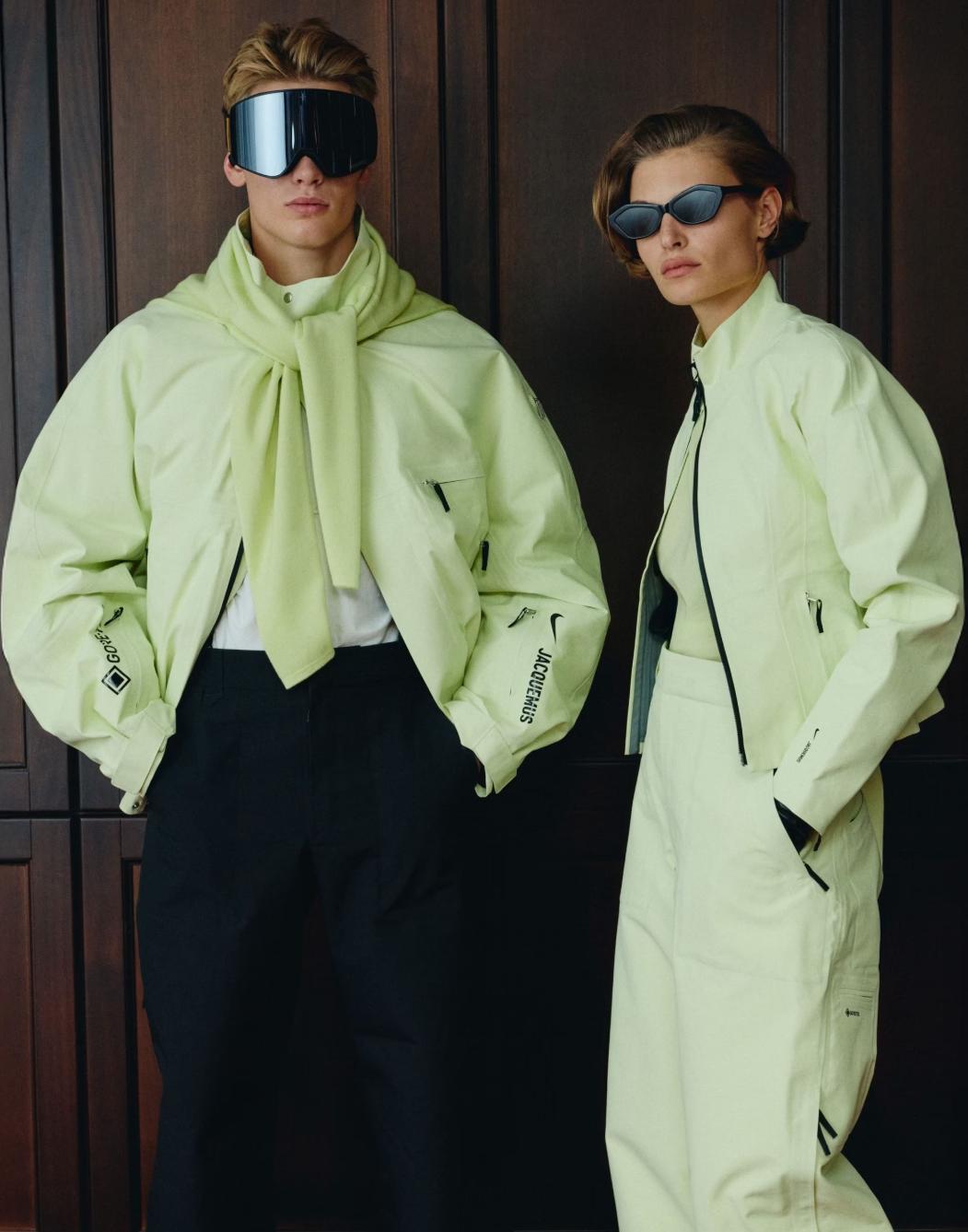
Nike x Jacquemus Après Ski Apparel Collection
Different brands have different logics behind this move. Nike and Jacquemus launched a co-branded collection of 18 pieces in November 2025, with core products being three-layer GORE-TEX jackets and trousers. The color scheme and tailoring of the entire collection are distinctly in Jacquemus' style — southern French, sunny, and vacation-oriented. Nike has launched many co-branding collaborations before, but it is the first time for it to let a designer brand that focuses on vacation style lead the design of a batch of professional gear. Nike did not abandon GORE-TEX, but GORE-TEX is no longer the only selling point. The official description of this collection is quite illustrative: it is designed to withstand snowstorms, and also suitable for cocktails by the ski slopes.
The collaboration between The North Face and SKIMS takes another path, which repackages outdoor functions with SKIMS' aesthetic language.
Lululemon launched the "Train" collection fronted by Lewis Hamilton in the winter of 2025. Adidas' Terrex line uses "après-ski" as a key word in the product descriptions of multiple winter boots.
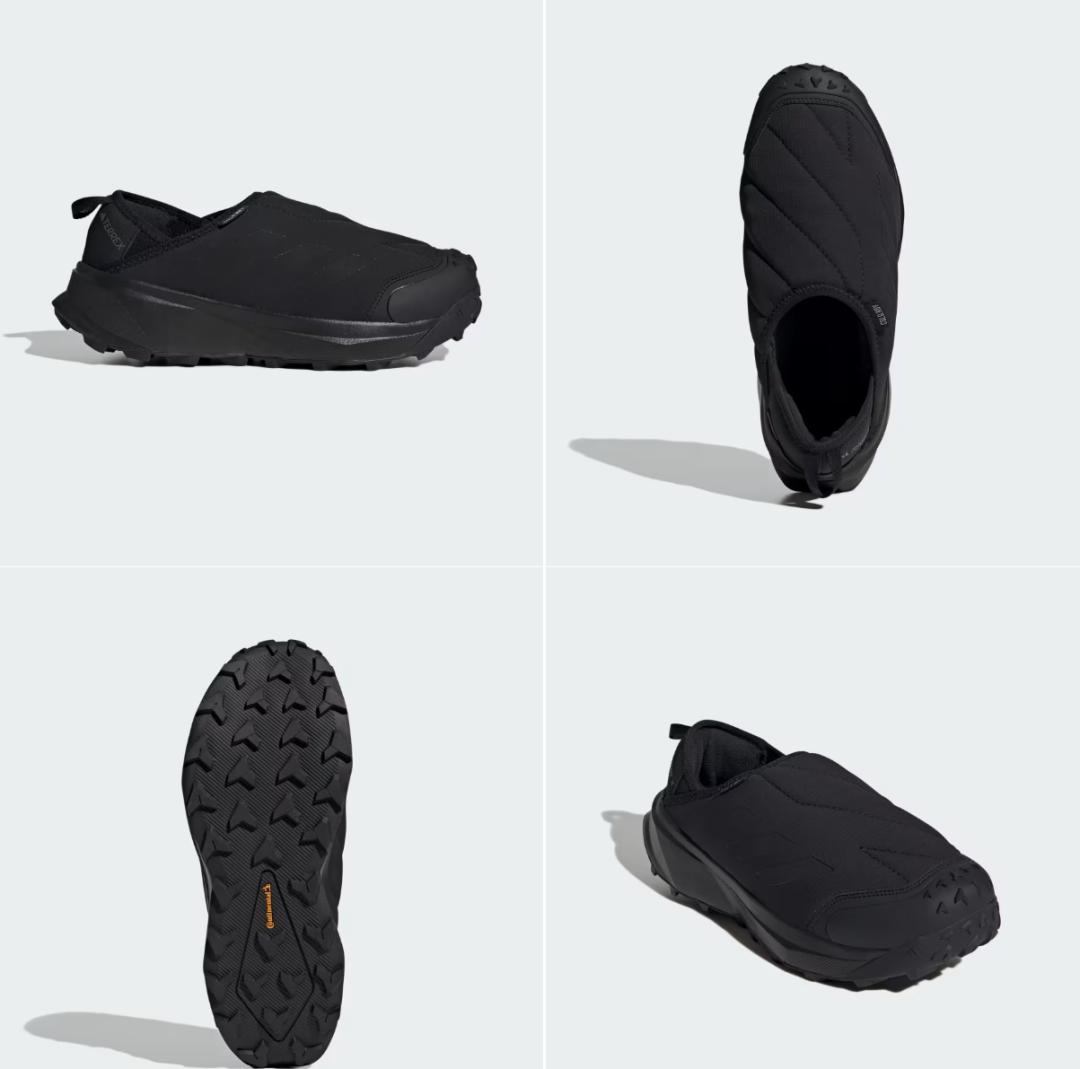
Terrex Winter Slip-On Cold.Rdy Boots
Luxury brands are also catching up. Dior Men's 2026 spring collection includes Après-ski product lines. Moncler Grenoble extended Après-ski from ski slopes to post-ski outfits in its 2026 spring and summer collection. Saint Laurent and Loewe also presented looks of sports jackets paired with casual shorts or flowing half-skirts on their spring and summer runways. Prada, LV, Moncler and Loro Piana have launched Après-ski style ski capsule collections, which are suitable for appearing in bars by ski resorts rather than on the ski slopes.
At the same time, mass apparel brands are also getting involved. J.Crew is an American mass apparel brand that does not make sports or outdoor products, but it has signed the U.S. Ski Team to launch an Après-ski collection. More precisely, J.Crew has reached a three-year partnership with U.S. Ski & Snowboard to provide athletes with lifestyle apparel off the ski slopes, including knitwear, fleece, loungewear and warm accessories. The fact that a brand with no direct connection to professional ski gear starts operating the "off-slope" lifestyle of athletes itself shows that Après-ski is crossing the boundaries of sports brands.
When a style appears on the shelves of mass brands, sports brands and luxury brands at the same time, it is no longer a concept, but a trend.
In the "Winter Sports Apparel Market" report released by market research institution Research and Markets in 2026, "apres-ski footwear" has been listed as an independent statistical category. It has evolved from a concept to a quantifiable market.
The relationship between Après-ski and Gorpcore is the best reference to understand this trend. More precisely, if we look at the process of sportswear entering the fashion system over the past decade, Athleisure, Gorpcore and today's Après-ski actually represent several different naming stages. They have similarities, but are not just fads that continue under a new name.
As early as 2022, WWD listed Après-ski, Gorpcore and Varsity Prep as the three major themes of men's wear of that season. Gorpcore and Après-ski are essentially doing the same thing: wearing functional clothing to places where it does not originally belong. The difference is that Gorpcore brings outdoor gear into cities, with jackets paired with jeans; Après-ski brings sports gear into social occasions, with hoodies paired with tailored trousers.
If Athleisure solved the problem of whether sportswear can enter daily life, and Gorpcore solved the problem of whether outdoor clothing can enter cities, then Après-ski tries to handle the issue of whether the social scenarios after sports can be included in the same dressing system. They all seem to be "sportswear becoming fashionable", but the consumer scenarios behind them are not exactly the same.
Therefore, Après-ski has stronger compatibility and wider adaptability, not limited to fixed items and dressing templates. Retro sport texture can be matched with diverse fashion styles, covering more daily scenarios. Gorpcore is more hardcore and niche, while Après-ski is more universal.
Gorpcore has been popular for six years since 2017, and its popularity has obviously faded now. But after it recedes, the habit of consumers wearing outdoor gear in daily life remains. Outdoor sports brands have also started to make functional fabrics into items with simpler tailoring that are more suitable for daily wear.
Après-ski also faces the same risk. From its emergence to being named, from being sought after to being overused, then to cooling down. GQ pointed out in a report earlier this year that the "-core" family is cooling down. From Normcore to Gorpcore to Blokecore, the popularity cycle of each "-core" style is getting shorter and shorter.
But Après-ski has a key difference from previous "-core" styles. Normcore is a weariness of conspicuous consumption, and Gorpcore is a yearning for the outdoors during the pandemic, both of which are expressions of "emotion". Après-ski corresponds to a more daily, more lasting real demand. Of course, trends also have their own life cycles. A large number of dressing formulas of "one sport item paired with one fashion piece" have appeared on Chinese internet. When a concept is repeatedly disassembled and popularized, it is often only one traffic peak away from becoming overused.
This does not mean that Après-ski has no real value. Its logic is similar to that of Athleisure when it entered the mainstream back then: yoga pants moved from gyms to cafes, not because the term was trendy, but because consumers needed a piece of clothing that could be worn both for yoga and for drinking coffee. Merriam-Webster included "athleisure" in its "Words We're Watching" list in 2015, and did not formally add it to the dictionary until 2020 — every time a style fades, a consumption habit is settled.
When the term "Après-ski" is no longer trendy, whether consumers are still willing to wear sportswear directly to social occasions is the key to the sustainability of this business.
This article is from the WeChat official account "Lanxiong Sports" (ID: lanxiongsports), written by Wang Shan, authorized to be released by 36Kr.