Chinese robots have been exported to 141 countries around the world, and after-sales service is becoming a new opportunity.
"Product leadership is merely the entry ticket, while going global is a battle of ecosystems"
The founder of an industrial robot enterprise in Guangzhou felt confused for the first time this year. The enterprise boasts solid product technology and rising export volume, yet overseas clients are becoming increasingly demanding. The negotiation statements like "What I want is not a single machine, but a complete set of deployable solutions. Will you take charge of after-sales support, secondary development and scenario adaptation?" appear more and more frequently.
This is not the dilemma of a single enterprise. At the 2026 World Robot Conference, Jack Perry, Chairman of the UK "48 Group of Club", put forward a suggestion of "try before you buy" when releasing the European robot procurement demand. He proposed that European enterprises should first put robots into real scenarios to verify their effects, and then decide whether to purchase more units. This proves that what overseas clients want is not a single machine, but a set of production solutions that can be put into use directly.
Perry brought clear procurement demands from the European market: applications in the logistics and warehousing field are mature and the demand is urgent; the hotel, catering and retail service sectors have considerable potential due to high labor costs; the agricultural sector is regarded by him as the most transformative market. But he also stated frankly that current robot sales volume in Europe is not large. Potential demand does not mean it can be automatically converted into orders. It is far from enough for Chinese enterprises to only ship their products overseas.
Similar discussions are not limited to Europe, and have even spread to Southeast Asia. Chen Zhihui, Chairman of the ASEAN Smart Industry Federation, stated that countries including Singapore, Malaysia and Thailand are eagerly looking forward to industrial robots, but humanoid robots are still rare in Southeast Asia, which is still in the early stage and the application market remains to be cultivated. Robots are large in size and complex in deployment, which cannot be separated from the support of system integration and localized service capabilities. This is not a traditional transaction that ends right after the product is sold.
Therefore, what overseas clients have always wanted is never a single machine, but a set of ready-to-use solutions including deployment, commissioning, training, system integration and follow-up services. The products are already mature, but services need to be improved.
01. Where is the incremental market for robots
In the first seven months of 2026, the export value of industrial robots reached 7.34 billion yuan, a year-on-year increase of 13.2%, and the products were sold to 141 countries and regions around the world. The export volume of humanoid robots in the first quarter increased by 210% year-on-year, with products sold to 148 countries and regions across the globe, and Europe, Southeast Asia and the Middle East became the main markets. In the first half of the year, the shipment volume of Chinese humanoid robots has exceeded 40,000 units, and its global proportion has further risen to 97%.
In the same period, the output of industrial robots increased by 28.5% year-on-year. Since the independent customs tariff code was added in January this year, the export value of intelligent bionic robots has increased by more than 5 times within half a year. From January to May 2026, the operating revenue of China's robot enterprises above designated size exceeded 90 billion yuan, a year-on-year increase of 26.9%. China has remained the world's largest industrial robot market for 13 consecutive years.
The data looks impressive, but the problems are also prominent.
The export output value is rising, but there is no support for after-sales, no secondary development, and no scenario adaptation adjustment. Relying solely on one individual enterprise going global, it is impossible to build a huge overseas service network. Kim Jae-hwan, Secretary-General of the Korea Artificial Intelligence Robot Industry Association, stated at WRC that China has taken a dominant leading position in the robot field. This leading position relies on the whole industrial chain collaboration capability covering materials, components, complete machine bodies, business scenarios and data services.
China's robot industry is undergoing a collective globalization upgrade from pure product export to concurrent export of supply chain and services. The reasons why overseas importers choose Chinese robots are no longer single factors such as cost performance and durability. China's robot industry is transforming from product-oriented globalization to capability and ecosystem-oriented globalization. Leading domestic enterprises are actively carrying out joint innovation with overseas software giants, scientific research institutions and local integrators, replacing pure product sales with technical cooperation and localized co-construction.
2026 is a decisive year for Chinese robots to go global. Product leadership is no longer sufficient under the trend of the times. The competition rule is shifting from product competition to ecosystem competition. Whoever takes the lead in building an overseas service network, completing localized adaptation, and opening up the entire data and computing power chain will gain pricing power in the next stage.
02. Three referenceable model cases
At present, the three core pain points in robot production are: insufficient service support, isolated operation, and scenario adaptation difficulties. The following cases correspond to the solutions to these three core pain points.
- Lepu Robotics: Overseas Strategic Cooperation Center Model
On August 20, at the 2026 World Robot Conference, Lepu Intelligence (Shenzhen) Co., Ltd. officially reached in-depth cooperation with STELLARIS ROBOTICS and DF PREXEL ROBOTICS, establishing the Lepu UK Strategic Cooperation Center and the Lepu Netherlands Strategic Cooperation Center respectively.
Relying on the two centers, Lepu Robotics will serve the industrial construction demands in local education and scientific research, secondary development, commercial service guidance, industry and other fields in the UK and the Netherlands, and output full-scene embodied intelligent solutions. At the same time, it will supply a series of robot products including Aelos, Roban and Kuavo to the two partner companies, providing solid product support for regional business implementation.
During the conference, Lepu signed overseas distribution orders of over 10,000 units, and established a regional distribution system in the UK and the Netherlands. With the support of overseas channel partners, it means that Lepu has successfully realized the full process of product sales. Meanwhile, Lepu also reached in-depth strategic collaboration with the German industrial giant Schaeffler. Taking "the world's top supply chain + China's humanoid body capability" as the fulcrum, the two sides will complement each other's advantages in industrial scenario application, data training ground, new technology R&D and other fields.
The booth of Lepu Robotics is the only booth at this WRC that realizes full-scene, fully autonomous, all-weather non-stop robot operation. Previously, Lepu has established a strategic cooperation center in Singapore to accelerate its layout of embodied intelligence in Southeast Asia.
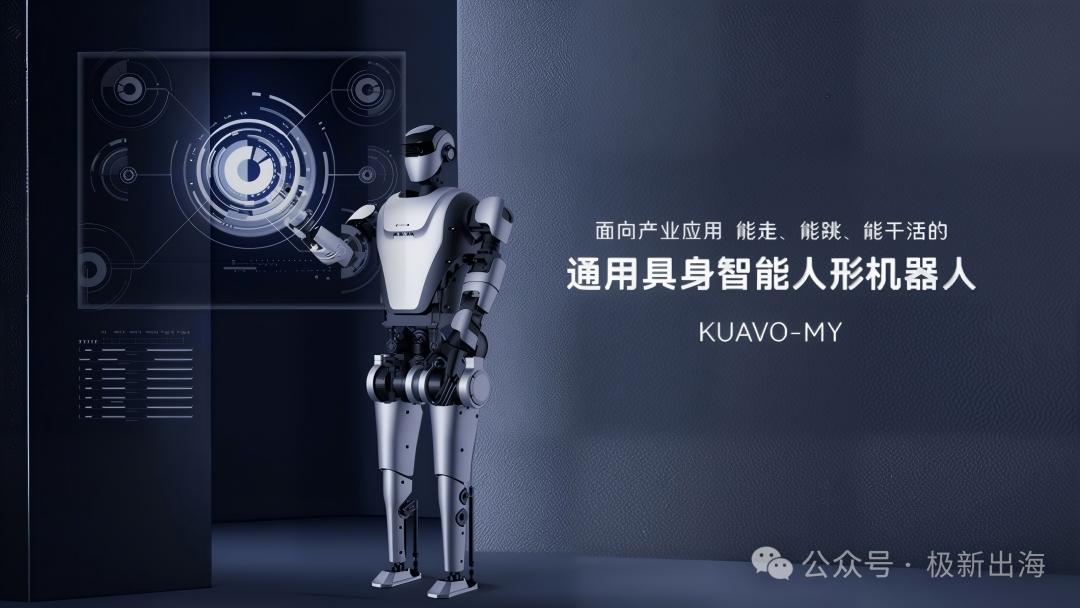
Its core logic is to build service centers together with mature local partners, ensuring that delivery, after-sales and secondary development all have responsible parties. From Singapore to the UK, the Netherlands, and then to Germany, Lepu Robotics' overseas strategic cooperation centers are connecting points into a network.
- Daqi Yuequan: Industrial Globalization Ecosystem Model
On August 20, the parallel forum of the 2026 World Robot Conference "Bionic Empowerment, Intelligent Creation of the Future: Bionic Embodied Intelligent Robot Technology Breakthrough and Industrial Ecosystem Co-construction" was held at Beiren Yichuang International Convention and Exhibition Center. The forum was hosted by the International Society of Bionic Engineering, Changchun Council for the Promotion of International Trade, Changchun Municipal Bureau of Industry and Information Technology, and Jilin Province Bionic Robot Manufacturing Innovation Center, gathering more than 300 attendees including academicians and experts at home and abroad, industrial chain enterprises, and venture capital institutions.
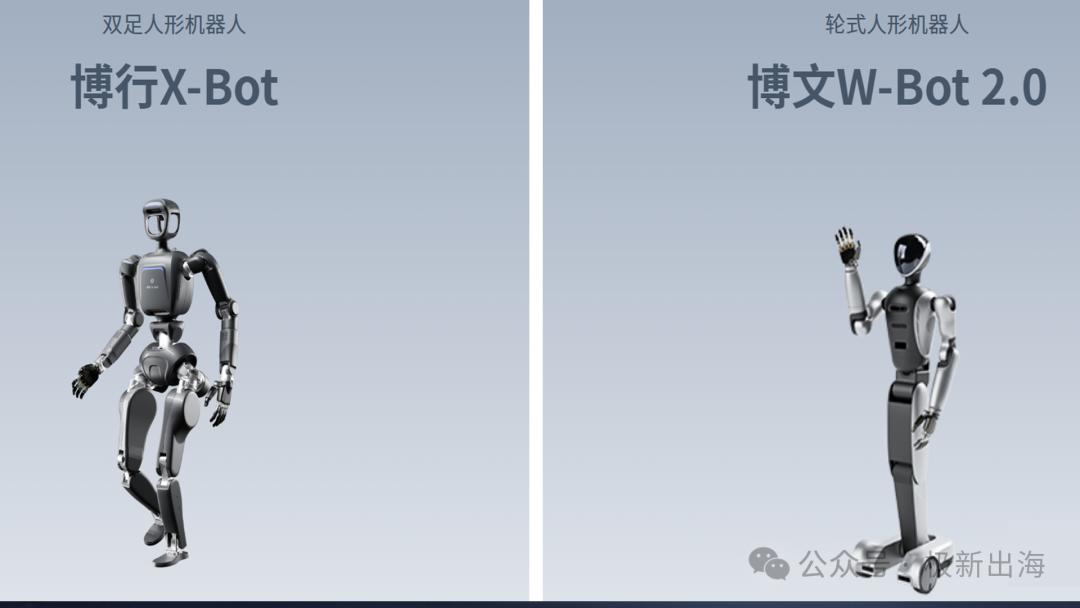
Professor Ren Lei, founder of Yuequan Bionics, gave a keynote speech on bionic tensile-compressive robot theory and technology on site, and released a self-developed product matrix including the YingShou Y-Hand series dexterous hands, YQ Motors series motors, YQ Muscles artificial muscle modules and other products. Among them, the YingShou Y-Hand series dexterous hands include three iterative products M0, M1 and M2, which are hierarchically adapted to different demands such as lightweight general operation, lightweight balanced operation and high-end precision operation.
During the forum, Yuequan Bionics completed two signing ceremonies. The "Signing for Transformation of Bionic Embodied Intelligent Robot Achievements and Scenario Application" promotes the transformation of scientific research achievements into real scenarios. The "Signing for Bionic Embodied Intelligence Industrial Globalization Ecosystem Cooperation" jointly builds an industrial globalization ecosystem for the global market. The signing aims to open up the two-way channel of the embodied intelligent industry from domestic implementation to overseas export, and build a full-link ecosystem covering technology transformation, scenario application, talent cultivation and industrial globalization. Fuyuan Co., Ltd. (600742) is also on the signing list. The two sides will jointly build the "Fuyue-Yuequan Joint Laboratory", focusing on application research and development in links such as auto parts production.
(Image source: Official website of Yuequan Bionics)
Its core is to open up the full chain of technology transformation, scenario application, talent cultivation and industrial globalization, going beyond the category of single product export, and enabling the entire robot ecosystem to go global together.
- Zhongke Kaichuang: Full-link Collaboration Model
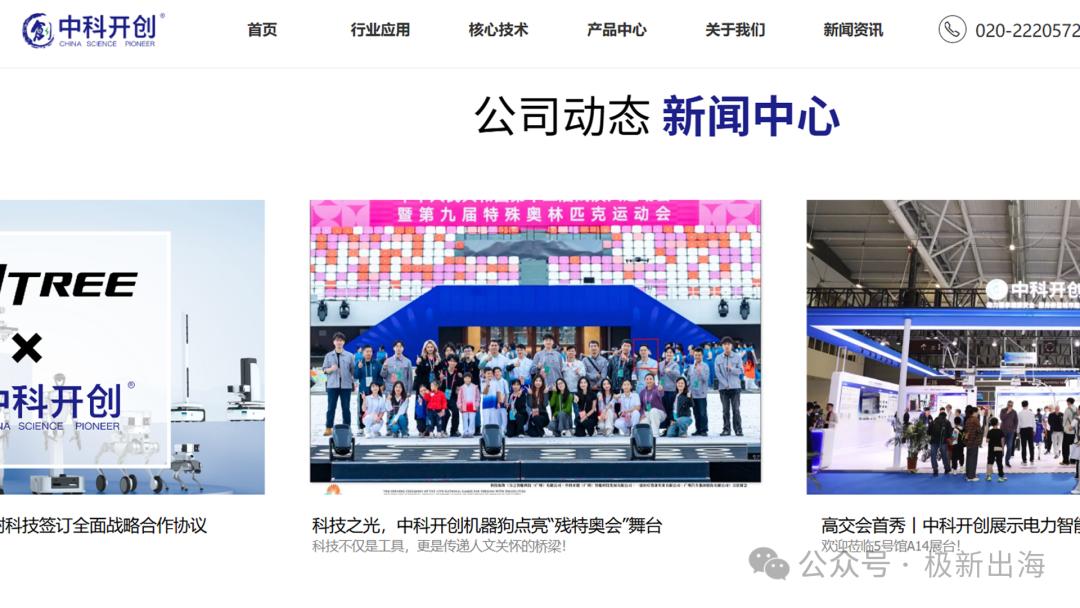
Zhongke Kaichuang (Guangzhou) Intelligent Technology Development Co., Ltd. is an enterprise focusing on intelligent operation and maintenance in the electric power and energy industry, with main products including multi-scene intelligent inspection robots, embodied dexterous operation robots and other products.
At the site of this World Robot Conference, Zhongke Kaichuang completed two strategic cooperation signings.
On May 25, 2026, Zhongke Kaichuang and Unitree Robotics reached a comprehensive strategic cooperation in the electric power and energy industry. The two sides carry out full-link collaboration around the development and upgrading, scenario adaptation, market promotion and project delivery of legged and humanoid robots in key industry scenarios such as intelligent inspection and operation, as well as energy and electric power, jointly promoting embodied intelligent robots to enter real industrial sites.
At the same time, a strategic cooperation agreement was signed with Xinzhan Su at the conference site. The cooperation focuses on three major directions: ecological collaboration at the chip and storage end, to ensure that the robot main control system is fully independent and controllable with domestic technologies; Zhongke Kaichuang helps Xinzhan Su implement its business in the embodied intelligence and energy power industry, while Xinzhan Su joins hands with Zhongke Kaichuang to expand scenarios such as industrial manufacturing and inspection operation; the two sides collaborate to carry out brand promotion, exhibition activities and resource docking.
When Dr. Huang Shuo, R&D Director of Zhongke Kaichuang, asked Sun Dan, Chairman of Xinzhan Su, about "the current development status of computing power" at the summit forum, Sun Dan introduced the AI90 architecture, which integrates high-performance SSD into the GPU memory system, building a three-level storage system of HBM+DRAM+SSD, enabling large model reasoning to be affordable and operable on the end side.
(Image source: Official website of Zhongke Kaichuang)
Ouyang Kaiyi, Chairman of Zhongke Kaichuang, told reporters at the conference site that the exhibition has brought four new embodied intelligent products, covering key links such as spatial understanding, collaborative management and control, and end-side intelligent control. Its core is to no longer operate in isolation, and carry out targeted development by uniting upstream and downstream partners. It connects the scenario end with Unitree Robotics, and connects the computing power end with Xinzhan Su. Both lines are implemented at the same time, using the ecosystem to make up for the shortcomings of isolated operation.
Lepu solves the problem of insufficient service support, Daqi Yuequan solves the problem of isolated operation, and Zhongke Kaichuang solves the problem of scenario adaptation. The models have been verified to be feasible, but facing these choices, robot founders need to clarify which model is suitable for their own enterprise to achieve development.
03. Our suggestions for going global
- Stop only selling standalone machines, sell solutions plus local services
The core logic of the Lepu model has been verified. Lepu established strategic cooperation centers in the UK and the Netherlands with STELLARIS ROBOTICS and DF PREXEL ROBOTICS, and signed overseas distribution orders of over 10,000 units.
Lepu is the most representative case. JD has launched the JoyRobocare robot maintenance service in Europe, and has established robot maintenance centers in Bedford, UK, Duisburg, Germany and other regions. The "robot ambulance" on-site service can cover major cities in many countries including the UK, Germany, France and the Netherlands. Robots can solve most faults without being returned to the factory across borders, greatly reducing after-sales maintenance costs.
Gu Jie, founder of Fourier Intelligence, shared an experience: the second biggest difficulty in going global is localization. Overseas markets have very high requirements for localized technical support and services, so it is necessary to recruit local personnel and build a complete team that can quickly provide pre-sales consultation and after-sales response. SIASUN Robot has set up local service teams in Germany, Singapore, Mexico, Japan, Thailand and other regions, responsible for project implementation, system commissioning and operation and maintenance support.
The core clients of robots are enterprises. If after-sales service is delayed for one day, the production line will stop for one day. The overseas service network is a booster for enterprise development.
- Learn to carry out ecological collaboration first, then expand overseas
On May 25, Zhongke Kaichuang and Unitree Robotics reached a comprehensive strategic cooperation in the electric power and energy industry, carrying out full-link collaboration around legged humanoid robots in key industry scenarios such as intelligent inspection and operation, as well as energy and electric power. The so-called ecological collaboration means that the scenario side puts forward demands, supply chain partners provide core components, and computing power partners ensure that data is transmitted quickly and calculated accurately.
Maimai Technology has established its first overseas subsidiary and ASEAN headquarters in Malaysia, recruiting local after-sales service personnel to support business implementation, with a target of delivering 1,000 agricultural robots this year. UBTECH does not sell standalone robots, but a complete set of solutions including customized software and delivery services, with the overall unit price controlled within 500,000 RMB.
On August 21, the Singapore Robotics Association released two initiatives on "commercial implementation of embodied intelligence" and "global supply chain collaboration", proposing to establish a joint after-sales and maintenance center for Chinese robots going global, and cultivate scientific and technological talents for the entire Southeast Asia based in Singapore. The initiative of the Singapore Robotics Association indicates a trend: in the future, going global will be a collective action of the entire supply chain.
- Build data and computing power into your own moat
For embodied intelligence going global, data needs to be "transmitted quickly and calculated accurately".
Melyssa Banda, Senior Vice President of Edge Storage Solutions at Seagate Technology, pointed out that in physical AI applications, 30% to 40% of the data has to stay locally. Physical AI applications such as robots, intelligent vehicles and industrial vision need to obtain local data in real time, and cannot hand over all decision-making to the central cloud for processing.
3D reconstruction and real-time reasoning are businesses that consume a huge amount of computing power. The traditional local server model makes enterprises face problems such as mismatch between computing power demand and resources, and persistently high costs. Embodied intelligence training needs to cover multiple types of data such as images, videos, point clouds, haptics, force feedback and trajectories, and traditional fixed infrastructure cannot meet the large-scale R&D demands.
Li Zhen, Vice President of Products at Xinzhan Su, said that Xinzhan Su plans to provide customized storage modules and chips for Zhongke Kaichuang's robots, to realize