The "Addition and Subtraction" of Unisplendour Corporation Limited
After six years, as its market value once again exceeds 100 billion yuan, Unis has rolled out a series of moves.
In August, Unis launched a private placement plan with a fundraising amount of no more than 54.1 billion yuan, to increase its control over the core asset — H3C. At the same time, Unis continues to divest non-core assets and move businesses such as online lending off its balance sheet. Coupled with the sharp rise in its stock price since the beginning of this year, Unis has ushered in a brilliant moment of both performance and valuation.
However, behind the glory, problems such as high debt brought by mergers and acquisitions, equity dilution from private placement, and industry competition cannot be underestimated. Based on the announcements of Unis, this article dissects the opportunities and hidden risks behind the capital operation of this leading ICT enterprise.
High Leverage Consolidates Control Over Core Assets
On August 22, the 2nd World Humanoid Robot Games opened at the National Speed Skating Oval "Ice Ribbon" in Beijing. This event gathered more than 2,000 humanoid robots from 666 teams across 16 countries around the world to compete on the same field. As the official communication service guarantee provider, H3C, a subsidiary of Unis, provided deep collaboration, with the dual engines of Wi-Fi 7 high-speed networking and AI intelligent operation and maintenance system, to escort this world-class intelligent sports event.
While serving high-end sports events, Unis has further strengthened its control over H3C.
Public information shows that H3C was formerly known as H3C Technologies, established as a joint venture between Huawei and the US company 3Com in 2003. Later, H3C Technologies changed ownership for many times. In 2006, 3Com took full ownership of H3C Technologies. In 2010, PC manufacturer Hewlett-Packard (split into HPE in 2015) acquired 3Com and obtained the control of H3C Technologies.
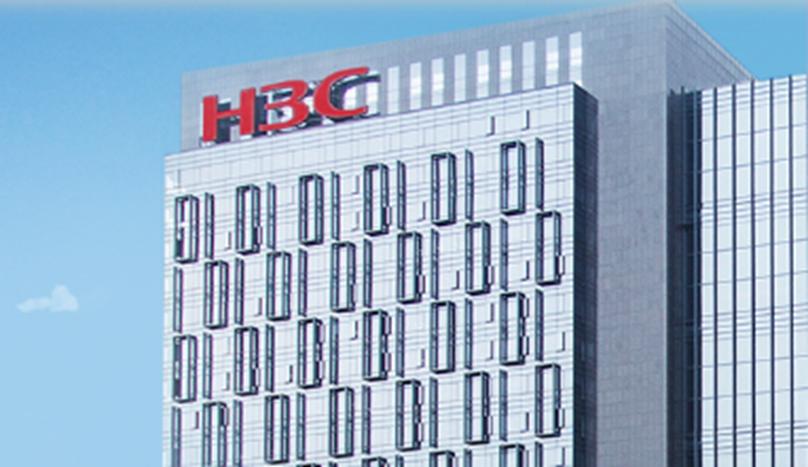
Figure 1: H3C Headquarters Source: Official Website
In 2016, Unis acquired 51% equity of H3C Technologies from HPE for 2.5 billion US dollars, and H3C Technologies was renamed H3C. Known as "Little Huawei", H3C ranks in the first echelon in China in terms of market share of products such as Ethernet switches, enterprise network switches, campus switches, and enterprise network routers.
In recent years, with the development of AI computing power construction, H3C has played a more significant role in boosting Unis' performance. Unis once stated in its 2023 private placement announcement that since the acquisition of control over H3C, the asset quality, revenue and profit scale of H3C have been greatly improved; after the completion of this acquisition of minority equity of H3C, the company's attributable net profit scale will be increased, its financial situation will be improved, and the company's sustainable operation capability will be consolidated and enhanced.
In 2024, Unis acquired 30% equity of H3C from HPE through its wholly-owned subsidiary Unis International at a transaction price of 2.143 billion US dollars. After the completion of the acquisition, Unis' shareholding ratio in H3C increased to 81%. In August this year, Unis launched another private placement plan, planning to raise 54.1 billion yuan, of which 33.9 billion yuan will be used to replace the previous investment in acquiring 6.98% equity of H3C.
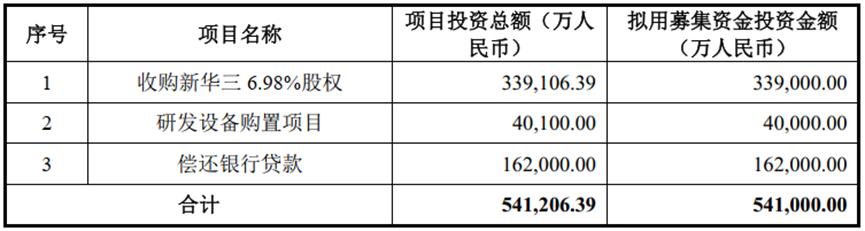
Figure 2: Details of Private Placement Fund Usage Source: Announcement
At present, Unis holds 87.98% equity of H3C. According to HPE's 2026 semi-annual report, the company has completely withdrawn from H3C's shareholder list. H3C, the leading Chinese ICT enterprise that has changed owners for many times, has officially entered a new historical stage of fully owned by Chinese capital.
Data shows that HPE has obtained a total transaction amount of 5.8 billion US dollars by gradually selling H3C's equity. Unis' gradual "takeover" has led to a large amount of liabilities. The previous acquisition of 30% equity of H3C mainly relied on large syndicated M&A loans, resulting in high interest-bearing liabilities of the company. At the end of 2022, Unis' asset-liability ratio was 49%, 54% at the end of 2023, surged to 82% at the end of 2024, and still exceeded 82% at the end of the first quarter of this year.
In 2025, Unis planned to list on the H-share market, hoping to enrich its capital through the overseas market. Later, it terminated the H-share issuance and turned to private placement on the A-share market. Unis stated that although the asset-liability ratio of the company will decrease to some extent after the completion of this private placement issuance, the relatively high asset-liability ratio may expose the company to certain debt repayment risks.
Continuously Divest Non-core Assets to Focus on ICT
While increasing control to expand core assets, Unis is gradually "slimming down", continuously disposing of a number of non-core assets to allocate resources to the ICT infrastructure track.
The announcement shows that Unis has completed a number of asset divestment moves since 2026.
In May, the company disclosed the transfer of 65% equity of its holding subsidiary Unis Microcredit, with a transaction consideration of 276 million yuan. Unis Microcredit will no longer be included in the consolidated statements of the listed company. This transaction has completed the industrial and commercial change registration in August.
In July, Unis Computer, a subsidiary of Unis, implemented capital increase and share expansion, and the company gave up the preemptive subscription right, with its shareholding ratio dropping to 29.42%, and it is no longer included in the consolidated statements. Financial reports show that Unis Computer is currently insolvent and in a state of continuous loss. After being moved out of the consolidated statements, the operating losses of Unis Computer will no longer drag down Unis.
In August, Unis announced the transfer of 51% equity of Unis Digital Intelligence. After the completion of the transfer, Unis will no longer hold any equity of Unis Digital Intelligence, and Unis Digital Intelligence will no longer be included in the consolidated statements of the listed company.
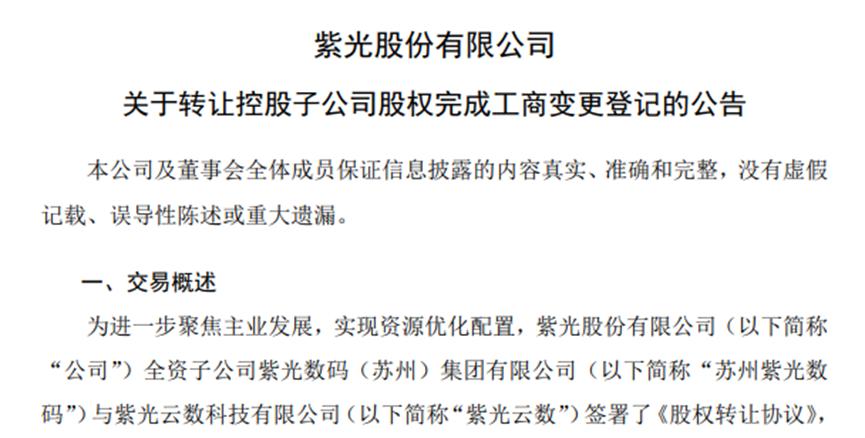
Figure 3: Transfer of Subsidiary Equity Source: Announcement
GF Securities believes that there is a clear logic behind Unis' series of asset disposals: the company's core competitiveness is concentrated in ICT businesses such as servers, switches, and intelligent computing solutions; businesses such as financial services and PC hardware either continue to lose money or have limited synergy with the core business; after divestment, part of the cash can be recovered, cash flow can be improved, and the quality of consolidated statements can be optimized, making the statements more truly reflect the operating level of the core main business.
However, asset divestment does not completely eliminate risks. Some equity transfers are related party transactions, leaving behind financial assistance formed by historical loans. The listed company also needs to face the uncertainty of fund recovery. In addition, some businesses of the divested companies still have business dealings with the listed company, and risk isolation still needs to be done well in the follow-up.
Back to Unis itself, since the beginning of this year, benefited from the explosion of AI computing power demand, H3C's server and switch businesses have full order books, driving both Unis' performance and stock price to rise.
The performance pre-increase announcement shows that Unis expects its attributable net profit in the first half of this year to be between 19.1 billion yuan and 23.2 billion yuan, a year-on-year increase of 83.50% to 122.89%. In the secondary market, Unis' stock price has risen by more than 40% since 2026. Following 2020, the company's market value has returned to the 100 billion yuan level.
However, while the stock price is rising, market divergences still exist. First, there is the hidden worry of high debt. At present, the private placement has not been implemented, the company's asset-liability ratio is still at a high level, the scale of interest-bearing liabilities is huge, and interest expenses continue to consume profits. Once the industry prosperity declines, high debt will amplify operating pressure.
Second, industry competition is intensifying. At present, there are many participants in the ICT track, and the pressure of industry price competition and technology iteration continues to exist. AI computing power investment is cyclical. If downstream customers' capital expenditure shrinks, it will directly affect H3C's order demand, leading to uncertainty about whether Unis' high performance growth can continue.