Hard Krypton Exclusive | Former Product Heads of META and XREAL Launch Wearable Hardware Startup, Secures Tens of Millions of US Dollars in Seed Funding From Top U.S. VC
Hard Krypton has learned that recently, wearable AI hardware startup Nirva has completed a seed round of financing of tens of millions of US dollars. The round is led by top US VC Lightspeed, with participation from South Park Commons, and Deep Capital acts as the long-term exclusive financial advisor. The raised funds will be mainly used for team expansion, mass production preparation and new product R&D.
This is an AI wearable company that grew up in Silicon Valley. Its founder Lyu Wei is a former product lead at META and XREAL, who has been deeply engaged in wearable device R&D for nearly a decade. Its CTO Jason is a former engineering manager at META Reality Labs, who has built the core technical architecture supporting consumer products used by billions of users. CCO Hu Hanying is in charge of fashion and design, and also the founder of fashion brand HANYING, who has designed fashion accessories for top Western stars including LADY GAGA, BLACKPINK and Westlife. The core hardware team includes a former senior project and supply chain director of Xiaomi, and a former HCI lead of ByteDance's Ocean Lab.
It is worth noting that 90 days after the company was founded, Nirva was selected as one of the top three best startups by the official CES 2026.
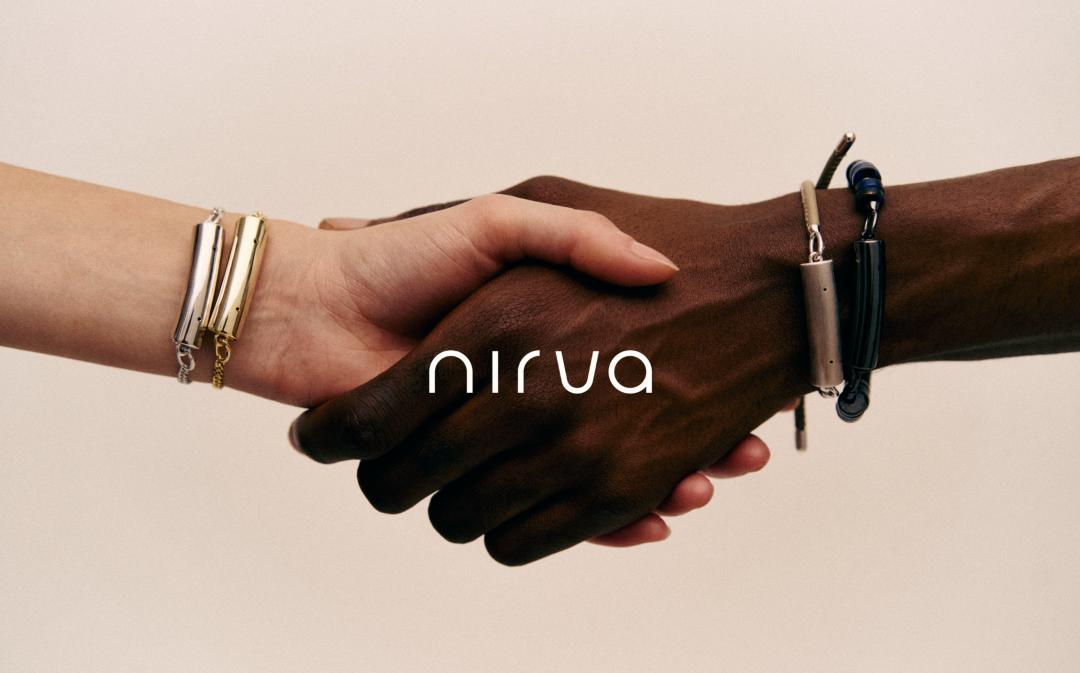
In terms of appearance, the main body of the Nirva necklace is a slender, minimalist metal cylinder weighing only 7.5g, available in gold, silver and black, which can be paired with chains to form necklaces or bracelets. Lyu Wei told Hard Krypton that many products take the device itself as the visual center, such as square, round or triangular shapes, "But we found that if the device itself becomes the visual center, there will definitely be people who like it and people who don't."
Therefore, Nirva's idea goes the opposite way — the device itself should not be the visual center, but can integrate into different accessory styles. The main body of Nirva is very slender and can be integrated with the chain. "For example, the same silver Nirva paired with a pearl chain can present an elegant feeling, while paired with a thick metal chain, it can present an American street style."
(Image source / Enterprise)
Lyu Wei, who has worked on AI glasses products for many years, believes that glasses are indeed a smart device close to the ultimate form that can interact with people, but limited by problems such as battery life and appearance, users cannot wear them all day long in real life at the current stage. "So the question we are thinking about today is not which hardware form is the most advanced, but what kind of form can really allow the public to wear it every day at this point in time", which is also the reason why Lyu Wei started to make AI accessories.
Behind the seemingly simple hardware, Lyu Wei introduced that the R&D is not easy. "One of the biggest challenges is that we hope to achieve a jewelry-like appearance of integrated molding. We insist that the product has no parting seams and cannot be assembled in two halves like other devices. Therefore, all components need to be loaded from one side into a tube with a very thin inner diameter and a radian, which is a challenge for structural design and assembly." In addition, the metal shell also poses a big challenge to antenna design.
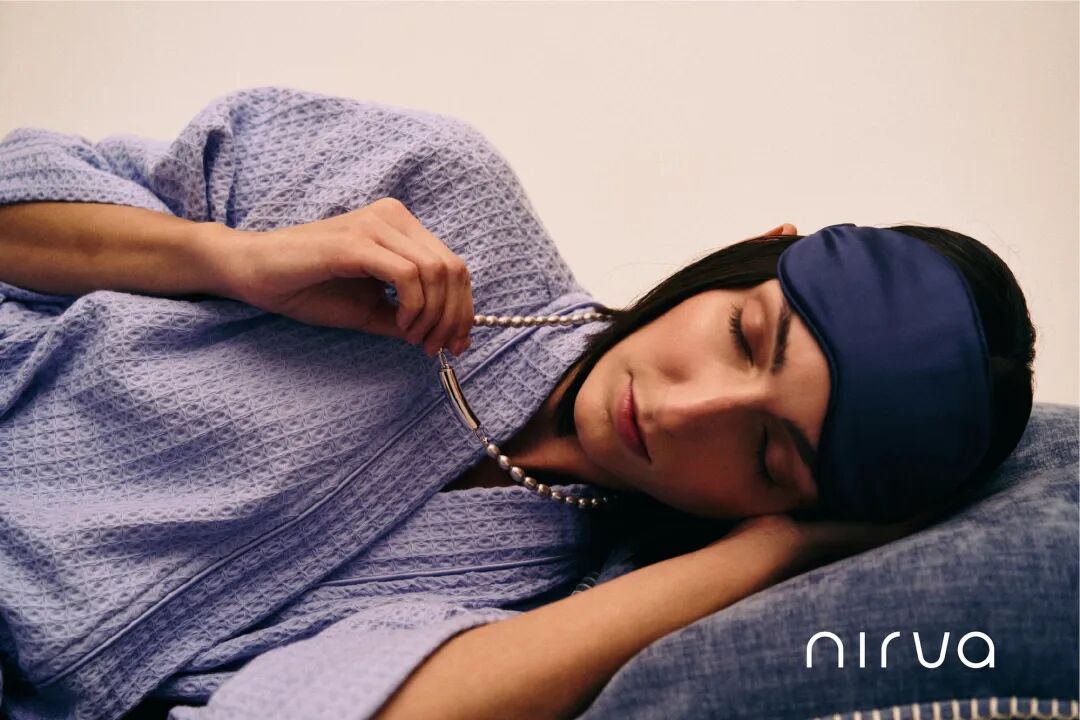
In terms of functions, Nirva can passively listen to the user's own words from morning to night and respond accordingly. Nirva is equipped with voiceprint recognition, which can filter out the voices of other people, "So users don't need to turn the device on and off all the time, and can wear it naturally from morning to night." In addition, it can actively generate different types of cards according to the user's life content, such as moments, affirmation, mood, gratitude, etc. These contents can help users record their lives, and also help users see their emotional changes, social patterns and behavior habits in the long run.
Lyu Wei showed Hard Krypton the screenshots she used in the past two months, such as the gratitude card, "At that time I was sick, my mom prepared meals for me and took care of me, and I didn't even say thank you. Nirva reminded me to say thank you to my mom. It's a very small point but really touched me." For example, the mood card, "One day I accidentally hurt a friend's dog, and then I felt strong self-condemnation. Nirva pushed me a psychology report to teach me how to correctly understand this problem." The daily life will be automatically organized into diaries and timelines, attached with a letter, and all cards can be directly shared on social media.
All the above functions will reach users through software. Lyu Wei analyzed that the problem of many hardware products now is that they only focus on the device itself, "But the reason why users stay in the end is not because they own a device, but because the device really integrates into their lives."
In Lyu Wei's view, what they really want to make is a context aware companion or agent (an accompanying AI that understands the context of the user's life). At the hardware form end, it can be presented in different forms of fashion accessories. "Today it may be necklaces and bracelets, and there will be more accessories of different forms in the future." In her vision, a user can own multiple Nirva devices in the future, and choose different ones to accompany them according to the daily outfit, scene and state.
(Image source / Enterprise)
The user profile of Nirva is very clear: North American urban white-collar women aged 23-45, living in big cities such as New York and San Francisco, who are interested in concepts such as self-improvement, health awareness and data-driven. Lyu Wei and her colleagues have done sufficient research on this group, "For example, they are exquisite urban white-collar workers, do yoga and Pilates, buy light luxury brands, pay attention to their own lifestyle and physical and mental health, and Oura Ring can often be seen on their hands." More importantly, under the current background of the times, this group has higher demands for self-care and self-improvement.
Next, Lyu Wei said that Nirva will launch different designs, "Following the logic similar to Pop Mart, we will continue to do brand IP co-branding, cooperate with fashion brands or IPs to launch chains, so that users can make repeat purchases." In September this year, the product will be distributed to hundreds of the earliest users on a small scale to build an early community and iterate the product based on feedback.
The following is an excerpt of the interview between Hard Krypton and Lyu Wei, founder of Nirva:
Hard Krypton: Both you and your co-founder have AI glasses background. Why did you choose the accessory form this time?
Lyu Wei: I started making glasses 10 years ago, and I always thought glasses are the North Star form. From the first principle, glasses are close to the eyes and ears, can replace the senses, and are the most suitable for AI to interact with people.
But precisely because I have been doing this for many years, I know that although the shipment volume of glasses is climbing today, the mainstream crowd still cannot wear them all day long every day, which is very critical. At this point in time, the capabilities of large models are strong enough, and what is more lacking is products that users are willing to wear every day. Users can generate data only when they wear the device, and many things can be done only with data. So the bottleneck is not on the model side, but whether there is a beautiful, comfortable, extremely unobtrusive product that people are willing to wear all the time.
Hard Krypton: If the device always listens to the user's own voice and forms a response, will users feel the pressure of being analyzed?
Lyu Wei: The tone of Nirva is to help users pick up the beautiful or memorable things in life. When it needs to give users another perspective to look at problems, it will put it forward very gently. One of the core members of our team is specifically responsible for this part. She used to be the user research and product lead of Headspace, a top Western mental health company with nearly 100 million cumulative global users.
A psychological framework is needed behind product design. Users want to improve themselves, but when giving them feedback, they don't want to be judged. Using the currently popular MBTI as a metaphor, our way is "to deliver very T things to users in a very F way", so that users can feel good while improving their self-awareness and seeing better possibilities in life.
Hard Krypton: Nirva can achieve always on, will this involve privacy issues?
Lyu Wei: This is why we insist that the device only listens to the user themselves. We are not a meeting minutes software, we don't pay attention to every word others say, but focus on the user's own state. When online, the voiceprint is collected through natural conversations, and only the user's own words are listened to. What the boss says, what colleagues say, what you hear on TikTok do not represent you. Only what you say every day represents your thoughts, emotions and needs, and defines who you are.
Since it does not involve conversations with other people, there are far fewer privacy issues. And users can turn off Nirva at any time, with full control. In addition, we are cooperating with Orrick, one of the largest law firms in the United States, to do privacy compliance. Users can actually understand that data needs to be uploaded to the cloud for AI services. What they care more about is whether they have control — whether they can view, completely delete, and transfer the data. We give users these promises, and also get certification from third-party institutions.
Hard Krypton: You attach great importance to the taste and development in the fashion field, how will this affect the marketing strategy?
Lyu Wei: Consumer electronics has its own established marketing strategies, but the fashion industry pays attention to building brands well. For example, we will cooperate with stars. If she wears the product on important occasions, it will be very effective to create "non-replicable events" for the brand. Of course, we will choose stars who are exactly the target group of Nirva. They must be really interested in this product and be real users, instead of paying them to wear or endorse the product.
In addition, we will also set up pop-up experiences in offline high-end department stores or gatherings of lifestyle brands, because fashion accessories need to be tried on. After that, we will launch brand co-branding and designer co-branding like Pop Mart, launch new styles every month and carry out large-scale cooperation every quarter, so as to keep the social buzz going and cultivate user habits. After buying one Nirva, users can keep matching different chains, and they will have the mentality of collecting.