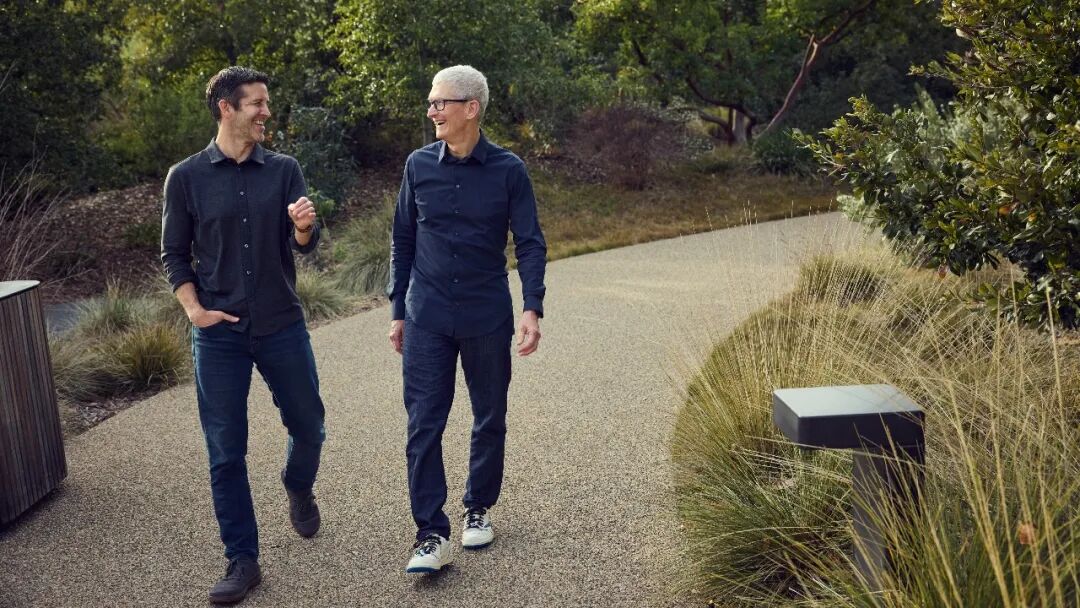
Starting from today, Apple has undergone a leadership change. Ternus is expected to move directly into Cook's office, and the two have been practically inseparable over the recent period.
On September 1 local time, Apple officially ushered in a new leadership.
After leading Apple for nearly two decades and pushing the company's market value from $350 billion to nearly $5 trillion, Tim Cook will step down as Chief Executive Officer and take up the position of Executive Chairman.
His successor is John Ternus.
A recent report from Bloomberg Businessweek revealed a detail: When Cook succeeded Jobs back then, he never moved into Jobs' office, which has remained locked and dark ever since. But Ternus is expected to directly take over Cook's office on Apple Park campus.
Over the past few months, the two have been almost inseparable in internal meetings and public occasions, and Ternus has taken every public opportunity to praise Cook's leadership style. At the premiere of the latest season of the sports drama *Ted Lasso* this summer, the two even wore almost identical outfits.
Does this mean that the Ternus era will be a continuation of the Cook era? But in the face of competition in the AI era, is simply continuing Cook's legacy enough?
Who Is John Ternus
51-year-old Ternus joined Apple in 2001. In 2021, he joined Apple's executive team as Senior Vice President of Hardware Engineering. During his tenure at Apple, Ternus was responsible for the hardware engineering work of numerous breakthrough products across all categories. He has participated in the launch of multiple new product lines, including iPad and AirPods, as well as multiple generations of iPhone, Mac and Apple Watch.
According to previous reports from the Financial Times, during Ternus' tenure in charge of hardware, Apple tried to launch new devices to expand its product lines beyond the iPhone, and the models launched at the same time also broke its typical annual release cycle.
He has long been the representative of these changes, including the slim and light iPhone Air launched by Apple at the end of 2025, and the MacBook Neo that marked Apple's entry into the affordable laptop segment.
The above report noted that not all products have achieved huge success. The iPhone Air was the biggest design innovation for the iPhone in years, but its market performance was relatively bleak. The Vision Pro headset, which was also overseen by Ternus, also recorded poor sales.
Synthesizing reports from foreign media, people who have worked with Ternus describe him as steady, reliable, and highly focused on products. He is not the kind of grand AI visionary, but a doer, a person who knows how to bring hardware to market and is extremely decisive.
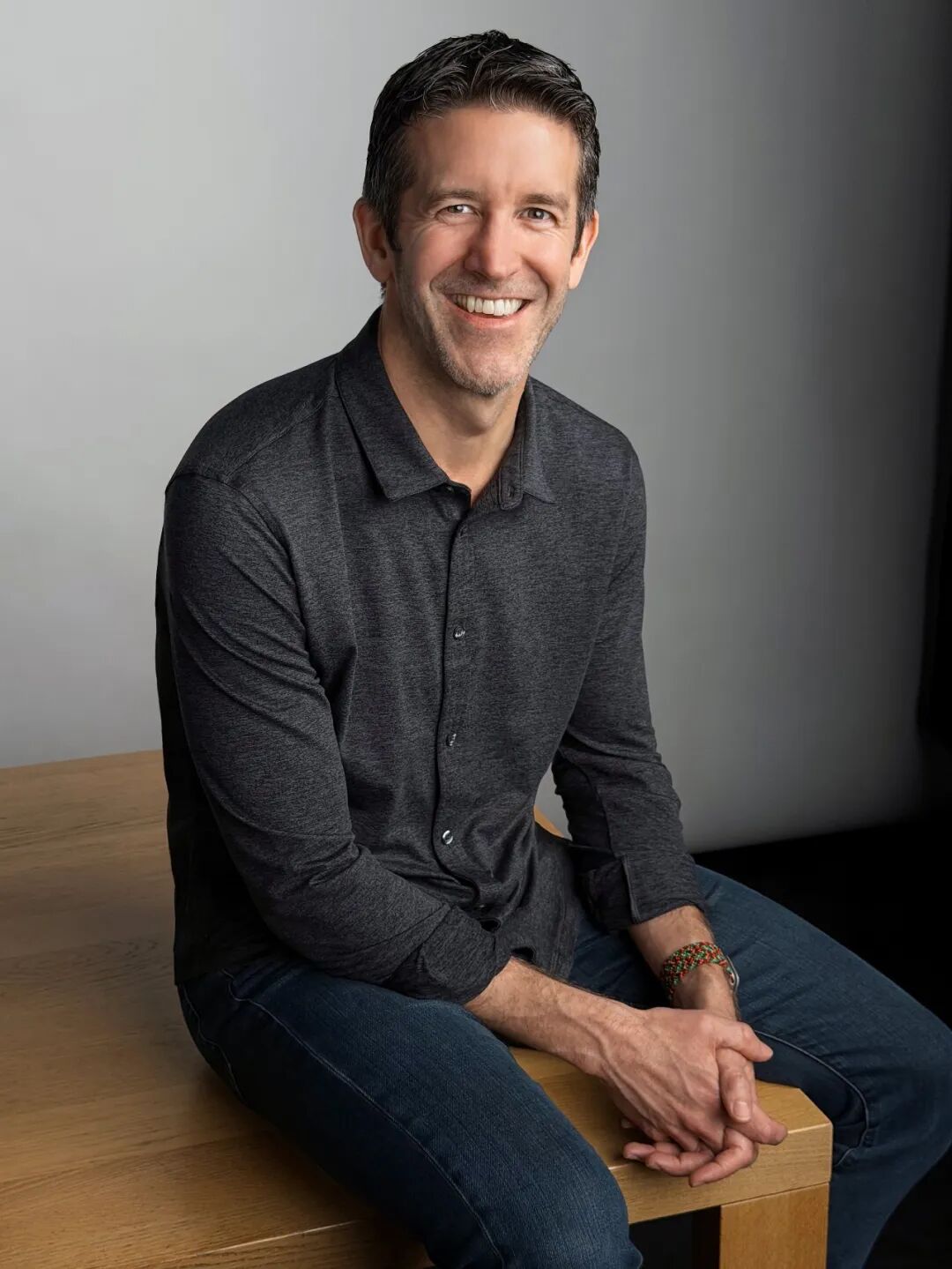
Cook began to seriously consider him as his successor two years ago. At an all-hands meeting after the decision was made public, Cook told employees: "John is the person on this planet I trust the most to lead Apple into the future. He is an 'elevator' person — he can not only have a clear vision from 30,000 feet above the ground, but also dive deep down to dig into the precise details of problems."
The No.1 Challenge: How to Win in the AI Field?
When Cook succeeded Jobs, the market had long worried that if Apple failed to launch a hit product comparable to the iPhone, the company would stagnate.
Cook indeed did not launch a product as groundbreaking as the iPhone. But during his tenure, Apple's revenue increased nearly fourfold to $416 billion, and its market value grew 15 times. He also launched successful products including AirPods and Apple Watch. He also developed Apple Pay and Apple Music, growing the service revenue from a trivial small segment to a business that is larger than the total revenue of the entire company when he took over.
Ternus, who comes from a hardware background, lacks experience in other aspects of being a CEO, such as finance, sales, legal affairs, government relations and procurement, so he needs to rely heavily on other Apple executives.
According to Bloomberg Businessweek, sources close to Apple revealed that Chief Operating Officer Sabih Khan, Chief Financial Officer Kevan Parekh and Services Head Eddy Cue are all prepared to take on more important and influential responsibilities.
Another senior Apple veteran who will continue to hold a key position is Cook. At a recent farewell dinner held by his colleagues, Cook told Ternus that he will continue to be responsible for the company's relations with U.S. President Donald Trump and the Chinese government, and is willing to handle any other tasks that his successor deems necessary.
However, at the moment, the first difficult problem facing Ternus may be how to lead Apple to win in the AI field. After all, Apple has fallen more than one step behind in the AI race.
Synthesizing foreign media reports, after ChatGPT ignited the generative AI boom at the end of 2022, Apple also developed large language models, carried out high-profile recruitment, and looked for acquisition targets. But the first version of Apple Intelligence flopped, and Apple never completed any high-profile acquisition of an AI startup. Cook removed the head of AI, and handed over jurisdiction over Siri to the head of Software Engineering and the creator of Vision Pro.
The most awkward part is that last year, Apple began to use Google's Gemini technology to rebuild the underlying model of Siri — which is equivalent to failing the exam by itself and having to copy the top student's homework next door. This angered many members of Apple's internal large language model team, including the team lead, who have left for higher-paying positions one after another.
The Economist put it bluntly: The "Apple Intelligence" that Apple placed high hopes on has been a fiasco since it was unveiled two years ago. Siri has not been transformed by AI into what people expected.
Ternus is a hardware engineer by background, not a software or AI expert. But Apple's logic of pinning its hopes on him is probably this: instead of catching up at the software level, it is better to overtake on a curve through hardware form factors. The foldable iPhone, AirPods with cameras, smart glasses — all these new hardware products are on his roadmap.
The Economist quoted an analyst as saying: "If I promote a hardware person to CEO, that means I expect innovation to come from the hardware side."
Hardware innovation — or the new "form factor" — has always played a vital role in Apple's history: the Mac revolutionized desktop computing; the iPod changed the way people listen to music; the iPhone redefined what a smartphone could be. But all of these happened during the period when Jobs was at the helm of Apple. Under Cook's leadership, Apple's success is more attributed to breakthrough process improvements, especially the supply chain built in China, rather than revolutionary products. The aforementioned analyst expects Ternus to change this status quo.
Cook spent 15 years proving that "succeeding a legend is achievable". Now what Ternus needs to prove is whether he can continue the legendary story after succeeding two legends.
This article is from the WeChat Official Account "China News View" (ID: jwview), written by Luo Kun, and published with authorization from 36Kr.