Securities firms are left crying in frustration: the bull market has arrived, but all the profits have been reaped by insurance companies.
When the semi-annual reports were released, the entire financial circle was in an uproar. The biggest standout this year is not brokerages, the so-called flagbearers of the bull market, but insurance companies that have dabbled in stock investment.
After China Life released its interim report, its net profit in the first half of the year hit 1344.89 billion yuan. In particular, it made a staggering 1100 billion yuan in net profit in the second quarter, making it the king of stock investment in the A-share market. The performance of other insurance companies also saw high growth. The total combined net profit of five insurance companies in the interim report of last year was 1781.92 billion yuan, and this year's figure nearly doubled, jumping to 3173.87 billion yuan. A large part of this growth came from stock investment (the appreciation of equity assets).
Brokerages, known as the flagbearers of the bull market, are not to be outdone, and have all released financial reports with high growth rates. The total combined net profit of 49 listed brokerages reached 1591.57 billion yuan, up 48.92% from 1068.76 billion yuan in the interim report of last year. Not only did net profit surge, operating revenue also skyrocketed: the total operating revenue last year was 2653 billion yuan, and this year's total reached 3692.5 billion yuan, an increase of 43.85%.
By comparison, the growth rate of the banking sector seems insignificant. The six major state-owned banks heavily held by insurance capital and public funds have operating revenue growth rates ranging from 6% to 11%, and their net profit also increased by 3% to 5%. However, what made insurance capital reap huge profits is not only the tech stock bull market in the first half of the year, but also the steady slow bull of bank stocks. Especially recently, as the market style shifts from growth to dividend, listed banks have seen a continuous general rise, with many companies hitting new highs.
The Real King of Stock Investment: Insurance Companies
How profitable can this round of tech bull market be? China Life has already become the king of stock investment.
A few days ago, China Life released its semi-annual report, which immediately caused a stir in the financial circle. Its net profit in the first half of the year was 1344.89 billion yuan, more than tripling from 409.31 billion yuan in the same period last year, overtaking last year's second placer and taking a far lead to rank first.
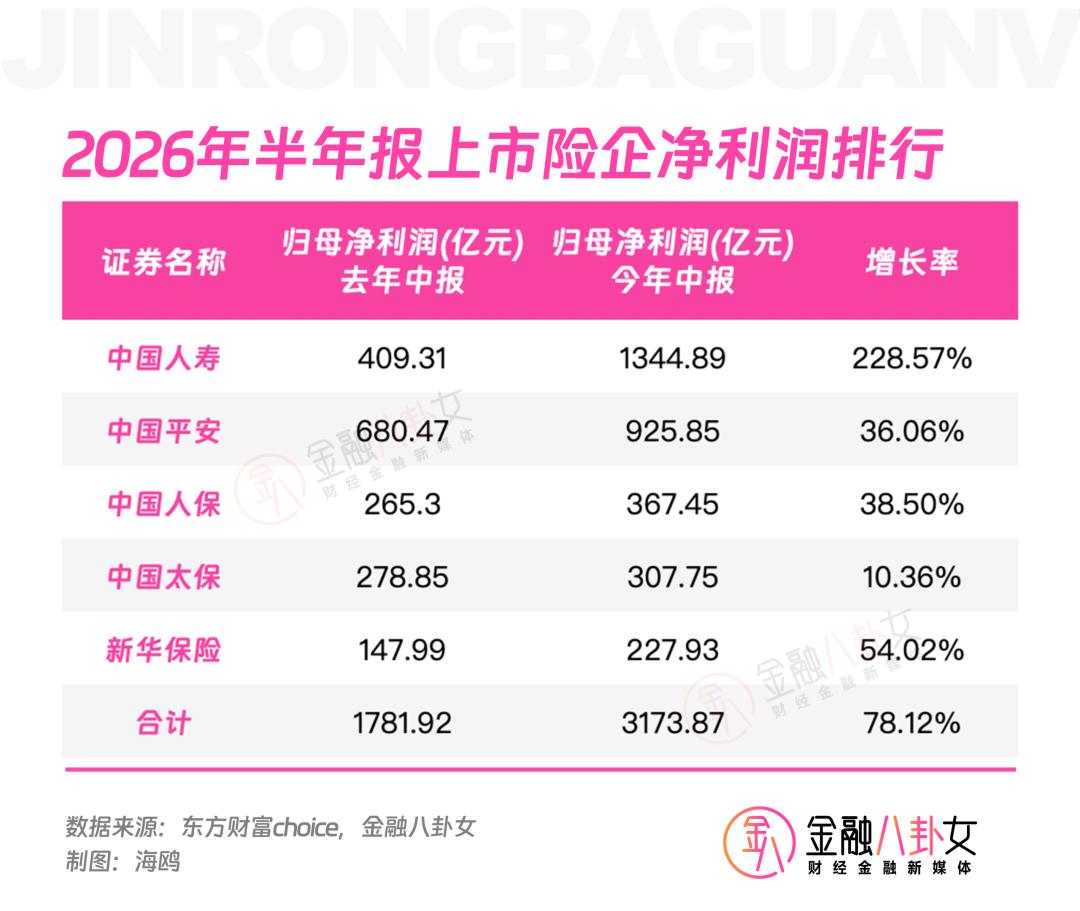
The performance of other insurance companies also saw high growth. In the interim reports of 2023, 2024 and 2025, the total combined net profit of the five insurance companies was 1341.88 billion yuan, 1717.99 billion yuan and 1781.92 billion yuan respectively. This year's interim report figure nearly doubled, jumping to 3173.87 billion yuan. A large part of this growth came from stock investment (the appreciation of equity assets), especially for China Life:
According to the announcement, China Life's total investment income in the first half of the year was 3145.04 billion yuan, an increase of 1869.98 billion yuan year-on-year. The allocation ratio of stocks and funds (excluding money market funds) rose from 16.89% at the end of 2025 to 19.14%, mainly because the company steadily promotes the long-term layout of equity assets and the market value of equity assets fluctuates. Among them, the market value of China Life's stock holdings exceeded 1 trillion yuan for the first time, approaching 1.04 trillion yuan. The proportion of stocks in its investment assets increased from 11.25% at the end of 2025 to 13.06%. Out of the total assets of 8.09 trillion yuan, its investment assets amounted to 7.95 trillion yuan.
What does this mean? In the first quarter of this year, China Life's loss from fair value change was as high as 428.6 billion yuan, resulting in a net profit attributable to shareholders of only 195 billion yuan, down 32.3% from 288 billion yuan in the first quarter of last year. However, in the second quarter, its net profit directly quintupled to over 1100 billion yuan. Behind this, it is very likely that the company bet on the surging tech stocks, and made a huge profit as the market rally came.
However, apart from stock investment, the regular business of insurance companies has not fallen behind at all, achieving comprehensive revenue growth with a very high overall growth rate.
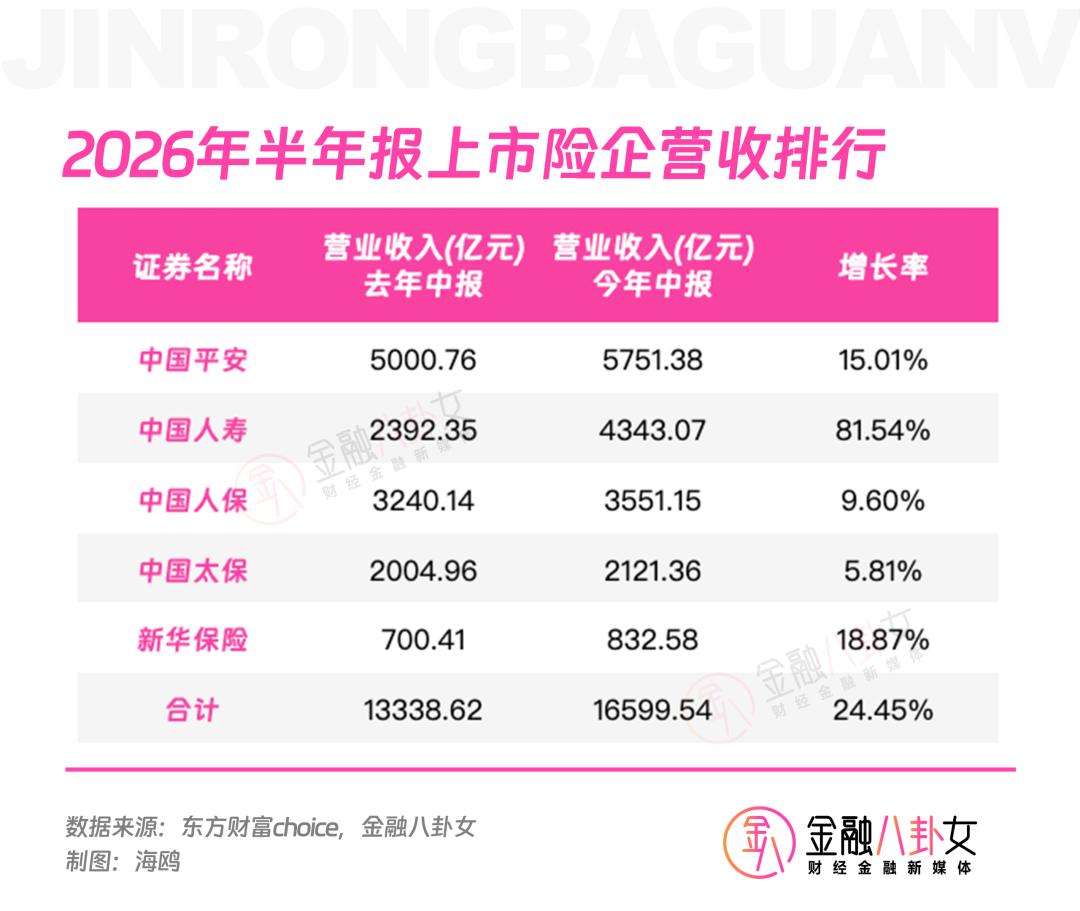
In the interim reports of 2023, 2024 and 2025, the total combined operating revenue of the five insurance companies was 1.18 trillion yuan, 1.27 trillion yuan and 1.33 trillion yuan respectively. This year, the figure directly jumped to 1.66 trillion yuan. This nearly 3300 billion yuan of growth is mainly contributed by China Life, whose operating revenue surged from 2392.35 billion yuan to 4343.07 billion yuan, an increase of nearly 2000 billion yuan.
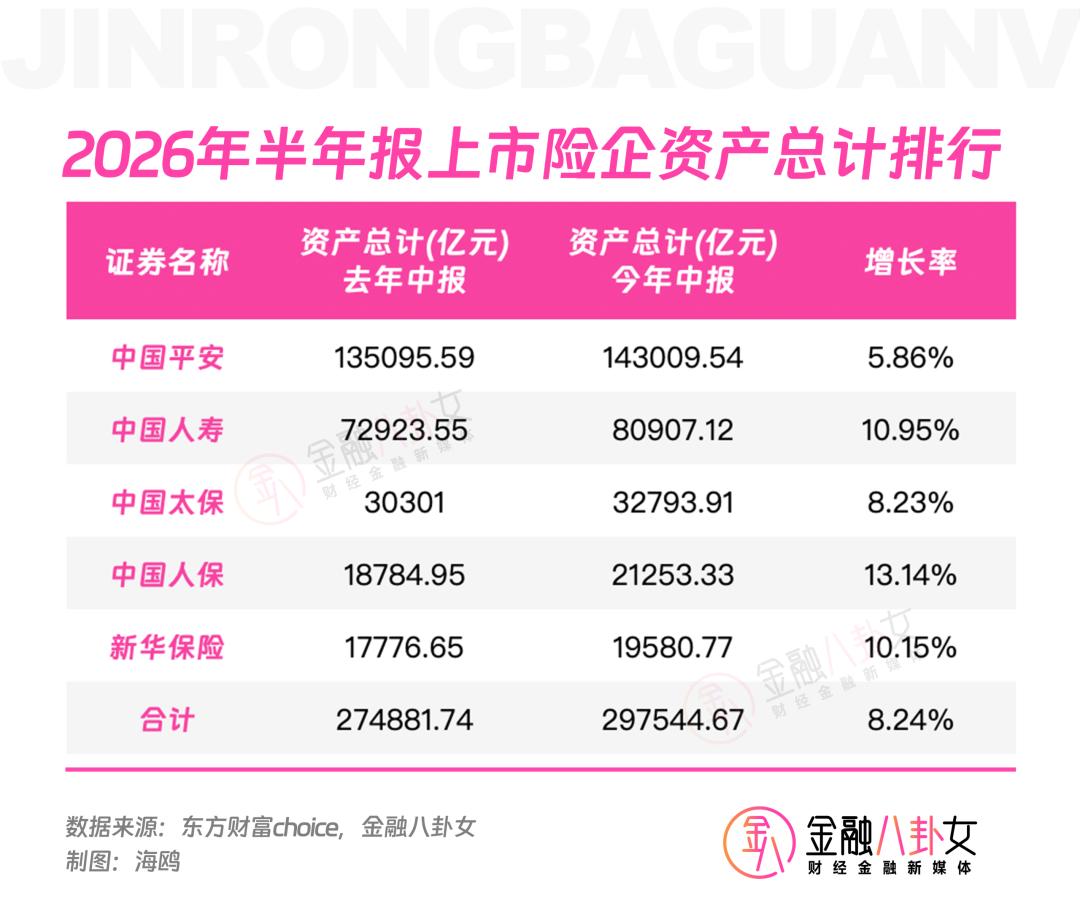
With the rapid growth of revenue, the total assets of insurance companies increased from 27.49 trillion yuan to 29.75 trillion yuan.
In fact, the profits in the semi-annual report are not all the gains. In July, ChangXin went public, and the insurance capital made another huge profit. Insurance funds including Sunshine Life, Postal Life Insurance and China Life obtained floating profits of over 100 billion yuan from their holdings through pre-IPO equity investment, strategic placement in the new share issuance stage and offline allotment, making them one of the biggest winners besides Hefei State-owned Assets Supervision and Administration Commission.
Moreover, it is not only tech stocks. Insurance capital also has a large amount of investment in the large financial sector such as banks and brokerages. The overall strategy is a dumbbell-shaped structure that combines steady dividend assets and tech growth assets.
In addition, in the three months of May, June and July, insurance capital successively sold a large number of tech stocks to realize profits, avoiding a sharp drop in the market. On the evening of July 20, China Life disclosed that 8 asset management plans under its name had collectively sold about 1.1092 million shares of GigaDevice on July 8, with the reduction price ranging from 611.46 yuan per share to 624.61 yuan per share, cashing out a total of over 682 million yuan. This operation was an extremely precise top escape at the stage high, as the tech stocks started to fall right after they sold them.
While selling tech stocks, they are also increasing their holdings of high-dividend dividend sectors. Not only China Life, but also New China Life and PICC are operating in the same direction. After cashing out at the high point to escape the top, insurance capital started to buy the dip after the market fell, making profits on both ends.
Brokerages That Were Talking About "Resigning" and "Switching Careers" Continue to Make Huge Profits in the Bull Market
Although the brokerages, the flagbearers of the bull market, were overshadowed by the insurance companies this time, their net profit growth rate is also strong, with 7 brokerages seeing their net profit double, namely Tianfeng Securities, Zhongtai Securities, China Merchants Securities, Caida Securities, Xiangcai Securities, Huachuang Yunxin and Huaan Securities. All of them are small and medium-sized brokerages except China Merchants Securities.
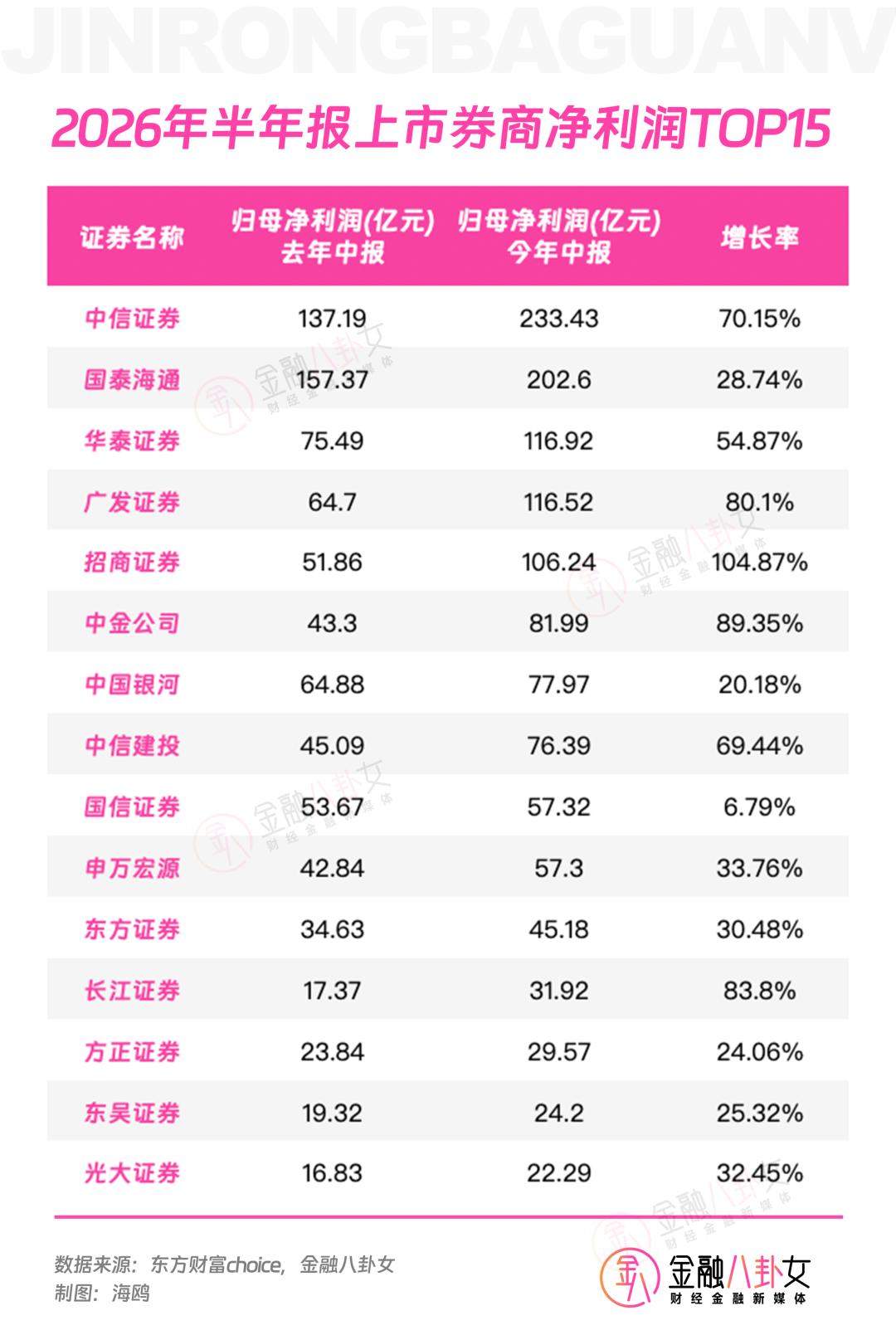
The total combined net profit of 49 listed brokerages reached 1591.57 billion yuan, up 48.92% from 1068.76 billion yuan in the interim report of last year. The top five brokerages by net profit are CITIC Securities, Guotai Haitong, Huatai Securities, GF Securities and China Merchants Securities. All five have net profit exceeding 100 billion yuan, while last year only CITIC Securities and Guotai Haitong had net profit over 100 billion yuan.
In the interim report of last year, the total net profit of brokerages surged by 63.14%, but the revenue growth rate was less than 10%. However, this year, brokerages not only have a high net profit growth rate, but also a high revenue growth rate. The total operating revenue of the brokerage sector last year reached 2653 billion yuan, and this year's total reached 3692.5 billion yuan, an increase of 43.85%.
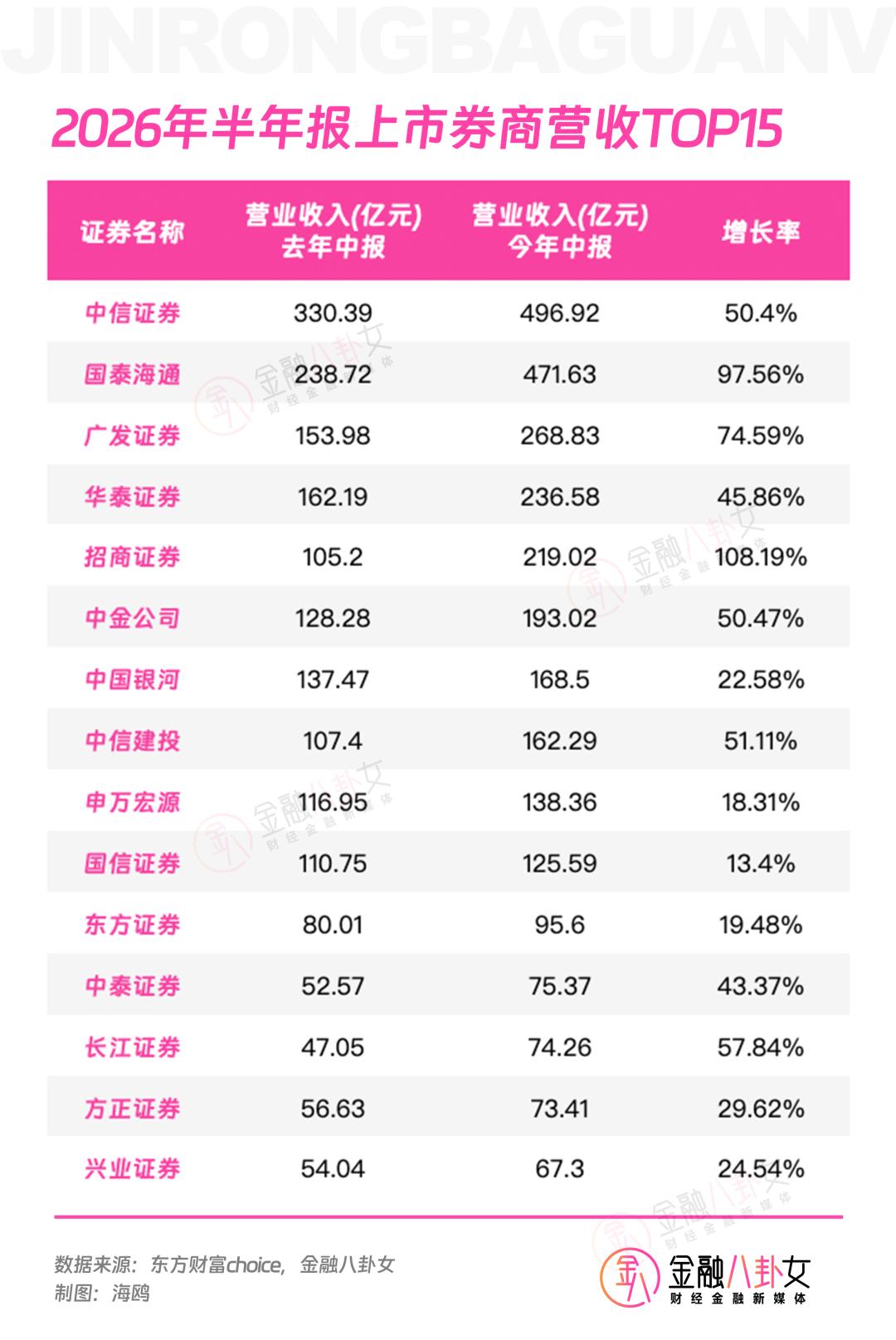
The top five brokerages by operating revenue are CITIC Securities, Guotai Haitong, GF Securities, Huatai Securities and China Merchants Securities. Last year, only CITIC Securities and Guotai Haitong had operating revenue exceeding 200 billion yuan, but this year all five have exceeded 200 billion yuan, and the operating revenue scale of CITIC Securities and Guotai Haitong has directly jumped to a level close to 500 billion yuan.
From the perspective of segmented businesses, proprietary trading and brokerage business firmly rank the top two in the revenue of most brokerages:
In terms of proprietary trading business, the number of brokerages with net income exceeding 10 billion yuan increased from 1 (CITIC Securities) in the first half of 2025 to 6 in the first half of 2026. The five new entrants are Guotai Haitong, GF Securities, China Merchants Securities, Huatai Securities and CICC. CITIC Securities, ranking first, achieved an income of 269.27 billion yuan in the first half of 2026, up 41.33% year-on-year from 190.52 billion yuan in the first half of 2025. Guotai Haitong, ranking second, achieved an income of 238.51 billion yuan in the first half of 2026, up 155.03% year-on-year from 93.52 billion yuan in the first half of 2025.
In terms of brokerage business, CITIC Securities' brokerage business achieved an income of 131.42 billion yuan, up 41.02% year-on-year. The net fee income from brokerage business of Guotai Haitong increased by 42.09 billion yuan year-on-year, an increase of 73.41%. The semi-annual report explained that the main reason is that the trading volume of stocks and funds increased year-on-year, and the scale of securities agency trading business expanded.
Even more solid than revenue is the growth of total assets. The total assets of 49 listed brokerages in the interim report of last year was 14.18 trillion yuan, and this year's figure reached 18.87 trillion yuan, an increase of 33.09%.
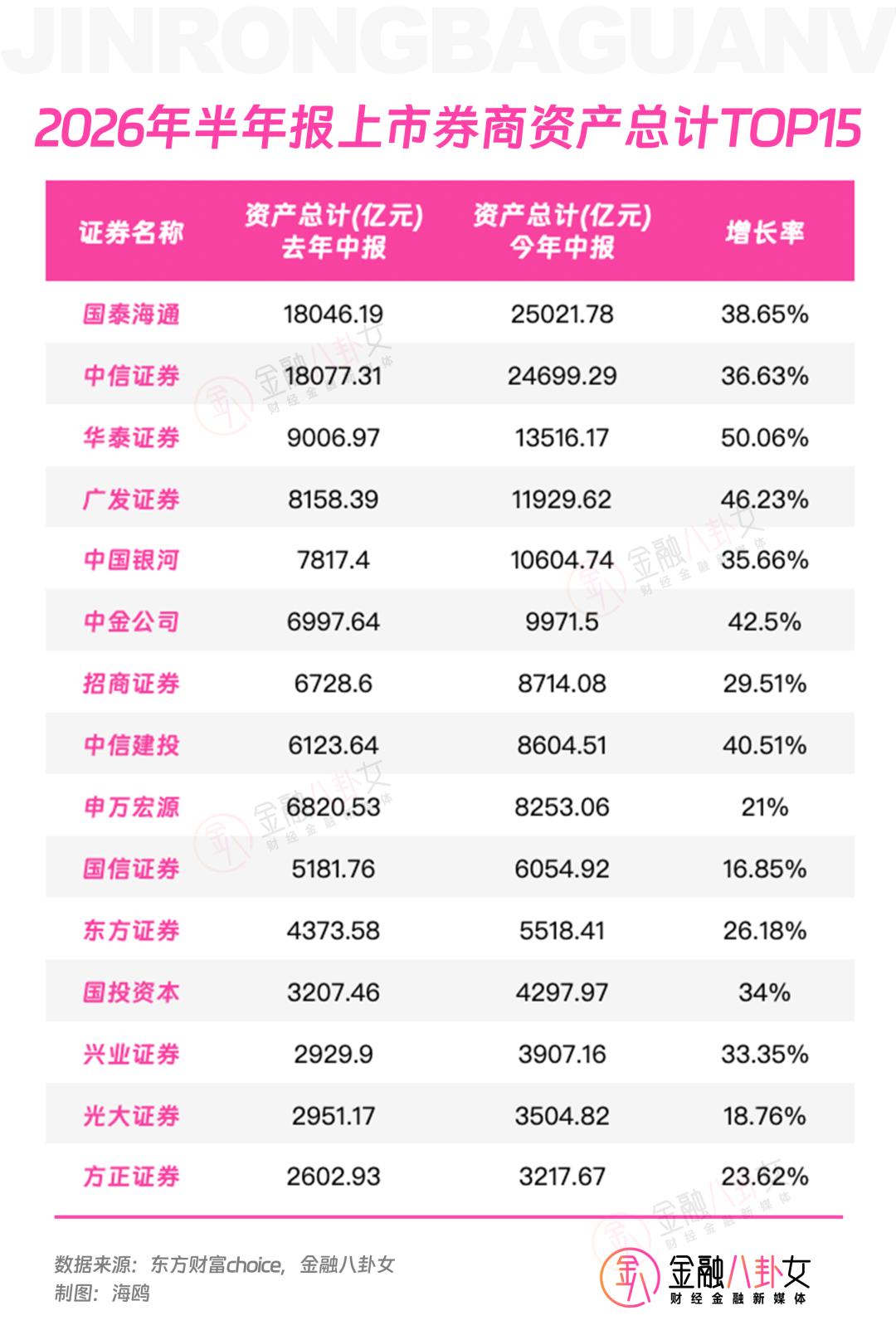
Last year, only CITIC Securities and Guotai Haitong had total assets reaching the trillion-yuan level, but this year the "Trillion-yuan Club" has expanded to 5 brokerages, adding Huatai Securities, GF Securities and Yinhe Securities. The number of brokerages with assets over 100 billion yuan also increased from 29 last year to 32 this year.
Regarding the high performance growth in the first half of the year, a colleague working at a brokerage said:
"In this round of tech bull market, clients who bet on tech stocks or tech funds have made huge profits. Although there was a slump in July, the market has been doing well recently. I don't know how long the bull market will last. I hope it can last as long as possible so that everyone can make more money."
The departments that make the most profits should still be the proprietary trading and asset management departments, where employees can get huge bonuses from stock investment, followed by the investment banking department, where the number and scale of new share issuances are very large this year. In contrast, brokers in business departments mainly rely on old stock investors, and it is getting more and more difficult to acquire new clients. The buy-side clients of research institutes are facing downward management fees and commissions, so their lives are not necessarily easy.
Although brokerages make a lot of money, the number of employees in the securities industry is shrinking. According to Choice data, as of August 6, the number of employees in the securities industry was 324800, a decrease of 3790 from the beginning of the year. The number of securities brokers dropped by more than 7000 in half a year. The number of sponsor representatives fell to 8153, down 4.4% from the end of last year.
However, compared with last year and the year before, the rate of headcount reduction in brokerages this year has slowed down. The "2025 China Securities Industry Development Report" released by the Securities Association of China shows that the number of registered employees of securities companies decreased by 18600 in 2024, and decreased by nearly 8000 in 2025.
Banking Sector Posts Steady Performance, Share Prices Hit New Highs
Finally, let's talk about listed banks. Although the operating revenue and net profit of banks always grow steadily and slowly, seemingly less dynamic than brokerages and insurance companies, banks are the biggest ballast stone of the financial circle.
This year's interim report shows that the overall operating revenue of listed