Is the current post-2000s generation wiping out a large number of driving schools?
After opting out of marriage, childbearing, and home purchase, are young people even giving up on getting a driver's license?
Data from the Ministry of Public Security shows that 20.51 million new drivers obtained their licenses nationwide in 2025, over 15 million fewer than the 36.13 million a decade ago, representing a 43% drop, the lowest level in nearly ten years.
In the past, finding a job, dating, and getting a driver's license were the three things parents would always urge their children to do before graduation from university, and getting a driver's license was the one they pushed the hardest for.
Back then, a widely accepted belief was: "You can buy a car later, but you must get your driver's license first." Being able to drive was regarded as a key skill in the workplace.
But why is this generation of young people no longer following the established path?
01
Nowadays, how sluggish has the driving school business become?
Even the summer training courses that never had to worry about student enrollment in previous years can no longer fill their quotas. The number of newly licensed drivers in 2025 decreased by another 1.75 million compared to the previous year.
The *China Driving Training Industry Development Report (2025)* shows:
Over 60% of driving schools are unprofitable, nearly 30% are suffering substantial losses, and nearly 60% have a utilization rate of training vehicles of less than 50%.
Even the former industry benchmarks can no longer sustain their operations.
As the "first A-share driving school stock", Oriental Fashion was listed on the Shanghai Stock Exchange in 2016, and was famous for its garden-style campus and standardized services at its peak.
Now it has been losing money for consecutive years, with a total loss of over 2 billion yuan accumulated from 2023 to 2025. Its stocks have been given a risk warning (ST) by the stock exchange, and it entered the pre-reorganization procedure for bankruptcy in July 2025; in April this year, it failed to raise funds to pay the principal and interest of a mature bond.
Driving instructors are also facing tighter livelihoods.
The *Research Report on the Current Situation of the Driving Instructor Team in China* shows that among more than 1.2 million driving instructors nationwide, 46.58% recruit 40 to 60 students per year, nearly half of whom have an annual income of less than 50,000 yuan, and over 60% are experiencing declining incomes.
The bleak business situation and painful losses are only superficial phenomena, and the problem probably does not lie solely with driving schools.
02
The skill of "being able to drive" is becoming less and less valuable.
First, let's look at a set of data.
By the end of 2025, there were 525 million motor vehicle drivers and 366 million motor vehicles in China. Based on a rough calculation of one vehicle corresponding to one person, nearly 1 in every 3 licensed drivers does not own a car.
Why do many people get a driver's license but never buy a car? Because owning a car in a big city is really not easy.
In Shanghai, the average transaction price of a private license plate reached 93,868 yuan in August this year, with a winning bid rate of only 14.4%. A piece of metal plate is more expensive than many whole vehicles, and you still have to rely on luck to get one; in Beijing, some people have waited for several years in the private car lottery system without getting a quota.
Even if you own a car, the monthly rent for a residential parking space is five or six hundred yuan, and more than a thousand yuan in core areas. You may drive around the building three times after returning home at night without finding an empty spot. Adding up insurance, fuel costs and maintenance, the annual cost is more than 10,000 to 20,000 yuan.
If you calculate by the cost of several dozen yuan per ride-hailing trip, this sum of money is enough for more than 200 ride-hailing trips.
According to statistics from the China Internet Network Information Center, the number of online car-hailing users has reached 539 million, with more than 900 million orders completed nationwide per month. You can get a car at your doorstep with one tap on your phone, and you don't even need to pay for a designated driver after drinking.
Even the act of "driving" itself is gradually being taken over by technology.
Data from the Ministry of Industry and Information Technology shows that since 2026, 70% of newly sold passenger vehicles have been equipped with L2-level combined driving assistance, which means the car can follow other vehicles, brake and stay in the lane by itself, but the driver still needs to hold the steering wheel and keep an eye on the road.
Fully driverless taxis have also been put into operation on the streets: Baidu Apollo Go has deployed more than a thousand vehicles in Wuhan, with no safety officer sitting behind the steering wheel, and its total global orders have exceeded 20 million.
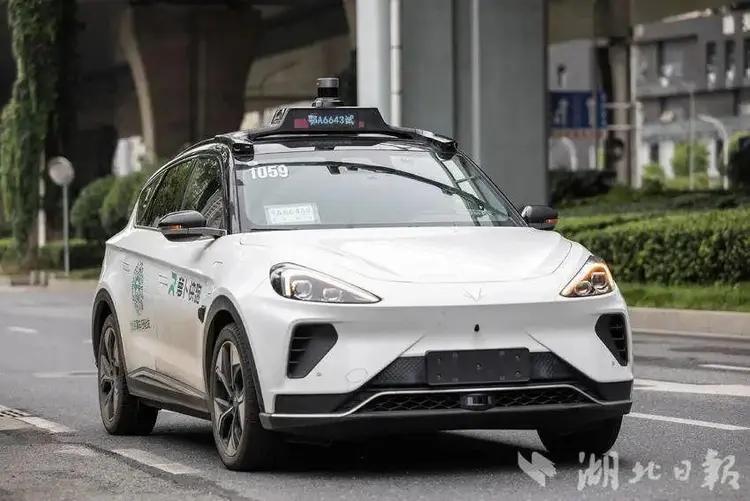
Image source: Hubei Daily
In fact, young people not learning to drive is not a phenomenon unique to China.
Statistics from the National Police Agency of Japan show that the proportion of people in their early 20s holding a driver's license in Japan dropped from 82.9% in 2008 to 69.3% in 2024, with the number falling from 5.65 million to 4.39 million.
When asked why they don't take the driving test, 44% of young people in a Japanese trend survey gave three words: "It's unnecessary."
Even in the United States, the "country on wheels", young people's desire to learn to drive is also declining. In this country where people can take the driving test at the age of 16, the proportion of people getting their licenses at this age has dropped from about half in the 1990s to around a quarter today.
Scenarios where young people drive themselves are getting fewer and fewer, so the "driver's license" certificate is naturally becoming less and less valuable.
03
Leaving the general environment aside, many driving schools are even ruining their own business with their own hands.
On social media, many people complain about the current chaos in driving schools: from registration to getting the license, you will encounter new reasons to pay money at almost every step.
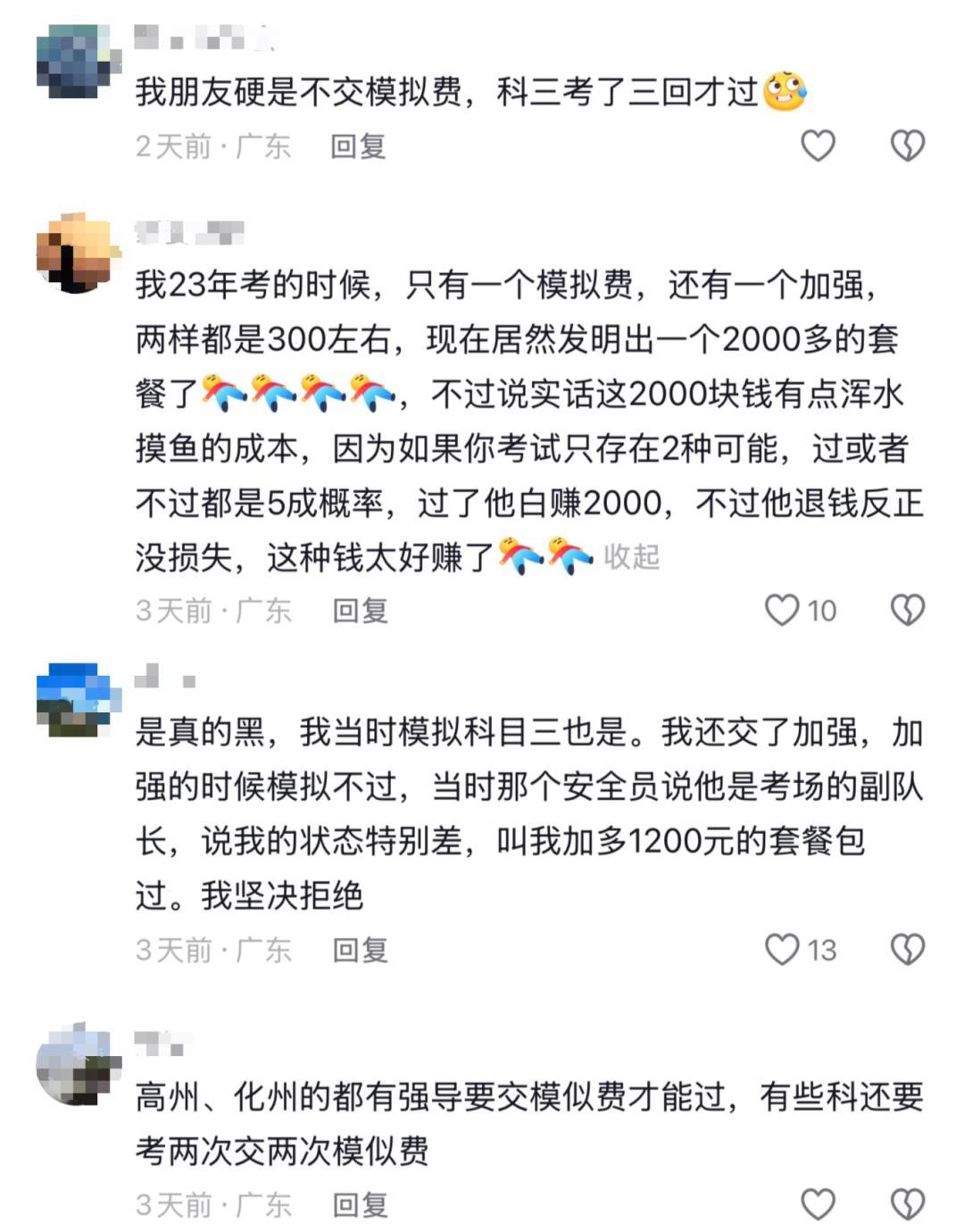
For example, low-price drainage. In live streaming rooms and enrollment advertisements, the "all-inclusive price" of more than 2,000 yuan is particularly attractive, but when you actually enter the driving school, the remaining fees will keep popping up.
According to an investigation by Shenzhen Special Zone Daily, a student Ms. Feng in Shenzhen signed up for a 3,800-yuan "all-inclusive class", and the salesperson promised that no extra fees would be charged in the middle. But when she started practicing, she had to pay 500 yuan for an expedited fee to get priority in test scheduling, 300 yuan for one simulation of subject 2, 600 yuan for one simulation of subject 3, and another 1500 yuan to upgrade to an "express class" to get the license faster. In the end, she spent more than 7,000 yuan, almost double the registration price.
One driving instructor even directly "persuaded" students: the test track is different from the track you usually practice on, if you don't pay for simulation, you are basically wasting your time on the test.
The issue of refund is a long-standing problem. On the "People's Complaint" platform of People's Daily, nearly 70% of complaints against driving schools are refund disputes. The monthly number of driving training complaint tickets in Shanghai rose from 1,717 in March to 2,005 in June, of which more than 80% were refund-related.
The reason behind this is not complicated, which is the industry's cutthroat competition. In recent years, the number of people learning to drive has decreased, but the number of driving schools has kept increasing: there were about 15,000 driving schools nationwide in 2015, and the number has expanded to 21,000 in ten years. To attract students, the price in enrollment advertisements has dropped from four or five thousand yuan to more than two thousand yuan, with the only goal of getting students to sign up first.
As the number of driving schools increases, the industry entry threshold has also been continuously lowered. Nowadays, to become a driving instructor, you only need 5 years of driving experience and no driving instructor certificate is required. Instructors over 45 years old account for nearly 60%, and the personnel are of mixed quality.
In the early years, booking practice sessions and test appointments were all controlled by instructors. Scolding and bad attitudes were commonplace, and students, in order to get their licenses as soon as possible, mostly tolerated it with a smile.
Now the main group of people learning to drive are the post-95s and post-00s generations, who will no longer put up with such treatment.
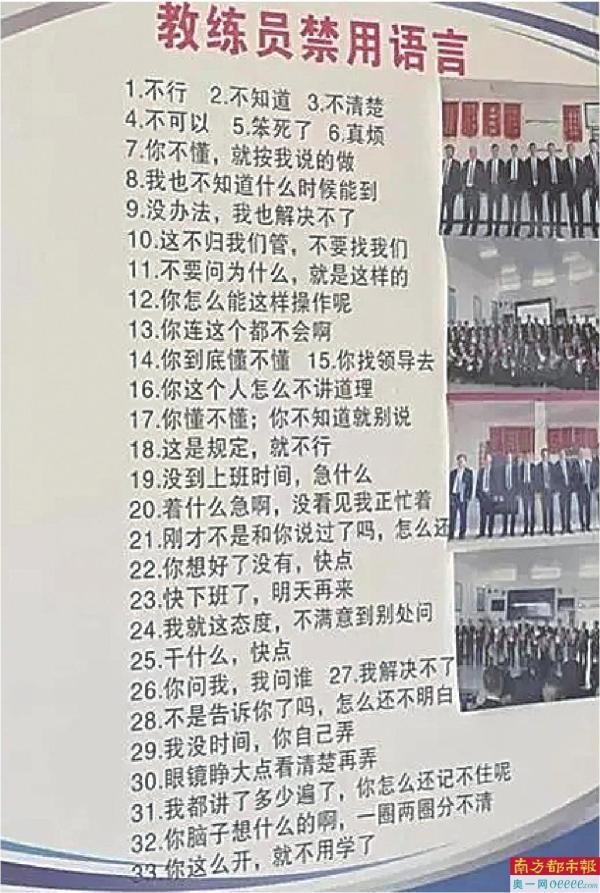
33 types of language forbidden for driving instructors are posted in a driving school in Henan. Screenshot from video.
If they are unhappy with the practice experience or are scammed, they will immediately post a "warning post" on social platforms to expose the driving school and the instructor, or submit a complaint to the consumer association, and simply request a refund.
The reason is very simple: why should I endure bad service just for a license?
04
Driving schools are just a microcosm, and more changes are taking place in the consumer sector.
More and more young people begin to believe that if you can rent, you don't necessarily have to buy; if you can share, you don't necessarily have to own.
The older generation used to compete on who had more household belongings; now young people are afraid of being tied down by too many possessions. A useless driver's license that costs two months of weekends and 5,000 yuan is seen as not worth it by more and more people.
Looking at it from a broader perspective, you don't have to hold onto things, as long as you can use them and solve your problems -- China's consumption is shifting from "owning goods" to "purchasing services and experiences".
According to the National Bureau of Statistics, in the first half of 2026, the national retail sales of commodities only increased by 1.1%, while the retail sales of services increased by 5.3%. Consumption such as dining, cultural tourism, travel and movie viewing, which are "used and then discarded", are growing much faster than the purchase of physical goods.
Young people are not spending less money, but shifting their money from "accumulating possessions" to "buying experiences": a concert, a trip that you decide to take on a whim, a class that you can book at any time, which leaves no burden after use, but brings you real experiences.
Therefore, what the post-00s generation has really "eliminated" is never driving schools, but the consumer logic that "adults must own these things to live a normal life".
The mindset of "must own" is turning to "use as needed", and the consumer view of an era is quietly changing.
References
1. Wu Xiaobo Channel: Who "Killed" the Driving School? | Frontline
2. Website of the Ministry of Public Security: National Motor Vehicle Ownership Reaches 469 Million, Number of Drivers Reaches 559 Million
3. China Economic Net: Problems Such as Difficult Refunds and Arbitrary Charges Are Prominent
4. Sina Finance: Driving School Refund Is Difficult, Students Are Deducted 2000 Yuan, Complaints in Multiple Regions Highlight Unfair Contracts
5. Tencent News: Young People Can No Longer Afford to Buy Cars
6. Xinhua News: The Penetration Rate of Passenger Vehicles with L2-level Combined Driving Assistance Reaches 70.5%
This article is from the WeChat official account "TrendInsight", written by Zi Buyu, and authorized for release by 36Kr.