QuestMobile 2026 Research Report on AI Platform Development: Human-like Controllable Capability, Tool-centric Development, Intense Competition in the Productivity Track, and the initial three-strong competitive landscape in the Office Agent segment has taken shape
Today, we are sharing the 2026 Research Report on the Development of AI Platforms. Data from QuestMobile shows that as the regulatory authorities continue to deepen and refine the supervision of artificial intelligence, the "one restriction, one liberalization" principle has become a new development path for agents: "anthropomorphic agents" have become the key regulatory target, which makes emotional companion agents develop in a controlled manner, and leading large model platforms are intensively restricting agents with attributes such as virtual lovers and role-playing; the "tool-based agents" in the productivity track have ushered in greater development opportunities, and strengthening the task execution completion rate and efficiency improvement has subsequently become the key to competition for agents in segmented fields such as office collaboration, data processing and business process automation.
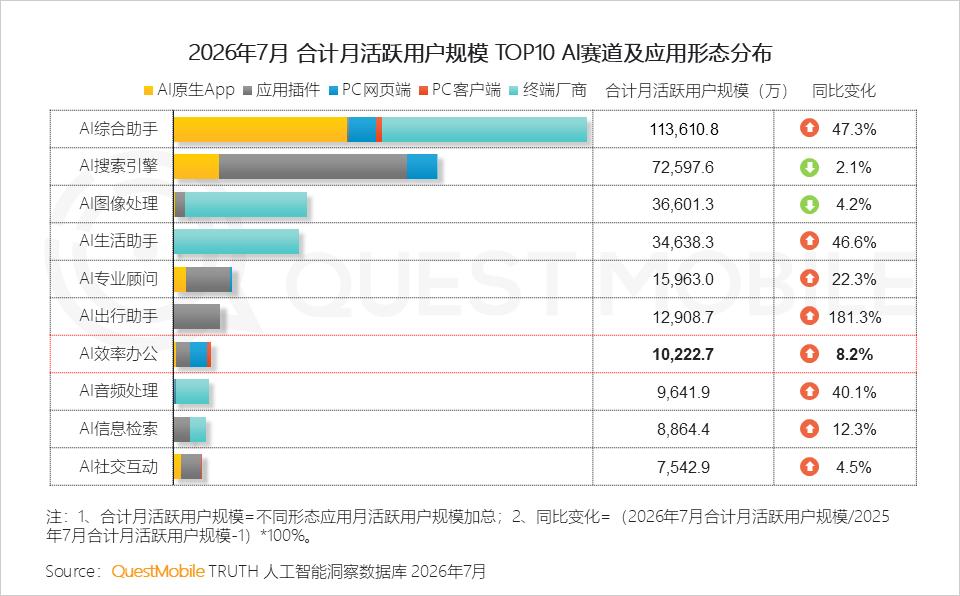
This change has brought two differentiated development paths. First, leading comprehensive platforms have scaled back anthropomorphic agents, prompting the demand for emotional companionship to migrate to independent APPs, and leading applications such as Maoxiang and Xingye have accurately undertaken the existing users. Second, life-service-oriented and efficiency-production-oriented agent applications have achieved transformation through path convergence and the release of "productivity value", for example, the interactive service path converges to government service Agent, and the capability boundary converges to vertical domain AaaS (Agent as a Service), etc.; these measures have promoted the industry to enter a new growth stage. In July 2026, the total number of active users in the AI efficiency office track reached 102 million.
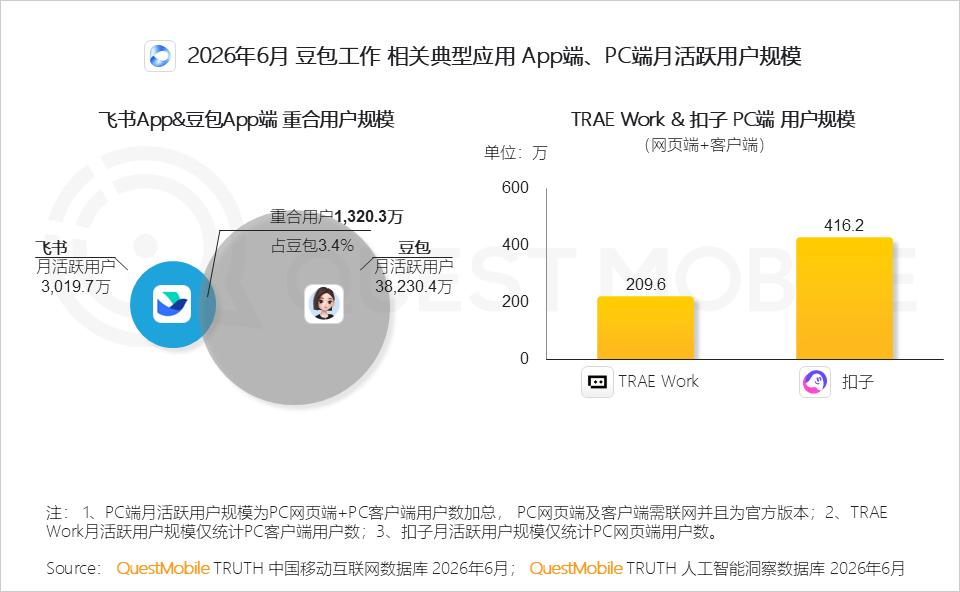
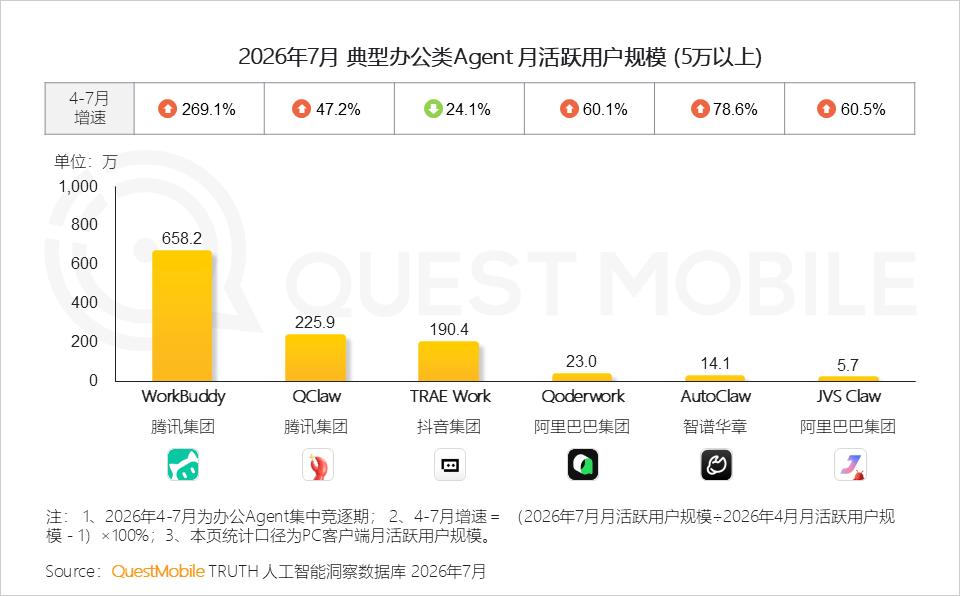
From the perspective of the whole industry, under the background that leading comprehensive AI platforms maintain the competition pattern of entry-level access, and the development prospect of emotional independent APPs is still unclear, office Agents are on the eve of an outbreak, and a tripartite pattern of Tencent ecosystem, Alibaba ecosystem and Douyin ecosystem has initially taken shape. As of July 2026, the monthly active users of Tencent's WorkBuddy and QClaw PC clients were 6.582 million and 2.259 million respectively, the monthly active users of Douyin's TRAE Work PC client were 1.904 million, and the monthly active users of Alibaba Group's Qoderwork and JVS Claw PC clients were 230,000 and 57,000 respectively.
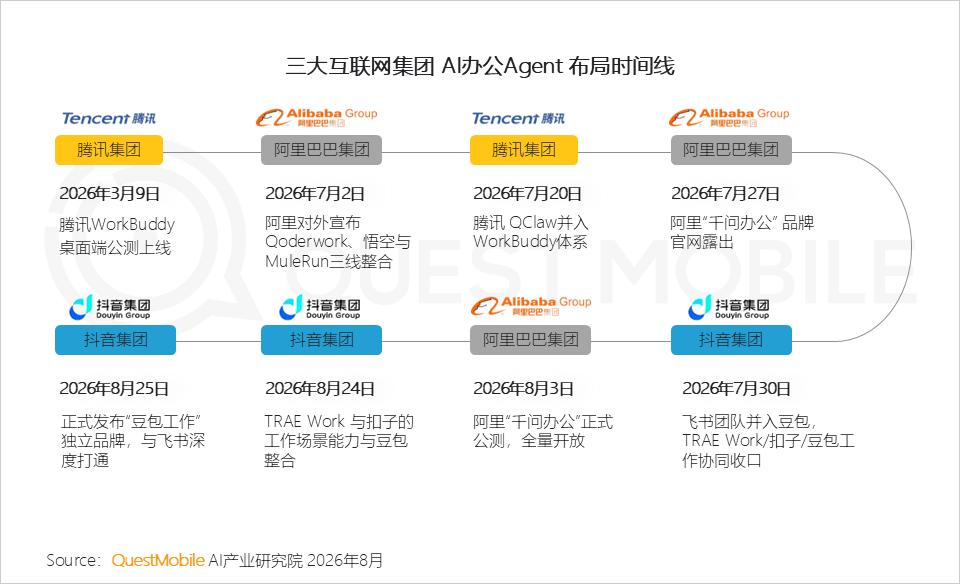
Of course, this figure is only temporary, because greater changes are continuing to occur. All three companies are strengthening the full-link service structure and service capabilities such as "entry-execution-undertaking" through their own ecosystems: Tencent Group has integrated Qclaw into the WorkBuddy system, and connected it with WeChat and WeCom; Alibaba's "Qianwen Office" has officially entered public beta and is fully open; Douyin Group's TRAE Work has been integrated with Coze and Doubao, independently released "Doubao Work" and deeply connected with Feishu...
It can be said that although the three companies are following their own differentiated paths, in the end, the three will have to face the "group large-scale combat"! What is the specific situation? You might as well read the report.
Large model platforms gather computing power resources and shift to closed-loop scenario execution; AI office has become a 100-million-user track
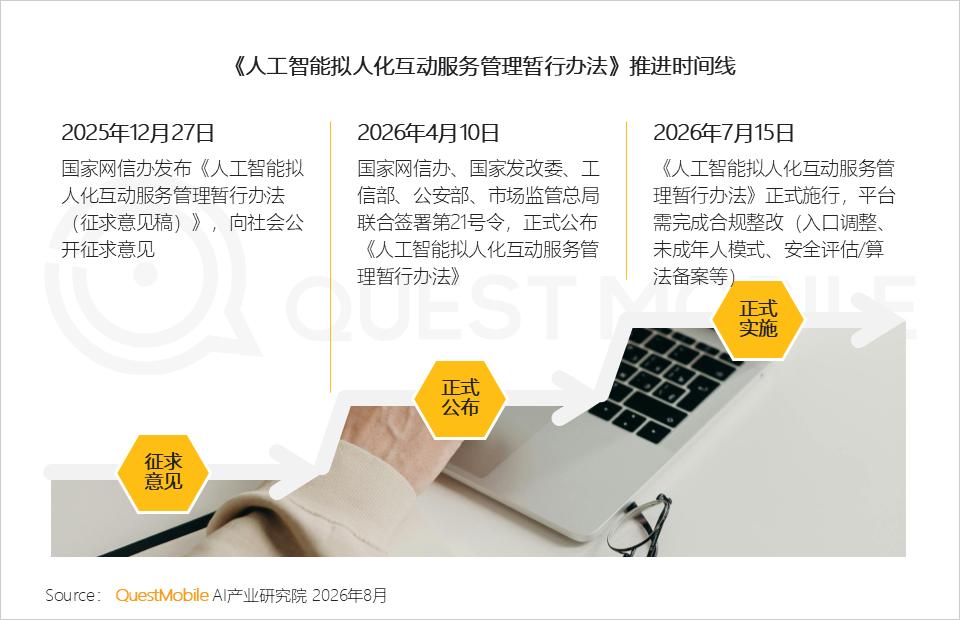
1. The Interim Measures for the Administration of Anthropomorphic Interactive Services of Artificial Intelligence was officially implemented in July 2026; marking that the regulatory scope has narrowed from "overall unified management" to "classified and graded, scenario-based targeted governance"
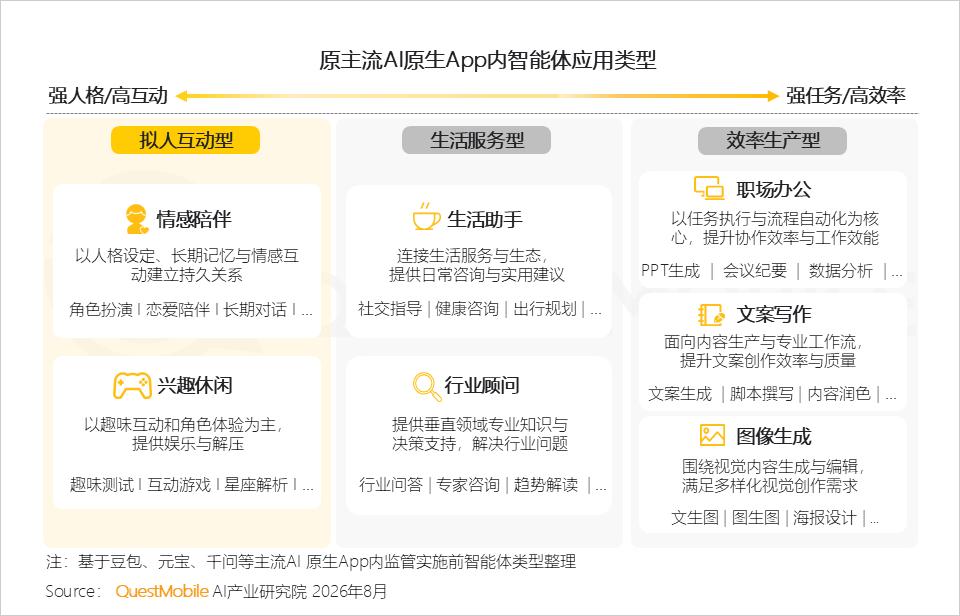
2. Before the implementation of supervision, agents were distributed along the "personality-emotion - task-efficiency" axis; anthropomorphic agents with strong personality and emotional interaction characteristics became the key regulatory objects in the follow-up; tool-based agents with task execution and efficiency improvement as the core were retained
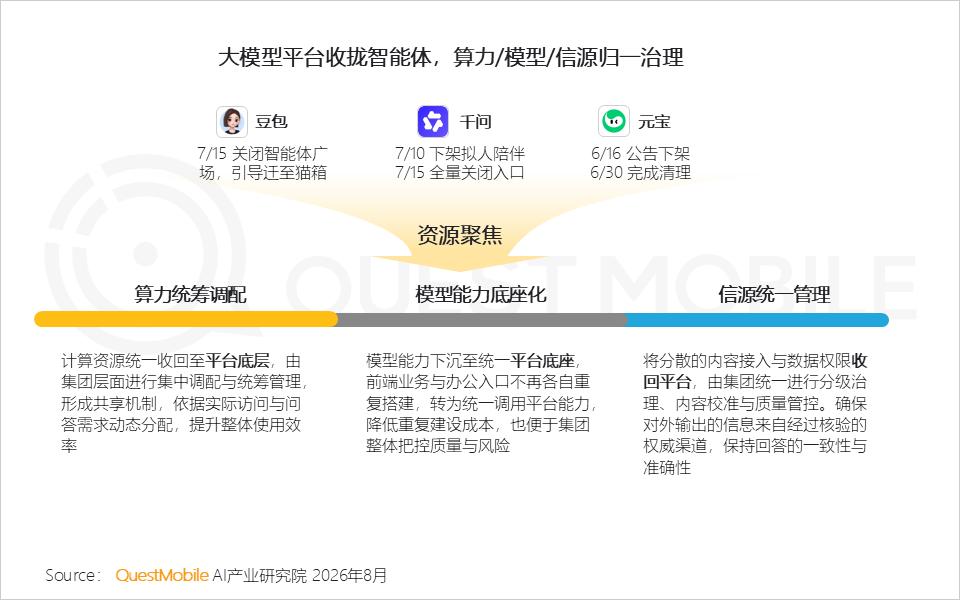
3. The mass removal of anthropomorphic agents is not a simple subtraction, but to take the scattered three-layer capabilities of computing power, model and information source back to the platform for unified management
Its essence is to shift from "repeated construction across all lines" to "centralized supply at the base and unified output at the front desk", and rebuild the boundary between efficiency and quality with the platform-based thinking.
4. The focused resources are reconstructed by scenario layers: the front desk is gathered as a unified entry, and the back office is precipitated as professional services and production capabilities
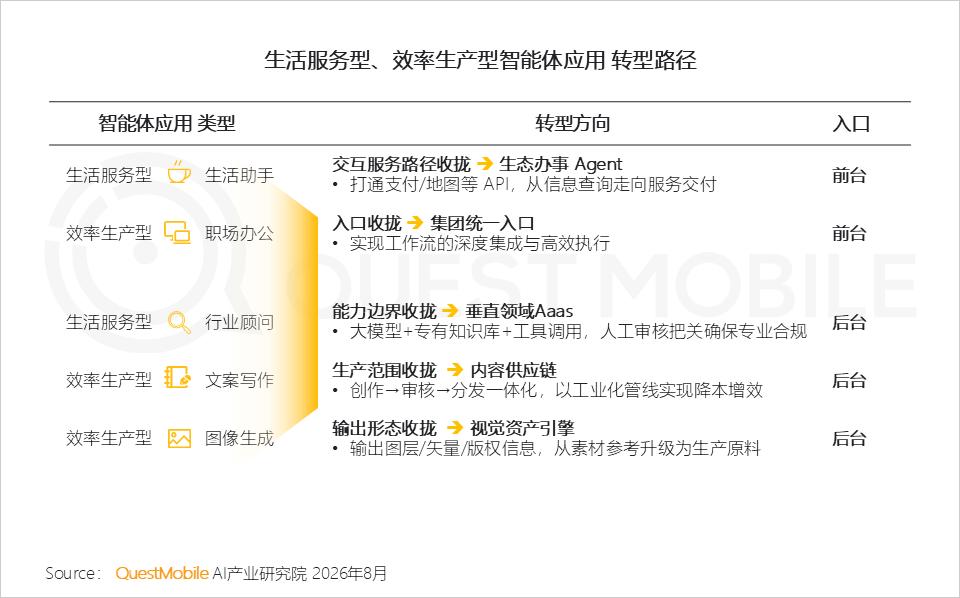
5. After the front-end AI application entry is converged, on the life side, the capabilities of query, transaction, reservation and performance are connected to form a service closed loop; after the back-office office entry is integrated, documents, meetings, approvals, projects, knowledge bases and organizational permissions are connected to form a workflow closed loop
After the front-end AI application entry and the back-office office entry are converged respectively, the platform has shifted from "passive response" to "active execution", and at the same time officially opened the main competition line of the AI industry in the second half of 2026: that is, the closed-loop capability of task execution.
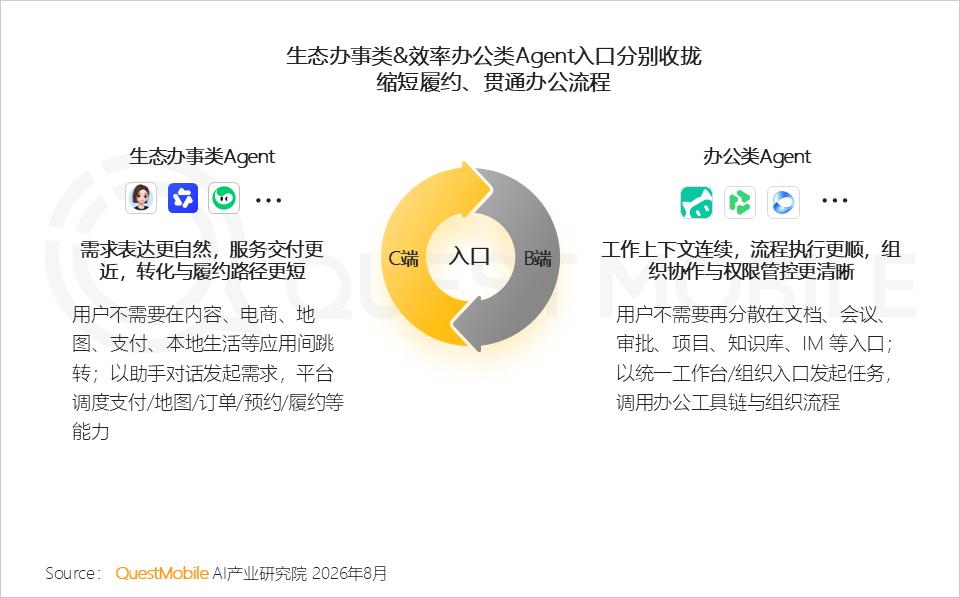
6. The industry growth momentum has also changed accordingly, shifting from generalized traffic to in-depth scenario cultivation and process closed loop; the AI office track has achieved steady growth through group-level office entry integration and workflow integration, and has been promoted to a 100-million-user track
Data from QuestMobile shows that in July 2026, the total monthly active users of the AI efficiency office track reached 102 million, a year-on-year increase of 8.2%.
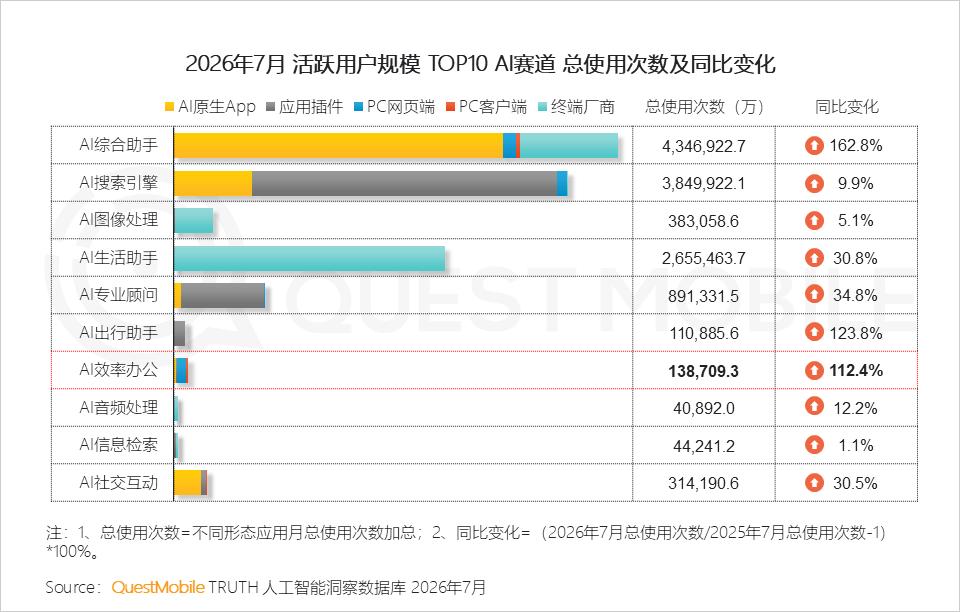
7. The doubling growth of total usage times in the office track (+112.4%) is the inevitable result of deep workflow embedding after the office entry is narrowed: the shorter the path, the stronger the stickiness; the lower the decision-making cost, the higher the usage frequency
Tencent, Alibaba and Douyin's office Agents all debut, and the competition differences lie in ecological anchors and execution closed loops
1. The integration of office Agents under the gathering of platform resources is accelerating
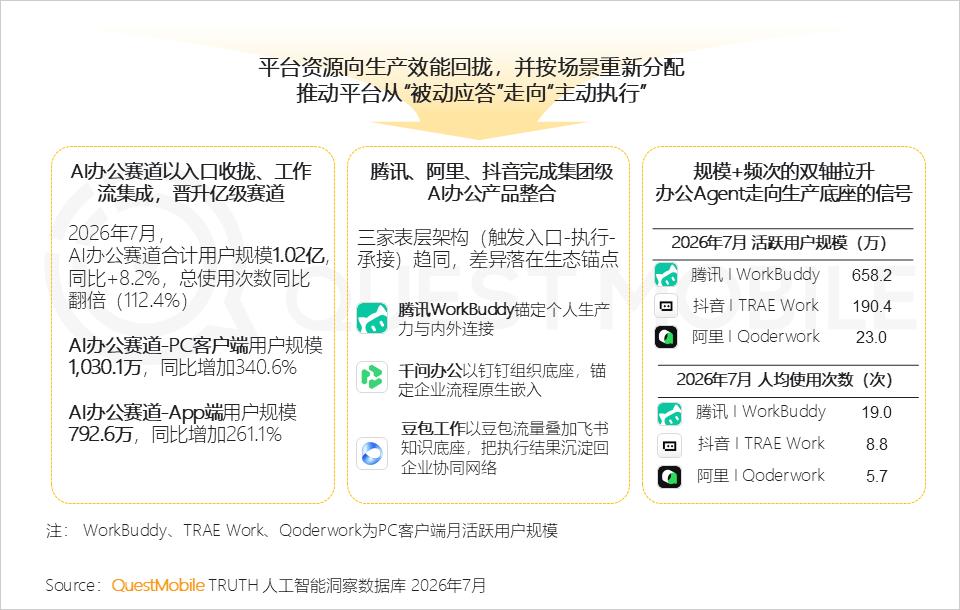
2. Data from QuestMobile shows that in July 2026, the scale of native App side and PC clients in the AI office track increased by 261.1% and 340.6% year-on-year respectively; the entry of AI office products is accelerating to gather to the clients
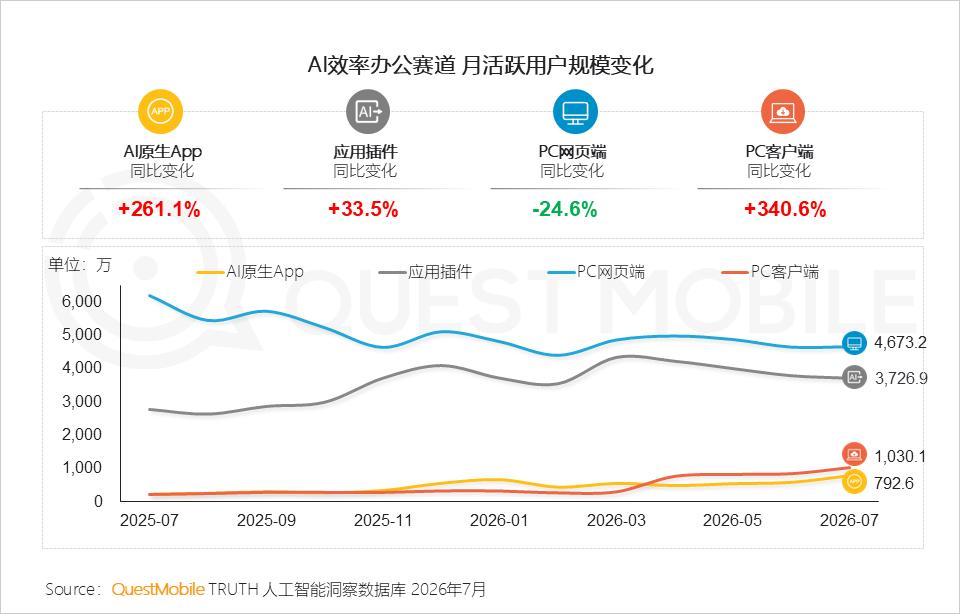
3. At present, office Agents present a phased pattern of "Tencent ecosystem leading, Douyin ecosystem catching up closely, and Alibaba ecosystem deploying in multiple lines"; it is believed that with the acceleration of product iteration and the deepening of scenario penetration, the future will still be full of variables
Data from QuestMobile shows that as of July 2026, the monthly active users of Tencent's WorkBuddy and QClaw were 6.582 million and 2.259 million respectively, and the monthly active users of Douyin's TRAE Work were 1.904 million.
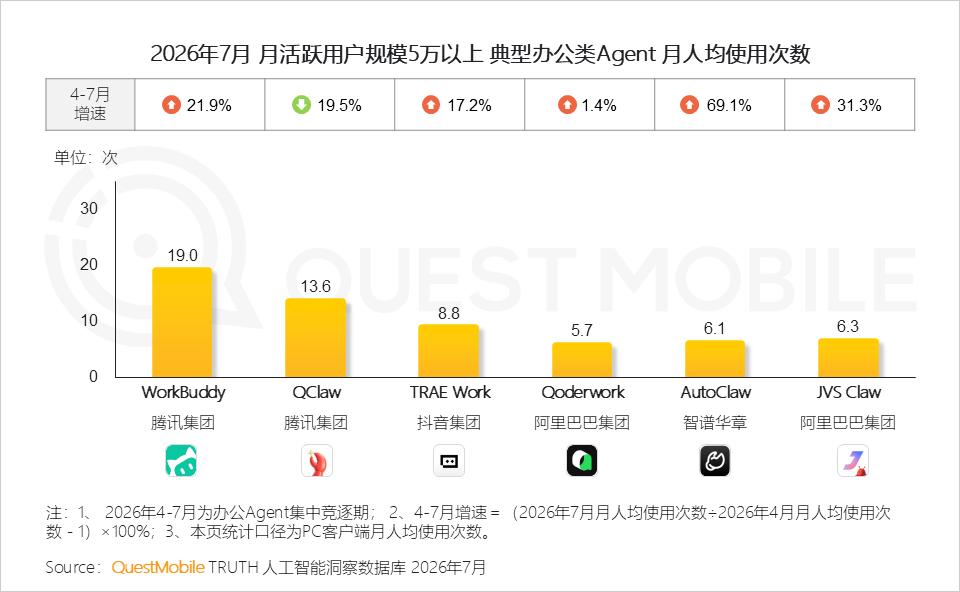
4. Scale measures market coverage and entry occupancy, and frequency evaluates workflow embedding depth and task dependency; the simultaneous rise of the two axes is the signal that office Agents move towards the "normalized productivity base"
Data from QuestMobile shows that in July 2026, the monthly average usage times per user of WorkBuddy and Qclaw PC clients were 19.0 times and 13.6 times respectively.
5. In the past six months, the development of office Agents has shifted from multi-line trials to group-level convergence: Tencent took the lead in seizing the position, Douyin carried out intensive integration in the later stage, and Alibaba set the tone through official strategic announcements, and completed product integration with the collaborative implementation of DingTalk
At this point, the three office Agents of Tencent Group, Alibaba Group and Douyin Group have all appeared, and the "tripartite confrontation" pattern has taken shape.
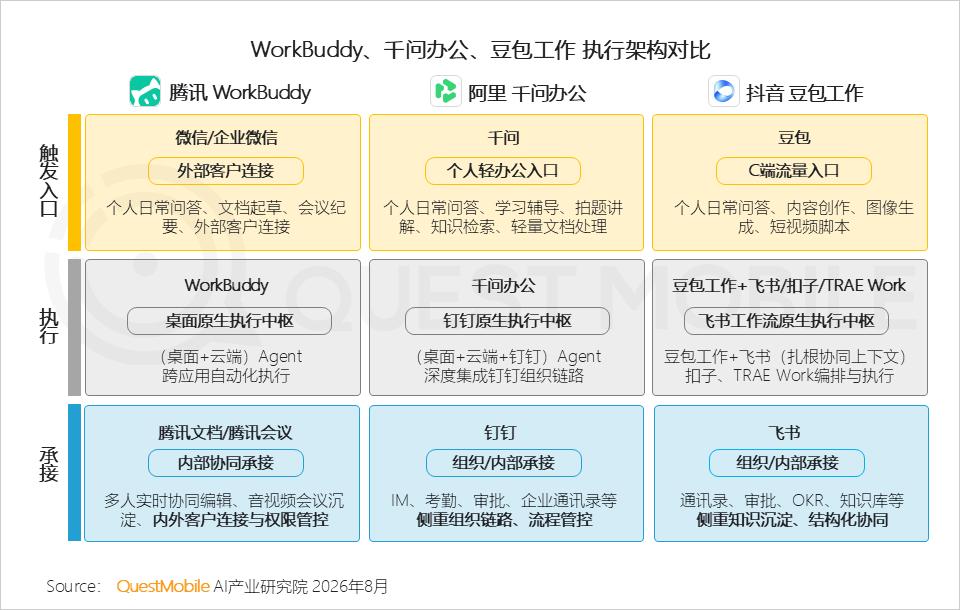
6. The surface architecture of the three companies converges to "trigger entry - execution - undertaking", and the differences lie in the ecological anchors: connection, organization and collaboration
Tencent WorkBuddy anchors personal productivity and internal and external connections; Qianwen Office takes DingTalk as the organizational base, and anchors the native embedding of enterprise processes; Douyin uses Doubao traffic superimposed on the Feishu knowledge base to precipitate the execution results back to the enterprise collaboration network.
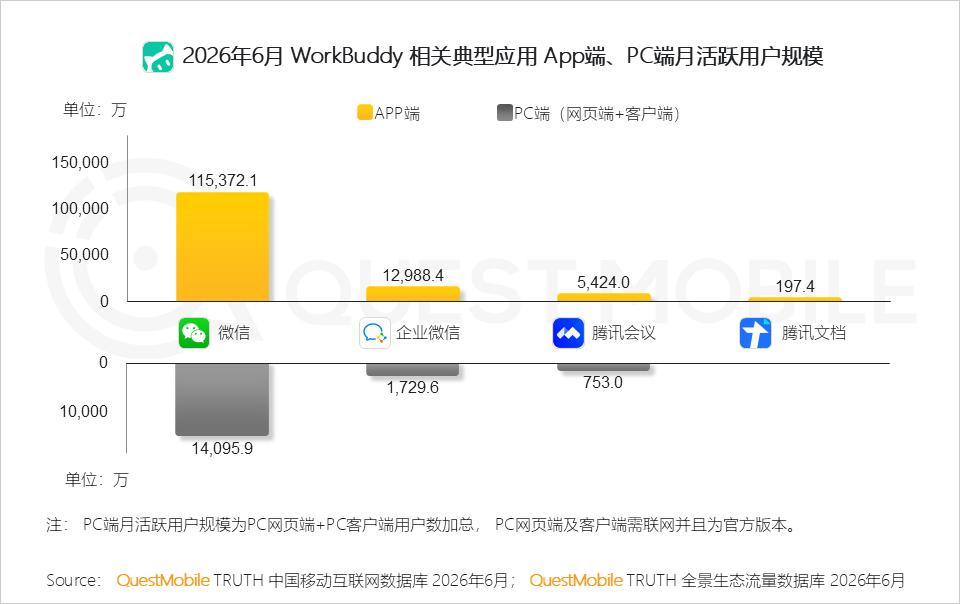
7. The future differentiated development advantage of Tencent WorkBuddy lies in converting "connection and collaboration assets" into executable desktop Agent capabilities
It quickly builds up scale through the national-level connection entry (WeChat), drives frequency through the enterprise-level collaboration base, and opens up depth through native desktop (WorkBuddy).
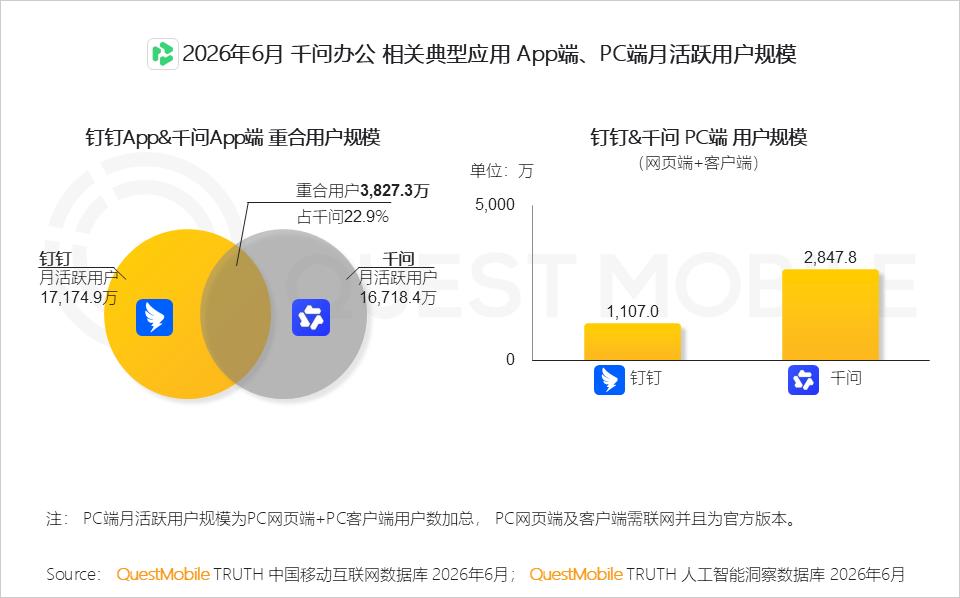
8. The differentiated development advantage of Qianwen Office lies in forming a closed loop of "organizational entry - intelligent processing - office asset precipitation"
DingTalk serves as the base of the organizational office scenario, and Qianwen serves as the interaction and execution center, embedding dialogue capabilities into real workflows such as approval, meeting, and documents.
9. Accessing "personal intelligent usage" into the "organizational work system" is the future differentiated development advantage of Doubao Work
Doubao provides high-frequency intelligent entry, Feishu provides collaboration and knowledge undertaking, Coze and TRAE Work provide Agent and engineering execution, building a closed loop from dialogue to workflow, from individual to team.