Apple's new king takes the throne today
The thicker the family fortune, the harder it is to turn around. Apple is one of the most powerful companies in tech history, and also one of the companies that find it hardest to recreate a miracle. For Apple, the real crisis is not losing today, but failing to see tomorrow.
The new CEO has only three possible directions: hold onto existing territory, expand boundaries, or reinvent Apple. Which one will come true depends on his capabilities and choices, as well as the company's luck in the next decade.
Steve Jobs turned Apple back into a great product company, and Tim Cook turned it into an unprecedentedly huge commercial enterprise. Now, it is John Ternus's turn to decide what the next-generation Apple will ultimately be.
On September 1, 2026, a dynastic transition quietly took place at Apple Park in Cupertino. Starting from today, a new person takes the throne of Apple: the one sitting in Apple's CEO office will no longer be Tim Cook.
In the history of Apple in the post-Jobs era, such a moment has only appeared twice.
In 1997, Steve Jobs, with his paranoia for products, returned to a company on the brink of extinction. In 2011, Tim Cook took over the scepter when Jobs was seriously ill.
Today, this is the third time.
If we look at the full timeline of Apple since its founding in 1976, there have been far more than three CEOs in Apple's history. But the public often refers to John Ternus, who succeeded Cook on September 1, as the third CEO in Apple's history — specifically the third-generation leader after Steve Jobs returned to Apple in 1997 and kicked off the chapter of the company's modern renaissance.
Over the past few decades, Apple has built its own set of order: hardware is its territory, the operating system is its rule, the App Store is its trade system, chips are its infrastructure, and billions of users form the most important population base of this empire.
Steve Jobs was like a monarch who expanded the territory, he redefined the boundaries of Apple; Tim Cook was more like a remarkable governor, who made this territory more stable, richer and more efficient.
Now, the one who takes over the scepter of Apple is a person whose name the public could barely pronounce before: John Ternus. He needs to manage and further grow one of the most powerful companies in the global business history, while preventing it from becoming a declining empire that can only guard the glory of the past.
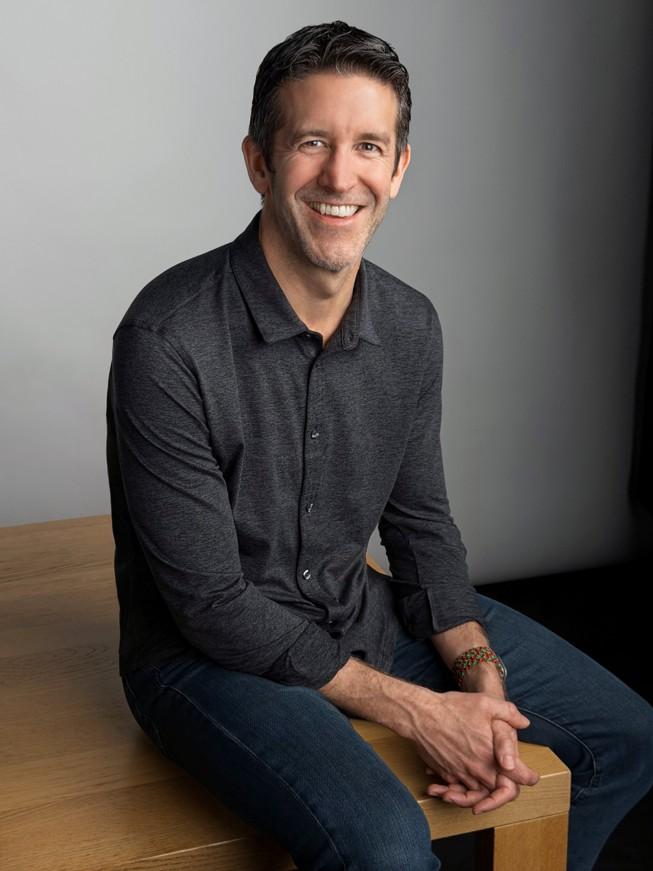
John Ternus, Source: Apple Official Website
The Cook Era Has Ended
Over the past 15 years, what exactly has Tim Cook changed?
Numbers are the most honest scale. Under Tim Cook's leadership, Apple's market value has grown from about 350 billion US dollars to 4 trillion US dollars, an increase of over 1000%; annual revenue has grown from 108 billion US dollars in FY2011 to over 416 billion US dollars in FY2025, a nearly fourfold increase. The company's global business has expanded significantly, especially in emerging markets, and its business now covers more than 200 countries and regions. During his tenure, the number of Apple employees increased by more than 100,000, and the number of active devices in circulation increased to over 2.5 billion units.
What is more profound than the changes in numbers is the structural change.
Apple in the Steve Jobs era was a product company that defined categories with a very small number of flagship products; Apple in the Tim Cook era is a machine interlocked by products, supply chains, services and capital returns. App Store, iCloud, Apple Music, Apple Pay — these businesses replaced one-off hardware sales with continuous service revenue. The iPhone is still dazzling, but Apple's revenue curve is no longer entirely tied to a single mobile phone.
However, problems have gradually grown out of this structure.
The iPhone still accounts for more than half of the revenue, but its innovation cycle is getting longer and longer, Vision Pro has not become a new platform, and Apple's presence in the AI game lags behind Microsoft, Google and Meta. The advancement of Siri and Apple Intelligence has been repeatedly delayed, and the supply chain is under new structural pressure. Apple is getting better and better at scaling up what it already has, but it has not launched a product that amazes the whole world again for a long time.
As a result, a judgment is popular in the market: what Cook left behind is an extremely powerful Apple, but also an increasingly "predictable" Apple.
The gap between being powerful and being predictable is exactly what Ternus has to withstand continuous pressure for quite a long time after taking office.
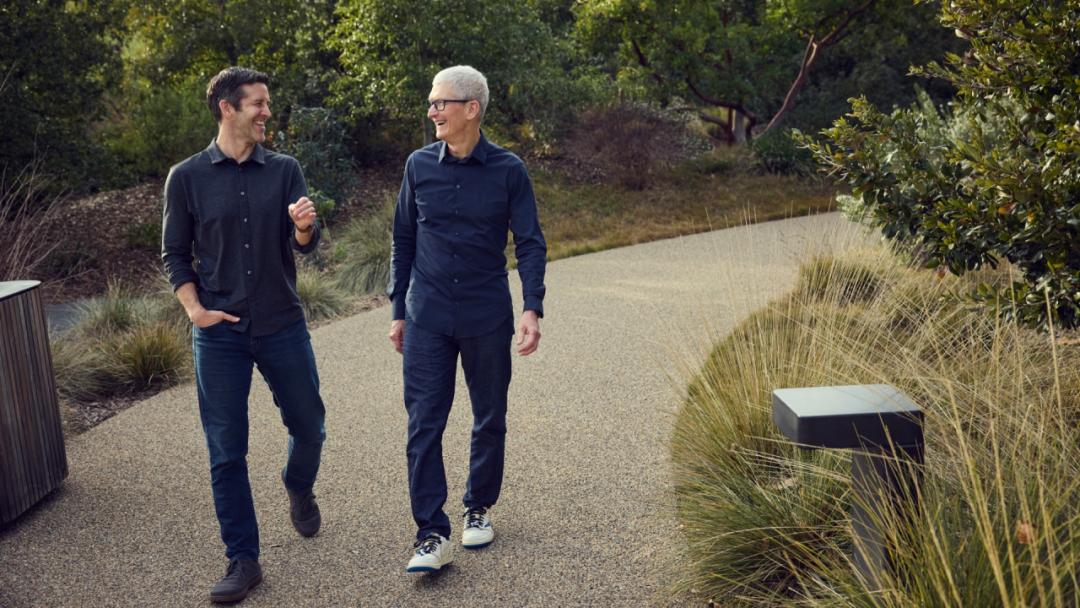
Tim Cook and John Ternus at Apple Park, Source: Apple Official Website
Why Ternus?
Ternus has spent almost his entire career at Apple.
He joined Apple's product design team in 2001, was appointed Vice President of Hardware Engineering in 2013, and joined the executive team as Senior Vice President of Hardware Engineering in 2021. For more than 20 years, he has been on the track of products and supply chains, no legends, no drama. But Apple, in an era when AI is redefining everything, handed the company to a product person instead of an AI person.
To understand why Apple chose him, we need to see at least three levels:
The first level is product.
Since joining Apple in 2001, he has long been deeply involved in the iPad and Mac product systems, and has deeply participated in the migration of Mac from Intel chips to self-developed chips. After that, he repeatedly appeared on stage at conferences to introduce new iPads and new Macs. He is not a bystander, but a witness of Apple's product system over the past decade.
Apple said in its official press release, "During his tenure at Apple, Ternus has overseen the hardware engineering work of many groundbreaking products across all categories. He played a key role in the launch of many new product lines including iPad and AirPods, and also participated in the development of multiple generations of iPhone, Mac and Apple Watch products."
The second level is organization.
In the leadership team composed of Tim Cook, chip head Johny Srouji, software head Craig Federighi and the design team, Ternus holds a unique position: he does not preside over a single front, but spans products, engineering and operations. Is Apple choosing him as an individual, or the "product plus operation" capability structure he represents? This is a question with no standard answer.
The third level is philosophy.
Ternus's voice mostly appears in press conferences and company statements, and his personal traits are deliberately downplayed. The impression we can piece together from these public snippets is: he believes more that technology should serve products, rather than making products a demonstration of technology. This impression currently comes from limited public materials, and as more information is disclosed, this judgment may be revised in the future, but it does conform to the consistent philosophy of Apple.
The First Major Test
Does Ternus understand AI? This question may be asked the wrong way around. The real question should be: why does Apple believe that the competition in the next era still requires someone who understands hardware?
The change lies in the development trend of AI.
The past decade was the era of software defining hardware; the next decade will most likely be the era of AI redefining hardware. More and more key capabilities including reasoning, perception and privacy will be deployed on the device side instead of the cloud.
As the wind direction changes, Apple's "family assets" that have been undervalued for years are being revalued: self-developed chips, operating systems, cameras and sensors, batteries and industrial design, accumulated on-device AI capabilities, stance on privacy protection, global supply chains, and the installed base of more than 2 billion devices.
Therefore, Apple's AI strategy is very unlikely to copy the path of OpenAI, Google or Meta. What it wants to do is probably to make AI the operation layer of the next-generation devices — intelligence is embedded in the device, users do not even notice its existence, but only feel that the device is easy to use. Apple's A-series and M-series chips have already demonstrated the power of this route: a big bet on hardware brings a major upgrade of the entire product line.
Ternus is exactly a participant in that bet. From M1 to M4, he was the main presenter of Apple Silicon.
By choosing him, Apple may be betting that when AI converges with the physical world, the company that can define next-generation hardware is qualified to define next-generation computing.
Try to put Apple into the current competitive landscape: OpenAI bets on models, Google has models, search and Android, Meta has models, social networks and hardware attempts (such as AI glasses), Microsoft has models and enterprise software, Amazon has cloud and Agents. What Apple holds is devices, chips, operating systems and user entrances.
Every player has a different set of cards, and they are all using AI to strengthen their own fundamentals. Where exactly is the bottleneck of Apple's AI?
Siri is the most conspicuous page in this history. When it debuted with the iPhone 4s in 2011, it was the pioneer of consumer-grade voice assistants; 15 years later, it has become a symbol of Apple's lag in AI. Apple Intelligence was released in 2024, with the right direction, but its advancement has been repeatedly delayed, and the promise to rebuild Siri has been postponed again and again.
A more fundamental interrogation comes from: when users open fewer and fewer Apps, but directly instruct AI to complete a task, is the App Store still Apple's most important entrance? This question touches the foundation of Apple's service model.
Chasing the pace of the times is harder than guarding the existing territory; reinventing the entrance is harder than optimizing the existing entrance.
What Exactly Is the Next-Generation Apple
After Steve Jobs returned in 1997, Apple has gone through three eras.
The first era belonged to Steve Jobs, with the theme of creation — products, design, redefining categories. The second era belonged to Tim Cook, with the theme of expansion — supply chains, scale, services, capital efficiency. The third era starts from today, and belongs to John Ternus.
Taking over a company and opening a new era are two different things.
Ternus has only three possible directions: hold onto existing territory, expand boundaries, or reinvent Apple. Which one will come true depends on Ternus's capabilities and choices, as well as the company's luck in the next decade.
When Steve Jobs returned, he was faced with ruins, and there was only one direction: survive first, then create. When Tim Cook took over, he was faced with the empire left by Jobs, and there was only one direction: scale up.
What Ternus faces is an Apple that is already extremely powerful, but is required to prove itself again.
Looking at the books, Apple's assets are almost perfect: a huge entrance composed of more than 2 billion devices, amazing cash flow, leading self-developed chips, complete software and hardware ecosystem, and extremely strong brand recognition.
But it is also weighed down by several major mountains: product innovation lag has been criticized for many years, discussions about the iPhone's growth peaking have never stopped, AI development lags behind peer giants, and the next-generation computing platform has not yet been finalized; and when tech companies are collectively moving from software to the physical world, can Apple redefine consumer technology in the next generation once again?
The thicker the family fortune, the harder it is to turn around. Apple is one of the most powerful companies in tech history, and also one of the companies that find it hardest to recreate a miracle. For a company like Apple, the real crisis is not losing today, but failing to see tomorrow.
The new king has ascended the throne, but inheriting the throne does not mean controlling the future.
Steve Jobs turned Apple back into a great product company, and Tim Cook turned it into an unprecedentedly huge commercial enterprise.
Now, it is John Ternus's turn to decide what the next-generation Apple will ultimately be.
This article is from the WeChat Official Account "Snow Leopard Finance" (ID: xuebaocaijingshe), the author is Snow Leopard Finance, and it is published by 36Kr with authorization.