The internet-famous cat food brand Jin Gu has been exposed to contain engine oil. Is the incident caused by inadequate quality control or mismanagement?
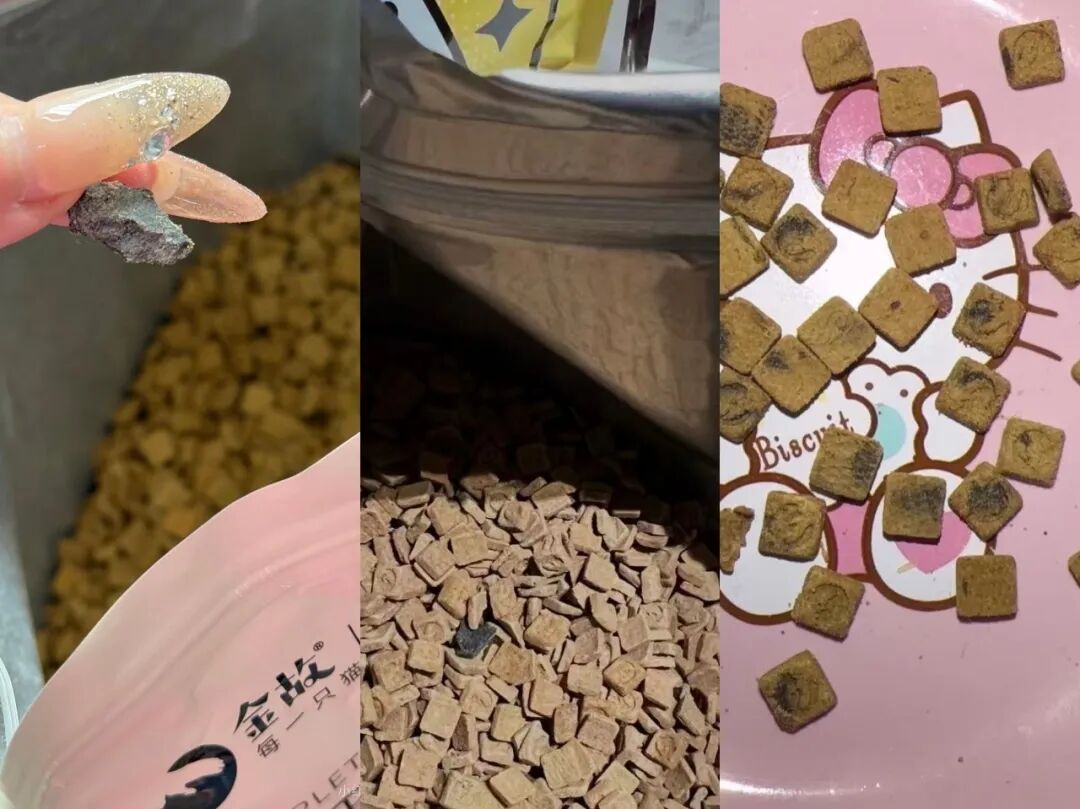
Recently, a large number of consumers reported on social platforms that black oil clumps were mixed in the GoldenTales cat food they purchased, pushing the internet-famous pet food brand into the center of public opinion storm once again.
GoldenTales is a pet food brand founded by pet blogger Deng Feng, with its product portfolio covering categories such as raw meat diets, freeze-dried food, and baked pet food. Relying on the huge fan base accumulated through the founder's personal IP, GoldenTales has long ranked at the top of the Douyin pet food brand list. During last year's Double 11 shopping festival, its transaction volume through Douyin channels exceeded 100 million yuan, with annual sales exceeding 200 million yuan, representing a year-on-year increase of over 500%.
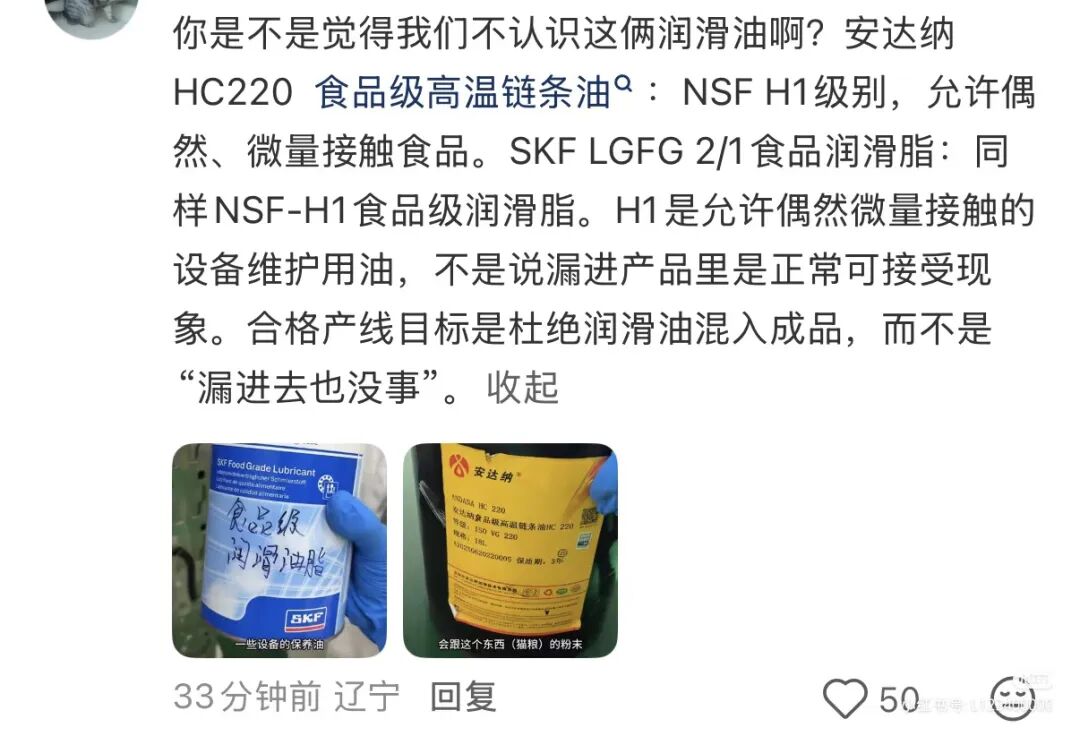
After the incident broke out, Deng Feng, founder of GoldenTales, posted a on-site factory inspection video on his Xiaohongshu account to respond to public doubts. Deng Feng explained that the black oil clumps were formed by the mixture of residual cat food powder and equipment lubricating grease, which had a small chance of falling from the elevator chain. He also specially emphasized that the involved lubricating grease was "food-grade", and the brand had already raised the machine baffle to reduce the probability of oil clumps falling off.
However, some netizens pointed out that food-grade does not mean edible, and raising the baffle is not the best rectification measure. "Can you produce the system report? Can you produce the management process? Can you produce the sampling test report?" Some netizens questioned in the comment section. The response video, on the contrary, intensified consumers' doubts and resistance.
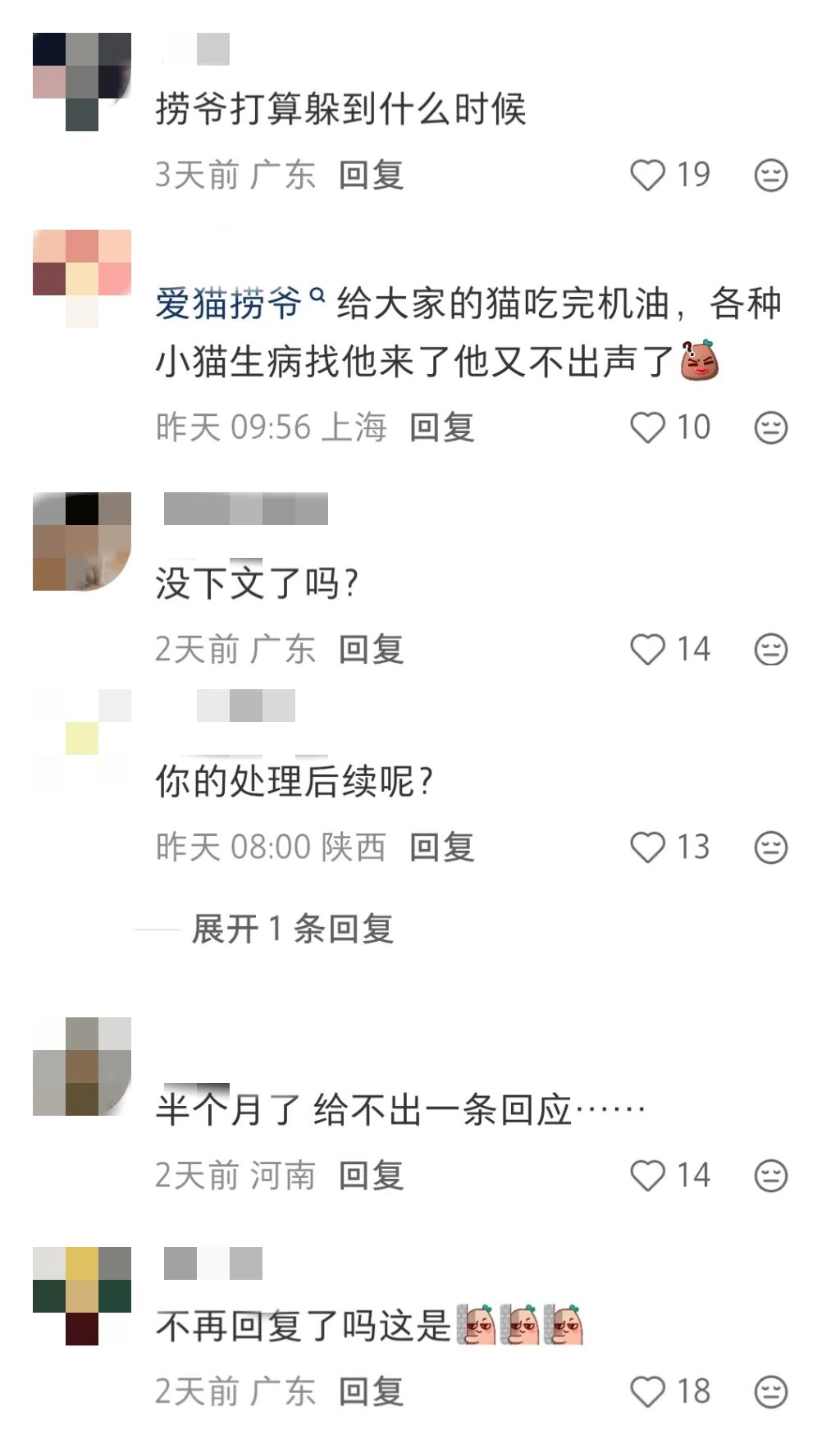
As of press time, the special test results of cat food that Deng Feng promised at the end of the response video have not been released, and only the test results of the Nais can liner were published evasively. At present, the official account of GoldenTales has resumed normal updates, while Deng Feng's personal account still stays at the factory inspection video, and netizens in the comment section have been asking: "Will you not respond anymore?" "How long are you going to hide?"......
Such public opinion crises of blogger-owned pet brands are not isolated cases. According to statistics from Spicy, in recent years, there have been more than ten pet food brands of a certain scale and public influence established by top internet-famous pet bloggers, and GoldenTales is not the first one trapped in reputation disputes due to quality control problems: the high-protein index of Gaoyejia cat food has deviations, the raw materials of veterinarian Zhang Xu's prescription food are falsely labeled, and the factory of Miaofansi was exposed to have hidden sanitation hazards...
It has become an emerging trend for pet bloggers to launch their own pet food. However, while enjoying the dividends of traffic, the lack of supply chain and quality control makes these brands more vulnerable to huge trust backlash caused by quality accidents or public opinion topics. The ongoing turmoil that GoldenTales is experiencing is the most direct footnote of this industry where opportunities and risks coexist.
Frequent quality control scandals, GoldenTales encounters major brand trust crisis
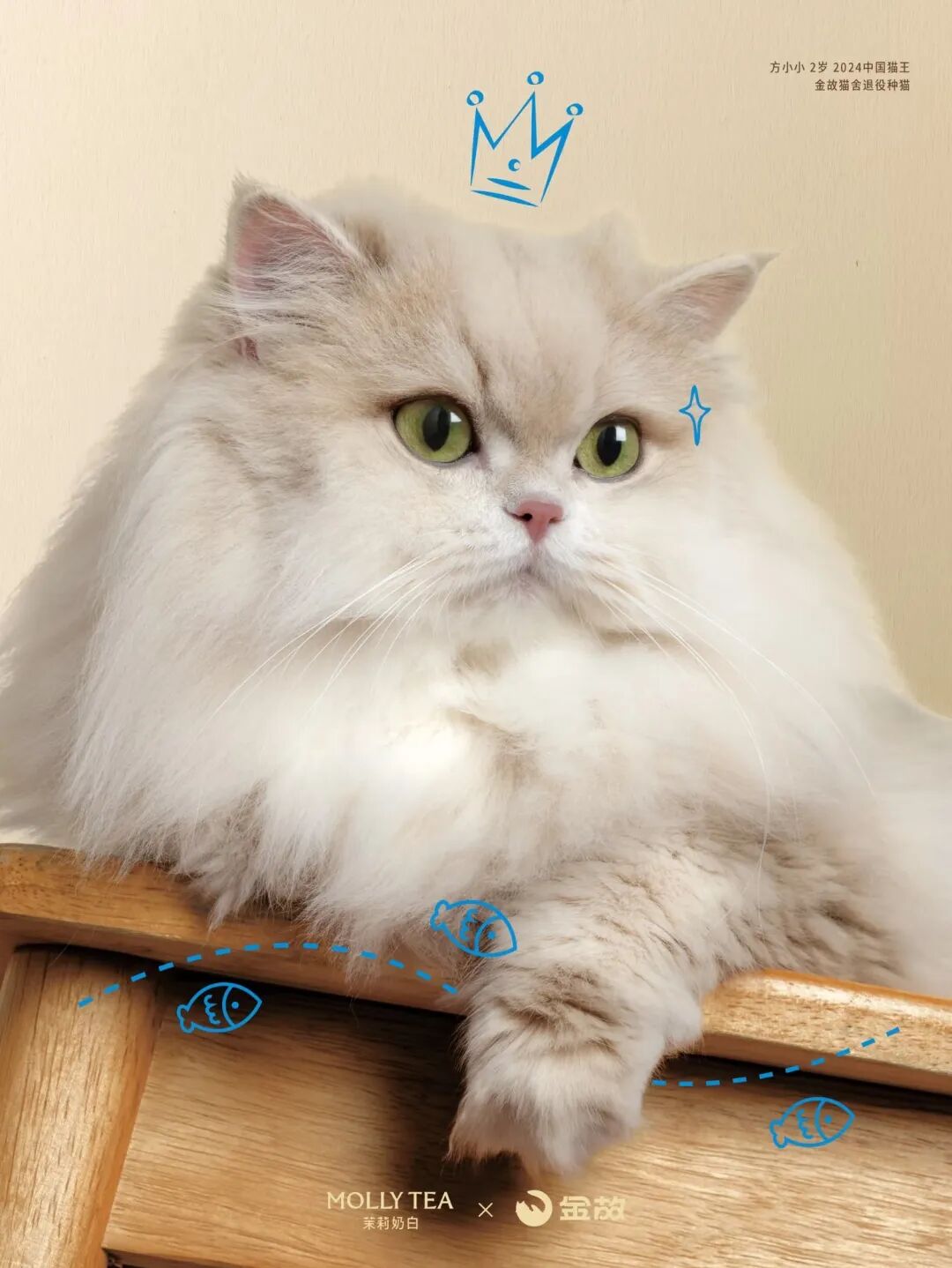
As a sample of pet bloggers crossing over to make pet food, Deng Feng, founder of GoldenTales, has more than 830,000 fans on Xiaohongshu. He started his business by running a pedigree cattery in the early stage, and the cats Nana and Xiaoxiao in the cattery are very popular on social platforms, making them veritable traffic IPs in the pet circle.
"Because my own cats also need to eat cat food, I simply make a reassuring raw meat cat food by myself", this is the original intention of entrepreneurship that Deng Feng told the public. Different from the mainstream extruded cat food on the market, GoldenTales' early products targeted the feeding demand of cat owners for "carnivorous nature", and its differentiated positioning of "raw meat staple food" allowed GoldenTales to stand out from many domestic cat food brands. Last year, in the 2025 Douyin Top Golden Product List released by the Oriental Fast Moving Consumer Goods Center, GoldenTales ranked No.1 in the pet snack category list.
Along with high public attention comes huge controversy. This oil-stained cat food incident is not the first time that GoldenTales has been trapped in quality control disputes. In September 2024, GoldenTales' "Little White Rabbit staple freeze-dried food" was exposed that the OEM had modified the formula without authorization, reducing the proportion of pure fresh meat input to 25%; in June 2026, the brand successively encountered two quality incidents: desiccant debris mixed in freeze-dried meat floss, and excessive bacteria in pet wet wipes.
In the previous several turmoil, GoldenTales either shifted the blame to the OEM, or promised to recall and compensate quickly, and the handling method could still calm the dissatisfaction of some consumers. But successive quality accidents have also consumed users' trust little by little. The reason why this oil incident ignited greater public opinion is precisely because it touched the core red line of pet food safety.
After the response video was released, the controversy continued to ferment. Some consumers showed that their cats had symptoms of vomiting, diarrhea and even abnormal kidney after eating GoldenTales pet food; some netizens found that "fresh chicken breast" on the product promotion page was quietly changed to "frozen chicken breast", questioning the brand's false publicity; a large number of consumers complained about the evasion of after-sales service and untimely handling of return and refund issues.
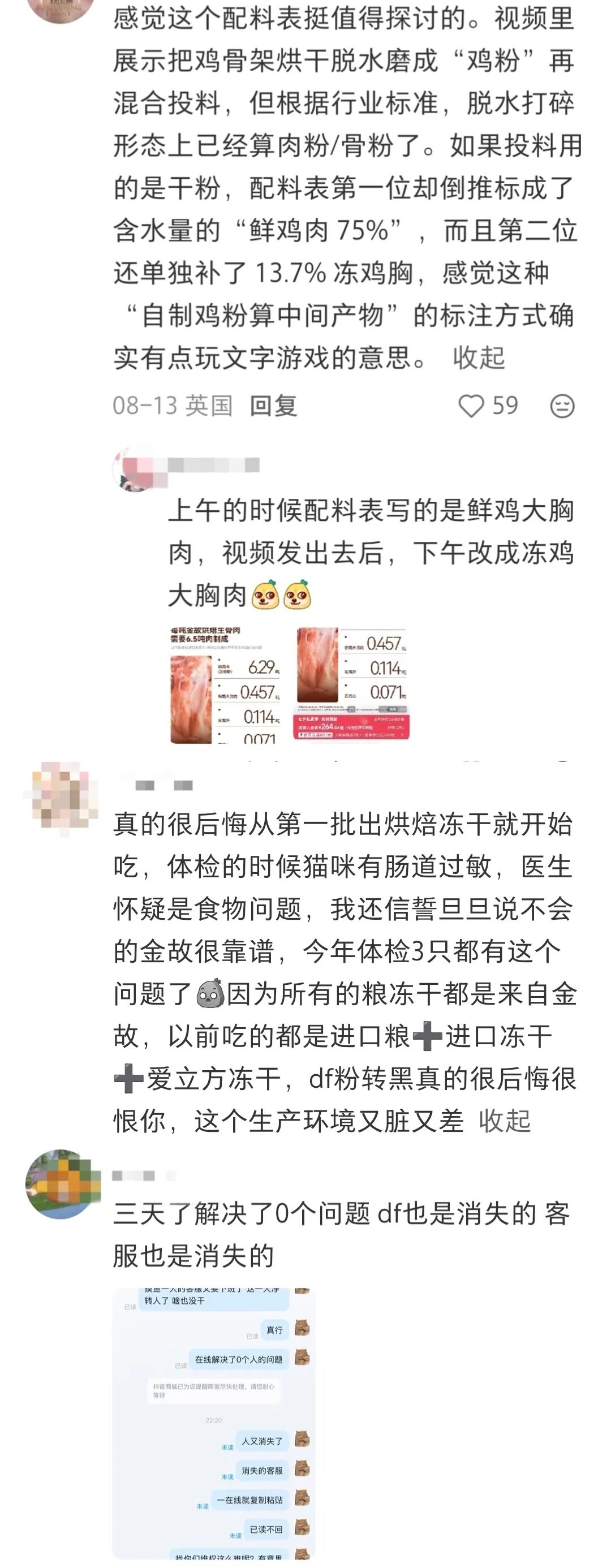
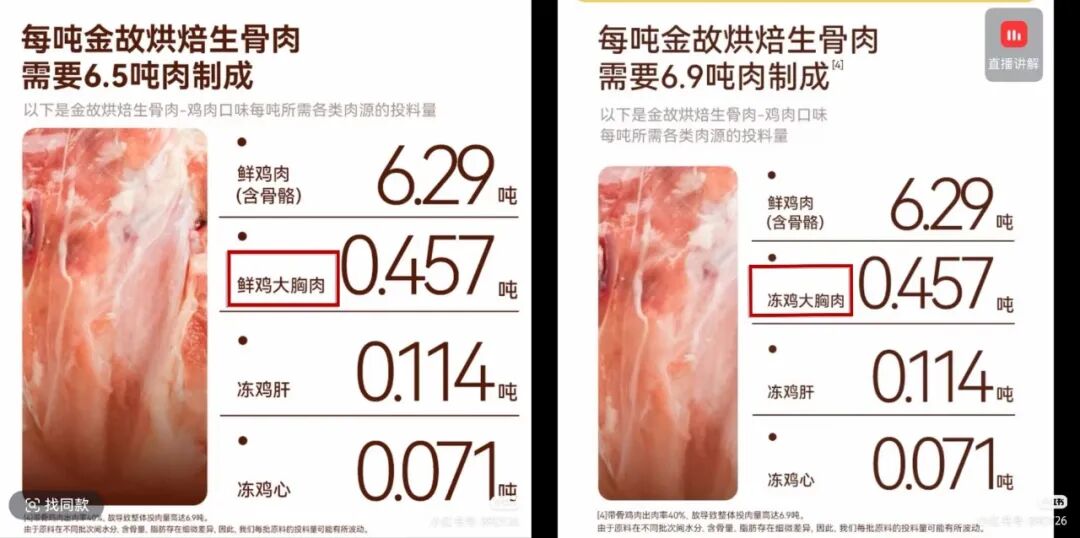
(Comparison of ingredient lists before and after the public opinion storm)
The public opinion field also showed obvious differentiation. Based on the fan stickiness accumulated from Deng Feng's personal blogger persona, many core fans chose to understand, believing that "it is inevitable that there will be mistakes in the factory, at least the attitude of rectification is sincere"; but most ordinary consumers have lost their patience, and the discussion has spread from "whether GoldenTales cat food is edible" to "whether internet-famous pet food can still be trusted", and even the voice of "rejecting all pet food created by internet celebrities" has appeared.
Under the impact of public opinion, on August 24, GoldenTales publicized the third-party test results of the mousse can, which showed that it was qualified. However, the core involved product this time is cat food, and GoldenTales's move is quite suspected of avoiding the key and focusing on the trivial, which in turn deepened consumers' doubts.
Pet bloggers launching high-priced pet food becomes prevalent, how to ensure quality under traffic dividends?
In recent years, it has become a trend for pet bloggers to launch their own pet food, with clearly divided factions.
The first category is pure traffic bloggers like Deng Feng who cross-border to create pet food brands, relying most on the fan effect. A typical example is the dog training blogger "Mingliang and Dogs", who became popular with 15 years of dog raising experience and the persona of daring to tell the truth, and then founded a dog food brand with the same name; there is also the blogger "Congming Youmiao meao" who has seven cats, diverting the private domain traffic accumulated in the early stage to the live broadcast room, and founded the cat food brand "Xinxin Xiangrong"; the blogger "Miaofansi Laowang" gathered fans through the homely and down-to-earth operation, and founded the cost-effective cat food brand "Miaofansi".
The second category is founders with professional identity endorsement, focusing on knowledge-based personal setups. "Veterinarian Zhang Xu" relied on 21 years of clinical experience to establish a pet food brand with the same name; "THE RAWMEAT Chef", a well-known pet popular science influencer known as the first person of raw meat in China, founded the cat food brand "Purrja!".
The third category is pet food brands created by pet rescue teams for self-sustainment, attracting attention through public welfare attributes. Blogger "Yang Wengui" accumulated traffic by recording the daily life of rescuing stray dogs, and then founded the brand "Laofengyang", saying that profits would be used to support the rescue station; "Qiqi Manor" also started from the stray animal rescue public welfare project, and launched its own pet food after accumulating audiences through short videos.
There are also dog food brand "Meiyi Tianqi" founded by dog training blogger "Pan Hong", cat food brand "Gaoyejia" founded by cat raising blogger "Peng Han", etc. The camp of internet-famous pet food has begun to take shape.
Although the brand directions are different, their underlying strategies are interlinked. In the early stage, they continuously cultivate fans through short video content and the blogger's personal persona, converting fans' love for pet IP into expectations for products. After the product is launched, the blogger's large account is responsible for promoting products, and the brand account undertakes conversion. Some bloggers also let their own cats and dogs attract users' attention and stay in the live broadcast room, and reduce consumers' decision-making threshold and increase the willingness of fan users to actively share unboxing experiences by sending trial packs, publicly releasing test reports, and giving peripheral gifts with orders.
On the product side, almost all these internet-famous brands avoid the red ocean of traditional extruded cat food, and focus on high-premium niche categories with high unit price and large gross profit margin such as baked food, staple freeze-dried food, and raw meat food. GoldenTales started from raw meat food, and gradually expanded to original cut freeze-dried food and baked food; Gaoyejia focuses on high-protein formula; Veterinarian Zhang Xu focuses on prescription food and functional products.
According to the "2025 White Paper on China's Pet Industry", the scale of China's pet economy has exceeded 3 trillion yuan, of which pet food accounts for about 554 billion yuan, making it the core sector with the highest proportion. At present, when pet consumers choose staple food, "good nutritional content", "clear and transparent formula" and "safe ingredient source" have become the main considerations, while the influence of price and brand popularity has relatively declined. This change in consumption trend just gives internet-famous pet food room to break through.
From the perspective of market pattern, the market share of local pet food brands has increased to 71% in 2025. Among them, internet-famous brands rely on the traffic advantage of online channels to quickly seize share in the mid-to-high-end niche tracks, especially in high-premium categories such as baked food and staple freeze-dried food, the growth rate of internet-famous brands far exceeds that of traditional large factories.
Consumers are willing to pay for internet-famous pet food, essentially paying for the "trust premium". On the one hand, the emotional goodwill brought by the founder's pet-loving persona reduces the user's decision-making cost; on the other hand, differentiated products such as raw meat food and baked food meet the demand of young pet owners for "scientific feeding", and the price is 30%-50% lower than that of imported brands of the same type.
But for this type of brand audience, what consumers buy when making decisions is not just a bag of pet food, but also the recognition of the founder's pet raising concept and the yearning for the state of the blogger's own pets.
This kind of trust built on personal IP is extremely fragile. Internet celebrity traffic can bring the brand to a relatively high starting point, but whether it can stand high and stably ultimately depends on the quality.
Not only GoldenTales, almost all internet-famous pet food brands cannot avoid the hurdle of quality control. "Gaoyejia" was once trapped in disputes over nutrition labels and test data in the early stage, and the high-protein index promoted had deviations from the third-party test results; in a factory inspection video of "Miaofansi", the raw materials that fell on the ground were directly pushed back into the machine with a shovel, and the dirt on the equipment was clearly visible; the factory of "Purrja!" was once exposed by netizens to be suspected of using expired raw materials, and the reissued quarantine certificate was later found to be inconsistent with the raw material origin in the promotion; many prescription foods of "Veterinarian Zhang Xu" were tested by review bloggers and pointed out that the raw materials were falsely labeled, and the professional persona accumulated for many years was damaged...
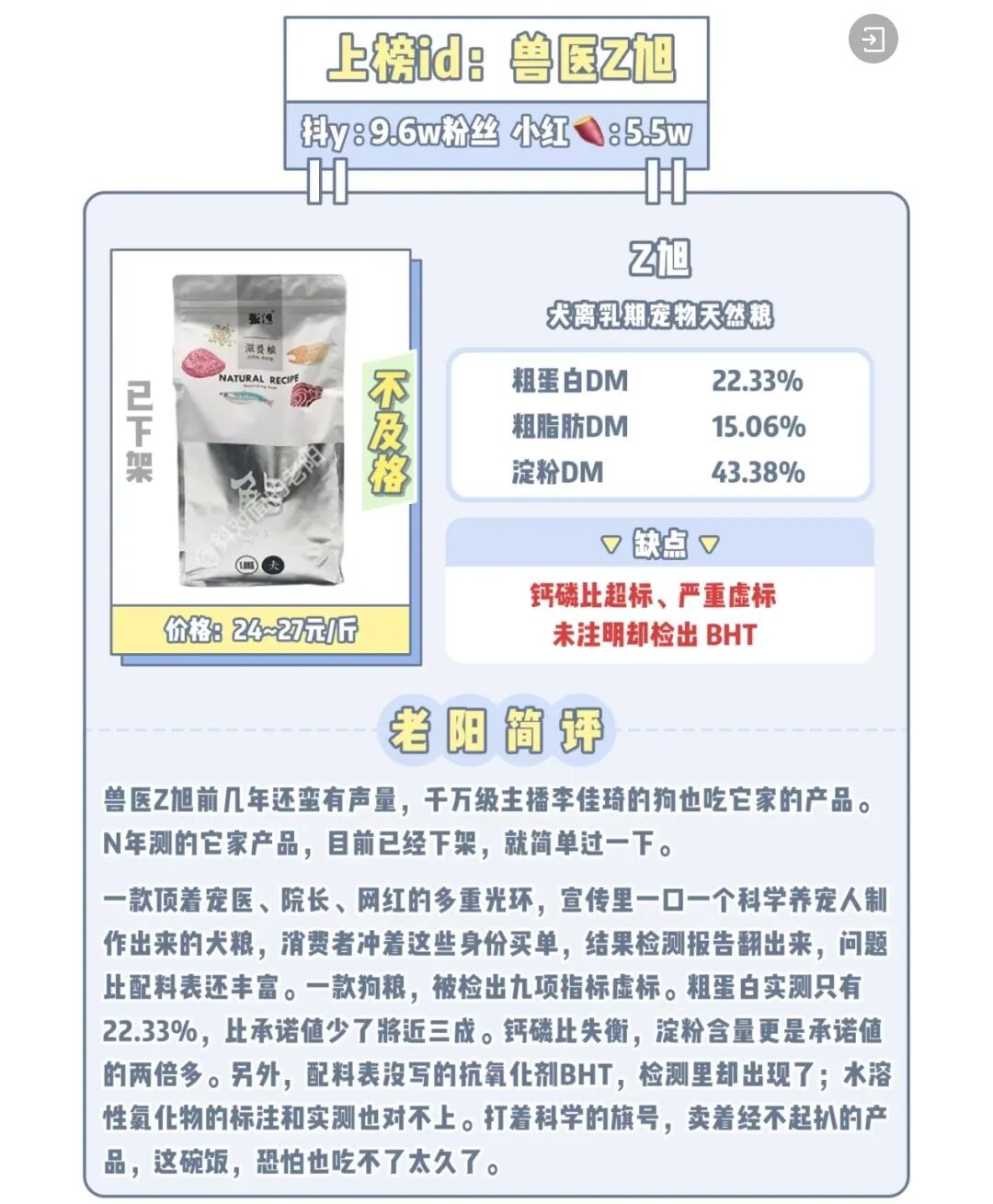
(Source: Laoyang Opposite)
In the early stage of brand establishment, these quality control problems may be resolved gently through emotional connection. After all, at that time, the brand volume was small and the users were basically fans. However, with the expansion of the user group, pure brand users attracted by the ranking list and product promotion content will put forward stricter requirements. At the same time, pet food is, after all, something that pets eat, which is directly related to the health and even life of cats and dogs, so consumers' tolerance threshold is much lower than that of other products. Quality control issues are destined to be a necessary test for internet-famous pet food to move from the explosive period to the stable period.
At the same time, quality control is often deeply bound up with the personal persona of internet-famous bloggers. If the founder is reliable, users will default that the product is reliable; once there is a problem with the product, users will naturally rise to the doubt about the founder's character. In the GoldenTales oil-stained cat food incident, many fans spoke up for Deng Feng: "If you want to talk about cat food, just talk about cat food, how can you involve the person himself". But this is precisely the fate of internet-famous brands: if you sell goods by persona, you have to bear the corresponding trust backlash.