Why is a vitamin brand worth 1.5 billion US dollars?
Behind America's best-selling health supplement brand lies a bold, unconventional and highly creative financing story.
It is not common for banks to take the initiative to reach out and offer to raise more than $400 million in debt financing for an enterprise, helping the founder regain almost all external equity. But in August 2025, 10 bankers from Capital One sat down at the negotiating table with MaryRuth Ghiyam, founder of Los Angeles-based organic supplement brand MaryRuth’s, and provided her with exactly such help.
"They really went all out to help me," said the 41-year-old Ghiyam, who currently serves as the company's co-CEO. The other co-CEO is Jonathan Klein, who previously served as chief legal officer for five years and was promoted to the position in April 2025.
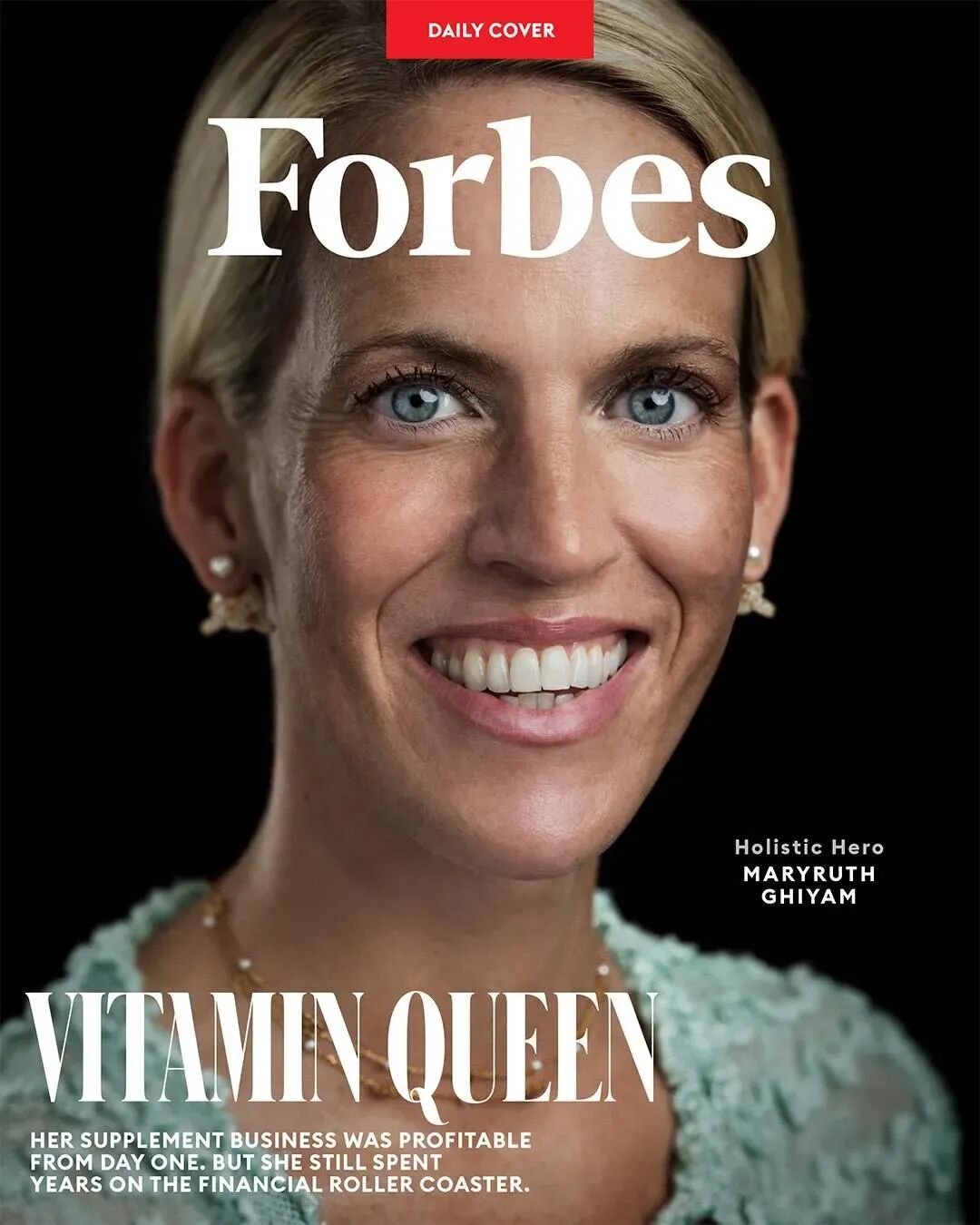
Image source: ETHAN PINES FOR FORBES
01
Ghiyam is no stranger to Capital One. After founding the company in 2014, she spent thousands of dollars on a Capital One Spark credit card to cover early operating expenses.
MaryRuth's mainly sells liquid vitamins, gummies and more than 300 other forms of supplement products. Ghiyam said the company has been profitable since the first day of its establishment. At present, MaryRuth's generates about $600 million in revenue in the past 12 months, with an EBITDA of about $125 million and a profit margin of about 20%. Even after deducting the $420 million debt raised by Capital One for the company, a large part of which was funded by Capital One itself, Forbes estimates that the company's valuation can still reach at least $1.5 billion.
"My face is printed on the bottle. Most consumers think I'm a virtual avatar or cartoon character, and I actually like that. I also use this point to tell stories when raising funds," Ghiyam said. "I always say, 'This brand has never been my one-man show.' Users don't even know I exist."
The transaction with Capital One was completed in October 2025, with the loan maturity date set for 2030. Through this deal, the former holistic health coach and her family were able to hold approximately 97% of the company's equity.
Under this equity structure, Ghiyam should have become a new billionaire with a net worth of about $1.5 billion, but after she separated from her husband David Ghiyam two years ago, they signed a postnuptial agreement: if MaryRuth's is sold, David is entitled to half of the proceeds from the sale; correspondingly, if David sells his AI spiritual coaching business David AI in the future, Ghiyam is also entitled to half of the proceeds. Ghiyam founded MaryRuth's before marriage and gave part of the equity to her mother Colleen, who served as the company's first chief financial officer in the early years. Colleen still holds some shares, which Forbes included in its calculation of Ghiyam's total shareholding. Forbes estimates that Ghiyam's personal net worth is about $750 million.
For years, strong profitability has made MaryRuth's a coveted acquisition target. Long before Capital One approached her, Ghiyam had rejected nine-figure offers from multiple food conglomerates and investment institutions, including Blackstone.
"When you have profits, you have choices," she said.
02
Ghiyam's entrepreneurial journey has not always been financially comfortable. When she founded MaryRuth's, she also took on $700,000 in personal debt owed by her mother. She did not pay herself a salary for nine consecutive years.
"It hasn't been easy along the way," she added. "It's been a long journey."
Ghiyam grew up in Somerville, New Jersey. Her father was a lawyer who ran a lumber and wood products processing plant, and he died when she was seven years old. After that, her mother took over the family business and operated it until the company went bankrupt during the real estate market crash in the late 2000s, accumulating a lot of personal credit card debt during that period.
In March 2013, Ghiyam opened a private holistic health clinic in New York, before which she worked as a real estate agent at Douglas Elliman Real Estate for several years. She was a big advocate of liquid supplements at the time, because taking capsule products on an empty stomach can easily cause nausea. But at that time, there were no high-quality liquid supplement products either in offline stores or online channels, so she decided to develop and produce them herself.

Her original idea was to launch two large bottles of liquid vitamins, one morning formula and one evening formula, suitable for the whole family. "Drink a small cup in the morning and a small cup before going to bed," Ghiyam introduced.
Her first product was a raspberry-flavored morning liquid multivitamin, which was launched on Amazon in the fall of 2014. Ghiyam said this product "can be as ubiquitous and available anytime, anywhere in the world as Coca-Cola. Just like Arm & Hammer baking soda can reach 95% of American households, it should also find its way into the refrigerator of every household."
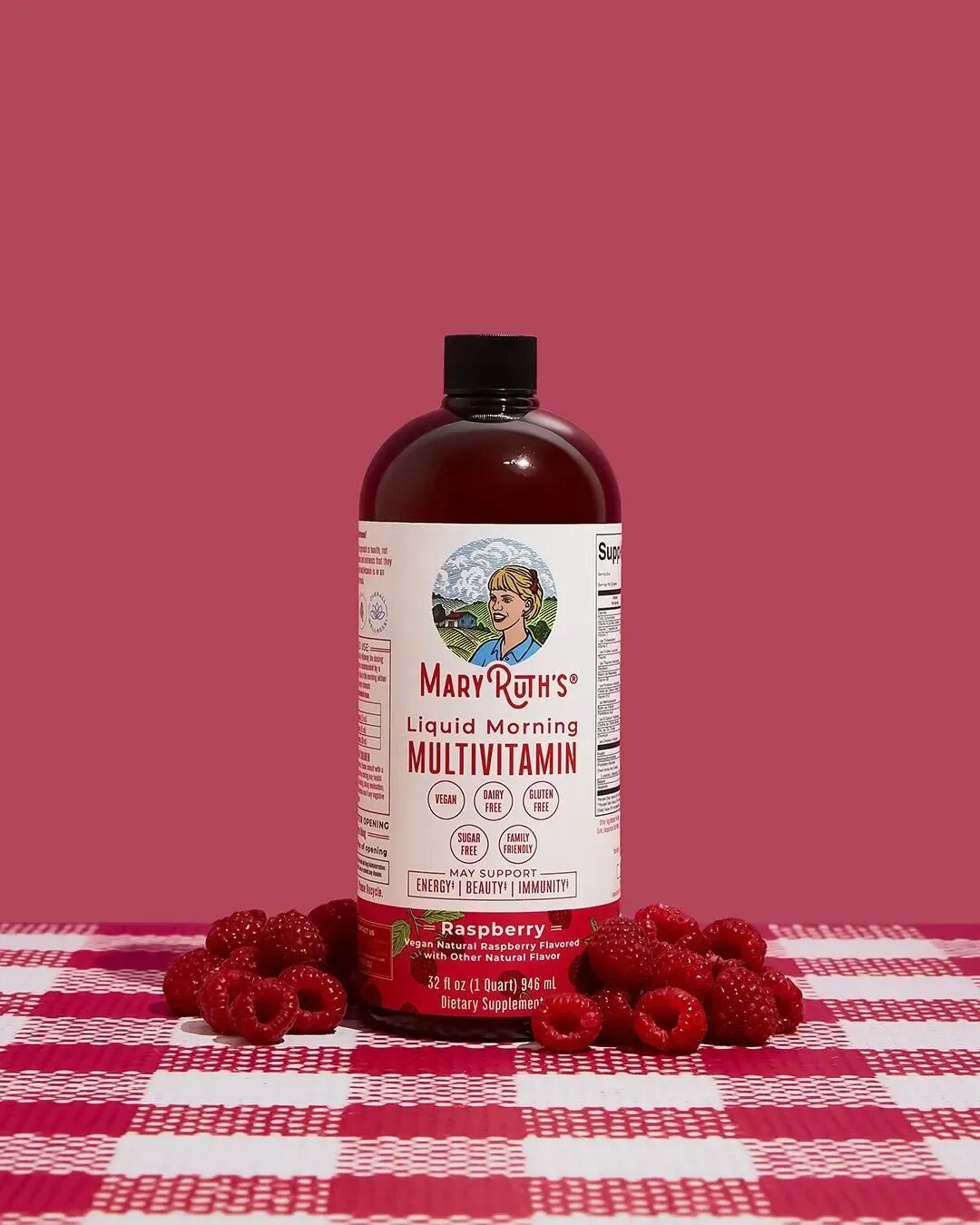
Health and Wealth: MaryRuth's product portfolio covers liquid vitamins, gummies and more than 300 different forms of supplements. Image source: MARYRUTH ORGANICS
03
Ghiyam said that in the early days of the brand, she relied entirely on her Capital One credit card with a $50,000 limit to maintain the company's cash flow — sometimes the cash flow even went negative. The reason was that although the brand itself was profitable, contract manufacturers required prepayment for goods, and individual orders from national retailers could reach hundreds of thousands or even millions of dollars, while payment collection often took several months.
Three years after founding MaryRuth's, Ghiyam paid off her mother's debts, moved from New York to Los Angeles, and gave birth to her second child. She carried an extremely heavy burden during that period.
In 2018, Ghiyam reinvested all her profits back into the company, describing her state at the time as "penniless". It was then that her contract manufacturer in Texas offered to invest $1 million in exchange for a 10% stake in the company, and she was very tempted at the time. But she ultimately rejected the offer — she saw that the employees of this factory had a smoking habit, which she believed was inconsistent with the brand's philosophy. At that time, the company's annual sales were $11 million, with EBITDA close to 20%.
Ghiyam called the next three years the "toughest days", during which she gave birth to a pair of twins. By 2019, the sixth year of her entrepreneurship, MaryRuth's annual revenue reached $23 million. Then the pandemic hit, the number of people buying supplements and shopping online hit a record high, and the company's sales nearly tripled directly to $84 million.
But Ghiyam "still felt that the company had not yet gained a firm foothold". She had no idea about valuation logic at the time. "We didn't even think about valuation multiples at all," she recalled.
04
In 2021, everything changed. Fort Worth-based TPG Capital approached Ghiyam, when her company's annual sales had grown by more than 60% to $135 million. According to her recollection, TPG's deal valued the company at $250 million, 1.85 times sales.
"We didn't even hire a financing advisor at the time," Ghiyam recalled.
After that, she received more offers, and the company's valuation doubled. She recalled that Boston private equity firm Summit Partners valued the company at about $500 million, and Los Angeles-based Butterfly Equity gave the same valuation. New York-headquartered alternative asset management firm Blackstone made a higher offer of about $525 million. But Ghiyam rejected Blackstone, because according to the other party's transaction plan, she "had to step down on the first day of signing". She originally planned to sign agreements with Summit and Butterfly, selling 20% of the shares to each of them, but Summit later withdrew from the transaction. In August 2021, Ghiyam finally chose to cooperate with Butterfly, which obtained approximately 40% of the shares, and the final valuation of the company in the transaction was about $400 million.
Ghiyam said these investors "pursue perfection in everything", and driven by them, the company's annual sales more than doubled by 2023, exceeding $270 million. "They are very strict and never really praised me for doing a good job, but because of that, I gave it my all," Ghiyam recalled.

Only two years after the deal was completed, Butterfly Equity, which has invested in Qdoba restaurant chain, mini-carrot processor Bolthouse Fresh Foods and Duckhorn Vineyards, told Ghiyam that they "must sell their equity" and "return money to investors" — according to Ghiyam, a claim that Butterfly Equity denied.
Butterfly Equity said the firm sought an exit because MaryRuth's performed strongly and potential buyers had expressed acquisition interest, so it decided to explore transaction possibilities. Even by the standards of the private equity industry, where the typical holding period is 3 to 5 years, this investment was not held for a long time.
Just a week before Ghiyam launched the company's sale process, she and her husband finalized their divorce. Then the roadshow started, the company's valuation doubled again, and acquisition offers poured in, reaching valuations of $800 million and $900 million.
She recalled that initially Ghiyam and the board decided to sell the company to Boston-based Advent International, but the $94 billion buyout firm ultimately did not submit a final offer (Advent International declined to comment). Ghiyam recalled, "They didn't believe we could hit the performance targets we promised, but in reality we far exceeded expectations." MaryRuth's originally expected EBITDA to reach $89 million in 2025, but the actual figure exceeded $100 million for the first time that year.
"Sometimes being rejected is a kind of protection," Ghiyam said. "We are an extremely profitable company, but the sale process still failed."
Butterfly Equity continued to push for the exit. Eventually the two sides reached an agreement: New York-based King Street obtained less than 3% of the company's shares, and Butterfly Equity converted $50 million into shares of the King Street fund. Ghiyam also increased her shareholding, eventually holding 97% of the equity.
05
However, this rollercoaster financing journey is not over yet.
Soon, Paul Baisley, managing director of Capital One's commercial banking division responsible for the food and beverage business, contacted Ghiyam. Eventually, MaryRuth's book debt reached $420 million, but given the company's strong profitability, repaying this debt will not put too much pressure on it.
Baisley's division has provided a total of $7 billion in debt financing to 140 different borrowers. He said MaryRuth's impressed him, and among private consumer goods companies, the company's performance "actually outperformed large listed peers".
"I admire MaryRuth and her business approach, which is very data-driven. She is very good at spotting emerging growth trends and keeping up with the direction of consumer demand," Baisley said. "If consumers start to embrace creatine, she can immediately develop creatine products; if people prefer the gummy dosage form, she can quickly follow up; she is also very familiar with the liquid vitamin category. She is extremely good at tapping into these new growth points."
Nowadays, "spotting emerging growth trends" has become a concept that Baisley's team often mentions when communicating with other entrepreneurs. "We have been with her since the very beginning of her entrepreneurial journey," Baisley said. "We believe she still has huge room for development, and everything is just getting started."
Ghiyam might even appear in Capital One's commercial advertisements.
But even so, it may not be enough to let Ghiyam rest easy. She may already be ready to completely give up control of MaryRuth's.
"The current situation is worrying. Today, other people only need 10 employees and two years to replicate a company like ours," Ghiyam said. Her remarks clearly refer to the recent blockbuster sale of Grüns — in April this year, Unilever announced that it would acquire 80% of the brand for about $900 million, with a transaction valuation of about 4 times its sales.
Grüns was founded in 2023 by Chad Janis, who was 31 at the time. Janis previously worked at private equity firm Summit Partners, then resigned to pursue an MBA at Stanford University, and founded the gummy supplement brand during his studies. Currently, Grüns' annual revenue is about half that of MaryRuth's. Forbes estimates that after the deal completed in June, which valued the company at more than $1 billion, Janis took home about $300 million after tax; most of the remaining 20% of the shares that Unilever has not yet acquired also belong to Janis (Unilever mentioned in a recent filing that it has taken on debt to pay for the future acquisition of the remaining shares).
Ghiyam said Janis participated in the due diligence of MaryRuth's when he was on the Summit team in 2021, before founding Grüns. Janis declined to comment.
This experience has been weighing on Ghiyam. She said she used to want to own the company 100% and keep it private for a long time. Now in the middle of divorce proceedings, she is considering launching the MaryRuth's sale roadshow again. "I might have to sell the company," she said, "but I will still stay in the company to work."
Originally published on:
https://www.forbes.com/sites/chloesorvino/2026/08/27/how-the-founder-of-maryruths-vitamin-supplements-built-a-billion-dollar-business/
This article is from the WeChat official account "Forbes" (ID: forbes_china), author: Chloe Sorvino, translated by Lemin, authorized for release by 36Kr.