Insights for the Industry from Insta360's Financial Report
Insta360 is not only adept at manufacturing cameras, but also skilled at creating viral public topics.
Recently, the financial report of Insta360 has drawn nationwide attention. This is likely the most contrasting financial report of this year: the operating revenue hits 5.517 billion yuan, while the profit attributable to shareholders of the parent company is only 30 million yuan.
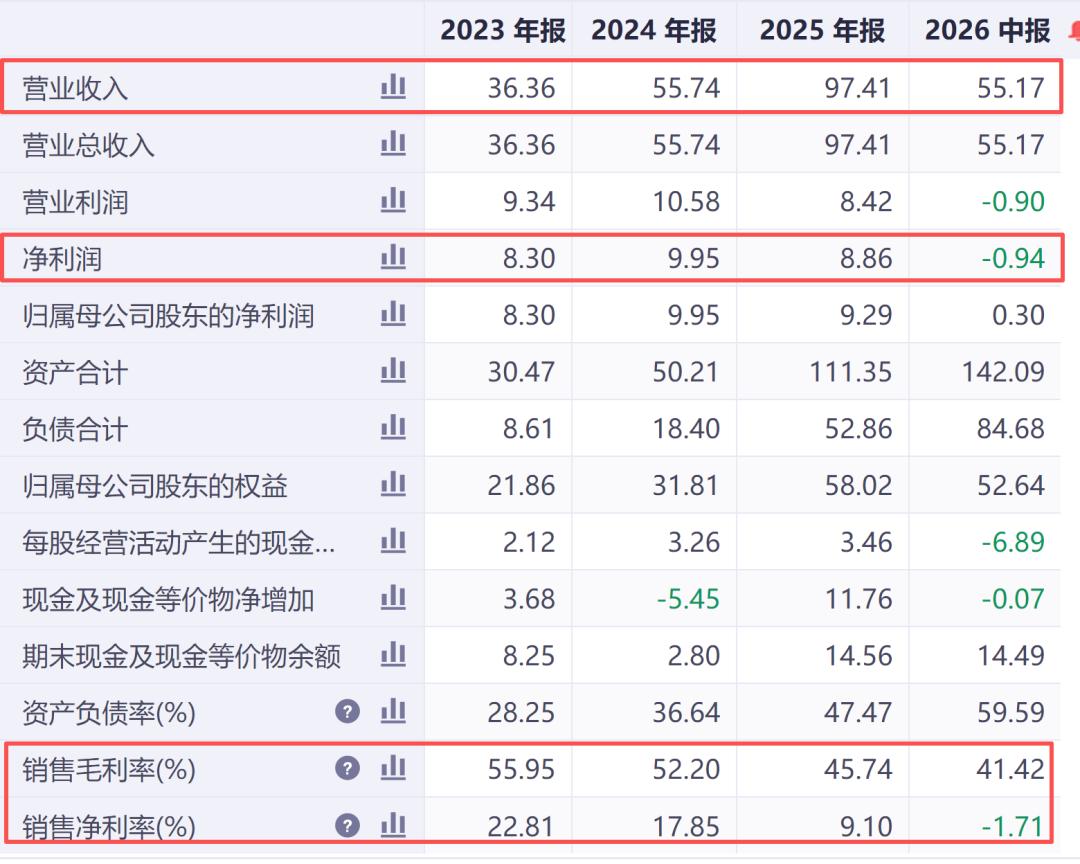
Data source: TongHuaShun
Recently, Insta360 Innovation released its 2026 semi-annual report, with the operating revenue reaching 5.517 billion yuan in the first half of the year, up 50.29% year on year; the net profit attributable to the parent company was 30.4073 million yuan, down 94.15% year on year; the non-recurring profit and loss adjusted net profit attributable to the parent company was -15.3392 million yuan.
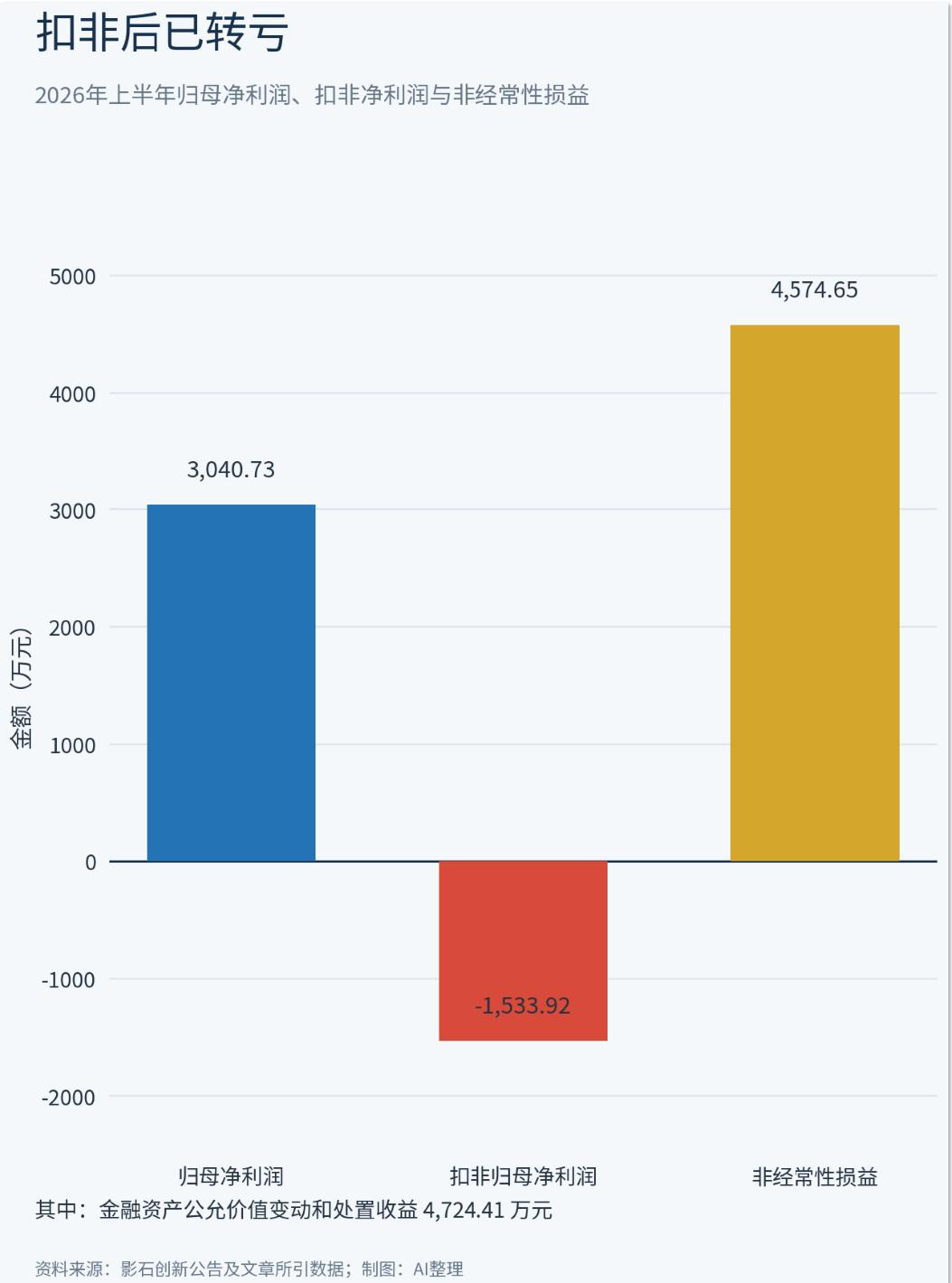
The remaining profit on the books is mainly because among the 45.7465 million yuan non-recurring profit and loss in this period, the fair value change of financial assets and disposal income amounted to 47.2441 million yuan.
The revenue growth rate remains strong. The 5.517 billion yuan revenue represents a 50.29% year-on-year increase. Against the backdrop of the overall sluggish global consumer electronics market, this growth rate is truly hard-earned. What deserves more attention is the performance of the domestic market, where the domestic revenue in the first half of the year surged by 98% year on year. The domestic revenue almost doubled, indicating that Insta360's penetration speed in the home market far exceeds that in overseas markets, and its localized operation is accelerating to deliver results.
In addition, its gross profit margin of over 40% is also at a relatively high level across the entire capital market
The cumulative global shipment volume has exceeded 10 million units. It took Insta360 less than ten years to achieve this milestone. For a company that started from the panoramic camera niche track, reaching this scale means it has successfully turned a niche product into a mass consumer good, so people from all walks of life naturally pay more attention to Insta360 and hold higher expectations for it.
Various data show that Insta360 has entered a more challenging stage, it needs to maintain the price and market share of its core categories, invest in R&D, production lines and channels for new categories, convert online distribution to offline experience for overseas expansion, and advance the procurement and stock preparation of storage chips before profits are realized.
For Insta360, it needs to deal with several difficult problems at the same time in the next stage: maintaining the price and share of panoramic cameras, the revenue and gross profit of new products such as drones and gimbals, the positive return of inventory and operating cash flow, the unit economics of overseas direct sales and offline channels, as well as the actual impact of Sino-US intellectual property disputes.
The panoramic camera market has reached its upper limit
The core contradiction for Insta360 is that it cannot only stick to the single market of panoramic cameras.
In 2025, the revenue from consumer-grade smart imaging equipment reached 8.516 billion yuan, accounting for 88.05% of the main business revenue; the overseas main business revenue was 6.676 billion yuan, accounting for 69.02%. Citing IDC data, the company stated that its shipment share of panoramic cameras exceeded 65% in 2025, and the share of detachable action cameras exceeded 50%.
A high market share does not necessarily mean no growth, but it means that growth increasingly depends on product upgrading, price adjustment capability and channel expansion; if any link is weakened by competitors, the original category will need more R&D and marketing expenses to maintain its position.
The figures of 2025 have already reflected this defense cost.
The company's operating revenue reached 9.741 billion yuan, a year-on-year increase of 74.76%, but its net profit attributable to the parent company decreased by 6.62% year on year to 929 million yuan, and the overall gross profit margin dropped from 52.19% to 45.74%. Sales expenses were 1.679 billion yuan, up 103.31% year on year; R&D expenses were 1.530 billion yuan, up 96.95% year on year; the two items together accounted for 32.94% of revenue, 4.20 percentage points higher than that in 2024.
In the first half of 2026, operating costs increased by 80.46%, sales expenses increased by 61.96%, and R&D expenses increased by 79.26%, all faster than the 50.29% revenue growth rate; the total of sales and R&D expenses reached 2.024 billion yuan, accounting for 36.68% of revenue.
Price competition has entered Insta360's familiar core panoramic camera market. On August 12, Insta360 released the X6 with a launch price of 3999 yuan; the next day, DJI released the Osmo 360 II, with the standard kit priced at 3299 yuan. The two products adopt the 1/1.1-inch square sensor of the same specification level, both support 120-megapixel panoramic photos, with a price difference of 700 yuan.
This means that the product differentiation that Insta360 established relying on the panoramic camera category in the past is facing direct competition from DJI.
For a company whose overall gross profit margin has dropped from 52.19% to 45.74%, if it maintains market share by cutting prices, the gross profit margin will continue to face pressure; if it keeps the price unchanged, its products, algorithms and channels must continuously provide differentiation that users are willing to pay for.
The choice of channels also comes with costs. In 2025, Insta360's online revenue was 4.397 billion yuan, with a gross profit margin of 50.72%; offline revenue was 5.274 billion yuan, with a gross profit margin of 42.21%. Offline revenue has exceeded online revenue, but the gross profit margin is 8.51 percentage points lower.
The company is expanding its sales network to more than 10,000 global retail points. The directly-operated store near Times Square in New York is planned to open in the third quarter of 2026, and stores in Tokyo and Munich are also in the planning stage; its logic is not just to sell goods, but also to let consumers understand how to use panoramic imaging, editing and AI functions.
This can lower the experience threshold of new products, but it also means that store leasing, staff training, display, after-sales service and localized content will become continuous costs. When online customer acquisition and offline education are both strengthened, sales expenses are difficult to decline naturally.
Insta360 is also expanding its sales organization. The public recruitment page in August 2025 shows that among Insta360's 619 positions, 280 are technical positions and 146 are sales/marketing/e-commerce positions; among DJI's 341 positions, 226 are technical positions.
This also reflects from one side that Insta360 is not only recruiting people for R&D, but also investing in channel and market capabilities. The high market share of panoramic cameras has brought it brand value and scale advantages, but to a certain extent, it has also increased the defense cost.
Challenges in the drone industry
Competition in the panoramic camera industry has shifted from hardware capabilities such as optics and sensors to the "hardware + algorithm + software" ecosystem, and further moved towards the "hardware + algorithm + data + content ecosystem".
For Insta360, drones, gimbals, audio, AI editing and custom chips are all regarded as strategic resource investment directions.
Liu Jingkang disclosed in the shareholder letter of the 2025 annual report that the company made a strategic investment of 762 million yuan that year, covering two drones, gimbal cameras, wireless lapel microphones, other new categories and three custom chips. This is not just adding several new SKUs, but an attempt to extend panoramic imaging, stitching, anti-shake, automatic editing and community distribution to more hardware entrances.
The problem is that technical adjacency does not mean that capabilities can be directly reused commercially. Panoramic drones are still in the market education stage, with large investment in R&D, production line construction and channel expansion, and have not yet formed scale effects.
The Luna Ultra gimbal camera has been launched in China, North America, Europe and the Asia-Pacific market since June 2026, and is still in the stage of market introduction and capacity ramp-up.
This is where Insta360's pressure lies: it must expand outward, but every new business line it expands will first increase expenses, inventory and channel investment.
In the past, the company entered the market with panoramic cameras, solving the problem of how to edit and share content after shooting; after entering the drone and gimbal track, it also needs to meet the requirements of flight, control, reliability, product safety, after-sales service and compliance in different national markets.
The technology, supply chain and service system must be completed synchronously, and the hardware advantage of a single product cannot replace this set of capabilities.
The supply chain is amplifying the upfront cost of expansion. In the first half of the year, the company's strategic procurement amount for storage chips was close to 2 billion yuan; the ending inventory was 6.212 billion yuan, an increase of 3.293 billion yuan compared with the end of 2025, with a growth rate of 112.82%; the net cash flow from operating activities was -2.761 billion yuan, compared with 241 million yuan in the same period of last year, and 1.386 billion yuan for the whole year of 2025.
The company attributed the cash outflow to the procurement of chips and other materials and the stock preparation for new products. Short-term borrowings also increased from 123 million yuan at the end of the year to 1.061 billion yuan, and contract liabilities increased to 581 million yuan.
Strategic stock preparation is reasonable. When chip prices continue to rise or supply becomes tight, locking raw materials in advance helps to ensure delivery and control costs. Insta360 also mentioned in its 2025 annual report that IC chips, lens modules and structural parts account for a high proportion of the main business cost, and some core chips come from international brands such as Sony and Ambarella, with low substitutability.
When the price of important raw materials falls and the reserve is large, there will be a risk of inventory depreciation. In addition, consumer-grade smart imaging equipment is mainly produced by external processing, and the capacity, quality and the ability to switch suppliers are also constraints when expanding new categories.
This is exactly where the industry contradiction lies. Smart imaging is not a track that can be extended infinitely just by replacing sensors and adding AI functions. For hardware manufacturers to embed algorithms into devices, they must simultaneously manage power consumption, heat, battery life, chip platforms, lenses, production and after-sales services.
To turn panoramic content into products that ordinary consumers are willing to use, they must also invest in software, creation tools and offline education.
The change Insta360 needs to make is not to expand from cameras to drones, but to shift from the single-point product advantage that the company is good at, to the competition of a set of cross-product, cross-channel and cross-regional delivery capabilities.
The market is re-evaluating Insta360's growth story
After Insta360 went public, the capital market once priced it as an "entrance for a larger category" rather than a "panoramic camera company". The company's issue price was 47.27 yuan, the closing price on the first day of listing on June 11, 2025 was 177 yuan, and the highest intraday price on September 3, 2025 reached 377.77 yuan.
As of the latest trading day August 28 before August 29, 2026, the closing price was 119.30 yuan, down 66.11% from the highest closing price of 352 yuan on August 28, 2025, but still 152.38% higher than the issue price.
This round of decline is not only due to the unsatisfactory semi-annual report. In June 2026, about 227 million restricted shares of the company were lifted. The lifting of restrictions does not mean reduction of holdings, nor does it mean that the stock price will inevitably fall, but it significantly increases the supply of tradable shares, and makes the market more sensitive to changes in revenue quality, profits and cash flow.
In the coming period, Insta360 is facing legal pressure at the same time.
The 337 investigation initiated by GoPro in the United States made a final ruling in February 2026. The US International Trade Commission determined that Insta360 violated Section 337 in terms of GoPro's D'435 design patent, but did not violate the two invention patents of '840 and '052, and issued a limited exclusion order and a cease-and-desist order.
Insta360 stated that its existing products can continue to be imported and sold in the United States. At present, both parties have filed an appeal against the relevant ruling, and the parallel litigation in the Central District of California has not resumed hearing.
The dispute with DJI covers links closer to product R&D and production. In March 2026, DJI filed a claim for ownership of 6 patents involving drone flight control, fuselage structure and image processing at the Shenzhen Intermediate People's Court.
After the Luna series was launched in the United States, the two parties sued each other in the Eastern District Court of Texas, filed applications for withdrawal on June 28 respectively, and the court withdrew the case the next day in a way of "without prejudice to substantive rights". The withdrawal did not make a substantive judgment on patent validity or infringement, and either party can sue again for the same claim.
In other words, these current legal pressures have not brought direct consequences, but they require the company to continuously allocate legal and management resources in new product launches, overseas channels, supply chains and R&D rhythm.
For Insta360, the three sets of figures that matter the most in its next