Why does F1, which has 24 races throughout the whole year, suffer huge losses just by skipping one race?
In 2026, F1 introduced a new set of racing regulations on the track that was supposed to further drive its growth. However, judging from its financial report, it has delivered a performance marked by declining figures.
Recently, Liberty Media, the parent company of F1, released its performance for the first half of 2026, and separately disclosed the operating results of its F1 business.
The financial report shows that F1's revenue in the first half of this year was 1.381 billion US dollars, down 15% from 1.629 billion US dollars in the same period of 2025; its operating profit dropped to 180 million US dollars from 265 million US dollars in the same period last year, with a decline of roughly 32%.
The most direct cause of the decline is the reduced number of races.
Liberty Media explicitly stated that F1 held 3 fewer races in the first half of 2026 than in the same period last year, which led to a 15% year-on-year drop in revenue. The figure was even more prominent in the second quarter: with 4 fewer races than the same period last year, F1's single-quarter revenue plummeted 38% directly to 764 million US dollars.
Affected by the situation in the Middle East, the Saudi Arabian Grand Prix originally scheduled for April failed to proceed as planned, and the Bahrain Grand Prix could not be held locally either, which was eventually relocated to the Sepang International Circuit in Malaysia. Liberty Media mentioned in its financial report that the reduced number of races has directly affected multiple revenue streams of F1, including media copyright, race promotion, sponsorship, and hotel hospitality services.
At the same time, 2025 itself was a special comparison base. Last year saw the release of *F1: Turbo Drive*, and the revenue related to the movie further lifted the performance of 2025.
Against this backdrop, the 15% year-on-year decline in revenue is regarded as a phased fluctuation under special circumstances. After the financial report was released, there was no obvious negative reaction on the stock price for the time being.
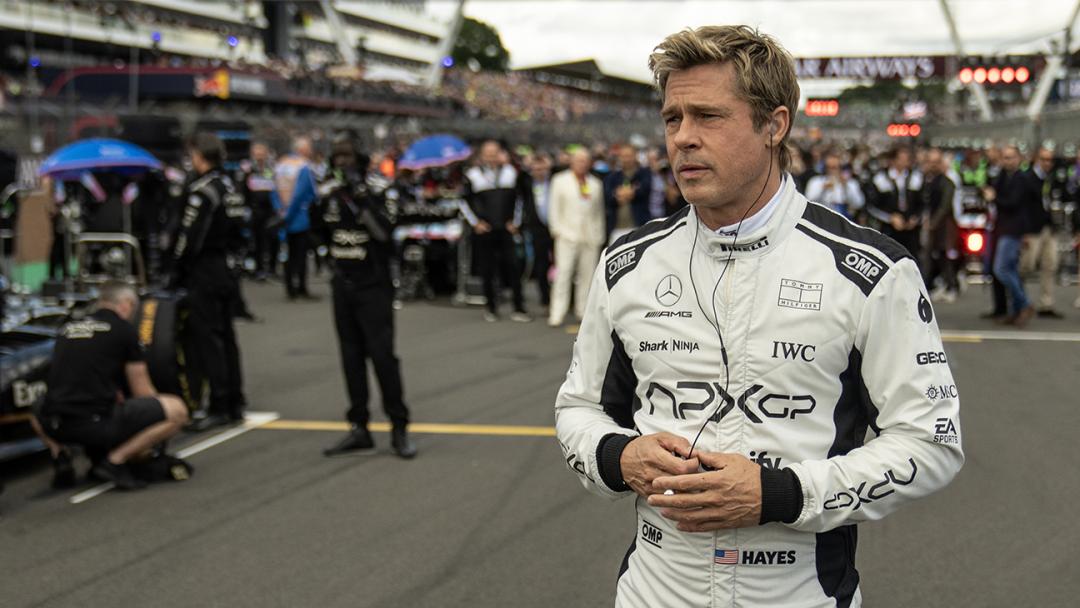
Still from *F1: Turbo Drive*
That being said, F1 is ultimately a global business, whose core products must be launched on schedule in different regions around the world. Once races are delayed or canceled, it will affect media copyright, race promotion fees, sponsorship rights and interests, tickets, hotel hospitality, logistics, as well as the revenue of event organizers.
Therefore, for F1, the race calendar is no longer just an event schedule, but a serious business risk management issue. The deeper F1's globalization goes, the more important the race calendar becomes, and geopolitical risks will naturally be reflected in its financial reports.
Having two Grand Prix events involved in the same season is undoubtedly a red flag worth paying attention to. Stefano Domenicali, CEO of F1, frankly admitted that if the situation in the Middle East continues to deteriorate, the possibility of the 2026 season ending in Europe cannot be ruled out, and potential alternative plans are already under consideration.
Facing such risks, the official body and all deeply involved parties have also pushed forward remedial measures to recover as much of the lost commercial value caused by uncertain factors as possible.
Race Relocation and the U.S. Market Strategy
As mentioned above, the Bahrain Grand Prix was rescheduled to the Sepang International Circuit in Malaysia, but it did not become a brand new "Malaysian Grand Prix". Instead, it continued to be held under the name of the Bahrain Grand Prix, with the official announced title being "Formula 1 Gulf Air Bahrain Grand Prix in Malaysia 2026", only changing its host location to Malaysia.
The host location of a race can be changed, but the event IP and commercial rights and interests do not necessarily need to be changed accordingly. Behind this operation is a very typical practice in sports business.
It is reported that Malaysia provides a mature F1 circuit and local event hosting conditions, while Bahrain continues to bear a considerable part of the event costs.
According to information disclosed by the Malaysian side, Bahrain will bear about 70 million to 80 million US dollars in fees related to the F1 hosting rights, retain the event name, corresponding commercial rights and interests, as well as relevant ticket revenue. Malaysia will provide the ready-made international circuit, local infrastructure and event hosting resources, and obtain spillover value brought by the event, including on-site consumption, tourism and city exposure.
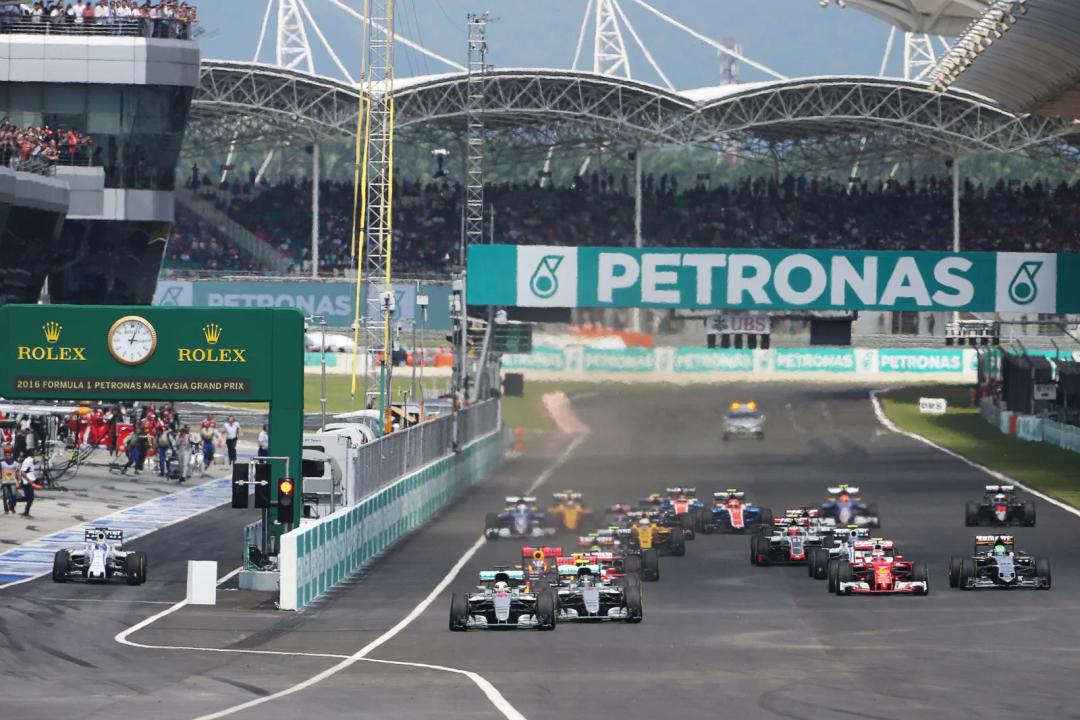
This "relocation" is also of extraordinary significance for Malaysia. Sepang has hosted F1 races since 1999 and withdrew from the race calendar after 2017. Now it returns in such a special way, showing an obvious "experimental" implication.
However, Malaysia may not be the future destination for F1. Domenicali has clearly stated recently that F1 will still target 24 Grand Prix races in 2027, with Portugal and Turkey returning to the calendar, while F1 is also looking for new opportunities in Africa and South America.
Of course, what F1 is facing is not just how to make up for the lost races this year — geopolitics is an uncertain factor that exists not only this year, but also in the future. The key question is how to find more certain growth drivers?
F1's answer is increasingly pointing to the United States. The certainty of the U.S. market can help F1 dilute the impact brought by uncertainties in other regions.
On August 20, U.S. investor Woody Johnson completed the acquisition of a minority stake in the Aston Martin F1 Team, and officially joined the team's board of directors as Vice Chairman. Johnson will not participate in the daily operation of the team, and his main task is to help the team drive commercial growth, especially expand its influence in the U.S. market.
In the sports industry, one of the most notable labels of Johnson is the owner of the New York Jets of the NFL, and he also holds a partial stake in Crystal Palace F.C. of the Premier League. His entry itself means the connection of multiple sports business systems, so this transaction is more like a form of commercial cooperation, and can also be regarded as Aston Martin using equity to purchase an opportunity to tap into the U.S. sports business market.
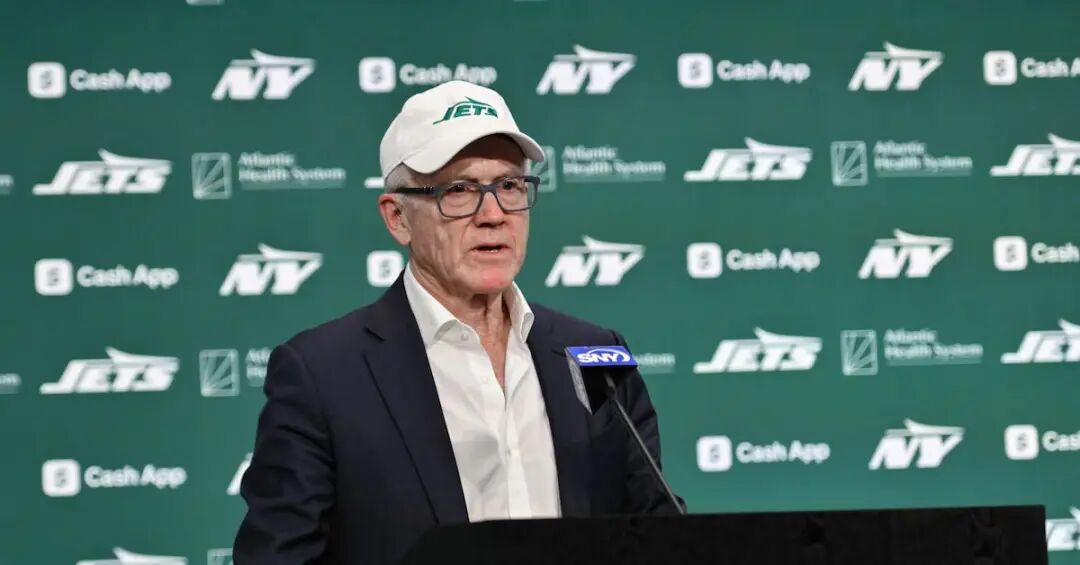
Woody Johnson
In addition, F1 has launched a global cooperation with Disney, to further roll out projects such as content, on-site experiences and co-branded products around Mickey & Friends, transforming the originally threshold-high race content into entertainment IP that can enter daily consumption scenarios, integrating content, products and offline experiences into people's daily lives.
After launching the copyright cooperation with Apple, Domenicali once emphasized that he hopes Apple can help F1 further enter American households and culture, especially to reach the younger generation.
When a sport truly goes mainstream, it does not necessarily mean that everyone can understand the races. Instead, it means that even people who do not understand the races can encounter it in their daily lives, and eventually become its consumers.
Looking back, whether it is the financial report or business expansion, only the successful hosting of races defines what F1 is. And how much value can be created beyond the races determines how much F1 will be worth in the future.
This article is from the WeChat Official Account "Sports Industry Ecosystem", written by ECO KETI, published by 36Kr with authorization.