A ring is valued at 100 billion and is about to launch its IPO.
A tiny smart ring is about to underpin a 100-billion-yuan IPO.
It is reported that global smart ring enterprise Oura Health Oy has confidentially submitted its S-1 filing to the U.S. Securities and Exchange Commission, planning to raise up to 30 billion U.S. dollars in total together with some existing shareholders, with the post-listing valuation expected to exceed 16 billion U.S. dollars.
This will create the largest ring IPO in history.
It is hard to imagine that this smart ring, which is now snapped up and worn by celebrities, originally came from a small Finnish company that could not even afford to pay salaries. In 2013, Oura was founded in Oulu, on the edge of the Arctic Circle. In the early days of its entrepreneurship, it once could not pay salaries due to tight cash flow. But today, Oura Ring appears on the hands of celebrities such as Cristiano Ronaldo, Mark Zuckerberg, and Gu Ailing, and has become a global hit with the concept of health monitoring.
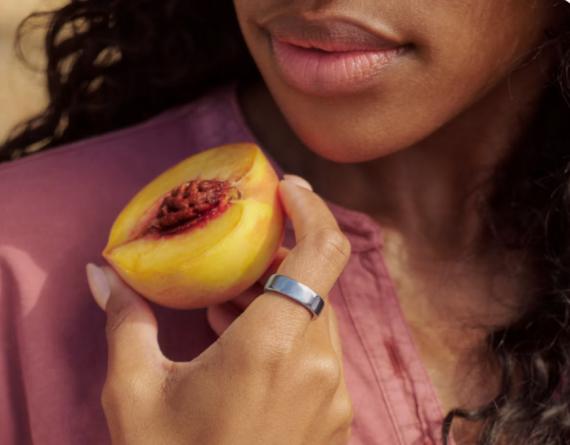
Oura Ring
Priced from 2500 yuan, a smart ring becomes a global bestseller
The story starts from Oulu, northern Finland.
Oulu has a population of only more than 200,000, and was famous for wood tar and salmon in the early years. It is close to the Arctic Circle, with little sunlight in the long winter. After Nokia set up its presence here in the 1970s, Oulu gradually grew into an important communications and electronics industry center in Finland, gathering a large number of engineers and technical talents.
Oura was born right here.
In 2013, Petteri Lahtela, Kari Kivelä and Markku Koskela founded Oura. The founding team had previous product, engineering and R&D experience at companies including Polar and Nokia.
What they initially focused on was whether the human body had fully recovered after falling asleep. The team believed that daily work, exercise and mental stress would leave traces on the body, while the night was a relatively stable observation window. Heart rate, heart rate variability, body temperature and respiratory rate keep changing during sleep. If these data can be recorded for a long time, it may help everyone find their own physical baseline.
This emphasis on balance and rest comes from Finland's long winter and the local lifestyle of getting along with nature.
However, putting health monitoring into a ring is not as romantic as imagined. Oura later recalled that in the early days of the startup, the company was short of cash, salaries had to be delayed for a time, and some employees even relied on personal credit cards to get by.
In March 2015, the team finally brought the first-generation product to the Launch Festival in San Francisco. On the stage, Petteri Lahtela raised a question: everyone knows how much power their mobile phone has left, but they may not know how much "power" their own body has left.
A few months later, Oura landed on Kickstarter. The original crowdfunding target of 100,000 U.S. dollars was completed within 15 hours, and finally attracted 2,383 supporters, raising about 650,000 U.S. dollars. For a Finnish startup far away from Silicon Valley, this was the first time its product truly crossed Northern Europe and found a group of users willing to pay for it in advance.
It was a photo that really pushed Oura to the public. In 2018, Prince Harry was photographed wearing an Oura Ring. The royal endorsement drew a flood of media attention, and the company's sales increased tenfold at one point. After that, Jennifer Aniston, the actress who played Rachel in *Friends*, talked enthusiastically about being "addicted" to this ring on a talk show, and celebrities including Cristiano Ronaldo, Mark Zuckerberg and Gu Ailing were also spotted wearing the ring.
In 2020, the epidemic gave Oura an unexpected opportunity to break into the mainstream. The University of California, San Francisco used it for the TemPredict study, with more than 65,000 people around the world participating; during the NBA's resumption of games in Orlando, the Oura Ring was used to predict athletes' COVID-19 infection.
Since then, Oura has begun to accelerate its transformation from a sleep tracker to a health platform, with functions such as stress monitoring, heart health tracking, female physiological cycle recording, pregnancy preparation support and metabolic health management added one after another. Oura also introduced a membership subscription model, generating continuous software service revenue in addition to hardware sales.
As of September 2025, Oura's cumulative sales exceeded 5.5 million units, more than half of which were sold in the previous year. In May 2026, the company launched the Oura Ring 5 with a further reduced size, priced from 399 U.S. dollars (about 2,600 yuan). Users also need to pay a membership fee of 5.99 U.S. dollars per month or 69.99 U.S. dollars per year to continue to access full health analysis.
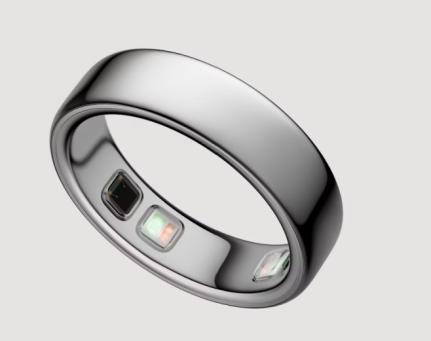
Oura Ring 5 (Image source: official website)
Valued at 100 billion yuan, well-known investors gather
In 2015, Oura completed a 2.3 million U.S. dollar seed round of financing in Oulu, Finland, led by Helsinki-based local fund Lifeline Ventures. Timo Ahopelto, founding partner of Lifeline, later described this investment as "pre-PowerPoint" — when they placed their bet, Oura did not even have a prototype product to demonstrate with a PPT.
If it wanted to expand its business globally, funding from Finland alone was not enough. In 2016, Oura completed a 5 million euro Series A financing, 75% of which came from U.S. investors. It was also at this stage that Harpreet Singh Rai, who originally worked at a New York hedge fund, invested in Oura as an individual, and then joined the company's management from being an investor.
The encounter between Rai and Oura was quite dramatic.
In 2016, Rai and his girlfriend ran into a man wearing an Oura T-shirt at a Whole Foods in New York. His girlfriend went up to talk to him and found that the man was Kari Kivelä, co-founder of Oura. Rai then invested 1 million U.S. dollars in Oura, joined the company as president in 2017, and became CEO in 2018.
After Rai took office, Oura began to win investment from Silicon Valley's celebrity circle.
In December 2018, MSD Capital, the family office of Michael Dell, led a financing of about 5 million U.S. dollars for Oura, with more than 20 participants. Actor Will Smith invested through Dreamers Fund, and basketball star Shaquille O'Neal, YouTube co-founder Steve Chen, and Twitch co-founder Kevin Lin also appeared on the investor list.
Rai revealed that the secret to attracting these celebrities is very simple: "They were fans!" The celebrity effect quickly spilled over into subsequent rounds of financing.
In December 2024, two high-profile new shareholders joined. Oura completed a 200 million U.S. dollar Series D financing, with Fidelity Investments and continuous glucose monitoring company Dexcom participating in the investment. The company's valuation rose to 5.2 billion U.S. dollars, roughly doubling from 2022. Dexcom and Oura also announced at the same time that they would interconnect blood glucose monitoring data with Oura's recorded sleep, stress and activity data.
In October 2025, Fidelity continued to lead Oura's new round of financing of over 900 million U.S. dollars, with institutions including ICONIQ, Whale Rock and Atreides participating. The company's valuation reached about 11 billion U.S. dollars, with cumulative financing of about 1.5 billion U.S. dollars. This round of financing is also known as the largest startup financing in the history of Finnish enterprises.
Compared with the list of investors full of celebrities in the past, the main participants of Oura's recent rounds of financing have become large asset management institutions and industrial investors. More and more capital comes from the United States, and Oura is getting closer and closer to Wall Street.
In February 2026, Oura announced that it would move its parent company's registration place from Finland to Delaware, the United States. In May, Oura confidentially submitted its S-1 filing to the U.S. Securities and Exchange Commission, officially launching the IPO process.
According to Bloomberg, Oura and some existing shareholders plan to raise up to 30 billion U.S. dollars in total through the IPO, with the post-listing valuation likely to exceed 16 billion U.S. dollars, and the issuance is expected to be completed as early as September 2026.
If it advances in accordance with the latest disclosed IPO plan, Oura is expected to surpass Peloton and become the largest consumer wearable device IPO in recent years.
Smart ring melee: a new hardware knockout competition
Oura's confidence in sprinting for IPO comes from a rapidly expanding market.
IDC estimated in July 2026 that the global shipment of smart rings will reach 4.9 million units that year.
This market is highly concentrated. Omdia data shows that in the first half of 2025, Oura accounted for 74% of global smart ring shipments, Ultrahuman and Samsung accounted for 9% respectively, and RingConn from Shenzhen accounted for 5%. The rest of the market is occupied by brands such as Circular, Noise, boAt and Zepp. In other words, although this battle for the fingertip market seems lively, there are still not many players that have formed large-scale shipments.
Tech giants have also flocked to this track. In July 2024, Samsung officially released the Galaxy Ring, integrated it with Samsung Health and Galaxy AI, and does not charge subscription fees. This is almost a direct challenge to Oura's "hardware + membership" model. Apple, although remaining on the sidelines, has continued to apply for patents related to smart rings for many years, covering directions from health monitoring to cross-device gesture control.
What really makes peers shudder is Oura's patent offensive.
In 2024, Oura filed a 337 investigation with the U.S. International Trade Commission (ITC), naming RingConn, Ultrahuman and French brand Circular as defendants. The following year, the ITC issued a final ruling, issuing an injunction against Ultrahuman and RingConn. Circular and RingConn successively reached settlement agreements and paid patent licensing fees. At the end of 2025, Oura's lawsuit list added Samsung, Amazfit, Reebok and Indian brand Noise.
The Chinese market is also looking for its own Oura.
In 2021, Wang Guoxing, a professor at Shanghai Jiao Tong University, and Wu Hao, an artificial intelligence expert, founded RingConn in Shenzhen. Institutions including Shifeng Investment and Westlake Innovation Investment are its early investors. Different from Oura, RingConn does not charge subscription fees, so as to compete for users who are unwilling to pay continuously.
Dreame has also entered this track. The Dreame Ring launched by Dreame in 2025 is priced at 2,599 yuan. In 2026, it became the first smart ring to appear on the CCTV Spring Festival Gala, and has also appeared on the same stage as celebrities such as Jackson Yee, Hu Xianxu and Liu Xijun. Sa Beining personally tested it and jokingly called it the new generation of "Lord of the Rings".
In addition, major manufacturers including Huawei, Xiaomi and OPPO are continuously expanding their wearable device territories. In recent months, a number of young startups including Atom AI, String Finger Tech, PostLove Tech and New Core Innovation have successively obtained financing.
However, more practitioners are feeling the chill, and the Chinese supply chain has already fallen into fierce cutthroat competition. *Economic Observer* reported that more than 200 smart ring brands have emerged in China within half a year, and the processing profit of a single ring in Dongguan factories has been squeezed to only 0.5 to 1 yuan, while the ex-factory price of finished products in 2022 could still remain above 180 yuan. Huaqiang North in Shenzhen has taken "speed" to the extreme: finished products can be delivered 20 days after placing an order. A factory owner asserted: "If Apple does not enter this track, this category has no future."
The ring structure and general sensors are relatively easy to obtain, but the long-term accumulated health data, algorithms, clinical verification, brand trust and business model are more difficult to replicate. In May 2026, Oura stated that its number of paying members is expected to exceed 5 million in that quarter, and the member scale has grown more than four times in the past two years. It took more than ten years to grow from a sleep tracking hardware to a health platform with continuous subscription revenue.
Moreover, this path is also accompanied by risks. On August 20, a proposed class action lawsuit was filed in San Francisco, with the plaintiff accusing Oura of exaggerating the accuracy of sleep staging. Oura has also made it clear that its rings are not medical devices intended for the diagnosis, treatment or prevention of diseases.
This is also a test that the entire health wearable industry has to face. The bigger the health story a company tells, the heavier the verification cost and user expectations it needs to bear.
A knockout competition for fingertip hardware has just begun.
This article is from the WeChat official account "Daily IPO", author: Chen Jia, published with authorization from 36Kr.