"Text Tower Defense" has become a dark horse this year. Honey Badger's *Zhao Yun and A Dou* 2.0 has been launched, what opportunities are there in this track?
Recently, the new game *Wukong and Tang Monk* developed by Honey Badger landed on the new game list of Douyin Mini-Games on August 20, and topped the list the next day.
Undoubtedly, *Zhao Yun and A Dou* launched by Honey Badger in June has already made "text tower defense" the biggest dark horse on the 2026 mini-game track.
Only two months later, Honey Badger launched a new "text tower defense" product again, which has achieved considerable market performance.
What is the specific performance of this product? Today, DataEye Research Institute will talk about this game.
I. Overall Observation of *Wukong and Tang Monk*: A New "Text Tower Defense" Product Released
(1) Product & Market
*Wukong and Tang Monk* is a text tower defense mini-game with Journey to the West elements as the core theme. After entering the game, players will directly enter the PVP battle interface, where the player and the opponent occupy the upper and lower split-screen positions respectively. The core rule of the match is: the side that loses its protected target first loses the game. Players need to spend peaches to summon text units to stop enemies from abducting Tang Monk, and win the match by protecting Tang Monk.
In the game, characters such as "person", "monkey", "pig", "horse" are basic text units, which can automatically launch attacks after deployment, and two identical units of the same level can be combined to upgrade. In addition, randomly refreshed text units can also be combined to create exclusive heroes, for example, "Wu" and "Kong" combine to form Wukong, "Ao" and "Guang" combine to form Ao Guang, etc. Exclusive heroes not only have stronger basic combat power, but also have exclusive special skills, giving them more prominent advantages in the game.
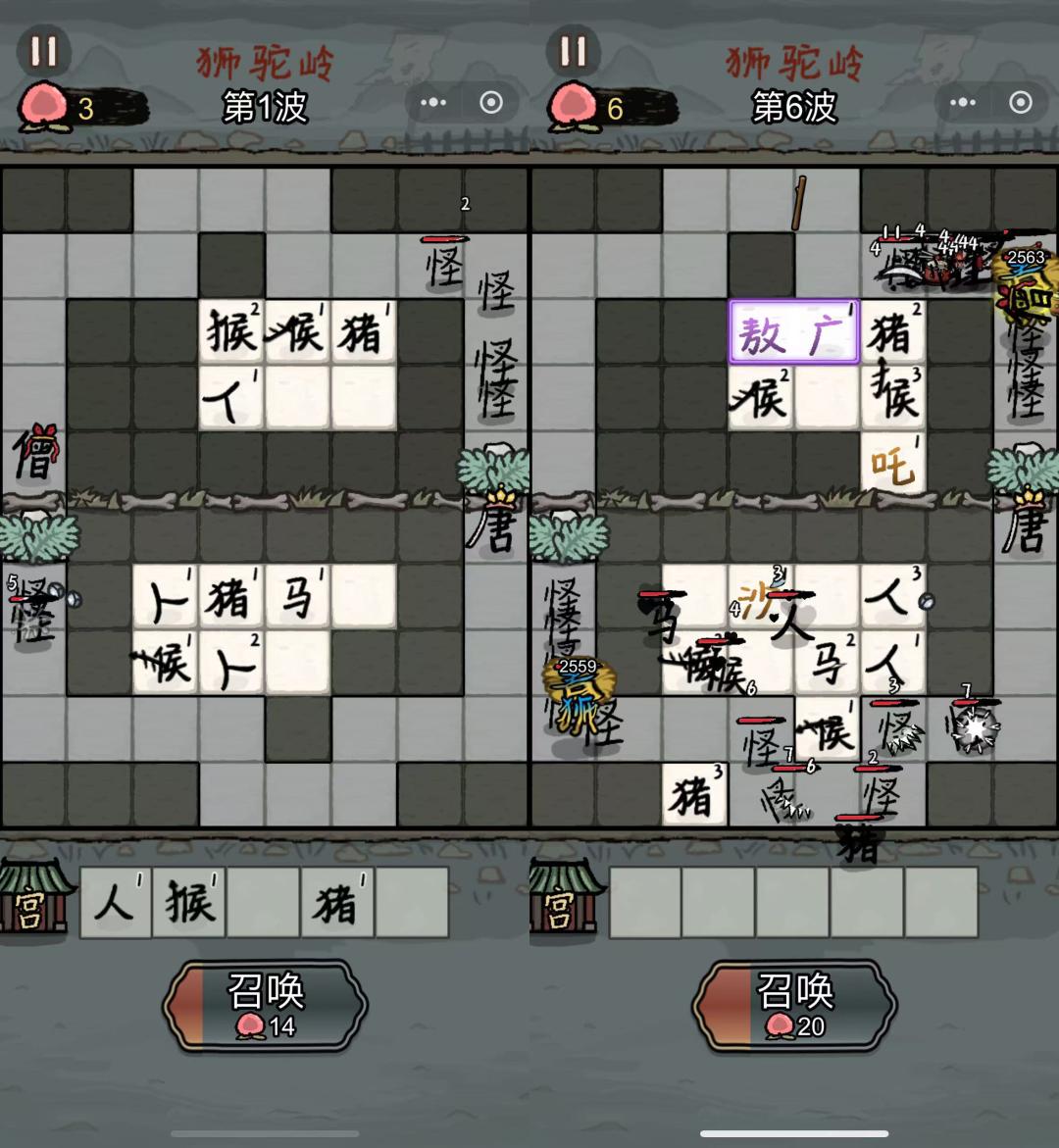
Overall, *Wukong and Tang Monk* highly reuses the full content of *Zhao Yun and A Dou*, including UI design, core gameplay, and even follows the same naming logic for character relationships.
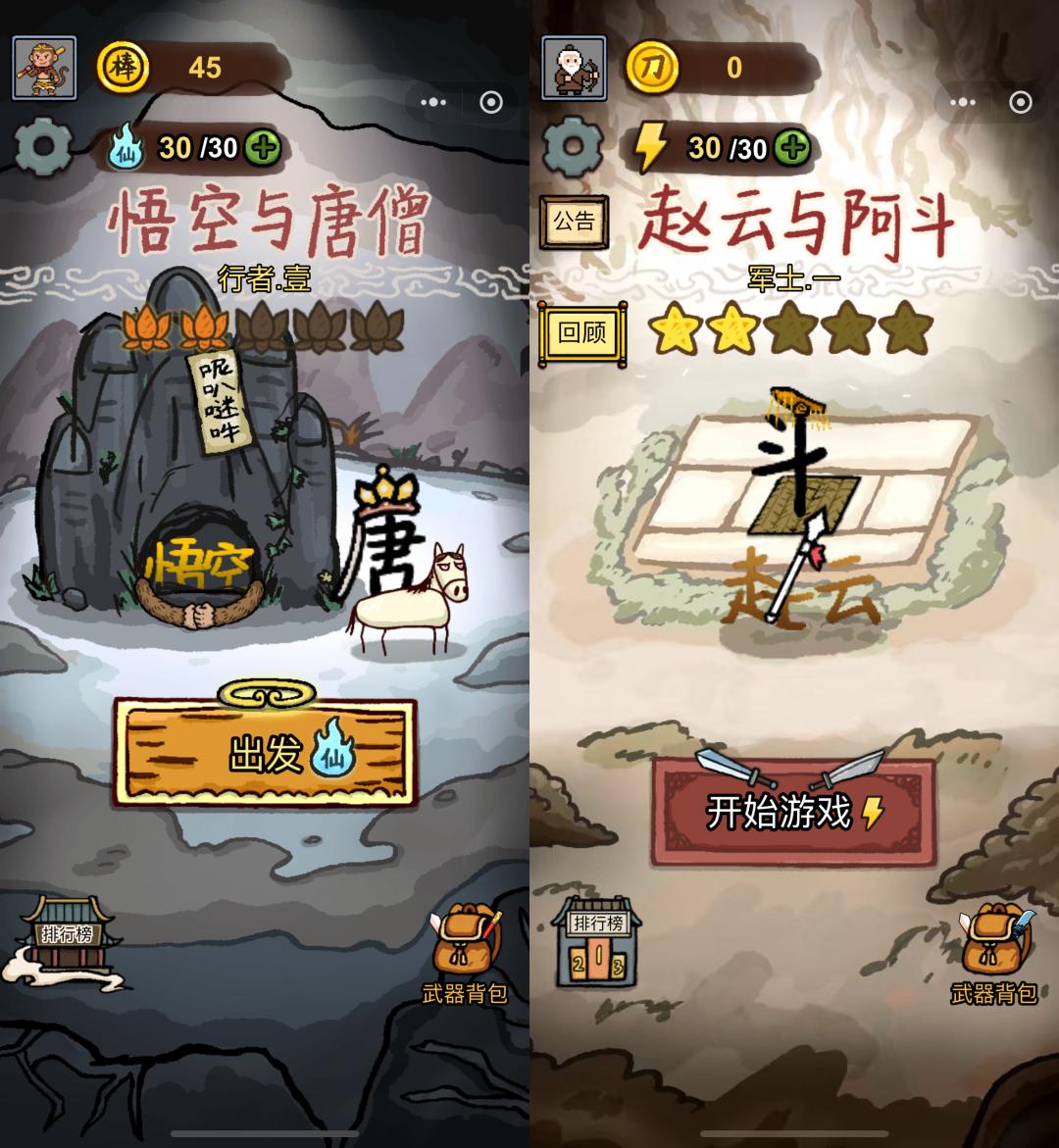
There are only obvious differences in the victory and defeat judgment: *Zhao Yun and A Dou* takes the health value of A Dou as the judgment standard, and the match fails when A Dou's health is exhausted; while the losing condition of *Wukong and Tang Monk* is that the Tang Monk on your side is abducted back to the enemy's starting point by monsters, and the side whose Tang Monk is abducted first loses.
DataEye Research Institute believes that this mechanism adjustment is mainly based on two major considerations: first, to optimize the gameplay logic, improve the game fault tolerance rate, enhance players' match experience, and at the same time strengthen the depth of tower defense strategy, effectively improving user stickiness; second, to fit the Journey to the West theme, amplify the humorous and interesting trait of "Tang Monk being abducted", and create differentiated product highlights.
Judging from the current market performance of the product, the performance of *Wukong and Tang Monk* is surprising. DataEye-ADX mini-game data shows that *Wukong and Tang Monk* entered the new game list and hot list of Douyin Mini-Games on August 20. It performed strongly on the new game list, ranking 5th on the first day and topping the list the next day. As of August 26, it has dominated the list for 6 consecutive days. It ranked 84th on the first day of the hot list, quickly climbed to 26th two days later, and then its performance fluctuated.
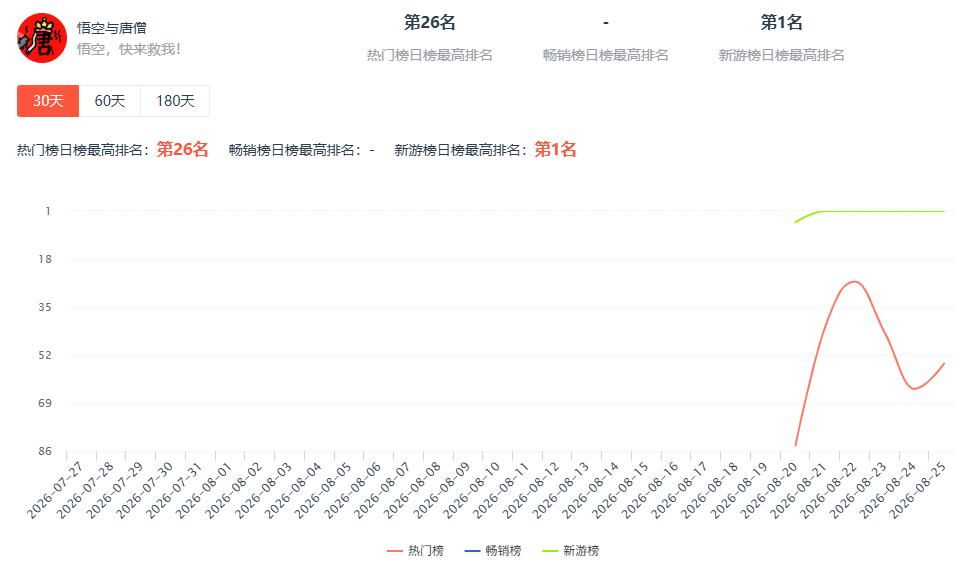
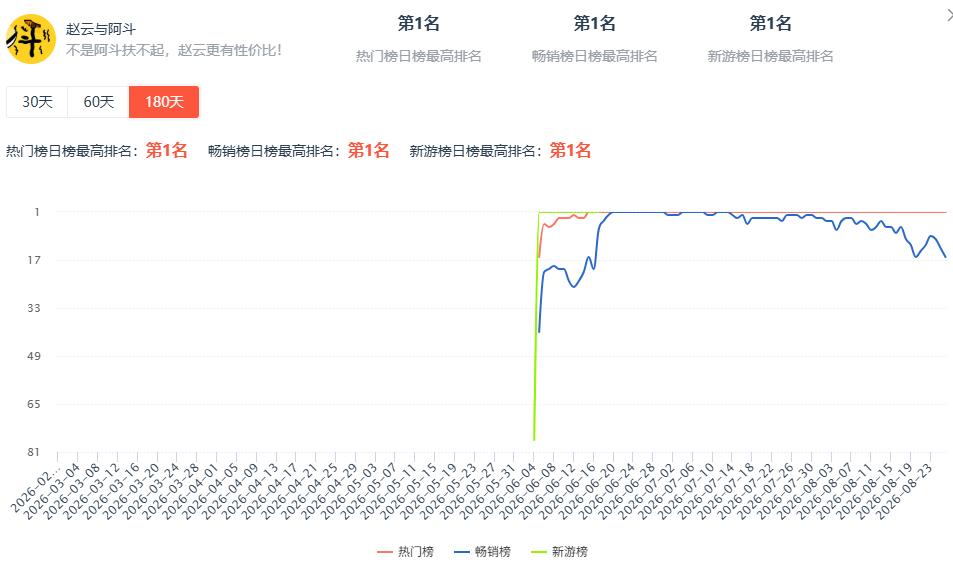
However, a comparison shows that after *Zhao Yun and A Dou* was launched on the Douyin new game list, it entered the bestseller list the next day and quickly climbed to the TOP 10, while *Wukong and Tang Monk* has not yet achieved this result.
Combining product and market performance, *Wukong and Tang Monk* has obvious traces of reuse, and the overall product framework completely replicates *Zhao Yun and A Dou*. It only makes adjustments in game experience optimization and theme content. In essence, it can be regarded as the iterative 2.0 version of *Zhao Yun and A Dou*, which belongs to the conventional product iteration operation of game manufacturers.
Even with the highly reused product framework, *Wukong and Tang Monk* still achieved excellent market results and dominated the new game list of Douyin Mini-Games, but its overall popularity and commercial performance are still not as good as the previous work. However, this phenomenon is sufficient to prove that the text tower defense track has upgraded from a "single hit product" to a "hit segmented category" in less than three months, and the market size of the track continues to expand. Relying on the national user education completed by *Zhao Yun and A Dou*, there are still a lot of market opportunities to be tapped in this track. For most small and medium-sized game manufacturers, the deterministic benefit of entering a mature track is far higher than the unknown risk of exploring new gameplay.
But returning to the product itself, *Wukong and Tang Monk* has prominent problems of homogenization and templating. If it wants to break through the traffic ceiling of the previous work *Zhao Yun and A Dou*, it is necessary to have brand new game content, differentiated gaming experience, or larger-scale marketing investment to achieve breakthroughs.
(2) User Acquisition & Creative Observation
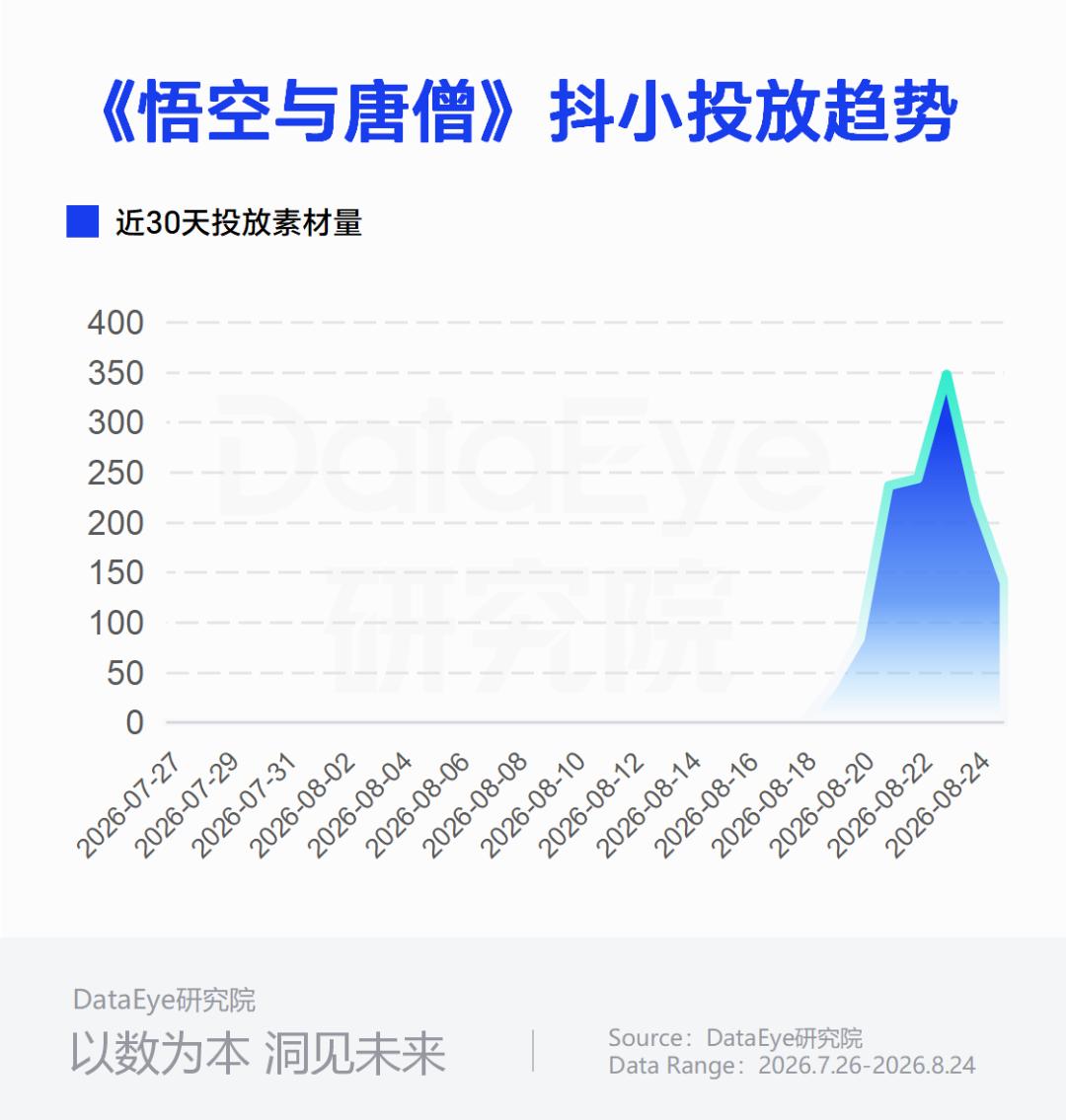
DataEye-ADX mini-game placement data shows that *Wukong and Tang Monk* started to run performance-based advertisements on the Douyin Mini-Games side on August 19. After the product entered the list, the number of placement materials continued to increase. On August 23, the number of daily placement materials exceeded 340, which was the recent peak of placement.
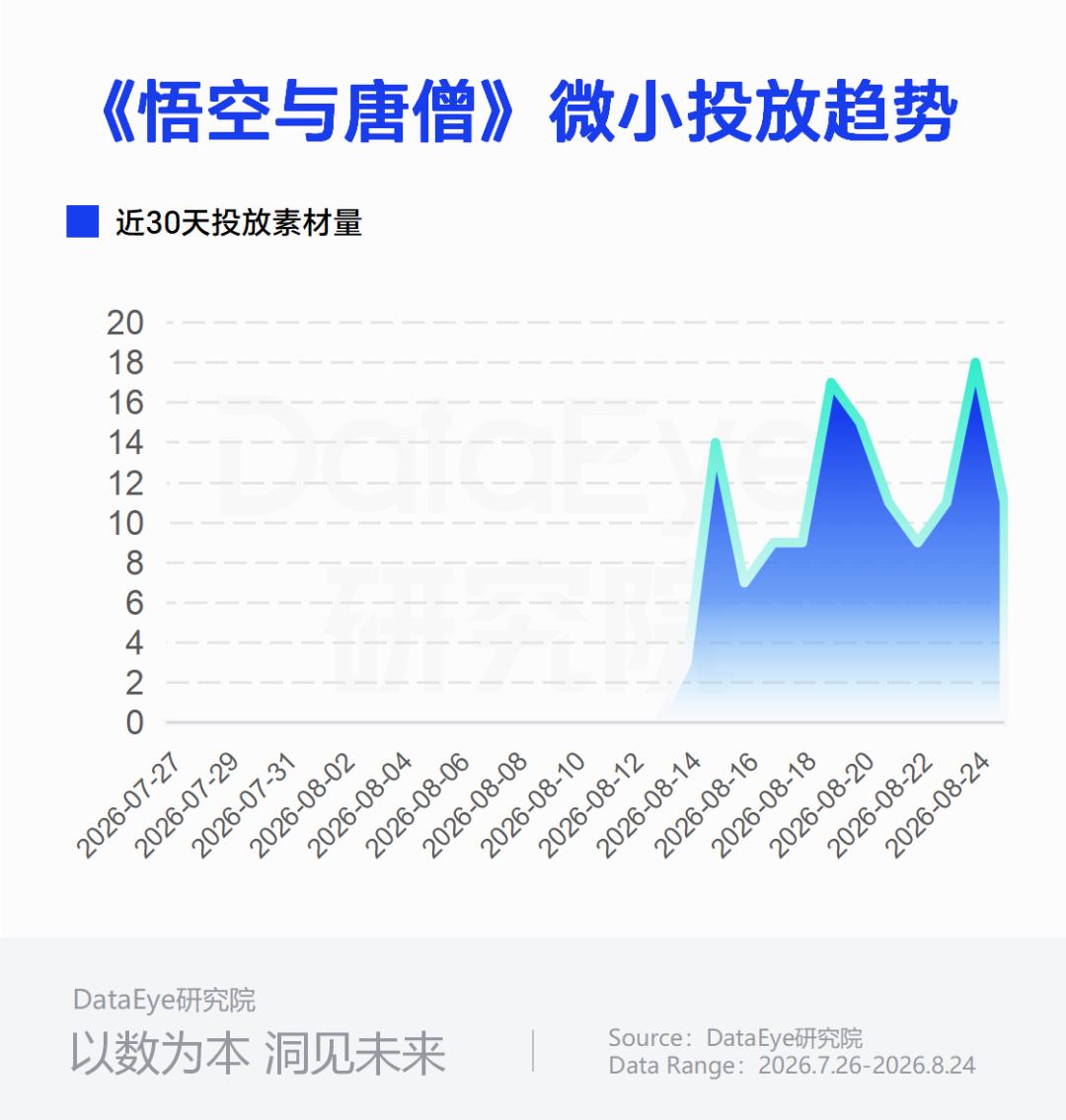
At the same time, it is observed that *Wukong and Tang Monk* launched performance-based advertisements earlier on the WeChat Mini-Games side. The data shows that WeChat Mini-Games started to run performance-based advertisements on August 14, but the placement intensity of materials was relatively low, the number of placement plans did not exceed 100 groups, and the product has not yet officially expanded its volume on the WeChat Mini-Games side.
At the creative level, DataEye Research Institute sorted out the high-efficiency placement materials of *Wukong and Tang Monk* in the past 30 days, and roughly divided them into three types:
The first is gameplay content oriented. The script logic of this type of material is simple and clear, focusing on binding the connection between *Wukong and Tang Monk* and the previous hit work *Zhao Yun and A Dou*, using the user cognition of the previous work to quickly divert traffic, greatly reducing the cost of user education. At the same time, through voiceover narration and actual game footage, it intuitively displays the core gameplay and game content to attract new users to join in.
The second is direct comparison of special text combinations. This type of material focuses on the game's characteristic text combination gameplay. By comparing with the gameplay of *Zhao Yun and A Dou*, it intuitively demonstrates the brand new text combination mechanism and features of this work, helping players quickly master new gameplay and lowering the entry threshold.
The third is game strategy oriented materials. The project team simultaneously launched a large number of gameplay strategy content, explaining in detail the attributes and abilities of various text units in the game, as well as the actual combat effects and gameplay skills of special combination units. The overall material content is relatively conventional, which is the mainstream placement material form in the mini-game track.
At present, the placement focus of *Wukong and Tang Monk* is concentrated on the Douyin Mini-Games platform, and the WeChat Mini-Games side has not yet fully expanded its volume. The overall user acquisition rhythm is relatively restrained, which is basically consistent with the placement strategy and rhythm in the early launch period of *Zhao Yun and A Dou*.
At the level of creative materials, the overall core idea of the product is centered on "lowering the threshold of user cognition". Conventional content introduction and gameplay display materials account for the highest proportion, and the core purpose is to build basic product cognition for new users and achieve rapid user acquisition.
However, DataEye Research Institute found that the core creative logic of *Wukong and Tang Monk* is mainly "leveraging the popularity of existing hits", highly relying on the market popularity and user base of its own hit product *Zhao Yun and A Dou*. By strengthening the correlation between the two products, it accurately reaches core enthusiasts of this category to achieve efficient user conversion. But as an iterative product of the same manufacturer, *Wukong and Tang Monk* needs to focus on polishing the product experience and doing a good job in user retention in the follow-up, to avoid the situation that traffic comes fast and leaves fast.
II. Track Reform: Chinese Style Text Games Become the Mainstream, Minimalist Attempts Are Changing Industry Rules
The successive breakout of the two text tower defense products is not an accidental popularity of a single category, but reveals two brand new development trends in the mini-game track, providing new thinking directions for the long-term development of the industry.
First of all, traditional culture free IP has become a new incremental treasure house for mini-game innovation. For a long time, the IP competition in the game industry has been concentrated in the paid copyright fields such as film, animation and classic games. The high authorization cost has raised the entry threshold for small and medium-sized manufacturers. The success of *Zhao Yun and A Dou* and *Wukong and Tang Monk* proves that public cultural symbols such as Chinese characters, idioms, traditional allusions and classic Chinese style characters are inexhaustible and zero-cost high-quality creative materials.
This type of traditional cultural IP has a natural national cognitive foundation, no additional user education is required, and it can quickly adapt to the communication logic of lightweight games. In the future, "traditional culture + minimalist gameplay" may become the mainstream creation paradigm of the mini-game track, completely breaking the industry pattern of high-priced IP monopoly, and enabling Chinese style culture to realize normalized gamification implementation.
Secondly, minimalist and lightweight gameplay continues to lead the underlying dividends of mini-games. The core user demand for mini-games is "open and play in seconds, lightweight entertainment, no device threshold", and text tower defense perfectly fits this core logic. Compared with the complex modeling, special effects and plot of heavyweight mini-games, text games have extremely low art workload, short R&D cycle and low cost. Relying on the AI R&D pipeline, individual developers and small teams can quickly enter the track for testing.
At the same time, the minimalist product form makes the game installation package extremely small, with extremely low requirements for device configuration and network environment. It can fully cover users in the sinking market and adapt to the fragmented gaming needs of all scenarios. This also means that the competition in the mini-game track in the future will no longer be a competition of picture quality and special effects, but a comprehensive competition of gameplay adaptability, theme interest and operation refinement.
III. Final Thoughts
While the track dividends continue to be released, the problems exposed by *Wukong and Tang Monk* have also sounded the alarm for the industry. At present, the text tower defense track has obvious homogenization involution problems, reskin iteration and mechanism replication have become the mainstream gameplay, and product differentiation is seriously insufficient. Compared with the previous work, *Wukong and Tang Monk* only completed theme replacement and subtle mechanism optimization, and there is no essential upgrade in core experience, which is the core reason why its commercial performance is not as good as the first generation hit.
With a large number of manufacturers entering the track following the trend, the traffic dividend of the text tower defense track will be diluted rapidly. The iterative mode that simply relies on "old gameplay + new theme" will soon hit the growth ceiling. For players in the track, short-term reuse iteration can obtain deterministic benefits, but long-term homogenization involution will eventually lead to user aesthetic fatigue, rising traffic costs and declining retention data.
From the overall perspective of the industry, a new round of reshuffling in the mini-game track has already begun. On the one hand, mature segmented categories continue to expand, and deterministic gameplay such as text tower defense, minimalist puzzle solving and lightweight synthesis will attract more players to enter, making the track competition increasingly fierce; on the other hand, extensive reskin iteration will eventually be eliminated by the market. Only products that integrate theme innovation, gameplay upgrade and experience optimization can break through the traffic ceiling and achieve long-term growth.