Stepping out of the Odyssey Period: 5 Insights for Chinese Enterprises from Apple's "Leadership Transition"
Tomorrow (September 1, 2026), as scheduled, Apple CEO Tim Cook will step down as CEO and transition to the position of Executive Chairman. His successor is John Ternus, Senior Vice President of Hardware Engineering who has worked at Apple for 25 years.
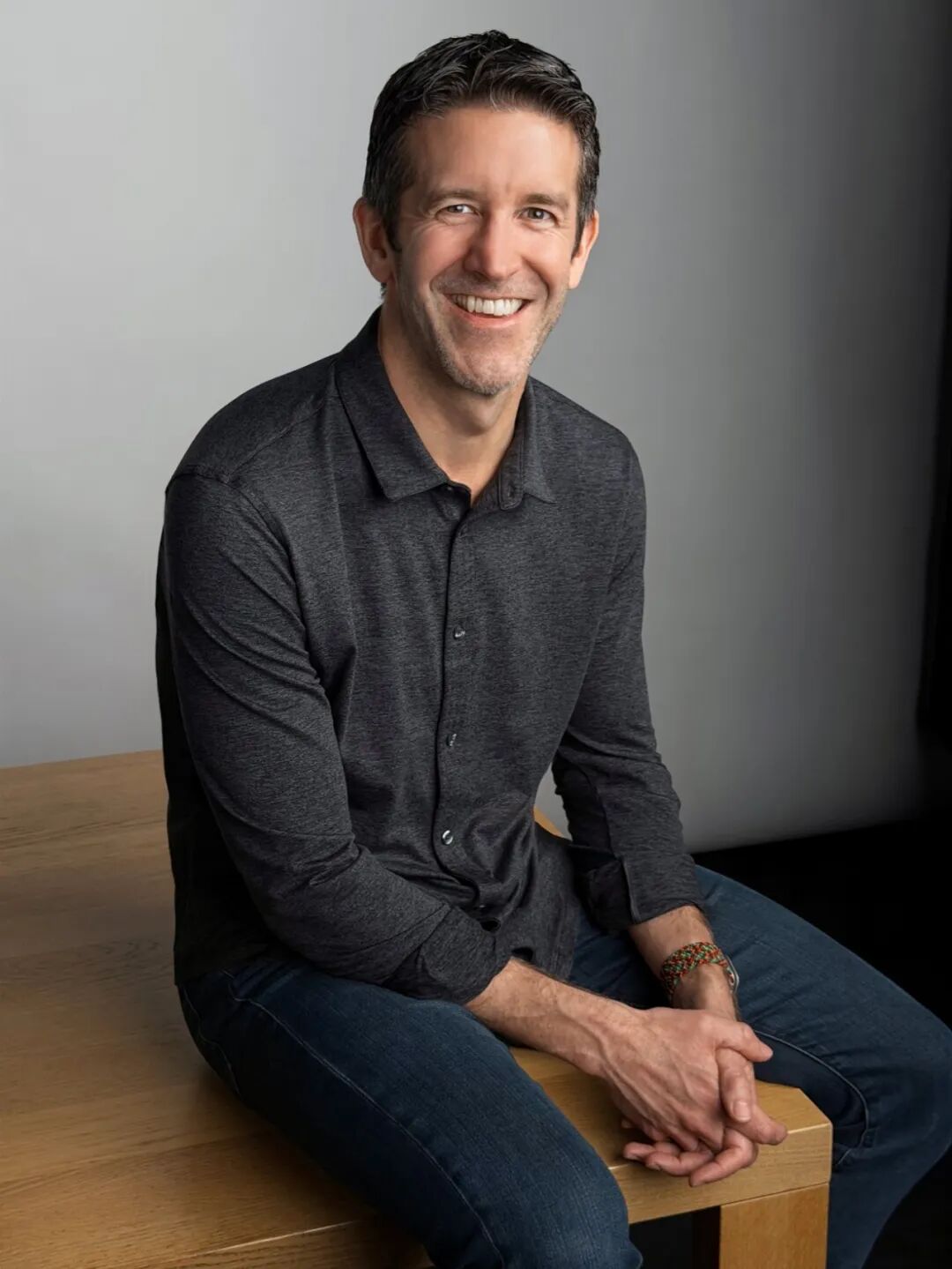
John Ternus, Source: Apple official website
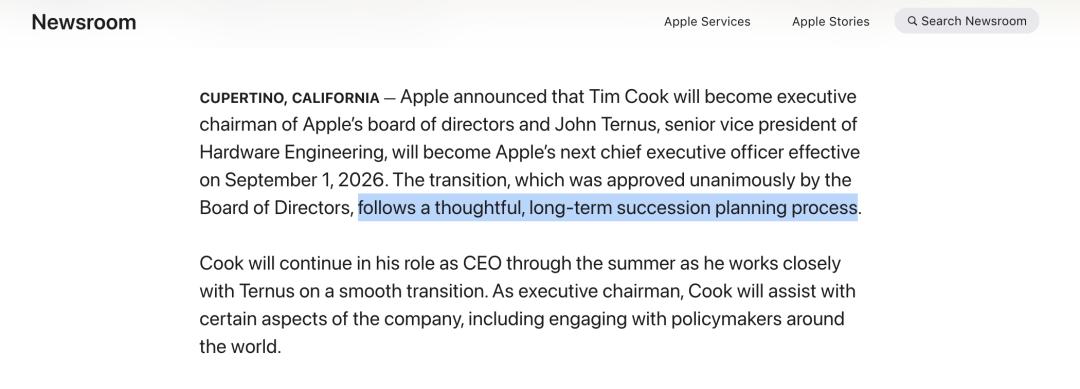
In its official statement, Apple used a thought-provoking expression, stating that this decision stems from "a thoughtful, long-term succession planning process" and was unanimously approved by the board of directors.
This is the third real top leadership handover in Apple's 50-year history, following Steve Jobs' return in 1997 and Jobs' "passing the baton" to Cook in 2011. It is also the first time that the handover has been completed in a truly smooth manner.
It is easy to start a business but hard to sustain it; it is easy to sustain a business but harder to pass it on. Many Chinese entrepreneurs today, especially founders, are also facing succession issues. How did Apple turn the handover process from a crisis that could trigger 12 years of corporate turmoil into an institutionalized, predictable, and even publicly transparent governance method step by step?
On February 23, 2011, Apple's annual general meeting was held in Cupertino.
Jobs did not attend. He had been on his third medical leave since January, and Tim Cook, Chief Operating Officer, presided over the meeting on stage. The most high-profile agenda item of the day was Proposal No. 5, submitted by a construction workers' pension fund based in Jacksonville, Illinois, which holds 11,484 shares of Apple stock and is almost negligible on Apple's shareholder register.
The proposal required the board of directors to formulate and publish a written CEO succession policy, under which non-emergency handovers should be launched at least three years in advance, and a report should be submitted to shareholders once a year. Proxy voting advisory firm ISS stated its support. However, Apple's board of directors opposed it, on the grounds that the proposal "attempts to micromanage the board" and that making the succession plan public would give competitors an opportunity to take advantage.
The proposal was ultimately rejected. However, data disclosed later showed that about 172 million shares still voted in favor, accounting for about 30% of the actual voting shares.
Six months later, on August 24, Jobs wrote a very short resignation letter to the board of directors, which contained a later widely quoted sentence: "I strongly recommend that we execute our succession plan and appoint Tim Cook as CEO of Apple." Six weeks later, Jobs passed away.
Fifteen years later, on April 20, 2026, Apple posted its succession plan on its official website: Cook will step down as CEO on September 1 and transition to Executive Chairman, John Ternus will take over, and the board of directors unanimously approved that this "stems from a thoughtful and long-term succession planning".
Combining the three handovers in Apple's history and relevant research, the following five reference suggestions for Chinese enterprises, especially family businesses and founder-led enterprises, can be extracted:
First, succession planning should be done when it is "not yet needed", rather than when it "must be used". Studies show that if the board of directors can systematically cultivate candidates several years in advance, the company's performance and shareholder returns after the handover will be significantly better. For Chinese entrepreneurs, succession planning should not be an emergency plan, but a governance action that is included in the regular agenda of the board of directors after the enterprise enters a stable growth period.
Second, set standards before selecting candidates, and the standards should be independent of the founder's personal preferences. In this process, enterprises should transform the founder's business philosophy into organizational capabilities, rather than just leaving it as the successor's personal memory. Otherwise, the successor will only receive an "empty shell".
Third, handover does not mean a complete break. The role of the founder after exiting should be designed in advance with a clear power boundary. After stepping down as CEO, both Cook of Apple and Bezos of Amazon deliberately defined their scope of responsibilities after remaining on the board within a narrow range to avoid forming an actual dual-head command with the new CEO. This ensures that power is truly transferred to the new leader after the handover, so as not to cause chaos inside and outside the organization.
Fourth, provide the successor with a sufficiently long "visibility accumulation period" to let internal and external parties get to know him or her in advance. Ternus started from edge projects, went through 25 years and at least four rounds of responsibility expansion before reaching the CEO position. More than a year before the official announcement, Apple had intentionally let him appear frequently at product launches. This "visibility" is not only a psychological preparation for external investors and the media, but also allows the successor to build credibility in the minds of customers, suppliers and core teams before actually taking over.
Fifth, founder-led enterprises have higher succession risks and require more institutional hedging. Studies show that the risk of failure in the handover from a founder to a non-founder CEO is 2 to 3 times that of a normal handover, including reasons such as the founder's self-identity being deeply tied to the enterprise and retaining "shadow power" after formally stepping down, which is particularly worthy of vigilance for Chinese private enterprises that take the founder's personal IP and style as their core competitiveness. Such enterprises are precisely the ones that most need to accumulate systems to actively hedge succession risks.
The Odyssey Period of Apple
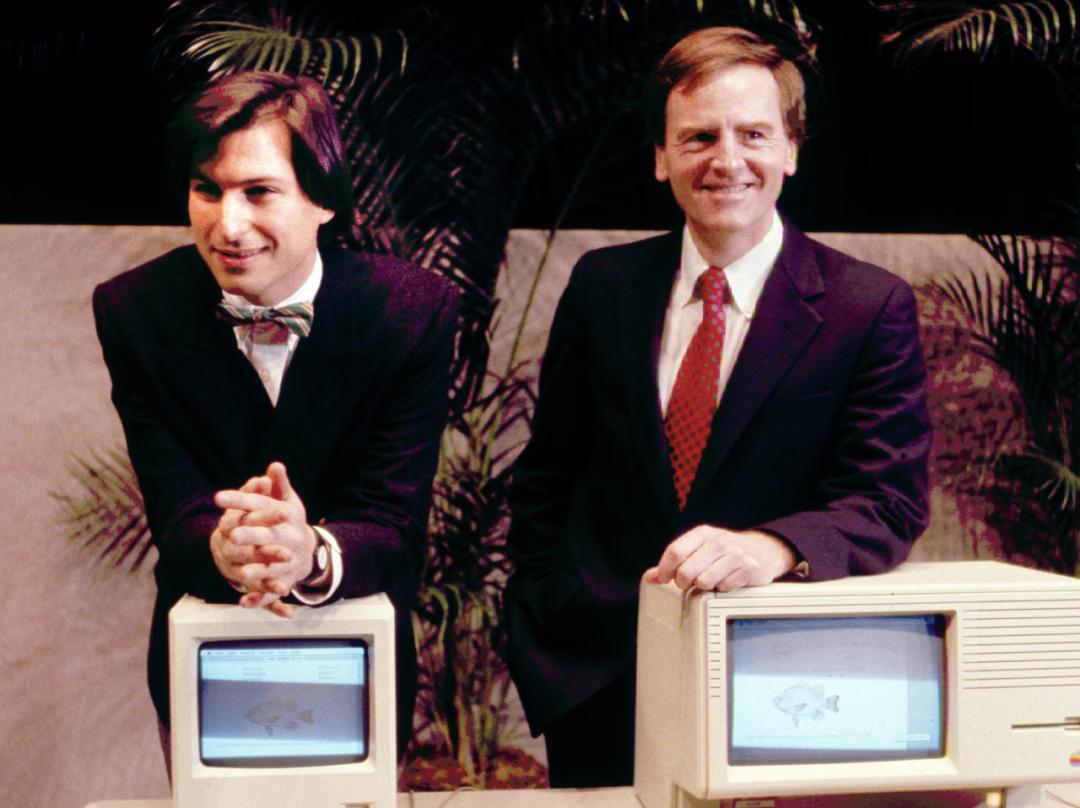
Steve Jobs and John Sculley, Source: AP News
Apple's handover story has to start with failures.
In 1985, a power struggle broke out between Steve Jobs and John Sculley, the CEO he personally recruited from PepsiCo. The board of directors eventually stood by Sculley, and Jobs was ousted from the company he founded.
In the more than ten years that followed, Apple fell into strategic drift. Successively led by Sculley, Michael Spindler and Gilbert Francis Amelio, it had a confused product line, its market share was continuously eroded by Windows PCs, and the company was once on the verge of bankruptcy.
At the end of 1996, Apple announced the acquisition of NeXT, a company founded by Steve Jobs, for about 400 million US dollars, and invited Jobs back to the company as a consultant. In the announcement, then Apple CEO Amelio said that Apple acquired NeXT because compared with other alternatives, the two companies are most capable of "complementing each other's advantages".
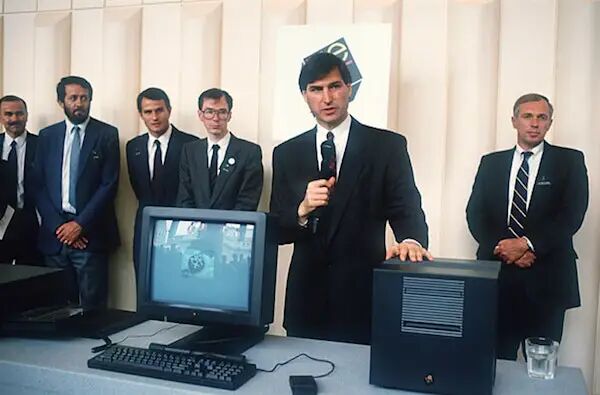
Steve Jobs introducing NeXT to the media in 1988, Source: AP News
However, the acquisition did not immediately bring a boost. In February 1997, Apple posted the worst quarterly results in its history and had to lay off more than 3,000 employees. In June of the same year, Steve Jobs anonymously sold Apple stocks worth 22.5 million US dollars, and the stock price fell to a 12-year low, which directly prompted the board of directors to re-evaluate Amelio's position.
The board of directors eventually removed Amelio, and Jobs took over as interim CEO ("iCEO") in September of that year, and drastically cut most of the product lines.
Amelio became one of the many forced-to-leave CEOs in Apple's history, and also the last one.
Companies without institutional succession arrangements often can only rely on "crises" to complete leadership transitions. Plunging stock prices and near-bankruptcy can force the board of directors to make decisions.
This is also the situation many Chinese private enterprises are experiencing: they only start to seriously discuss "who will take over" when the founder's health deteriorates or the enterprise's performance declines continuously.
Apple spent a full 12 years of Odyssey period writing its own negative textbook.
Crisis Handled with Ease
On October 5, 2011, Steve Jobs died of pancreatic cancer six weeks after the resignation letter was sent. What Cook took over was a company that had "almost no transition period". There was no public transition ceremony, no long period of parallel running-in, and everything was completed in a very short time.
What really prevented this handover from turning into a governance crisis is that Cook had actually been in invisible leadership inside Apple for many years: in 2002, he served as Senior Vice President of Worldwide Operations, leading the reshaping of Apple's supply chain; in 2005, he was promoted to COO, fully in charge of global sales and operations; during Jobs' two sick leaves in 2009 and 2011, Cook acted as interim CEO to actually run the company. By the time the official appointment came, Cook had essentially "been CEO for many years", just without the title.
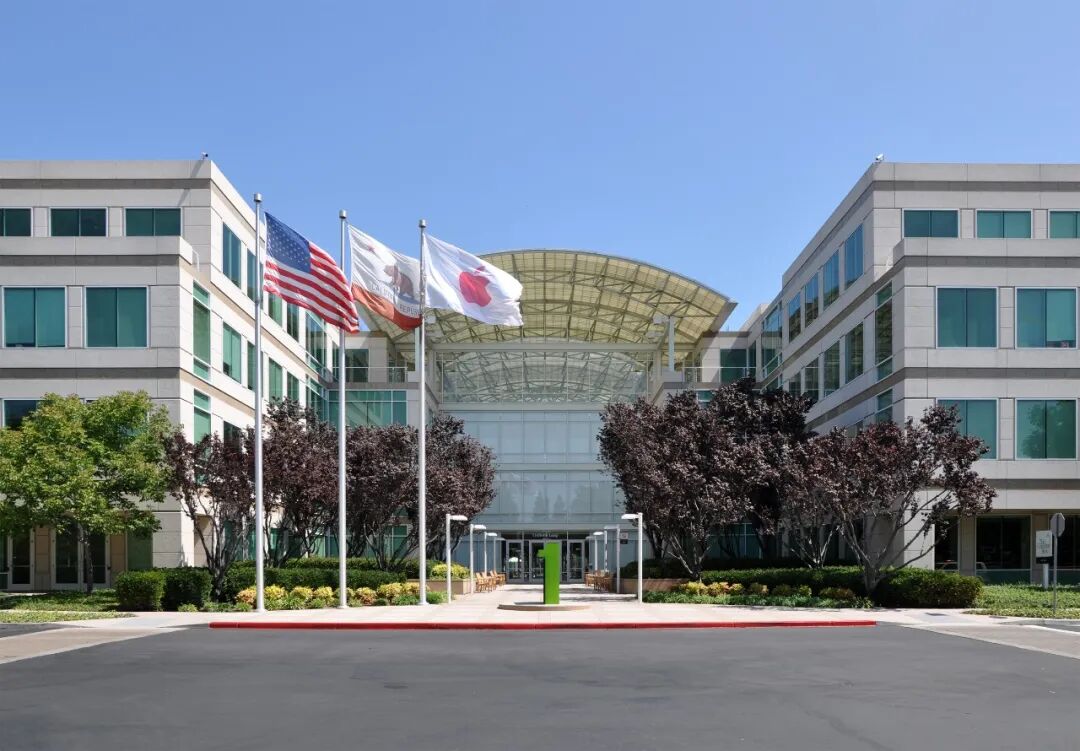
Apple University located in California, Source: Wikipedia
Compared with the candidate for handover itself, what is more worthy of attention for Chinese entrepreneurs is the "institutional foreshadowing" laid by Jobs for this handover, namely Apple University.
In 2008, Steve Jobs recruited Joel Podolny, then dean of the Yale School of Management, to Apple to found this internal training institution. The goal was to systematically distill Jobs' management philosophies such as accountability, attention to detail, extreme simplicity, and confidentiality culture into a teachable curriculum system. Podolny later recruited many scholars including Harvard Business School professor Richard Tedlow to join.
Human resources scholar Josh Bersin wrote an article in the week when Jobs announced his resignation, pointing out that Apple's real succession strategy is far more than just "selecting a person", but to precipitate the founder's way of thinking into organizational capabilities through Apple University, so that even if Steve Jobs himself leaves, the company culture will not be lost.
Textbook-style Succession?
Succession is never just about selecting people, but transforming the founder's business philosophy, decision-making methods, and corporate culture into inheritable organizational systems.
The succession anxiety of many Chinese private enterprises essentially stems from the fact that the core competence of the enterprise is tied to the founder. Once the founder is absent, the company's business operating system will disappear accordingly.
If Apple's 2011 handover was "plans ready, triggered hastily", the 2026 handover can be regarded as Apple's first real power transfer completed at its own pace without being forced by external crises. This process can almost be used as a textbook for succession planning.
The first step is years of public momentum building. As early as November 2025, the Financial Times reported that Apple's board of directors and executive team were accelerating preparations for Cook's departure, and Ternus was considered the strongest candidate for succession, though no final decision had been made at that time.
Bloomberg reported that for quite a long time in the past, Apple's public relations team began to "turn the spotlight on Ternus", letting him appear frequently at new product launches to introduce new products such as iPhone Air. This is seen as a signal that the company is paving the way for the handover.
This approach of increasing visibility before announcing the decision allowed Ternus to be familiar with and recognized by internal and external parties before officially taking office.
Ternus's own career is almost on the same track as Apple's development.
After graduating from the University of Pennsylvania with a major in mechanical engineering in 1997, Ternus worked for four years at Virtual Research Systems, a small company that made VR headsets. He joined Apple's product design team in 2001, starting with external Mac displays, and was in charge of the G5 iMac hardware team in 2005, staying on the front line of the Asian supply chain for a long time.
In 2013, Ternus was promoted to Vice President of Hardware Engineering at Apple, overseeing Mac, iPad and AirPods. In 2020, he took over iPhone hardware engineering, and was promoted to Senior Vice President in 2021, reporting directly to Cook and entering the company's core decision-making circle.
For a full 25 years, he advanced step by step, giving employees and shareholders confidence in the successor's ability and understanding of the company.
In addition, this Apple power handover was not a complete and abrupt break, but designed with a transition period and reserved roles.
From the announcement in April to the official handover in September, Cook will work with Ternus for several months before completing the transition in summer. After the handover, he will not quit completely, but transition to Executive Chairman to continue participating in specific affairs such as policy communication. Ternus once publicly stated that he "has spent almost his entire career at Apple, was lucky enough to work under Steve Jobs, and has always regarded Cook as a mentor".
Real mentoring takes place continuously in long-term specific work scenarios, rather than through brief explanations right before retirement.
Calculable Accounts
CEO succession planning should be a regular part of the board of directors' daily agenda, rather than being launched only when it is imminent. This is especially important for companies with CEOs who have achieved great growth and outstanding achievements.
Take Apple as an example. Under Cook's leadership, Apple's revenue has grown from 108 billion US dollars to 416 billion US dollars, and its market value has increased tenfold. The pressure and risk of succession are correspondingly greater.
If we only look at Apple's individual case, it is easy to mistakenly think that a good succession is only the product of luck or the founder/leader's personal style. However, academic and empirical research in the field of corporate governance has clearly quantified the cost of not doing succession planning.
"CEO succession planning is one of the most important responsibilities of the board of directors, but most boards have failed to perform it well." The research team from the Center for Executive Succession at the Darla Moore School of Business, University of South Carolina, argued in a study published in November 2025.
A study published in Harvard Business Review in 2021 pointed out that poorly managed CEO and executive transitions cause a total of nearly 1 trillion US dollars in market value losses among S&P 1500 constituent companies every year, while better succession planning itself can help the company's valuation and return on investment increase by 20% to 25%.
The challenge of founder succession is even more prominent. The latest research released in 2026 found that the failure rate or performance decline risk of the founder transferring power to a non-founder CEO is 2 to 3 times that of a normal handover between non-founders, including reasons such as the founder's