India's Battery Miscalculation: Materials Come First, Cell Supply Is Constrained by China
Indian companies are investing tens of billions of rupees to construct lithium-ion battery material plants, but are confronted with the problem of insufficient domestic sales channels. The root cause lies in China's restrictions on technology transfer, which has caused delays in the core cell production plans...
Indian companies are investing tens of billions of rupees to build lithium-ion battery material plants, but now they are facing the problem of insufficient domestic sales channels. The reason is that China has imposed restrictions on technology transfer, leading to delays in the core cell production plans.
Various manufacturers have to postpone the commissioning time of their own plants or be forced to develop overseas sales channels. It may take several years to improve the cell production foundation.
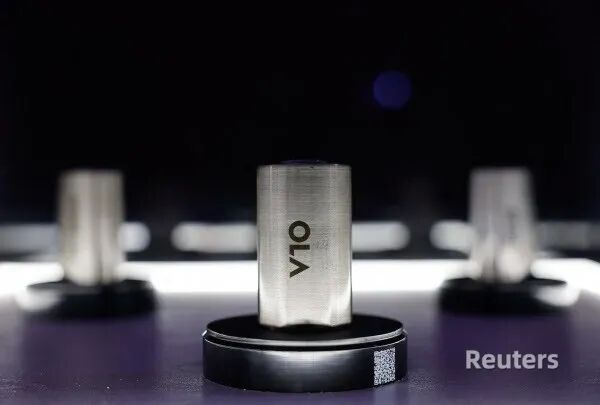
Under the subsidy scheme launched by the Indian government in 2021, many enterprises including electric two-wheeler giant Ola Electric Mobility and large conglomerate Reliance Industries have successively announced cell production plans. A cell is the smallest constituent unit of lithium-ion batteries used in pure electric vehicles (EVs) and renewable energy energy storage devices.
India has long relied on China for lithium-ion battery supplies, with imports increasing eightfold between April 2019 and March 2025. Getting rid of dependence on China has become a policy priority. However, due to China's restrictive measures, the original production plans of Indian enterprises have deviated, forcing them to postpone or suspend production.
In addition, China is vigorously promoting sodium-ion batteries with lower costs and better suitability for energy storage applications, which also poses a new threat. This may jeopardize the future prospects of lithium iron phosphate (LFP) batteries that Indian enterprises are optimistic about.
Most material manufacturers and cell manufacturers are committed to mastering the production technology of lithium iron phosphate batteries suitable for pure electric vehicles and other applications, and China also holds a dominant position in this market.
"Although some enterprises are advancing equipment investment and production preparation in the field of battery materials, the downstream cell industry has not yet developed," pointed out Ajay Joshi (transliterated), who is familiar with the battery material industry.
Emerging enterprise Altmin established India's first domestic cathode material pilot plant in Hyderabad, Telangana, southern India in 2023. It has now sent samples to domestic and foreign enterprises and is advancing performance evaluation.
Large-scale plants are under construction in the state, and production was originally scheduled to start between October and December 2026.
However, Anjani Mourya Srid, Chief Executive Officer (CEO), said that the commissioning time will be postponed to January to March 2028. "Originally, the government should first support lithium processing, then cell materials, and finally cell production. But in fact, the government started with supporting cell production, which has hindered industrial cultivation."
The Indian government is currently considering a subsidy scheme for cell materials similar to that for electronic devices and rare earths, which is expected to be launched within the year.
Calls for such subsidies are high. Epsilon Carbon and Himadri Speciality Chemical Ltd have started to build cathode and anode material plants. Neogen Chemicals Ltd. and Gujarat Fluorochemicals are building production facilities for electrolyte salts.
Epsilon now has an annual capacity of 2,000 tons of anode materials. It plans to complete a 20,000-ton-per-year lithium iron phosphate cathode material plant by early 2028, and a 30,000-ton-per-year anode material plant by the end of 2028.
The company will first supply customers in South Korea, Japan and the United States. Vikram Handa, the company's general manager, introduced that about 50% of the production capacity of the two planned plants has been contracted with overseas customers.
On the other hand, Himadri has acquired a 20.5% stake in a US cell manufacturer. It announced at the financial results briefing in mid-July that it will supply products from the initial stage of its new plant to this US enterprise.
It sometimes takes more than three years for battery materials to go from evaluation to mass production. Vikram Handa said, "In China, the government is supporting the R&D of sodium-ion batteries. Since we rely on bank loans, we must achieve sales as soon as possible after the plant is completed," noting that if the Indian government introduces support policies for cell materials, it will help attract investment.
However, it is still not easy to expand the scope of related industries. For example, Exide Industries Ltd., a battery giant based in Kolkata in eastern India, obtained part of the technology from Chinese automotive battery manufacturer SVOLT before China restricted technology transfer.
Exide does not plan to source battery materials from Indian enterprises immediately, but intends to prioritize the supply chain established by its Chinese partner.
"India's industrial base has not yet been integrated," sighed Debmalya Sen, Chairman of the India Energy Storage Alliance. "Battery manufacturers are dissatisfied with the price, quality and stable supply of materials. Material manufacturers will complain about the lack of subsidies and the system of mandatory domestic procurement."
The threat from sodium-ion batteries is also increasing. Sodium, the raw material for sodium-ion batteries, is more abundant than lithium, and the cost can be reduced by up to 30% compared with lithium iron phosphate batteries.
China has drastically adjusted its policy to impose a 2% consumption tax on lithium-ion batteries starting from September. The tax rate is expected to rise to 4% a year later, which will further promote the R&D of sodium-ion batteries.
Epsilon has successfully commercialized hard carbon anode materials suitable for sodium-ion batteries.
"In the next five years, sodium-ion batteries will undoubtedly become a major threat and are expected to replace lithium-ion batteries," predicted industry expert Joshi. "Enterprises need to have a flexible manufacturing system that can produce both types of batteries, but there are still very few such enterprises in India."
This article is from the WeChat official account "Nikkei Chinese" (ID: rijingzhongwenwang), author: Nikkei Chinese, authorized for release by 36Kr.