Where will capital flow after the ebb of market consensus? Five investors discuss technology investment in 2026
Amid the ever-accelerating technological iteration and capital flows, what truly determines investment returns remains the ability to clearly perceive the long-term value of a company.
Investment in the technology industry in 2026 has heated up again.
Financing in the primary market has rebounded, and the IPO channel has become active again. From Biren, Zhipu, MiniMax, to Momenta, CXMT, Unitree, a number of technology companies that have received long-term bets from the primary market in the past few years are entering the public market to accept new pricing.
At the peak dialogue session of the "Riptide - 2026 Jiazi Gravity X Tech Industry Investment Conference" held on August 20, Zhang Yijia, Founder and CEO of Jiazi Lightyear, together with five investors including Ji Wei, Founding Managing Partner of Huaying Capital, Fei Jianjiang, Founding Managing Partner of Oriza Seed, Liu Erhai, Founding and Managing Partner of Joy Capital, Wu Xi, Partner, Executive President and Chief Investment Officer of Dacheng Finance & Intelligence, and Li Feng, Founding Partner of Frees Fund, took "Riptide to New: Value Coordinates and Capital Opportunities for Next-Generation Tech Companies" as the theme, and launched discussions on topics such as revaluation of tech assets, investment cycles, value judgment and non-consensus opportunities.
At the conference site, Fei Jianjiang shared a highly representative case: Yuanchuan Micro, an AI chip company, had a post-money valuation of about 500 million yuan when it raised financing in February this year, and the valuation has risen to several billion yuan a few months later. Fei Jianjiang said that the changes of the company in half a year "definitely will not be as fast as the valuation growth".
Li Feng cited a case from other tracks for comparison, and then concluded: "When the market is hot, some linearly growing technologies may get non-linearly growing valuations. But the world is fair after all, the economy will not only develop around one main line, and eventually there will be opportunities in all directions."
In the past few years, at the Jiazi Gravity X Tech Industry Investment Conference, the topics we discussed the most were "patience" and "crossing the cycle". By 2026, the questions begin to change: when technology, capital and industry are all changing at an accelerated pace, how do investors view the cycle, identify value, and maintain independent judgment in a market where consensus is forming faster and faster?
In the peak dialogue, the five investors held very distinct views: Fei Jianjiang emphasized that "the cycle exists forever"; Li Feng reminded to "buy when no one cares, sell when the noise is at its peak"; Wu Xi judged that "β may not be that large, and α may not be that small"; Liu Erhai attributed the key of productivity leap brought by AI to "autonomous closed loop", and proposed that "human beings had better not be in the closed loop, but stand outside the closed loop"; Ji Wei reminded that "faith remains, but we must always stay calm".
They talked about non-consensus, how to understand the underlying changes of technology, the leap of productivity, as well as bubbles, prices and long-term value. And all these discussions ultimately point to the same thing: in the ever-accelerating technological iteration and capital flows, what truly determines investment returns remains the ability to clearly perceive the long-term value of a company.
The following is the written record of this peak dialogue, edited by "Jiazi Lightyear", with slight deletions and modifications on the basis of not changing the original meaning.
1. The most noteworthy invested projects worth sharing
Zhang Yijia: First of all, please introduce yourselves and the invested projects you most want to share with everyone this year.
Ji Wei: Hello everyone, I am Ji Wei from Huaying Capital. Founded in 2008, Huaying Capital now has an AUM of 150 billion yuan, and mainly invests in the VC stage. More than 50% of our current investments are in the full AI stack, from the bottom-level chips to platforms and applications, including applications in the physical world, embodied intelligence and so on.
There are two projects that can particularly represent some of our recent changes.
The first project is "Xijian Tech", a visual perception chip enterprise jointly incubated by us and the Tsinghua University Research Center for Brain-inspired Computing, which helps transform university research achievements from the laboratory to industrialization. Everyone is now investing in earlier stages, even directly participating in incubation. We started investing in this project with more than 100 million yuan, and now its valuation is about 3 billion yuan, and we have continued to invest in it.
The second project is "Gestalt Tech", a leading ultrasonic brain-computer interface enterprise. Huaying did not invest in the medical sector before, so in the past my understanding of the brain-computer interface track was relatively narrow, but I have had some updated understanding recently. Brain-computer interface is not just a medical device, the core of our investment is that it will be an important way for the interaction between the human brain and AI in the future. So from this we can also see that with the development of AI, interdisciplinary entrepreneurship is on the rise, and more and more industrial boundaries are intersecting and overlapping.
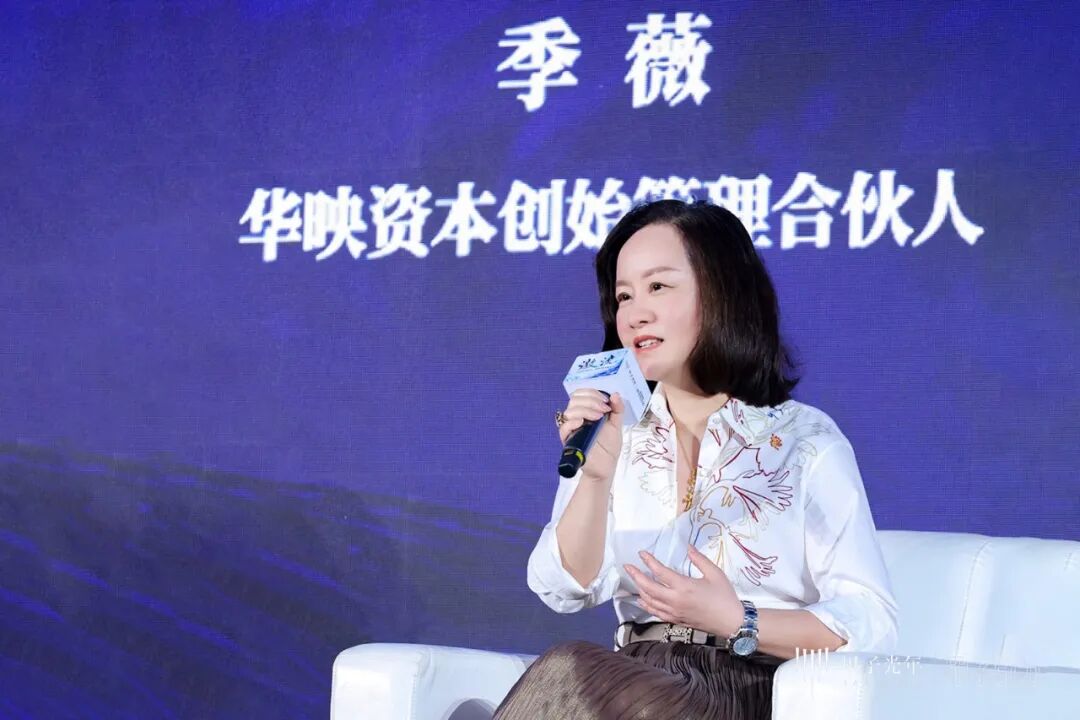
Ji Wei, Founding Managing Partner of Huaying Capital
Fei Jianjiang: Hello everyone, I am Fei Jianjiang from Oriza Seed. Oriza Seed is a professional early-stage investment institution, founded 13 years ago, and has invested in about 400 companies now, mainly in the broad technology and medical sectors.
Today we are sharing a company that I think particularly reflects the changes and popularity of the capital market in the first half of this year, this company is called Yuanchuan Micro.
It was established in September last year. In October and November last year, we met its founder, and we actually made the investment around February this year. At that time, the pre-money valuation was more than 300 million yuan, we were the lead investor in that round, and the post-money valuation was 500 million yuan.
At the stage when we made the investment, the entire industry has undergone particularly great changes. In December 2025, NVIDIA reached a cooperation agreement with LPU manufacturer Groq. Yuanchuan Micro actually also follows the LPU route, of course it is not exactly the same, and it has its own characteristics. But before that, the LPU technology route was not so widely recognized, so the valuation of the whole company was relatively low at that time.
But after NVIDIA cooperated with Groq later, the valuation of Yuanchuan Micro increased rapidly by more than 1 billion yuan, then reached 3.3 billion yuan, and now this round of 4.4 billion yuan is being settled.
From the perspective of our investment institution, we are certainly very happy. But you say how big changes the company can make in half a year? In fact, it may not be, it definitely will not grow as fast as the valuation. This is a reflection of the entire market in the first half of this year.
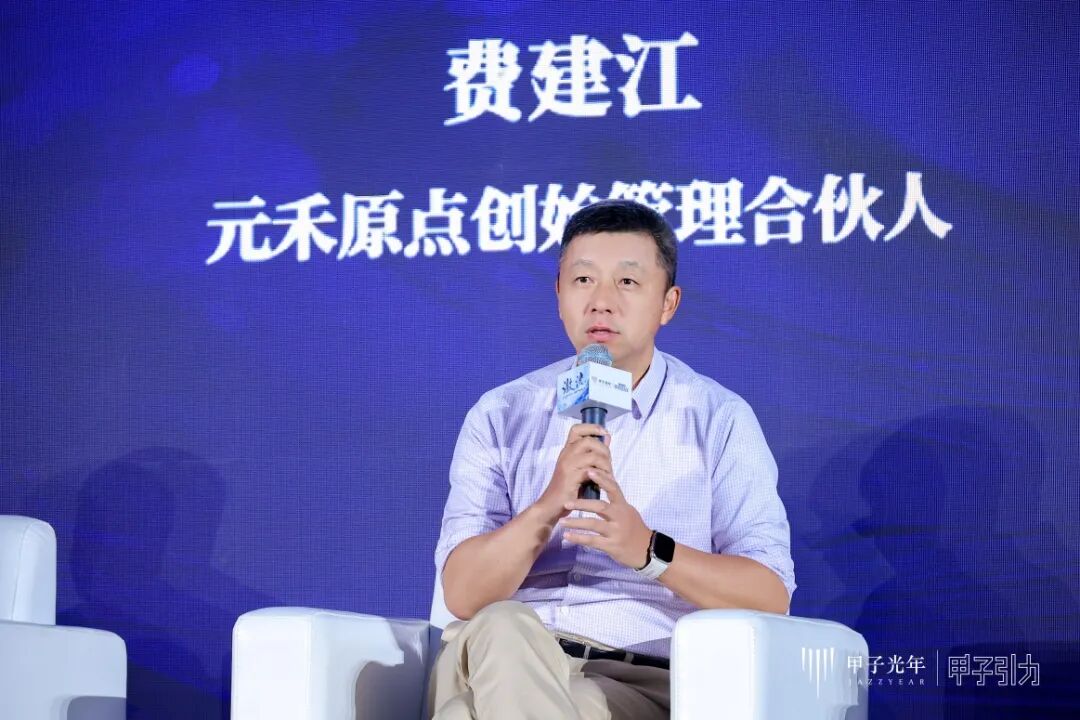
Fei Jianjiang, Founding Managing Partner of Oriza Seed
Liu Erhai: Hello everyone, I am Liu Erhai from Joy Capital. Joy Capital basically has two main categories of investments: one is hard technology and general technology; the other is the reconstruction of large industries after general technology is transformed into infrastructure. We have done a lot of projects in the automotive and mobility sector in the past, such as NIO. In other sectors, such as the combination of technology and traditional industries, there are companies like Luckin Coffee.
I want to share two projects: Momenta, and MEGARobotics. In fact, both of them are our investments in 2018. In 2024, we found that the route of Momenta has great opportunities to expand to physical AI, so we added another 30 million US dollars to it. We can see that with the continuous development of technology, the evolution path of intelligent driving is also beginning to be associated with physical AI.
MEGARobotics is a company providing life science solutions. Especially since two years ago, it has carried out a lot of R&D and industrial work of AI for Science, and has won the recognition of many heavyweight customers in the industry. In the past we talked about "connecting points into lines", you keep placing pieces and making breakthroughs at some points, these points will be connected, pulling you forward. I think this is also the fun of entrepreneurship and investment.
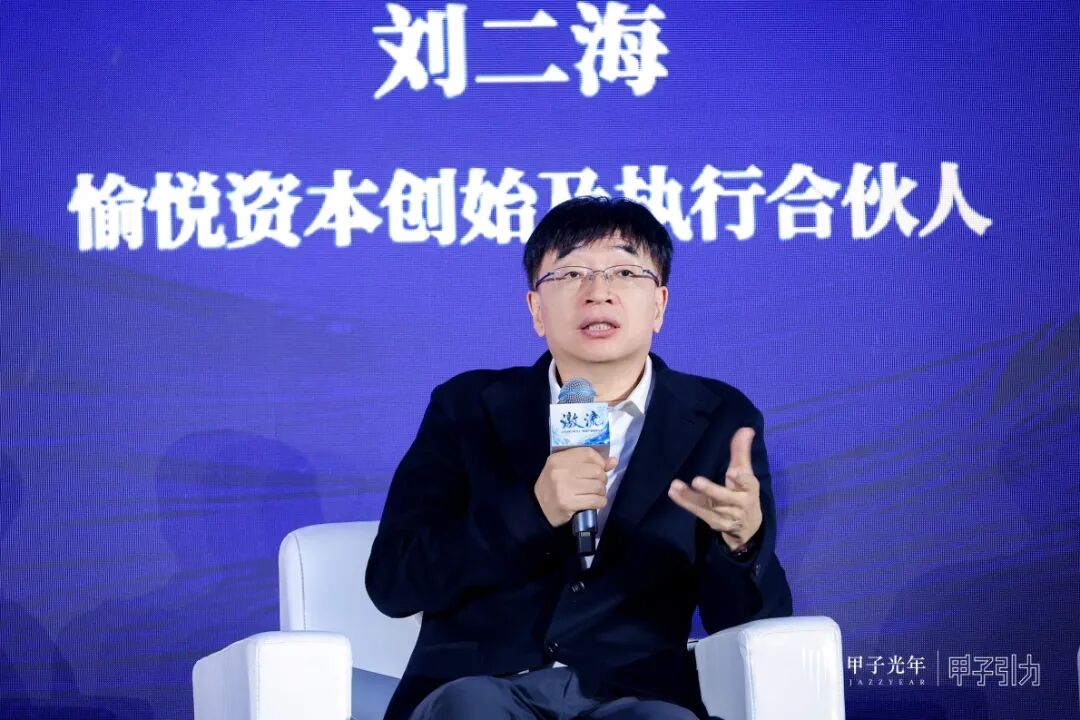
Liu Erhai, Founding and Managing Partner of Joy Capital
Wu Xi: Hello everyone, I am Wu Xi from Dacheng Finance & Intelligence. Dacheng is an institution established 26 years ago, now managing 80 billion yuan of funds, has invested in more than 850 projects, about 150 of which have been listed. After 2021, we mainly focus on the fields of AI, embodied intelligence and commercial aerospace. We have made more layouts from models, Infra to applications.
I want to share an embodied project we are paying attention to — Tensor World. There are many world model or embodied brain projects this year, we have looked at twenty or thirty of them, and we think this project is quite interesting. We know that models can learn intelligence related to object motion and state through massive video data, but it is not complete yet. So how to make it complete and form a closed loop? How to introduce physical data, how to do a good job in training and alignment? I think the tokenizer for physical information done by Tensor World is quite interesting, and at the same time it reminds me that the embodied brain may also return to the pre-training era. Only pre-training can raise the upper limit of intelligence, which was true for LLM (Large Language Model), and I think it may also be true for the embodied brain.
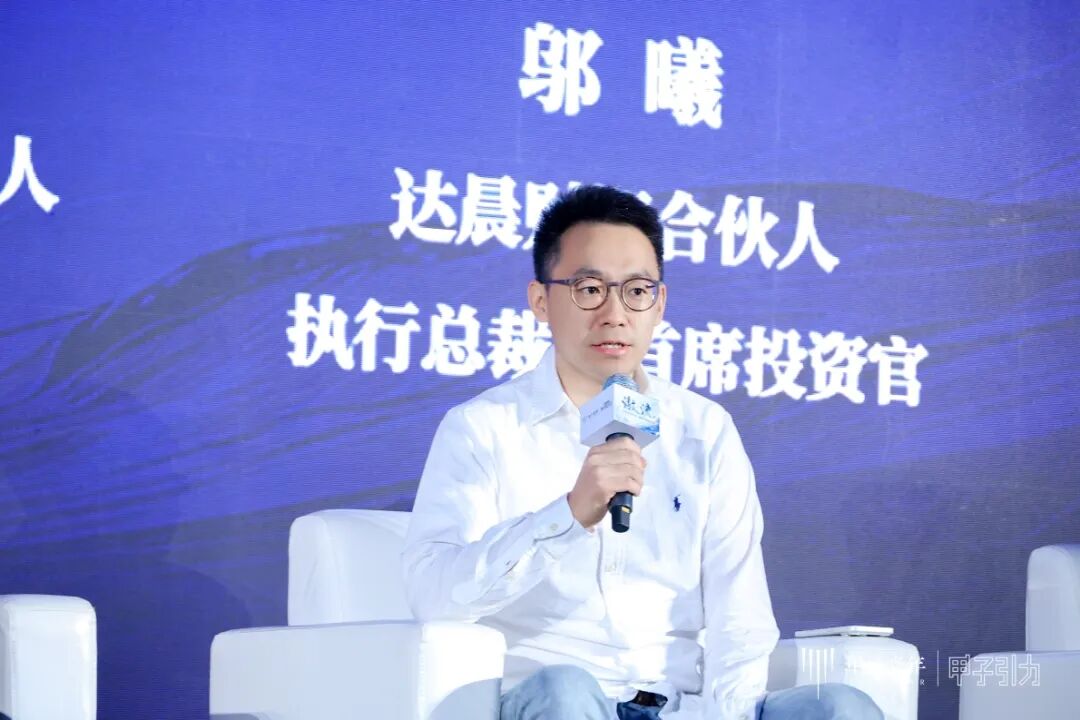
Wu Xi, Partner, Executive President and Chief Investment Officer of Dacheng Finance & Intelligence
Li Feng: Hello everyone, I am Li Feng from Frees Fund. We have been doing early-stage investment for 11 years, about 60% of our investments are in cross fields, which are the intersections between technology, biotech & healthcare, consumption, hardware, chips and other fields.
There are a lot of companies whose valuations have risen tremendously this year. For example, we also invested in the angel round of Yuanchuan Micro. There are also AI chip enterprises similar to Yuanchuan Micro that have obtained rapid valuation growth, such as Hyperdimensional Infinity and Zhichen Semiconductor.
I originally wanted to pick a niche project to introduce to everyone, but there was a news last night, and this direction became a hot topic this morning.
I want to introduce a biotech & healthcare enterprise we have invested in for multiple rounds — Yanming Bioscience. It was founded by Shao Feng, my classmate in college, who was once the youngest academician in China. My colleagues and I often joke that he was the youngest when he was elected, and now he is no longer young, more than ten years have passed.
Based on Academician Shao's scientific research, Yanming has spent more than 6 years developing more than a dozen R&D pipelines with completely new mechanisms and new targets, 5 of which have entered phase I and phase II clinical trials, and another 1 is carrying out investigator-initiated clinical research (IIT). All of them are First-in-Class, from the mechanism to PCC (the candidate compound that enters preclinical research in drug R&D), and then to the drug molecules, all are independently developed, which is absolute original innovation without any objects to imitate.
The valuation of this company is almost the same as the valuation of our world model company whose valuation has increased more than ten times in 6 months. I said, do you think the world is fair? But the world will be fair sooner or later. So since May this year, inside our fund, I have been suggesting my colleagues to invest more in biotech & healthcare.
It is not fashionable to say this at the moment, or it was not fashionable to say it before last night. Because last night, there happened to be a small intersection between the AI and biotech & healthcare industries. Moderna, the most popular company during the pandemic, developed a personalized vaccine for melanoma to fight cancer, and its stock price nearly tripled in one day. So this matter became a hot topic today, because it used AI for screening, of course this is also the first so-called personalized vaccine for human beings, which is a creative thing.
All in all, the world is fair after all, the world cannot only develop around one main line, and eventually it will develop in all directions, which is determined by both the cycle and the industry and economy.
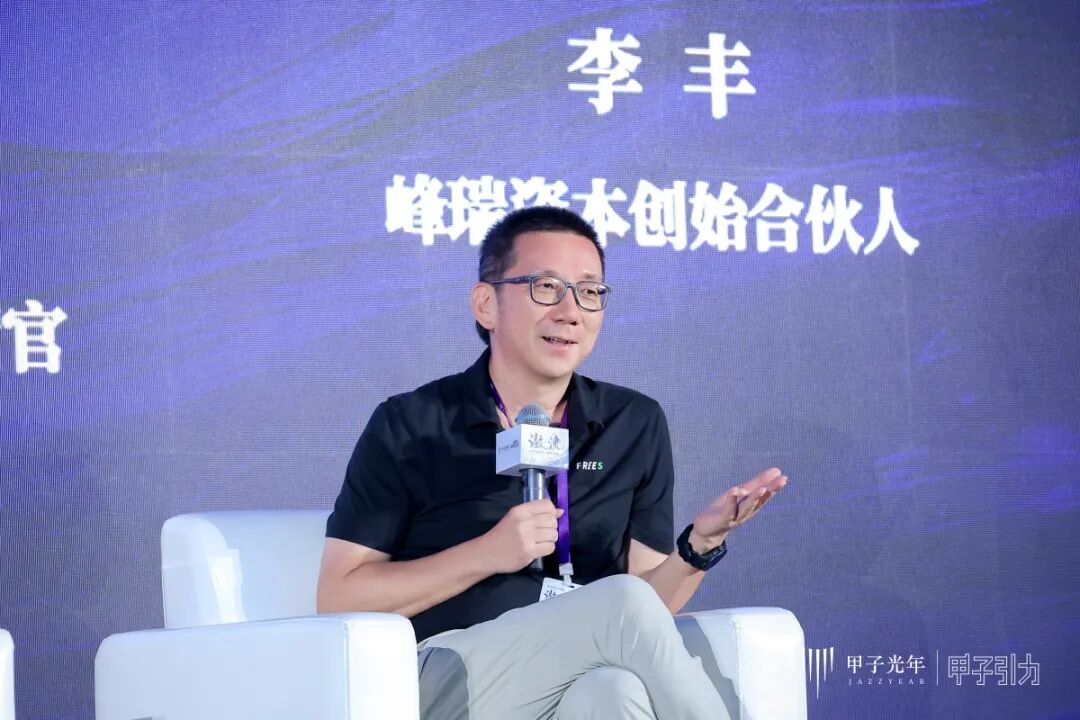
Li Feng, Founding Partner of Frees Fund
2. Is this a phased prosperity of hot tracks?
Zhang Yijia: We have all seen the global sensational news about cancer vaccines. What Mr. Li Feng said just now "Is the world fair? But the world will be fair sooner or later" is very classic.
Just now in the big report, I proposed "Intelligence in Four Worlds" — Digital Intelligence, Physical Intelligence, Scientific Intelligence, Social Intelligence. I believe these intelligences will gradually spread to niche places and eventually cover all corners.
All the guests just mentioned some projects that have achieved rapid multiple growth. So please make an overall judgment: what time point are we at now? Is it a real revaluation cycle of tech assets, or a phased prosperity of hot tracks?

Zhang Yijia, Founder and CEO of Jiazi Lightyear
Li Feng: All capital cycles in the world are from the gradual increase of money, to the peak of money, and then to the decrease of money. This only represents my personal opinion, not the opinion of the fund and the institution. From my limited macro knowledge, global liquidity should be close to its peak. Of course there are many signs, no matter the US debt issues discussed these days, what happened to the US Treasury, or the United States stepping in to rescue the Japanese exchange rate, including the high-frequency rotation and large fluctuations of tech stocks, these