Five Years: The Chronicle of a City's Breakthrough in the Power Battery Industry
China's power battery sector remains highly competitive in the global market.
Data released by South Korean market analytics firm SNE Research shows that among the world's top 10 power battery installation volumes in the first half of 2026, Chinese enterprises took 7 seats, accounting for a combined 72.4% of the global market share.
While the figures are impressive, hidden concerns still linger: overcapacity at the low end, undersupply of high-end products, rising compliance thresholds for overseas expansion, mounting pressure on R&D across multiple technical routes, and intertwined challenges involving raw materials, supply chain security and recycling systems.
Against the backdrop of industry shifts, local investment attraction trends are also changing: many cities have quietly shifted their new energy investment focus from scrambling for projects with all their might to de-stocking cautiously. At this juncture, Yibin, the first city along the Yangtze River, is welcoming the 5th edition of the World Power Battery Conference.
On one hand, the entire industry faces the coexistence of overcapacity and structural shortage; on the other hand, Yibin stands as a sample city that has hosted this top national-level industry event for five consecutive years. What exactly has Yibin done right? The 2026 World Power Battery Conference, which is set to kick off in Yibin on September 3, may offer the answer.
The theme of this conference is "Electrify All, Integrate for Shared Growth". "Electrify All" points to the continuous expansion of power battery application boundaries: batteries are no longer exclusive components for new energy vehicles, but are becoming the power infrastructure for thousands of industries. "Integrate for Shared Growth" responds to the current practical propositions of the industry, including upstream and downstream coordination in the industrial chain, equal emphasis on manufacturing and circular recycling, and alignment between domestic industrial rules and global standards. The two concepts are two sides of the same coin, precisely anchoring the development direction of the power battery industry.
1
The "Yibin Solution" Under Industrial Bottlenecks
After going through the high-speed expansion phase, China's power battery industry already boasts the world's largest production capacity. But behind the prosperity, multiple practical pain points continue to plague the entire sector.
While the nominal total production capacity keeps rising, low-end backward production lines are operating at insufficient rates, and the supply of high-quality cells that meet the strict standards of automotive manufacturers and large energy storage clients is tight. Homogenized competition and price involution keep squeezing corporate profit margins. Most cities' lithium battery industries focus more on the manufacturing segment, and can hardly fully address a series of complex contradictions across the industrial chain.
Technological upgrading is also caught in a dilemma. With multiple technical routes such as solid-state batteries and sodium-ion batteries advancing in parallel, enterprises, no matter if they choose to bet on a single route or deploy multiple routes, have to bear high R&D investment and the sunk costs caused by misjudgment of technical routes.
In response to the above pain points, Yibin's solution is not to simply pursue the expansion of production capacity figures, but to prioritize improving the full-chain supporting foundation.
Looking at the local industrial layout, Yibin has formed a complete closed loop covering upstream lithium salts, cathode and anode materials, and electrolyte, midstream cell manufacturing, downstream complete vehicles and energy storage applications, and end-of-life recycling and regeneration.
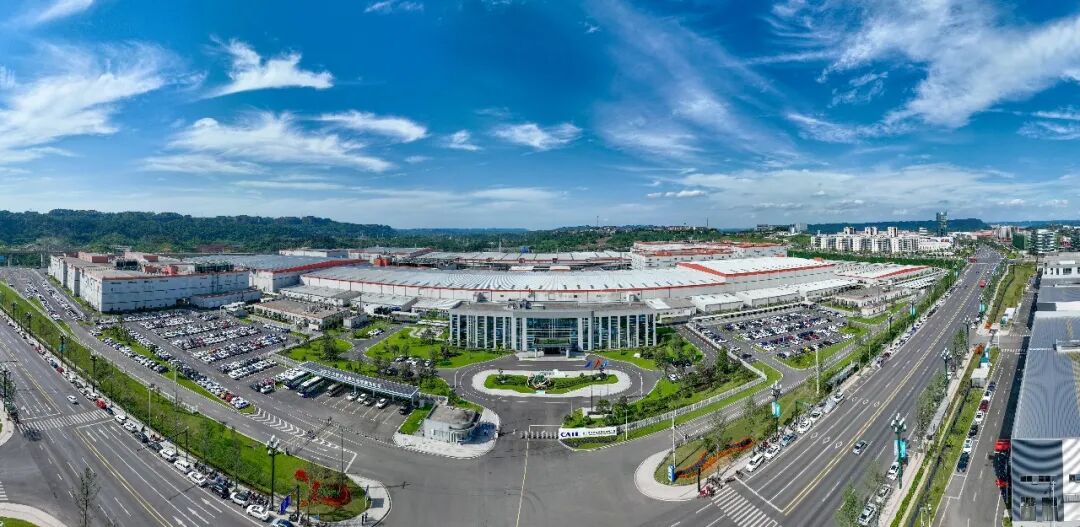
Sichuan Times, the world's first battery "zero-carbon factory"
In the Yangtze River Industrial Park of Sanjiang New Area, enterprises including Sichuan Times, Times Chang'an and Sai Ke Power are located in close proximity, with core chain factories, power battery production and new battery trial production links within a relatively short industrial radius. Extending further to districts and counties such as Jiang'an, the electrolyte project of Kunlun New Materials complements the upstream material supporting system, providing soil for new technologies to complete pilot test and small-batch verification locally, avoiding the dilemma of "having production capacity but being unable to manufacture high-end products".
Facing the next-generation battery track, Yibin has built a multi-level matrix of innovation platforms. Multiple high-level scientific research institutions including the Academician Ouyang Minggao Workstation and the Intelligent Solid-State Battery Innovation Center have settled in the city, advancing multiple solid-state battery technical routes such as sulfide and oxide in parallel, and building a solid-state battery industrial park.
In addition, the local government has implemented the "Open Bidding for R&D Tasks" mechanism, where enterprises put forward real technical problems and offer rewards to scientific research forces to tackle them. The total amount of rewards for power battery-related R&D tasks exceeds 99 million yuan. Meanwhile, the Yibin New Energy and New Materials Digital Intelligence Innovation Center uses AI tools to shorten the R&D cycle of battery materials and reduce the R&D trial and error costs for enterprises.
More critically, Yibin is making every effort to build an in-depth industry-city integration ecosystem. Relying on the golden waterway of the Yangtze River, Yibin pioneered the "Electrified Yangtze River" demonstration project, applying power battery technology to inland shipping scenarios and exploring the practical path for ship electrification.
Yibin's practice reflects that China's new energy industry is shifting from "whether we have production capacity" to "whether production capacity can achieve efficient coordination", and is evolving from scale competition to comprehensive competition covering technology, scenarios and global rules.
2
Directly Connecting to the Global Power Battery Industry Pulse
Power batteries are becoming industrial products with global mobility attributes. Their production may involve multiple countries and regions, with raw materials, equipment, cells, system integration and end applications distributed in different links.
Competition that used to be completed by a single enterprise or a single region now increasingly requires information sharing between supply chains, collaborative verification between enterprises, and joint participation of the industrial community in rule discussions.
Whoever can establish a transparent, traceable and enforceable standard system earlier will have more opportunities to reduce transaction costs in the next round of competition.
The agenda setting of the 2026 World Power Battery Conference is exactly a response to these industry changes. This conference will focus on promoting the digital ID of power batteries, full life cycle management and standardization of the recycling system. Meanwhile, the Power Battery Industry Development Index (2026) and the Power Battery Technology Roadmap will also be released during the conference.
The conference aims to provide a common set of observation coordinates for enterprises, scientific research institutions and application parties: how products are recorded, how carbon emissions are accounted for, how technical routes are compared, and which indicators should be used to judge industrial development.
The establishment of observation coordinates is only the first step, followed by integrating them into the daily operation system of enterprises. The 8 special sessions set up by this conference cover fields including policy, solid-state batteries, supply chain, application, energy storage and recycling. Such agenda arrangement puts issues originally scattered in different links of the industrial chain into the same discussion framework, helping enterprises understand the real demands of upstream and downstream partners and reducing information mismatch between R&D, manufacturing and application. Its significance lies not only in centralized display of achievements, but also in finding manufacturing, pilot test and application interfaces for technologies.
Internationalization is another main line of this conference. Spain participates in the conference as the guest of honor country for the first time, soliciting innovative technologies globally and providing overseas scientific research institutions and enterprises with opportunities to access China's manufacturing capacity and understand China's application market.
Since the consecutive hosting of the World Power Battery Conference, Yibin has continuously connected with embassies and consulates of multiple countries in China, international industry organizations, overseas scientific research institutions and foreign-funded enterprises, and obtained information on overseas market demand and rule changes through project docking, technical seminars and industrial exchanges. For an inland city, the value of such connection is not only reflected in expanding popularity, but also in enabling local enterprises to get access to international certification, green rules and product demands at an earlier stage.
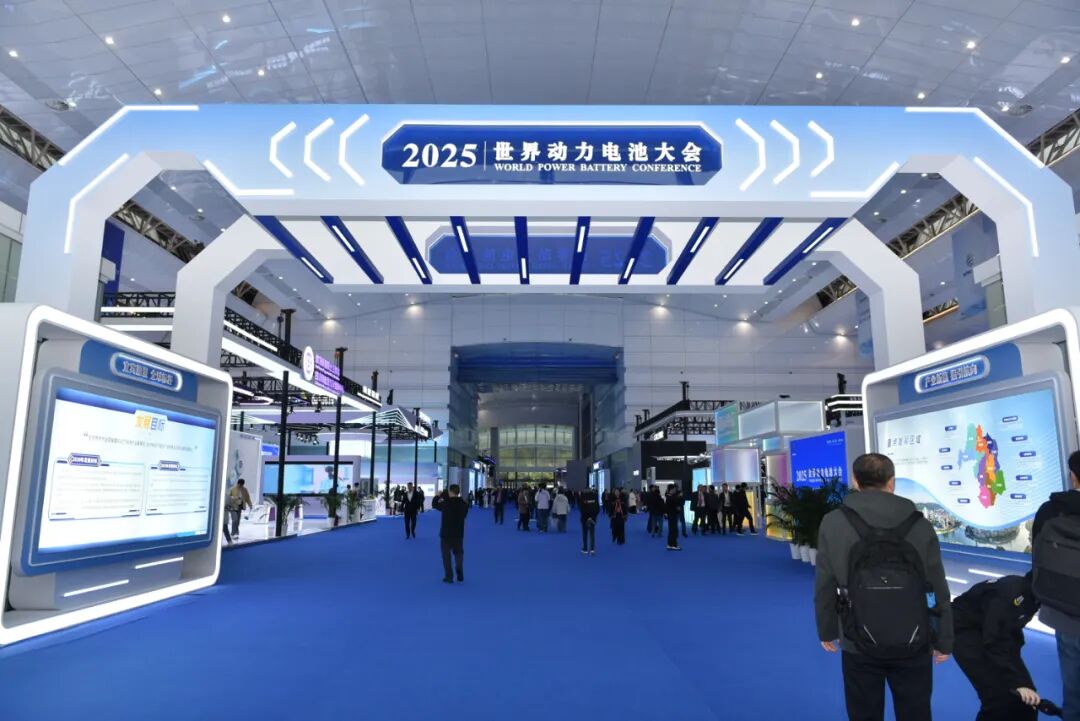
Scene of the 2025 World Power Battery Conference
From this perspective, the significance of the 2026 World Power Battery Conference has gone beyond being a mere industry conference. It connects technical R&D and manufacturing sites at one end, battery applications and the global market at the other end, and handles cross-link issues such as carbon footprint, recycling and industrial standards in the middle.
When cooperation brings real projects and products, the value of the industrial platform will truly manifest.
3
Yibin's Next Five Years
"Electrify All" accurately describes the ongoing scenario revolution brought by power batteries.
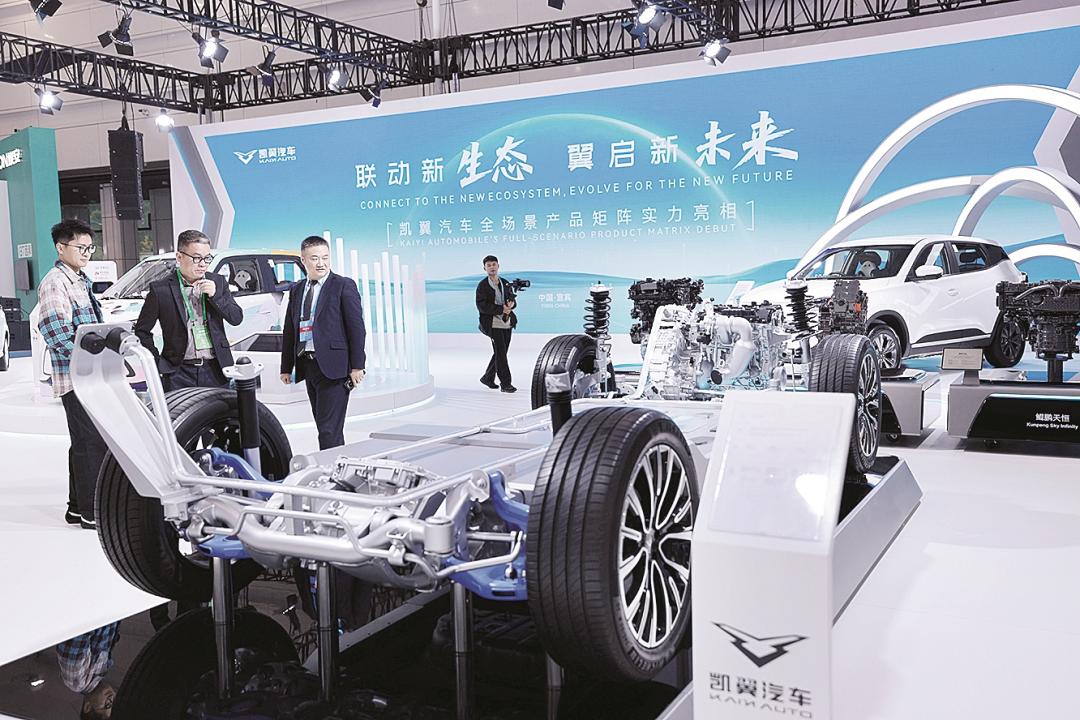
Visitors learning about the application of new power battery technologies
For a long time, the public has long perceived power batteries as roughly equivalent to new energy vehicle batteries. But today, the application boundaries of power batteries are being continuously expanded. Electric aviation, electric ships, energy storage power stations, embodied intelligent robots, electric tools, engineering machinery, drones... thousands of scenarios are waiting to be empowered by power batteries.
This is exactly the intention of the special sessions of this conference: to build a supply-demand dialogue platform, put the real demands of all downstream industries on the table, and enable direct dialogue between both sides. The concurrent power battery application achievement exhibition can also intuitively show how power batteries support new scenarios such as shipping, energy storage, robots and low-altitude equipment, allowing people to immerse themselves in the industrial landscape of "Electrify All".
Yibin, a city by the Yangtze River, has grown into a pivotal industrial town in the global power battery landscape. Calculated from public data, one out of every 10 power batteries produced worldwide now comes from Yibin. After years of layout, Yibin's completed power battery production capacity has reached 270GWh, and it will form a 300GWh production capacity in the third quarter of 2026. Relying on the siphon effect continuously generated by the World Power Battery Conference, Yibin has settled hundreds of power battery industry projects in total.
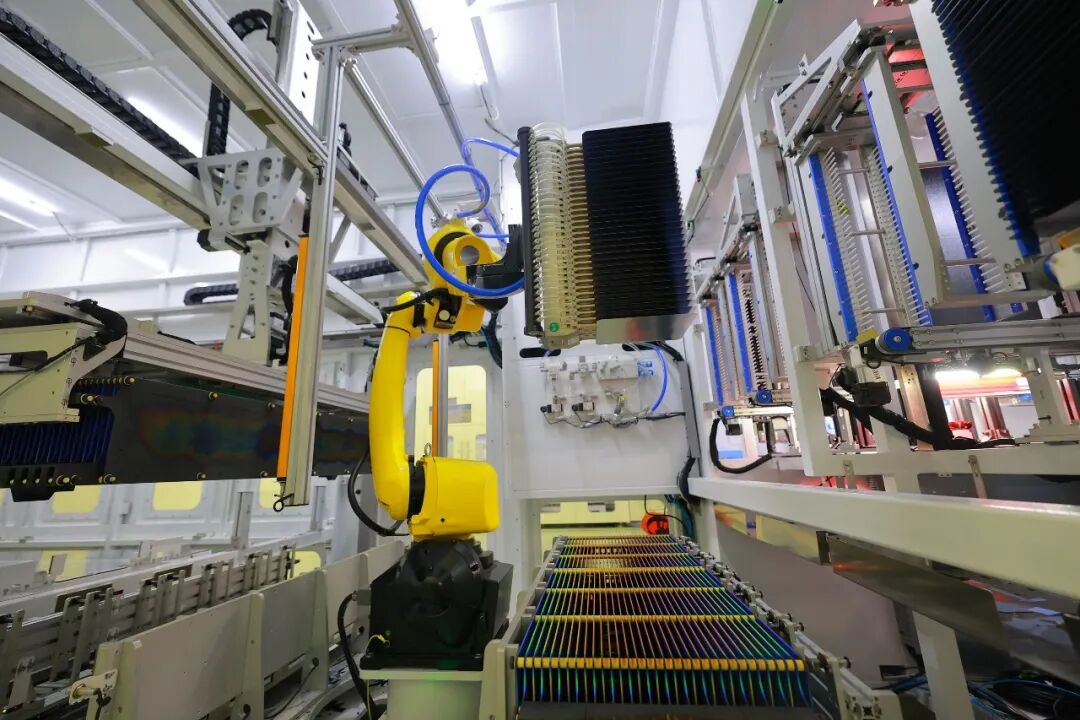
Inside the production workshop of Sichuan Dongci, a robotic arm is grasping battery cells
From this perspective, Yibin's focus in the next five years lies in "deepening development".
With a huge production capacity cluster in place, Yibin's next key task is to continuously consolidate its original innovation capabilities, seize opportunities in cutting-edge tracks such as solid-state batteries, new electrolytes and battery recycling technologies, further smooth the industry-university-research transformation chain to enable more scientific research achievements to move from lab scale to mass production, rely on the conference as a global window to participate more deeply in the discussion of international standards and green rules, and continuously cultivate diverse application scenarios such as energy storage, electric shipping and special equipment, so as to translate the industrial scale advantage into product advantages and technological advantages.
This is perhaps the other meaning of "Electrify All, Integrate for Shared Growth" for Yibin: the city is not only hosting more battery projects, but also undertaking more complex connections between technologies, scenarios, rules and industrial resources.
This article is from the WeChat Official Account "Phoenix Weekly Finance", author: Shi Dongxu, editor: Zhang Cheng, published with authorization from 36Kr.