Can the all-electric global vehicle still make another big splash?
The first all-electric SUV, a global vehicle, priced between 100,000 and 150,000 yuan — with these three selling points combined, do you think this model will be a huge hit?
This is the answer and the selling proposition presented by Chery Fengyun when its first all-electric SUV, the Fengyun T7, was officially launched on August 26 (3 trim levels, with an official guide price of 97,900 to 118,900 yuan).
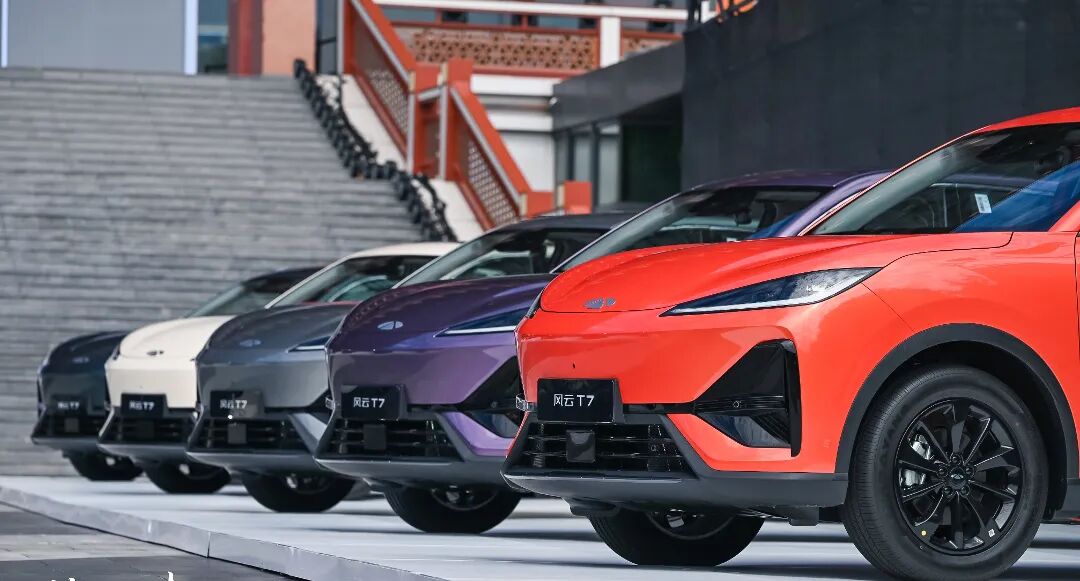
At the launch event, Li Xueyong, Executive Vice President of Chery Automobile, spoke highly of this "slow-developed vehicle". Boasting global quality built with 963 test vehicles, four core values of "extra-long range, globally appealing design, higher safety, and smart experience", as well as product strength of "six redundancies" covering crash safety, battery safety, equalized range performance, full-domain energy efficiency, handling performance and full-vehicle verification, the model fully demonstrates Chery's strong ambition for the global market.
Moreover, the strategy of launching this model first in overseas markets then in the domestic market has become a new model pioneered by Chinese automakers in the new energy era, backed by a systematic development framework that aligns with global standards from the very start of R&D. In terms of launch rhythm, the overseas homologous model Lepas L6 started pre-sales in South Africa first, landed in Thailand on July 24, entered Indonesia in August, and will reach the EU in September, covering Australia, New Zealand and the UK market in October, which is a fairly fast pace.
Of course, in the current highly competitive and saturated new energy vehicle market, what is the success rate and market breakthrough potential of launching an all-electric SUV that is also a global model to compete in the 100,000-150,000 yuan domestic segment? There is far more behind this move than meets the eye.
01
Competition for the 100,000-150,000 Yuan Market Cake
First, let's talk about why Chery is investing heavily in the 100,000-150,000 yuan market, focusing on the all-electric SUV Fengyun T7 this time?
According to the data referenced in the article *The 150,000-yuan SUV Market Cake: Easy to Spot, Hard to Grab* from Auto Commune, the retail sales of narrow-segment SUVs in July reached 800,000 units, while compact SUVs in the 100,000-150,000 yuan segment account for about 30% of the total SUV market, which is roughly 240,000 units.
Moreover, this price range basically covers the first-car purchase and replacement demands of most ordinary families, with a large user base and high market capacity. It is also the most transparent segment in the industry competition where users make the most rational purchase decisions. Therefore, the performance of automakers in the 100,000-150,000 yuan SUV segment directly determines their annual sales volume, market penetration rate and user reputation base.
What Chery aims to do this time is to use a global all-electric SUV to break a new path in the 100,000-150,000 yuan SUV market currently dominated by PHEV and range-extender models, to embrace the "all-electric era" covered in the previous special report by Auto Commune. This is the key strategic move after Chery recognized the market trend and announced that "we will go all out for all-electric models".
Key competitors in this segment include BYD Sea Lion 06, which has achieved cumulative sales of over 86,500 units in the first half of the year, with monthly sales steadily exceeding 24,000 units, ranking firmly as the top-selling SUV in the 150,000-yuan segment; BYD Song PLUS DM-i, which continues to sell well with mature technology and complete after-sales system and has become a benchmark for household hybrid SUVs; as well as Leapmotor C10 and Deepal S05, which quickly stand out as dark horses in the market with advantages of class-leading space, downgraded intelligent driving configurations and high cost performance.
Of course, there is also the basic market of fuel and hybrid vehicles, such as Geely Xingyue L with sales exceeding 82,000 units in the first half of 2026, Changan CS75 PLUS with sales over 72,000 units in the first half of the year, as well as defensive joint-venture fuel models including Toyota Frontlander, Toyota Corolla Cross and Nissan Qashqai.
From the perspective of compact SUV market sales, the top 5 best-selling models in July were Changan Qiyuan Q05, BYD Song PRO DM, GAC Aion i60, BYD Yuan UP and GAC Toyota bZ3X. Together with the aforementioned models counted under different statistical calibers, this segment is clearly a red ocean market.
Undoubtedly, Fengyun T7 has kicked off a new round of compact SUV replacement competition in the all-electric track. This is the clarion call for a new round of competition in the 100,000-150,000 yuan all-electric SUV segment after all-electric sedans in this price range achieved good market results. This time, Chery is "going all out" again.
In terms of the "four core values" mentioned by Li Xueyong, the "extra-long range" feature solves the range anxiety problem that plagued previous all-electric SUVs. The entire lineup is equipped with a 65.05kWh Rhinoceros battery, with a CLTC range of 600km, a measured actual range of 681.6km that exceeds the nominal value, and the 30%-80% fast charging only takes 20 minutes.
The battery is a core factor supporting this performance. After years of R&D, Chery has mass-produced its self-developed "branded battery" Rhinoceros battery, which gives it the confidence to compete with PHEV SUVs in terms of quality and cost. Coupled with the "full guarantee" policy, it eliminates consumers' concerns and provides sufficient technical support for the next stage of all-electric SUV competition.
Safety has always been Chery's strong suit, and its intelligent performance has also been greatly improved. Its exterior design is widely praised, and the paint finish is of high quality. In short, the Fengyun T7 can be regarded as a "well-rounded fighter" with no obvious shortcomings, which is the basic quality and requirement for winning the fierce red ocean competition of new energy SUVs at present — a single outstanding advantage is no longer enough, full capability is necessary.
Of course, as a compact SUV, space is the most valued factor by consumers in this segment. The Fengyun T7 has dimensions of 4570×1852×1694mm and a wheelbase of 2700mm, achieving an 84% "space utilization rate" in the cabin. Combined with 911mm of rear legroom and a fully flat floor design, its space performance is very satisfactory. It is truly remarkable that a global model fully considers the demands of domestic users.
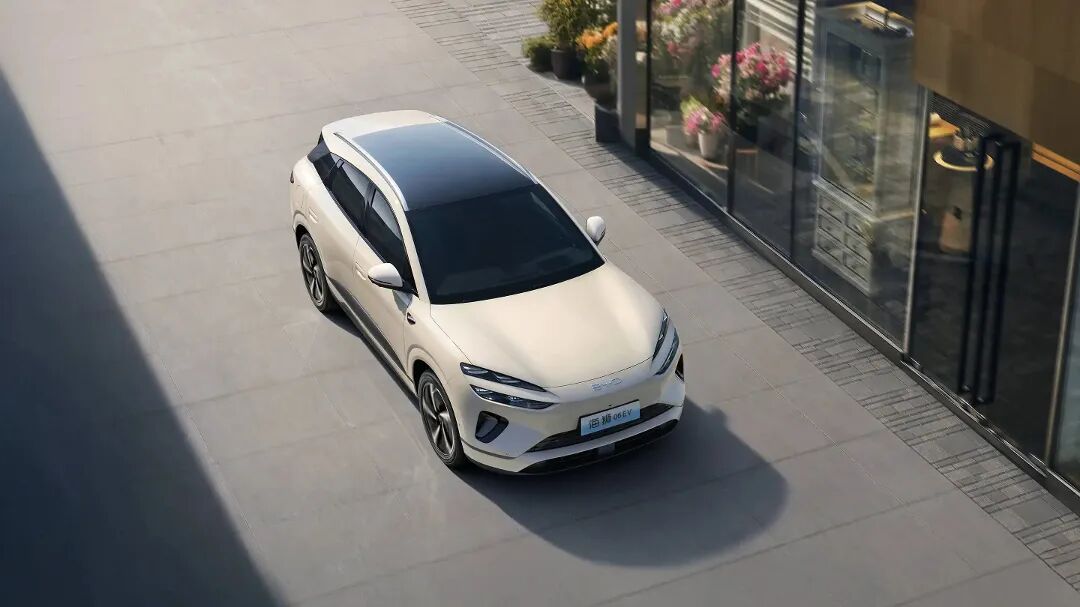
Since family users in this segment will prioritize travel practicality when purchasing vehicles, a wheelbase close to or even larger than 2750mm, spacious rear seats, large-capacity trunk, fully flat rear floor and other tangible space advantages are often the primary judgment criteria for users to make purchase decisions, and are the selling points that most easily form differentiated advantages. In these aspects, the Fengyun T7 has already met the core demands very well.
Moreover, compared with all-electric sedans, all-electric SUVs have prominent advantages in vertical space with fewer restrictions, and they fit the car usage habits of Chinese consumers. Therefore, it is predictable that the competition in the all-electric SUV segment will become a red ocean in the next stage, and the final winner is hard to predict.
In addition, as concluded in the Auto Commune article, there is a set of proven formulas for achieving sales breakthrough in the 100,000-150,000 yuan SUV segment: sufficient and class-leading space + controllable usage cost + practical configurations + reliable brand + reasonable pricing. On this basis, automakers that equip their products with mature and stable three-electric and hybrid technologies can gain a firm foothold in the fierce competition and continuously capture the dividends of the household vehicle market.
As for the all-electric form, which represents the ultimate goal of carbon neutrality, it is only at the initial stage to seize market share from the mainstream hybrid and range-extender models in the 100,000-150,000 yuan SUV segment. As the saying goes, when the top two players fight, the third and fourth suffer. When all-electric SUVs compete with PHEV and range-extender SUVs, the market share of fuel SUVs will further shrink, while HEV models can still maintain a certain market position for a period of time.
However, the 100,000-150,000 yuan market has extremely fierce internal competition, which generally follows the principle of "class-leading experience at affordable price". As the Fengyun T7 claims, it provides product experience above the 200,000-yuan level with a 100,000-yuan price, and wins competition through "quality-to-price ratio". After all, under national regulation, pure low-price competition is no longer allowed, and there are not many enterprises that have the strength to achieve both high quality and reasonable pricing. The market will eventually select the most competitive players.
02
"The Global Car Is Dead" VS "Born Global"
The concept of "global car" has a long history. Starting from the Ford Model T launched in 1908, the Volkswagen Beetle, to the Toyota Corolla 1966 and Volkswagen Golf 1974 after World War II, these global cars have all led an era.
However, in the third stage when European and American automakers widely adopted modular platforms, such as Ford's C1 platform, Volkswagen MQB and Toyota TNGA, the gap in user preferences in different regions began to widen. For example, European consumers value small cars and emission performance, while Chinese consumers value large screens, long wheelbase and rear space. As a result, the era of "one model for all markets" gradually came to an end.
At this stage, the most common products in the Chinese market are "market-specific models". For example, Audi launched the "L" era, which specially developed long-wheelbase versions and market-specific interiors for Chinese consumers. These models are nominally based on global platforms, but actually have a large number of localized redesigns.
In the new energy era initiated by the Chinese market, the global car model has changed completely.
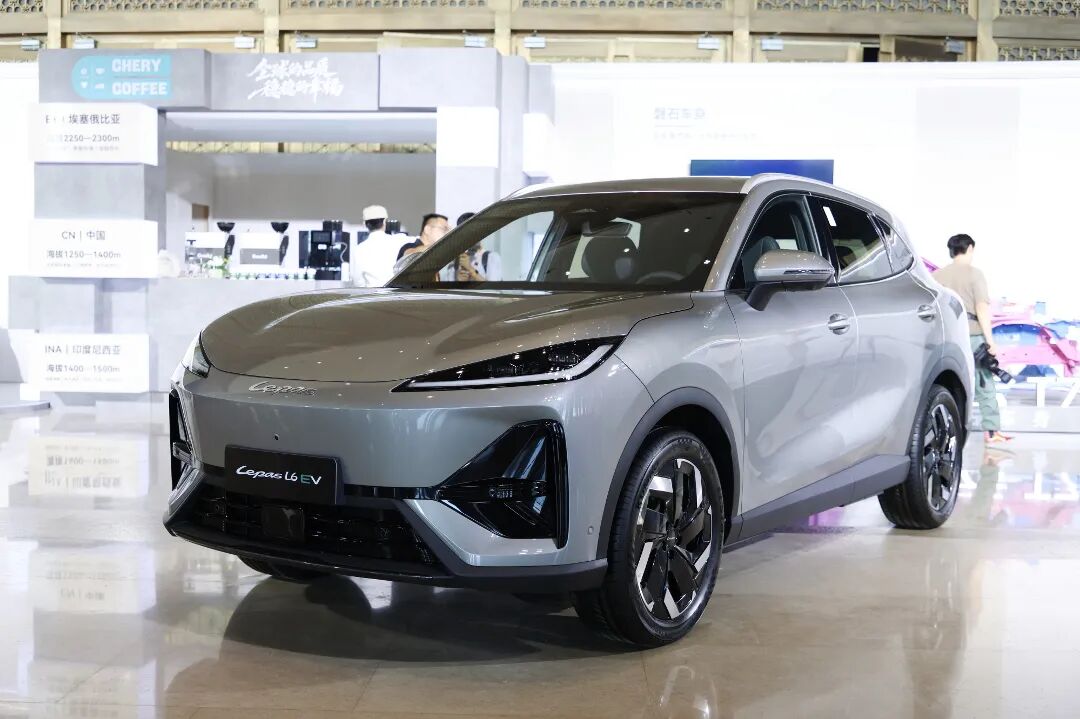
In contrast to joint-venture automakers abandoning the "global car" strategy, Chinese independent automakers currently have two modes. The first is the conventional mode: models from brands such as Chery, BYD and Zeekr are first launched and iterated in the domestic market, then go through overseas certification (or conduct certification at the same time) before being sold abroad, with the domestic market as the largest one prioritized for supply.
The second mode is the reverse global car, which is pioneered by the Fengyun T7 (Lepas L6). Leapmotor B10 also adopts a similar approach. Its feature is that the model is developed in accordance with global regulations (E-NCAP, ASEAN, Australia and New Zealand standards, etc.) from the very beginning of the project, instead of being developed for the domestic market first then modified for overseas versions.
Moreover, the certification period varies in different countries, and some overseas markets can complete certification first to launch sales earlier. In addition, automakers can use real road conditions in overseas markets to conduct large-scale product verification, and use the higher gross profit margin in overseas markets to offset the huge R&D costs of three-electric systems and vehicle platforms.
Undoubtedly, this is a very suitable approach adjusted to local conditions, but the concept of global car is also gradually fragmented, which makes domestic consumers feel confused.
Not long ago, Rouven Mohr, Chief Technology Officer of Audi, said that the era of trying to use one single model to meet the demands of all global markets is over. Rouven Mohr pointed out that a single product cannot satisfy consumers in North America, Europe and China at the same time, and the gap in vehicle usage preferences of users in different regions has become very obvious.
However, at almost the same time, XPeng's MONA L03 entered the market as "the first global model of the MONA series that is born global". Meanwhile, at the Fengyun T7 launch event, Zhang Guozhong, Executive Vice President of Chery Automobile, also said, "The core of a global car is being born global." On the one hand, people declare that "the global car is dead", on the other hand, people declare "born global" — which one makes more sense?
The global car used to represent a standard. Chinese consumers used to take pride in buying "globally synchronized models". In the fuel vehicle era, Chinese automakers did lag behind in technology, so the label of global car had a premium of advanced technology in the minds of Chinese users. At that time, there was also a widespread inferiority complex that worshiped foreign products.
However, after the disenchantment of this concept, the logic of "global car" has been reversed now, and its subtext in the Chinese market has become "not understanding local users well enough". When standardized products are no longer favored, only thorough "localization" and "customization" can help enterprises survive.
The article *"Global Cars" Have Become a Thing of the Past in China* published by Auto Commune last year also mentioned that "Chinese users no longer have the same enthusiasm for global car IP as they used to. In an era where consumers are willing to pay for innovative technologies, any automaker that treats the Chinese market with a cautious attitude will not win the future."
Therefore, even Audi, the decades-old premium brand among BBA, has to re-launch its business with the new AUDI marque, and develop models specially for the Chinese market. Audi has also established a special project center, where the development team reports directly to the board of directors, to shorten the R&D cycle of new vehicles to the "Chinese speed".
Not only Audi's AUDI marque, but also Dongfeng Nissan's N series, Toyota's bZ series, and FAW-Volkswagen's ID.AURA new energy sequence specially developed for the Chinese market are all such measures to seek new growth opportunities. The core value positioning of vehicles established in the fuel vehicle era, such as powertrain and chassis, is no longer applicable under the new value standards of intelligent driving and intelligent cabin in the new energy era. Essentially, this is the shift of the core value of automobiles.
As for the Fengyun T7, Chery aims to redefine the concept of "global car", focus on the "high quality" proposition, and reject "quickly developed vehicles". Its subtext is to oppose the industry belief of "speed is everything", under which the R&D cycle of new vehicles is extremely compressed, and a large number of half-finished "quickly developed vehicles" are rushed to the market with hidden dangers.
Chery announced to the public that this "slow-developed vehicle", which took 2 years for project setup and 3 years for R&D, adheres to the essence of automobile manufacturing, and is a "slow-developed vehicle" that truly meets the demands of consumers. However, whether this new logic of redefining "global car" can be recognized by domestic consumers still needs to be verified by the market.