Over a decade of futile efforts for nothing? Why did Japan's rare earth substitution plan fall through?
By rough calculation, China's rare earth export control on Japan has been in place for 8 months. Many people may wonder how effective this set of combined policies has been after implementation.
Coincidentally, Japan's Ministry of Finance has released the latest status report.
From January to June 2026, Japan's import of dysprosium ferroalloy, a key rare earth material, was only 13 tons, plummeting 82% compared with the same period in 2024 before the control took effect. The import volume of yttrium oxide, another important rare earth material, also dropped sharply, hitting 204 tons in the first half of this year with a year-on-year decrease of 74%... Obviously, the noose around the neck of Japan's manufacturing industry is slowly tightening.
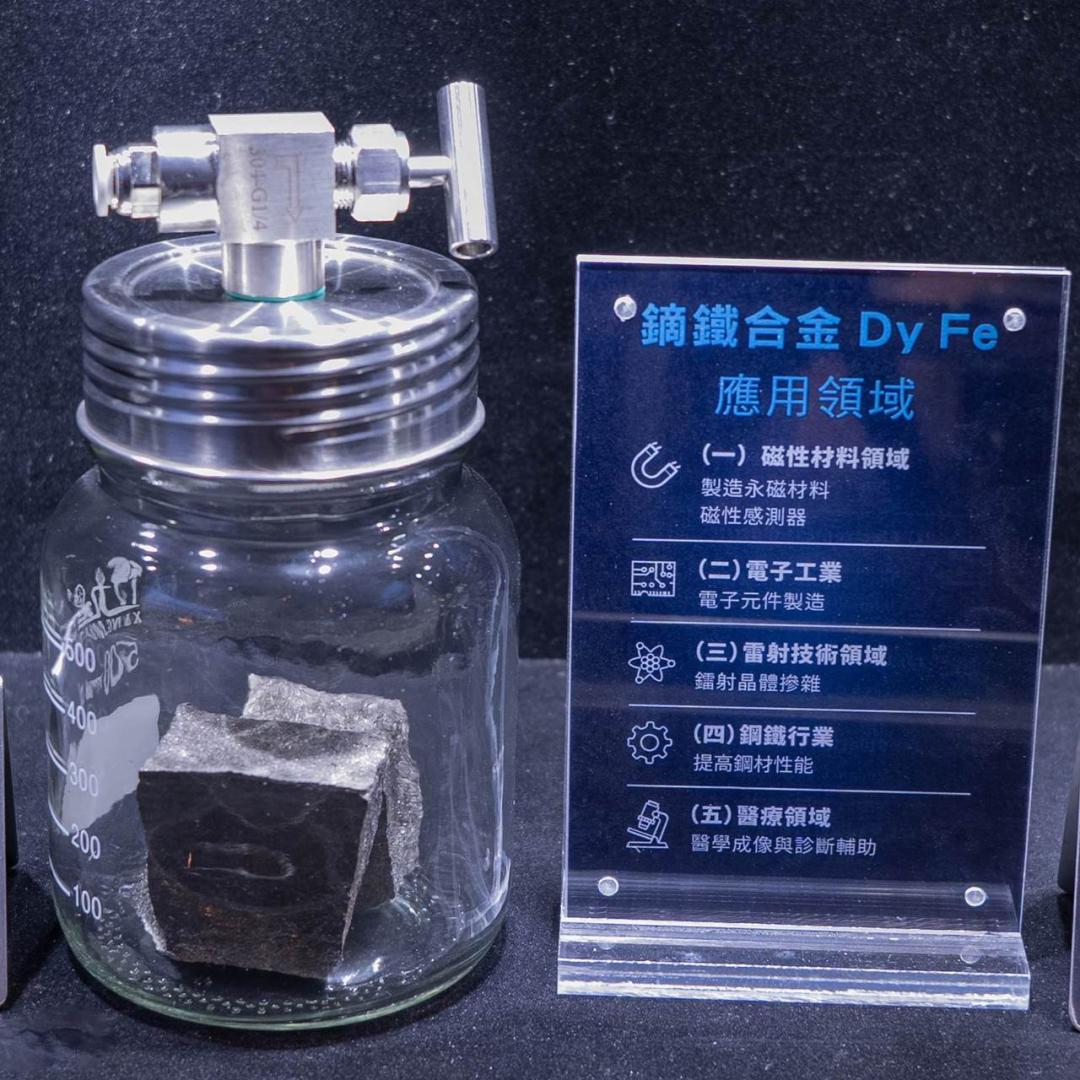
From our Chinese perspective: "Yoshi! Sugoi!"
But the Japanese may be full of confusion: "How could this happen? Haven't we started the de-China process for rare earths more than a decade ago?"
01
De-Sinicization of Rare Earths
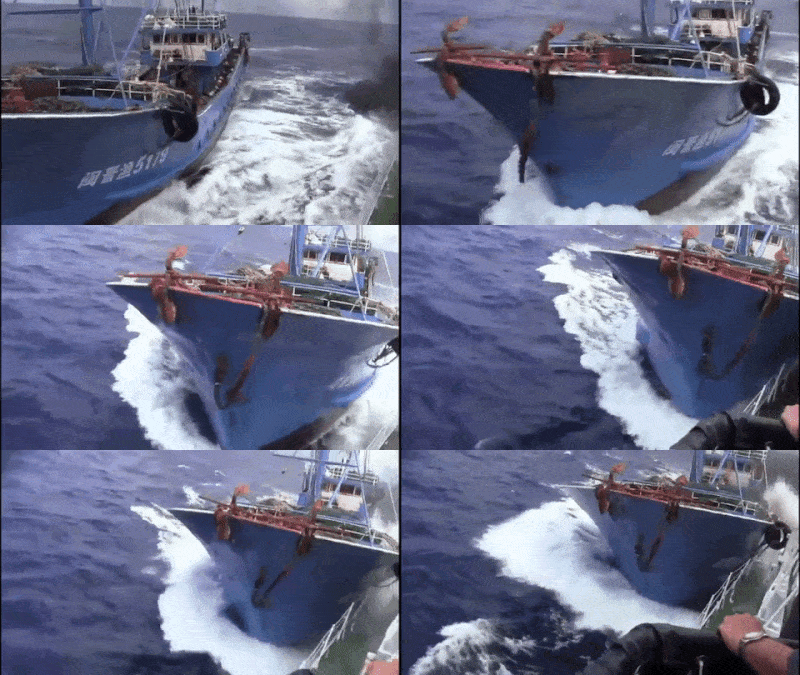
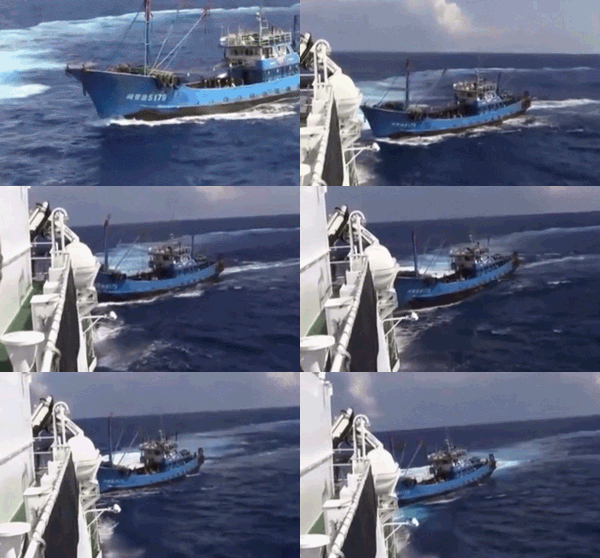
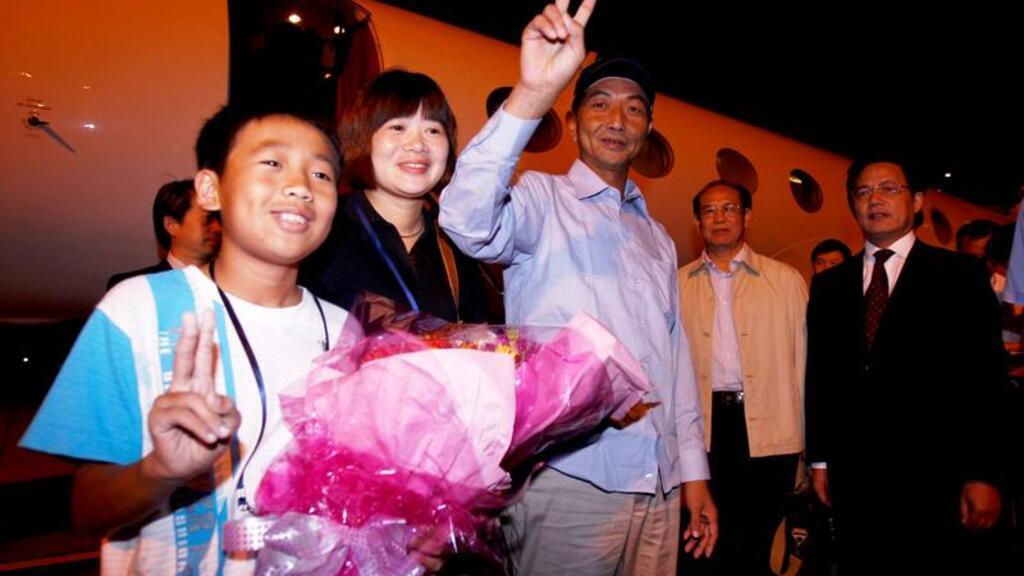
Back to September 7, 2010, Japanese patrol boats rammed the Chinese fishing boat Minjin Yu 5179 in the waters off the Diaoyu Islands and detained the captain and crew. China immediately launched countermeasures, including suspending high-level talks, halting tourism exchanges, and stopping the shipment of rare earths to Japan.
The 17 rare earth elements have unique magnetic, optical and electrical properties that can bring qualitative leaps to traditional materials. Lanthanum and cerium are the core components of automotive three-way catalytic converters; yttrium can be used as a protective layer for internal parts of advanced semiconductor etchers; europium and terbium are widely used in night vision devices and laser rangefinders; dysprosium and neodymium are the key to manufacturing high-performance motors...
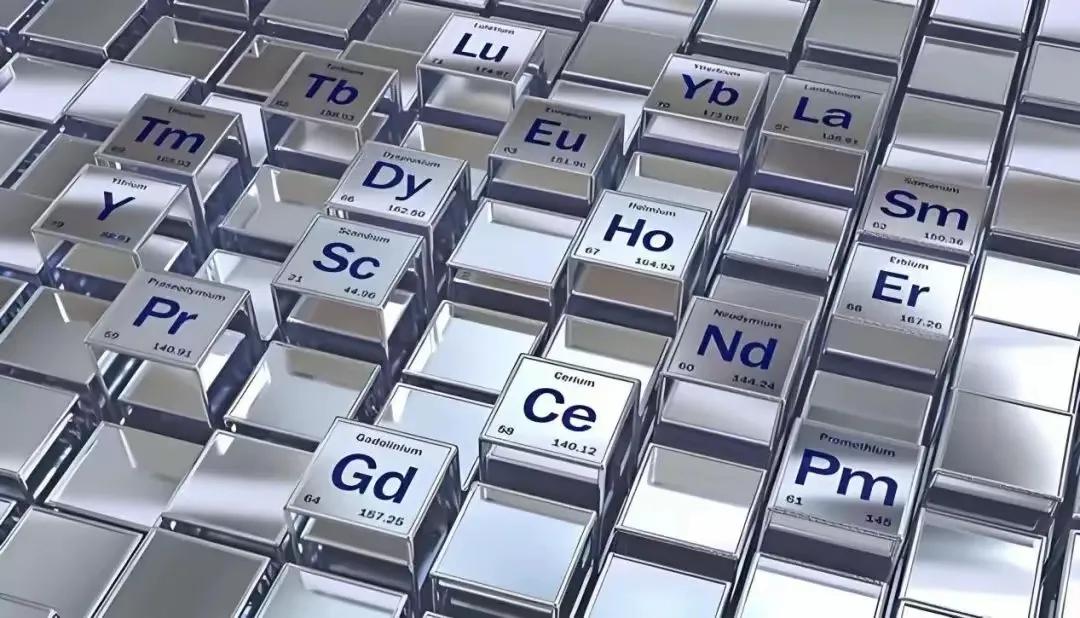
If these rare earths are completely lost, Japan's proud manufacturing industry will shut down immediately and regress to the level of the mid-20th century. Therefore, as soon as the countermeasures were introduced, it caused great panic in the Japanese business community.
Fortunately, the Japanese government bowed in time and released the Chinese crew, and the rare earth shipment suspension was actually only implemented for about two months.
After this incident, people across Japan developed PTSD, feeling that rare earths had become a lifeblood controlled by China, and that their supply would be cut off every time a conflict broke out. So they began to spare no effort to seek alternatives.

After the supply cutoff crisis, the Japanese government urgently allocated an additional budget of 100 billion yen and launched five decoupling measures: investing in overseas mines, establishing strategic reserves, promoting recycling, developing reduction technologies, and looking for alternative materials.
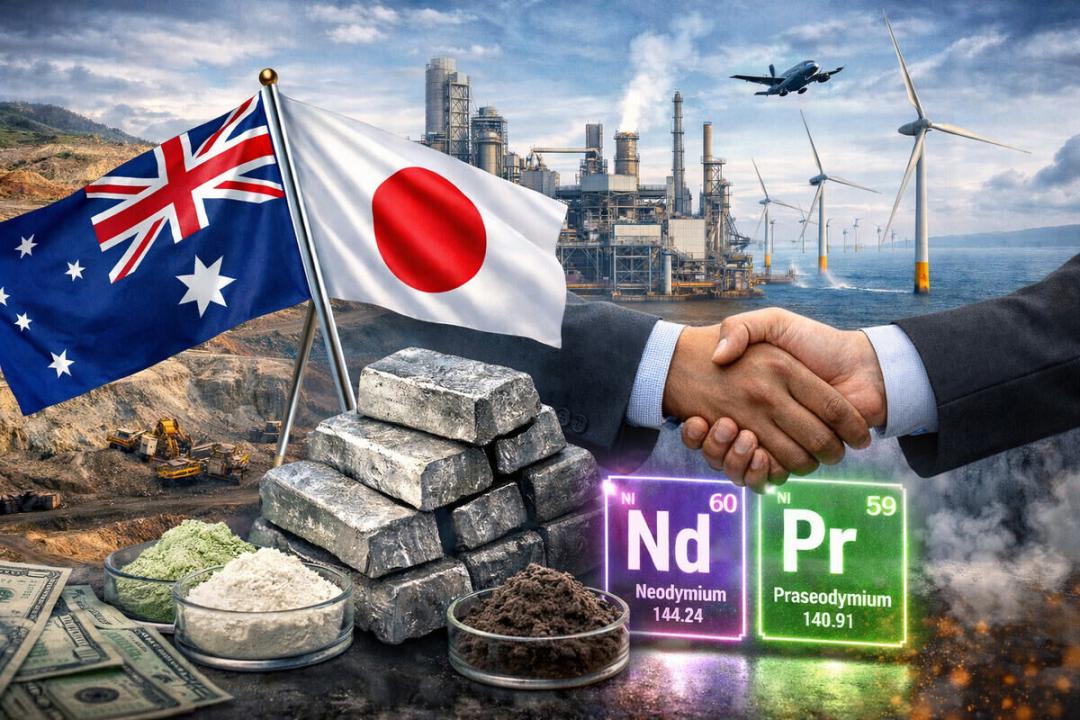
In 2011, the Metal Energy Security Organization representing Japan's national team and Sojitz Corporation, a resource development company, established a joint venture JARE, injecting 250 million US dollars into Australian rare earth enterprise Lynas in the form of loans and equity for mine development and capacity expansion. In return, JARE obtained the priority procurement right for the company's rare earth raw materials. Lynas promised to allocate up to 7,200 tons of neodymium praseodymium oxide to the Japanese market every year, and 75% of the dysprosium and terbium it mined would be reserved for the Japanese market on a priority basis.
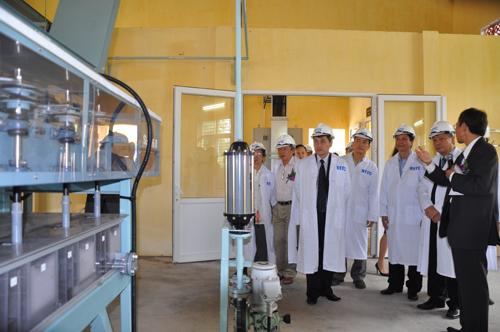
After that, Japan vigorously carried out "rare earth diplomacy" across the globe. Vietnam, which has the world's second largest rare earth reserves and is geographically close to Japan, became one of the priority targets. In 2012, Japan set up the "Japan-Vietnam Rare Earth Research and Technology Cooperation Center" in Hanoi to directly export technology and assist Vietnam in developing the Dongbao Mine with a total reserve of 7 million tons. Around 2012, Japan also reached an agreement with India to jointly build a rare earth plant. To get this mysterious major Eastern country to agree, Japan even offered civilian nuclear power technology as a bargaining chip in exchange.
After more than ten years of efforts, on the eve of this round of control, Japan has reduced its dependence on China for rare earths from 90% to 60%, which seems very successful. This set of data has become the confidence for Kishida and his group to speak loudly.
Western media also took Japan as a positive example for publicity, believing that as long as they work hard like Japan, they can achieve supply chain diversification. "China's rare earth card is not to be feared!"
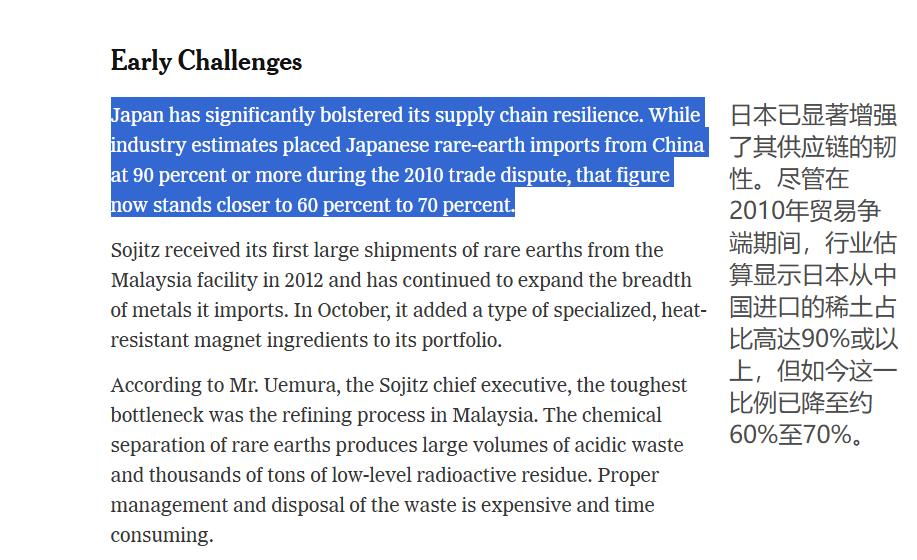
(The New York Times)
But as soon as this round of export control was launched, the true situation was exposed again. The supply was still restricted as expected. From the chart made by Japanese media, it can be seen that in the first 6 months of this year, the proportion of dysprosium and yttrium supplied to Japan by other countries has increased significantly, but the actual supply volume is pitifully small, far from enough to replace China's role. The end result is that Japanese enterprises can obtain fewer raw materials.
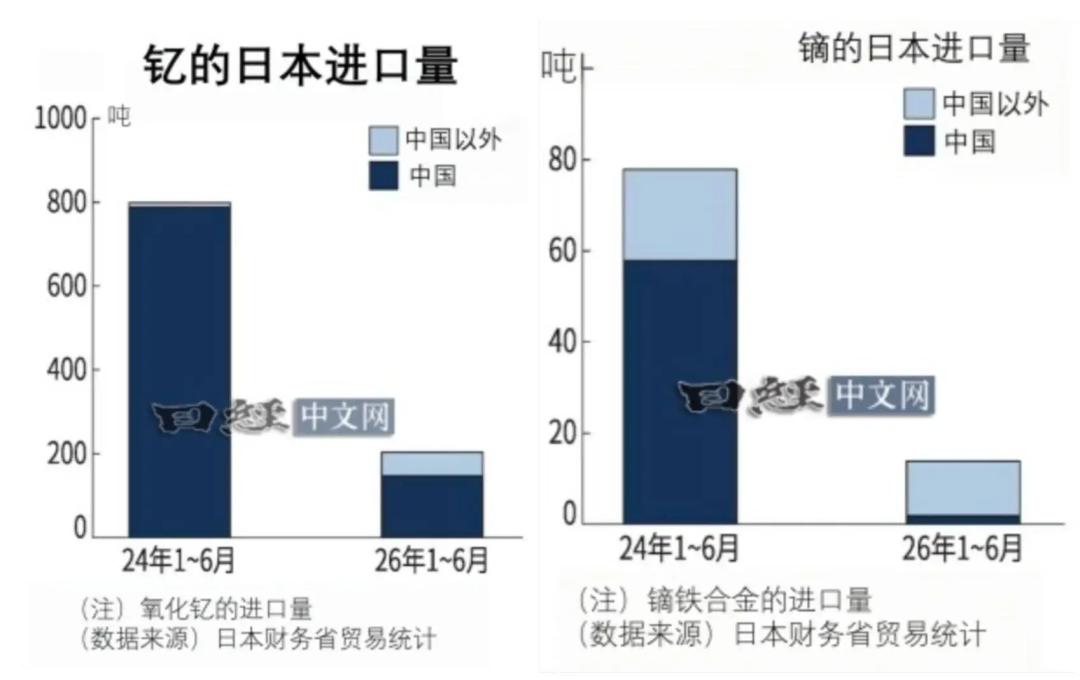
(Nikkei Chinese Website)
It's not that those countries are unwilling to support Japan, they just don't have the capacity to do so.
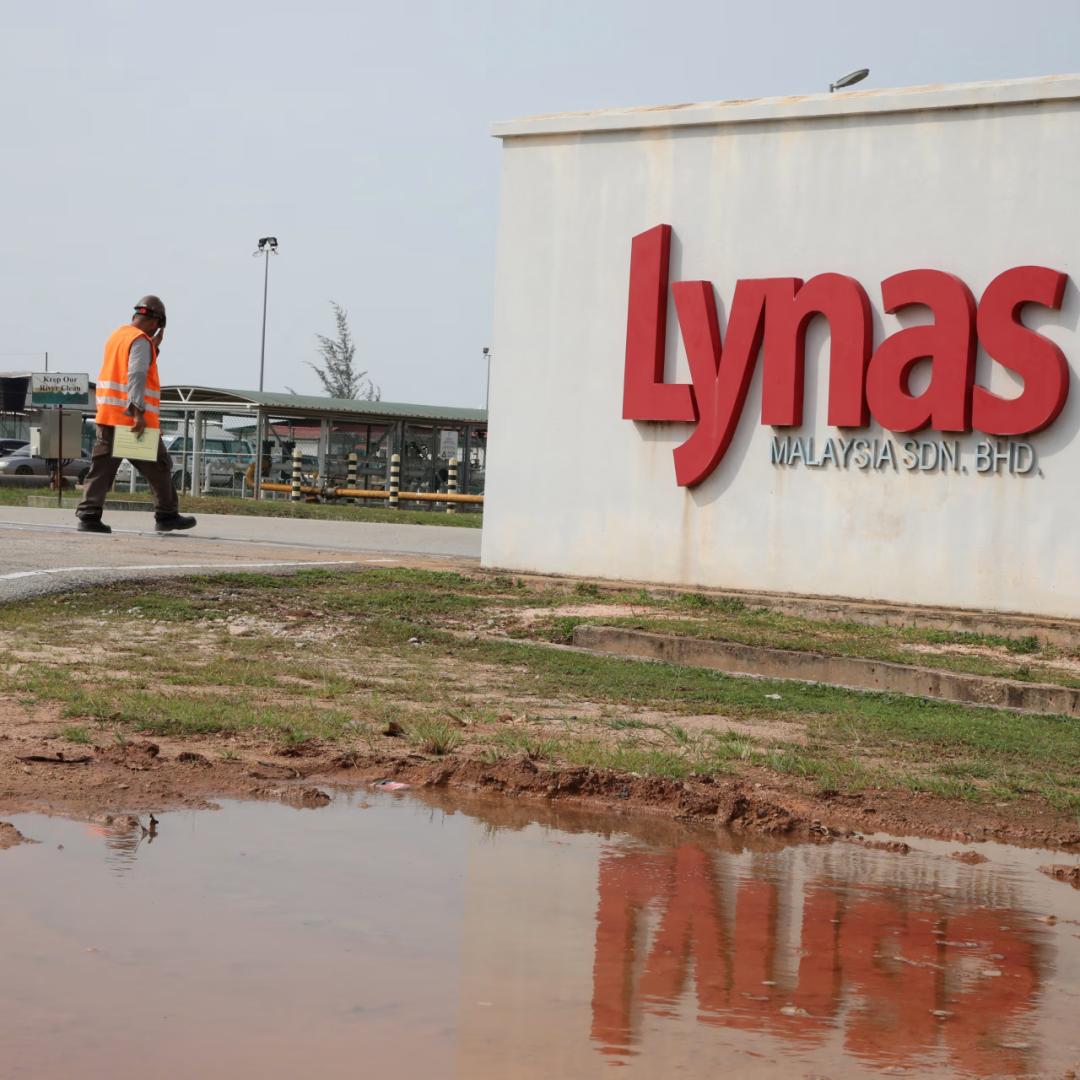
In the first quarter of 2026, Lynas had been operating at full capacity, producing a total of only 8 tons of dysprosium and terbium. Before China tightened export controls, an average of 14 tons of dysprosium and terbium were exported to Japan every month. The situation of partners such as Vietnam and India is similar. At present, Japan has expanded its rare earth import sources to 12 countries, but the supply is still insufficient, and the import volume is difficult to return to the level before the control.
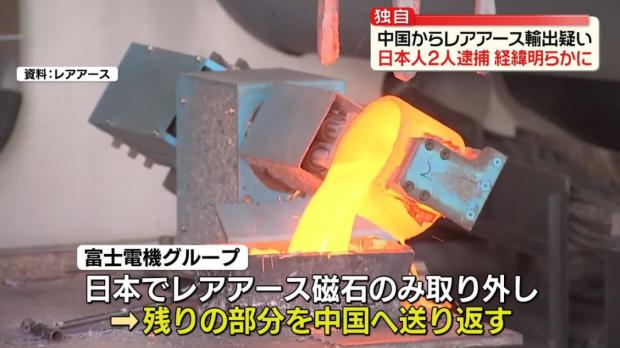
As the saying goes, the situation report may lie, but the front line does not. In May 2026, two employees of Fuji Electric were detained by Chinese customs authorities in Dalian on suspicion of "smuggling goods prohibited from import and export", and were formally arrested later. They embedded controlled rare earth magnets into motors, declared them as ordinary electromechanical products for export, disassembled them overseas to take out the rare earth magnets, and sent the remaining parts back, trying to bypass export controls. As a result, they ended up in prison.
After 16 years of tossing and turning on decoupling, Japan only changed "importing from China" to "smuggling from China", which can be described as quite a remarkable achievement!
02
The Decoupling Dream Shattered
This brings us back to the previous question: how on earth did Japan calculate that its dependence on China for rare earths dropped to 60%?
Simply put, it's just a word game.
What countries such as Australia and Vietnam can supply is mostly light rare earths, and they provide very little heavy rare earths to Japan. Using cooking as a metaphor, light rare earths are like "flour" or "rice" in industry, with large consumption and widespread availability. Heavy rare earths are the "salt" and "monosodium glutamate" in industry, with very small consumption but irreplaceable, directly determining whether the meal tastes good or not. If Japan calculates the rare earth import volume by tonnage, China's share is indeed declining. But if you look at medium and heavy rare earths alone, China still firmly holds absolute dominance, which is a typical moment of statistical trickery.
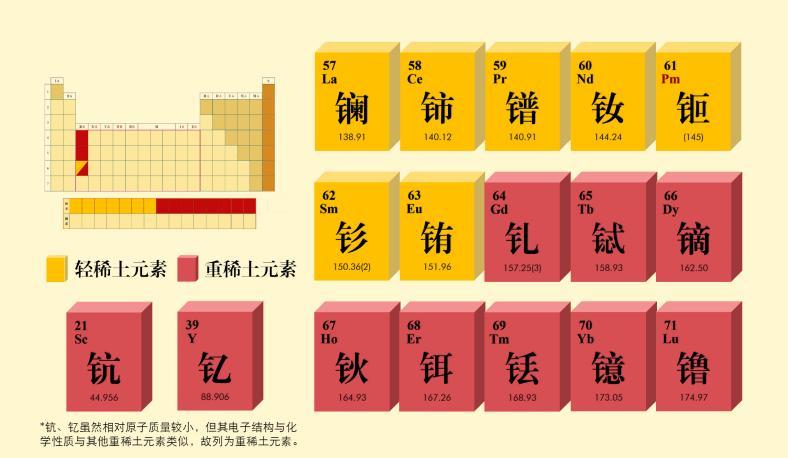
(Peking University)
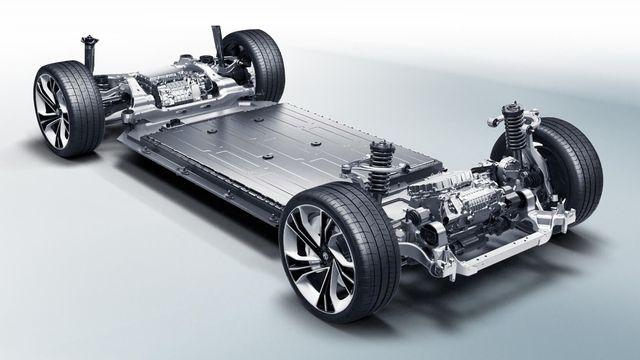
The representatives of heavy rare earths are the aforementioned dysprosium, terbium and yttrium. They have unique electronic structures, with extreme high temperature resistance, strong anti-magnetic degradation performance, ultra-high luminescence purity and excellent radiation resistance. For example, the motor of an electric vehicle will generate intense high temperature of 150℃ to 200℃ during high-speed operation. Under such harsh working conditions, magnets made of light rare earths may demagnetize and fail. A small amount of dysprosium or terbium must be added to lock its magnetism. For another example, during the wafer manufacturing process, the plasma etching gas will corrode the inside of the machine instantly. Only the yttrium oxide coating can resist the bombardment of strong acid and plasma, protecting chip equipment worth tens of millions of dollars from contamination.
China's absolute dominance in this field is no joke. Our heavy rare earth ore reserves account for about 90% of the global total, and almost 100% of the world's high-purity heavy rare earth oxide and metal separation capacity is concentrated in China. This means that heavy rare earths mined in other regions must also be sent to China for processing, otherwise they are just piles of unusable stones. Therefore, Laos, Myanmar and Malaysia, which have heavy rare earth resources, export 70,000 tons of raw ore and intermediate compounds to China every year.
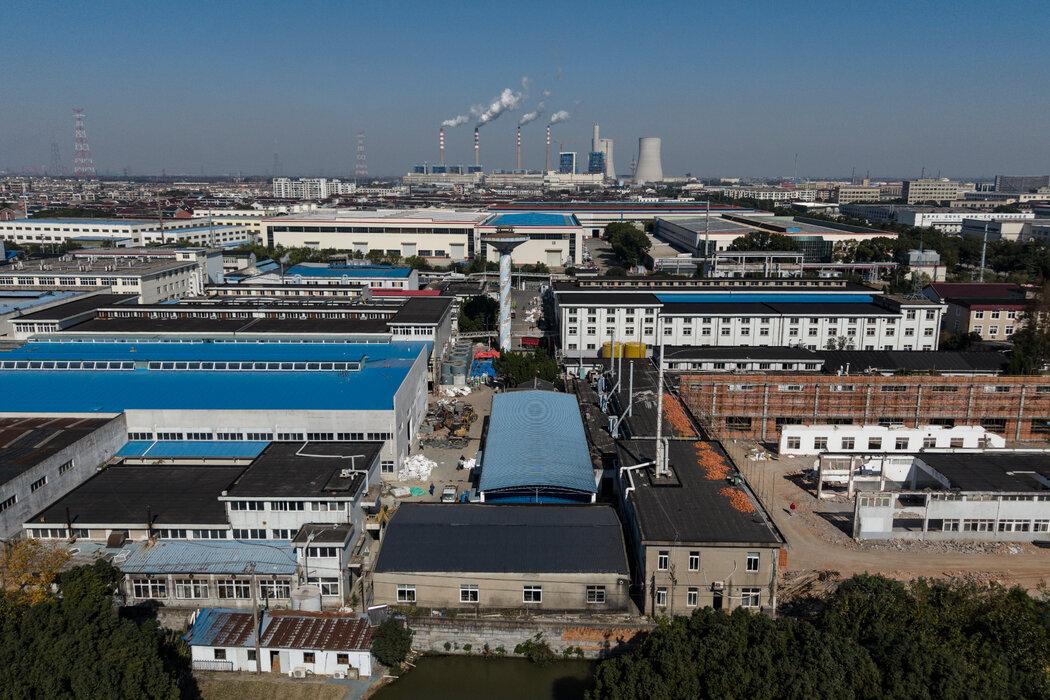
Never underestimate the refining process. In a sense, it may be more important than reserves. The elements in the rare earth family have very similar chemical properties and microscopic sizes. When they are mixed together, it is extremely difficult to separate and purify them artificially. In the beginning, Westerners used the very clumsy fractional crystallization method, repeating tens of thousands of cycles of dissolution, heating, cooling, crystallization, filtration and re-dissolution on dozens of kilograms of mixture to obtain only 0.5 grams of rare earths. Later, they began to use the ion exchange method, which increased the production scale, but consumed a large amount of special resin with very high cost.
China gradually realized the importance of rare earths