Sharing the same origin with SK Hynix and supplying Samsung: The past and present of JCET's South Korean factory
Over the past two years, the global semiconductor industry's spotlight has barely shifted away from South Korea. The undersupply of HBM, the soaring market value of SK Hynix, and Samsung's aggressive catch-up in advanced processes — every headline reminds people that South Korea remains at the center of this AI computing power feast.
However, when sorting out South Korea's OSAT (outsourced semiconductor assembly and test) landscape, a detail easily overlooked caught my attention: on Yeongjong Island next to Incheon International Airport, there are two companies with "STATS ChipPAC" in their names, with a total of nearly 5,000 employees. On the 2025 "Trade Day", they respectively won the Export Tower Awards for 2 billion US dollars and 800 million US dollars — a scale that is quite prominent among South Korea's export enterprises.
The actual parent company of these two companies is neither Samsung nor Hynix, but JCET, the global leader in the semiconductor assembly and test sector.
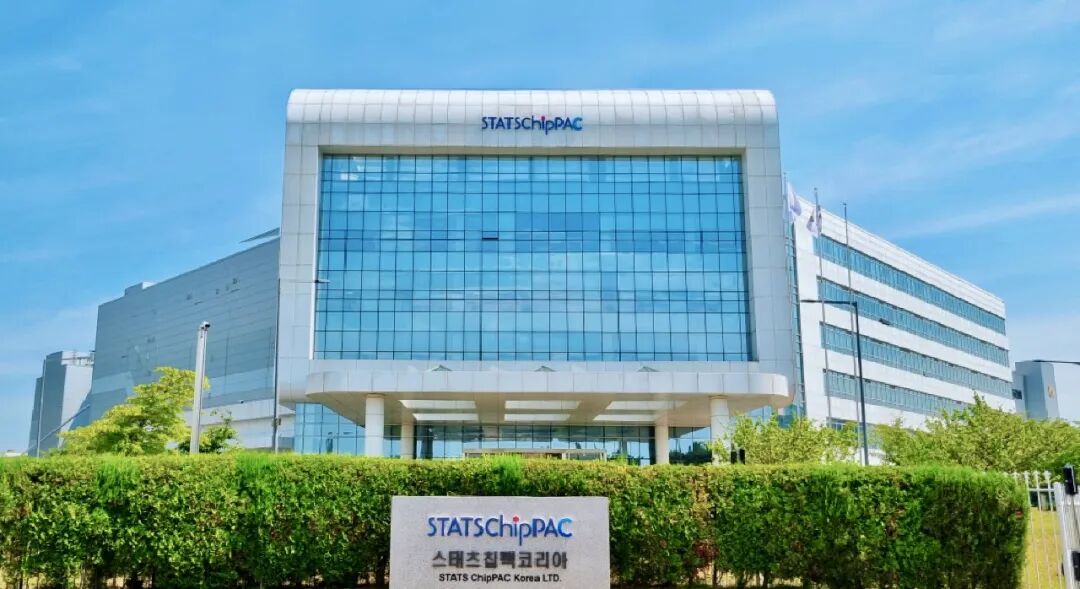
STATS ChipPAC Korea (SCK), a subsidiary of JCET
Following this lead to trace back, the story is far more tortuous than imagined. The origin of this factory exactly traces back to the predecessor of today's most popular SK Hynix; in its historical announcements, it explicitly lists Samsung Electronics as a customer. For 40 years, it has been rooted in this land and grown together with South Korea's semiconductor industry.
This is an industrial past that has hardly ever been fully told.
I. Same Origin: It Shares the Same Root with Hynix
To understand this factory, we have to go back to 1983.
In February of that year, the Hyundai Group led by Chung Ju-yung founded "Hyundai Electronics Industries Co., Ltd." and officially entered the semiconductor sector. According to the record of South Korea's *Electronics News* "50 Years of South Korean Semiconductors" series, Hyundai's idea of manufacturing chips came even earlier — back in 1978, Hyundai tried to launch its first semiconductor factory in Icheon, Gyeonggi-do; when the factory officially broke ground in October 1983, it was only about a month later than Samsung Electronics.
Hyundai Electronics is exactly the predecessor of today's SK Hynix. It was renamed Hynix Semiconductor in 1999, and became SK Hynix after being acquired by the SK Group in 2012.
The starting point of this assembly and test factory on Yeongjong Island is hidden inside Hyundai Electronics: in 1984, Hyundai Electronics established the Assembly & Test (A&T) Division; in 1985, the back-end production facility in Icheon was put into operation. That means today's SK Hynix and JCET's Korean factory were actually "one family" at the very beginning — one responsible for front-end wafer manufacturing, the other for back-end assembly and test, both located in the Hyundai Electronics Park in Icheon.
Even in 1999, when the control of this assembly and test factory had already left the Hyundai Electronics system, the factory still rented the Icheon plant of Hyundai Electronics (later Hynix) for production for a long time, and did not completely move out until 2015. They shared the same origin and stayed under the same roof for a full 30 years.
II. The Road to Independence Spun Off from the "Big Deal"
What truly separated this factory from its parent was the financial storm that swept across East Asia.
The Asian financial crisis broke out in 1997. In 1998, the "Big Deal" of the industry led by the Kim Dae-jung administration forced debt-ridden Hyundai Electronics to streamline its business. In April 1998, Hyundai Electronics announced that it would spin off its semiconductor assembly division to establish an independent legal entity ChipPAC Korea with a registered capital of 200 billion won. At that time, this business accounted for about 8% of Hyundai Electronics' revenue and had about 2,000 employees.
Being spun off, on the contrary, opened the door for this factory to go global.
In 1999, a consortium of American investors led by Bain Capital and SXI Group invested about 550 million US dollars to acquire about 90.2% of ChipPAC's shares, while Hyundai Electronics and its American affiliates only retained about 9.8%. However, this Korean production line continued to operate in the Hynix park under lease for more than ten years.
After foreign capital took over, the customer list quickly became international. According to the S-1 listing document submitted by ChipPAC to the U.S. Securities and Exchange Commission (SEC) — a first-hand source far more credible than any brochure — around 1998, the company had explicitly listed customers including Atmel, Intel, IBM, LSI Logic, Lucent, Samsung Electronics, and STMicroelectronics. In the same year, BGA products contributed 61.8% of ChipPAC Group's revenue. Company documents showed that it was "the world's second largest outsourced BGA supplier" and became a key packaging supplier for Intel.
In 2001, the semiconductor cycle hit rock bottom. According to an exclusive interview in *Electronics News* that year, the Korean factory took three measures to survive: move the lead frame production line to Shanghai, concentrate the Icheon capacity on high-value products such as CSP and Flip Chip, and reduce the revenue proportion from its former parent Hynix to about 5%, while deeply partnering with Intel, IBM and Qualcomm. The factory completed its transformation of actively "de-parenting" and targeting global customers at this point.
III. Merged with a Singaporean Enterprise, Ranked Third in the World
In August 2004, a cross-continental share swap merger pushed this Korean factory onto the global stage.
Singapore's ST Assembly Test Services (STATS, backed by Temasek) completed a 1.6 billion US dollar merger with US-based ChipPAC. The new company was named STATS ChipPAC Ltd., which immediately became the world's third largest OSAT manufacturer, second only to ASE Group and Amkor. The Korean legal entity was accordingly renamed STATS ChipPAC Korea (SCK).
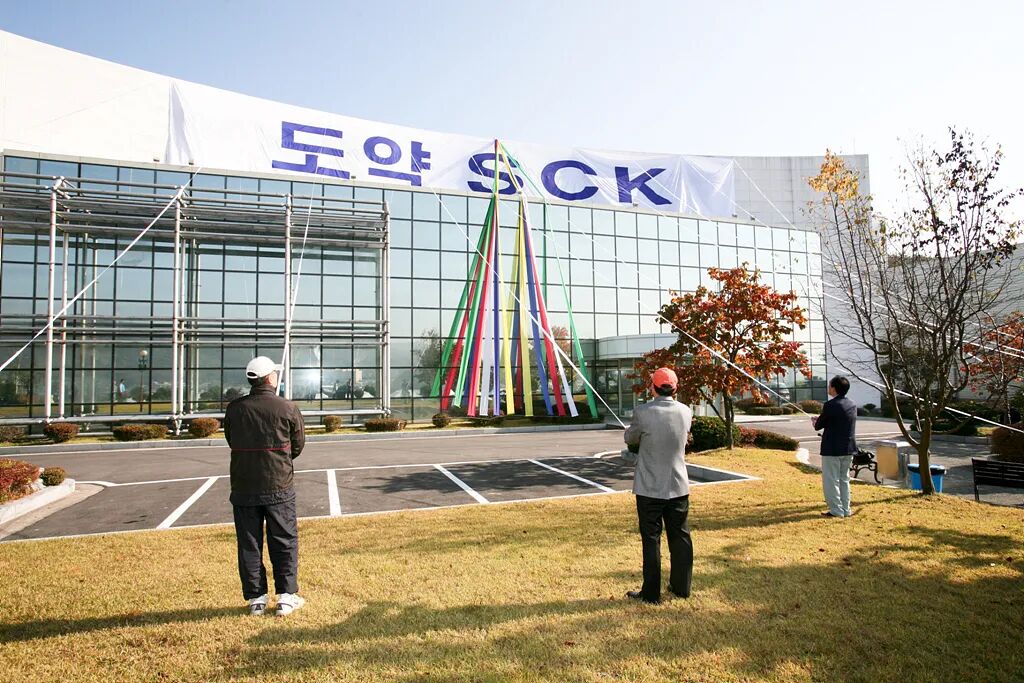
The SCK factory of STATS ChipPAC Korea in the early 2000s
In the STATS ChipPAC era, this OSAT enterprise earned a global reputation. Its most outstanding credential came from Intel: in March 2007, Intel awarded the "Preferred Quality Supplier (PQS)" award to 44 suppliers worldwide, and STATS ChipPAC was on the list. This award requires full compliance in six dimensions including cost, quality, delivery and technology, which is a highly recognized honor in Intel's supply chain system. At the same time, South Korea was designated as one of STATS ChipPAC's global R&D centers, where a series of advanced technologies such as system-in-package and wafer-level packaging were implemented.
IV. It Almost Moved to China
The most dramatic part of the story took place between 2011 and 2013, and the outcome of this episode laid the groundwork for JCET's entry a few years later.
According to an exclusive report by *Seoul Economic Daily* at the end of 2011, STATS ChipPAC Korea was caught in three dilemmas at that time: the first factory in Icheon leased properties from Hynix, and Hynix planned to take back the plant for capacity expansion; the second factory located in Masan area was designated as a "natural conservation zone", where the expansion of large semiconductor factories was prohibited by South Korean regulations; there was no hope for lease renewal, nor for expansion on the original site.
Therefore, STATS ChipPAC's global headquarters once seriously considered relocating the entire Korean factory to Shanghai. A person in charge of the company at that time told the media directly: "The space of our Shanghai factory is large enough to accommodate the entire relocation of the Korean site, but we hope to stay in South Korea if possible."
Eventually, South Korea retained it. In 2013, the company officially settled in Phase II of the Incheon Airport Free Trade Zone, covering an area of about 100,000 square meters with an investment of about 250 billion won, becoming the first manufacturing enterprise to settle in the free trade zone since its establishment. The first factory was completed and put into operation in 2015, and the second factory was completed in 2016. This factory that had resided in the Hynix park for 30 years finally had its own exclusive land on Yeongjong Island.
By coincidence of history, in the same period, JCET was actively promoting the acquisition of STATS ChipPAC. The two lines of relocation and merger intersected in 2015.
V. "Achieving More with Less": After JCET Took Over
In 2015, JCET, together with the National Integrated Circuit Industry Investment Fund and Xindian Semiconductor, completed the privatization of STATS ChipPAC with an equity consideration of about 780 million US dollars (enterprise value including debts is about 1.8 billion US dollars). This sensational "small-to-large" merger in the industry immediately pushed JCET from the 6th to the 3rd largest OSAT manufacturer in the world.
As one of the acquisition targets, this Korean OSAT factory had been in operation for more than 30 years and had complete advanced packaging engineering capabilities. Looking through public materials, its customer list is half the history of the industry. Samsung Electronics appeared in SEC documents very early, and the president of Samsung Semiconductor personally awarded the "Best Supplier Award" to the factory for two consecutive years; Intel signed a material supply agreement with it as early as 1999, and awarded the "Preferred Quality Supplier (PQS)" award in 2007; leading semiconductor companies such as IBM and Qualcomm are also its long-term important customers.
After JCET took over, it did not "parachute" a new management system, but fully retained the local Korean operation team, and gave full autonomy in daily business decision-making. At the same time, it continued to increase R&D investment, technological innovation and financial support, helping the factory to continuously upgrade to more advanced packaging processes. This "trust local, root local" business model not only enabled the factory to achieve a smooth transition after the acquisition, but also entered a fast growth track, making tangible contributions to the development of South Korea's semiconductor industry.
In 2016, JCET further invested 200 million US dollars through its Hong Kong platform to establish a new legal entity JCET STATS ChipPAC Korea (JSCK) in South Korea, further expanding its advanced packaging and testing capabilities.
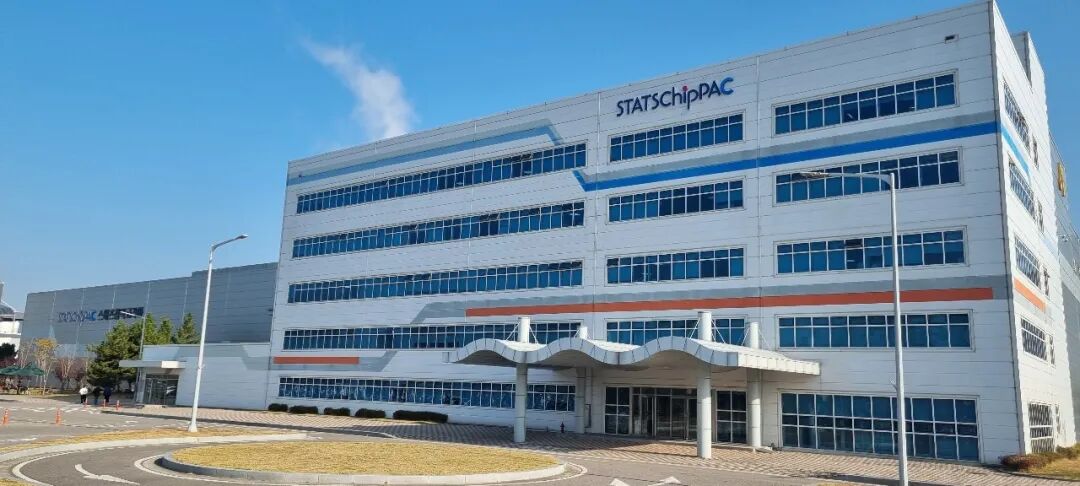
JSCK, a Korean subsidiary under JCET
Therefore, after being acquired by JCET, this Korean factory was not marginalized at all. On the contrary, it kept winning awards in South Korea. According to South Korean media reports, in December 2022, SCK won the "Presidential Citation for Outstanding Job Creation" issued by the South Korean government for having the largest number of employees among all enterprises settled in Yeongjong International City; JSCK has continuously climbed the Export Tower Awards for years — 500 million US dollars in 2017, 600 million US dollars in 2019, 700 million US dollars in 2020, up to 2 billion US dollars in 2025. In the more than ten years after the relocation, according to local media disclosure, its revenue has increased by about 7 times, and the number of employees has expanded from 2,000 to 4,500. This factory has also become a "star export enterprise" that the local South Korean community is proud of.
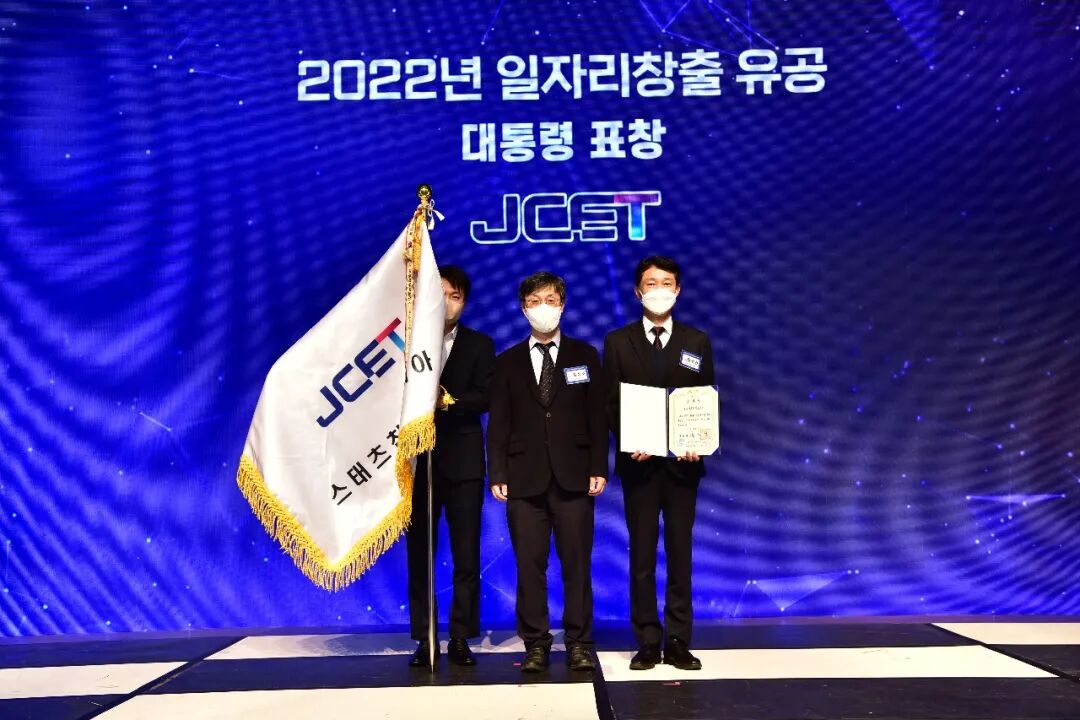
In 2022, SCK under JCET won the "2022 South Korea Presidential Award"
VI. Next Stop: Unleash the Value of High-end Advanced Packaging
If the key word of this factory in the past 40 years is "how to survive in turbulence and step onto higher platforms again and again", since the second half of 2025, its narrative is being redefined — it is no longer "a Korean branch of OSAT", but a key outpost in JCET's global advanced packaging network for AI and high-performance computing.
Statements from the company's management on multiple public occasions have outlined the direction: SCK's main business has been clearly defined as "back-end packaging for non-memory system semiconductors". Facing the outbreak of advanced packaging demand brought by the expansion of AI infrastructure and autonomous driving, the company has clearly signaled that it will increase investment, expand production capacity and recruit more talents, and cooperate with Inha University, University of Incheon and other institutions to cultivate local talents. In its 2025 annual report, JCET has also listed AI, HPC, high-density storage, automotive electronics and advanced packaging as its core future directions — all of which are exactly the high-value tracks that the Korean base is best at and most qualified to undertake.
From mainstream packaging to advanced packaging such as Flip Chip and SiP, to today's 2.5D/3D packaging and heterogeneous integration, this factory has proved one thing in 40 years: every time it changes its identity, it accurately catches up with the node of the global industrial pattern shift. The question it needs to answer in the next decade is: whether it can transform the 40-year accumulated mass production engineering heritage into the competitiveness of high-end advanced packaging in the AI era.
Conclusion: An Underestimated China-South Korea Industrial Bond
Back to the original question: when the whole world is talking about South Korean semiconductors, people mostly talk about Samsung, Hynix and HBM. But few people notice that JCET has long been deeply involved in the back-end segment of this industrial chain.
Its Korean factory has nearly 5,000 employees; it shares the same origin with the popular SK Hynix, inheriting the heritage of Hyundai Electronics; it has a stable customer base and has won many awards from leading semiconductor companies such as Samsung and Intel; it is also an enterprise awarded the presidential citation by the South Korean government. These clues are not noticeable when viewed separately, but together they point to the same long-underestimated fact: JCET has long been deeply connected and co-grown with South Korea's semiconductor industry.
This is probably why this past story is worth retelling at this moment. When the semiconductor industrial chain once again enters a turbulent era, the 40-year history of this factory on Yeongjong Island is exactly a reminder: the most advanced technologies, top customers and excellent engineers have always been flowing, collaborating and co-developing on a global scale.
(This article is compiled based on publicly available materials such as SEC filing documents, reports from mainstream South Korean media, and JCET's announcements. All undisclosed investment and project information involved in the article shall be subject to the official disclosure of the enterprise.)