Performance Express | Improve Efficiency and Ensure Quality, Guming Achieved Double Growth in Both Revenue and Net Profit in the First Half of the Year
Report by Yang Shuo
On the evening of August 26, Guming released its 2026 mid-year performance report. In the first half of the year, it recorded a revenue of 7.47 billion yuan, representing a year-on-year increase of 31.9%; the adjusted profit reached 1.57 billion yuan, a sharp year-on-year rise of 44.4%.
This is a fairly outstanding performance sheet. Against the backdrop of cutthroat competition across the entire industry and a saturated domestic new tea beverage market, Guming's profit growth rate is significantly faster than its revenue growth rate. This fully demonstrates that while the company is expanding its scale, it has made substantial progress in cost control and operational efficiency improvement.
In terms of GMV, which best reflects the operational quality of stores, Guming's average daily GMV per store in the first half of the year was 7,800 yuan, basically flat with the same period of the previous year; the total GMV of all stores reached 19.7 billion yuan, up 40.1% year on year.
In fact, since 2026, Guming has been continuously improving the operating performance of its stores. This benefits from both the company's effective product and marketing strategies, and the active input of the vast number of franchise partners.
In the first half of this year, Guming continued to focus on product R&D, continuously improved product quality, and regularly launched new products to maintain product attractiveness. During the reporting period, Guming launched a total of 51 new beverage products, and made important breakthroughs in the coffee category. Among them, many hit products including "Bittersweet Citrus Latte" have received widespread praise from consumers.
At the same time, Guming also implemented the "30-day fresh coffee beans" standard in its stores, controlling the whole process of coffee beans from roasting to being used in stores within 30 days. Behind the fresh, tasty, high-quality and affordable products lies the supply chain capability of Guming.
According to the financial report, Guming stores and transports short-shelf-life raw materials such as fresh fruits, tea and fresh milk through its own cold chain warehousing and logistics infrastructure, and has formulated supply chain management standards covering all stages including "procurement, raw material processing, warehousing, and transportation to stores".
As of June 30, the company operated a total of 24 warehouses with a total floor area of 277,000 square meters and a cold storage capacity of over 82,000 cubic meters. Among them, about 73% of the stores are located within 150 kilometers from the warehouse, and 99% of the stores can achieve delivery once every two days. More critically, the delivery cost from Guming's warehouses to stores is controlled below 1% of the total GMV.
In terms of store scale, the total number of Guming's stores reached 14,351 in the first half of the year, up 28.4% from 11,173 in the same period of last year. For chain tea beverage brands, when the number of stores reaches a certain scale, the diversion effect of new stores on old stores will gradually appear. However, Guming has continuously diluted its operating costs by improving the efficiency of its distribution network.
It is also worth noting that Guming, which has long been rooted in the low-tier markets, is constantly testing the high-tier cities.
In August this year, Guming's first store in Nanjing officially opened, which was widely welcomed by local consumers. Official data shows that in the first three days of the store's opening, the highest single-day revenue reached 160,000 yuan, and the maximum number of cups sold in a single day exceeded 9,000.
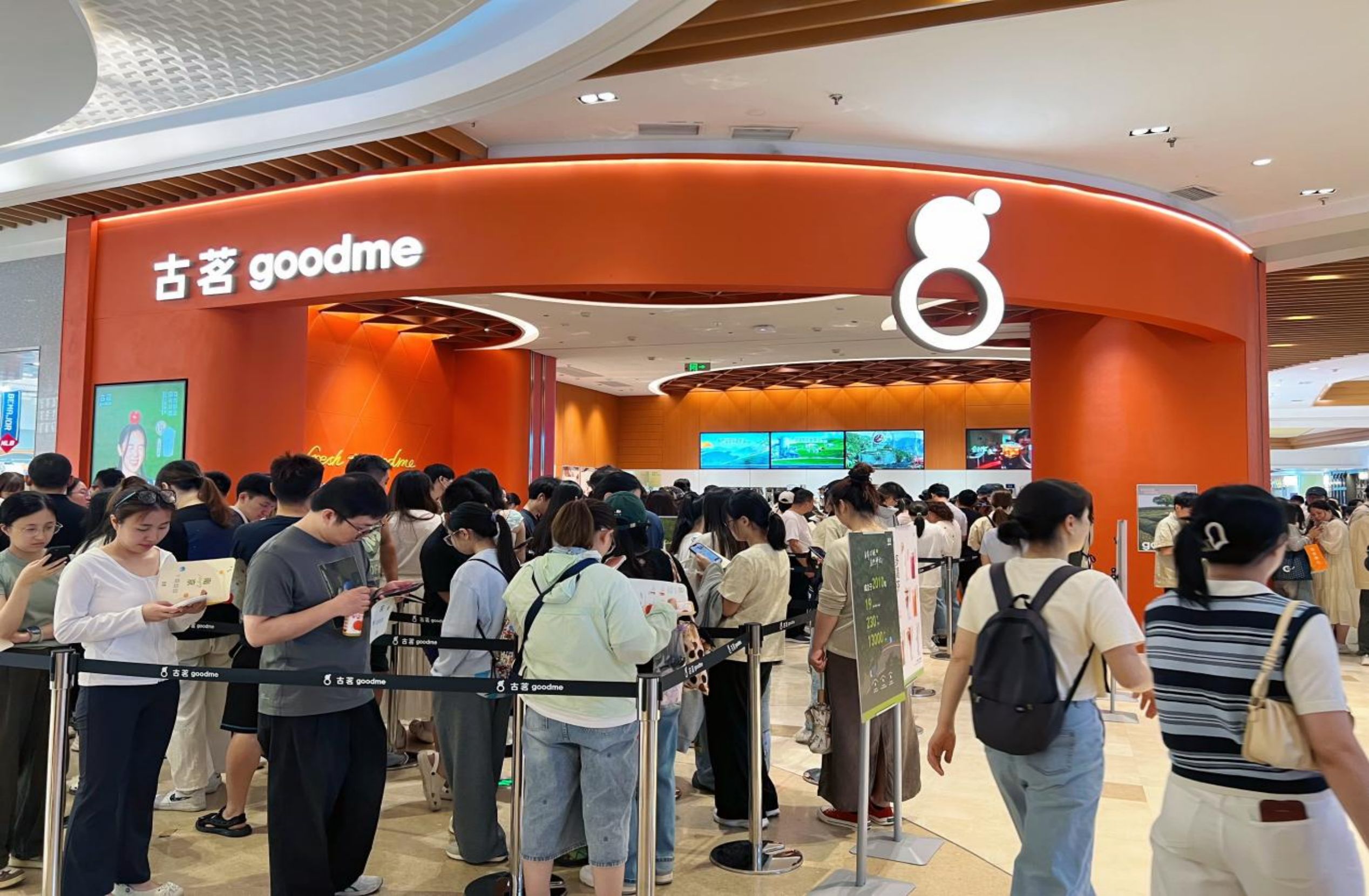
The first store of Guming in Nanjing
On many occasions, senior executives of Guming have clearly stated that they will not enter Shanghai and Beijing in the short term. "Because high-tier cities have a high proportion of takeout orders, high rent and labor costs, and product pricing is difficult to cover the costs." However, the opening of the Nanjing store undoubtedly leaves more room for the market to imagine.
The industry generally believes that Nanjing, as a new first-tier city, is a relatively rational entry point for Guming, which originated from the East China market, to enter high-tier cities.
For Guming, whether the single-store profit model in high-tier cities can be successfully operated, or even better than that in low-tier markets, still depends on the driving force of products such as coffee on customer unit price and repurchase rate; it also depends on whether there is still room for improvement in supply chain efficiency to offset the increased costs brought by opening stores in high-tier cities.
In any case, when a tea beverage brand with more than 14,000 stores, 80% of which are located in low-tier markets, starts to "move upward", the competitive landscape of the entire industry may change. Guming's narrative of "encircling cities from the countryside" will also enter the 2.0 version.