Children's playgrounds cannot save parent-child hotels.
01
This summer vacation, several friends of mine who run family-friendly hotels have complained to me one after another that business is getting tough.
Not only are the imported children's facilities expensive, but they also need to be renewed after a few years of use. One of my friends just spent a huge sum of money replacing a whole set of equipment, almost draining all his savings, yet still failed to attract the expected crowds of families with kids.
I asked them, given such heavy investment, why do you keep pouring money into children's playgrounds?
My friend asked me back, who on earth would be willing to bring their kids to stay at a hotel that doesn't even have a children's playground?
That question really stumped me at that moment.
However, these days, I happened to bring my child to RISONARE Yatsugatake, a well-known family-friendly hotel in Japan, and suddenly realized that whether a hotel is suitable for family trips with kids may not necessarily be judged by the number of slides it has.
The hotel is located in Kobuchizawa, a town known for equestrian culture. On the weekend, shortly after we finished check-in, the service staff brought us sparkling wine, a specialty of Yamanashi Prefecture.
Watching the tiny bubbles rising continuously to the rim of the glass, I found it quite interesting: a hotel famous for family vacations actually serves wine to parents first?
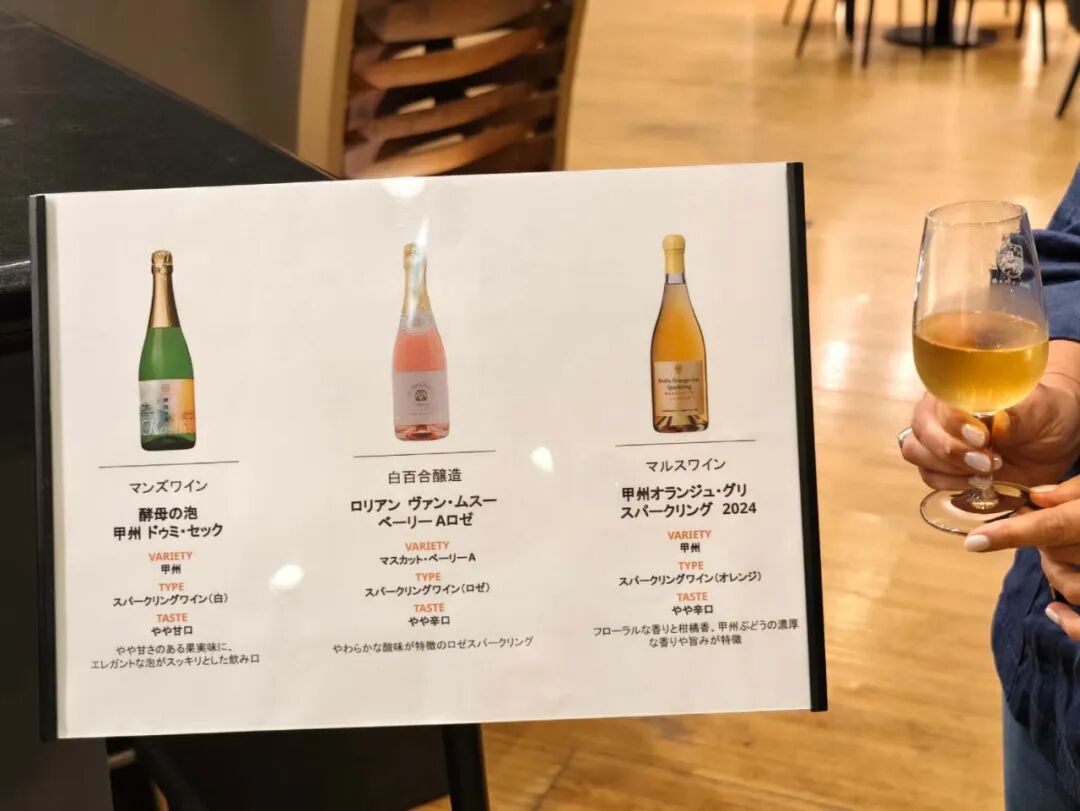
On-site photograph by Travel Industry
At this moment, the restaurants and shops along the Sweet Pepper Path in the hotel gradually lit up. Parents could have a few drinks at the wine cellar lounge, while children helped themselves to grape juice and cookies. The scene was so quiet that it felt somewhat unusual.
For a moment, I could not tell whether the sense of relaxation in front of me came from the parents, or was hidden in the hotel's product design.
It was not until I stayed there for a few days that I gradually realized that the hotel's understanding of family vacations is mainly reflected in how it arranges the time for the whole family.
To be more precise, RISONARE Yatsugatake divides family vacations into three types of time: time for the whole family to play together, time for children to enjoy on their own, and time for adults to have for themselves.
Among all the activities that the whole family can participate in together, the most representative experience is of course horse riding.
As a town of horses, there are many equestrian clubs around Yatsugatake. Even for local children, horse riding is a very representative vacation activity.
RISONARE did not enclose an area on the hotel lawn to let children ride small ponies around in circles just to muddle through. The real horse riding experience is located at Canadian Camp outside the hotel.
Children need to get familiar with the movements at the riding ground first, then follow the coach into the woods, and parents can also get on the horseback.
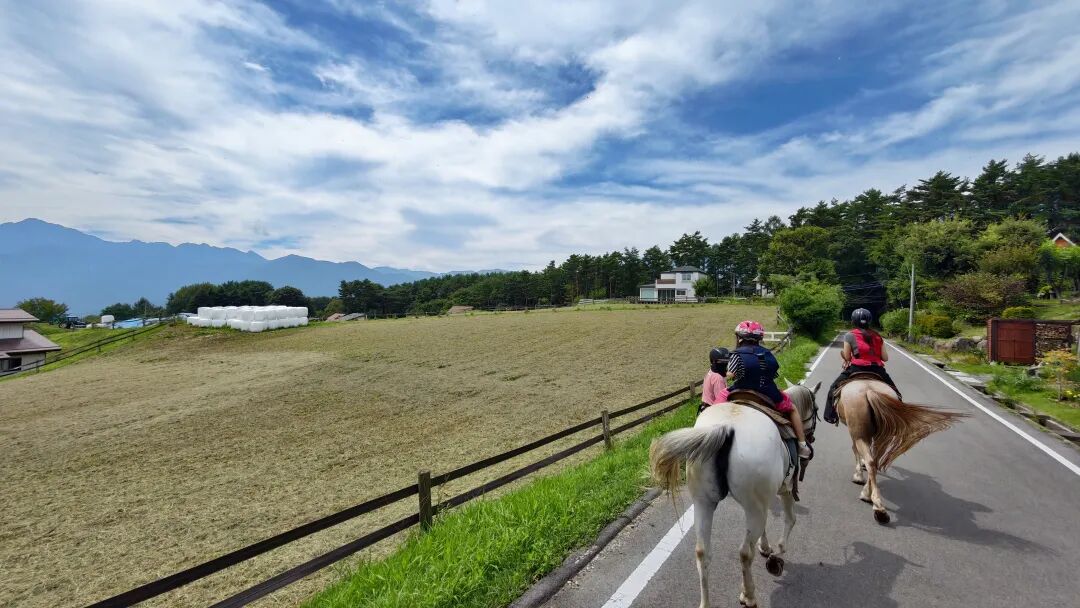
On-site photograph by Travel Industry
The family forest adventure and the forest treetop walk also require parents to participate. When the weather in the mountains changes, the indoor wave pool provides activities for the whole family to enjoy.
Apart from group activities, children also have their own exclusive time.
In the sustainable children's workshop, children follow the teacher to learn about substandard vegetables, then make food by themselves. Parents can step back and observe, without having to keep an eye on their kids the whole time.
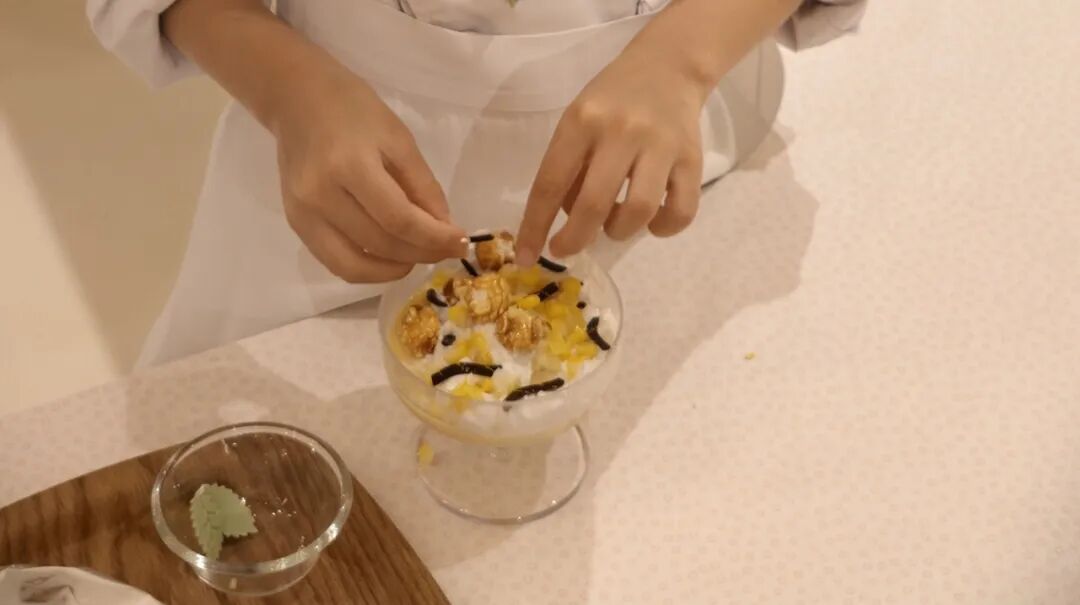
Sustainable Children's Workshop / On-site photograph by Travel Industry
When the children are fully engaged in their activities, the adults' vacation can also go on smoothly.
Some people read books quietly in BOOKS & CAFE, the wine house is full of local wines from Yamanashi and Nagano. In the evening, the lighting, menu and space of the restaurant still retain the aesthetic preference of adults, and have not been turned into a gaudy children's restaurant just because of the family-friendly label.
The hotel also provides childcare services for families with young children. If parents want to have a meal or get a SPA, they can temporarily leave their children to the staff. The time is not long, but it is enough for adults to take a break from the state of accompanying their kids to play.
Looking back at that glass of sparkling wine in the wine cellar lounge, it is like a boundary drawn by RISONARE Yatsugatake for the whole family: children are of course very important members of the trip, but they do not occupy the entire vacation of everyone.
What really supports the whole family's vacation here is the experience that both parents and children can participate in, including the time they each have for themselves after being temporarily separated from each other.
02
Family-friendly hotels should put adults back into the vacation, and there are more practical reasons behind this: the number of children in East Asian regions is collectively decreasing.
In 2025, China's birth population dropped to 7.92 million, 1.62 million less than the previous year.
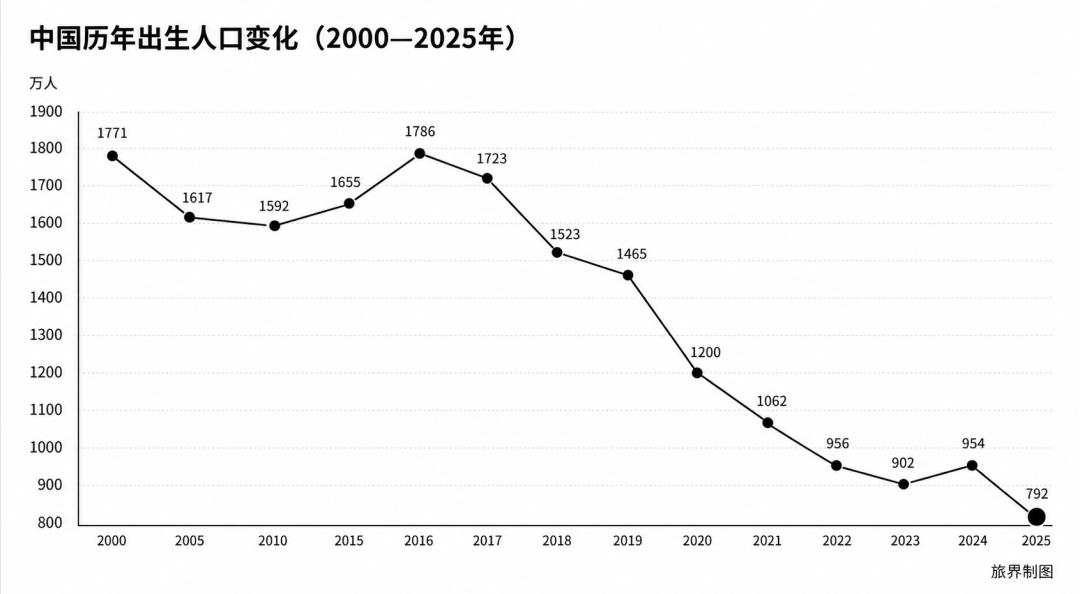
Newborns will not become guests of family-friendly hotels immediately, but this number determines how many children of the right age there will be in the market in a few years.
The problem is that the investment model of many family-friendly hotels still follows the logic of the past period of population growth.
When family travel became popular, adding new slides, swimming pools and small trains could easily attract family customers. Seeing that their peers had good business, more hotels followed suit to add children's facilities, and family-friendly elements quickly changed from a selling point to a standard configuration.
When everyone has a similar playground, the only thing guests end up comparing is often the hotel price.
The declining birthrate has made the problem even more difficult.
Children's playgrounds are naturally limited by age. A four or five-year-old child can play on the slide for half a day, but when they reach eight or nine years old, the same facilities will seem childish. Before the equipment reaches the end of its service life, the guests may have already grown up.
In other words, the depreciation period of children's facilities may be longer than the period during which children are interested in them.
Similar to China, the Japanese market where RISONARE Yatsugatake is located encountered this dilemma very early.
As of April 2026, there are only 13.29 million children under the age of 15 in Japan, decreasing for 45 consecutive years, accounting for 10.8% of the total population. Among them, the population aged 0 to 2 is 2.13 million, and the population aged 12 to 14 is 3.09 million, the younger the age group, the smaller its size.
When Hoshino Resorts started operating RISONARE Yatsugatake in 2001, Japan's child population had already entered a long-term downward trend. It could not pin its growth hopes on the continuous emergence of new families, but had to find ways to make the same family stay for more years.
According to the disclosure of Hoshino REIT, at that time, the occupancy rate of this hotel was only over 30%. From May 2018 to April 2019, the annual average occupancy rate had risen to 87.9%, and even exceeded 97% for 4 consecutive months from July to October, with revenue reaching 4.983 billion yen.
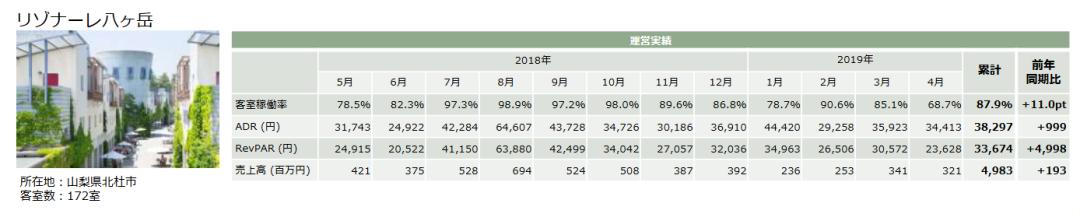
Source: Hoshino REIT
Nowadays, RISONARE has expanded from Yatsugatake to 8 hotels. As a vacation brand that has been operating in a low birthrate market for more than 20 years, it can still maintain such a price and occupancy rate, which is naturally worthy of in-depth study.
The key reason why RISONARE can stand out in the Japanese market is that it identified the real guests of family-friendly hotels very early.
Children influence where their parents go and determine what activities they do during the vacation, but the people who actually choose the hotel and pay for the room are still the parents.
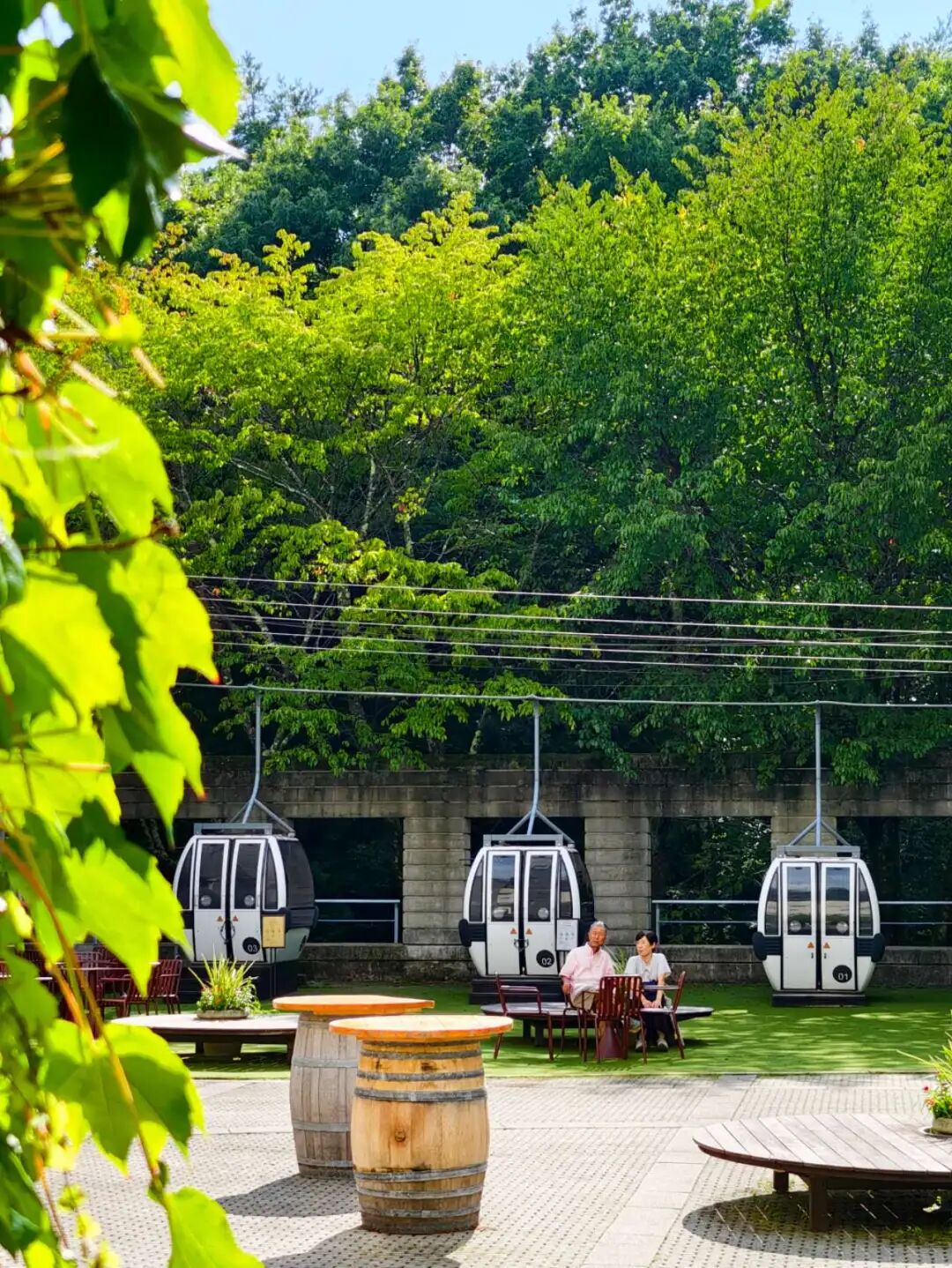
Both children and adults can find their own time at the hotel / On-site photograph by Travel Industry
After all, if the children have a great time every day, but the parents only remember exhaustion after returning home, the relationship between the hotel and this family will not last long.
What's more troublesome is that when children grow up, they will eventually outgrow the low-age playgrounds. If parents can't find a reason to come back either, the hotel will lose the entire family at the same time.
The all-inclusive model of Club Med provides another solution. Accommodation, catering and a large number of activities are pre-included in the package, and the kids club can also help parents free up their time, which is really worry-free for families who do not want to make travel plans.
However, it may not be suitable for every Chinese family.
Some parents do not like crowded group activities arranged one after another, and children may not be willing to stay in the kids club for a long time. After the expenses are packaged in advance, if the family uses fewer items in the package, they will easily feel that they have not got their money's worth.
RISONARE leaves more choices for guests.
Guests can bring their children to ride horses, or spend half a day at the swimming pool. If parents want to have a drink or enjoy a quiet dinner, they can use the childcare service. If they do not want to fill the itinerary, no one will urge them to participate in activities.
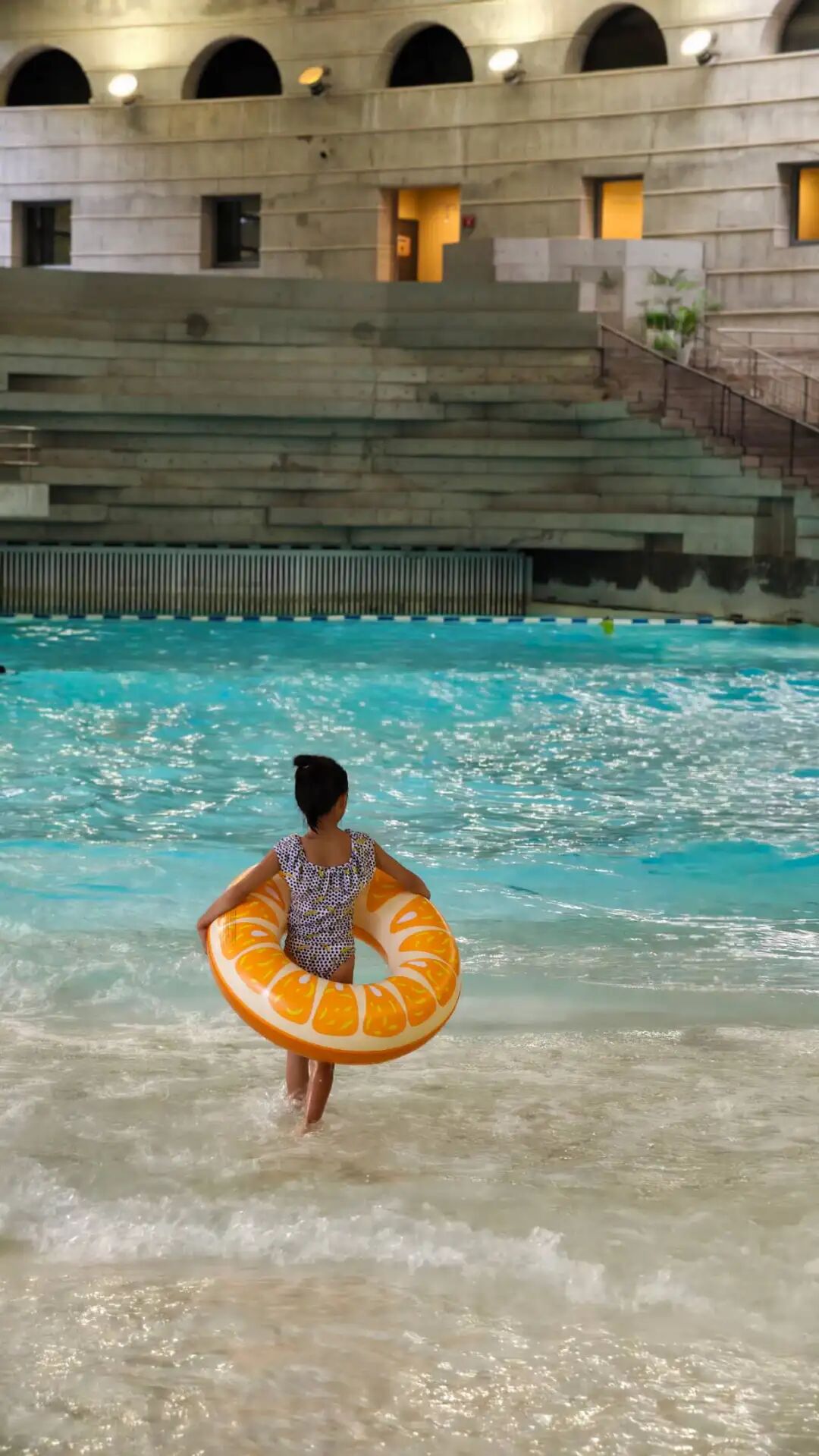
Il Mare Wave Pool / On-site photograph by Travel Industry
When the three types of family time can be freely combined, every family can find a way of vacation that suits them.
The declining birthrate will not make family-friendly hotels disappear. The first ones to be eliminated are likely to be those hotels that cannot explain what else they can sell without relying on children's playgrounds.
03
Back in China, it is difficult to copy RISONARE's practices as they are.
Most family-friendly hotels do not have the forests like those in Yatsugatake, nor are they necessarily located in a town famous for equestrian culture, but it provides a new business idea: the focus of investing in family-friendly products can gradually shift from purchasing equipment to organizing experiences.
In the past, many domestic family-friendly hotels completed their product design at the construction stage.
Investors marked out a site, the equipment company installed slides, then placed several small toy cars, and the family-friendly supporting facilities were considered completed. After opening, the playground repeats the same content every day, and when the facilities look old, the hotel spends money to replace them.
Such updates still stay at the hardware level.
The real operation starts after the family enters the hotel. The duration of each activity, whether parents need to accompany, where the children will go after the activity ends, and what will take up the free time of adults all need to be designed in advance.
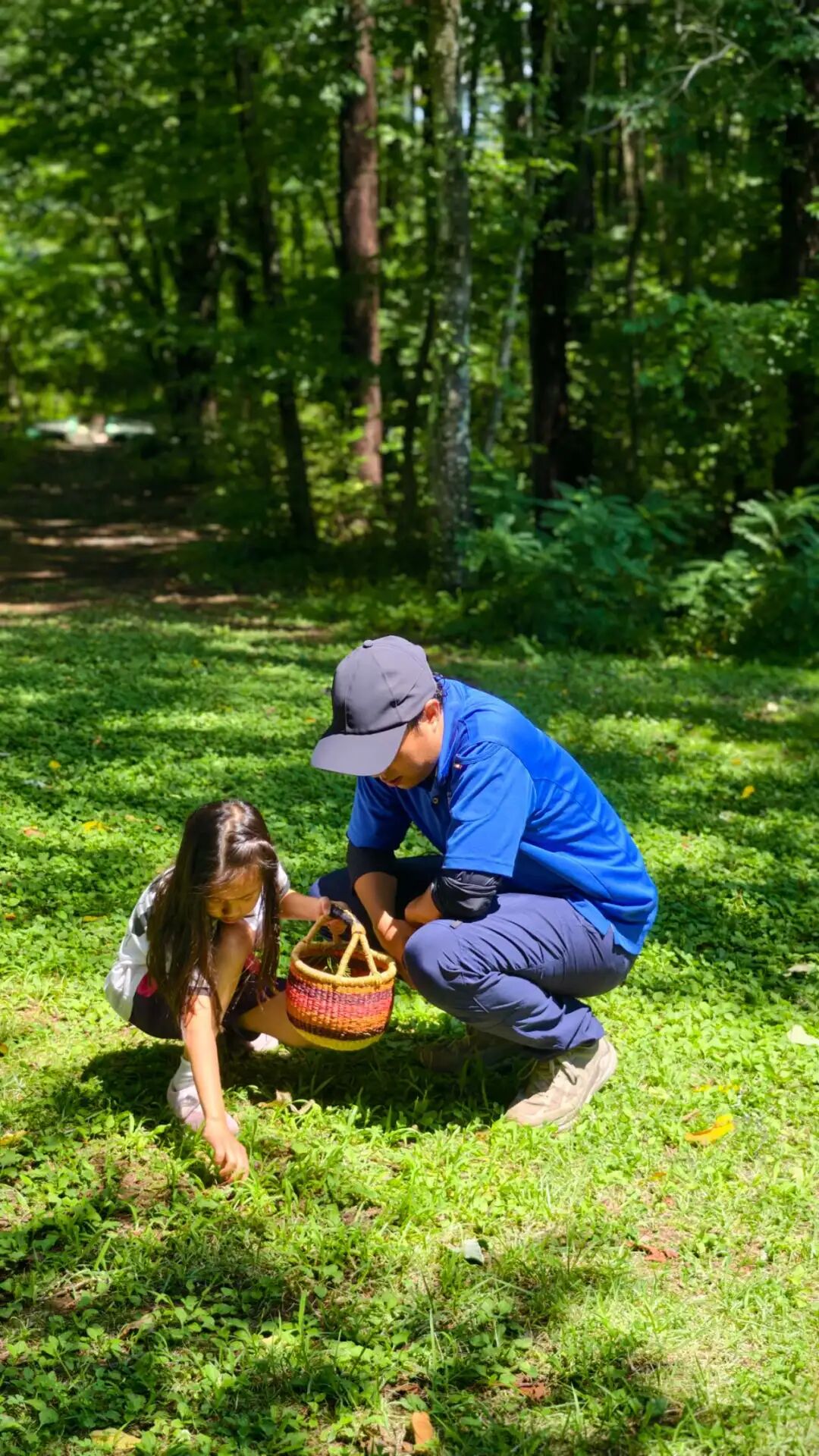
RISONARE Yatsugatake Hotel / On-site photograph by Travel Industry
The hotel also needs to take into account weather changes and age differences, to avoid the situation where guests arrive at the scene only to find that they cannot participate in the planned activities. As a result, family-friendly products have become a daily work that requires continuous updates, which can no longer be fully handed over to equipment suppliers.
The inspiration brought by the Yatsugatake riding ground is more direct.
Canadian Camp does not belong to RISONARE, but guests will regard horse riding as an integral part of their hotel vacation. The hotel completes the screening and reservation, then handles the connection of transportation and services, so that the existing resources of the destination are integrated into its own products.
There are often farms, museums or outdoor institutions around domestic hotels, but in the past few people have seriously organized these resources.
Cooperative projects can be adjusted according to seasons, and can also generate revenue through commission or revenue sharing. The hotel bears less pressure of long-term maintenance, and it is much easier to replace outdated projects.
When the season changes, the cooperative content can also be adjusted accordingly, so that the same hotel has a reason for repeated visits, no need to wait until the children's playground is renovated to create a sense of freshness.
For hotel operators, the scope of competition has therefore changed.
In the future, when measuring the family-friendly capability of a hotel, we should not only look at how many square meters of space are allocated inside the hotel, but also look at how large a scope of destination resources the hotel can mobilize. The cost that really needs to be invested will gradually shift from civil construction and equipment to curriculum development, safety management and service personnel.
The difficulty of family-friendly products should also increase as children grow up.
At the low age stage, activities can be completed with the company of parents. When children have more physical strength and better judgment, the activities can extend to nature exploration, sports training or local cultural experience,