The veteran of the Little Smart (PHS) industry makes a comeback, and this time he will lead his robotics business to sprint for an IPO.
On August 24, Youdi Robot passed the listing hearing on the Main Board of the Hong Kong Stock Exchange, leaving only the final step before official listing.
You may have never heard of the name "Youdi Robot".
But if you often visit KTVs and hotels, you have probably encountered it at the door of private rooms or around corridor corners — the metal device carrying a tray that waits for the elevator by itself.
According to the prospectus, as of the end of March 2026, the company has sold more than 114,000 robots in total. At present, over 15,000 units are in operation every day, executing more than 360,000 delivery tasks.
Still can't match the impression? No problem.
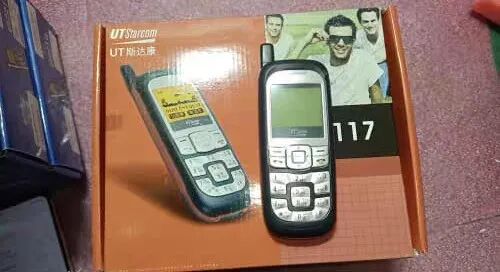
Change to another name, and you will most likely be familiar with it — UT Starcom.
It is the communication company that once became extremely popular across the country with the product "Little Smart".
△
Strictly speaking, Youdi Robot did not come from a direct name change of UT Starcom (China).
After the era of Little Smart ended, in 2013, Lu Ying, former CEO of UT Starcom, led some employees to switch tracks and founded Youdi Robot.
Although the founding team has accumulated technical experience in the communication industry and has good shipment data, the practical challenges of hard technology entrepreneurship have not become easier for that reason.
△
From 2023 to Q1 2026, Youdi Robot recorded a cumulative net loss of 513 million yuan.
It is not unusual for robot companies to make losses.
However, compared with listed peers, the biggest problem of Youdi Robot is its relatively weak overall product gross profit, with the gross margin of complete machines being only about 8%.
Even so, Youdi has still received investments from industrial capitals including the Alibaba ecosystem (Ele.me, Yunfeng Capital), Legend Capital, SenseTime, Huazhu Group, etc. Why is that?
What does Youdi's prospectus say?
Not only selling robots, but also "eyes"
In the impression of many people, Youdi Robot is just the "delivery robot" in hotels.
When guests order a bottle of water or buy a pack of tissues in their rooms, the robot takes the elevator upstairs and makes a call to notify the guests to pick up the goods after arriving at the door.
But looking through the prospectus, Youdi's business is far more complex than "selling robots".
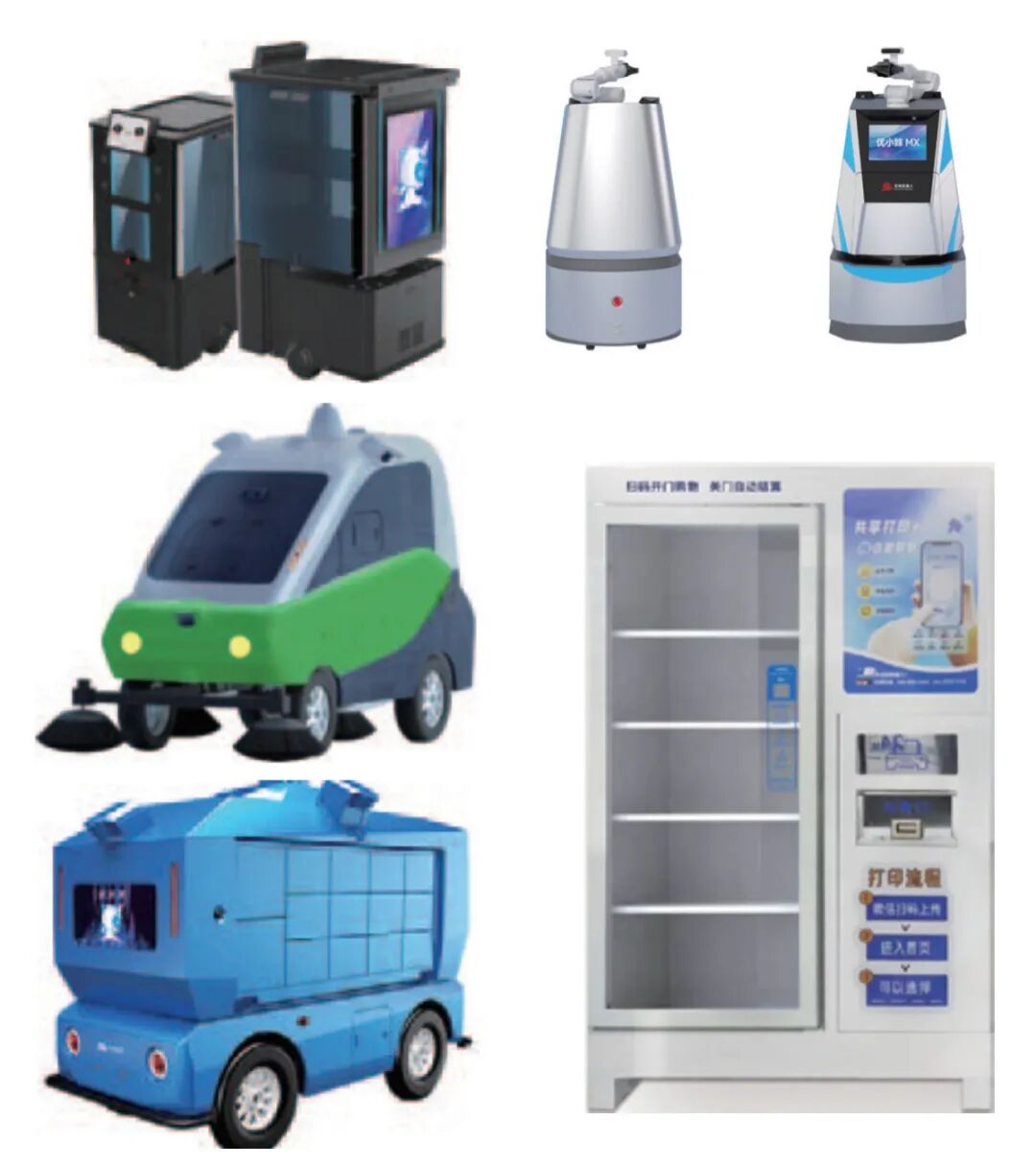
It currently has five main product lines:
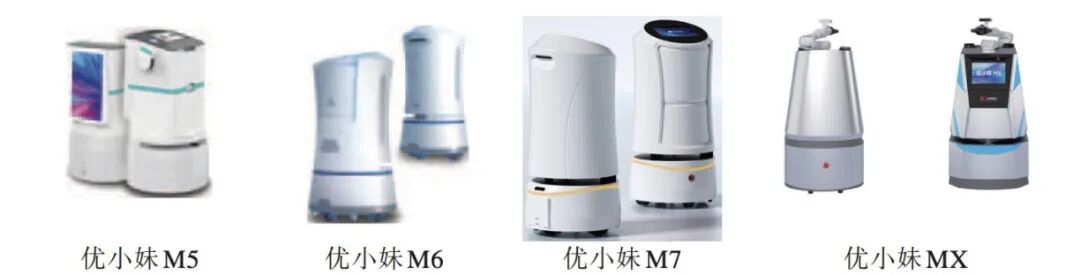
- You Xiaomei: smart hotel service robot;
- You Xiaodi: cultural, entertainment and catering service robot;
- You Xiaoge: outdoor autonomous driving delivery vehicle;
- You Xiaogu: indoor and outdoor cleaning robot;
- You Xiaofeng: movable intelligent vending robot.
In addition, the company has an AI visual model platform called "You Xiaoyun".
The so-called AI visual model can be simply understood as installing a pair of judgmental "eyes" on the machine, which can identify what is in the picture, what is happening, and whether there is an abnormality.
At present, Youdi applies this capability to scenarios such as building construction, food production, elevator renovation, physical education and media content moderation.
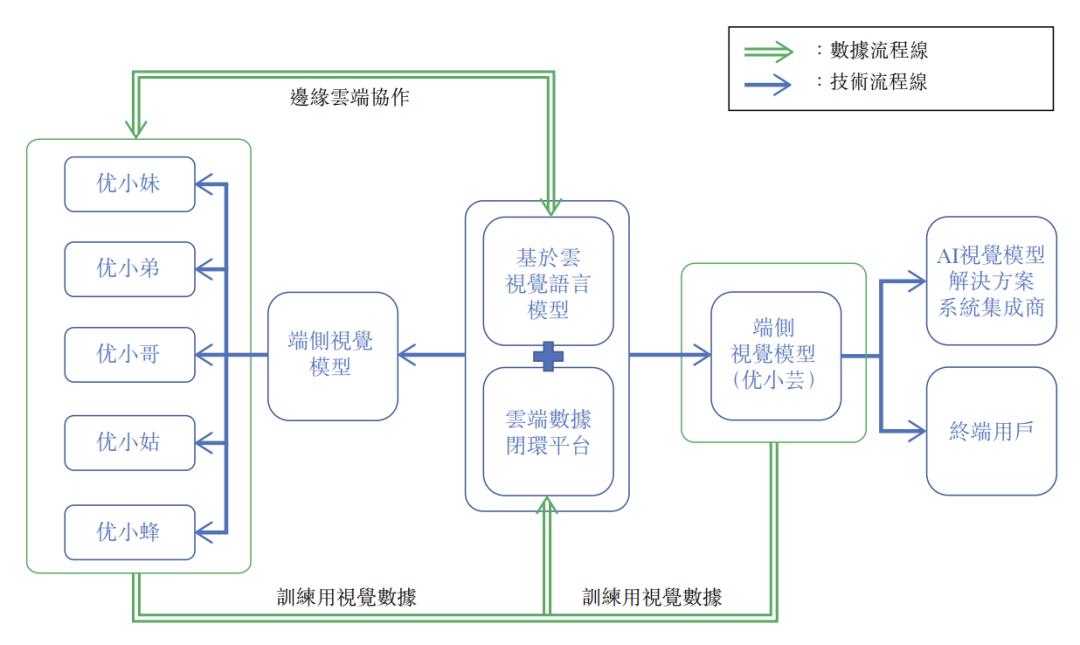
From the perspective of revenue composition, this "selling eyes" business has been quite important.
In 2025, Youdi achieved a revenue of about 318 million yuan, of which the revenue from AI visual model solutions was about 119 million yuan, accounting for 37.5%, second only to the revenue from robot product sales (about 135 million yuan, accounting for 42.5%).
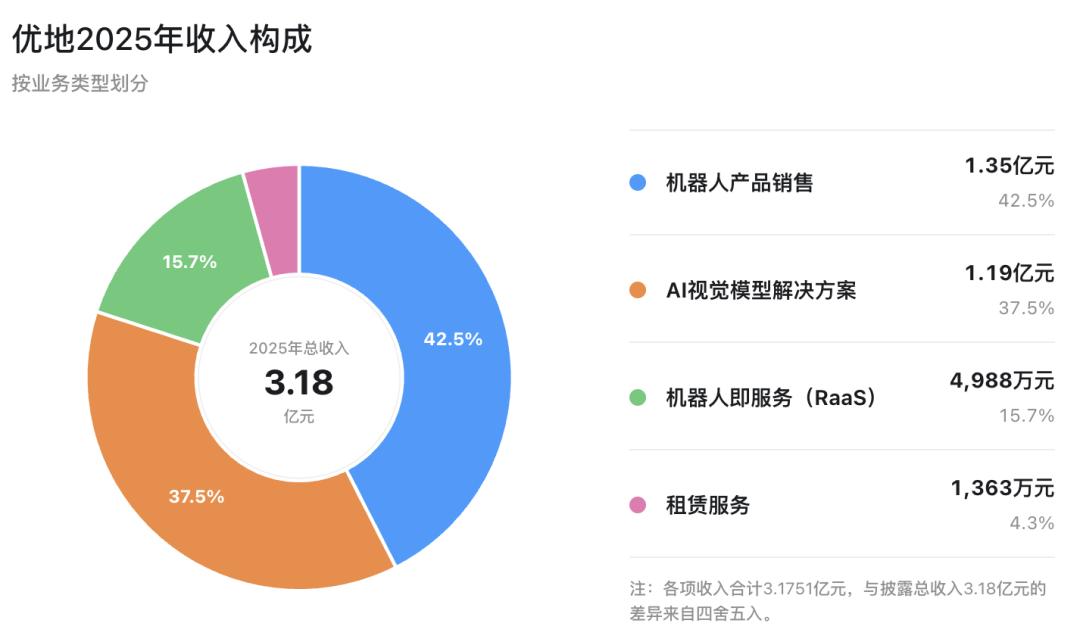
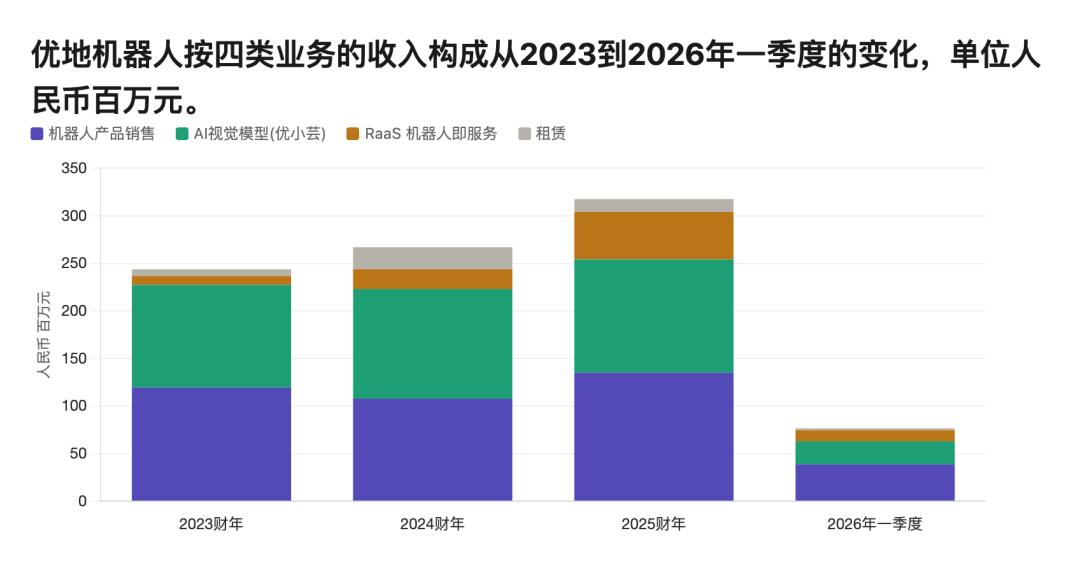
Overall, among the four revenue sources, more than half of Youdi's revenue in 2025 no longer came from direct robot sales, but from AI visual projects, robot operation and equipment leasing.
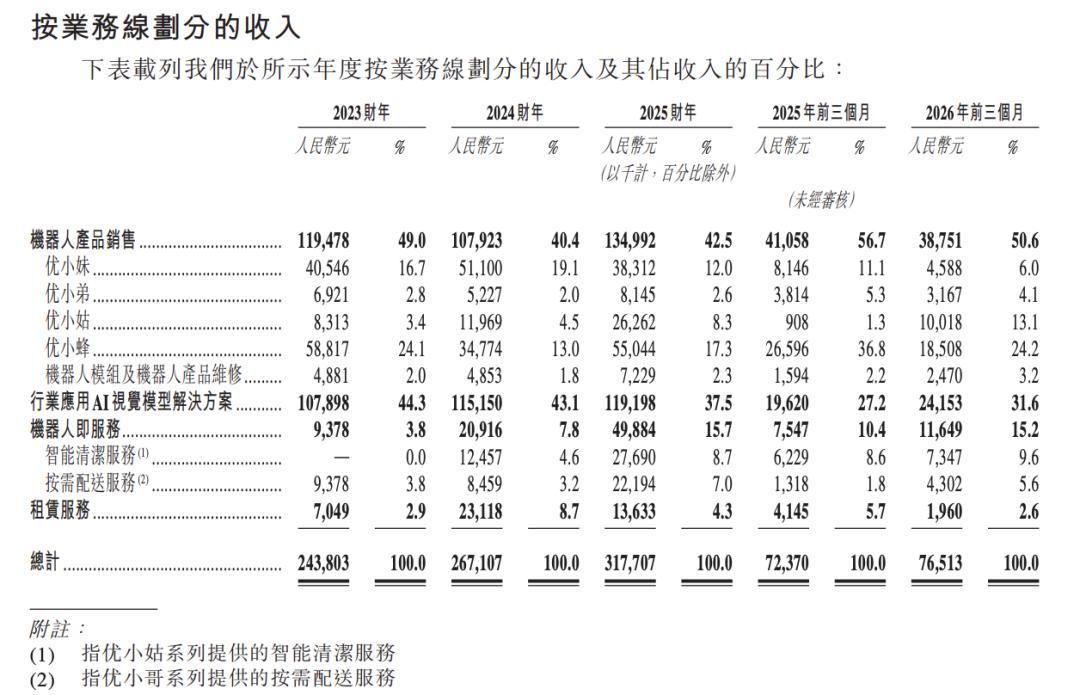
This is the most obvious business model adjustment of the company in recent years.
The logic behind the choice is easy to understand: selling hardware can only make money once, while operating robots has the opportunity to generate continuous revenue.
If each robot executes enough orders every day, the fixed cost can be diluted, and the business will become more stable.
But at present, this transformation path is still in the early stage.
From 2023 to 2025, RaaS revenue increased from 9.38 million yuan to 49.88 million yuan, and the gross margin improved from -122.2% and -40.3% to 5.1%.
Turning from negative to positive indicates that the model has started to work properly.
However, a gross margin of 5.1% also indicates that this business is not yet a mature "cash cow".
As of March 2026, Youdi has served more than 5,100 customers around the world and sold more than 114,600 robots in total.
The figure of 114,600 also needs to be analyzed in detail.
In 2023, Youdi sold a total of 79,140 You Xiaofeng vending robots, of which 79,114 were low-cost H2 models.
In that year, the average price of You Xiaofeng was only 743 yuan, and the lowest selling price of H2 was about 500 yuan.
Calculated based on the data disclosed in the prospectus, the H2 models sold only in 2023 accounted for about 70% of the company's total cumulative robot sales as of the end of March 2026.
These devices obviously do not have the same commercial value as delivery and cleaning robots priced at tens of thousands or even hundreds of thousands of yuan.
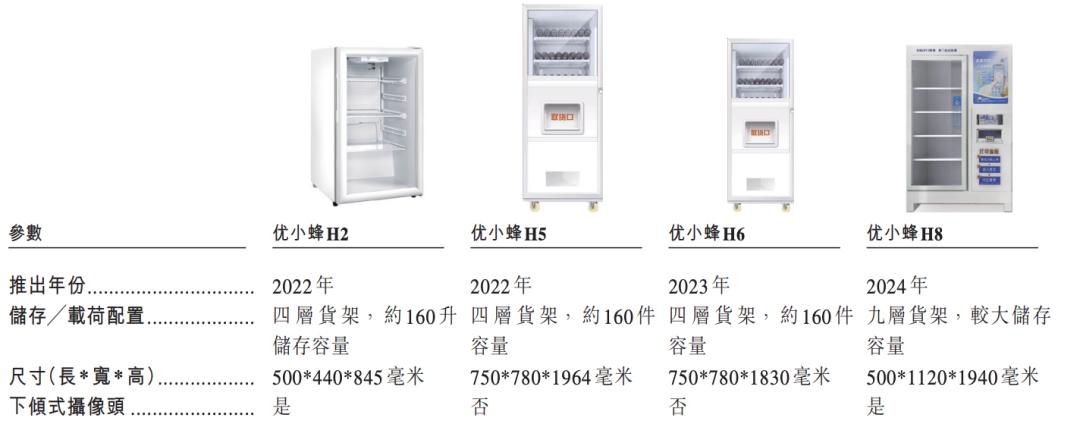
Since the second half of 2024, Youdi has gradually stopped selling the low-cost H2, and turned to sell the H8 with more functions and higher prices.
In 2025, the sales volume of You Xiaofeng dropped to 4,229 units, but the average selling price increased to 13,016 yuan.
This is an active product adjustment to "squeeze out the moisture".
Giving up the bloated low-price shipment volume in exchange for higher unit price and revenue quality. Why did Youdi do this?
Thin profit from hardware, but losses are narrowing
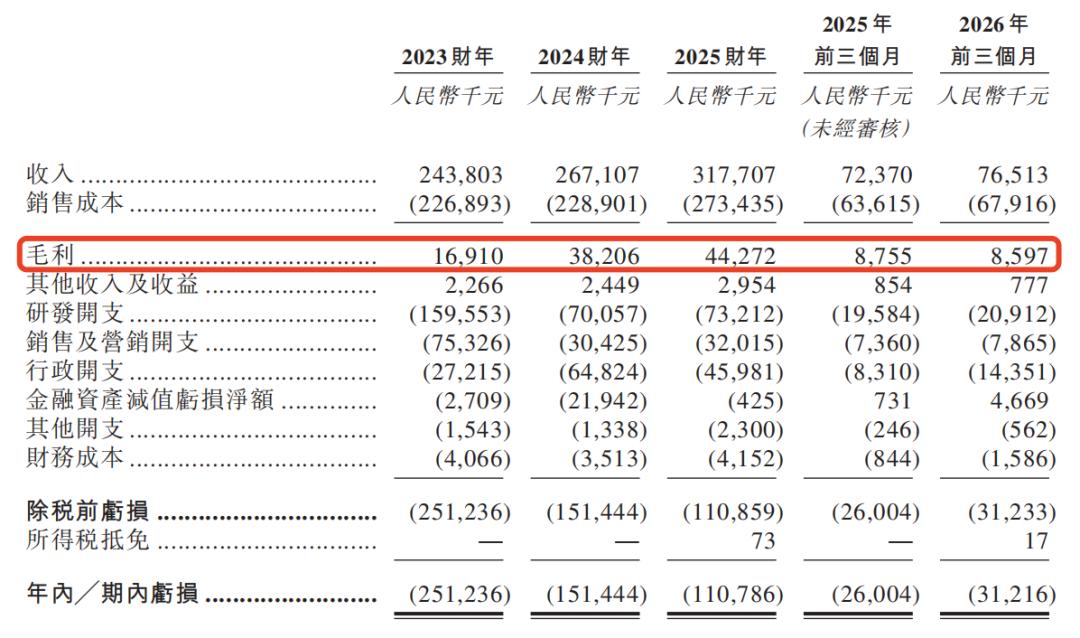
The prospectus shows that from 2023 to 2025, Youdi's revenue was about 244 million yuan, 267 million yuan and 318 million yuan respectively, maintaining growth for three consecutive years.
In the same period, the pre-tax loss was about 251 million yuan, 151 million yuan and 111 million yuan respectively, showing a year-by-year narrowing trend.
If adding the loss of 31.23 million yuan in the first three months of 2026, the company's cumulative loss is about 544 million yuan.
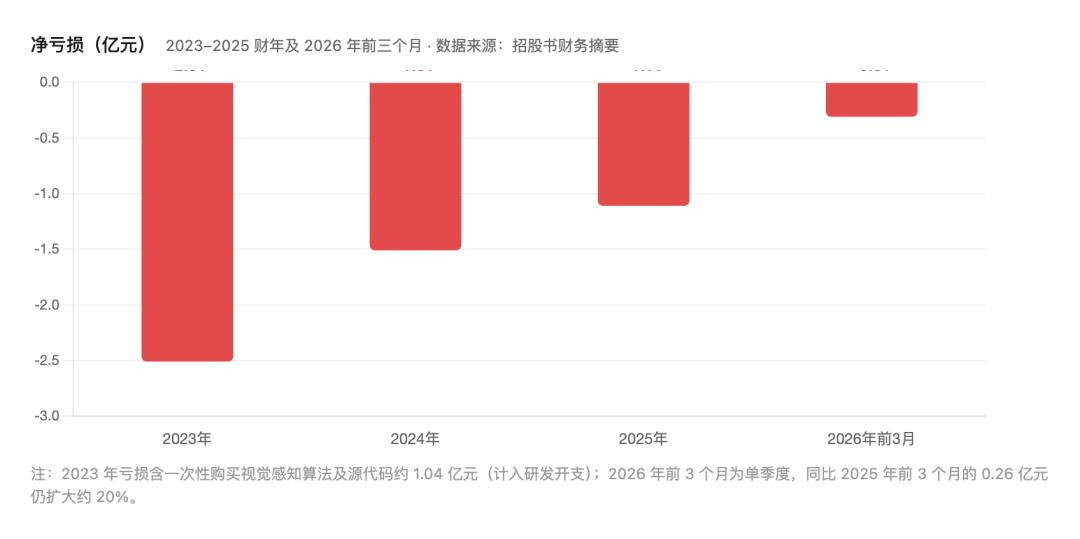
To add one more point here, the loss in 2023 has some special reasons.
In that year, Youdi spent about 104 million yuan to purchase a set of visual perception algorithms and related source codes at one time, so as to accelerate the development of outdoor cleaning robots and AI visual models.
This expense was directly included in R&D expenditure, which pushed up the loss of 2023 at one stroke.
Therefore, the loss of 251 million yuan in 2023 cannot be simply understood as the company will lose this much in daily operation every year.
However, even excluding this one-time expenditure, Youdi has not achieved profitability yet.
Youdi is not at the point of "losing money for every unit sold", but the gross profit it earns is not enough to support the operation of the company.
In 2025, Youdi's revenue was 318 million yuan, generating a gross profit of about 44.27 million yuan. According to the calculation of QbitAI, the company's overall gross margin in that year was about 13.9%.
By business segment:
- Gross margin of robot product sales is 8.3%;
- Gross margin of AI visual model solutions is 18.9%;
- Gross margin of RaaS is 5.1%;
- Gross margin of leasing services is 58.8%.
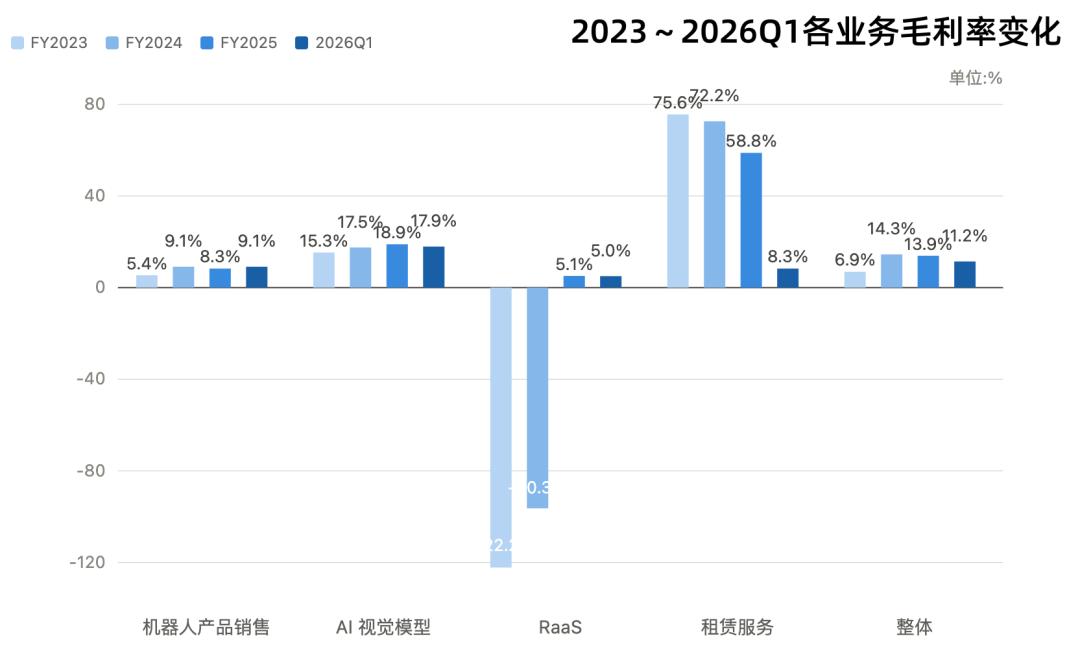
Leasing seems to be the most profitable business, but in 2025, leasing only contributed 13.63 million yuan in revenue, accounting for 4.3% of total revenue. Its scale is too small to change the overall profitability for the time being.
While the largest segment, robot product sales, only has a gross margin of 8.3%.
The general explanation for gross profit fluctuation in the prospectus is: changes in product mix, market competition, and insufficient release of scale effects.
From 2023 to 2025, the sales volume of You Xiaomei increased from 2,016 units to 2,851 units, but the average selling price dropped from 20,112 yuan to 13,438 yuan, a decrease of about 1/3 in two years.
In the first three months of 2026, the average selling price further dropped to 11,138 yuan.
The sales volume is growing, but the price is getting lower and lower, indicating that the hotel delivery robot sector has entered more intense homogeneous competition.
Corresponding to the annual gross profit (44.27 million yuan), Youdi's R&D expenditure reached 73.21 million yuan in 2025.
In other words, even without considering sales, management and financing costs, the total annual gross profit of the company cannot even cover the R&D expenditure.
In addition, Youdi had about 32.02 million yuan of sales and marketing expenses, 45.98 million yuan of administrative expenses and 4.15 million yuan of financial costs in 2025.
This is also the direct cause of the company's losses