The photovoltaic industry as a whole has suffered a total loss of over 10 billion yuan, while Hengdian Dongci still remains profitable amid the downward cycle with its three trump cards.
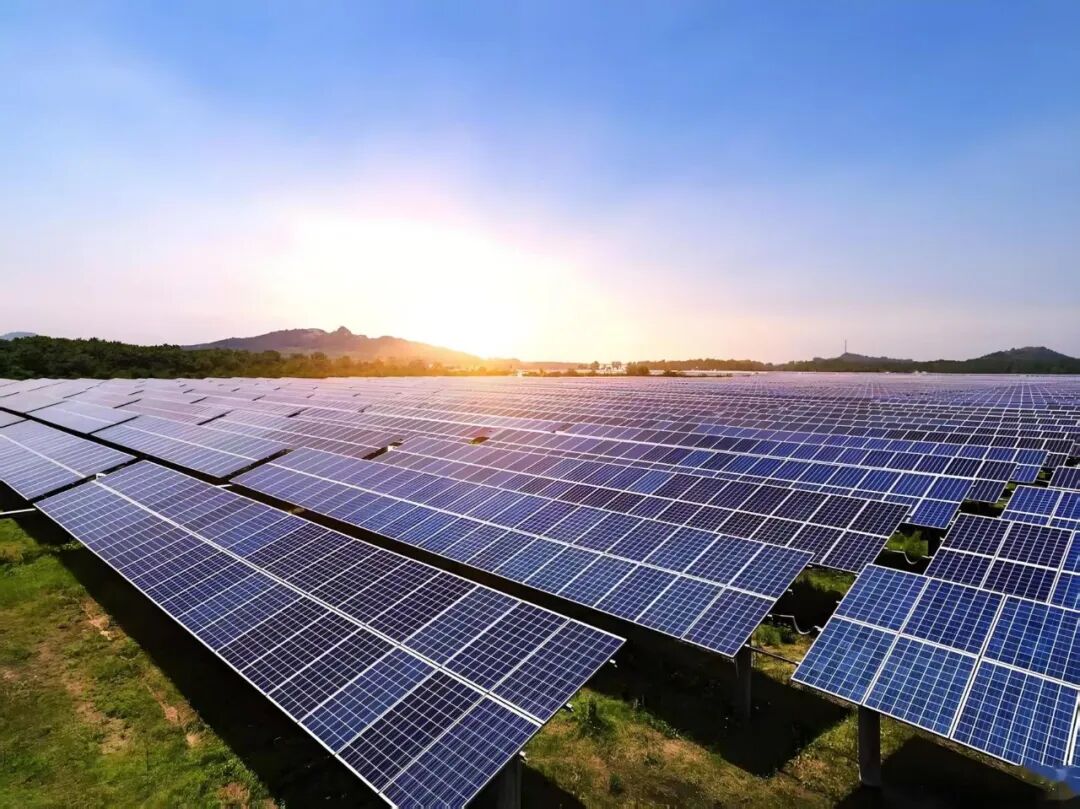
Hengdian DMEGC delivers profits against the market downturn, and is shifting its growth model from a single photovoltaic-driven core to multi-core growth drivers.
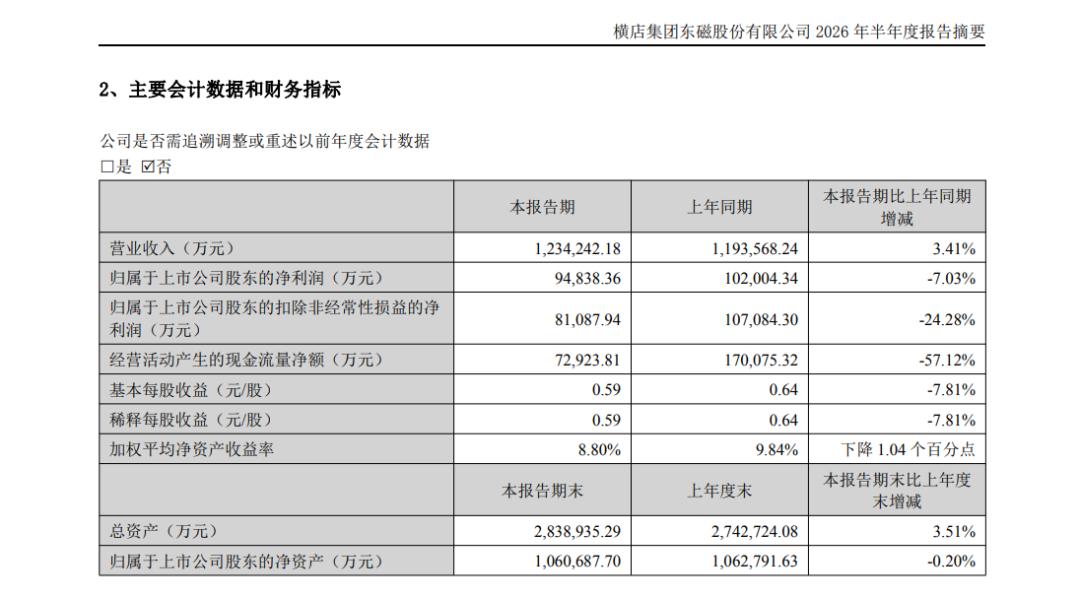
Foresee Energy has learned that on August 20, Hengdian DMEGC disclosed its 2026 semi-annual report. The company recorded operating revenue of 123.42 billion yuan, up 3.41% year on year; net profit attributable to shareholders stood at 9.48 billion yuan, down 7.03% year on year.
Financial expenses turned from -314 million yuan in the same period of the previous year to +264 million yuan. The 578 million yuan scissors gap between the two figures almost offset the entire decline in profits. The corporate report attributes this change to exchange losses caused by the appreciation of the RMB against the euro and the US dollar, which is systematically eroding the income statements of export-oriented manufacturing enterprises.
However, in the photovoltaic industry, achieving revenue growth without corresponding profit growth is already considered good news. As previously reported by Foresee Energy, many photovoltaic enterprises are facing losses. For example, Longi Green Energy expects a loss of 3.4 billion to 3.8 billion yuan, Tongwei Co., Ltd. expects a loss of 4.8 billion to 5.4 billion yuan, TCL Zhonghuan expects a loss of 3 billion to 3.3 billion yuan, and JA Solar expects a loss of 2.4 billion to 2.9 billion yuan. The total expected losses of these four leading enterprises alone exceed 13 billion yuan.
Hengdian DMEGC is an outlier in this industry - it is still making profits. But the logic behind its profitability is undergoing profound changes. To understand this change, we need to go back to 1980 to see how this company developed from a silk reeling factory to where it is today.

An entrepreneur with a peasant background
Timing selection for two cross-sector expansions
Before 1980, the industrial foundation of Hengdian was silk reeling. Xu Wenrong, the founder of Hengdian DMEGC, founded the Hengdian Silk Reeling Factory in 1976 to solve the food and clothing problem for the people of Hengdian. But the ceiling of the silk factory was obvious: it belonged to the low-end manufacturing sector, with no technical barriers and no pricing power.
In that year, when communicating with a fellow townsman who worked at the 4390 Factory in Baoji, Xu Wenrong keenly spotted business opportunities in the magnetic materials industry. At that time, domestic magnetic materials were almost monopolized by Japanese enterprises, and high-end magnetic steel and magnetic cores were all imported. Xu Wenrong made a judgment: this product has market demand, and Chinese people can make it. He selected 33 young workers to go to Baoji to "learn skills" on the job. With 50,000 yuan of funds and 25,000 yuan of training fees paid on credit, he founded the Dongyang Hengdian Magnetic Equipment Factory. Among these 33 people was He Shijin, who later became the general manager of Hengdian DMEGC.
An entrepreneur from a peasant background completed the industrial leap from light textile to high-tech materials in the most simple way.
In August 2001, 61-year-old Xu Wenrong arranged for his 37-year-old eldest son Xu Yong'an to take over the business.
After Xu Yong'an took over Hengdian Group, its operation style began to change. He is good at capital operation, and the listing of Hengdian DMEGC on the Shenzhen Stock Exchange in 2006 was a key step. But what really determined the development direction of the company was the two cross-sector expansion choices.
The first move was to enter the photovoltaic industry in 2009. In October, the company changed its planned fundraising project and invested in a 100MW crystalline silicon solar cell production line. The timing of this move was almost the worst in terms of the industrial cycle. With a total investment of about 5 billion yuan, the company was directly hit by the "double anti" investigation of the US against Chinese photovoltaic enterprises in 2011 and the subsequent major industry downturn. That strategic attempt to expand into the photovoltaic industry ended in failure. At the cost of 5 billion yuan, the company learned a profound lesson: at the bottom of the industry cycle, even if the direction is correct, it is impossible to survive without the right timing. But Hengdian DMEGC did not withdraw, it waited. After 2016, the photovoltaic industry entered a new upward cycle, and the company began to make new efforts. By 2022, the revenue of its photovoltaic sector exceeded 12.6 billion yuan.
The second move was to lay out the lithium battery sector in 2016. The company announced an investment of 3 billion yuan to build a project with an annual output of 6GWh high-capacity lithium-ion power batteries. It initially entered the large power market, focusing on ternary 18650 batteries.
However, problems soon emerged: the national new energy vehicle subsidy policy was phased out, competition intensified, and it became difficult to recycle accounts receivable. The large power battery market was firmly occupied by giants such as CATL and BYD. In the second half of 2019, the company completed a key transformation, shifting from large power applications to small power applications - electric two-wheelers, electric tools, smart homes, and portable energy storage.
The market size of this track is not very large, but it enjoys stable growth, no monopoly by giants, and cleaner profit margins than the main battlefield. In 2024, the shipment volume of the company's 18650 model cylindrical lithium-ion batteries ranked second in the world, and the shipment volume of small cylindrical batteries remained among the top three in China.
These two cross-sector expansions share a common underlying logic: transferring the process capabilities of material preparation and precision sintering accumulated in the magnetic materials field to new industrial directions.

11.18% gross margin of the photovoltaic business
What supports this figure
Now we look back at the present, at the financial report for the first half of 2026.
In the first half of the year, the revenue of Hengdian DMEGC's photovoltaic sector was 7.369 billion yuan, accounting for nearly 60% of the total revenue, but down 8.50% year on year. Its gross margin dropped from 16.70% in the same period of the previous year to 11.18%, a decrease of 5.52 percentage points.
What is the level of 11.18% in the whole industry? Trina Solar's gross margin in the first half of the year was 7.59%. The overall gross margin of the module link in the industry was only 0.67%. Hengdian DMEGC's photovoltaic gross margin is 16 times the industry average.
Why? Differentiation. The company focuses on overseas distributed markets such as Europe, adheres to the product line of high power and high energy efficiency, and maintains a certain premium capability. In the first half of the year, the shipment volume of photovoltaic products exceeded 12GW, firmly ranking among the top 10 in global module shipments. According to statistics from InfoLink, Hengdian DMEGC, Aiko Solar, TCL Zhonghuan, and GCL Integration are tied for eighth place.
But how long this logic can last is a problem. In the first half of 2026, the global demand for photovoltaic modules was about 536GW, while the production capacity reached as high as 1100GW. The average price of dense polysilicon material dropped from 52 yuan/kg at the beginning of the year to 32.5 yuan/kg in early July, and the module bidding price fell below 0.7 yuan/W.
Statistics from the China Photovoltaic Industry Association show that the output of modules in the first half of the year was 201.3GW, down 35.1% year on year. 17 of the 31 enterprises in the main photovoltaic industrial chain disclosed semi-annual performance forecasts, all of which were expected to be loss-making, with a total loss of about 16.8 billion to 19.6 billion yuan.
Foresee Energy believes that Hengdian DMEGC has maintained a gross margin of 11.18% by exercising restraint in "not participating in price wars". But how long this restraint can last depends on the demand of the European market and the company's own cost control capability. The downward cycle of the photovoltaic industry has not yet come to an end, and many industry insiders hold a cautious attitude towards the actual turnaround from losses to profits.

Magnetic materials sector is boosted by AI
But where is its ceiling
The magnetic materials and devices sectors are making up for the profit gap.
The revenue of the magnetic materials business was 2.08 billion yuan, up 12.44% year on year; the revenue of the devices business was 806 million yuan, a sharp increase of 86.50% year on year. The gross margin of magnetic materials was 25.89%, and the gross margin of devices was about 20.7%. The total gross profit of the two sectors was about 731 million yuan, close to the gross profit of 824 million yuan created by the 7.369 billion yuan revenue of the photovoltaic sector. With 40% of the total revenue, they generated almost the same gross profit.
The 86.5% growth rate of the device business is driven by AI. TrendForce predicts that the global shipment volume of AI servers in 2026 will increase by more than 28% year on year. The consumption of integrated molding inductors in a single AI server is 8 to 10 times that of a traditional server, and the value is increased by 5 to 15 times. Hengdian DMEGC's copper-iron co-fired inductors are directly located in the core position of the GPU/CPU power supply link, and have been applied in the server field on a large scale. The company is promoting product verification and small-batch introduction with overseas customers.
However, the boost of AI to the demand for magnetic materials is still in the early stage. In 2025, the company's revenue related to AI servers and data centers accounted for about 20% of the total revenue of the soft magnetic business sector, and this proportion is not large enough. Magnetic materials is the founding business of Hengdian DMEGC. The company has been engaged in the magnetic materials business since its establishment in 1980, and it does have the scale advantage as the world's largest ferrite manufacturer. But the growth rate of the AI track determines how much profit gap this business can fill.

The gross margin of lithium batteries rose by 7 percentage points
What did Hengdian DMEGC do correctly
Lithium battery is the third variable driving growth.
In the first half of the year, the revenue of the lithium battery business was 1.748 billion yuan, up 35.91% year on year. Its gross margin jumped from 12.90% to 20.09%, an increase of 7.19 percentage points. The shipment volume of lithium batteries exceeded 300 million units.
The 7-percentage-point jump in gross margin did not come from price hikes. After all, the price of lithium carbonate is still fluctuating in a wide range. It came from the increase in capacity utilization rate and the optimization of product structure. The company's full-tab pilot production line was officially put into operation, and the overall capacity utilization rate increased significantly. By the end of the first half of 2026, the company had an annual lithium battery production capacity of 8.5GWh.
Let's make a horizontal comparison. Weilong Lithium Core recorded 2.527 billion yuan of revenue from its lithium battery business in the first half of the year, up 58.43% year on year, with a gross margin of 22.84%. Hengdian DMEGC's 20.09% gross margin is lower than that of Weilong Lithium Core, but the gap is narrowing.
EVE Energy takes the large power route. In the first half of the year, its power battery revenue was 17.28 billion yuan, with a gross margin of 16.2%. The gross margin pressure in the large power market is obviously greater.
In 2024, the shipment volume of Hengdian DMEGC's 18650 model cylindrical lithium-ion batteries ranked second in the world, and the shipment volume of small cylindrical batteries remained among the top three in China. In the small power market segment, it has already gained a firm foothold. But the small power market is not without hidden worries. Power battery enterprises such as BYD and Gotion High-tech are entering this track, and the technical threshold and quality standard of the industry are continuously rising. Competition is intensifying. Whether Hengdian DMEGC's gross margin can continue to increase depends on the mass production speed of full-tab products and the market expansion of 21700 series batteries.

Growth engines are being switched
But the switching speed is not fast enough