Liu Dian from Fudan University discusses enterprise inheritance and organization in the AI era: the biggest risk of AI transformation is the absence of the "top leader"
Recently, the 10th China Academic Conference on Business Culture and Management was successfully held. Centered on the core theme of "Innovation, Entrepreneurship, Inheritance and Development of Private Enterprises", this conference is hosted by the Institute of Urban Soft Power of Peking University, and undertaken by the Shanghai Campus of Clermont School of Business in France.
Liu Dian, associate researcher at the China Institute of Fudan University, delivered a keynote speech titled "Enterprise Intergenerational Inheritance and Organizational Transformation in the Era of Artificial Intelligence" at the conference. From the perspectives of AI industry trends and enterprise organizational transformation, he shared the changes in the way enterprises create value in the AI era, and analyzed the core challenges faced by entrepreneurs in the new cycle.
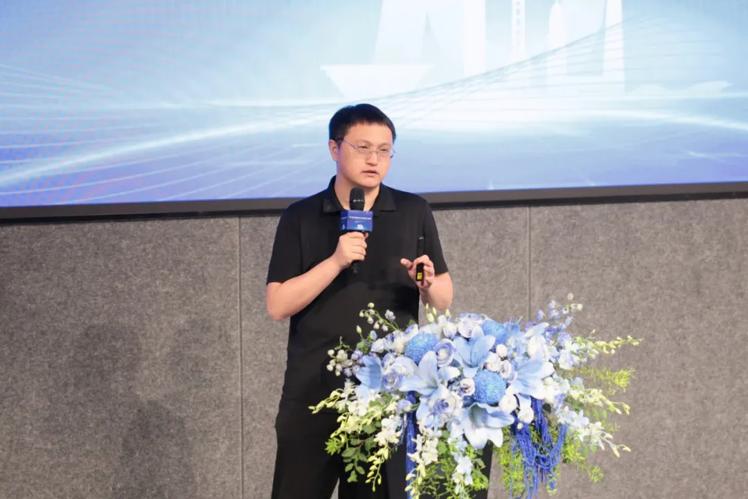
Liu Dian
Liu Dian believes that when enterprises view intergenerational wealth inheritance, they should not only focus on the transfer of fixed assets and family continuity, but also pay more attention to the structural shift of value creation logic and wealth carriers to "technology-driven", as well as the reconstruction of organizational structure and decision-making chains by AI.
Value Creation Shifts to "Industry Investment + Technology", and Enterprise Inheritance Targets Turn to Computing Power, Models and Data
Liu Dian said that for a long time in the past, wealth creation relied more on land, real estate and spatial value, and the development of enterprises and local governments revolved around resources, scale and markets. However, as scientific and technological innovation becomes a new growth driver, the main body that creates wealth is shifting from the traditional owners of spatial resources to the builders of technological innovation and industrial ecology.
At present, many local governments are undergoing similar changes, shifting from the past emphasis on infrastructure and hardware investment to focusing on the layout of technology industries, innovation ecosystems and industrial clusters. A new wealth creation model will take shape in the future: a symbiont of enterprises, local governments and high-tech companies will emerge, and a number of enterprises with a valuation of over one trillion, several trillion, or even more than 10 trillion in the future will appear. "This means that entrepreneurs need to re-understand the source of wealth. The advantages formed in the past by relying on land, channels and resource relationships are gradually giving way to technology, computing power and innovation capabilities."
The above logical transformation reshapes the carrier form of wealth. Liu Dian said that means of production that continuously generate value, such as data, computing power and models, are becoming the core dimension for measuring enterprise value.
First of all, the top spot in global market value has long changed hands. Nvidia's market value took only 29 months to rise from $1 trillion to $5 trillion, of which only 113 days were spent from $4 trillion to $5 trillion. In May 2026, its market value exceeded $5.5 trillion, surpassing Germany's full-year GDP and becoming one of the most valuable companies in the world.
In the Hurun Global Unicorn Index 2025, there are 128 "pure AI" companies with a total valuation of nearly $1 trillion, and the number of AI-related unicorns reaches 478.
At the same time, data assets are being included in corporate balance sheets. The total amount of "data assets recorded in statements" in the 2025 annual reports of 127 A-share companies reached 3.716 billion yuan; the figure was 2.093 billion yuan from 92 companies in the previous year, almost doubling within one year. The three major operators account for 60.7% of the total amount of data assets recorded in the statements of A-share companies, and data assetization has been led by resource giants.
Transactions related to data assets are growing rapidly, and data is changing from a resource to a new type of asset that can be recognized, managed and operated by enterprises. The experience, channels and relationship networks accumulated by enterprises in the past need to be transformed into precipitatable, callable and replicable data assets in the AI era.
"The successor will inherit not only equity and factory buildings, but also the ownership and operation rights of data assets, model capabilities and computing power resources. Without understanding these three things, you cannot understand the future balance sheet." This also shows that the next generation of entrepreneurs needs to understand how to clearly explain the asset value of the enterprise to the outside world in the language of "industry investment", rather than describing the enterprise with traditional business language.
Two Waves Overlap: "Personnel Replacement" and "Organizational Restructuring" Are in the Same Decade
Liu Dian said that 2025-2035 is a special intersection period, in which the intergenerational transfer of power and the reconstruction of enterprise organizations will overlap in the same time and space.
On the one hand, in the handover window of the next 5 to 10 years, the first generation of entrepreneurs will withdraw intensively from the front line of operation, and 21 trillion yuan of wealth and management rights are waiting to be transferred; on the other hand, from 2026 to 2030, intelligent agents will be deployed on a large scale, and management levels, post systems and decision-making chains will be systematically rewritten.
During the intersection period, the successors are faced with a set of organizations that are being rewritten by AI; organizational transformation can no longer wait until the handover is completed to start. This means three direct changes for enterprises: In the selection criteria for successors, AI literacy has changed from a plus item to a mandatory item; the content of handover has expanded from positions and connections to data assets and intelligent systems; the board of directors needs to answer both "who will take over" and "how to reform the organization".
In the process of AI reconstructing organizations, a counter-intuitive trend has also emerged: The middle management of a large number of enterprises is being systematically compressed, while the basic posts are not being replaced as quickly as expected. "This is a common organizational change in enterprises that deeply use AI, especially in large organizations, the middle management roles that originally assumed the functions of information transmission, coordination and interpretation are facing the greatest impact."
At the same time, front-line grassroots employees have instead become key nodes that are closely integrated with AI systems and directly amplify efficiency and value in the new organizational form of human-machine collaboration; with the compression of the middle management, the decision-making chain of enterprises is also shifting to a more flat human-machine collaboration mode, and the decision-making space of front-line employees assisted by AI has been significantly expanded. This also requires future managers to shift from "only managing people" to "managing both human and AI teams at the same time", and ultimately master the new organizational form of human-machine collaboration.
Two Core Variables of Inheritance: Data Assets and AI Cognition
The experience in the minds of "veteran employees" in enterprises is becoming the scarcest and most inheritable asset.
Liu Dian shared a Silicon Valley case: an algorithm engineer originally led an algorithm security department of 300 people in a large technology company with an annual budget of more than one billion yuan. He converted all his years of industry experience into data, developed an AI product, started a business with 3 people, and was acquired at a valuation of 240 million US dollars more than a year later.
Another typical signal is that top AI companies are now offering data annotators a price of 10,000 to 20,000 yuan per day, recruiting master's, doctoral degree holders and industry experts, which exactly shows that the deeper AI goes, the more it relies on high-quality industry data.
Therefore, data is not only the operating asset of the enterprise, but also the inheritance asset. The core competitiveness of the previous generation is often implicit experience, and precipitating it into data and intelligent agent processes is the specific form of "passing on the system" in the AI era.
In addition, the biggest variable in enterprise inheritance is the cognition of AI. Liu Dian said: "21 trillion yuan of wealth is waiting for handover in the next ten years, and the success rate of the second generation inheritance is less than 30%. The biggest pit in AI transformation is the absence of the top leader. AI cognition cannot be outsourced, nor can it be handed over along with the position."
Liu Dian shared that many enterprises have a misunderstanding in AI transformation: they completely outsource strategic-level tasks to professional managers or external teams, and only make huge capital investments themselves, but the final effect is very little. "The root cause is that enterprise decision-makers often do not really use AI in depth, but the core user of enterprise AI transformation should be the decision-maker himself."
Liu Dian concluded that intergenerational inheritance of enterprises should pass on culture, cognition and system on the one hand, but from an individual perspective, four capabilities are crucial in the future, including the ability to insight into the direction, the ability to implement after grasping the direction, the ability to cooperate and collaborate, and the ability to make decisions in uncertainty - this kind of decision-making needs to take risks and integrate innovation at the same time. "When enterprise inheritance overlaps with the industry cycle of AI reconstructing organizations, the biggest risk for both generations of successors is to misread the structural transformation in the AI era."
This article is from the WeChat Official Account "Bright Company" (ID: suchbright), author: Robin, published with authorization from 36Kr.