Those overhyped, flashy yet practically useless intelligent driving configurations
Over the past few years, new energy vehicle startups have launched fierce competition around in-vehicle scenarios, taking unconventional functional innovations as product selling points, which has infinitely expanded the usage of in-car space, as if the more novel a function is, the closer it is to the vision of future mobility.
But recently, regulatory actions targeting autonomous driving configurations in the automotive industry have emerged one after another.
At the beginning of July this year, the Ministry of Industry and Information Technology put forward new requirements for the review of new vehicle announcements. All declared passenger car models originally equipped with external blue driving assistance indicator lights will fail to pass the product announcement review. Almost at the same time, the mandatory safety specifications related to zero-gravity seats entered the public consultation stage, imposing strict restrictions on the adjustable angle and usage posture of seats when the vehicle is in motion. In addition, the new national standard for the single-pedal mode has been officially released, clearly stipulating that starting from 2027, under the default driving mode, after the driver releases the accelerator pedal, the vehicle shall not achieve a complete stop through methods such as energy recovery.
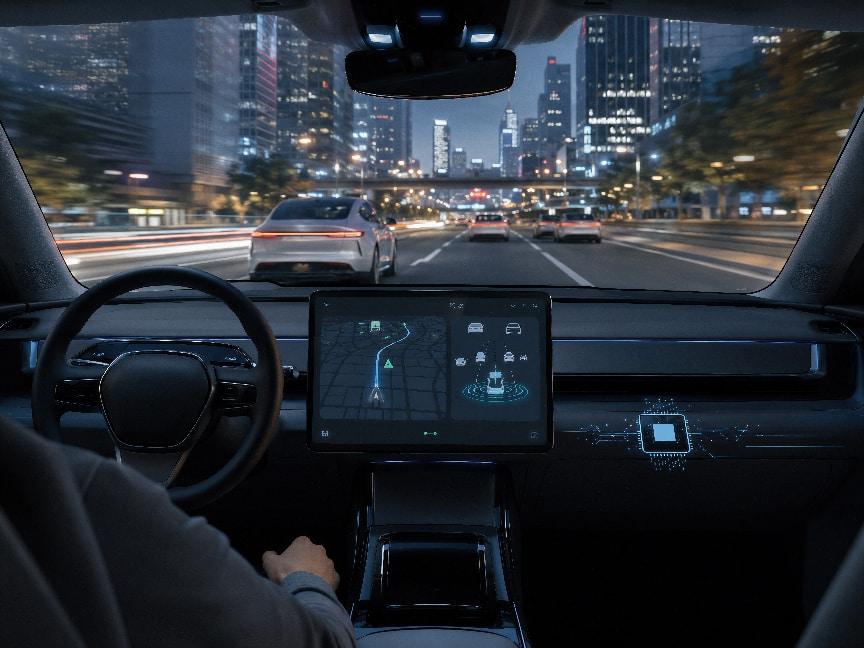
From the small blue indicator lights and zero-gravity seats to eye-catching in-car showers and concept cars without B-pillars... the hand of regulation is reaching out to those once highly popular "viral configurations" one by one.
How many of those highly praised innovations truly serve driving itself? Why don't automakers focus on improving core capabilities such as autonomous driving algorithms and three-electric systems, but instead compete to develop these flashy configurations?
The Carnival of Flashy Viral Configurations
The story dates back to several years ago. It is difficult, costly and slow to achieve breakthroughs in hard-core fields such as core three-electric systems, chassis tuning and safety architecture, while a creative scenario-based configuration with low cost can get millions of views on short video platforms.
Since they cannot compete in mechanical quality, automakers choose to compete in sense of intelligence, sense of technology and imagination, and explore all kinds of possibilities for in-car entertainment. As a result, whether you can cook hot pot, play mahjong, or get a SPA when stuck in traffic in the car has unexpectedly become the core highlight of product launch events.
As a result, the involution centered on configurations has quietly deviated from its proper track. But the problem is that many configurations in this space have little to do with real autonomous driving, and even easily lead to potential safety hazards.
Take the in-car shower as an example. The wild luxury outdoor kit launched by a certain brand's flagship SUV turns the trunk into a simple shower room, which is supplied with water by a 10-liter water tank, and the heating module can raise the water temperature to 45°C within 10 minutes. However, the water output of an ordinary shower head is about 8 to 10 liters per minute, so this system can only support one minute of showering at most. The circuit safety when the vehicle is parked, the risk of scalding by hot water, and the possibility of slipping and falling on wet ground are all glossed over with words like wild luxury and freedom in promotional brochures.

The in-car kitchen is in the same situation. Some models are equipped with a camping kitchen integrating a sink, an induction cooker and an integrated cutting board, but when you are actually on the road, where to discharge the sewage? How to exhaust the oil fume? How to fix it when the vehicle is moving? How to maintain hygiene? There are no answers to these series of most basic questions at the launch events.
Public opinion generally believes that this type of configuration is full of gimmicks, but has serious defects in practicability and durability, and has become a useless design divorced from real life. Of course, if the in-car kitchen and shower are just "useless decorations", some configurations directly cross the red line of safety.
The B-pillar is the core component that bears more than 1.5 tons of impact force during a side collision of a car, and is the backbone that protects the integrity of the passenger cabin. Without the B-pillar, even if it is repeatedly reinforced with extremely high-strength steel at sky-high prices, it is difficult to meet the safety standards of traditional structures.
However, in recent years, the B-pillarless suicide door has become a synonym for high-end and futuristic sense. A flagship SUV of a luxury brand released in August 2026 takes the world's first B-pillarless suicide door design as its biggest selling point, paired with front seats that can rotate 180 degrees to create a mobile meeting room. The automaker claims that the safety standards are met through high-strength steel beams, but the engineering community generally remains skeptical. It is difficult to open both suicide doors in a narrow parking space, and it is not cost-effective to sacrifice all-weather side safety protection for the elegance of getting on and off the car that can be used only a few times a year.

As for the specially designed storage slot for knives and forks in the car, it is even more ridiculous. In a metal shell moving at a speed of 100 kilometers per hour, a reserved position for sharp metal tableware may lead to serious safety hazards caused by jolts in case of sudden braking or collision.
Speaking of which, we have to mention those autonomous driving configurations that have been targeted by regulatory measures.
The small blue light, which is installed on the roof, rearview mirror or the rear of the vehicle, was originally intended to remind surrounding road users that "this vehicle is using assisted driving", but it quickly evolved into an identity label that reflects a sense of exclusivity, and its inconsistent brightness is easy to distract other drivers' sight.
Similar to the small blue light, the large-angle reclining of the zero-gravity seat back claims to simulate the space posture, but when the seat is reclined to more than 120 degrees, the seat belt will slip off the shoulder, and the waist belt may move up to the abdomen, causing internal organ injury in a collision. The single-pedal mode means that releasing the accelerator is equivalent to stepping on the brake. In an emergency, the driver's instinctive action of releasing the accelerator will cause the vehicle to decelerate sharply, and the following vehicle may not have enough time to react.
None of the above configurations are real autonomous driving technologies, but peripheral gimmicks built around the concept of intelligence. Cooking hot pot in the car, raising fish in the front trunk, removing the B-pillar... The promotion of scenario-based configurations for current intelligent driving vehicles has become increasingly absurd.
But are all autonomous driving configurations not worth mentioning? Are there any truly valuable ones?
The Hard Currency of Autonomous Driving Configurations
Peeling off the layers of flashy gimmicks, the intelligent configurations that are really worth paying for are not fancy at all, and even somewhat simple. They do not pursue visual impact on short video platforms, but quietly reduce the burden on drivers during every commute, every parking maneuver, and every night drive.
The criteria for judging whether a configuration is truly useful is very simple: will you use it every day? Is it indeed more convenient and safer after you use it?
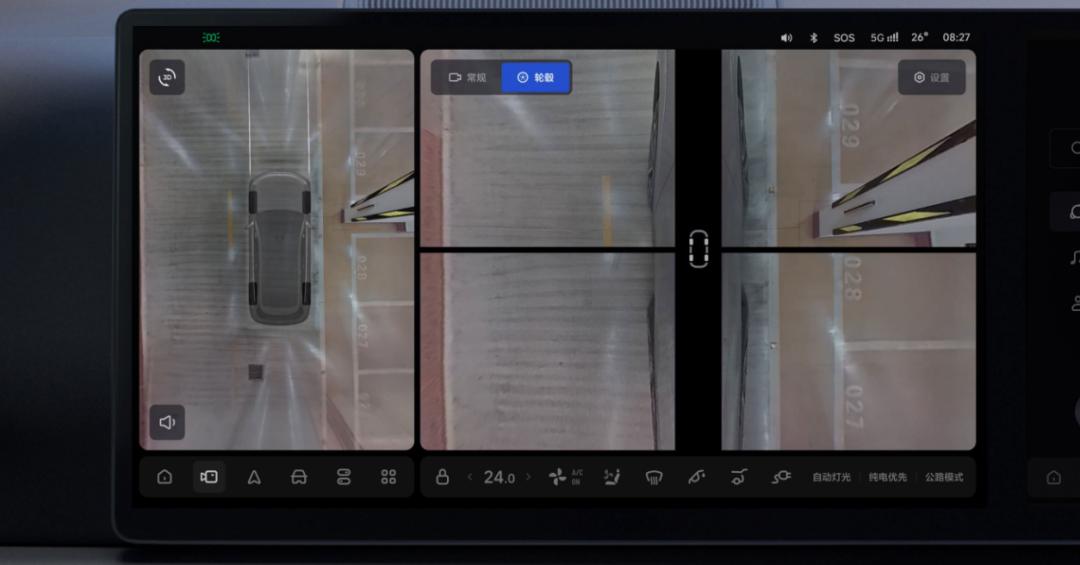
The 360° panoramic imaging system with transparent chassis is exactly such a configuration. It stitches together the top-down view through multiple cameras around the vehicle, allowing the driver to see obstacles around the vehicle and the road conditions under the chassis on the central control screen. For SUVs and MPVs with large body sizes, the 360° panoramic imaging system can reduce scratches and chassis bottoming when meeting cars on narrow roads, parking by the roadside, and passing through potholed roads.
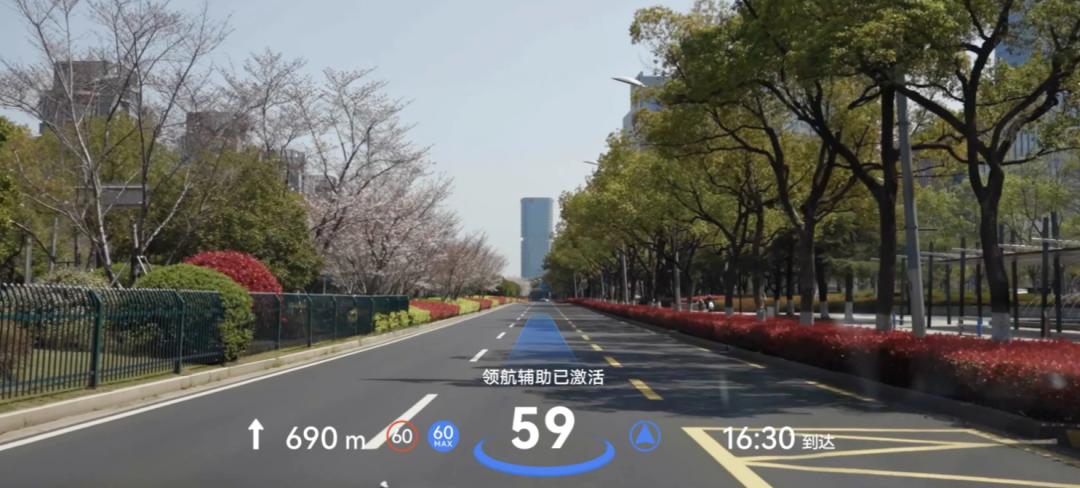
The HUD head-up display technology is also underrated. It projects key information such as vehicle speed, navigation, and assisted driving status onto the front windshield, allowing drivers to obtain information without taking their eyes off the road. There is no need to frequently look down at the instrument panel during high-speed cruising, and the navigation arrows appear directly in front of the field of vision at complex intersections. A high-quality HUD can also display lane lines, distance from the preceding vehicle, and lane change reminders.
Beyond visual safety, the streaming media rearview mirror and DMS driver monitoring system make up for the shortcomings in driving safety from two dimensions: observation field of view and human-related risks.
Traditional rearview mirrors are often limited by the influence of rear headrests, passengers' heads, and rain and fog on the rear window. The streaming media rearview mirror transmits real-time images through the high-definition camera at the rear of the vehicle, with a wider field of view that is not blocked, and its clarity in rainy days and at night is far better than traditional mirrors. DMS uses the camera above the steering wheel to monitor the driver's facial status in real time, identifies dangerous behaviors such as fatigue, distraction, and eyes closed, and sends timely reminders. In today's world where assisted driving is becoming more and more popular, drivers are prone to over-reliance on the system, and DMS is the last line of defense.
If the above configurations all focus on driving safety, then the vehicle-to-load (V2L) external discharge function is a practical configuration that expands the boundary of car usage scenarios. It can convert the electric energy of the vehicle's battery into 220V alternating current to power devices such as induction cookers, projectors, and electric drills outdoors. Different from the idea of moving the entire kitchen into the car represented by the in-car kitchen, V2L is an open platform.
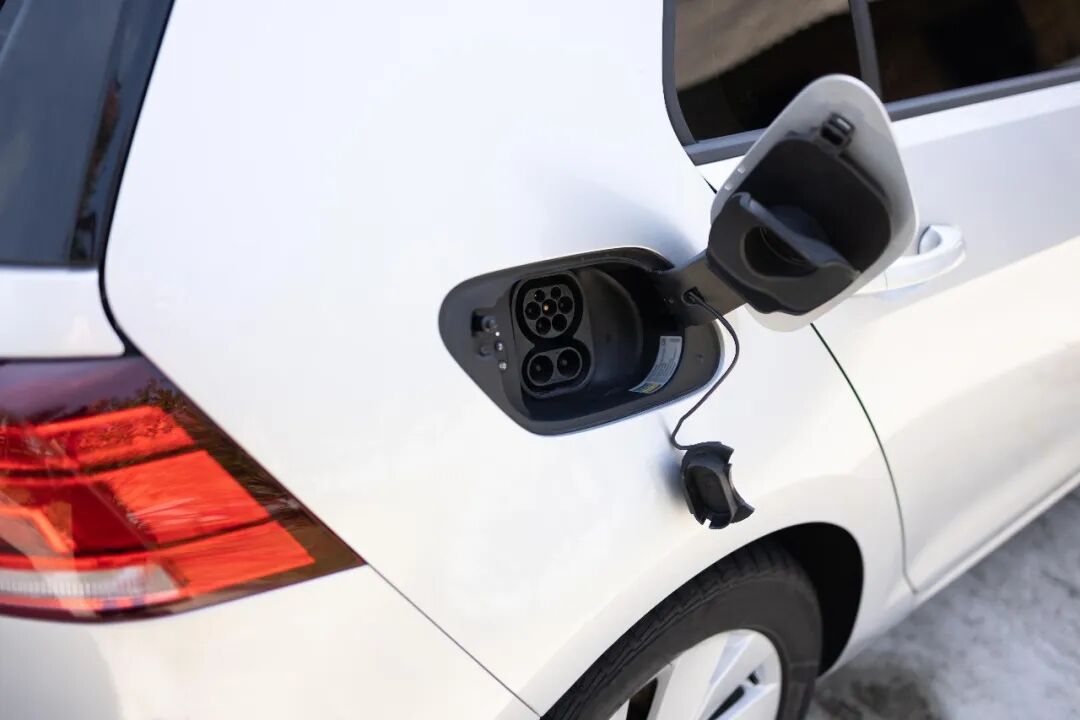
Users can choose to connect any device according to their own needs, instead of being restricted by the sink and cutting board pre-installed by automakers. It can be used for cooking hot pot during camping, emergency power supply during power outages, and powering electric tools at construction sites. The usage scenarios of V2L are far more diverse than in-car kitchens, and it has the advantages of low cost, no space occupation, and no hygiene hazards. This idea of providing capabilities rather than defining specific scenarios is what intelligence should really look like.
Looking at these practical configurations that are truly implemented in daily car usage scenarios, it is not difficult to find that the core of automotive intelligence should be to serve users, simplify car usage, and improve experience. However, the current intelligent configuration track is full of chaos, and countless fancy and redundant viral configurations flood the market, forming a sharp contrast with pragmatic and easy-to-use core configurations. It is this polarized status of configurations that makes the industry and consumers fall into thinking: after removing the marketing filter, where should autonomous driving configurations go?
Where Should Autonomous Driving Configurations Head?
The public's mixed opinions on viral configurations are, on the surface, consumers' aesthetic trade-offs between practical and fancy vehicle configurations, but in essence, they are the phased confusion of the entire industry during the electrification and intelligence transformation of China's automotive industry. The electrification wave has completely subverted the technical barriers of the traditional automotive industry, and the century-old accumulated core mechanical advantages such as engines and gearboxes have been quickly erased. The entry of internet thinking has further reconstructed the product definition and competition logic of automobiles, leading all automakers into a competition track with brand new rules and unfamiliar terrain.
Traditional mechanical quality is no longer the only dimension of competition, but what exactly is the new dimension of competition?
Many automakers have taken configurations as the answer. They use as many and as novel configurations as possible to create differentiation, attract traffic, and prove that they are "more intelligent".
The problem with this line of thinking is that it equates intelligence with a large number of functions. But real intelligence is not the piling up of functions, but the upgrading of experience. An in-vehicle infotainment system that can understand user intentions and proactively provide services is far more intelligent than ten flashy scenario-based configurations; a set of assisted driving systems that can work stably under complex road conditions is far more convincing than a flashing small blue light. When automakers put their energy and resources into eye-catching configurations, the core experience that really needs to be polished is ignored.
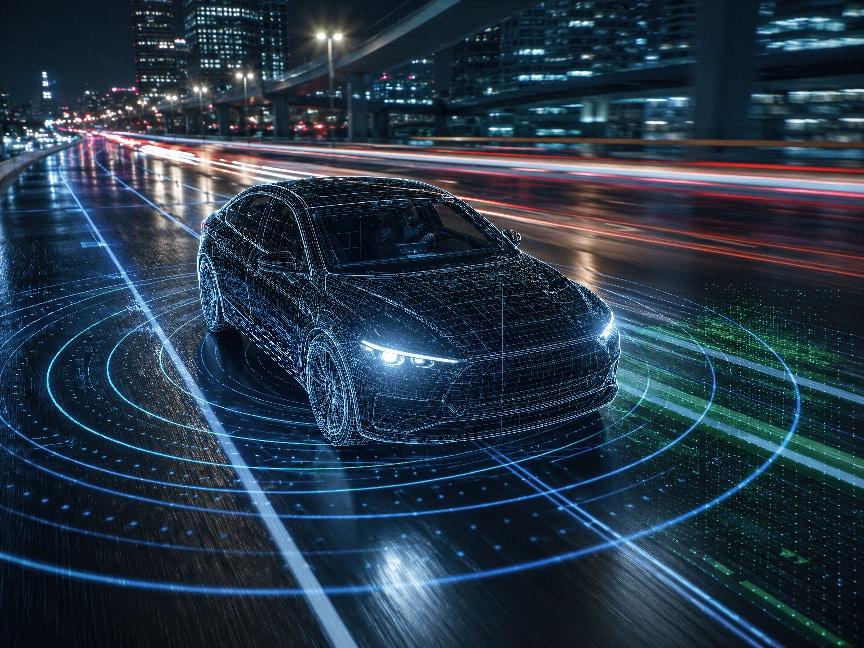
First, what is the essence of automobiles? An automobile is first and foremost a means of transportation, and safety and efficiency are the first principles. When the piling up of configurations begins to erode driving safety and crowd out core R&D resources, innovation crosses its proper boundary. Nowadays, automakers piling up viral configurations is just like mobile phone manufacturers piling up camera pixels in the early years: the parameters look better and better, but the experience has no essential improvement.
Second, who is paying for these configurations? R&D and manufacturing costs are ultimately passed on to car prices, and consumers spend real money on a shower room that can barely be used a few times a year and a small blue light that has been banned. Moreover, every additional configuration adds a bit of weight to the vehicle and reduces a bit of the cruising range.
Third, has marketing logic kidnapped product logic? In the era of traffic, a configuration that can go viral on hot search lists can drive short-term sales better than a silent technical improvement. Whether a configuration can become popular replaces whether it is practical as the primary criterion for configuration selection, and this reversal of cause and effect is the root of the chaos.
The successive regulatory actions in 2026 mark that the industry has entered a stage of standardized development from barbaric growth. The ban on small blue lights, the inclusion of zero-gravity seats in mandatory specifications, the restrictions on single-pedal mode, and the approval of the mandatory national standard for L3-level autonomous driving... A series of policy constraints mean that innovation cannot be achieved at the expense of safety, and configuration design cannot cross the bottom line of laws and regulations.
