From summer consumer sentiment to business growth, how can brands ride this wave?


Ride the wind and find your brand's own path to sustainable growth.
Written by | J
Cover Source | Pexels
Summer is the most "courageous" season of the year.
Young people in summer seem to be a little bolder than in other seasons. They dare to wear clothes they usually wouldn't dare to wear, dare to get a little tanned under the scorching sun, dare to dance until they are soaked in sweat at music festivals, dare to have late-night snacks with friends, dare to play games until the early hours of the morning......
Even adults seem to loosen their self-discipline a little in summer — after being busy for the entire first half of the year, they dare to lie flat for a few days with a clear conscience and treat themselves better.
These vivid summer moments all point to the same thing. Summer does not create new desires out of thin air, it just unties the desires that were suppressed by the daily routine. The "should I do it" and "is it worth it" that you have to weigh over and over in daily life, seem to require no more overthinking in summer. If you want to do it, just go for it first.
That's what makes summer truly special: it doesn't manufacture desires, but tears open a gap for them.
For brands, this gap represents a rare window. It is one of the few moments of the year when user emotions are highly concentrated and actively expressed. The real summer opportunity is never just to put a "summer limited" label on yourself, but to understand this amplified emotion, be able to embrace it, turn it from being seen to being participated, and finally convert it into tangible business results.
This is exactly the question that Ocean Engine's "100 Growth Answers · Summer Special" — "Summer Wind Ride Program" aims to answer: when emotions surge together, how can brands catch this wind and leverage it to soar.

Dare to Express: Make Your Voice Seen and Embraced
Summer is the season of the year that is most generous to expression.
Young people are not satisfied with enjoying themselves alone, they are more eager to share this feeling out — posting it on social platforms, leaving it in comment sections, sending it to people with the same interests, so that others can see their current state. For users, Douyin is exactly such a place where their status can be seen and responded to.
For brands, this also means one thing: for summer content, it is not enough to just make users "see it", you have to make users willing to use it and re-create it. And this is exactly the problem that Ocean Engine aims to help brands solve: how to turn a one-way exposure into a two-way participation.
This emotion of "daring to express" will take on completely different forms when applied to different brands.
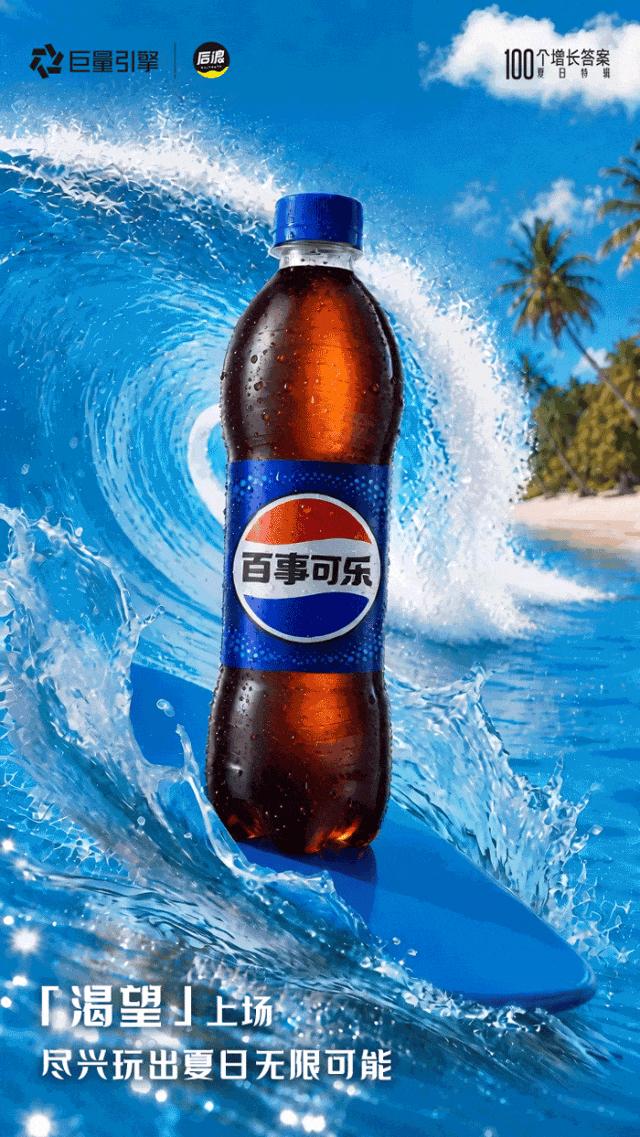
Pepsi played a new trick on a song this year. At the end of May, the brand theme song *Alive* collaborated by Jackson Wang and Ashin of Mayday was launched, with over 110 million views, ranking TOP1 on Douyin's "Trending Style Chart" and TOP3 on Douyin Music's "Hot Search Chart".
But the real change happened after the song went live: relying on the AIGC capabilities of Ocean Engine, Pepsi launched interactive stickers and challenge campaigns, turning the brand's iconic blue, bubbly vibe and the musical emotion of *Alive* into materials that users can directly use and re-create — users not only listen to the song, but also use stickers, special effects and duet functions to film their own summer into exclusive MV. A song was transformed from "brand content" to "user-generated content", which finally brought more than 8 million interactive sticker uses and 2.58 billion views of related topics.
In addition to the outwardly prominent self-expression, another kind of "daring to express" in summer is hidden in more private, lighter companionship scenarios.
You don't necessarily need to arrange a special meal or a trip. Most of the time, just chatting a few words every day, sharing a little daily triviality with each other, or doing a small thing together is enough to maintain the connection between friends. Therefore, this kind of "hanging out with friends" integrated into the tiny daily life is becoming a new normal for young people to maintain intimacy.
This emotion is not driven by topic popularity, but it quietly determines whether users will take a product as a reason to stay in touch with friends. What Ocean Engine does is to help brands build cross-scene social bonds, and precipitate these little connections into longer-term relationships.
For simulation management games, social interaction is not an additional function, but the core of user retention.
*Dream Weaving Forest* chose to collaborate with Douyin's "Co-raise Elf" little fire character — a light social gameplay that maintains relationship heat by "continuing the spark" through daily chats. *Dream Weaving Forest* leveraged this familiar social habit to naturally extend "continuing the spark" to the joint operation of "raising and planting together", so that the sense of companionship in the game is rooted in the existing social relationships of users.
This is inseparable from Ocean Engine's crowd insight, content co-creation and AI capabilities: it accurately targets the active crowd of the "little fire character", links the Douyin content ecosystem to bring new users to the game, and makes the new gameplay of "co-planting forest" quickly seen by more people. The activity finally brought a total of 510 million exposures to the entry, helping the game complete a long-term precipitation of player relationships during the summer vacation.
From Pepsi's "playing with songs" to *Dream Weaving Forest*'s "hanging out together", they actually point to the same thing: what young people need now is content that can be used for expression, interaction and relationship maintenance. No matter this connection is meant to be seen by more people, or just to play with friends.
When users take the brand's content to express their own ideas, find their own like-minded friends and maintain their own social circles, a simple commercial exposure will evolve into real two-way interactions that happen one after another.
Dare to Explore: Translate Functions into Perceivable Experiences
From self-expression in social circles to specific daily life, people are breeding a more private, more specific summer demand: dare to treat yourself better, and dare to go after more real physical and mental experiences.
This emotion is particularly strong in summer. Some people want to temporarily put down the tension of "having to accomplish something" during the summer vacation, and experience a more free exploration with their children; others start to care about how to recover their status quickly after sweating in sports, staying up late or traveling. People want a more direct, specific and instantly satisfying physical experience.
For brands, this emotion can hardly be responded to by simply shouting selling points. Because before functions, what users need is "you understand my current demand". The role Ocean Engine plays here is to help brands first see what specific, satisfiable real needs are hidden behind a vague seasonal emotion, then match corresponding content and crowds, and turn "seeing" into "embracing".
Then from the seemingly general "summer demand", find specific crowds, scenarios and emotions, and translate the original abstract functions of products into experiences that users can truly feel.
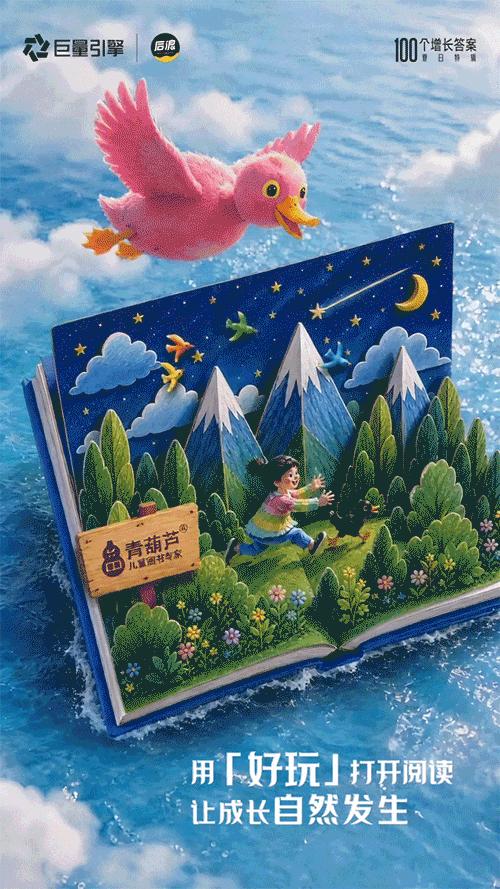
Summer vacation is the period with the most intensive parent-child companionship, and also the most contradictory moment for parents — they hope their children can gain something, but they don't want the vacation to become an extension of the new semester. The summer reading scenario that Qinghulu faces is exactly such a traditional scenario that needs a new way to open: the real difficulty is not to find a book, but to make children want to open it by themselves.
Qinghulu did not simply package reading as a "summer task", but used different forms such as graded reading, 3D pop-up books and IP sound books to break down "reading" into experiences that are easier for children to perceive: the graded system *Little Lamb Up the Mountain* provides a sense of achievement that "I can finish reading it by myself", pop-up books turn reading into a game that can be explored by hands, and Ultraman sound books directly enter from the IP that children already love.
The brand seized the "transition from kindergarten to primary school" node, with the help of Ocean Engine's precise push and the trust endorsement of Jin Guizi's Douyin live stream, further converted these scattered product features into purchasing reasons that parents can understand. The new product of *Little Lamb Up the Mountain* topped the "Great Deals for Kindergarten to Primary School Transition Chart" on Douyin Mall on the first day of live broadcast.
If what parents want is the sense of certainty of "children actively explore", what young people want is another sense of control over their bodies: after a full day of exploration, can they quickly get back to their best state. Summer is especially suitable for exploring — sports, sweating a lot, outdoor hiking, but the other side of "daring to explore" is always the hidden concern of "can I hold up". In addition to explaining technical parameters, this kind of demand needs an answer that can be verified by eyes.
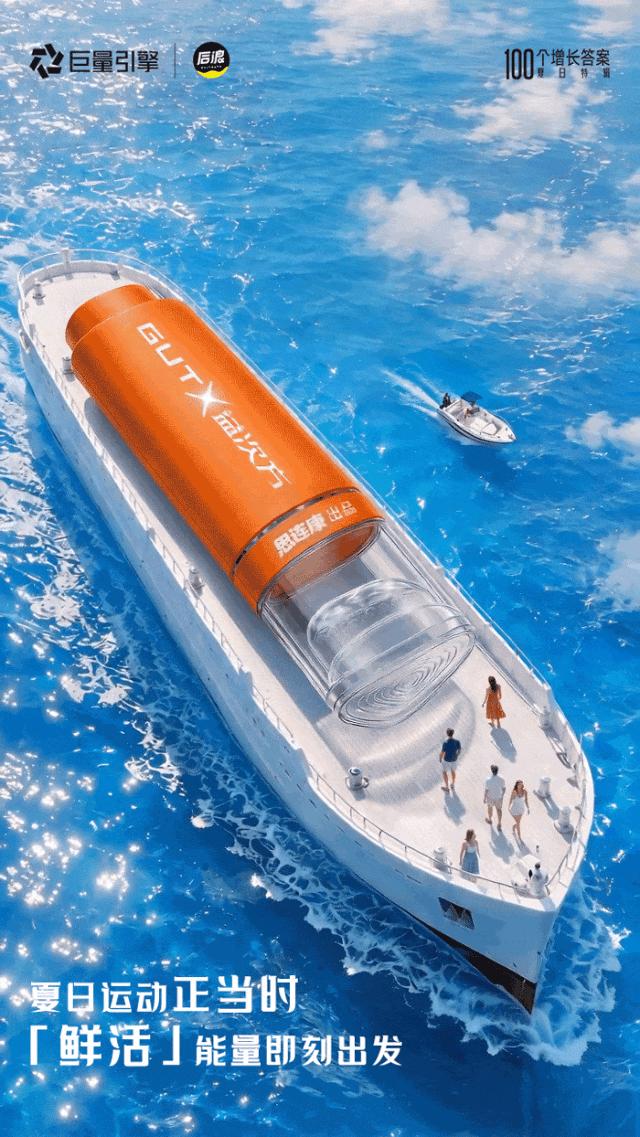
The answer given by GUTX Yicifang is a specific core concept — "vitality". Traditional probiotic powder is cumbersome to brew, the dry powder is easy to choke the throat, and the flora is easy to deactivate. Yicifang uses dual-chamber technology to store the bacterial powder and activation liquid in separate chambers, and mix them right before drinking, making "activity" from an abstract concept into a specific process where users unscrew the cap, shake it well, and see the powder and liquid fuse instantly with their own eyes.
Ocean Engine helps the brand accurately find sports-loving crowds, combined with offline sweat scenarios such as Keep Loners' Festival, to let users experience the ritual sense of "vitality" by themselves after exercise, translating technical language into the effect of "your state never drops" that can be directly perceived by the body; expert popularization explains in depth why dual-chamber technology is more suitable for sports crowds, and KOL recommendation connects online and offline voices, finally achieving over 100 million exposures.
Summer growth does not create demand out of thin air, but accurately captures emotions that have long existed but not been responded to, and then amplifies them into visible business opportunities.
After all, those seemingly hard-core selling points and technologies are never cold parameters. Through the precise connection of scenarios and physical feelings, translating profound technical language into specific experiences that users can "see, touch and enjoy" in daily life, brands can truly walk into users' daily lives and turn temporary physical experience into long-term trust.
Dare to Invest: Turn a One-time Popularity into a Long-term Relationship
Summer is also the season when people are willing to pay for shared memories.
World Cup, summer vacation, health preservation season, in addition to the lively atmosphere, the reason why these high-density nodes work is that they provide the same thing: collective emotion. A group of people are watching the same thing at the same time, getting excited and working hard for the same thing, this feeling of being together is a scarce consumption driving force.
For brands, the value of nodes should not stop at a peak of traffic — the real problem is, after the popularity fades, can this emotion stay and become a relationship that brands can continuously operate. Ocean Engine is helping brands connect the "emotional peak" into the "operation link", so that the one-time node popularity can be connected into a long-term link that can be repeatedly reached and continuously converted.
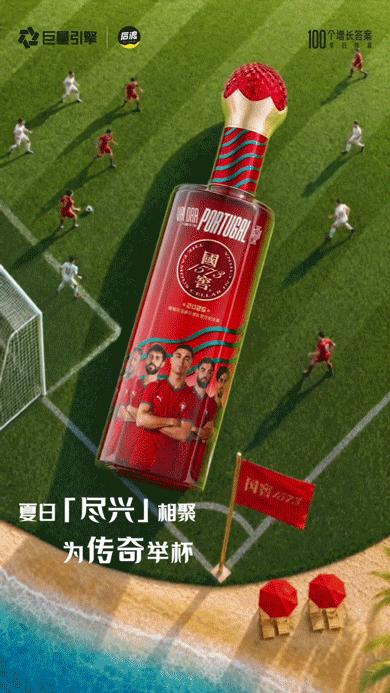
Luzhou Laojiao 1573 caught the collective emotion brought by a sports event. Baijiu used to appear more in traditional festival scenarios such as Spring Festival, Dragon Boat Festival and Mid-Autumn Festival, but the World Cup provides a completely different reason for gathering — fans get together because of their common love, emotions are continuously released between goals and reversals, and "raising a glass" is exactly the most natural outlet for this emotion.
Luzhou Laojiao 1573 joined hands with the Argentina National Football Team and the Portugal National Football Team to launch the 2026 Luzhou Laojiao 1573 × Argentina National Football Team official commemorative liquor and the Portugal National Football Team official commemorative liquor, meeting the collection and social needs, taking "This Toast to the Legend" as the core communication theme, converting fans' emotions towards stars and teams into brand memory. The collaboration with Douyin IP "Summer of Chasing the Ball" brought more than 1.3 billion brand exposures, KOL content and topic operation kept this emotion running through the whole tournament; offline, it adapted to the form of "driving liquor sales with meals" to convert event traffic into GMV growth in multiple regions, realizing the coordinated growth of online communication and offline business.
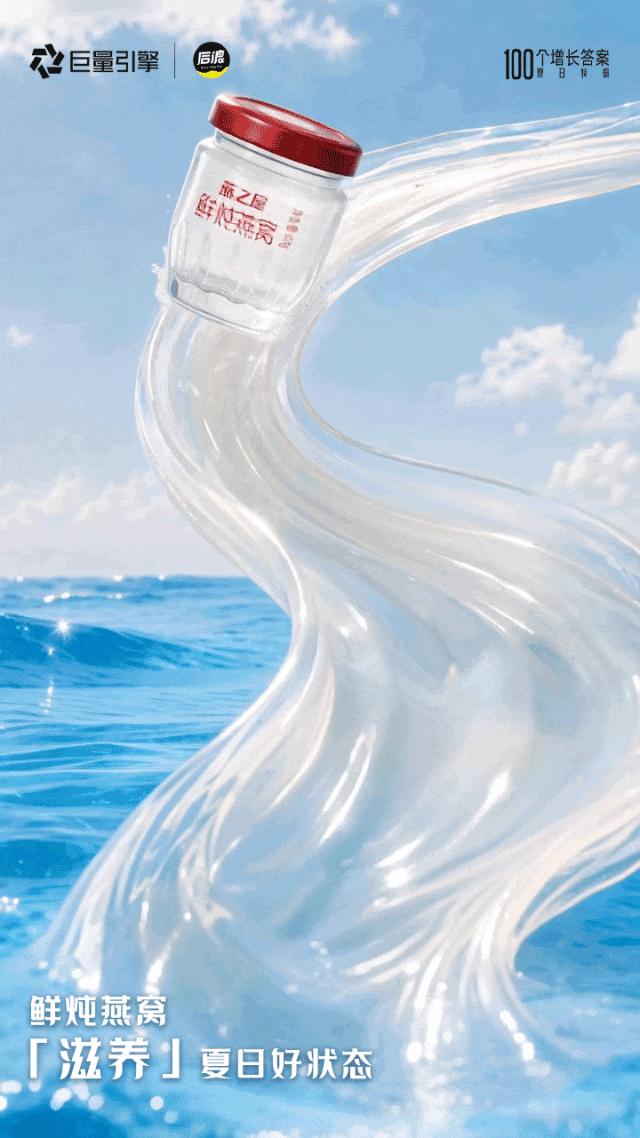
But not all "shared memories" are ignited by one event, there is also a kind of memory that is slowly accumulated through day after day of trust. For categories with long decision cycles and high unit prices, the reason why users are willing to stay is not being moved once, but the sense of security accumulated after being taken seriously again and again. This kind of relationship requires brands to continuously appear in specific life moments, so that the touch brought by one activity can slowly precipitate into longer-term trust.
Nourishing products are a category that is difficult to be driven by impulse. Before purchasing, users will repeatedly judge the quality, raw materials, craftsmanship, and whether the brand is worthy of long-term trust. In response