The robot sports meet is so incredibly surreal.
Guys, have you seen the robot sports games? The scenes are so surreal and hilarious!
The most viral one must be the robot running in the style of Zhang Ruonan, holding its face like it's shy, and it runs extremely fast!
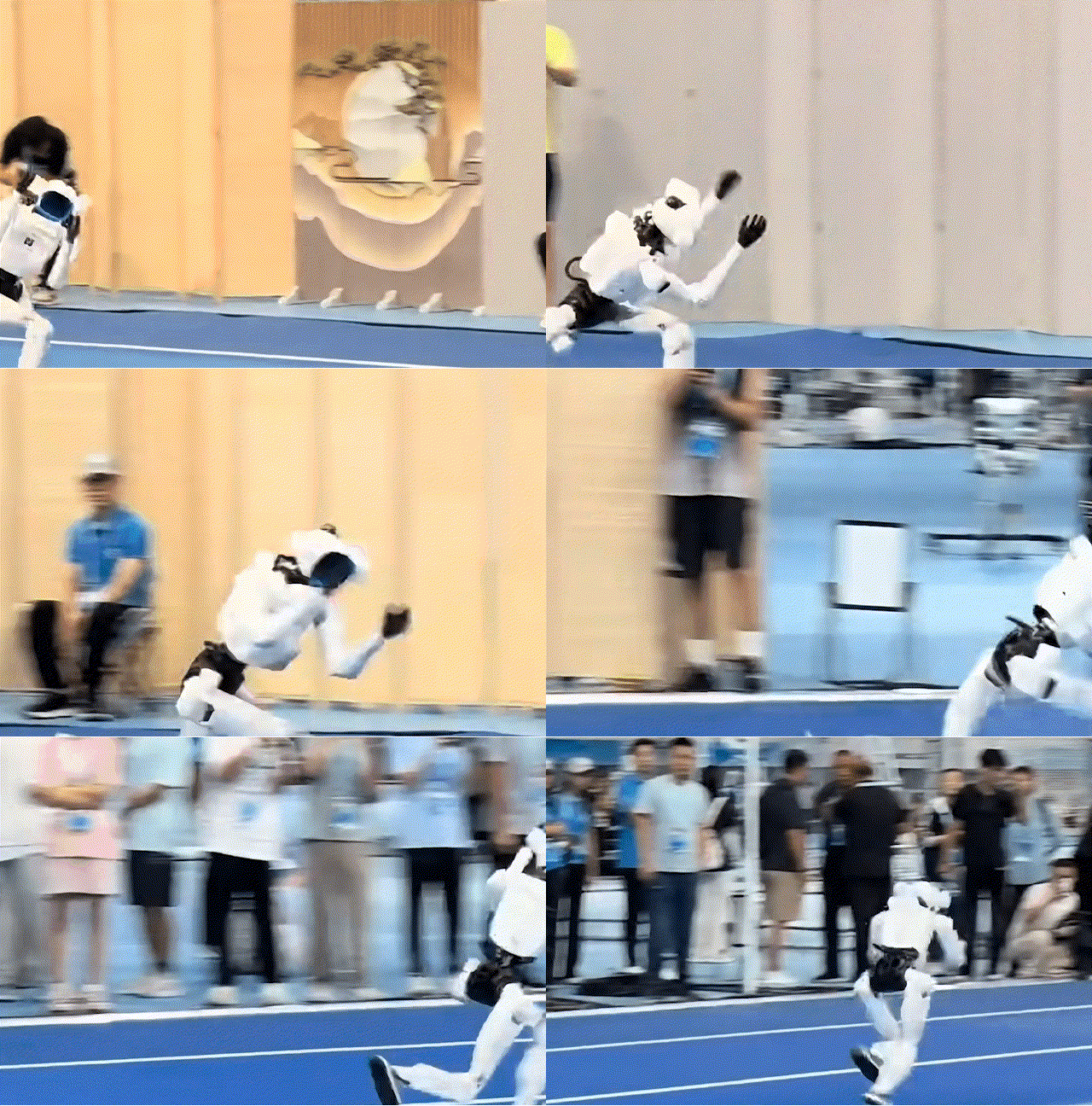
Of course, there are also robots that lie flat on the ground before the starting signal even goes off.
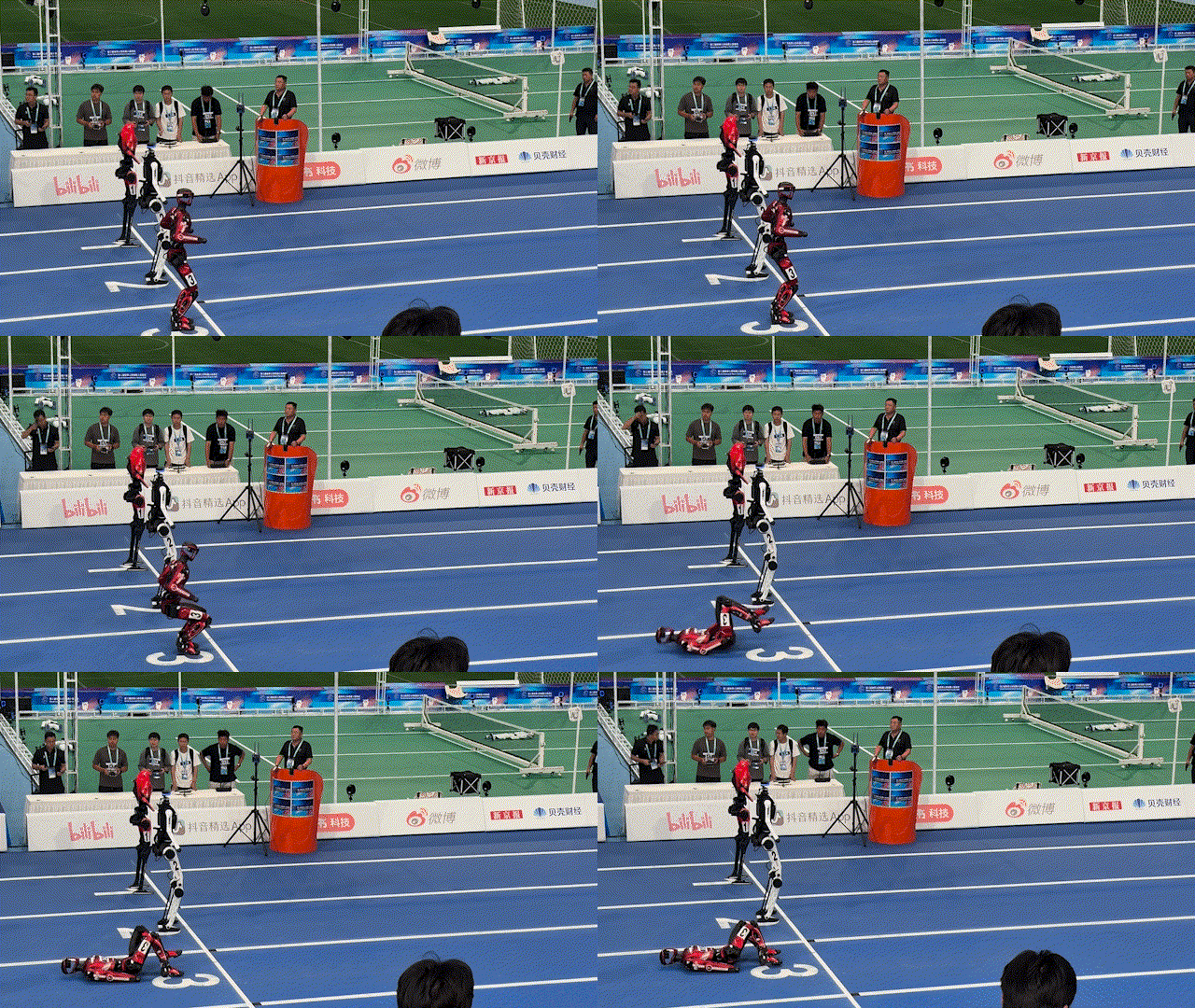
There is also this robot that performs "drunken boxing", it really wobbles around refusing to fall, though it still ends up collapsing eventually.

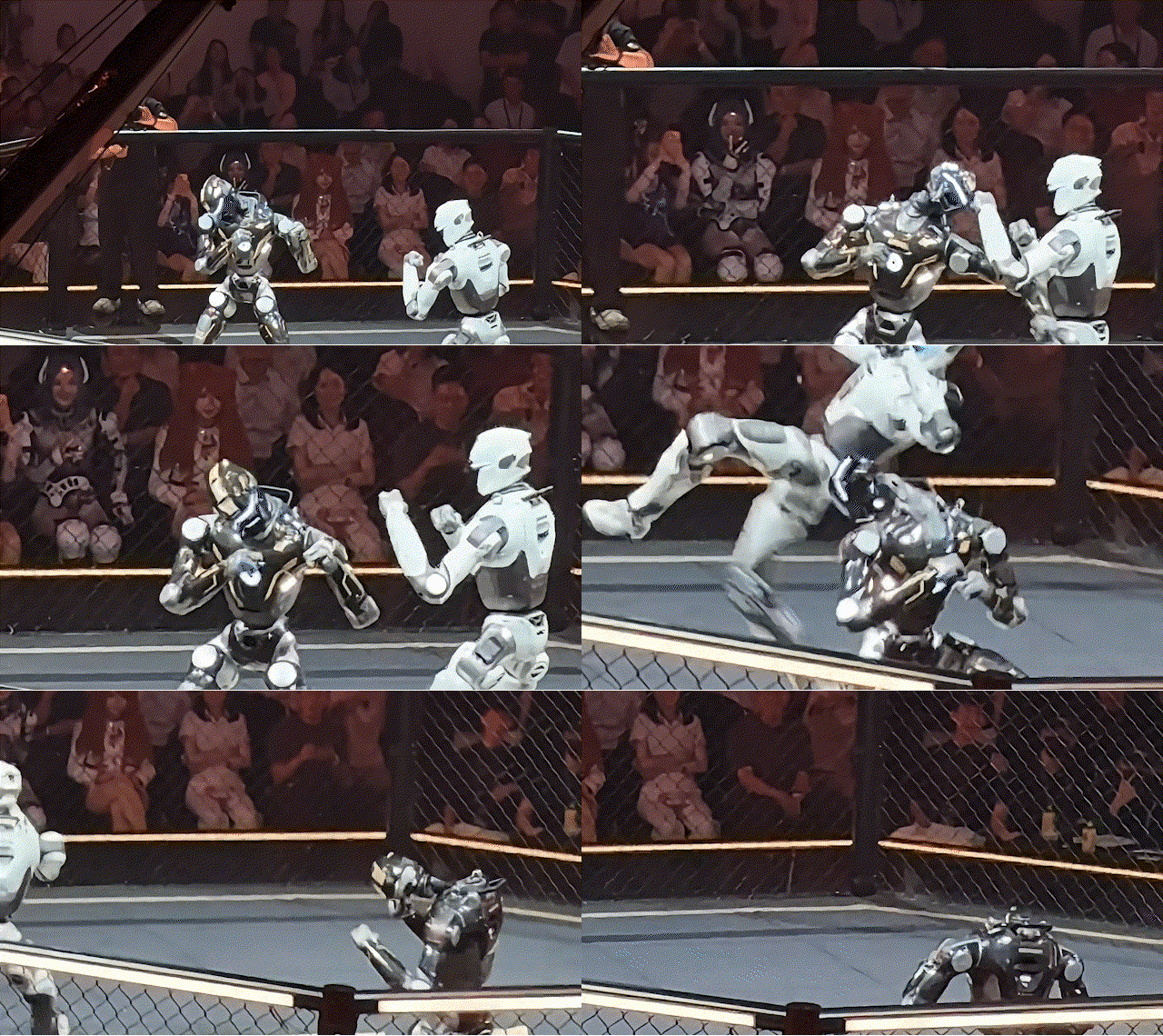
Where there are surreal robots, there are surreal events. The robot boxing match features two remotely controlled robots fighting freely, one even had its head knocked off... (Actually, it shook its head off on its own before getting hit at all)
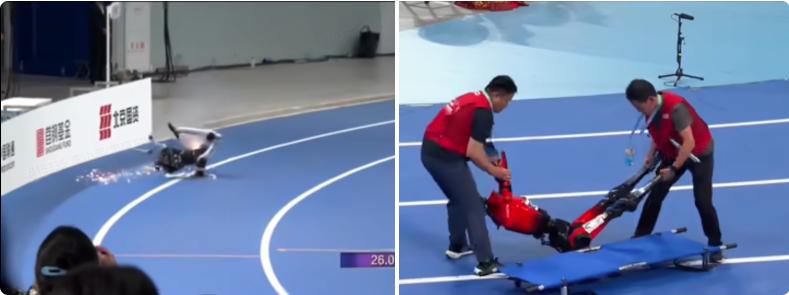
In the 400-meter preliminary on the first day, the TianGong robot fell at the curve, bursting out sparks everywhere. Honor's robot "Flash" finished the race in a record-breaking 41.95 seconds, but after crossing the finish line, it fell and had to be carried away by staff on a stretcher.
But in the final, TianGong Ultra took the championship with a time of 38.15 seconds, surpassing Flash's 39.45 seconds. It's worth noting that in the 400-meter event last year, the champion robot H1 from Unitree controlled by Gaoyi Technology only finished with a result of 88.03 seconds, and it was remotely controlled by humans instead of operating fully autonomously.
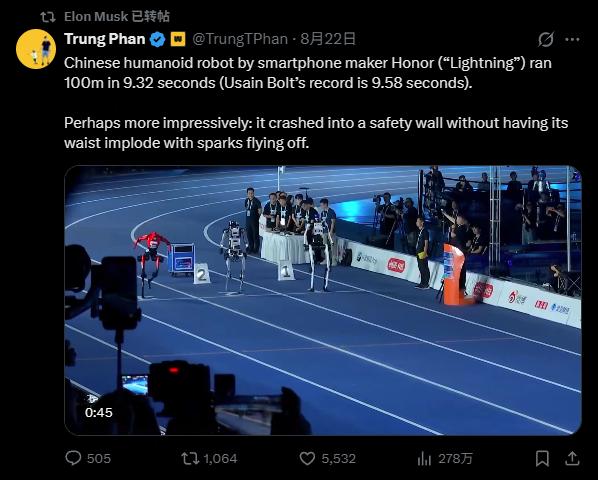
Even Elon Musk reposted the clip of the pre-race test for the 100m group, where Honor's Flash finished the race in 9.32 seconds. This result has already surpassed Usain Bolt's world record.
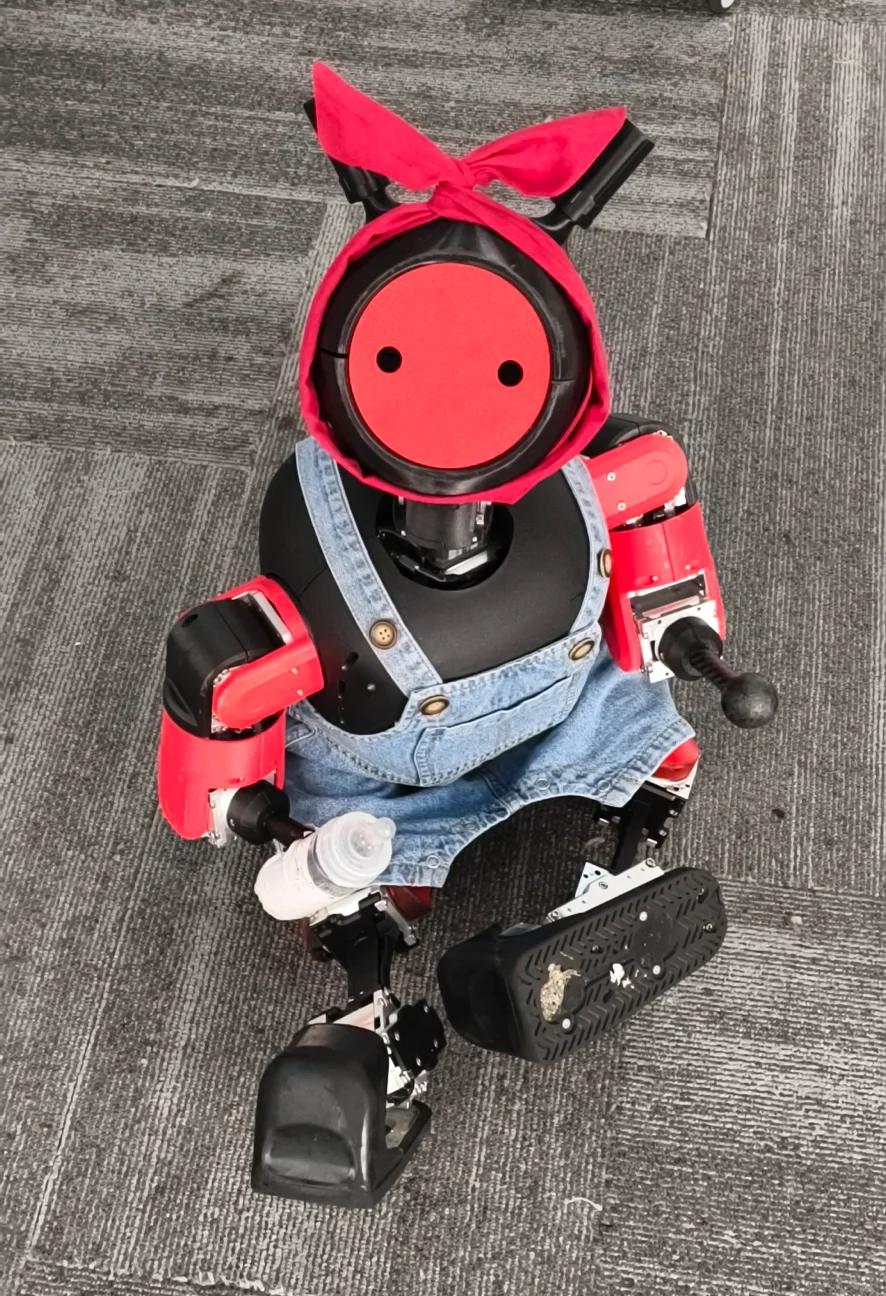
There is also an extremely cute little robot Pai from Honor at the scene, which looks like this.
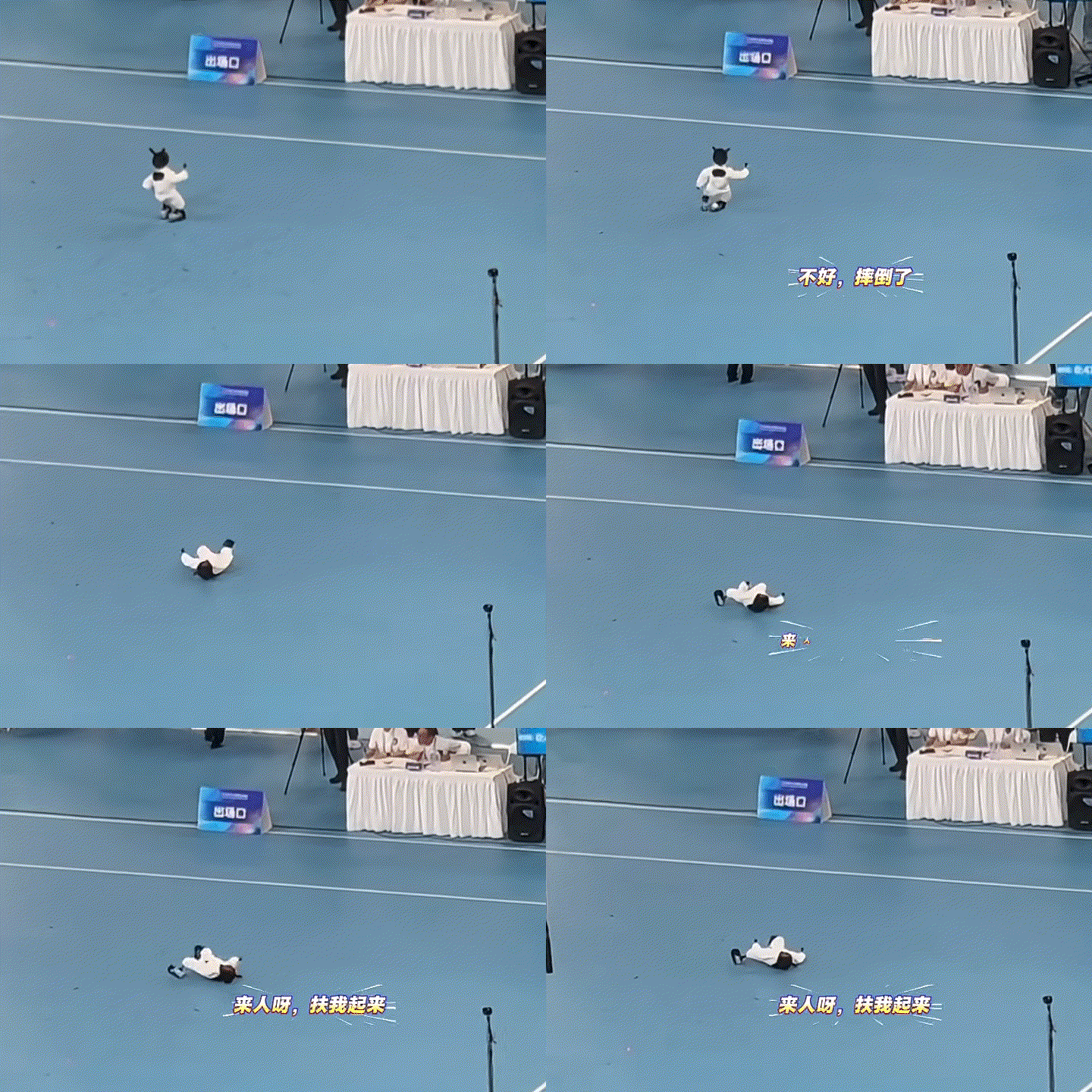
When it falls over, it acts just like a naughty kid.
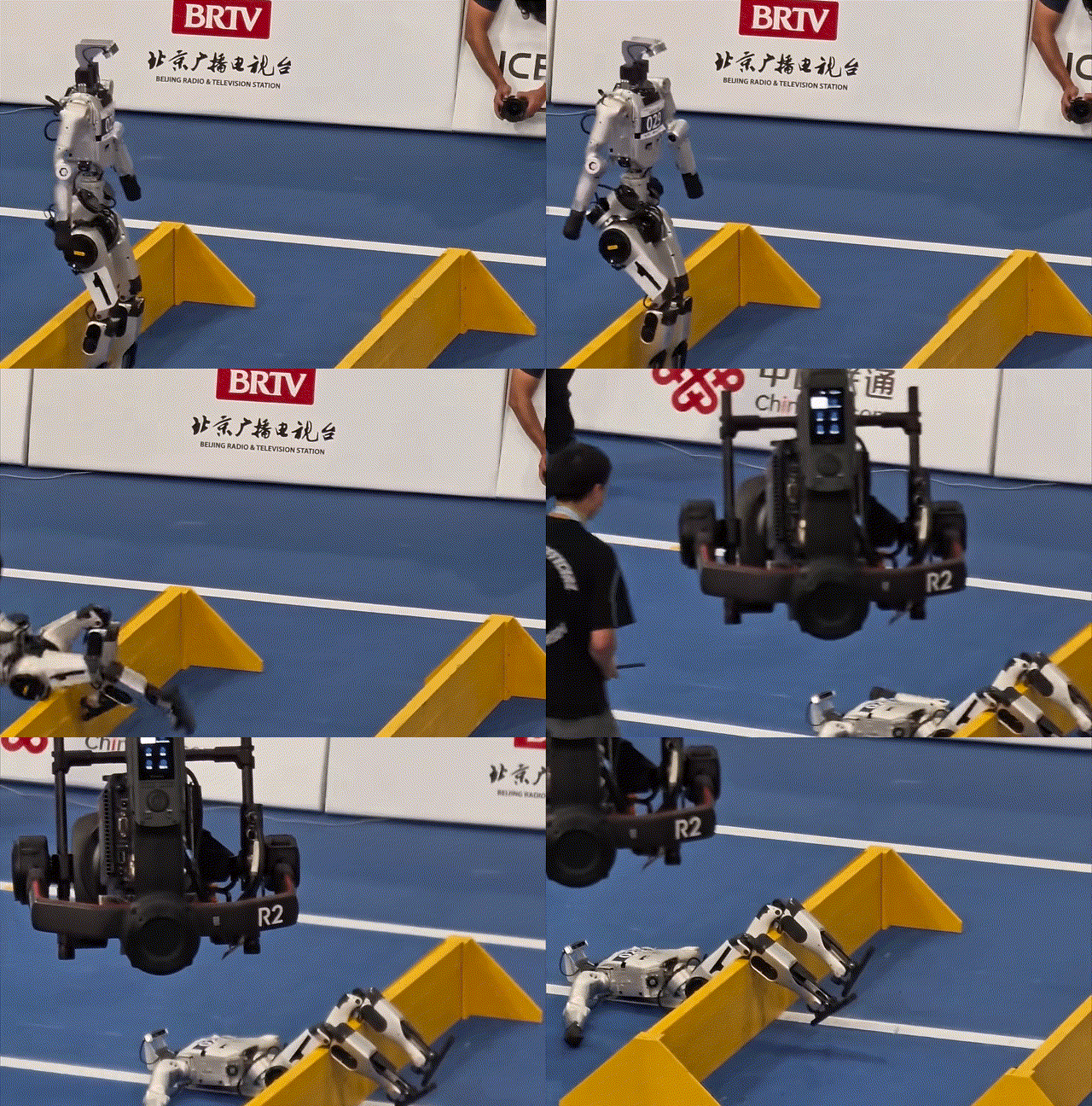
Throughout the entire games, being able to stand up or even just stay standing has become an extremely difficult task. The scene is like two funny comedians running into each other, with random breakdancing moves and wobbly unsteady steps popping up from time to time.
Why can robots run so fast now, but getting back up after a fall has become such a hard problem to solve?
01
After the robot falls,
why is it so hard for it to get back up
The main reason is that running fast is a pre-programmed function, but after falling, the robot has to judge all kinds of unexpected situations first.
After the robot hits the ground, it needs to re-judge how it is lying, where it can get support from, and whether its body is damaged. The joints can only provide sufficient power, but cannot solve the problem of how to apply force correctly in the end.
When a human falls, the eyes, inner ear balance sense, skin tactile sensation and muscle stretch all send signals to the brain at the same time: which part is pressed down, and which part to use for support to stand up. Humans will not draw a force diagram first before deciding how to get up, their bodies keep testing and adjusting during the movement.
But robots can only reconstruct their own posture from a string of sensor readings. First, it has to distinguish whether it is lying prone, supine or on its side, whether its arms are stuck under its body, and whether its body is still sliding; then it checks if all joints can respond normally, and if the current and temperature readings are within the normal range.
Next, it has to choose whether to use hands, elbows, knees or feet to support the ground first, and judge if the ground is hard enough and not slippery.
When getting up, it also has to avoid its own arms and legs, cannot exceed the joint movement range, and cannot make any motor output too much force in an instant. After standing up, it also needs to re-locate the track and the forward direction.
All these steps must be completed correctly in sequence. In most cases, humans can stand up even with their eyes closed, but when the robot's camera is facing the ground, it may not be able to see the surroundings; if the palm landing point deviates by a few centimeters, the support force direction will change; if the reading of one joint is inaccurate after impact, the originally usable getting-up movement will make it fall again.
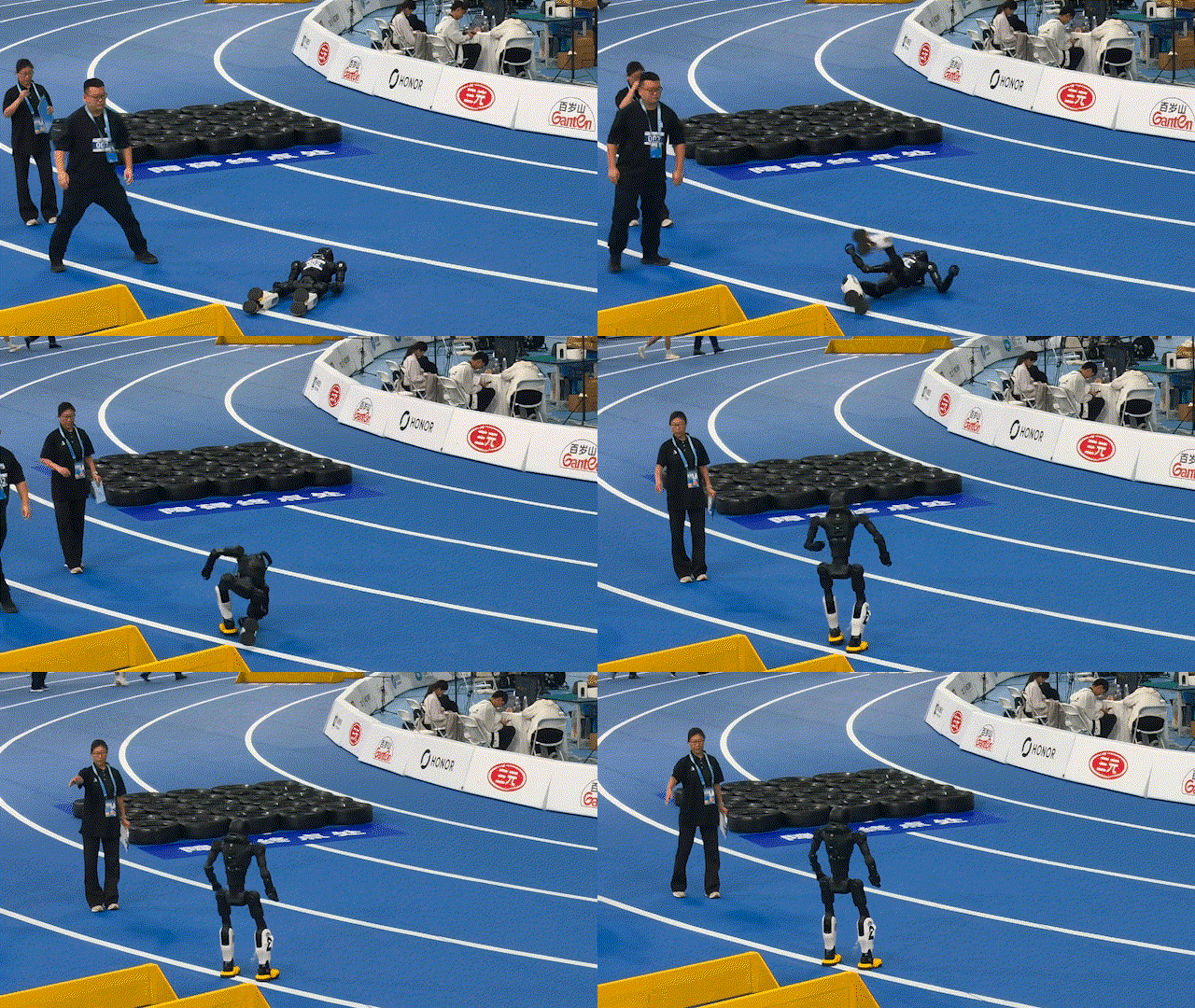
HumanUP team tested six types of ground on the real Unitree G1 robot, and the average success rate of getting up is only 78.3%. They also put the same set of movements into a computer simulation experiment that omits part of the body collision, and the simulation success rate is close to 94%; but the virtual world is completely different from the real world. When this set of movements was transplanted back to the real machine on flat ground, all 5 consecutive attempts failed. The computer simulation missed several body contact scenarios, so the real robot cannot stand up even once.
Don't forget that most of the robots participating in this games are modified specifically for the competition events. When placed in real production scenarios, their performance is far worse than that of human beings.
02
Robots
are still far less capable than humans
The Table30 test, first announced in 2025, requires robots to complete 30 kinds of desktop tasks. The simplest task is just putting an object into a box, and the average success rate of this kind of task is only 42%; while for complex tasks that require remembering which step you are on, the average success rate is as low as 5%.
Take the button test that tests "sequential dependency" as an example. The robot needs to press the pink, blue and green buttons in sequence. After pressing each button, the arm will return to a similar position, and the camera still captures the three buttons. Humans know they just pressed the pink one, and the next step is to press the blue one; but the model tested in the paper only looks at the current frame when making decisions, without bringing in what happened in the previous few seconds. After the arm returns to the original position, it is just like losing its memory, and may press the pink button repeatedly, or even directly press the green one.
There is also the test of folding a rag, which tests multi-step operation and the ability to manipulate soft objects. The robot needs to fold the rag in half twice continuously and then put it aside. After completing the first fold, when the robot reaches out for the second time, it can no longer use the same grasping position as the first time.
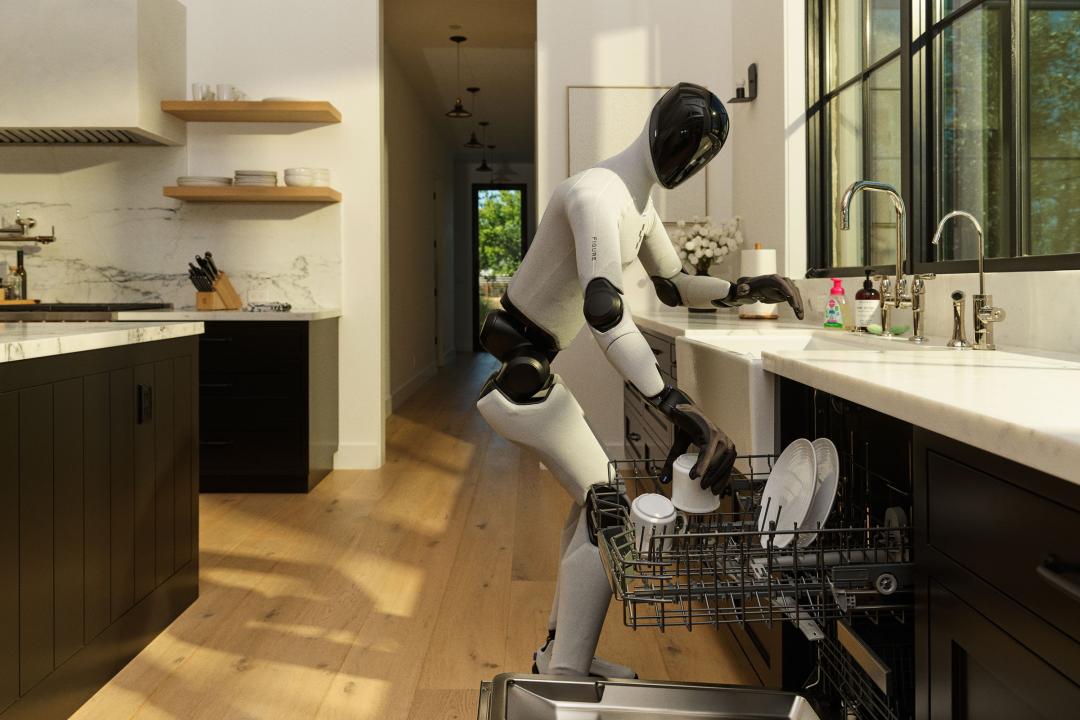
Figure, the robotics company, released its third-generation humanoid robot Figure 03, claiming that it can independently complete household tasks such as watering flowers, washing dishes, and organizing items, and can also undertake commercial roles such as sorting parcels and working as hotel receptionists.
A media once published a set of data: in a simulated automobile factory, a humanoid robot took about 90 seconds to move a box to a place 20 meters away, and the reporter estimated that its efficiency was about 30% of that of a human; in a bearing factory, the robot spent 70 seconds putting a bearing from the tray into a plastic box, while a human only needs 2 seconds to finish the same task.
When a human sorts bearings, the hand is already stretching out, and the brain can adjust the movement continuously according to the position and tactile feedback. If the bearing tilts a little, the box slides, or someone suddenly walks by, the wrist and fingers will adjust immediately. But robots cannot do that yet. They usually need to observe the position first, then calculate the arm movement path, adjust the fingers, grasp the object stably, and then put it down; once any condition changes in the process, the movement they just calculated may become invalid.
It's just like picking up food with chopsticks when eating: if the piece of meat you are aiming at is picked up by someone else first, while your hand is still halfway, your brain has already selected the adjacent piece of meat, and your wrist adjusts the direction right away. What robots receive is often the instruction "grab target A at this position": after target A disappears, it may continue to stretch towards the empty position, or stop to re-identify the target. New models can take another picture, select a new target, and recalculate the movement path, but they still need to understand that "the adjacent piece of meat can also fulfill the task", and avoid the chopsticks stretched out by other people.
Robots can only perform well in pre-programmed tasks, instead of adapting flexibly to uncertain environments.
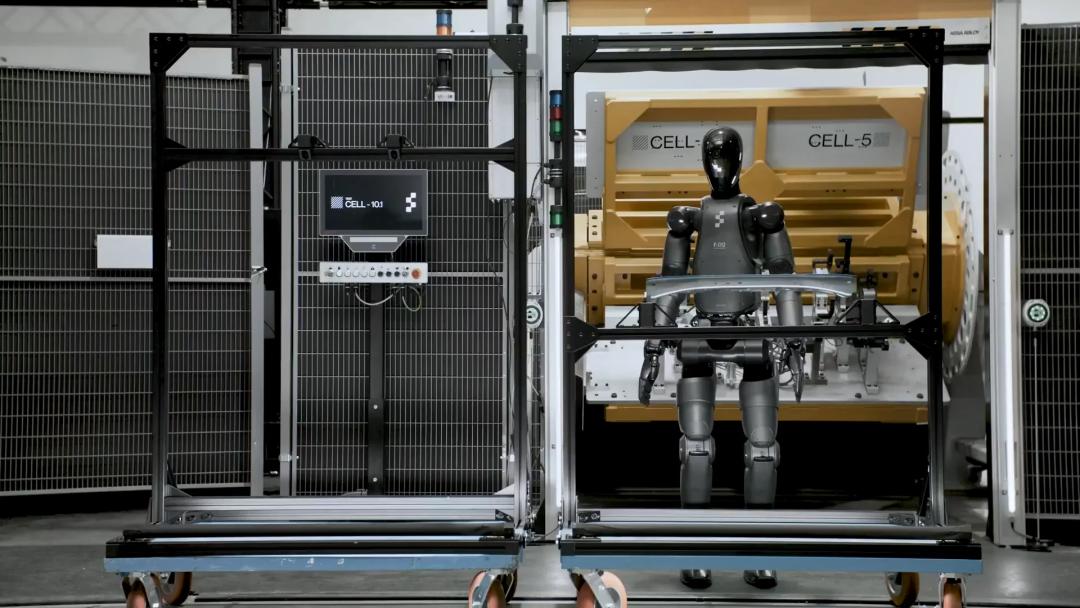
BMW deployed Figure 02, the humanoid robot from American robotics company Figure, in its automobile production line. In 10 months, it worked for about 1250 hours in total, transported more than 90,000 sheet metal parts, and participated in the production of over 30,000 X3 vehicles. The task the robot does is simply moving parts that come from a fixed position to another fixed position.
I don't know if you have ever played the video game *Detroit: Become Human*. The game sets its story in 2038. The housekeeping robot Kara can speak 300 languages, cook more than 9000 kinds of dishes, and can clean, cook, tutor children with their homework and take care of kids; Connor can enter the police station to analyze crime scenes; Markus is responsible for taking care of the elderly with mobility issues.
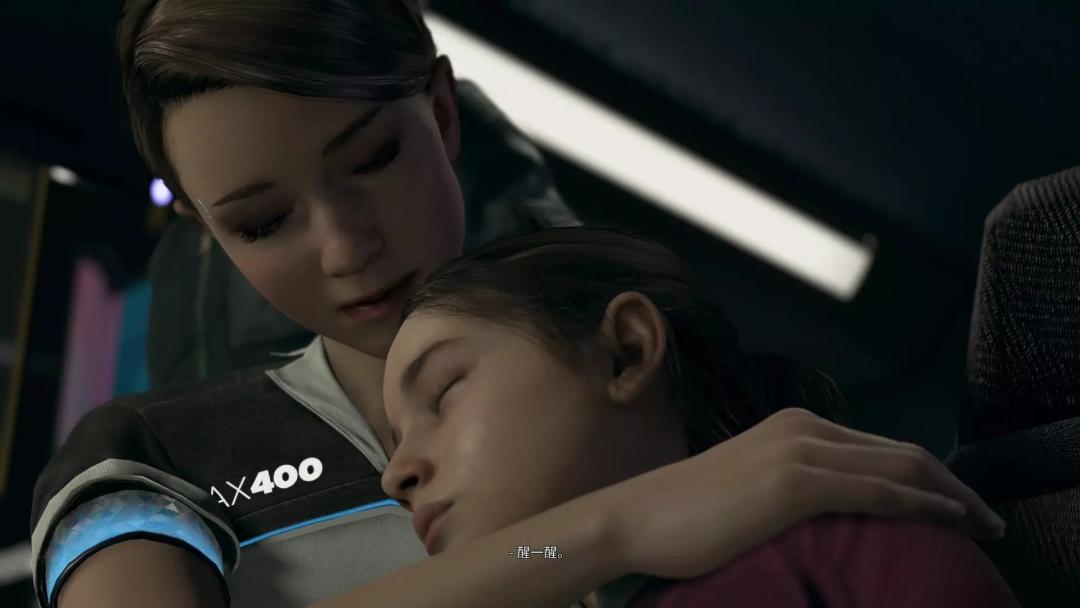
But in reality, after customers buy robots, they still need to fix the positions of materials, modify the site environment, collect data, and then ask engineers to retrain the robot for a specific job post.
03
The ChatGPT moment has not arrived yet, but Unitree has gone public
"XX moment" is not an official technical term. It generally refers to the inflection point when a technology suddenly transforms from an industry-specific achievement to a mass consumer product.
For example, at the end of 2022, OpenAI opened the ChatGPT research preview. Users do not need to understand the model or write code, they can just open the web page and chat with it to get it to write articles, translate, explain knowledge and modify programs. People call this point in time the "ChatGPT moment".

Another example is in January 2025, DeepSeek released its reasoning model R1 and open sourced the model weights, allowing developers to modify, deploy and continue training the model. This moment is called the "DeepSeek moment".
So even though in January 2025, Jensen Huang, CEO of NVIDIA, said at CES that the