The Era of Interview Glut and the Battle Against Energy Scarcity
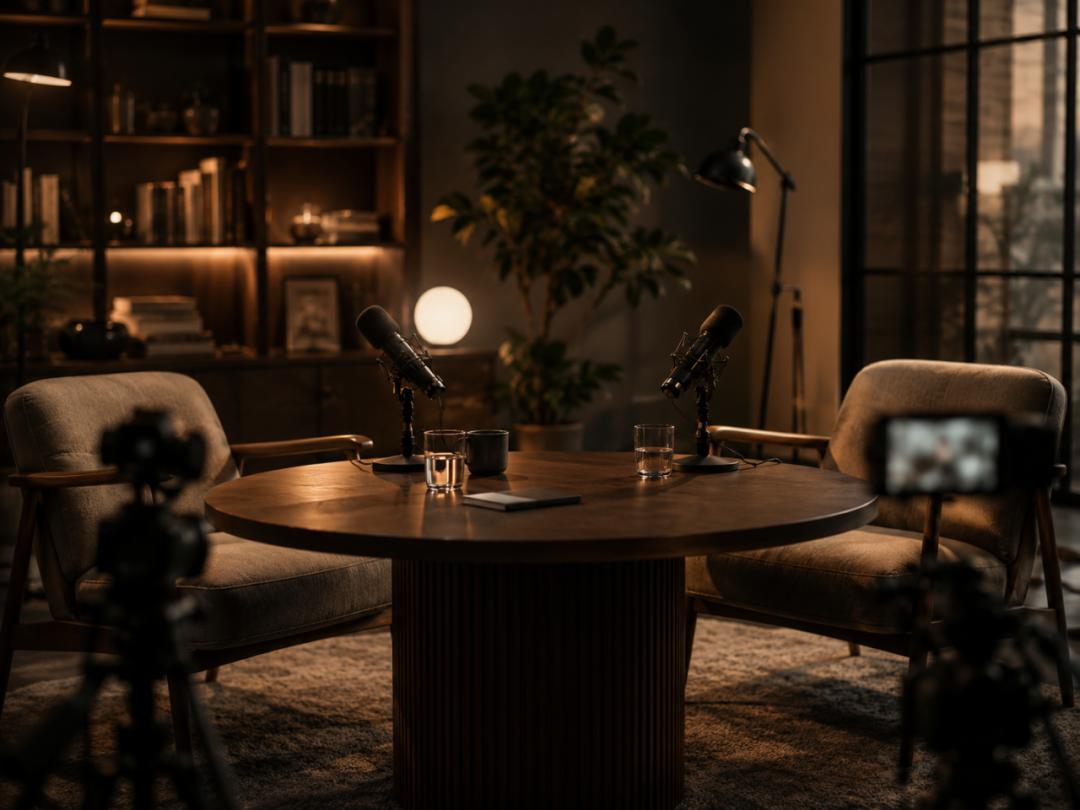
"I feel like the era we live in right now, isn't it really a bit over-saturated with interviews?
"Lu Yu interviews others, and others interview Lu Yu; papi jiang interviews others, and others interview papi jiang. Everyone has their own program, and everyone is also a guest on others' shows. It seems that everyone in this era has a life methodology worth being explored.
"Every person's life has to be refined into a few widely spread answers, which is my biggest takeaway from watching all interviews recently. Do we really need that many interviews?"
On August 21, internet content creator "Zhuangzhuang Sha" released a video, saying, "To be honest, I don't resent interviews. I just think we are stepping into an era of excess meaning."
One netizen left a comment under "Zhuangzhuang Sha's" video: "I was super into listening to podcasts last March. When I listened to them two or three times, I was totally shocked and marveled at how someone could empathize with me so deeply, and break down my life feelings and emotional confusion so completely. I went through one keyword after another, one example after another. Then I got exhausted, I got sick of it. I found these podcasts could only express my thoughts at that exact moment, yet they felt so far away from me. Just like a universal template, everyone's story can fit into it, and everyone is supposed to learn a little something from it. I think when you listen to podcasts while drowning in emotions, you will cry over the transcript and have no idea what you are saying; when you focus on your real life, you will find them totally incoherent and just whining for no reason. This video brought me so many new feelings. I feel that we have added too many extra things to life sometimes, we should also do some subtraction, and the whole nation can step into an era of simply living a good daily life!"
This kind of sentiment has been brewing for a while. In July, the nearly four-hour program *Chen Luyu: Slow Talk* featuring Lu Yu and Jiang Sida was launched. The actual recording of the program lasted about 6 and a half hours, and the final broadcast version was 3 hours and 55 minutes. Some viewers were so grateful that "all the literary youth around the world spread the good news to each other"; others joked that Yi Lijing's conversation with Xiang Zuo was nearly four hours long, and Lu Yu's interview with Jiang Sida was also nearly four hours long, those who could finish watching both episodes could be called "the most patient people on the internet".
Some viewers picked out a meaningful line said by Jiang Sida from the program: "I don't want to hear too many principles anymore. I've found that the world is a little over-saturated with principles, everyone loves to say golden quotes and preach principles. But what I want to hear is stories, and sometimes stories don't make sense at all." Ironically, the weapon viewers use to denounce the overflow of interviews is exactly Jiang Sida's tiredness of "excess principles" from that nearly four-hour long conversation.
This kind of contradictory split runs through the video podcast boom over the past year. Indeed, long conversations have given public figures a complete chance to speak their minds again, and have produced a lot of valuable content. The problem emerged after the success was quickly replicated: all mainstream platforms including Bilibili, Xiaohongshu, WeChat Channels, Douyin, Tencent Video and others joined the market, making the supply side of video podcasts grow rapidly.
According to data released by Bilibili this year, the number of submitted video podcasts longer than 2 hours has increased by nearly 9 times. On May 13, the total daily playing duration exceeded 100 million minutes for the first time, and more than half of the video podcasts are longer than 30 minutes. The number of programs can increase nine times, but people's interviewing capabilities, the figures worth telling stories repeatedly, and the truly unfamiliar information can hardly grow at the same rate.
After interviews were turned from an information acquisition method into a content product, it went from scarcity to overcrowding. What the audience is facing is no longer "is there anyone willing to have a serious chat", but another more realistic question: so many people sit down to chat for two or three hours every day, how many conversations are actually worth spending a whole evening on?
It is worth mentioning that the "interviews" discussed in this article mainly refer to the public content and cultural products for mass communication in the content industry of the commercial economy sector, which take individuals as the core, and transform personal experiences, opinions and life insights into publicly spread content through conversations, video podcasts and other forms.
Microphones Have Become Standard Configuration
Video podcasts did not come into the world with the aura of a booming trend. For a long time, even audio podcast users wondered "why do I need to look at faces when listening to podcasts", and domestic practitioners were also used to treating podcasts and videos as two separate types of products.
In October 2024, after Joe Rogan's nearly three-hour interview with Trump got tens of millions of views on YouTube, the domestic podcast industry realized more strongly that long-form audio, long-form video and celebrity interviews can be integrated into one single content product. At that time, many domestic audio podcast creators believed that podcasts and videos are two different things, and video podcasts are not "pure enough" in their podcast essence.
Earlier attempts did not go smoothly either. According to reports from NewRank, *Boredom Studio*, a podcast under the comedy brand Danliren, cooperated with Youku in 2023 to launch the video-based program *Let's Have a Nice Chat*. A total of 29 episodes were released, and the maximum number of comments on a single episode was only over 200, while popular episodes of *Boredom Studio* on the podcast platform Xiaoyuzhou could get thousands of comments in the same period. Platform participation, mature podcast IPs, well-known comedy performers, plus video presentation did not naturally bring greater communication influence.
In 2025, the podcast *Left Right* which has a large number of subscribers also tried to move its audio programs to Bilibili. The first episode got 110,000 views, but the subsequent traffic gradually declined, and the video version stopped updating one month later. The host Cheng Yanliang later said that for a program that updates twice a week, video podcasts require about four to five times the manpower and time investment of pure audio programs, which was once unbearable for the team.
The awkwardness in the early stage is easy to understand. Audio podcasts already had a mature set of usage scenarios: people can listen while driving, doing housework, or commuting, and the visual picture is not a necessity. After adding cameras, the production cost rises, the host needs to manage their facial expressions and postures, and the guests will also become constrained because of the camera. The conversations that originally relied on a sense of intimacy and companionship can easily be regarded by the audience as a TV interview with lighter production once they are placed under studio lights, multiple cameras and set designs. Some industry observers later directly summarized some of the video podcasts on the market as "long video interviews with microphones", questioning that these programs are just putting a "podcast" label on traditional interviews.
The turning point came after a group of people who are really good at speaking, asking questions, and have their own traffic joined the field. The advantages of Lu Yu, Luo Yonghao, Yi Lijing, Dou Wentao and other figures do not come from microphones and cameras. Decades of interview experience, personal reputation, guest connections and on-camera performance ability are the foundation for long programs to work. *Chen Luyu: Slow Talk* allowed Yi Lijing, Dou Wentao and Xu Zhiyuan to move from the questioner's seat to the answerer's seat; the first episode of *Luo Yonghao's Crossroads* invited Li Xiang, and the two talked for nearly four hours. For the first time, users found that public figures can show their more complete hesitations, pauses and contradictions after leaving the short 30-second video clips.
Long duration thus gained a new cultural meaning. Short videos have compressed a large number of expressions to less than one minute, so three or four hours of content seems luxurious instead, and speaking slowly is regarded as a resistance to fragmented information. The first batch of hit video podcasts actually sold not only content, but also a unique experience: finally there are people who are not in a hurry to finish a sentence.
Video podcasts also have a practical advantage for platforms: their production cost is much lower than traditional variety shows. A fixed venue, a small number of cameras and a group of guests can produce hours of full-length content, and the long full-length content can be split into a large number of short videos, trending topics and social media materials. One recording can thus serve long video consumption, short video distribution and brand exposure at the same time, with very high reuse efficiency of per unit content. Platforms, production teams, hosts and brands share common motivation in commercial benefits, so more and more microphones are placed on the table.
Platforms soon sensed the opportunity. In 2025, Bilibili launched a video podcast support plan, offering 1 billion-level cold start traffic, and providing free recording venues and AI tools in multiple cities. In March 2026, Tencent Video launched a dedicated podcast channel, which calculates revenue sharing directly based on effective playing duration, and the basic unit price for exclusive cooperation reaches 1.2 yuan per hour. After the public got familiar with this form, recording a video podcast has become easier and easier, and platforms also need more supply to fill users' time.
The boom was thus formed, and it also sowed the seeds of later problems. Early entrants gained attention by the scarcity of the form, while for later entrants, sofas, microphones, multi-camera setups and three-hour duration have become standard configurations. The form that once could create value quickly lost its uniqueness after becoming the norm, and the industry had to look for the next scarce resource.
The boom often changes after a large influx of supply. Early entrants enjoyed the scarcity of form, while later entrants face a mature template. After the same set design, same long conversation, and same clip editing method are quickly replicated, video podcasts have changed from innovative products to regular content categories. The market may still continue to grow, but "producing a video podcast" can hardly constitute a competitive advantage on its own. The form dividend has reached the end, and the true content competence is fully exposed.
Programs Are Getting Longer, Guests Are Getting More Familiar
After the supply of video podcasts increased, the first thing that became overcrowded was the guest pool.
The number of people truly suitable for a three-hour long conversation is far smaller than the list of all public figures. Programs expect guests to have popularity and interesting stories, to express smoothly and output continuously, and they also need to consider invitation cost, commercial risks and communication effects. After several rounds of screening, the guest list will naturally be concentrated on celebrities, entrepreneurs, media practitioners, writers, stand-up comedians and top content creators.
Thus a very interesting phenomenon of cross-appearance between shows emerged. Lu Yu talked to Yi Lijing, and then Yi Lijing hosted *Yi Beyond Words* to interview Xiang Zuo and Sun Yang; Lu Yu had a conversation with Dou Wentao, and Lu Yu herself has long been a regular guest on Dou Wentao's show *Round Table*; Xu Zhiyuan has hosted the show *Thirteen Talks* for many years, and in *Chen Luyu: Slow Talk*, he sat opposite Lu Yu as a guest. Interviewers and interviewees keep swapping seats, and a group of people who are good at public expression gradually formed a stable guest pool.
Cross-appearance itself is not a problem, it can even produce good content. When interviewers are being interviewed, they will expose the experience and judgments they used to hide behind the questions, and the audience can also see how these professional content performers react after leaving their familiar positions. Figures like Dou Wentao, Yi Lijing and Lu Yu have complex enough career experiences, and swapping identities can also bring valuable observation perspectives.
The trouble is, when the industry's growth relies more and more on guests who have already been verified to be successful, the freshness of these figures will decay rapidly. The more interviews a public figure accepts, the more skilled they become at talking about their personal experiences, and their childhood, career, low points, family and life choices will gradually form a fixed narrative. The host changes, the set changes, the theme and title change, but the core material the guest provides still comes from the same old life story inventory.
Zhang Zetian's show *Zhang Tian's Chats* provided a very subtle example. After the first episode featuring Carina Lau was launched, some viewers thought "Carina Lau basically did all the talking", others felt the discussion was "superficial", and some even said the show directly exposed the host's lack of experience. Other viewers argued that the expectations for Zhang Zetian were too high, and the show still had many touching details. The coexistence of the two types of evaluations just shows that after video podcasts enter the mature stage, celebrity status and exquisite production can no longer replace the host to create the inherent value of the content itself.
Brands sensed the same problem even earlier. The Paper reported earlier this year that some podcast production agencies received a large number of enterprise consultations in the past year, some brands signed annual video podcast production contracts, but after recording one episode, they found the cost is high and the effect is not ideal, so they would rather pay the penalty than continue recording the rest. Zhu Feng, the founder of the podcast platform Jinjin Laodao, judged that many brands attributed the success of Luo Yonghao's show to "video transformation", but in fact a large part of the success came from Luo Yonghao's own popularity, expression ability and controversial personal traits.
As video podcasts develop to this day, this kind of misjudgment has become more and more obvious. Microphones cannot automatically produce opinions, and four hours of duration cannot automatically produce depth. A poorly prepared question is still a shallow question even if you stretch it to ten minutes; a story that a public figure has told ten times will not suddenly generate new facts after being told for another hour, no matter how many pauses and close-up shots you add.
The conversation between Lu Yu and Jiang Sida is a perfect sample showing both advantages and problems. New information did appear in the show: Jiang Sida talked about the low point of his business, the disbandment of his team and his personal financial pressure. The sense of security built up over the long duration allowed many vulnerable, tangled and even not fully coherent expressions to be preserved. At the same time, the four-hour length also caused obvious fatigue. Some netizens joked that the so-called "deep talk" has turned into "over-the-top literary youth outburst" even for trivial matters, and many listeners decided not to "finish the whole episode in one go" after listening for an hour.
The advantages and problems happen to appear at the same point. Long duration can reach more details, but it can also accommodate off-topic content; it can allow a person to get rid of the scripted expression, but it may also allow mature opinions to be repeated more fully. What distinguishes the good and the bad has never been the number of minutes, but whether the host can dig into the parts of the guest that have never been clearly explained before, and bring back new facts, new relationships and new understandings.
The complaints about "over-saturated interviews" thus hit a feeling that has been accumulated for a long time. What netizens refer to as "must output golden quotes" does not simply mean they hate interviews, but that they are tired of highly processed expressions. The host prepares questions that are easy to spread, the guest provides answers that are suitable for being cut into short clips, both sides are very familiar with what the platform wants, and the interview easily slides into repackaging of existing mature opinions. The program looks longer, more substantial and more emotional, but truly unfamiliar figures, unfamiliar facts and words that have never been said before become scarce instead.
Interviews were originally a method to obtain unknown information. After video podcasts turned interviews themselves into content products, the evaluation criteria expanded to playing duration, guest influence, social communication and commercial sponsorship. Of course, the industry can produce excellent conversations, but when the overall supply of the industry increases rapidly, the criteria for judging whether a long conversation is valuable will also become stricter. The audience only needs to answer one question in the end: after spending two hours watching it, what new thing did you learn that you did not know before?
All Long-Form Content Is Competing For the Same Limited Lifetime
The supply of content can grow rapidly, but people's energy cannot be replicated.
According to data released by QuestMobile in August this year, as of June, the monthly active users of China's mobile internet reached 1.282 billion, with a year-on-year growth of only 1.2%; the average monthly usage time per person has reached 189.3 hours, with a year-on-year growth of 7.4%. On average, a person spends about 6.3 hours on the mobile internet every day. After the user scale approaches the ceiling, the new added value of the internet comes more and more from making the same group of people stay a few more minutes.
Therefore, video podcasts face a more demanding transaction than short videos. A short video asks the user to give dozens of seconds, while a long interview may directly take up one whole night out of your two available evenings. Three hours is no longer just the length of the program, it is also a very specific price of attention.
The competitors are far more than other podcasts. Short videos, short dramas, games, long videos, music, social media